Animal (and human) homes

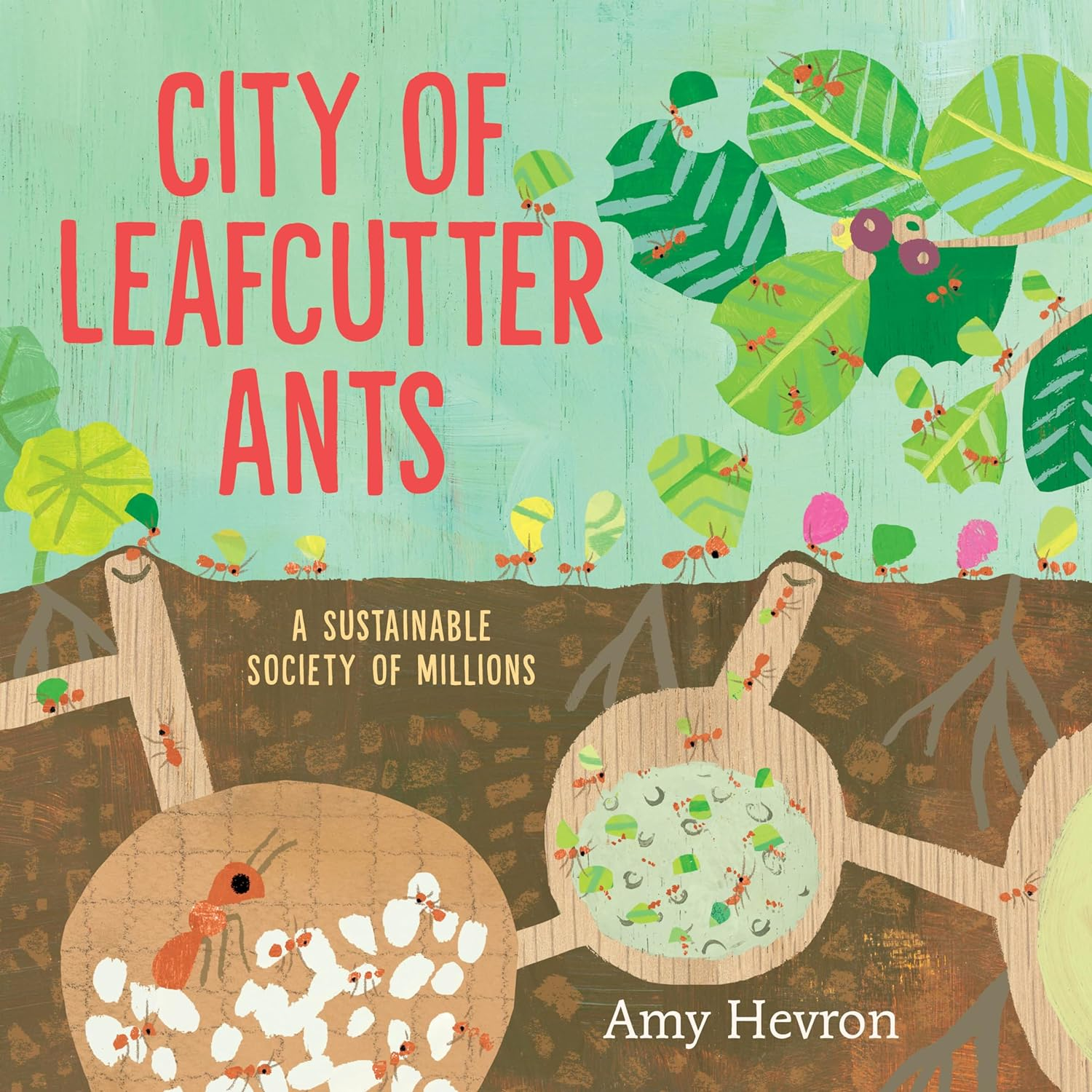
City of Leafcutter ants: A Sustainable Society of Millions by Amy Hevron (Neal Porter Books, 40 pages, ages 4-8). Enter the fascinating world of leafcutter ants, a rainforest community of eight million that produces their own food, uses antibiotics to prevent diseases, manages their trash, and builds and defends their city. Each job is described with a sentence or two of text and collage illustrations that show the different ants at work. There’s a surprising amount of action, including an amazing defense against an invading poison dart frog (don’t worry, everyone’s okay). The back matter provides a lot more information along with a list of additional resources. This is an excellent science book that would be perfect to share with preschool and early elementary kids, although the boys may be bummed by the limited role of the male drones in this largely female society.
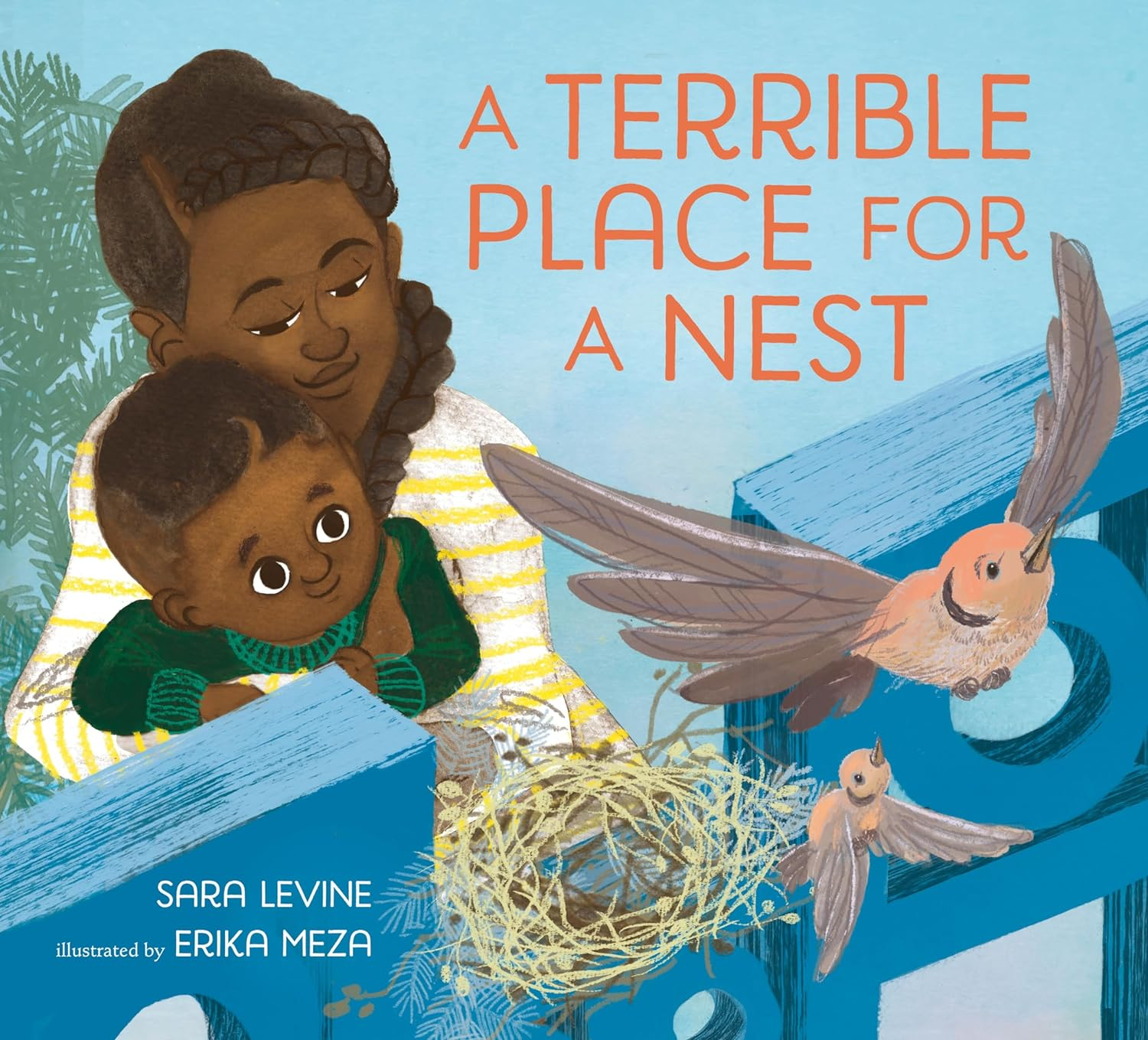
A Terrible Place for a Nest by Sara Levine, illustrated by Erika Meza (Roaring Brook Press, 40 pages, ages 4-8). “When Juno and his mom lost their home, they had to move to a new place.” Juno is sure the new place will never feel like home. He and his mom notice he mourning doves that live outside of their new building. When Juno sees two of the birds making a nest on the fence, he tells them it’s a terrible place for a nest. Sure enough, a deliveryman accidentally knocks it down, breaking the eggs inside. Juno tries to rebuild the nest, doing some research to learn more about mourning doves, but the birds stay away. Meanwhile, the illustrations show him making a new friend and settling into his home. By the time a pair of doves settles into the nest, Juno and his friend are ready, with signs warning people to watch out for the nest. “I told them it wasn’t a great place for a nest,” Juno says, “But we made it work.” This sweet picture book will reassure kids who have to move to a new home, with its parallel story about the doves and Juno and his mom. Kids will find plenty to look at in the illustrations, which tell more of Juno’s story than the text does. A little back matter about mourning doves would have been a nice addition.
Two books from Eerdmans

Long-time subscribers may recall that a few years ago I reviewed a book every week from an independent publisher. I haven’t kept up with it recently, but a few of those publishers still reach out to me from time to time. I recently received these two excellent books from Eerdmans Books for Young Readers. They are a great reminder of the unique and beautiful work being produced by smaller publishers. Both books will be released in September.

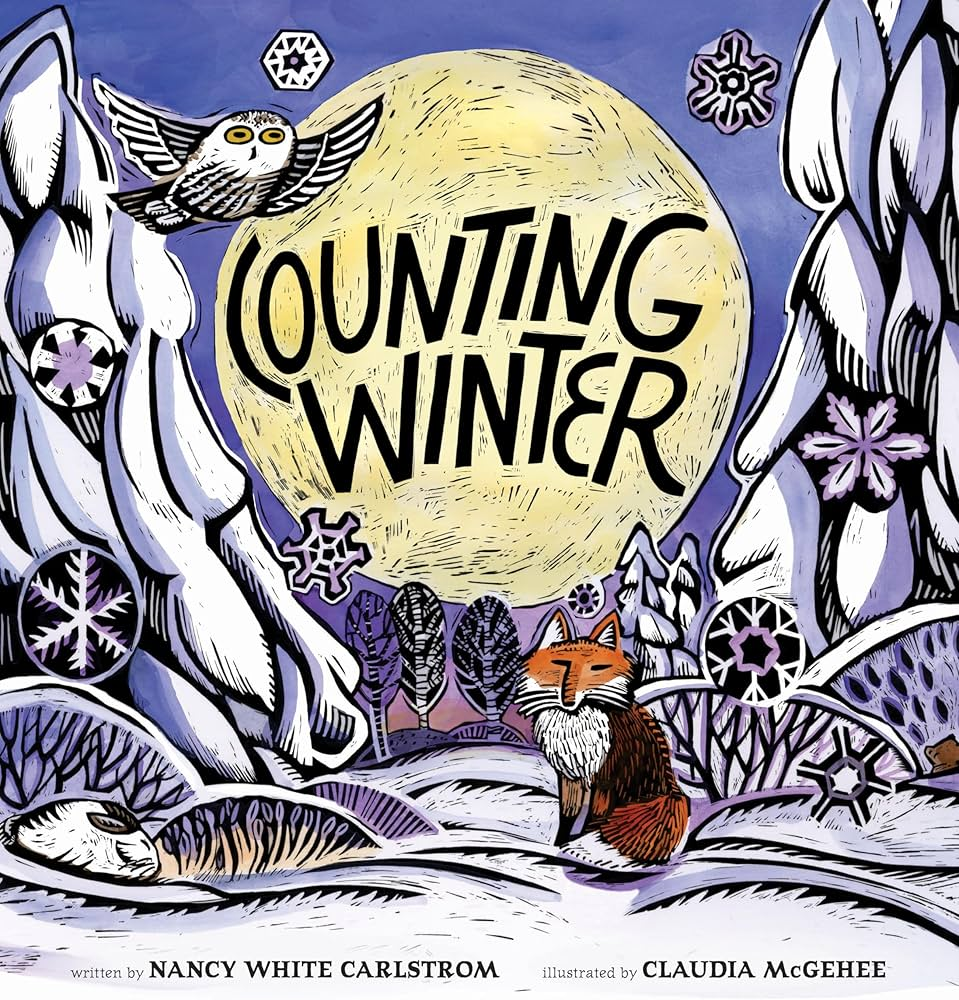
Counting Winter by Nancy White Carlstrom, illustrated by Claudia McGhee (44 pages, ages 4-8). Nancy White Carlstrom drew on her eighteen years in Alaska to create this counting book that includes eleven different animals, with verses written in similar fashion: “One red fox walks/across the white snow/quietly/stalking winter.” These could be used as models for kids to write their own four-line poems about animals with a similar combination of verbs, adverbs, and adjectives. The stunning scratch board and watercolor illustrations perfectly capture the animals and the snowy landscapes. When the counting reached eleven, I started to think it was going all the way to twenty, but the last page features twelve excited children, which was the perfect stopping place. Includes a wordless two page spread showing all the animals, two pages of animal profiles, and notes from the author and illustrator.

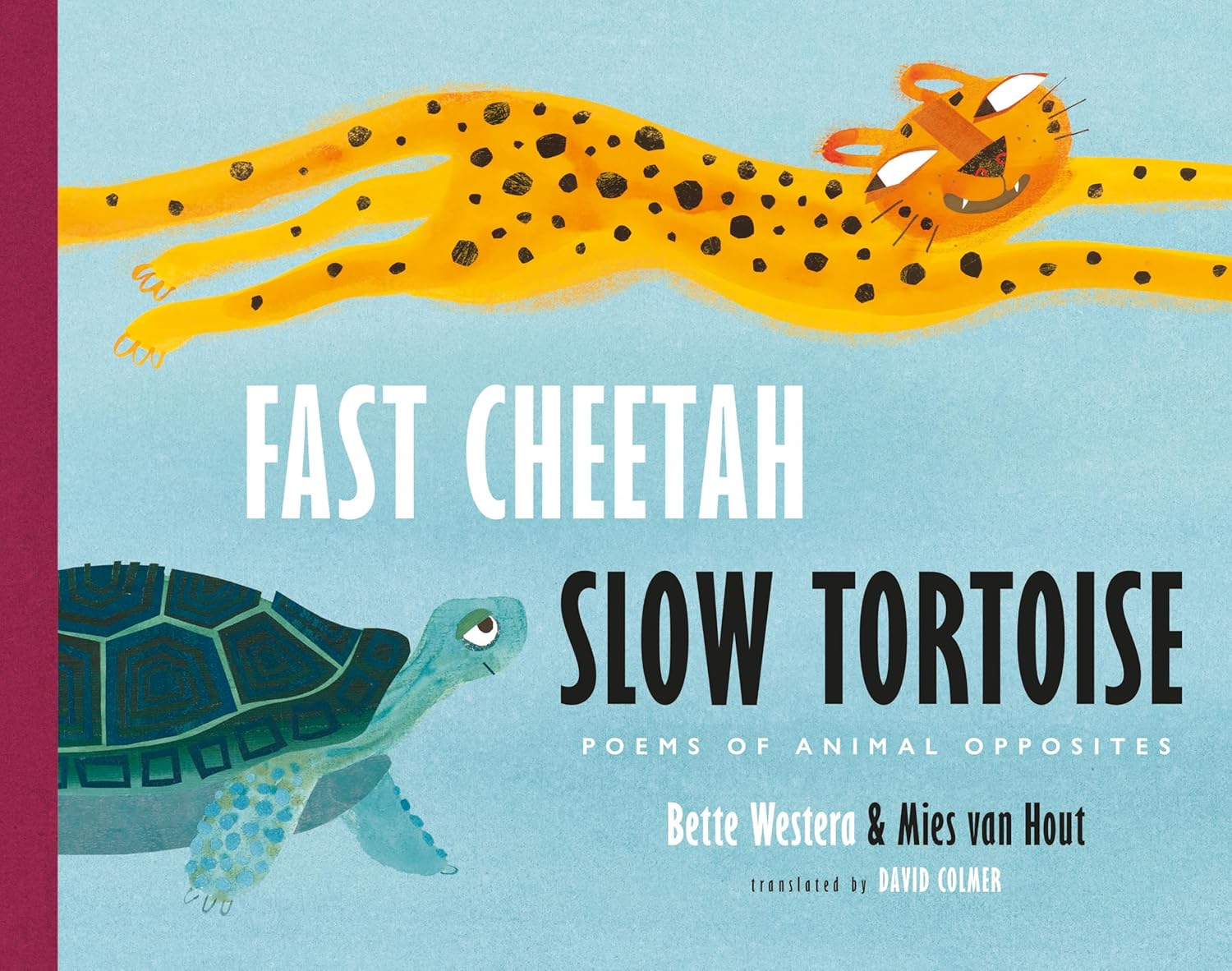
Fast Cheetah, Slow Tortoise: Poems of Animal Opposites by Bette Westera and Mies van Hout, illustrated by David Colmer. (40 pages, grades K-4). This Dutch import pairs animal poems that illustrate antonyms; a two-page spread features the tortoise in a poem entitled “Slow” with the cheetah, which is “Fast.” Others are noisy and quiet (cricket and pill bug), relaxed and busy (sloth and ant), and bossy and meek (gorilla and lesula). As this last example shows, there are some animals that may be new to kids. Each poem is accompanied by an illustration, which will help kids visualize those unfamiliar animals. This would be fun to share by reading a poem and having kids guess the animal and maybe the antonym as well. Unfortunately, there’s no back matter that could have offered more information on the animals.

A couple of nonfiction picture books

Clever Crow by Chris Butterworth, illustrated by Olivia Lomenech Gill (Candlewick, 32 pages, ages 4-8). “Wherever you are right now, there’s sure to be a crow or two nearby.” Crows are easy to spot, but also easy to miss. They tend to be plain, not particularly fancy fliers, and have a hoarse caw instead of a melodious song. But they’re smart enough to use tools and store food, and sometimes you can see them acting playfully. To summarize, they are “smart, clever, crafty and playful…just like you!” Includes a list of suggestions for learning more about crows and a short index.

The illustrations in this book are stunning, beginning with the endpapers, which show various crow eggs in the front and the birds that hatch out of them in the back. The text is quirky but interesting, although it left me wanting to know a lot more…for instance, is a crow a specific bird or a family of birds? I was surprised by the inclusion of a blue jay on the back endpapers, since I don’t think of it as a crow, but a quick Google search revealed that it’s part of the crow family. This is an eye-catching introduction, but curious readers will want to dig deeper for more information.

Sleepy: Surprising Ways Animals Snooze by Jennifer Ward, illustrated by Robin Page (Beach Lane Books, 32 pages, grades K-3). Whether it’s the half-sleeping brain of the dolphin, the deep torpor of the hummingbird, or the eyes-wide-open slumber of a snake, animals get their rest in a variety of fascinating ways. Each page features a close-up illustration of the animal with four lines of rhyming text describing its sleep, with a paragraph of additional information giving more details. The last page features a human child experiencing what scientists call “monophasic sleep.” Includes a list of the types of sleep in the book, a list of sources, and pie charts showing sleeping and waking times for all 16 animals and five more showing humans at different developmental stages.

As much as I mourn the loss of Steve Jenkins, his talented wife Robin Page has found an able partner with Jennifer Ward, whose rhyming text and fascinating facts reminded me of many a Jenkins book. The pie charts were very similar to some in his Animals by the Numbers (and the fact that I know that is a testament to how many times I’ve shared that book with classes.) The rhyming text and pictures will appeal to younger readers, and older ones will enjoy the additional information about each animal.

Cultivate your own garden

Prunella by Beth Ferry, illustrated by Claire Keane (Simon and Schuster Books for Young Readers, 40 pages, ages 4-8). Prunella’s green-thumbed parents are surprised when their new daughter is born with a purple thumb. Turns out Prunella’s just as good at growing things as they are, but her talents lie with plants like Venus flytraps, bladderworts, and corpse flowers. Her parents are completely supportive of their daughter’s passions, but other kids are not, and Prunella’s only friends are her plants. One day a little boy appears and starts asking her about her garden. Much to Prunella’s surprise, he not only isn’t repelled by them, but tells her his aspiring-mycologist sister would be interested as well. Before long, other botanists have found them, and Prunella finds herself surrounded by a group of like-minded–and purple-thumbed–friends. The plants from Prunella’s garden (“Prunella’s Persnickety Plants”) are described on the front and back endpapers.

Millie Fleur’s Poison Garden by Christy Mandin (Orchard Books, 40 pages, ages 4-8). When Millie Fleur La Fae and her mother arrive in Garden Glen (“A Picture-Perfect Place”), they move into the one rundown house, located on the edge of town. Millie starts a garden with seeds from her old home, and before long plants like fanged fairy moss, sore toothwort, and glowing Jack-in-the-bush are flourishing there. The local garden club is not happy, and they try to root out this unconventional garden from their pristine town. Millie doesn’t understand, but her mother tells her, “Some people are scared of things that are different.” Millie decides to share her garden with the kids in her class, bringing in a plant for show and tell and inviting the whole class over to her house. The kids are amazed (if occasionally grossed out) by Millie’s wild collection, but slowly things start to change in Garden Glen. While it retains some of its original perfect charm, many people incorporate Millie’s plants into their gardens, adding a weird and wonderful dimension to the community. Includes additional information about snapdragons, spider plants, and a real-life garden like Millie’s in England.

These two books came out within a couple of weeks of each other and are remarkably similar with their stories involving girls who love unusual plants and themes of how being true to yourself can enhance a community. They would make a great story time combination, perhaps paired with a study of plants or an activity of planting something from Prunella’s or Millie’s garden.

For the birds

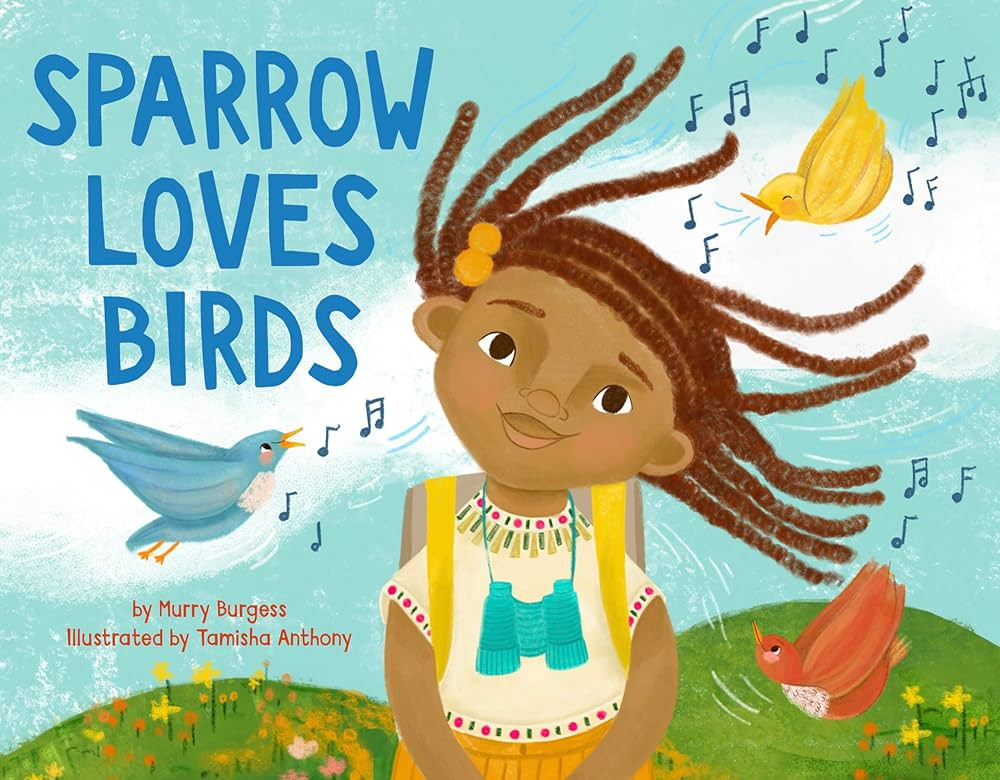
Sparrow Loves Birds by Murry Burgess, illustrated by Tamisha Anthony (Christy Ottaviano Books, 40 pages, ages 4-8). Sparrow is an observant girl, who loves noticing the people, animals, and sounds of her neighborhood. Most of all, she loves to watch birds, and she’ll often head out with her sketchbook and binoculars to look for them. She learns to identify different birds by their movements, colors, and songs, carefully drawing them and labelling them when she knows their names. The last page invites readers to explore their own neighborhoods, and there’s lots of back matter to help them, including tips for birdwatchers and a guide to eighteen birds mentioned in the text. There’s also an author’s note describing her journey from a childhood spent learning about nature to a career in wildlife biology, and encouraging kids to get outside and observe nature, whether they live in rural, suburban, or urban neighborhoods. This a great introduction to birdwatching, and just generally enjoying the outdoors, that introduces lots of different birds and birdwatching techniques through an enthusiastic young narrator. The illustrations and back matter add to the educational value.

Owls in Our Yard! The Story of Alfie by Carl Safina (Norton Young Readers, 48 pages, grades 2-5). For some real-life backyard birdwatching, here’s the story of Alfie, a baby eastern screech owl found on the ground and given to ecologist Carl Safina for rehabilitation. After nursing her back to health, he and his family gradually reintroduced her to the wild. He wasn’t sure she would ever completely lose her reliance on humans, but slowly, Alfie started leaving her nesting box for longer periods of time and learned to hunt for food on her own. Eventually, she showed up with a mate, and Carl discovered that Alfie had built a nest and laid three eggs. During the pandemic, the family had plenty of opportunities to follow the adventures of the new baby owls, including battles with blue jays and robins for backyard territory. While Alfie has stayed close to her old home, she’s completely integrated into the wild now, having raised three broods and raised a total of ten owlets. The photos and compelling nonfiction story make every step of Alfie’s journey an adventure that animal lovers are sure to enjoy. It’s a bit text heavy, so younger kids may need some help with the reading, but the narrative is engaging enough to keep them going to learn what happens to Alfie and her babies.

Animal books

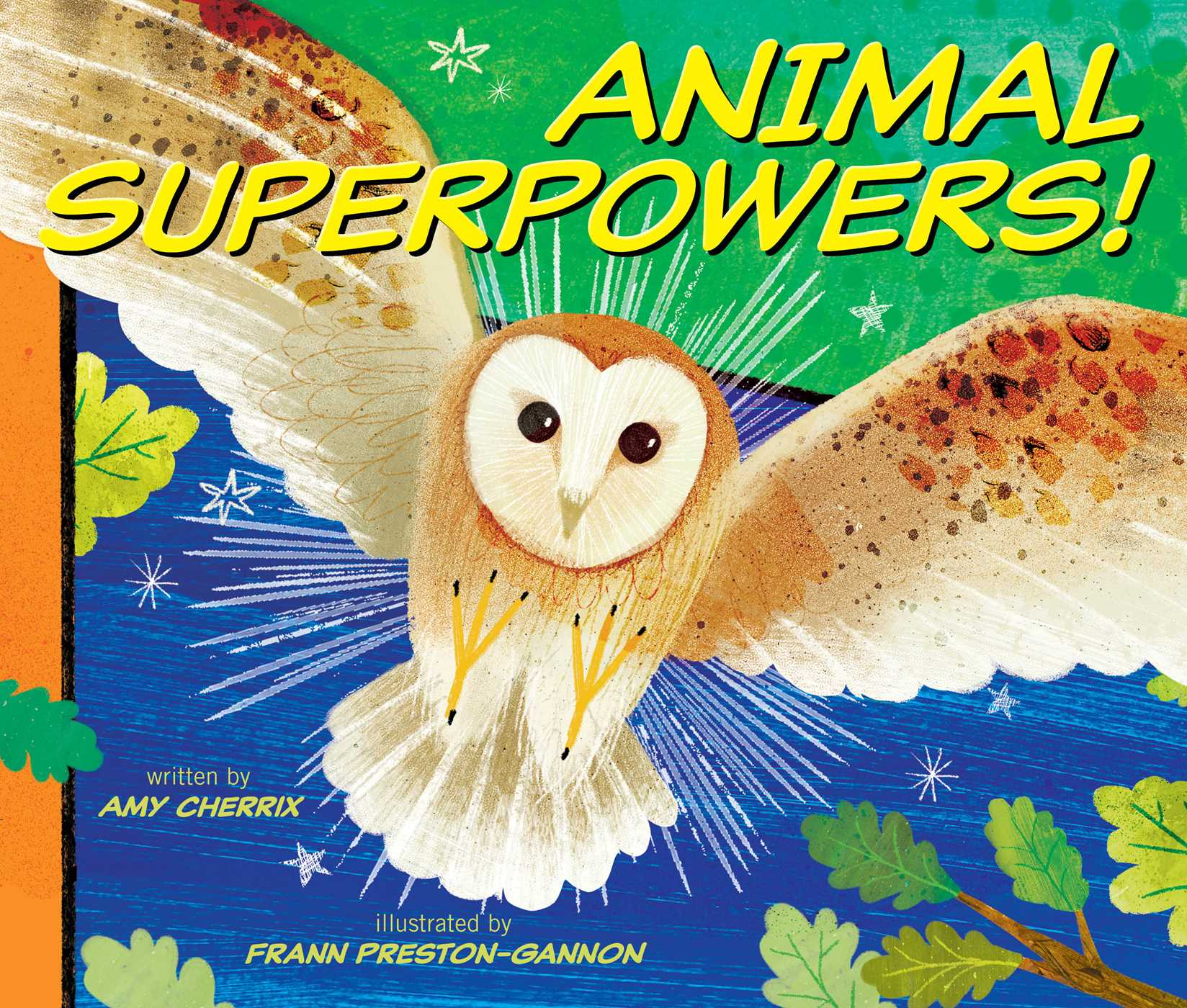
Animal Superpowers by Amy Cherrix, illustrated by Frann Preston-Gannon (Beach Lane Books, 48 pages, grades K-4). From a seemingly immortal jellyfish to a gravity-defying ibex to a snake-killing, venom-resistant opossum, these animals have superpowers that allow them to survive and thrive in their environments. Even your pet dog has a smelling superpower! Each two-page spread has a vivid illustration with boxed text. One spread gives the introduction to the power, then turn the page to reveal what it is and how the animal uses it. The last couple pages, entitled “Action is your superpower!”, tells how the different animals are threatened by pollution and climate change, encouraging kids to take action to help them. There’s also a list of sources.

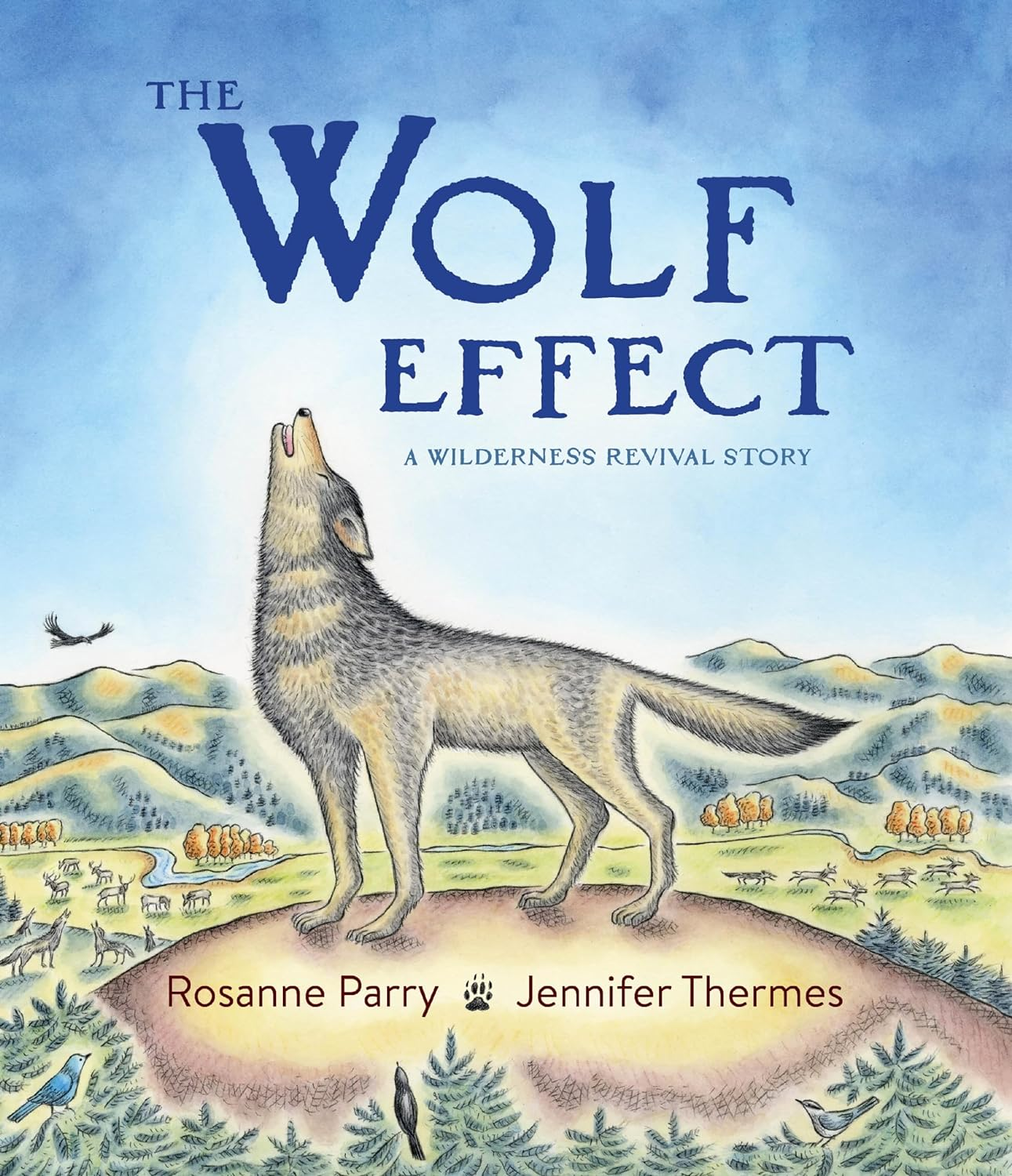
Wolf Effect: A Wilderness Revival Story by Rosanne Parry, illustrated by Jennifer Thermes (Greenwillow Books, 40 pages, grades K-4). The story of wolves in Yellowstone, from their disappearance due to hunting to their reintroduction in the 1990’s, is told with rhyming text, prose, and illustrations. The wolves’ demise is told in verses, showing farmers and rangers hunting the wolves, with newspaper headlines declaring that Yellowstone is free of them. Then the text goes into a sort of “house that Jack built” rhyme, showing the ripple effects of reintroducing the wolves on the environment, as beavers, willows, and songbirds all return to the park. Boxes of narrative text provide more details, as do the illustrations, which sometimes depict a bear and a coyote discussing the effects of the wolves’ return. Eighteen animals from the pages are shown at the end; there are also notes from the author and illustrator, as well as a glossary and a list of resources.

Animal fans will be happy to see both of these books on the library shelves, with their eye-catching covers and beautiful illustrations. Animal Superpowers will appeal to readers who like collecting interesting facts while Wolf Effect is more of a story. I found the way the latter book was written a bit confusing, and I’m not sure that rhyming verses were the best way to go, particularly from an author as knowledgeable about wolves as Rosanne Parry (A Wolf Called Wander is one of my all-time favorite animal stories). Jennifer Thermes is amazing, though, and I found the illustrations to be the main attraction of both books.

Animals, dead and alive

Life After Whale: The Amazing Ecosystem of a Whale Fall by Lynn Brunelle, illustrated by Jason Chin (Neal Porter Books, 48 pages, grades 2-5). When a 90-year-old blue whale dies on her annual northern migration, her body slowly sinks a mile before settling on the bottom of the ocean. Scavengers like hagfish and sleeper sharks, attracted by the chemicals released to this rare source of food, start devouring the whale meat. This process can go on for years until only the skeleton is left. A second stage begins with a new set of scavengers (hello, bone-eating zombie worms), who feed on the whale remains for decades. 150 years later, the bones are still releasing chemicals that feed algae, which in turn feed krill. The krill is eaten by a pregnant blue whale, thus completing the cycle of life that includes the old blue whale and the new one. Includes additional information about blue whales, ecosystems, and the four phases of a whale fall ecosystem, as well as additional resources.

This beautiful, well-written science book is sure to be a contender for the Caldecott and the Sibert awards, both of which amazing illustrator Jason Chin has won before. The information is fascinating, with descriptions of a process and animals that exist so far under the sea that scientists are just beginning to learn about them. There’s a lot of text and scientific information, which made me wonder if the book would hold the attention of younger elementary readers. If it’s too much, you can direct them to Melissa Stewart’s Whale Fall.

I Was: The Story of Animal Skulls by Katherine Hocker, illustrated by Natasha Donovan (Candlewick, 40 pages, grades 2-5). A skull says, “I was,” as the teeth, bones, holes, and cracks help tell the story of the animal it belonged to. Each two-page spread shows a skull with the voice of the animal describing part of the skull that hints at its identity. Turn the page and see the animal as it looked when it was alive. There’s a lynx, a deer, a beaver, a hummingbird, a wolf, and an owl. The last few pages celebrate the human skull, which protects the brain that allows us to understand the world around us. Includes a labeled diagram of a human skull with additional information about different parts, more information about the animals in the book and the human skull, and a few additional resources.

The large, vivid illustrations capture both the skulls and the animals beautifully. I always enjoy a book that gives kids the opportunity to guess what’s coming next, as it makes for a more engaging read-aloud. I found the premise kind of sad, though, with dead animals describing themselves when they were alive, and I wish the name of the animal had been included with the picture.

Survival of the Fittest: Who Will Come Out on Top? by Rebecca Donnelly, illustrated by Misa Saburi (Henry Holt and Co., 112 pages, grades 2-5). A reality TV show has six animals competing for the best engineering feat, with a hermit crab serving as host and three sharks judging. A chameleon, humpback whale, gecko, elephant, peacock mantis shrimp, and diabolical ironclad beetle each make a case for why it should be the winner, showing off a unique adaptation that allows it to survive. A winner is declared in the final chapter, and additional information about each animal’s “invention” is given on the last few pages.

Billed as book 1, this looks to be the start of a graphic novel series that may appeal to fans of the Who Would Win series. It’s cute and funny, with some interesting animal information, although not nearly as much as Who Would Win provides. The winner seemed like kind of a random choice, but I guess that’s more or less in keeping with the nature of reality TV.

Poetry for scientists

A Planet Is a Poem by Amanda West Lewis, illustrated by Oliver Averill (Kids Can Press, 40 pages, grades 2-5). An introduction explains that a planet is a poem, and a poem is a planet, setting the stage for the integration of science and poetry. There’s a poem for each planet, as well as for the sun (but, surprisingly, not the moon), the Kuiper Belt, Arrokoth (an object located in the Kuiper Belt), and one for future astronomers. Each poem is on a page that unfolds to a gatefold that contains additional information on both the subject of the poem and the poetic form, with illustrations that expand as well. It’s a clever concept that educates about both planets and poetry, but I’m hesitant to get this for my library, knowing how even one gatefold page tends to get destroyed pretty quickly. Back matter includes information about writing your own poem, with facts about Planet X to serve as possible inspiration; a glossary of space terms; and a list of sources and resources.

The City Sings Green & Other Poems About Welcoming Wildlife by Erica Silverman, illustrated by Ginnie Hsu (Clarion Books, 40 pages, ages 4-8). In a dozen poems, Erica Silverman describes projects around the world where a single person or small group has made a difference with conservation. Each poem is spread over two or three pages, accompanied by colorful illustrations and a paragraph describing the project. From rewilding the playground in Los Angeles to cleaning a beach and restoring a sea turtle habitat in India to creating a bee “highway” in Norway, these projects will inspire kids to find ways to make a difference. With plenty of resources in the back, this would make a great starting place for a unit on ecology that might inspire hands-on projects.

Oh! 2 books about H2O

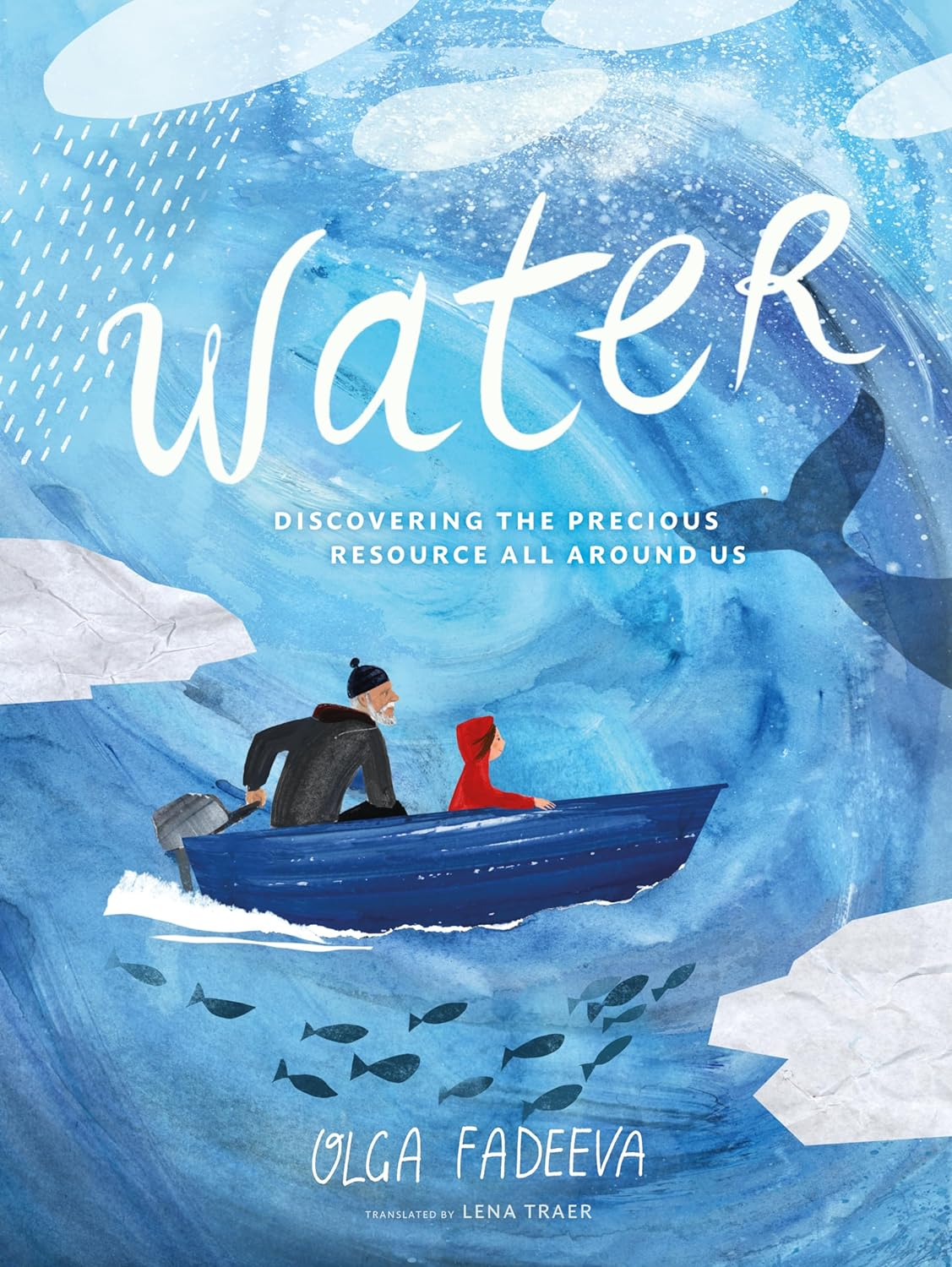
Water: Discovering the Precious Resource All Around Us by Olga Fadeeva, translated from Russian by Lena Traer (Eerdman’s Books for Young Readers, 56 pages, grades 2-5). Each spread in this book asks a question about water, covering a wide range of topics from weather to oceans to pollution. How much water is there on Earth? How do rivers form? How are seas and oceans different? How powerful is water? Each question is answered with a few straightforward, engaging paragraphs and illustrated with acrylics that emphasize the blues and browns of water. This is a fun book to browse and would make an excellent addition to any elementary unit on water, although there was a sad lack of additional resources at the end.

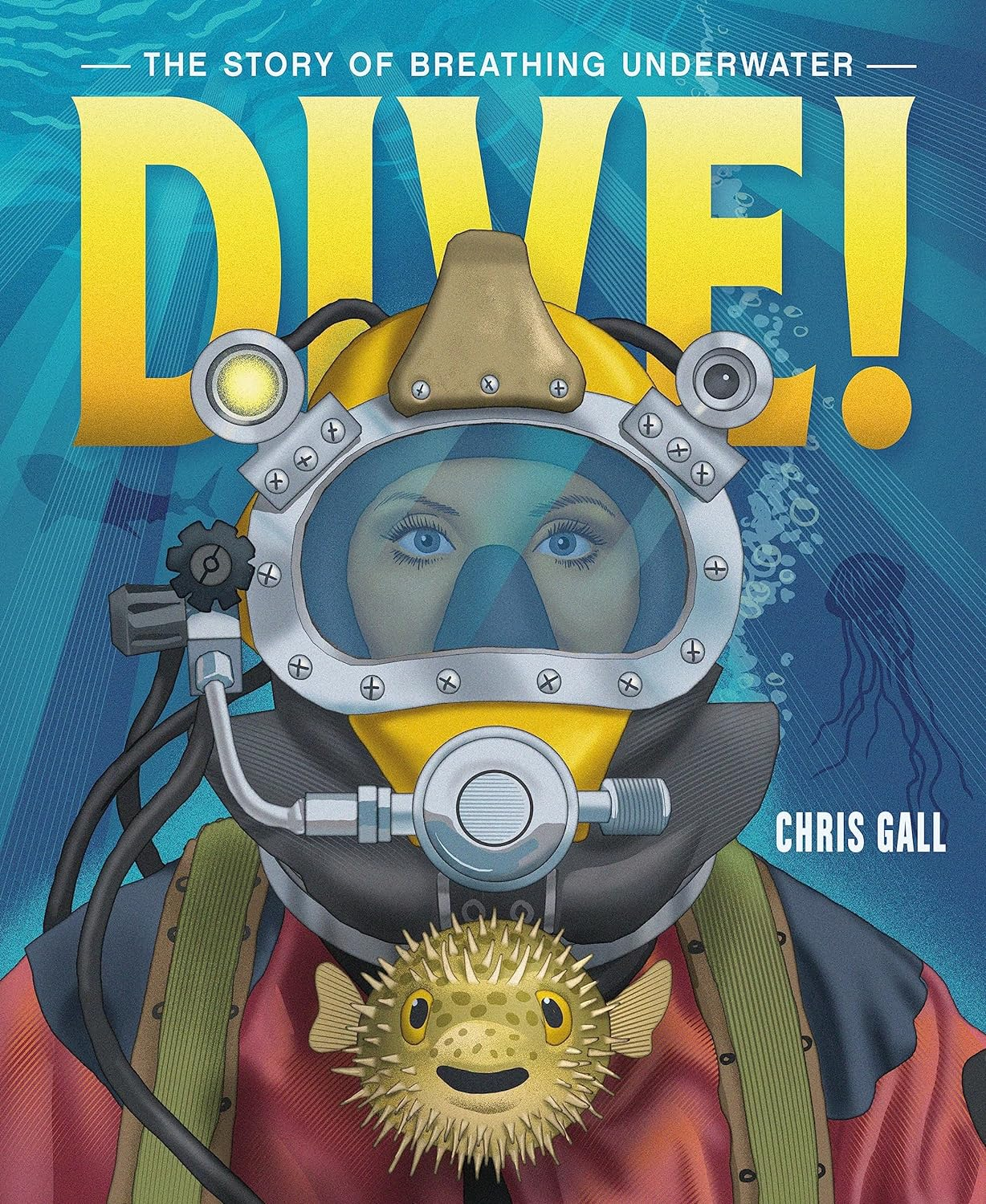
Dive! The Story of Breathing Underwater by Chris Gall (Roaring Brook Press, 48 pages, grades 1-5). As we learned in the first book, two-thirds of the Earth is covered in water, so it’s only natural that humans would seek out ways to explore the oceans. Beginning with the ancient Greeks who used hollow reeds that allowed them to breathe while harvesting undersea sponges, Chris Gall moves on to diving bells, the bathysphere, the Aqua-Lung, and robot-controlled submersibles. He also explains what happens when humans travel deep into the ocean, and the catastrophic effects returning to the surface too quickly can have. The narrative is told through a lens of problem-solving, as various inventors sought to overcome obstacles to allow divers to go deeper and explore longer. There’s more information at the end about the oceans, how to become a diver, and the author’s personal experience with diving, as well as a glossary and additional resources. Although this has the look of a picture book and is recommended by some reviewers for kids as young as 4, there’s a lot of somewhat technical information that would most likely be more interesting for older readers.

A unicorn boy and an ant girl

Unicorn Boy by Dave Ryan (First Second, 208 pages, grades 3-7). Brian leads a pretty ordinary life until the day a unicorn horn sprouts from his head. He tries to ignore, remove, or hide the horn, but there’s no getting around the fact that it’s there to say…and did I mention that the horn sings? A talking muffin turns out to be a cursed wizard who offers some help, and Brian’s best friend Avery is always a source of support, that is, until Avery is kidnapped by evil shadow creatures. Before long, Brian learns that his unicorn horn gives him superpowers, leading him on a quest to rescue Avery. There’s plenty of adventure along the way, and Avery discovers their own superpowers. The two friends look forward to additional adventures, as, no doubt, will the reader.

Ant Story by Jay Hosler (HarperAlley, 160 pages, grades 3-7). Rubi is a cartoon ant living in a colony of regular ants. She tells the other ants stories and talks to herself nonstop, but never gets to have a real conversation until she meets Miranda. At first Miranda seems to be a talking ant, but eventually they learn that she is a phorid, a parasitic insect who lays its eggs inside of ants’ heads, eventually destroying them. Despite their adversarial natures, the two become friends, and Rubi takes Miranda on a tour of the ant world, filled with dangers, adventures, and narrow escapes. The two fly off together on the last page (thanks to Miranda’s newly developed wings), hoping for a “happily ever after” life together.

Both of these are fun graphic novels that are sure to find an enthusiastic audience. As he did in The Way of the Hive, Jay Hosler brings entomology to life, portraying ants through exciting stories and a certain amount of gross-out factor that is sure to be appreciated. As for Unicorn Boy, I was literally laughing out loud all the way through, and I’m sure kids will be eagerly anticipating a sequel.