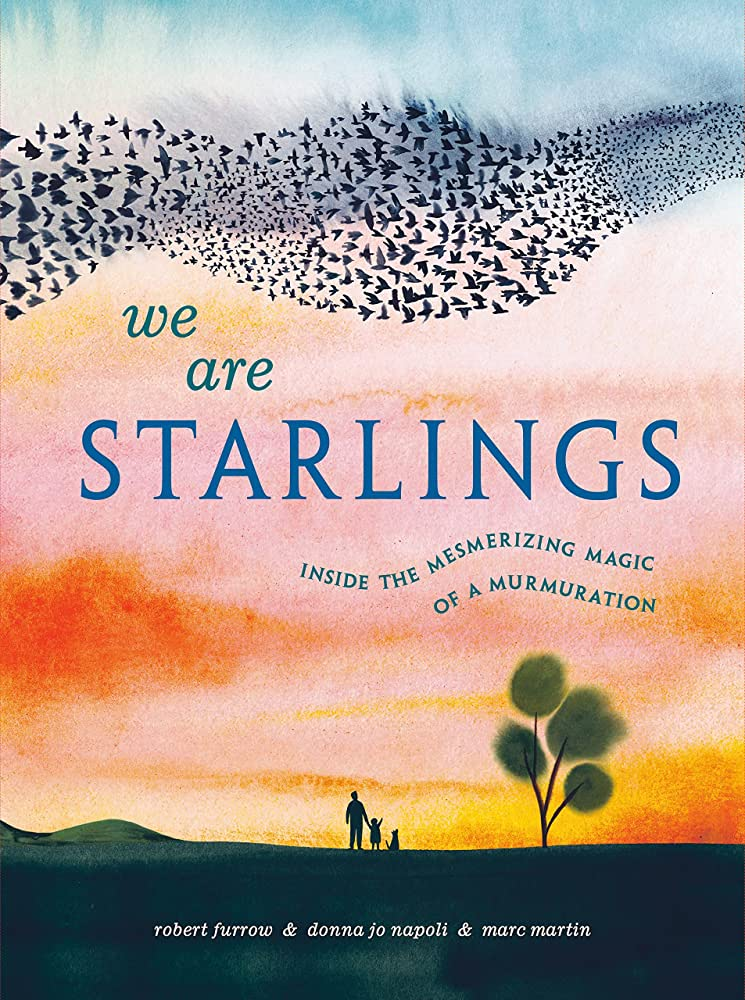
We Are Starlings: Inside the Mesmerizing Magic of a Murmuration by Robert Furrow and Donna Jo Napoli, illustrated by Marc Martin

Published by Random House Studio

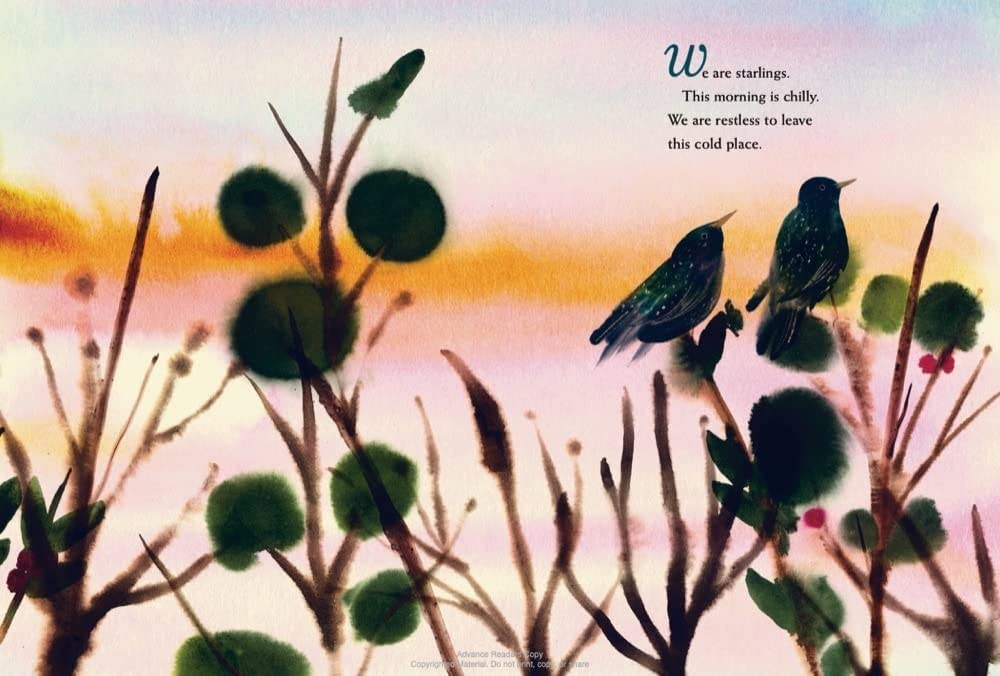
Summary:  Two starlings rest on a chilly morning, then fly away with others.  They travel for days, with more starlings joining them, until thousands of them are flying as a group, called a murmuration for the sound all those flapping wings make.  The huge flock provides warmth and protection, demonstrated when a peregrine falcon tries to attack.  After surviving that, the starlings are ready for some fun, diving and swooping in spectacular formations until they find a place to land and roost together.  Includes a two-page note about starlings.  40 pages; ages 4-8.

Pros:  The spectacular illustrations capture the movement of the murmuration, showing the black birds silhouetted against a beautiful sky at sunrise or sunset.  The poetic text gives just enough information to intrigue readers, with more offered in the note at the end.

Cons:  No additional resources.

Wings, Waves & Webs: Patterns in Nature by Robin Mitchell Cranfield

Published by Greystone Books

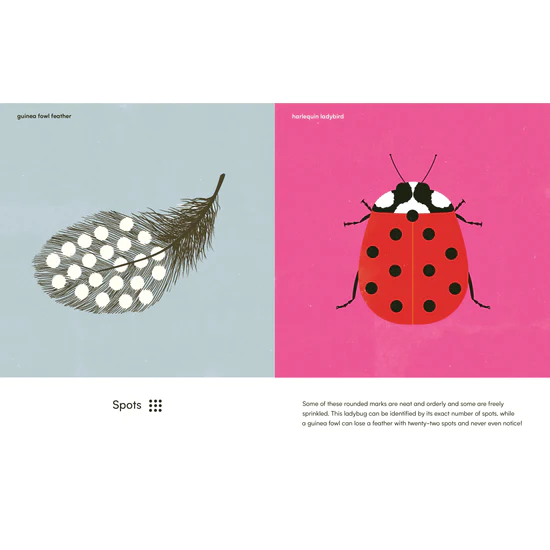
Summary:  Readers are invited to find patterns in nature, beginning with simple ones like spots (a ladybug and a guinea fowl feather) and stripes (a skunk and a sunflower seed).  The patterns become increasingly complex, moving on to mirror and radial symmetry, branching, and collective motion.  Each type is accompanied by one or two illustrations that show the pattern in nature.  The final spread of a flower garden invites the reader to look for the different patterns that have just been introduced.  36 pages; ages 4-8.

Pros:  A simple but thorough introduction to patterns that will have kids recognizing them in everyday life.  The beautiful graphics make this an eye-catching addition to STEM collections.

Cons:  I know the Oxford comma is optional, but I would have made the title Wings, Waves, & Webs.

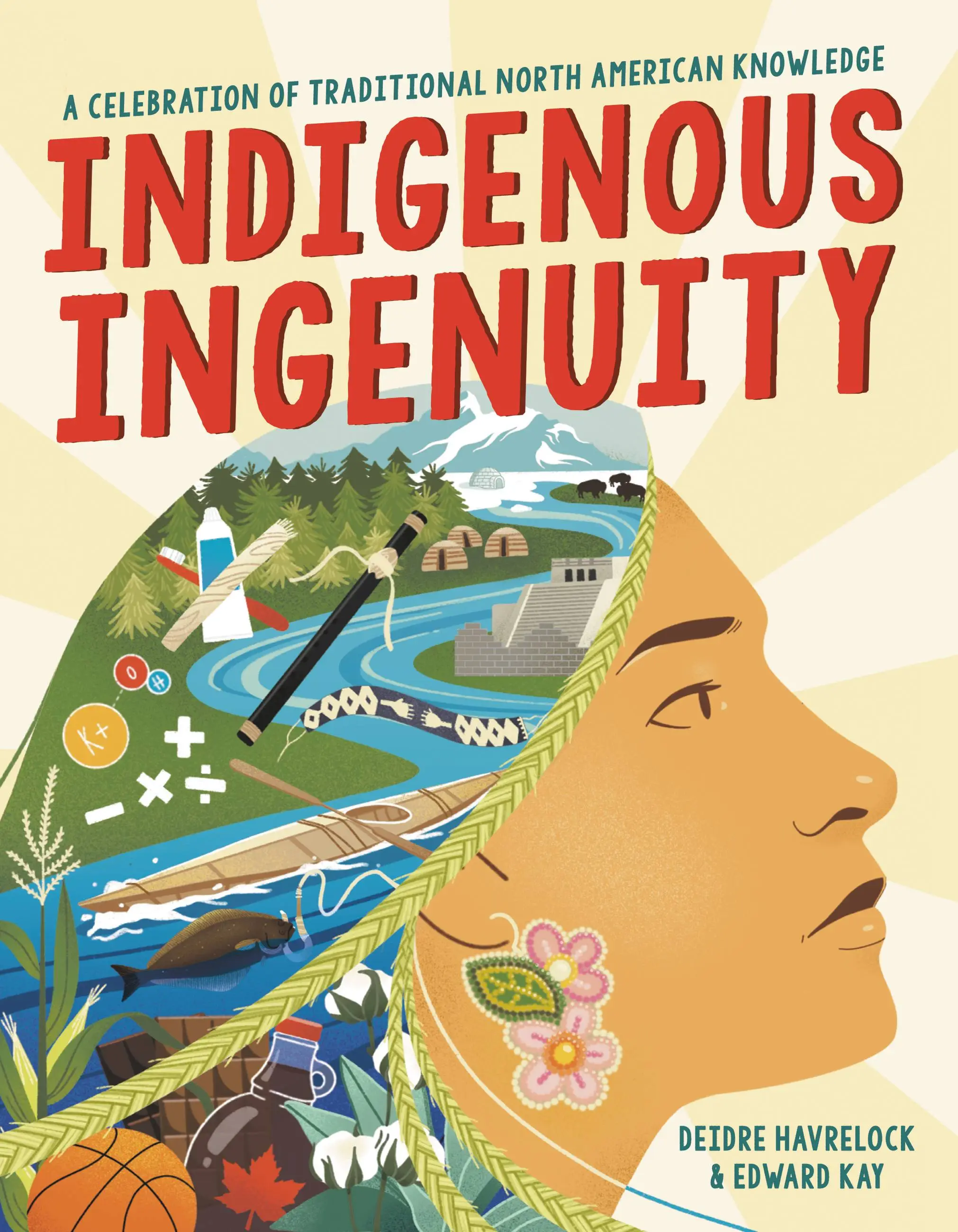
Indigenous Ingenuity: A Celebration of Traditional North American Knowledge by Deidre Havrelock and Edward Kay

Published by Christy Ottaviano Books

Summary:  Before making contact with Europeans, indigenous people had technologies to assist them with communication, transportation, agriculture, health care, and more.  While these innovations were designed to help people, they were created in ways that didn’t hurt the environment.  As their lands were increasingly taken over, they often hid these technologies, but today, as the author says, they are often hidden in plain sight: when we eat maple sugar, paddle a kayak, or marvel at astronomical wonders.  The text is divided into eleven chapters, with a final chapter that looks at how indigenous knowledge can help create a sustainable future.  Each chapter has activities to let kids try some samples of the technologies written about.  Includes a map showing cultural areas and peoples referenced, a glossary, a list of contemporary indigenous science organizations, a bibliography, source notes, and an index.  272 pages; grades 4-8.

Pros:  This meticulously researched, engagingly written book provides a fascinating look at indigenous technology, some of which we can see around us today.  Anyone curious about indigenous history or creating a sustainable future will find something of interest here, and the activities make this an excellent text to use for STEM curriculum.

Cons:  The book is pretty text heavy, with some black and white photos.  I felt like color photos and a more engaging layout would have made it more appealing to a wider audience.

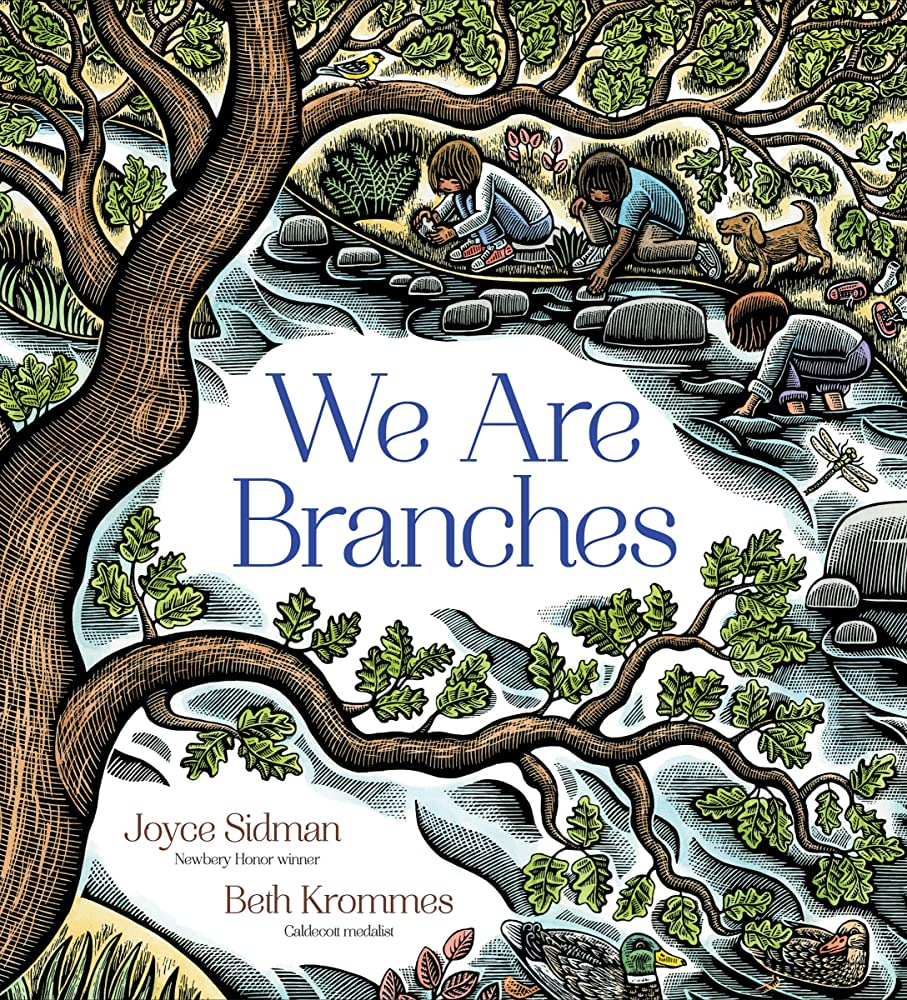
We Are Branches by Joyce Sidman, illustrated by Beth Krommes

Published by Clarion Books

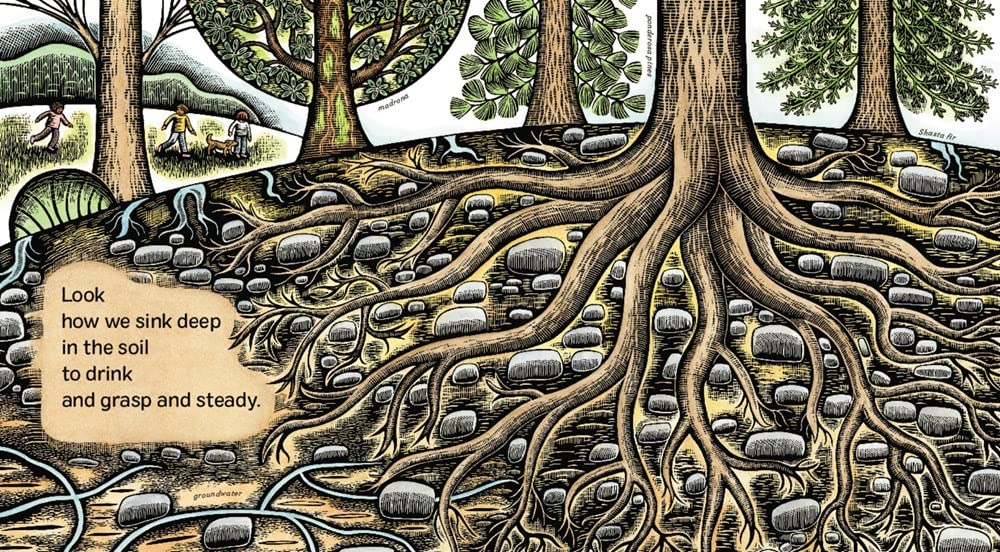
Summary:  Branches may call to mind the tops of trees, but the bottoms, their roots, also have branches.  So do rivers and bolts of lightning.  Look closely, and you’ll notice branches in coral reefs and snowflake crystals.  There are branches in bodies, too: bones that branch into fingers and the veins and arteries that allow blood to circulate.  Branches are strong and brave!  Includes additional information about branching patterns.  40 pages; ages 4-8.

Pros:  A Joyce Sidman-Beth Krommes collaboration is always a treat, with beautiful poetic language and distinctive scratchboard illustrations.  This is a great addition to STEM collections, encouraging readers to look for patterns in nature.

Cons:  The last book on patterns this team did was Swirl by Swirl: Spirals in Nature, published in 2011. I hope they’ll create another pattern book before another dozen years go by.

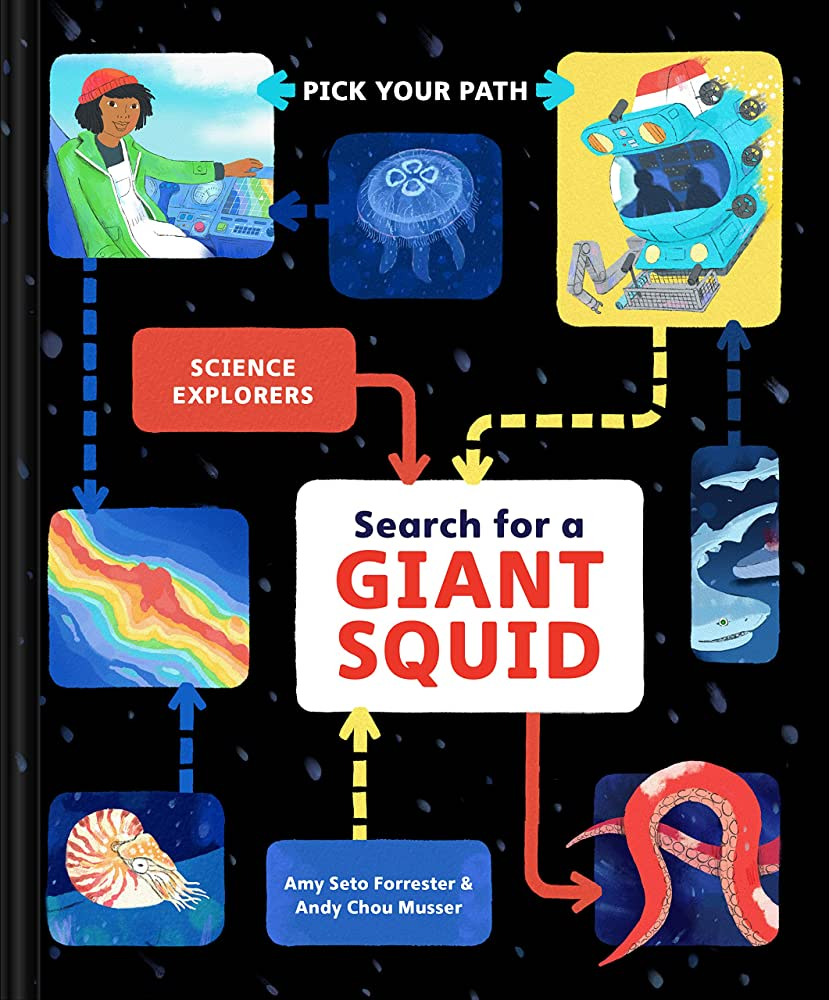
Search for a Giant Squid by Amy Seto Forrester, illustrated by Andy Chou Musser

Published by Chronicle Books

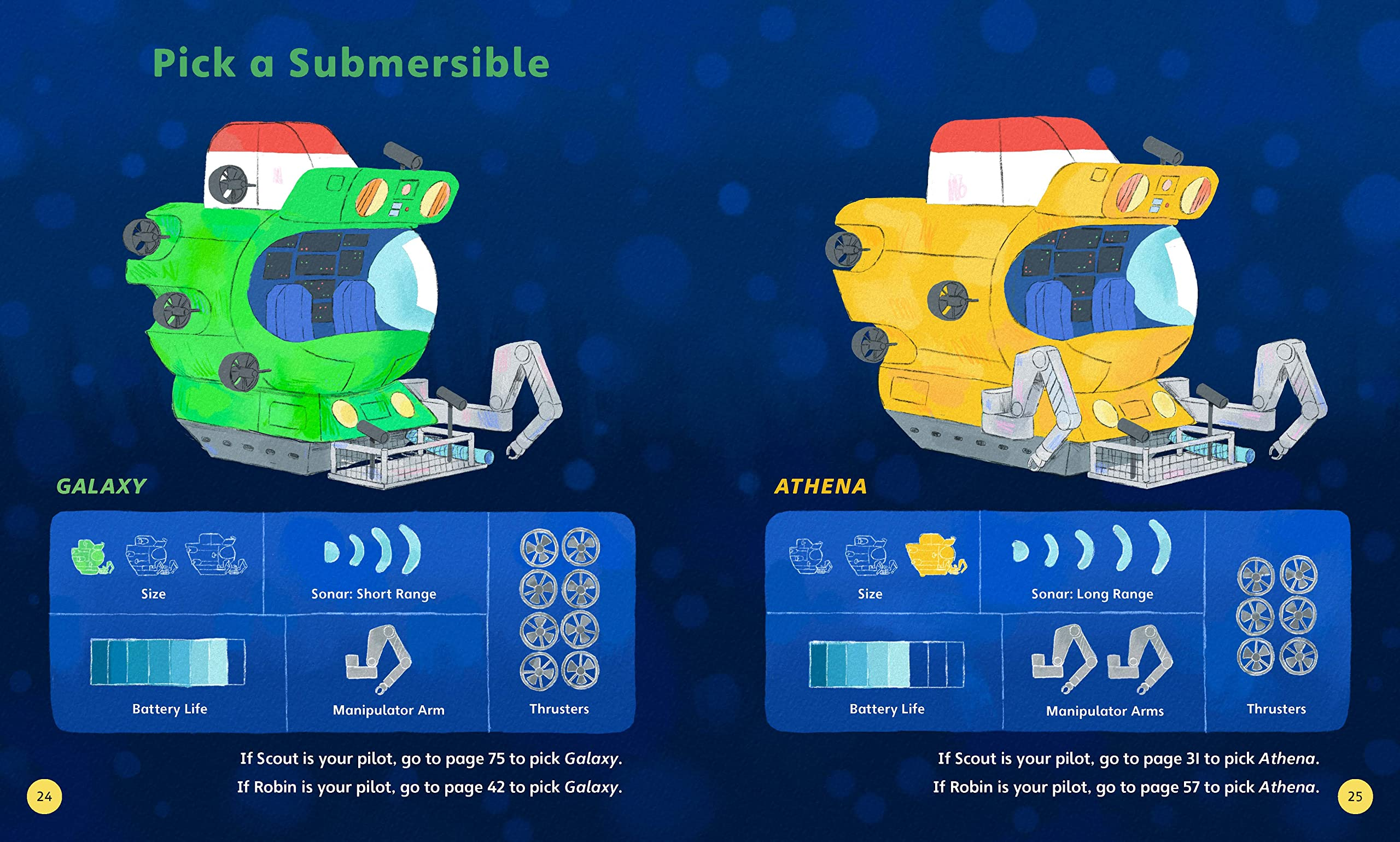
Summary:  You’re going on a scientific expedition to search for a giant squid!  Choose your team, pick your submersible, decide on a destination, and you’re off.  Each decision you make leads to a different outcome, and only one will result in a sighting of the elusive giant squid.  Along the way, you’ll learn a lot about this mysterious animal, as well as what it takes to have a successful scientific expedition–and the many things that can go wrong along the way.  Keep trying, and you’ll be able to count yourself among the lucky few who have seen the giant squid!  Includes a list of animals in the book, a glossary, a bibliography, and a list of additional resources.  96 pages; grades 2-5.

Pros:  This is a fun twist on the choose-your-own-adventure model that incorporates a lot of information about squid and science.  I hope this turns into a series.

Cons:  With 11 ways to fail and only one to succeed, I was starting to get discouraged about ever seeing that squid. 

Big Tree by Brian Selznick

Published by Scholastic

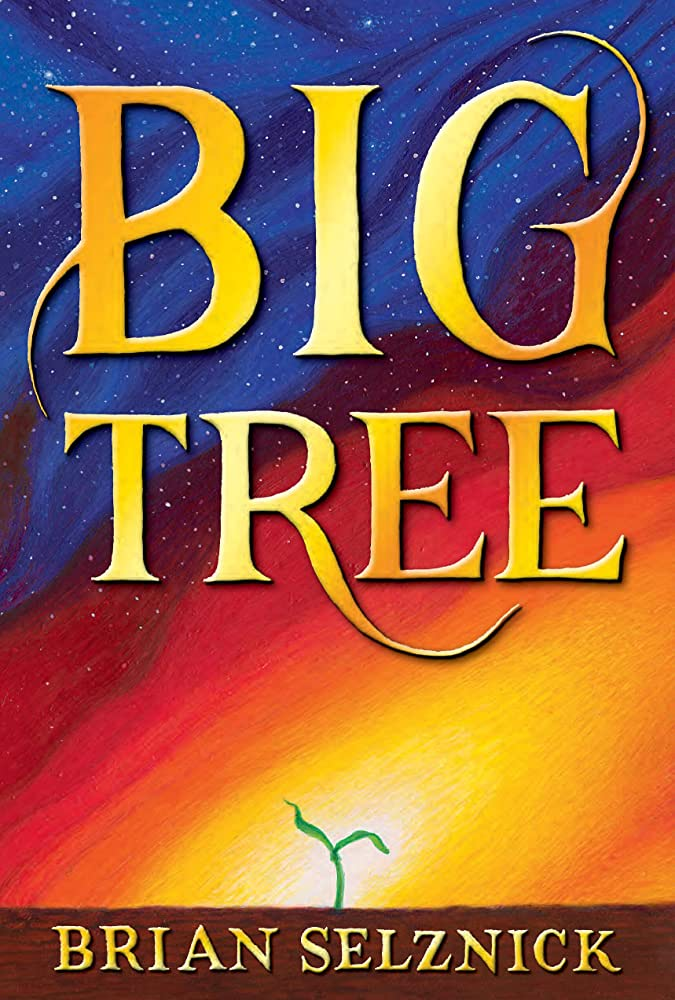
Summary:  Melvin and Louise are two seeds nestled cozily in a seedpod, secure in the love and wisdom provided by their mother, a giant sycamore tree.  A natural disaster flings them into the world, where they travel over land and sea, meeting all kinds of wise and wonderful creatures.  While their mother sought to give them both roots and wings, imaginative Louise is filled with wonder and hope, while Melvin is bound by his worries and fears.  When the two are separated, Melvin finds himself trapped for many, many years, never forgetting his sister.  Eventually he learns the lessons of the universe that Louise already instinctively knew, and the two meet again in a wondrous reunion.  Includes an afterword that explains some of the scientific references, a bibliography, and an author’s note that tells how the story came to be.  528 pages; grades 3-7.

Pros:  Brian Selznick has created a masterpiece of prose and art in the style of his previous books.  This book was inspired by a movie idea that Steven Spielberg had, looking at the history of the Earth from the perspective of nature itself.  It is a wildly creative and ambitious story that includes dinosaurs, volcanoes, meteors, dinosaurs, mushroom ambassadors, and so much more.  

Cons:  Readers might need some guidance to understand all that is going on during this long period of Earth’s history.  The back matter is a useful guide for this.

A Girl Can Build Anything by e. E. Charlton-Trujillo and Pat Zietlow Miller, illustrated by Keisha Morris

Published by Viking Books for Young Readers

Summary:  Girls and women in these pages learn to build increasingly larger, more complex objects.  First, it’s a box or birdhouse, then they move on to designing a trellis, a table, and a treehouse for a new playground.  There can be setbacks when projects don’t go as planned, but taking a break and starting again can get you where you want to go.  By the end, a team of women has created a new building at the entrance of the playground.  32 pages; ages 4-8.

Pros:  The cheery text and illustrations provide an empowering introduction to get girls (and boys) excited about learning to use tools and building their own projects.  

Cons:  That it still seems like something of a novelty for girls and women to be using tools and building things.

The Book of Turtles by Sy Montgomery, illustrated by Matt Patterson

Published by Clarion Books

Summary:  Naturalist Sy Montgomery writes engagingly about turtles, starting with descriptions of their anatomy and evolution.  She describes turtle species who hold the records for most colorful, stinkiest, fastest, largest, and more.  There are celebrity turtle profiles and information on how turtles communicate.  Turtles, protected by their shells, have survived for more than 200 million years, but now many species are endangered due to human activities.  The final few pages tell readers different ways they can help them survive.  Includes a glossary, bibliography, and list of resources.  40 pages; grades K-4.

Pros:  Montgomery has a knack for focusing on facts and information that will be of most interest to readers.  The acrylic paintings look almost like photos and show incredible details of a wide variety of turtles.  Kids who already love turtles will be thrilled, and others may become fans after reading this book.

Cons:  I wish this book had been around during my daughter’s decade-long obsession with turtles.

How the Sea Came to Be (And All the Creatures In It) by Jennifer Berne, illustrated by Amanda Hall

Published by Eerdmans Books for Young Readers

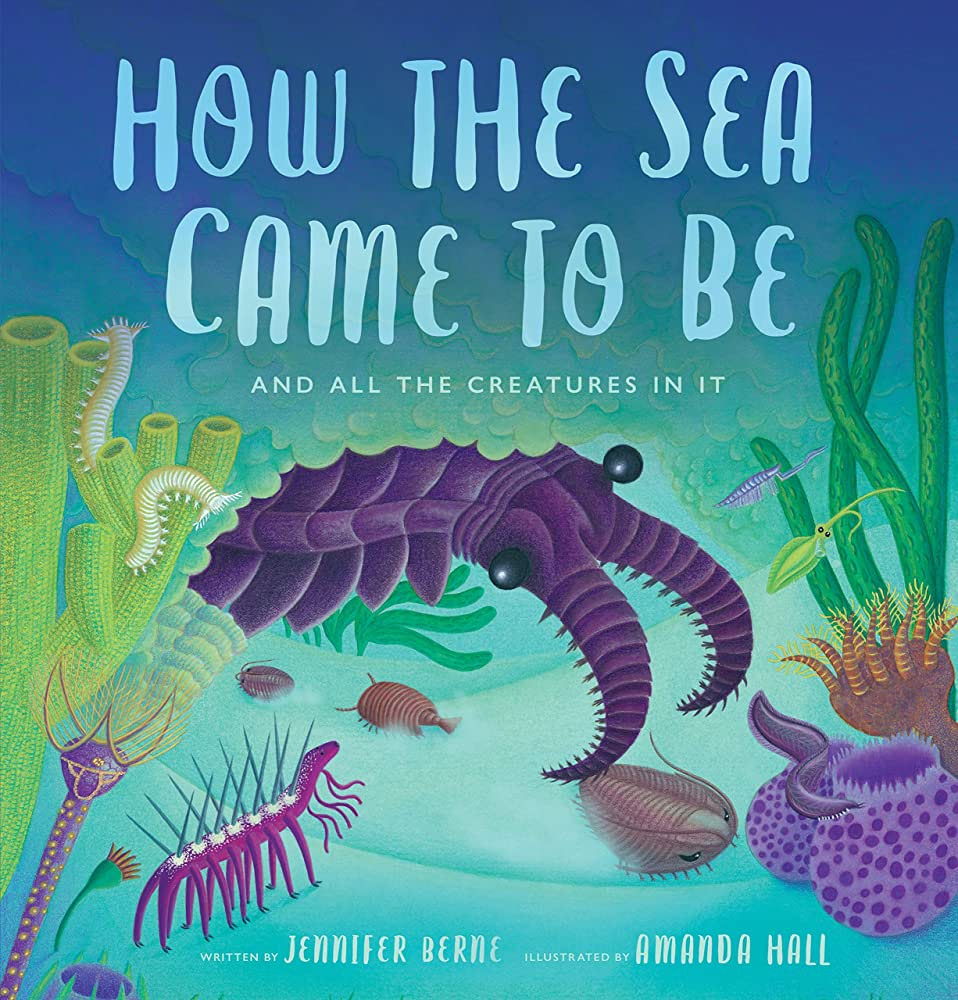
Summary:  Rhyming quatrains describe the history of the sea in three parts: the birth of the sea, the birth of life, and the sea from then until now.  All are accompanied by colorful illustrations that sometimes show the sun-dappled waters of the sea and other times take readers down into the black ocean depths.  Includes notes from the author and illustrator; two pages of ocean creatures that include illustrations and a paragraph of information about each; a four-panel gatefold timeline showing seven eras of the Earth’s history; key terms and concepts with definitions; and two pages of additional resources. 56 pages; grades 1-5.

Pros:  A spectacular nonfiction book that should be considered for a Sibert award.  The rhyming text is both catchy and impressive, making this a great choice to read aloud, and the illustrations are truly spectacular, conveying both the powerful forces that created the seas and the incredible diversity of life within them.  The timeline is a masterpiece, and the rest of the back matter makes this an excellent resource for research.

Cons:  I would have liked the timeline to have also been incorporated into the text to show the eras of each of the three parts.

Behold the Octopus! By Suzanne Slade, illustrated by Thomas Gonzalez

Published by Peachtree

Summary:  The amazing octopus is introduced in a series of two-page spreads, each one portraying a different species of octopus with a verb (hunting, changing, graphing) or adjective (luminous, dangerous) and a paragraph of information inspired by that word.  Includes additional information about octopuses, several photos, a list of resources, and a bibliography.  32 pages; ages 4-8.

Pros:  This visually appealing book makes an excellent octopus introduction for preschoolers but provides enough information and back matter to make it a good research resource for older kids. Fans of the Candace Fleming/Eric Rohmann books, especially Giant Squid, will want to check this out.

Cons:  The last two very cool-looking octopuses in the photos at the end aren’t identified.