Some suggestions for the first weeks of school

Sometimes We Fall by Randall de Sève, illustrated by Kate Gardiner (Random House Studio, 40 pages, ages 3-8). A young bear looks worriedly at his mother enjoying plums up in a tree. “What if I try and I miss?” asks the cub as he contemplates leaping. “Sometimes we try and we miss. It’s okay,” his mother reassures him. This pattern repeats as the cub starts climbing the tree, voicing his anxieties, which are soothed by his mother. Finally, he crawls out onto a branch for the plum, the branch breaks, and the worst happens: he falls. But it really is okay, because the plum falls too, and one taste is enough to motivate the cub to try again. An excellent lesson for preschoolers or kindergarteners about persevering. The mother is a good model for letting her child try and fail and try again, and as a bonus, both bears are adorable.

We Are Definitely Human by X. Fang (Tundra Books, 48 pages, ages 4-8). When something crashes outside Mr. and Mrs. Li’s house one night, Mr. Li investigates and finds three strange creatures. “We are DEFINITELY human,” they tell him, despite evidence to the contrary. Mr. Li is a kind human, and he gives the creatures a place to sleep and a promise that he’ll help them repair their vehicle in the morning. When morning comes, the Lis take the visitors into town, where other kind humans help them get what they need. Before long, there’s a party at the Lis’ house, and Mr. and Mrs. Li explain about food and dancing to the creatures. Finally, the “car” is fixed, and the creatures head off to space. “But wherever they went, they would remember kind humans and do what kind humans do–offer help to those in need.” A fun way to start classroom discussions about kindness and community while keeping things light. For an out-of-this-world theme, you could follow up with reading Dalmartian and/or The First Week of School.

Round and Round the Year We Go by Carter Higgins (Neal Porter Books, 48 pages, ages 4-8). Rhyming text and collage illustrations take readers month by month through the year. Pages inserted after February, May, August, and November introduce the change of seasons (with the name of the season in a bold font) with a simple rhyme, “rainy waiting/shady spring/round and round the year we swing.” A final two page spread summarizes the year: “some things change/and some do not/let’s play with all the time we’ve got/summer, spring, and winter, fall/round and round for one and all.” Reminiscent of an Eric Carle book, but with catchier text, using collage illustrations to introduce a concept. Although it’s the calendar year and not the school year, this would be a nice book to share with kindergarteners or first graders in the early days of school.

I’m Sorry You Got Mad by Kyle Lukoff, illustrated by Julie Kwon (Dial Books, 32 pages, ages 4-8). The title of the book is also Jack’s first attempt at a note apologizing to Zoe for knocking over her block castle. Made up entirely of the drafts Jack writes with his teacher’s coaching, the story traces Jack’s gradual movement from an angry “I’m sorry,” to a more nuanced explanation of his behavior (a couple of other boys told him castles were for girls, so he didn’t get to help Zoe build hers). A few pages from the end, Jack finally gets his apology right and hands the note to Zoe. Zoe responds with one of her own, and by the last page, the two friends are working on a new castle together. Perfect for starting discussions about what makes a real apology, the letters and illustrations also capture the kids’ emotions and show how a teacher can make a difference in helping them sort out and express their feelings.

There’s a new kid in school

Home in a Lunchbox by Cherry Mo (Penguin Workshop, 40 pages, ages 4-8). Jun is a new arrival from Hong Kong, facing her first day of school knowing only a few words (hello, thank you, I don’t know) that she’s written on her hand with the Cantonese translations. She tries her best but struggles with assignments and saying the wrong thing that causes her classmates to either laugh at her or ignore her. At lunchtime, the foods in her lunchbox bring back happy memories with her family and friends in Hong Kong, and it’s ultimately food that connects her with the other kids. A girl from her class has been quietly observing Jun, and one day she says hello and tells Jun that her lunch looks good. Soon, all the kids are trading food, and Jun learns the names of several other kids. The last page shows Jun bringing home those kids, and her mom preparing a snack for them that includes some of the family’s traditional foods and the pizza Jun enjoyed in the cafeteria. Includes a table showing the words from Jun’s hand in English and Cantonese and a labeled diagram (in English and Cantonese) of the food in her lunchbox.

Ruby’s Tools for Making Friends by Apryl Stott (Simon and Schuster/Paula Wiseman Books, 40 pages, ages 4-8). Ruby’s new at school, but she’s packed a bag full of tools designed to help with her anxieties. Her tape measure reminds her to count her breaths, pliers help her stay flexible, and safety goggles show her a new way of looking at the world. Her new school is a unique blend of people and animals, and Ruby is excited to be on a team with two humans and a goose, designing a holder for an upcoming egg drop. Working with others can be a challenge, though, and Ruby uses her tools to help her stay calm, focused, and confident enough to speak up when she has an idea. Their project wins the class competition and moves on to a schoolwide egg drop. As the principal gets ready to test the various designs on the playground, Ruby realizes she’s left her tools in the classroom, but she’s able to visualize them when she starts to worry. Although their egg ends up breaking, her new friends assure Ruby that she had a good idea, helping her to feel happy and excited to work on a new project.

Sister Friend by Jamila Thompkins-Bigelow (Harry N. Abrams, 40 pages, ages 4-8). Every day is a “play-by-herself” day for Ameena, who’s the only kid in her class with brown skin and twists in her hair. One day, a new girl named Sundus comes to class, and Ameena is excited to see that she has brown skin and that she wears hijab, meaning she’s Muslim like Ameena. After a series of missteps, Ameena sees Sundus at masjid one night when she’s there with her family. Her mother greets Sundus’s mother, “Assalamu Alaikum [peace be upon you], Sister. Welcome!” The next day at recess, when Ameena sees Sundus, she finally knows what to say and gives the new girl the same greeting her mother used the night before. That’s all it takes to reach out to Sundus, and before long, the two girls are the best of friends.

Here are a few more books that may come in handy at the beginning of the school year, especially if there are new kids starting in a class that’s been together for a while. All three would make good prompts to talk about ways to welcome new students and how to bridge differences in culture and/or language (and also good reminders for teachers, who for the most part seemed completely oblivious to the struggles going on in their classrooms.) Ruby offers some suggestions about handling the anxiety that can come from being a new kid (and Abbott Elementary fans may get a chuckle from the egg drop activity). If I had to pick a favorite, it would be Home in a Lunchbox, a debut that has illustrations worthy of Caldecott consideration, and that reminded me of one of my favorite books for sharing, Gibberish, another almost wordless book that shows what it’s like to start in a school where you don’t know the language, and the importance of that one kid who reaches out.

Life lessons from this year’s Newbery Medal team

I haven’t had the chance to express how thrilled I was that the 2024 Newbery Medal went to The Eyes and the Impossible, which was written by Dave Eggers and illustrated by Shawn Harris. Apparently, these two are not ones to rest on their laurels, as each of them has a new picture book this month.

Soren’s Seventh Song by Dave Eggers, illustrated by Mark Hoffmann (Harry N. Abrams, 56 pages, grades 2-5). Soren is a humpback whale teenager (or the equivalent of that in whale years) who hates the long, droning songs the adult whales sing. After much trial and error, he comes up with his own song, but when he performs it for his peers, they’re not impressed. One even vomits into his underarm (underfin, actually). Does Soren give up? No. He takes the feedback, particularly from his very blunt friend Hans, and makes revisions. Seven revisions, to be exact. And as he travels through the sea singing his seventh song, he notices that the lobsters are grooving, seaweeds are swaying, and barracudas are boogeying. Soren’s hard work finally pays off, and his seventh song becomes the hit whale song of the year.

Although the narration is third person, it reminded me of Johannes’s voice in The Eyes and the Impossible: funny and wise at the same time, with enough confidence to keep going despite multiple setbacks. It’s kind of a long tale, what with the seven songs and all, but I’m still considering reading it to the tough audience of fifth grade. If they don’t vomit into their underarms, I’ll consider it a win.

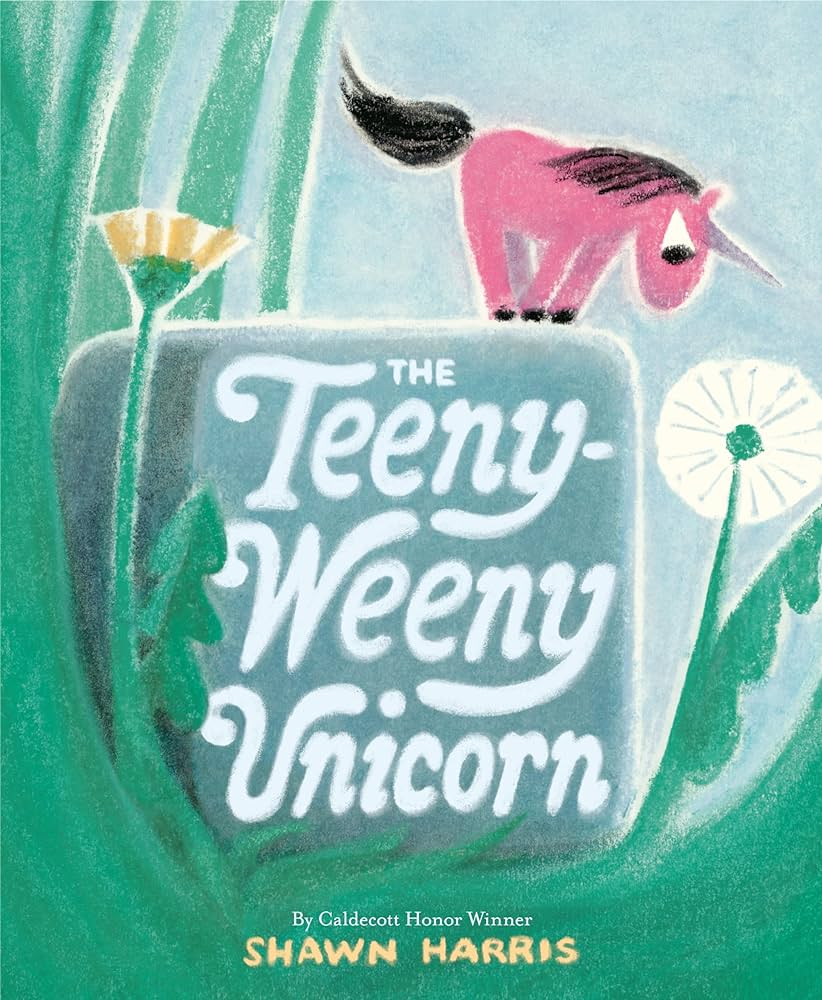
The Teeny-Weeny Unicorn by Shawn Harris (Knopf Books for Young Readers, 48 pages, ages 4-8). The titular unicorn is sort of the Stuart Little of the unicorn world, significantly smaller than the rest of his family. His much larger siblings use him as a piece in their chess games and make fun of his attempts to cannonball into the moat. Tired of their mocking, he runs off into the lawn, where he eventually comes face to face with an angry gnome. It turns out the teeny-weeny unicorn is much bigger than the gnome, and accidentally put his hoof through the gnome’s expensive sports car. Fortunately, the unicorn family is able to make things right, and readers learn an important lesson: We are all teeny-weeny. We are all giant. And we are all just the right size.

Who can resist a unicorn? Kids will love this story for sure, and Shawn Harris’s illustrations add to the fun. Dave Eggers and Soren teach us to be persistent, and Shawn and the teeny-weeny unicorn offer a lesson in self-acceptance.

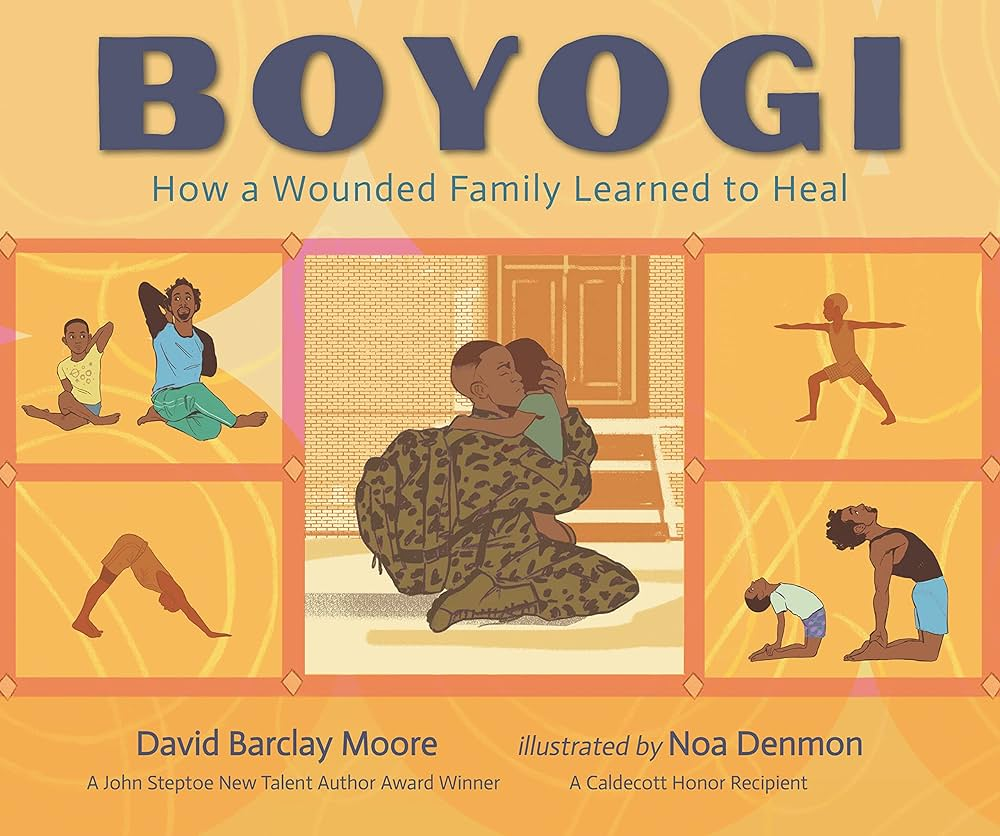
Boyogi: How a Wounded Family Learned to Heal by David Barclay Moore, illustrated by Noa Denmon

Published by Candlewick

Summary:  A family is struggling after the father comes home from a stint in the military.  Dad is silent, prone to nightmares, and easily angered.  Mom explains PTSD to their young son (the narrator): “When Daddy was away, some bad things happened…Those bad things harmed his mind.”  One day, the family goes to the YMCA, where Mom and Dad take a yoga class while the boy watches.  Before long, father and son are going every week, gradually getting better at the poses in the class, and Dad makes up the name boyogi for his son.  He tells his son that between yoga and therapy, he’s doing a lot better, making the boy feel happier as well.  32 pages; ages 4-8.

Pros:  An excellent kid-friendly introduction to both yoga and PTSD, with great digital illustrations of lots of yoga poses that kids will want to try.  

Cons:  Some additional information on PTSD and the benefits of yoga would have been a good supplement.

Mole Is Not Alone by Maya Tatsukawa

Published by Henry Holt and Company

Summary:  Mole wakes up to the realization that today is Rabbit’s moon harvest party, and he has to make the torturous decision about whether or not he’s going to go.  He decides to bring some homemade cream puffs, then sets off through tunnels that go under the town.  Readers can see other animals traveling to the party aboveground, while Mole goes back and forth between encouraging himself to talk to other party guests and recalling how awkward previous social gatherings have been.  He wants to push himself to be better, but as he approaches Rabbit’s house, he starts to think he should have stayed home.  At the front door, he meets Skunk, a kindred spirit who is also debating whether or not he’ll go inside.  Rabbit invites them in, but the two hand off their gifts and head for Mole’s place, where they enjoy a quiet cup of tea together.  40 pages; ages 4-8.

Pros:  Socially anxious introverts of the world, unite!  Rarely has a book spoken to me quite this accurately, as I recognized almost word for word Mole’s internal dialog while he overthought going to a party.  The underground illustrations are adorable, and I was delighted that Mole found a true friend at the end.

Cons:  I wish this book had been around in my younger days.

Two books about mindfulness

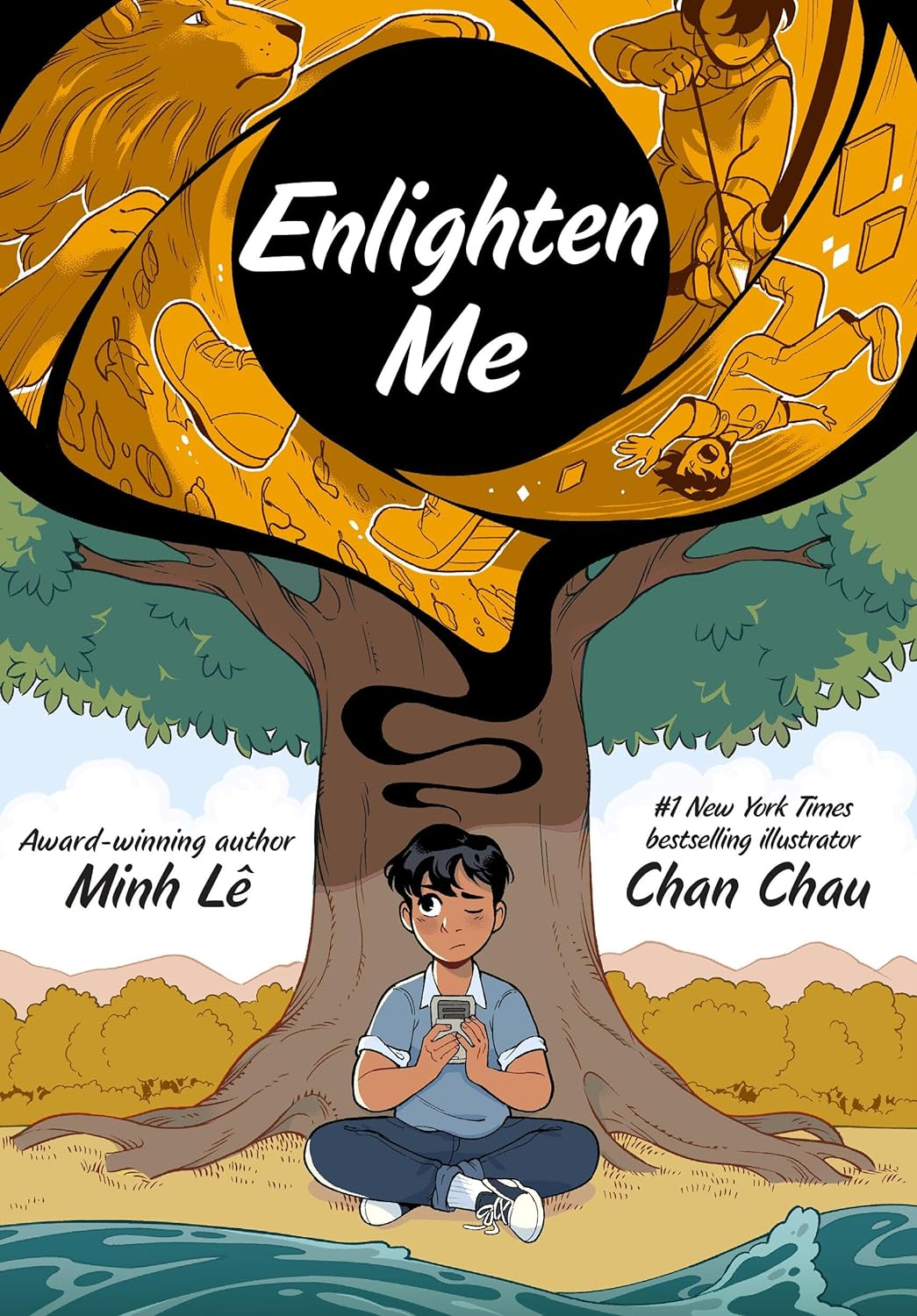
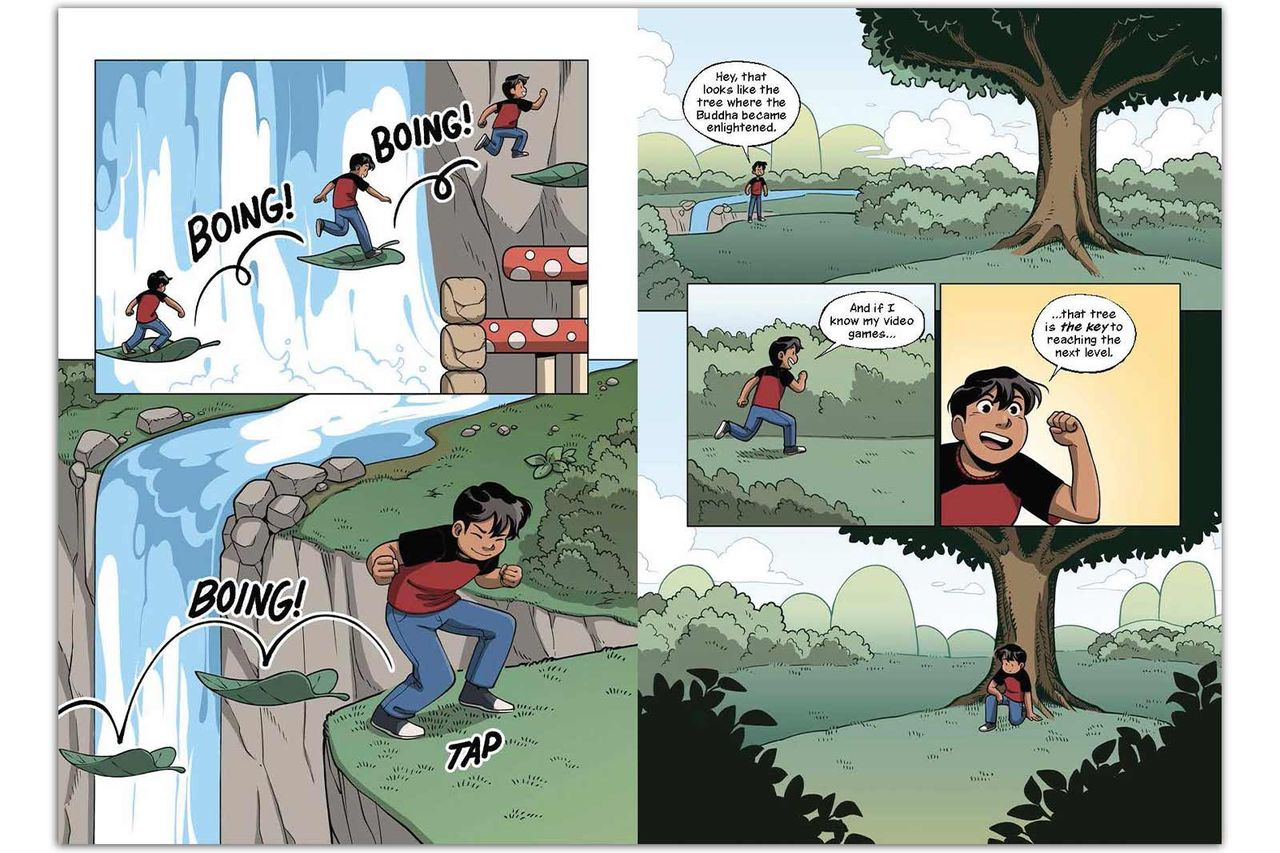
Enlighten Me by Minh Lê, illustrated by Chan Chau

Published by Little Brown Ink

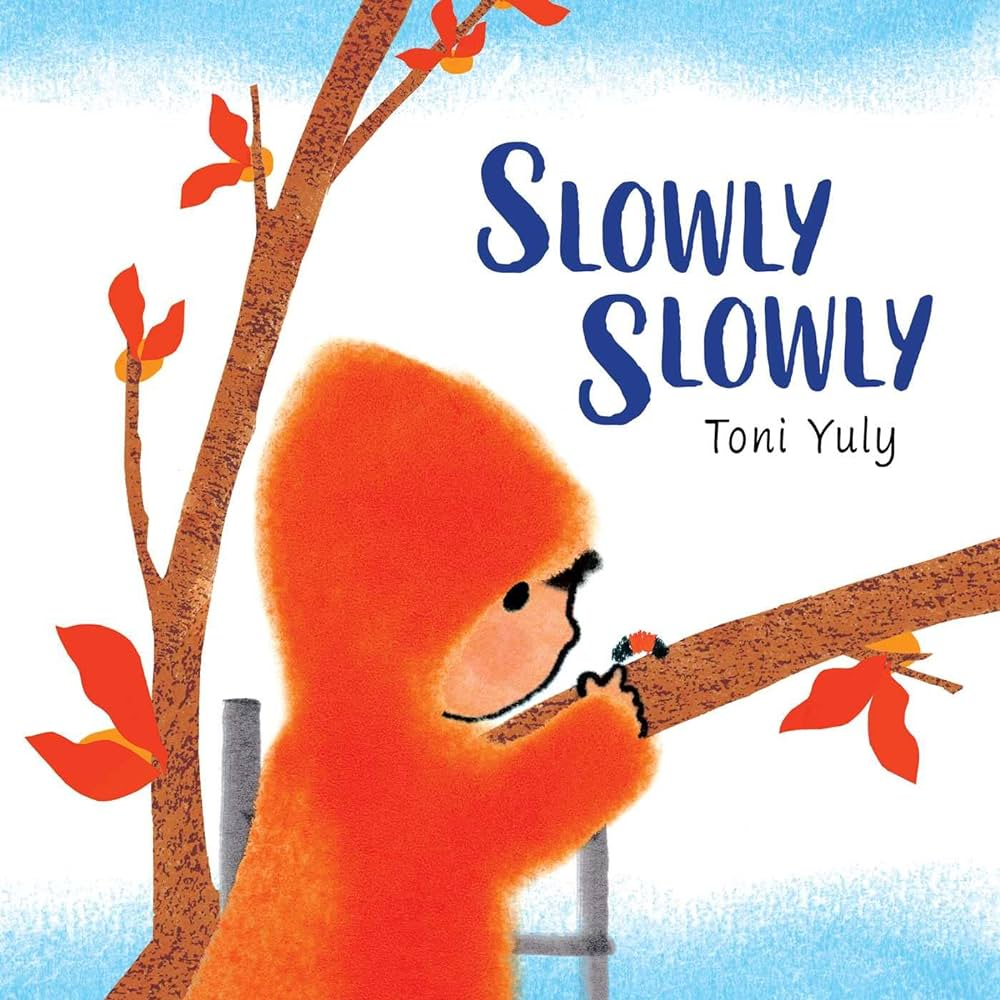
Slowly Slowly by Toni Yuly

Published by Atheneum Books for Young Readers

Summary: Binh and his family are off to a silent Buddhist retreat in Enlighten Me. During meditation times, Binh struggles with a recent memory of racist bullying at school. When he fought back, he ended up being the one to get in trouble. In between meditation sessions, a monk named Sister Peace shares stories about the Buddha with the kids that teach Binh some lessons about dealing with his issues. Those issues don’t get resolved, but by the time the family is heading for home, it’s clear that Binh is seeing things in a new light.

“When you slow down…you see more,” begins Slowly Slowly, as a child and dog explore the natural world. They observe winter turning to spring, and a persimmon tree slowly, slowly, slowly, slowly, slowly, slowly, slowly, slowly makes persimmons. With each page of “slowly”, readers can look for other changes going on in the child’s world. Enlighten Me is 140 pages; grades 4-7; Slowly Slowly is 40 pages; ages 4-8.

Pros: Both books focus on mindfulness through beautiful artwork and kids’ experiences. Minh Lê uses Binh’s story and love of video games to tell some tales of the Buddha while offering some kid-friendly insights Binh has about meditation and enlightenment. Readers of Slowly Slowly will want to take the time to notice all that is happening in the busy yet peaceful illustrations and to reflect on how slowing down can help us notice the world around us.

Cons: Both books are pretty spare, offering more of an opportunity for reflection than a fleshed-out story.

An Ofrenda for Perro by Judith Valdés B., illustrated by Carlos Veléz Aguilera

Published by little bee books

Summary:  Benito is devastated to lose his dog Perro, who has been his companion since he was born.  As his family gets ready to celebrate Día de Los Muertos, Benito is slowly drawn into the preparations.  His father explains that the holiday isn’t a celebration of the dead, but of the love they have for those who have passed.  His mother shows him that her memories of her great-grandfather mean that he’s not really gone.  When Benito finds Perro’s ball, he is able to smile at his memories of his beloved dog, realizing that his memories will always be with him.  Includes an author’s note with additional information about Día de Los Muertos and a glossary. 32 pages; ages 4-8.

Pros:  A great resource for Día de Los Muertos, or for anyone who has lost a pet, with explanations that kids will understand and relate to, and beautiful illustrations inspired by the holiday.

Cons:  I couldn’t help thinking that Perro (Spanish for dog) deserved a slightly more imaginative name.

Remembering by Xelena González, illustrated by Adriana M. Garcia

Published by Simon and Schuster Books for Young Readers

Summary:  The narrator is grieving the loss of her dog.  As she and her family remember him, she gathers his favorite things to create an ofrenda, or offering, for him.  Each photo she looks at reminds her of a time she and her beloved pet shared. She makes his favorite meal and pours him a bowl of water.  When everything is ready, the family celebrates their dog together on Día de Muertos.  Includes notes from the author and illustrator about the loss of their pets and additional information about Día de Muertos and how to make an ofrenda.  40 pages; ages 4-8.

Pros:  I’m adding this beautiful book to my list about grief and loss.  The simple text and realistic illustrations capture the bittersweet experience of grieving the loss of a pet and provide an excellent introduction to Día de Muertos.

Cons:  Keep the Kleenexes handy.

Ways to Play by Lyn Miller-Lachmann, illustrated by Gabriel Alborozo

Published by Levine Querido

Summary:  When Bossy Older Cousin Violet comes over, she doesn’t hold back in her opinion: Riley is playing with toys the wrong way and needs to be shown the right way.  Riley can play all day with a pile of newspapers, and instead of having dolls and stuffies to a tea party like Violet does, Riley likes to line them up by size.  Riley creates art by sharpening crayons and making little spirals with them.  Fortunately, Riley’s dog Charlie is more understanding than Violet is, and all the kids enjoy playing fetch and running around the yard with him.  “See,” Riley tells Violet, “There are lots of ways to play with toys.  And everyone’s way is the right way.”  Includes an author’s note about her personal childhood experiences, similar to Riley’s, and how she got some answers when she was diagnosed with autism as an adult.  32 pages; ages 4-8.

Pros:  A charming story that will appeal to many kids, both those who are neurodivergent and those who simply enjoy doing their own thing.

Cons:  Cousin Violet.

Two books about self-acceptance

Greenlight by Breanna Carzoo

Published by HarperCollins

Hidden Gem by Linda Liu

Published by Henry Holt

Summary: Two unconventional narrators discover their own value. Greenlight doesn’t like the fact that the cars slow down for Yellowlight, stop for Redlight, but speed through Greenlight, seeming to ignore it. Taking a break for a few minutes, with closed eyes and some affirmations repeated, Greenlight starts to see its own value and is ready to shine bright. In Hidden Gem, an ordinary rock can’t help comparing itself unfavorably when it goes to a museum exhibit of gems. But with the help of a spectacular diamond, the narrator comes to realize that every rock is special in its own way. 32 pages (Greenlight) and 40 pages (Hidden Gem); both ages 4-8.

Pros: With school starting up again, teachers and counselors will be looking for books like these that incorporate humor and striking illustrations (especially in Hidden Gem) to give kids some strategies for feeling good about themselves and accepting others for what they are.

Cons: Both books seemed to prioritize the message over the story.