Being a Dog: A Tail of Mindfulness by Maria Gianferrari, illustrated by Pete Oswald

Published by HarperCollins

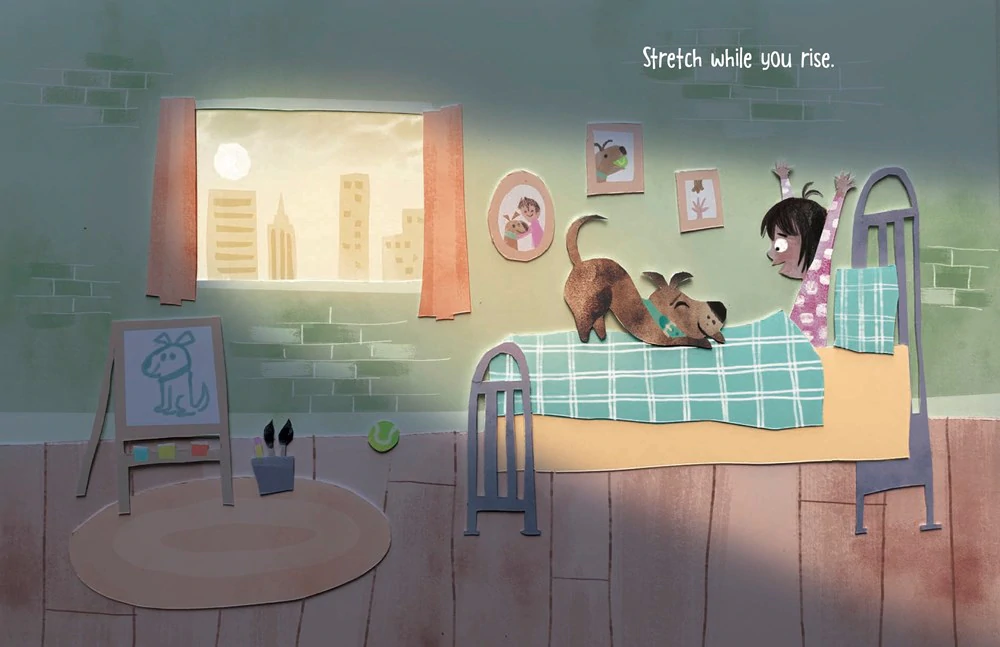
Summary:  Can you be like a dog?  Dogs are always in the present, not the past or the future. They stretch when they wake up, then greet the day and the people they love.   Dogs feel their feelings, then let them go.  They play every day, and sniff deeply wherever they go.  And at the end of the day, dogs notice the night, feel their fatigue, and drop and dream.  Includes lists of ways to use each of your senses on a mindfulness walk and a mindful breathing exercise.  40 pages; ages 4-8.

Pros:  A delightful way to teach mindfulness that kids will easily understand and relate to, with Pete Oswald’s fun dog illustrations providing the visuals.

Cons:  Not everyone lives in a climate where they’ll be able to find the things listed on the mindfulness walk.

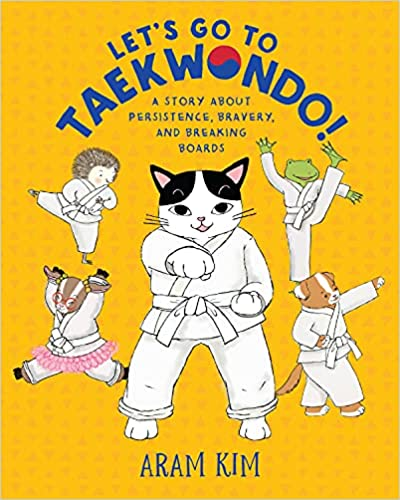
Let’s Go to Taekwondo! A Story About Persistence, Bravery, and Breaking Boards by Aram Kim

Published by Holiday House

Summary:  Yoomi is a dedicated taekwondo student looking forward to earning her yellow belt.  On the day of the test, she and the other white belt kids kick and punch with no problem.  When it comes to breaking a board, though, Yoomi is afraid of getting hurt and stops just short of the board.  Her teacher assures her she can try again, but Yoomi becomes so anxious about not being able to break the board that she stops going to class.  Her grandmother doesn’t try to force her to go but tells Yoomi that she is going to stop trying to learn how to use the computer to call her sister in Korea.  Yoomi encourages her to keep trying, and eventually Grandma succeeds.  Yoomi gets the point and returns to class the next day, where she finally breaks the board and gets her yellow belt.  Includes additional information about taekwondo.  40 pages; ages 4-8.

Pros:  This story of persistence is populated with adorable animals.  Grandma wisely shows rather than tells, and Yoomi shows courage in continuing to try something that is difficult for her.

Cons:  Master Cho is a scarily large rabbit…approximately the same size as one of the adult judges, a tiger, yet the mouse adult judge fits into the palm of the tiger’s hand (paw). 

Pink, Blue, and You! Questions for Kids About Gender Stereotypes by Elise Gravel with Mykaell Blais

Published by Anne Schwartz Books

Summary:  The book starts off with a series of questions: Are some things more for girls and some for boys?  Who made those rules?  What happens if we don’t follow them?  The text and pictures then show differences in sex and explain what gender identity is.  Different families and gender roles are portrayed, with an emphasis on treating others with respect and love, no matter how they identify or choose to raise a family.  A few people are profiled, like the Army’s first male nurse (Edward T. Lyon), the first openly transgender state senator (Sarah McBride of Delaware), and the first woman in space (Valentina Tereshokova).  The final page asks, “Won’t it be nice to live in a world where we can all just be ourselves?”.  Includes two pages of fun facts about gender and clothing.  40 pages; ages 4-8.

Pros:  The authors do an excellent job of presenting a complicated subject in a way that young children will understand.  Elise Gravel’s illustrations are fun and help to further illuminate the topics covered.  An outstanding resource all around (although I wish it had a list of additional resources).

Cons:  I’m sure it’s just a matter of time before the cultural warriors get this into their book-banning crosshairs.

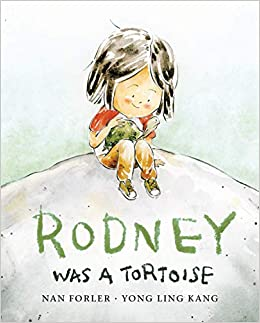
Rodney Was a Tortoise by Nan Forler, illustrated by Yong Ling Kang

Published by Tundra Books

Summary:  Bernadette’s oldest friend is Rodney, a tortoise is older than she is, older than her dad, even older than her Great-Aunt Clara.  Bernadette loves to play games with Rodney, to bring him to school for show and tell, and to read to him before bedtime.  Rodney has always been slow, but he gradually gets slower until one day he dies.  Bernadette brings her grief with her to school, where it feels like the other kids don’t really care.  Like Rodney, she sits on a rock at recess, drawing deeper into her shell.  Then one day, a boy named Amar climbs onto the rock with her, acknowledging her sadness about Rodney and remembering some good things that he remembers about the tortoise.  Amar used to have a budgie named Samuel, so he’s not unfamiliar with loss.  Bernadette responds by inviting Amar over for a game of Crokinole, something she used to enjoy with Rodney.  40 pages; ages 4-8.

Pros:  This gentle tale of love and loss will resonate with anyone who has ever experienced grief.  

Cons:  I had never heard of Crokinole and had to use my context clues to figure out what it is.

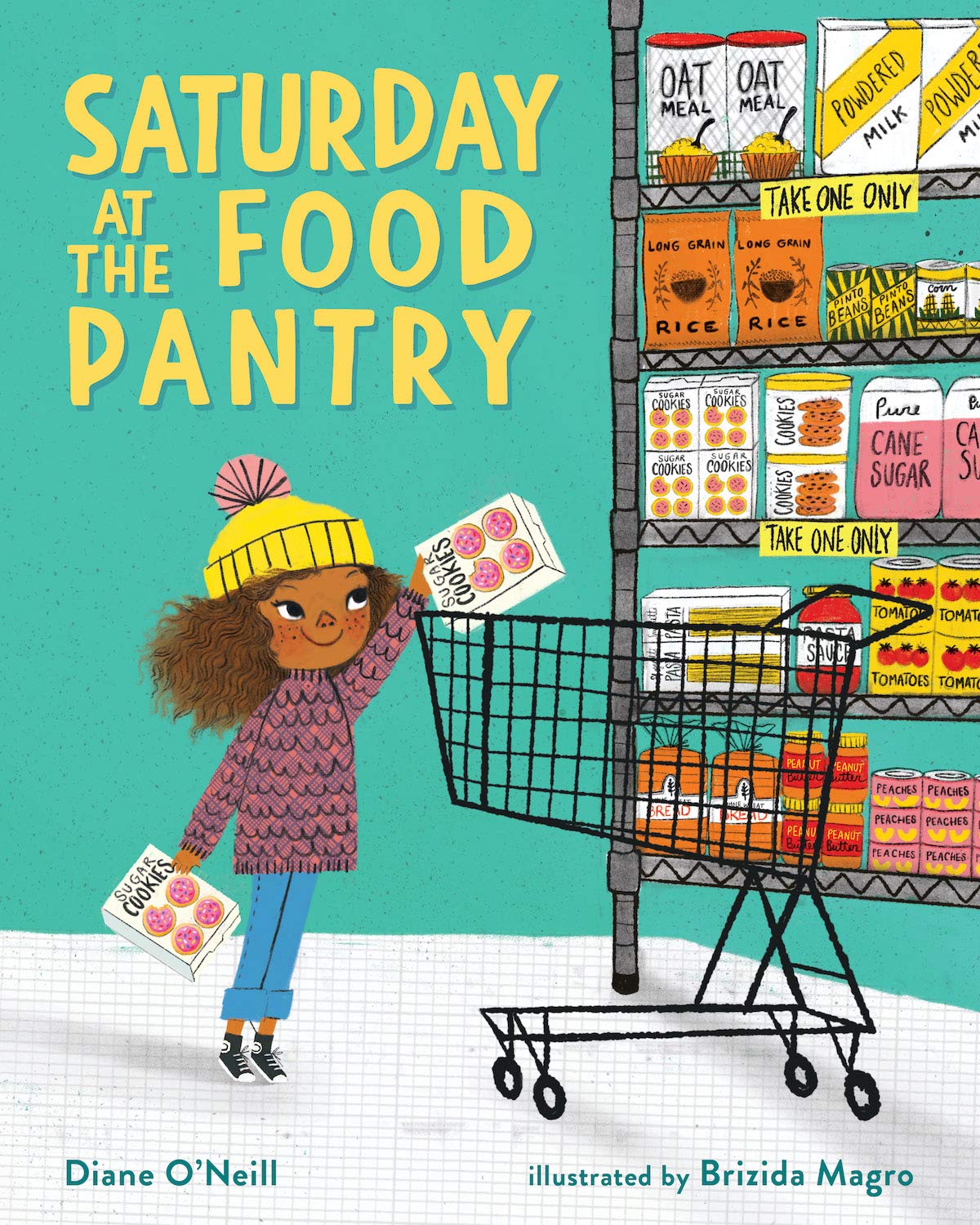
Saturday at the Food Pantry by Diane O’Neill, illustrated by Brizida Magro

Published by Albert Whitman and Company

Saturday at the Food Pantry: O'Neill, Diane, Magro, Brizida: 9780807572368:  Amazon.com: Books

Saturday at the Food Pantry: O'Neill, Diane, Magro, Brizida: 9780807572368:  Amazon.com: Books

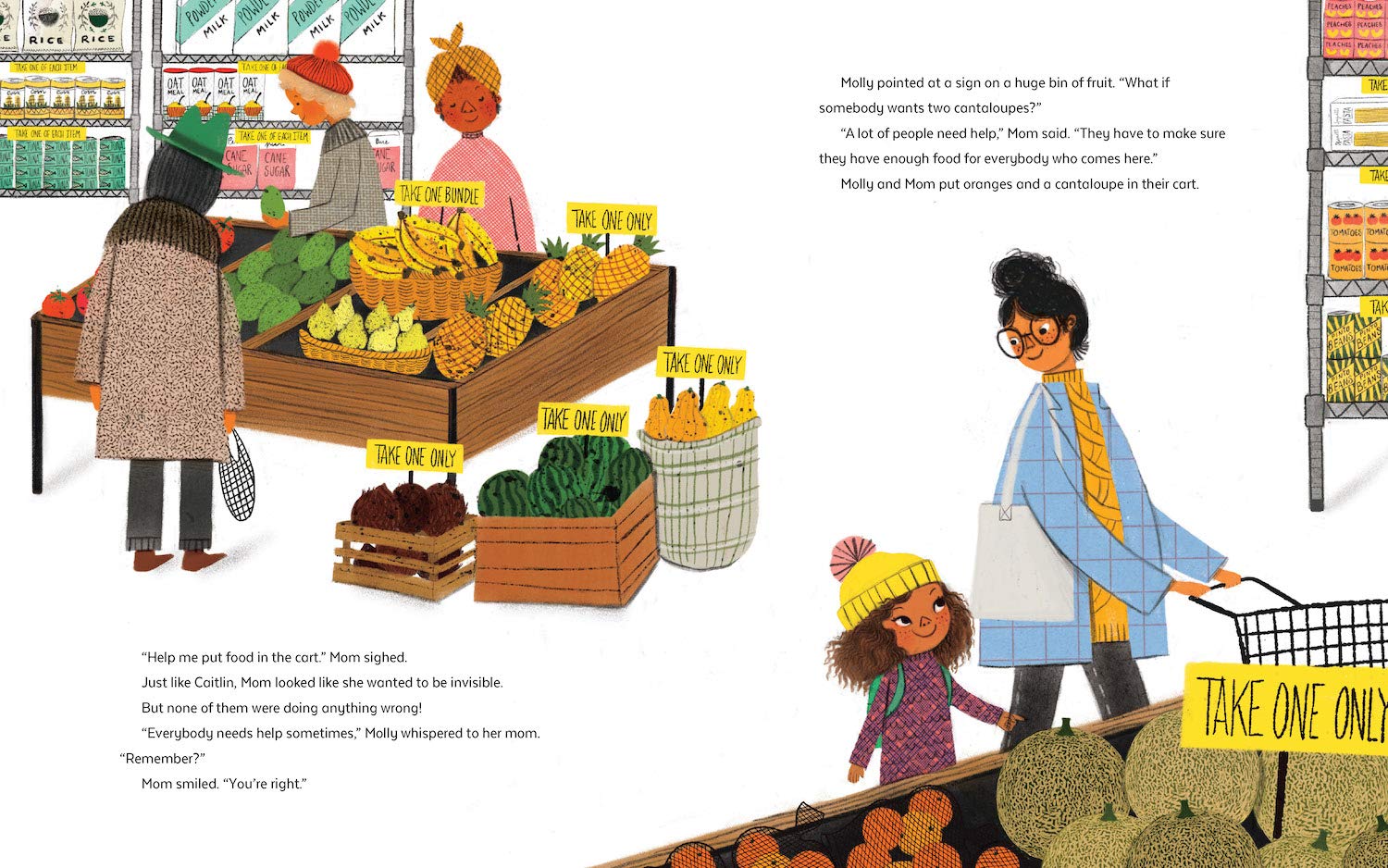
Summary:  When the food supply dwindles at Molly’s house, her mother tells her they’re going to the food pantry on Saturday.  “Everybody needs help sometimes,” says Mom, lifting her chin a little higher.  Waiting in line, Molly says hi to Caitlin, a girl from her class, but Caitlin turns away.  When Molly walks over to her, Caitlin says she doesn’t want anyone to know she and her grandmother are there.  Molly convinces Caitlin to draw pictures with her while they wait in line, and they cheer people up with their creations.  Inside, Molly and Mom fill their cart, and they walk out with Caitlin and her grandmother, who turn out to be neighbors.  They decide to eat lunch together, the adults sharing stories of job loss and illness, and the two girls remembering how their drawings made people happy.  Includes a note about food insecurity from Kate Maher, CEO of the Greater Chicago Food Depository.  32 pages; ages 4-8.

Pros:  A realistic look at what it’s like to shop at the food pantry with important messages addressing the stigma that kids might pick up on from adults.  

Cons:  There are too few books that address issues faced by low-income families.

The Longest Storm by Dan Yaccarino

Published by mineditionUS

The Longest Storm: Yaccarino, Dan: 9781662650475: Amazon.com: Books
Weathering the Storm Together by Dan Yaccarino | Nerdy Book Club

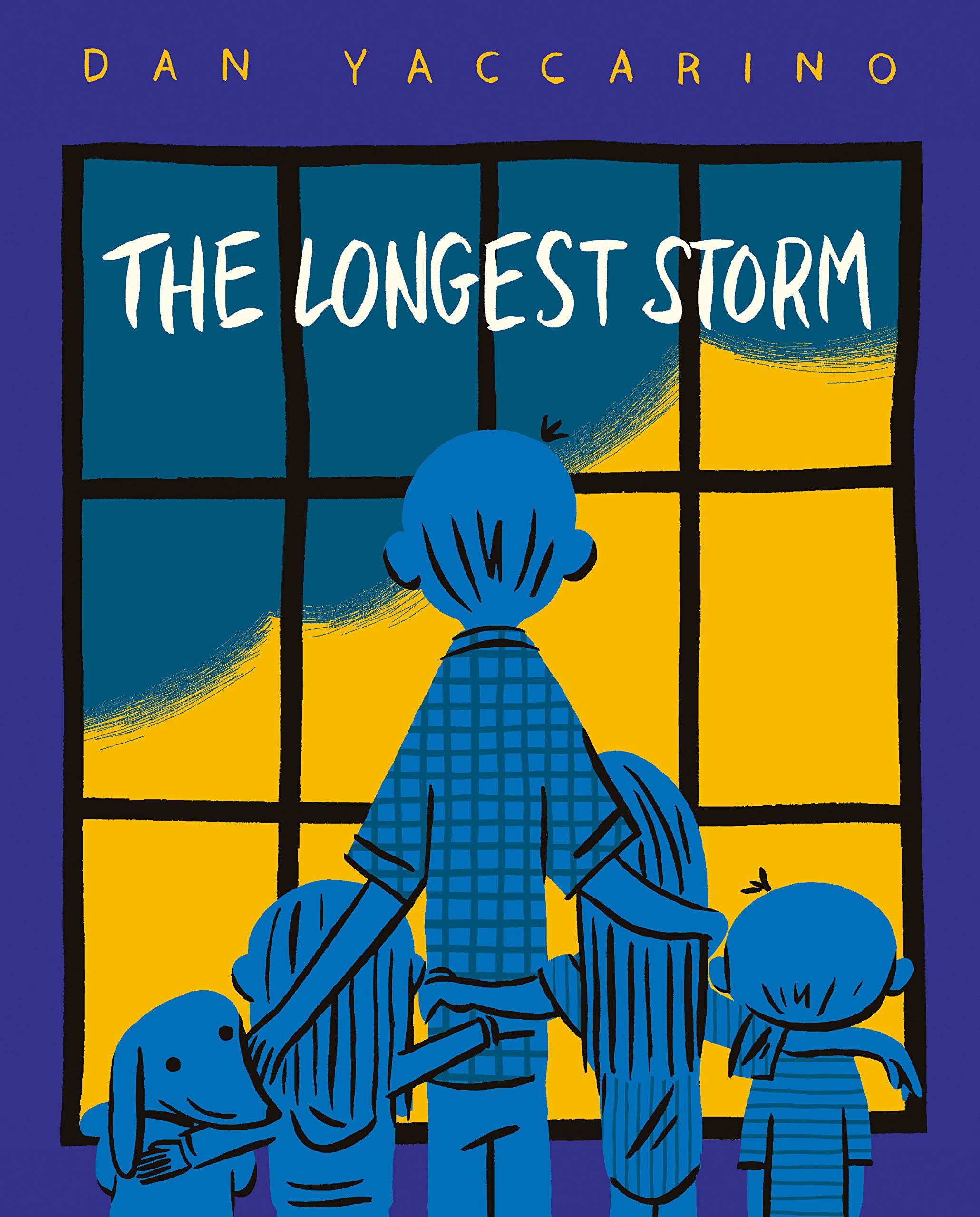
Summary:  A storm comes to town that is unlike any that has ever been seen before, and a family is forced to stay inside.  It feels strange to be indoors together for so long and soon tempers flare.  Everyone is mad at each other and just wants to be alone.  One night, though, a violent thunderstorm and power outage bring them all back together again, and after that things start to get better.  There are still occasional fights, but each day the family bond gets stronger, until one day the storm is gone and the sun is shining again.  When they head outside, there’s a lot of storm damage, but it’s clear from the last picture that the family will be working together to clean it up.  40 pages; ages 4-8.

Pros:  While this story seems clearly to have been inspired by the pandemic lockdown, it could also be used to show how a family moves through different stages during any sort of difficult time.  The family’s resilience in overcoming anger and learning to pull together during a tough time make this an excellent story for social and emotional learning.  

Cons:  The ending felt a little abrupt.

Isabel and Her Colores Go to School by Alexandra Alessandri, illustrated by Courtney Dawson

Published by Sleeping Bear Press

Isabel and her Colores Go to School (English and Spanish Edition):  Alessandri, Alexandra, Dawson, Courtney: 9781534110632: Amazon.com: Books

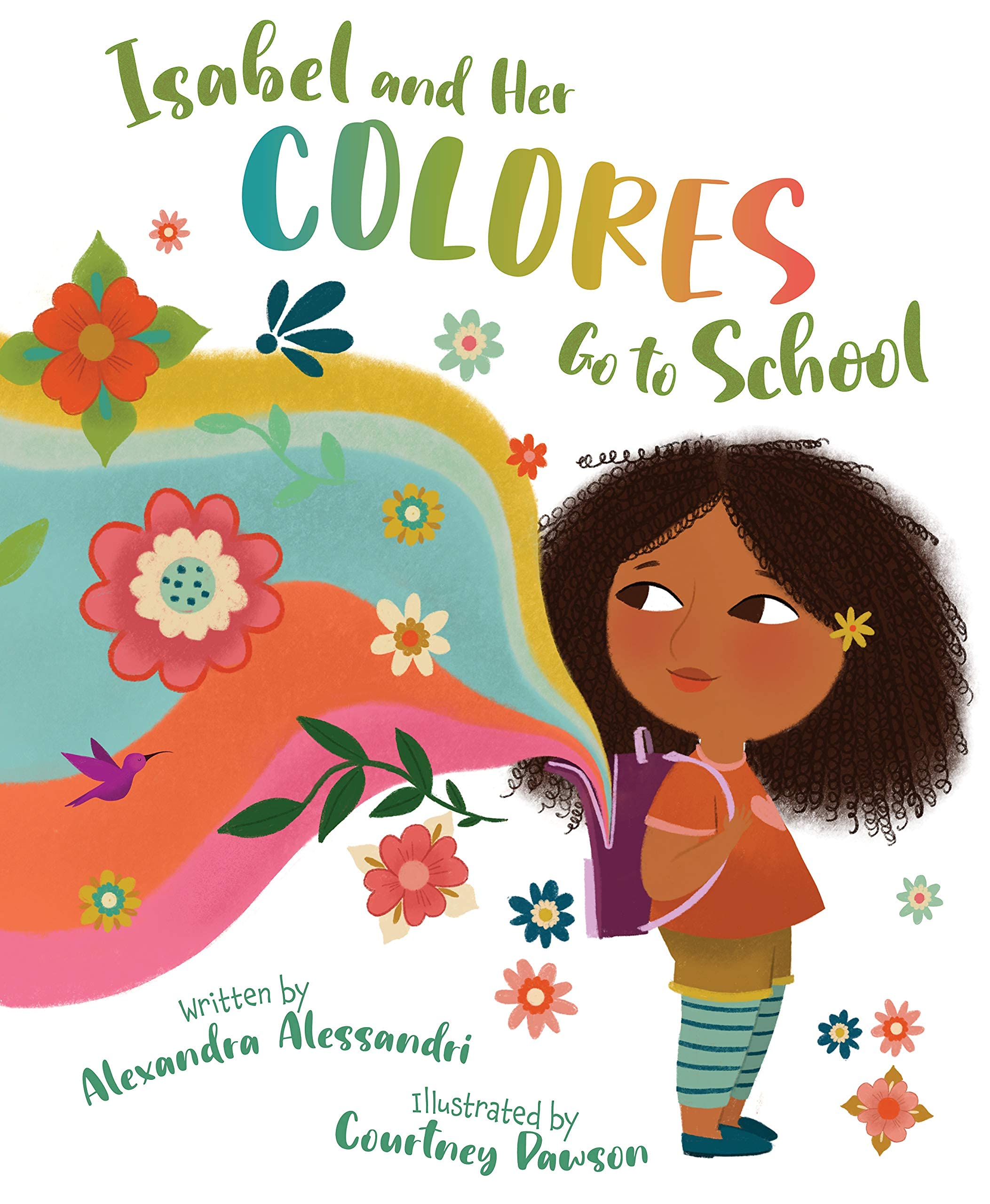
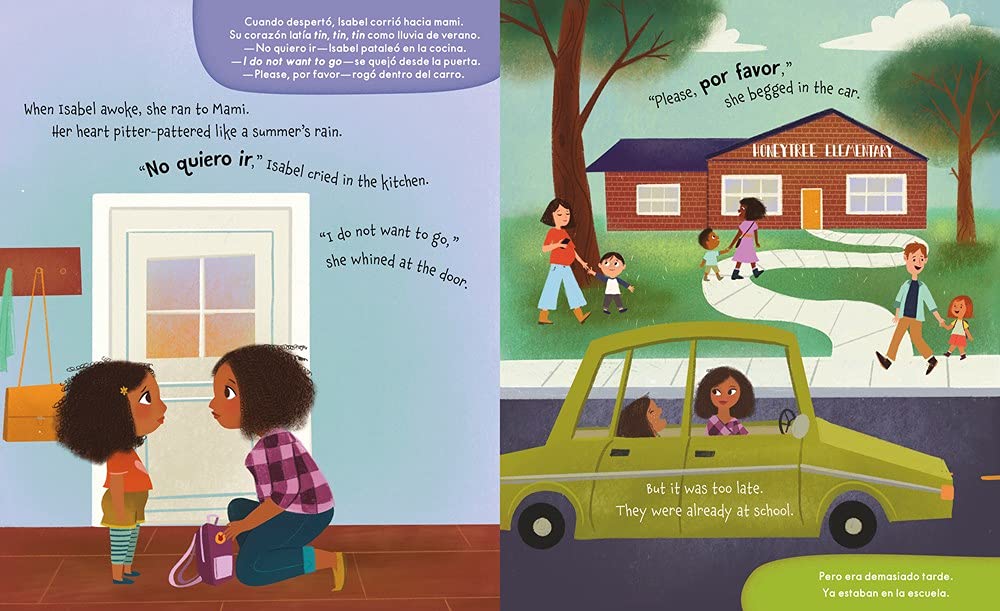
Summary:  Isabel’s got the typical first-day-of-school jitters, but she has an additional worry: she doesn’t speak much English.  She begs not to go; her mother is understanding but insistent, offering her this advice: “Al mal tiempo, buena cara.  To bad times, a good face.”  Things are tough at first, and when a girl named Sarah offers to be her friend, Isabel doesn’t understand and shakes her head.  In the afternoon, though, there’s time to draw, and Isabel loves using all the colors.  Remembering Mami’s advice, she draws two faces and shows them to Sarah, along with the word “Amigas”.  The rest of the class enthusiastically admires Isabel’s picture, and Isabel ends up thinking that maybe school won’t be so bad after all.  The story is told in both English and Spanish and includes two pages of Spanish to English translations for the words used in the story.  40 pages; ages 4-8.

Pros:  A perfect back-to-school book for ELL students, particularly those who speak Spanish.  The story captures the worries of learning a new language and fitting in, with a realistically hopeful ending.

Cons:  I hope Isabel can get some good ELL services at school.

What Are Your Words? A Book About Pronouns by Katherine Locke, illustrated by Anne Passchier

Published by Little, Brown Books for Young Readers

What Are Your Words?: A Book About Pronouns: Locke, Katherine, Passchier,  Anne: 9780316542067: Amazon.com: Books
Andy Passchier Illustrates Children's Book 'What Are Your Words?' | Arts &  Culture | Ideastream Public Media

Summary:  Ari is excited that Uncle Lior is coming for a visit.  Uncle Lior uses they/them pronouns, and they always ask Ari, “What are your words?”  Usually Ari knows right away; it may be “Happy! Creative! Funny! He/him” or “Thoughtful! Athletic! Silly! She/her.”  Today, though, nothing quite seems to fit.  Ari worries about it as the day progresses, with more introductions (including pronouns) around the neighborhood, finishing up with a barbecue and fireworks.  As the first ones burst across the sky, Ari suddenly discovers the words for today: “Impatient! Excited! Colorful! They/them.”  Uncle Lior tells them, “That’s definitely you, Ari.”  40 pages; ages 4-8.

Pros:  This book will be a valuable resource to anyone working with transgender, nonbinary, or gender fluid kids and will help others to understand the importance of pronouns.  The illustrations are cheerful and colorful; I especially liked the endpapers that showed a variety of people and pronouns.

Cons:  The story was definitely secondary to the lessons being taught.

Watch Me: A Story of Immigration and Inspiration by Doyin Richards, illustrated by Joe Cepeda

Published by Feiwel and Friends

Watch Me: A Story of Immigration and Inspiration: Richards, Doyin, Cepeda,  Joe: 9781250266514: Amazon.com: Books
Watch Me | Doyin Richards | Macmillan

Summary:  Growing up in Sierra Leone, Joe had big dreams.  He decided he needed to go to America to follow them.  Family and friends told him people in America would laugh at his accent and be afraid of his dark skin, but Joe said, “Watch me,” and moved to America.  People did, in fact, make fun of his accent and sometimes told him to go back to Africa.  Joe was homesick, but he persisted.  Sometimes he felt he had to work twice as hard to prove himself, but in the end he kept going and became a doctor.  How does the narrator know all this?  Dr. Joe was his dad.  40 pages; ages 4-8.

Pros:  This inspiring narrative tells Dr. Joe’s story, but also asks a lot of questions of the reader: do you know people like Joe?  Do you see them at your school?  Did they come by plane or boat?  Maybe you did, too?  The text is simple, but it is sure to provoke discussion and encourage kids to make connections between Joe and themselves or people around them.

Cons:  I wanted to know a lot more about Dr. Joe, but there was no additional information.

If the World Were 100 People: A Visual Guide to Our Global Village by Jackie McCann, illustrated by Aaron Cushley

Published by Crown Books for Young Readers 

If the World Were 100 People: A Visual Guide to Our Global Village: McCann,  Jackie, Cushley, Aaron: 9780593310700: Amazon.com: Books

Summary:  It’s hard to envision 8 billion people (the current population of Earth), so what if that number is reduced to 100?  60 people live in Asia, 5 in North America.  11 don’t have enough to eat (although enough food is wasted each day to feed them), and 29 don’t have access to clean water.  26 are under 14, and 8 are over 65.  And, as you may have already heard, 10 people have 85% of the world’s wealth.  Each of these facts is accompanied with an infographic that helps readers see the information.  The final two pages attempt to answer the question, “What are the big questions?” as we move into a future that will likely see 10 billion people on the planet by 2050.  32 pages; grades 2-5.

Pros:  I love information like this, and really, who doesn’t?  It makes demographics so much more accessible, with the fun illustrations adding another level of access.  I learned some surprising facts, as I’m sure most readers would. This could be used for social studies into middle school or even high school.   

Cons:  No back matter.