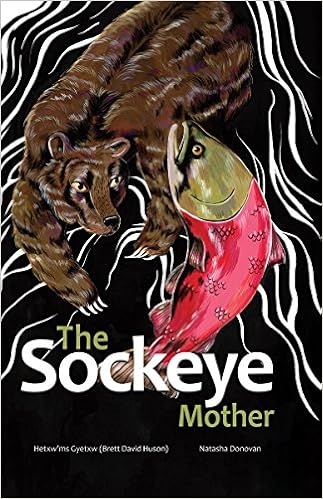
The Sockeye Mother by Hetxw’ms Gyetxw (Brett David Huson), illustrated by Natasha Donovan

Published by Highwater Press

Image result for sockeye mother brett amazon

Image result for sockeye mother natasha donovan

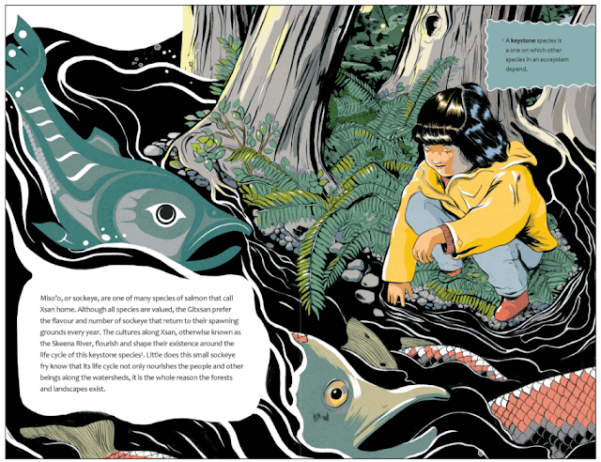
Summary:  The life of a sockeye salmon is described from the time she hatches from an egg until she returns to the same spawning ground two years later to lay her eggs before dying.  The sockeyes’ connection to the Gitxsan, indigenous people of British Columbia, is alluded to, as well as the reverence these people have for the fish that help sustain them.  The balance of nature is also described in a section called “A Replenishing Death”, when the salmon’s body becomes fertilizer for the flora in and around the water. 32 pages; grades 2-6.

Pros:  The author grew up in the Gitxsan Nation and imparts both scientific and cultural information in this brief story of a sockeye salmon.  The close-up illustrations vividly bring to life the different stages of the fish’s life, as well as the people and animals around her.

Cons:  This may not be a book many kids will pick up on their own, but with some guidance, they will find it an interesting resource.

If you would like to buy this book on Amazon, click here.

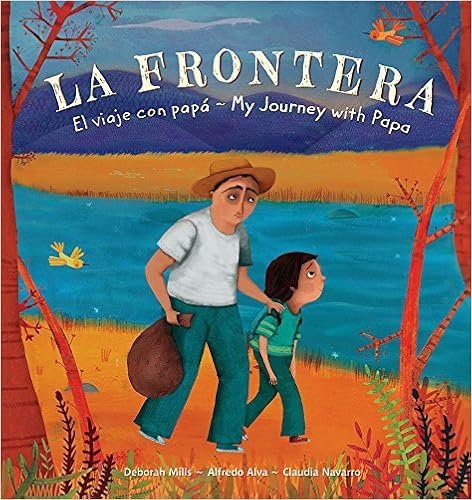
La Frontera/The Border: El Viaje Con Papa/My Journey With Papa by Deborah Mills and Alfredo Alva, illustrated by Claudia Navarro

Published by Barefoot Books

Image result for la frontera deborah mills amazon

Image result for la frontera claudia navarro

Summary:  Alfredo tells the story of his life in Mexico, how his father was no longer able to support the family, and his parents’ decided to send him and papa north to the United States.  A coyote led the two of them to the Rio Grande, gave them an inner tube to float across, then disappeared with their money.  After a grueling week of traveling on foot, they found a shack to sleep in, and a friend of Alfredo’s grandfather picked them up and drove them to Texas.  They settled in to the Embassy, a collection of broken-down vehicles parked behind a factory.  When Alfredo started school, his father gave him a $100 bill to buy a bus ticket back home if he was picked up by immigration officials and sent back to Mexico.  After a difficult transition, Alfredo enjoyed school.  President Reagan granted amnesty to immigrants, and Alfredo and his father were able to start the path to citizenship.  Best of all, four years later, the rest of the family was able to come to the United States.  Includes photos of Alfredo and his family, and extensive information on Alfredo’s story, borders and culture, and immigration.  In English and Spanish.  48 pages; grades 1-5.

Pros:  A grittily realistic story of a family seeking a way out of desperate poverty in the United States.  Although it takes place more than 30 years ago, the story is more relevant than ever to readers today.  Putting a face on “illegal immigrants” will help students have greater empathy for others in a similar situation, and those who have experienced a journey like Alfredo’s will feel a connection to him and his father.

Cons:   Too bad certain government officials in Washington, D.C. aren’t reading this.

If you would like to buy this book on Amazon, click here.


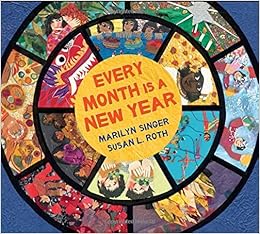
Every Month Is a New Year by Marilyn Singer, illustrated by Susan L. Roth

Published by Lee & Low Books

Image result for every month is a new year singer amazon

Image result for every month is a new year roth

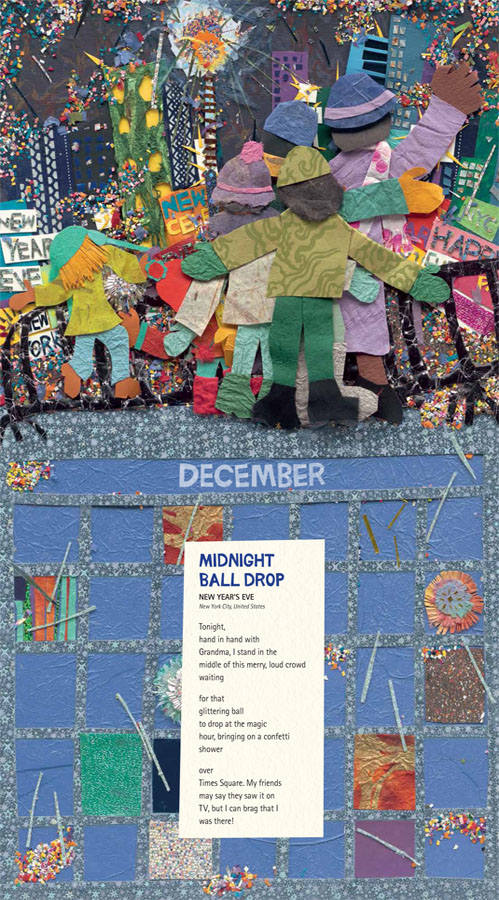
Summary:  Designed like a calendar, opening at the bottom instead of the right side, this book explores how a new year is celebrated in cultures around the world.  Eighteen poems celebrate the new year, beginning with “Midnight Ball Drop” on December 31 in New York City, and wrapping up with “Las Doce Uvas de la Suerte” in Spain the following December 31.  In between, there are visits to Scotland, Russia, China, Iran, Thailand, Jordan, Chile, New Zealand, India, and Ecuador, and celebrations that take place in every month of the year. Includes several pages with additional information about each holiday; a glossary and pronunciation guide; and author’s sources.  48 pages; grades 2-5.

Pros:  A wealth of information about a wide variety of cultures, all in a clever package–a book designed like a calendar.  The collage illustrations add texture and plenty of color to the poems.

Cons:  I would have preferred the information about each holiday to be on the page with the poem rather than all in the back.  The poems made me curious to learn more, and it was a little unwieldy to have to keep flipping back and forth.

If you would like to buy this book on Amazon, click here.

Chester Nez and the Unbreakable Code: A Navajo Code Talker’s Story by Joseph Bruchac, pictures by Liz Amini-Holmes

Published by Albert Whitman and Co.

Image result for chester nez and the unbreakable amazon

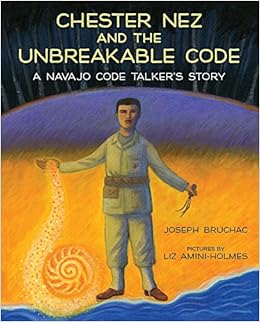
Summary:  When 8-year-old Betoli left his home and family in 1929 to go to Fort Defiance School, his hair was cut, his name was changed to Chester, and he was made to speak English.  If he spoke Navajo, his mouth was washed out with soap. He lived a double life through his school years, speaking Navajo and practicing his religion at home, and speaking English and practicing Catholicism at school.  In April 1942, Marine recruiters came to the school looking for Navajo speakers to help them create a code the Japanese couldn’t break. Chester was one of 29 men who created the code, then went to the Pacific to serve as a Navajo Code Talker.  He fought in the war until January 1945, when he came home, sick and traumatized by his military experience. Returning to his Navajo ways helped him to heal, and he went on to become an artist, living to the age of 93. Includes an author’s note, timeline, and the alphabet in the Navajo code.  32 pages; grades 2-5.

Pros:  A fascinating biography of Chester Nez, that includes a history of the Navajo Code Talkers and touches on Indian schools and the trauma they inflicted on the students.

Cons:  I would have liked to have seen a photo of Chester and/or other Code Talkers, so I give you this:

Image result for chester nez

If you would like to buy this book on Amazon, click here.

Iqbal and His Ingenious Idea: How a Science Project Helps One Family and the Planet by Elizabeth Suneby, illustrated by Rebecca Green

Published by Kids Can Press

Image result for iqbal and his ingenious amazon

Image result for iqbal and his ingenious idea

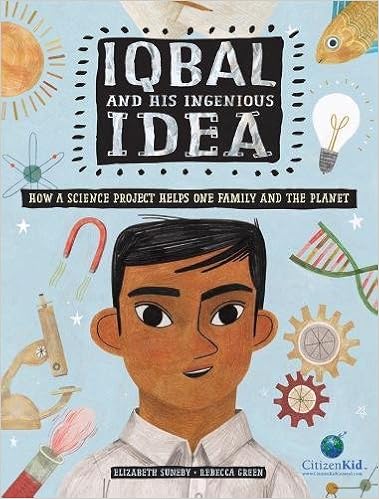
Summary:  When Iqbal hears about the science fair at his school in Bangladesh, he is determined to win, and his sister Sadia is determined to help him.  His mother and baby brother are having health issues that result from cooking on a smoky indoor fire.  His father has seen a propane stove that would help them, but can’t afford to buy it.  When Iqbal searches “smokeless cooking” on the school computer, he learns about solar cookers.  He and Sadia create one using foil and an old umbrella, and have their first success cooking an egg.  Iqbal goes on to win the science fair, and uses the money to buy a propane stove so his family can cook without smoke in any kind of weather.  Includes information about clean cookstoves, a glossary, and instructions for building a solar cooker.  32 pages; grades 2-5.

Pros:  As I’ve said before (more than once!) I’m a big fan of the Citizen Kid series, introducing children from around the world.  Readers will learn a lot about Iqbal’s life as he celebrates Ramadan, endures the monsoon season, and figures out a way to help his family.

Cons: Does finding an science fair project online qualify Iqbal’s idea as “ingenious”?

If you would like to buy this book on Amazon, click here.

Grandma Gatewood Hikes the Appalachian Trail by Jennifer Thermes

Published by Abrams Books for Young Readers

Image result for grandma gatewood hikes the trail amazon

Image result for grandma gatewood hikes the trail thermes

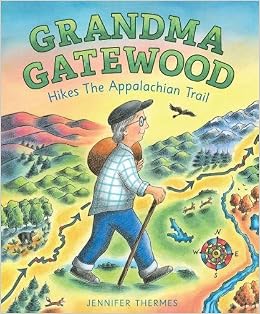
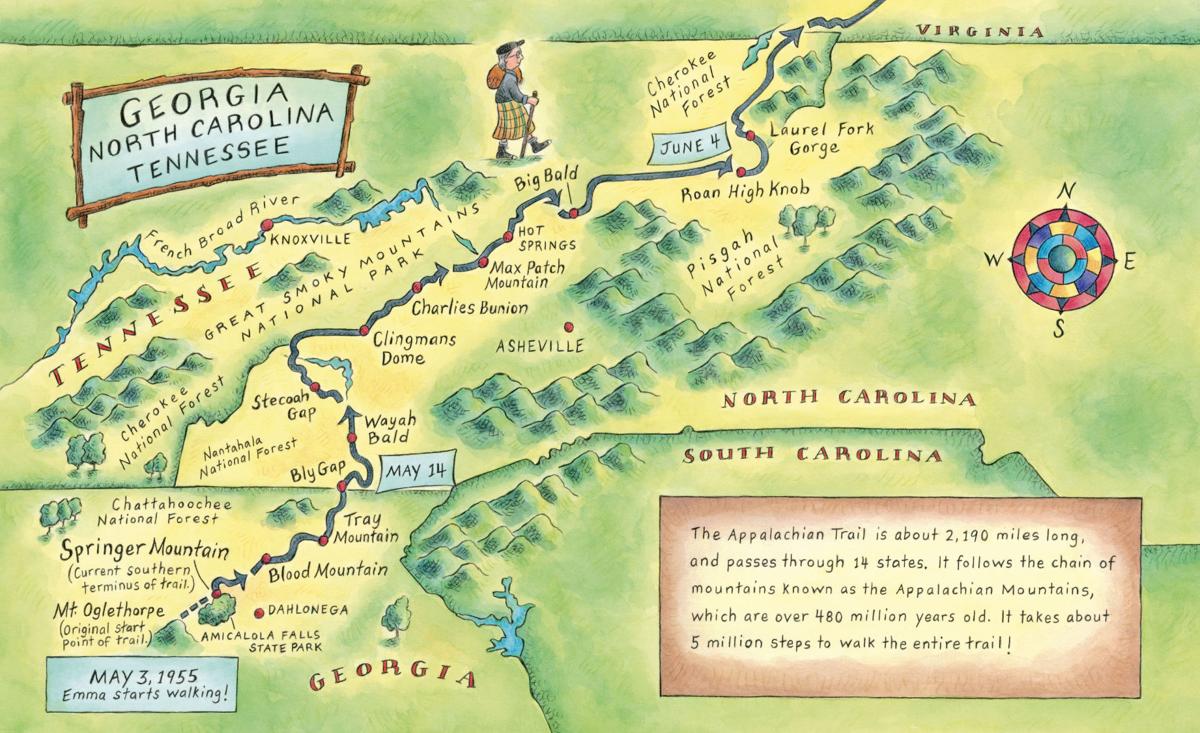
Summary:  After reading a National Geographic article describing the Appalachian Trail as “easy”, Emma Gatewood decided at age 67 to become the first woman to hike it in its entirety.  Starting off in a skirt and canvas sneakers, with a sack that weighed less than 20 pounds, she headed from her home in Ohio to the end of the trail in Georgia to begin on May 3, 1955.  Dealing with rocky trails, bugs, injuries, a hurricane, and a bear, Emma kept plugging along. Wearing all the clothes she had, barely able to see through her cracked eyeglasses, Emma reached the end of the trail on September 25.  She celebrated by loudly singing “America the Beautiful” from the top of Maine’s Mount Katahdin, then hiked the trail again less than two years later. Back matter includes additional information about Emma Gatewood and the Appalachian Trail, a list of sources, and a timeline on the back endpapers.  48 pages; grades 2-5.

Pros:  If this doesn’t inspire you to stay active in your old age, nothing will.  The beautiful maps every few pages show Emma’s progress up the trail, with landmarks labeled and interesting facts about the region.  

Cons:  I would have loved to have seen a few photos of Emma, particularly on the trail.

If you would like to buy this book on Amazon, click here.

Library on Wheels: Mary Lemist Titcomb and America’s First Bookmobile by Sharlee Glenn

Published by Harry N. Abrams

Image result for library on wheels glenn amazon

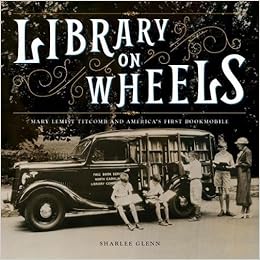
Summary:  Growing up in rural New Hampshire in the late 1800’s, Mary Titcomb yearned for an education and a career.  She didn’t want to be a nurse or a teacher, but was intrigued when she read about the new field of librarianship.  She worked in libraries in Concord, Massachusetts and Rutland, Vermont before eventually becoming the director of the Washington County library in Maryland.  A county library was unusual at the time, and Mary had to figure out how to reach the 25,000 people scattered across the 500 square miles of Washington County.  She decided to have a horse-drawn wagon built that could carry books to these remote locations, and the first bookmobile was born.  The wagon eventually was replaced by a motorized vehicle, and Miss Titcomb’s tireless efforts to publicize her work spread bookmobiles across America. Includes an author’s note that tells how she found Mary Titcomb’s grave in Concord’s Sleepy Hollow Cemetery and raised money for a headstone; also an extensive bibliography.  56 pages; grades 3-7.

Pros:  This square book resembles a scrapbook, with a large font, and photos and other memorabilia decorating the pages.  It’s a lively introduction to a woman who believed in the power of libraries to enrich all citizens’ lives and worked hard to bring her vision to life.

Cons:  The subject may be of greater interest to librarians than to their patrons.

If you would like to buy this book on Amazon, click here.


Hello Lighthouse by Sophie Blackall

Published by Little, Brown Books for Young Readers

Image result for hello lighthouse blackall amazon

Summary:  A man arrives at a lighthouse to take his new job as its keeper.  A cutaway illustration shows him busy, tending the light, painting the walls, and cooking food.  Despite his activity, he’s lonely, and often writes messages that he puts in bottles and tosses into the sea.  After awhile, a tender arrives, bringing supplies and the man’s wife.  They are happy together in the lighthouse, and eventually they’re joined by a third person, their new daughter.  Several years later, electricity comes to the lighthouse, and the family moves away.  A fold-out final page shows a little house on the coast, lights from its windows shining to meet the light coming from their old lighthouse home.  Includes additional information about lighthouses and the people who kept them going.  48 pages; ages 4-10.

Pros:  A lovely blend of fact and fiction, Caldecott winner Sophie Blackall makes life in a lighthouse seem indescribably cozy, while presenting each scene creatively (I especially admired the lighthouse cutaway, the shipwreck, and the circular images of the wife in labor).  Hello, my new favorite picture book of 2018!

Cons:  I suspect real life in a lighthouse was not this idyllic.  This sentence in the author’s note about foghorns particularly caught my attention: “Some lighthouse keepers learned to sleep through the din of the horn; others nearly went mad when the fog lasted for days.”

If you would like to buy this book on Amazon, click here.

A Lady Has the Floor: Belva Lockwood Speaks Out for Women’s Rights by Kate Hannigan, illustrated by Alison Jay

Published by Calkins Creek

Image result for a lady has the floor amazon

Image result for a lady has the floor kate hannigan

Summary:  Although a contemporary of Susan B. Anthony and Elizabeth Cady Stanton, Belva Lockwood is (unfairly) less well-known for her contributions to women’s rights.  Starting as a teacher at the age of 14, Belva began her activism in the world of education, introducing public speaking and physical education for both boys and girls, and eventually opening up her own private school.  From there, she went to law school, sticking it out when other female classmates quit. She graduated, but had to petition President Ulysses S. Grant to receive her diploma. As a lawyer, she fought for the underserved: widows, Civil War veterans, and former slaves, and eventually became the first woman to argue a case before the Supreme Court.  In 1884, she ran for President of the United States and received over 4,000 votes. Sadly, Belva Lockwood died in May, 1917, a little more than three years before the Nineteenth Amendment gave women the right to vote. Includes author’s note, timeline of U.S. women’s history to 2016, and bibliography.  32 pages; grades 2-5.

Pros:  A lively and engaging biography of an important and often overlooked suffragist; the timeline does a nice job of placing her life in the context of history.  

Cons:  Some readers might struggle with the cursive font that appears on some pages.

If you’d like to buy this book on Amazon, click here.

Midnight Teacher: Lilly Ann Granderson and Her Secret School by Janet Halfmann, illustrated by London Ladd

Published by Lee and Low

Image result for midnight teacher amazon

Image result for midnight teacher london ladd

Summary:  As a young child working in the master’s house, Lilly Ann Cox was sometimes included in games of school with the other children.  She learned how to read and write, and enjoyed teaching other slaves when the master’s family went visiting on Sundays.  When the master died, Lilly was sold to a plantation in Mississippi, where she was forced to work in the cotton fields, often beaten for not being able to keep up.  When she became ill, she was moved into the kitchen.  On her trips to the market, Lilly discovered an abandoned cabin, and eventually opened a school there.  Slaves would sneak out in the middle of the night.  The penalty if they were caught was 39 lashes with a whip; however, when they were finally found out seven years later, they were miraculously allowed to keep the school going with no punishment.  After the Civil War, Lilly married and raised three children, while continuing her career as a teacher.  An afterword describes her work in greater detail and how it positively influenced her descendants, including great-grandson Charles C. Diggs, Jr., who became a Congressman and helped found the Congressional Black Caucus.  40 pages; grades 2-5.

Pros:  A fascinating story about one woman’s courage to improve the lives of others that had an impact for generations after her.  The acrylic paintings nicely illustrate Lilly’s story.

Cons:  Be prepared to answer questions about Lilly’s difficult days working in the cotton fields of Mississippi.

If you would like to buy this book on Amazon, click here.