The Christmas Story by Robert Sabuda

Merry Christmas and Happy Hanukkah!

Published by Candlewick 
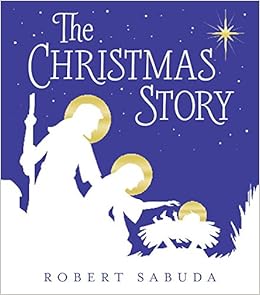
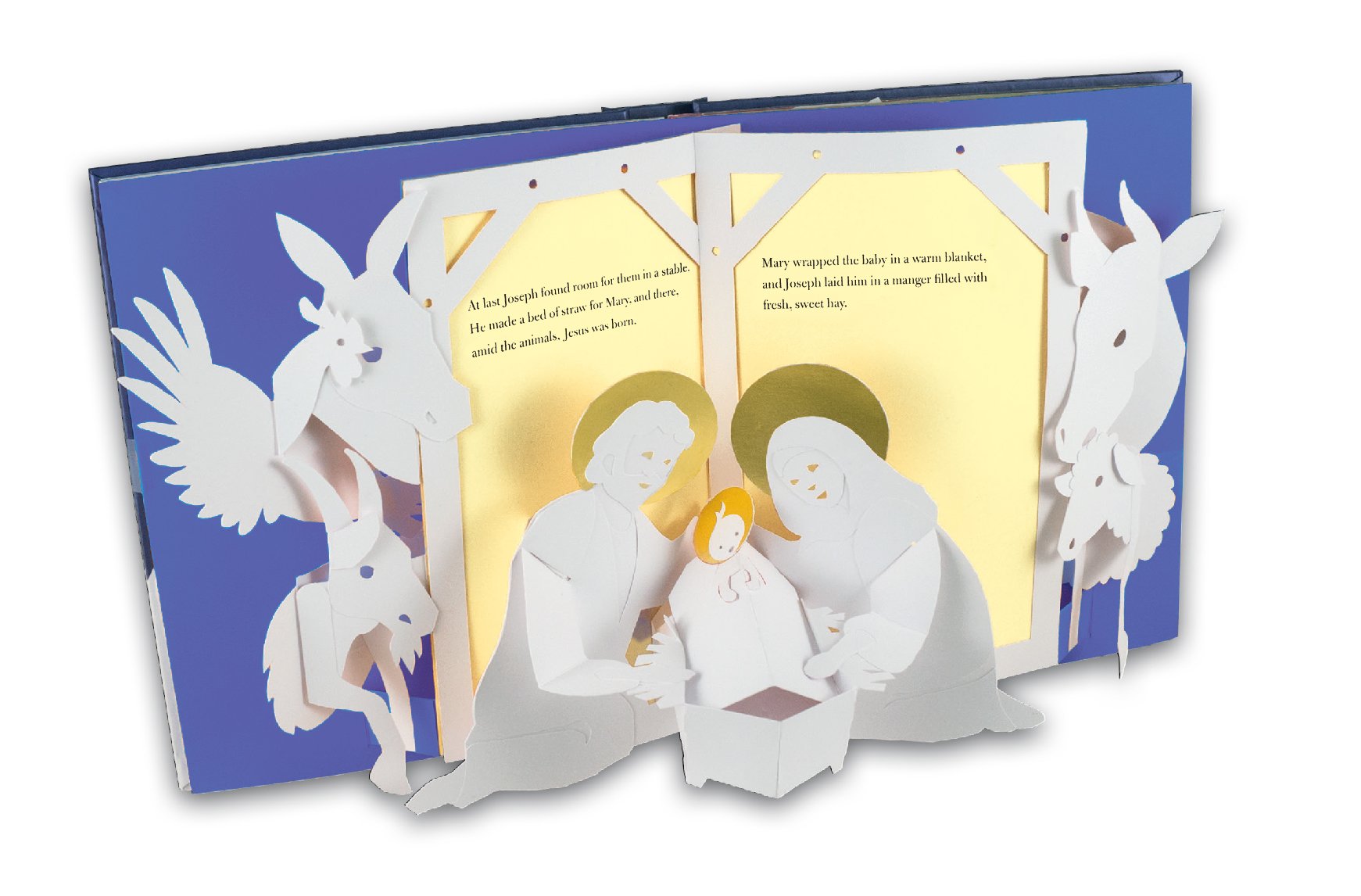
Summary:  The story of Jesus’ birth is told through six intricately designed pop-ups.  The text is faithful to the Bible story, beginning with Mary’s visit from the angel announcing the birth, moving on to shepherds and wise men, and concluding with the whole gang gathered at the manger.  The pop-ups are all white with golden highlights on a blue background.  Go here for a page-by-page preview: https://vimeo.com/174534813.  12 pages; grades K-4.

Pros:  The pop-ups are truly amazing, with angels and stars soaring above many of the pages.  A beautiful introduction to the Christmas story.

Cons:  The fragile nature of the paper art and $26.00 price tag may make this a better choice for a home library than a public one.
 

Saved by the Boats: the Heroic Sea Evacuation of September 11 by Julie Gassman, illustrated by Steve Moors

Published by Capstone Press 

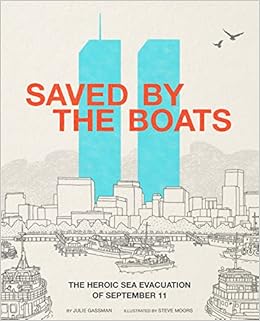
Summary:  On September 11, 2001, after the collapse of the World Trade Center, more than a million people were looking to get out of Manhattan.  New York City was under attack, and bridges, tunnels, and subways were closed.  The only way to escape was by water.  When lines for the ferries became miles long, the Coast Guard put out a call for any boat to come help with the evacuation.  “If it floated, and it could get there, it got there,” said an engineer who was part of the rescue effort.  Wondering if there would be more attacks, the ships and their crews knew they were easy targets, but they courageously sailed on.  Some put out sheets with their destinations in New Jersey painted on them.  They tried to help the shocked, distraught people who boarded their boats, and then they took them safely across the water.  In about nine hours, just under 500,000 people were helped, the largest sea evacuation in history.  Back matter includes an author’s note telling of her 9/11 experience being rescued by a boat, a brief glossary, and a few additional resources and source notes.  32 pages; grades 3-7.
Pros:  An interesting and inspiring slice of history, focusing on the courage of the ordinary people who answered the call of duty to help their fellow New Yorkers.  The illustrations are mostly sepia toned, with bright spots of color in the sky and water, symbolizing the brightness of the rescue effort on this tragic day.

Cons:  The glossary (“tragedy—a very sad event”) seemed superfluous for the intended age group.

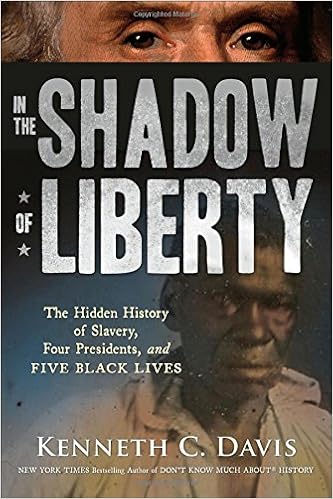
In the Shadow of Liberty: the Hidden History of Slavery, Four Presidents, and Five Black Lives by Kenneth C. Davis

Published by Henry Holt and Company 

Summary:  Did you know that thirteen American presidents owned enslaved people or grew up in slaveholding households?  (The last one was Woodrow Wilson, born in Virginia in 1856.)  This book profiles four of them–George Washington, Thomas Jefferson, James Madison, and Andrew Jackson—and five of the African Americans who were enslaved by them.  These five were present at many pivotal moments of American history, including various Revolutionary War battles and the burning of the White House in 1812, yet they remained in the shadows due to their positions in life.  As the author points out in his afterword, they were more fortunate than most in that their names and stories have survived and they were all set free by the ends of their lives.  The stories of the four Presidents are equally fascinating, as their thinking about slavery evolved over the course of their lives.  Yet they all bought and sold slaves, punished them, housed them in primitive shacks, and never gave them their freedom.  The extensive research that went into this book is demonstrated in the nine pages of source notes and the four-page bibliography.  304 pages; grades 6 and up.

Pros:  An amazing historical work, heavily illustrated with photos and drawings, with a timeline of slavery at the end of each chapter.  This should be required reading for all high school history students.

Cons:  You’ll never look at the Founding Fathers in quite the same way after reading this.

A Voyage in the Clouds: The (Mostly) True Story of the First International Flight by Balloon in 1785 by Matthew Olshan, illustrated by Sophie Blackall

Published by Farrar, Straus and Giroux 

Summary:  On the morning of January 7, 1785, Dr. John Jeffries and his dog Henry, and Monsieur Jean-Pierre Blanchard and his dog Henri, set off to be the first to travel from one country to another in a hot air balloon.  Jeffries was an Englishman financing the trip and Blanchard was an experienced pilot from France. Their dislike for each other showed up almost immediately when Blanchard wore a weighted vest to try to convince Jeffries that the balloon would be too heavy for both of them.  Jeffries discovered the trick, though, and insisted that they both make the voyage.  Partway through, the balloon began to sink, and the two men had to put aside their differences to make it to France.  They dumped everything they could out of the basket, including their clothes, but their descent wasn’t reversed until they both relieved themselves over the side.  Their safe arrival marked the beginning of a beautiful friendship.  An author’s note separates the facts from a few of the liberties taken in the story.  40 pages; grades K-4.

Pros:  A humorous piece of history, impeccably illustrated by last year’s Caldecott medalist Sophie Blackall.  Kids will get a big kick out of the picture of the two men clad in their old-fashioned drawers peeing over the side of the balloon basket.  The cartoon bubble dialog brings the events to hilarious life.

Cons:  Definitely a mix of fact and fiction, so be sure to read the author’s note.

Pocket Change: Pitching in for a Better World by Michelle Mulder

Published by Orca Book Publishers

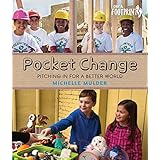
Summary:  What is money?  And why do some people have more of it than others?  This book starts with a history of money, which hasn’t been around all that long, and work, which has increased with the introduction of money.  People used to be self-sufficient, but with the Industrial Revolution, they started working to earn money and buy goods and services from others.  Advertising has created even more demand.  The author then moves on to grassroots movements that are helping to look at wealth in different ways and try to distribute it more equally.  Organizations like Kiva and the Grameen Bank provide microloans to give people an opportunity to work their way out of poverty, while groups such as Habitat for Humanity allow them to provide sweat equity instead of money.  Sidebars labeled “My Two Cents’ Worth” give brief personal stories from the author’s life to illustrate the concepts.  A glossary, index, and additional resources complete the book.  48 pages; grades 3-7.

Pros:  A can-do look at how kids can help others around the world.  The interesting history of economics will have readers looking at money, shopping, and advertising in new ways.  Lots of colorful photos on each page give this an appealing look.

Cons:  Not a topic most kids will be interested in without some adult guidance.


Preaching to the Chickens: The Story of Young John Lewis by Jabari Asim, illustrated by E. B. Lewis

Published by Nancy Paulsen Books

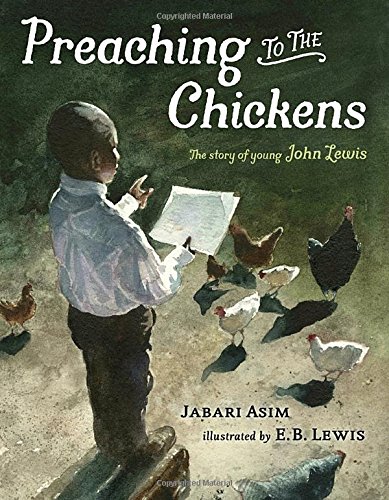
 Summary:  Growing up in Alabama, young John Lewis waned to be a preacher. His mama always said, “Work hard and trust in God.”  John loved going to church and found it easy to trust in God.  Working hard took a little more effort.  There was plenty of work to do on the farm where his family lived and grew cotton.  John was put in charge of the chickens on the farm.  After he had fed them and put fresh straw in their nests, he would pretend he was the preacher at church and that the chickens were his congregation.  He even baptized them with water from a syrup can.  When a man offered to trade with his family for one of John’s chickens, he convinced his family to trade other goods instead.  Many years later, John would go on to speak before huge crowds and stand up for those who couldn’t speak for themselves, as a leader of the Civil Rights movement.  An author’s note gives more information about John’s life as an adult.  32 pages; grades 1-5.

Pros:  An interesting slice-of-life look at a boy who rose from an impoverished childhood to do great things for others.  The paintings by award winner E. B. Lewis capture life on the farm.

Cons:  Although the author’s note lists some of Lewis’s accomplishments, there’s not really enough biographical information for a full report on his life.

A Family is a Family is a Family by Sara O’Leary, illustrated by Qin Leng

Published by Groundwood Books 

A Family Is a Family Is a Family: Sara O'Leary, Leng, Qin: 9781554987948:  Amazon.com: Books

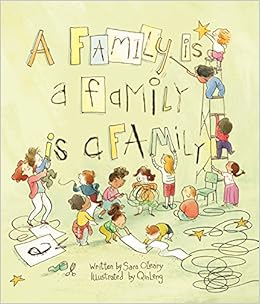
Summary:  When her teacher asks the class what makes their families special, the narrator isn’t sure how to answer.  She quietly listens to her classmates answer the question.  There are large families and small families, families with two moms and two dads, divorced parents and stepparents, families who all look alike and those who all look different.  Finally, the girl remembers a time with her family in the park.  Someone asked her foster mother to point out her real children.  Her mom answered, “Oh, I don’t have any imaginary children.  All my children are real.”  Conclusion:  A family is a family is a family.  32 pages; ages 4-8.

Pros:  Filled with family love and warm, funny illustrations, this book is perfect to share with children and invite them to think about what is special about their own families.

Cons:  It is no accident I am posting a book celebrating different kinds of love today.

Pablo Finds a Treasure by Andree Poulin, illustrated by Isabelle Malenfant

Published by Annick Press 

Summary:  Pablo and his sister Sofia spend their days hunting for treasure on Treasure Mountain, the local dump.  They’re joined by many other children who look for items that their parents can resell to buy a little food.  Sometimes they find old food, and eat it quickly before someone can steal it.  Their worst enemy is Filthy-Face, a man who bullies the children into handing over their treasures.  On this particular day, Pablo is having trouble finding anything; Sofia is doing better and scolds him for overlooking bits of plastic that can be recycled.  Just when he is ready to give up, Pablo finds a gold chain.  He and his sister excitedly make a list of all the things they’d like to buy with the chain until suddenly Filthy-Face looms in front of them.  He steals everything, and the two children have to run home empty-handed…until they arrive safely and Pablo reveals where he has hidden the gold chain.  32 pages; grades 1-4.

Pros:  An eye-opening look at poverty in an unnamed country.  The gray-toned illustrations match the sober subject.  This would make a good read-aloud to prompt further discussion or writing.

Cons:  It’s a pretty bleak story.

Freedom Over Me: eleven slaves, their lives and dreams brought to life by Ashley Bryan

 Published by Atheneum Books for Young Readers 

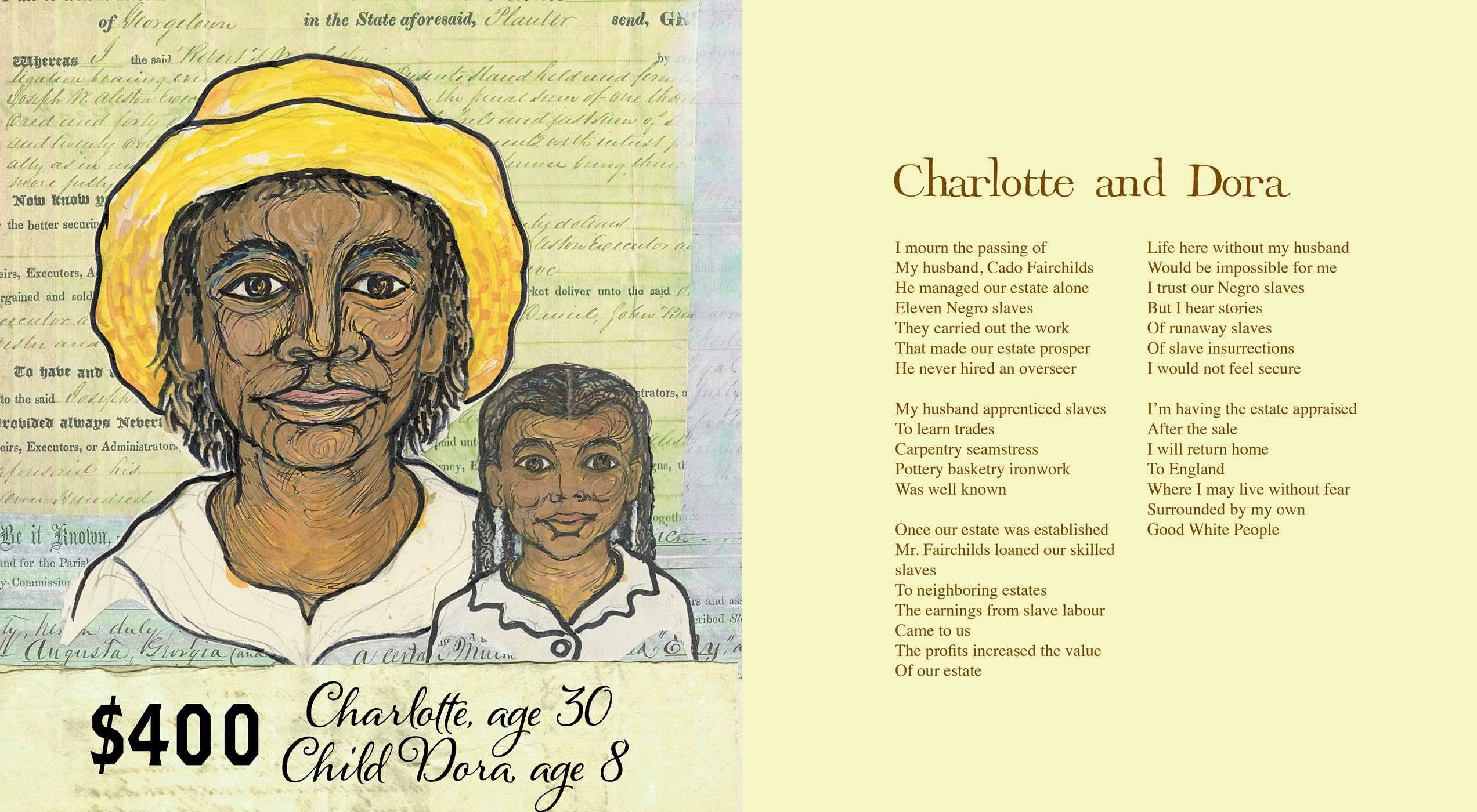
Summary:  Many years ago, as he explains in his ending author’s note, Ashley Bryan received a collection of documents relating to slavery from the 1820’s through the 1860’s.  He chose one of these, an 1828 appraisal of 11 slaves from the Fairchilds estate and created stories for each of them.  He has given each of them a name, connections to each other, and a trade or talent that each has used to increase the wealth of the estate.  Of course, this increase in wealth was not enjoyed by any of them.  Each slave has a portrait and two narrative poems, one describing himself or herself, and the other telling about his or dreams.  Almost everyone ends with a longing for freedom.  Their master has died, the mistress is selling the slaves, and they have no idea where they will end up.  The original document is shown at the end, along with the author’s note.  56 pages; grades 4-7.

Pros:  The sadness of slavery is profound in these poems of dignified, talented people, many of whom remember their lives and families in Africa.  Bryant has done a masterful job of bringing them to life, both in words and pictures.

Cons:  I wanted to know where the estate was, but no details were given.

The Water Princess by Susan Verde and Georgie Badiel, illustrated by Peter Reynolds

Published by G. P. Putnam’s Sons 

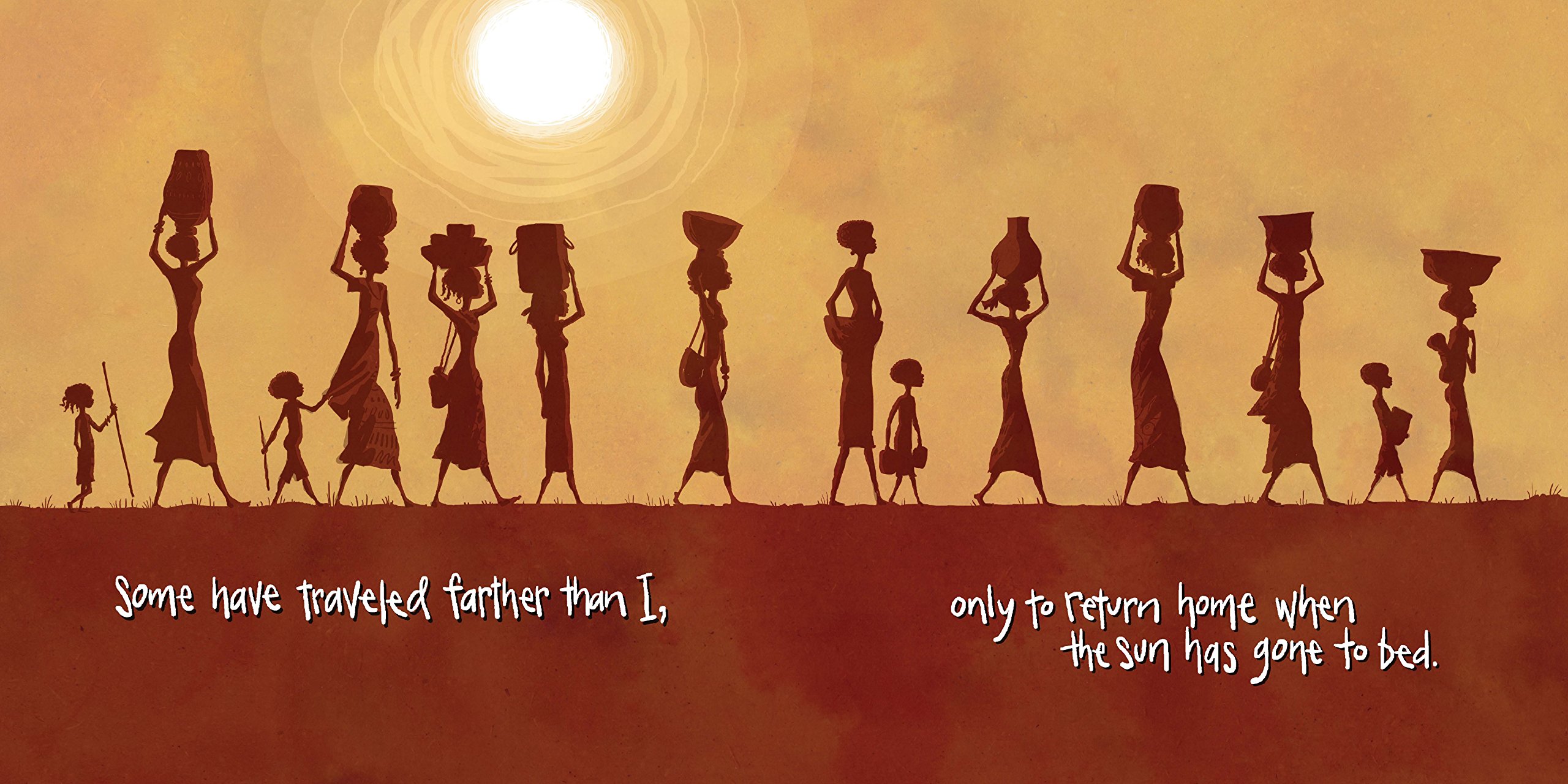
Summary:  Every day, the narrator goes with her mother to fetch water.  They start before dawn, and it’s late in the day when they get back.  The water is a dusty earth color and must be boiled before it can be drunk.  Despite these hardships, the girl’s family is happy.  Her mother sings as they travel to get the water, and her father gives her a warm greeting when he returns from the fields.  When she goes to sleep, her mother tells her to dream of someday when they will have clear, cold water nearby.  The last two pages tell more about the need for water for many people.  Links are provided to the Georgie Badiel Foundation, named for the supermodel who based this story on her childhood in Burkina Faso, and Ryan’s Well, an organization founded by a young Canadian boy.  Both groups are working to build wells in Africa and bring clean water to the people there.  40 pages; grades K-3.

Pros:  An eye-opening look at a difficult problem for many people around the world.  The illustrations are charming, and readers may be inspired to help out through the two organizations listed at the end.

Cons:  That this situation exists in the world today.