Blue by Laura Vaccaro Seeger

Published by Roaring Brook Press
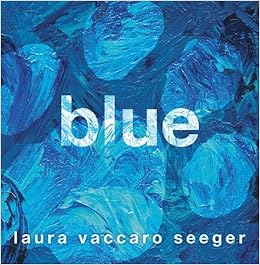
Image result for blue seeger amazon

Image result for blue laura vaccaro seeger

Summary:  The first spread in this companion book to Green shows a boy and puppy lying together with a blue blanket and the words “baby blue”.  The two grow up together, first a preschooler pulling his dog in a wagon entitled “berry blue”, later an older boy walking his dog in the woods: “chilly blue”.  At least a scrap of the blue blanket appears in every illustration, and a die-cut shape gives a peek to the next picture. Prepare for heartbreak on the pages “true blue”, “old blue”, and “so blue” as the boy deals with the aging and death of his beloved dog.  There’s a wordless page where the boy meets a girl and her puppy, and the last page shows them grown up, walking hand-in-hand, while a dog frolics in the ocean: “new blue”. 40 pages; ages 3-7.

Pros:  I dismissively thought I had “gotten” this book after the first few pages, but the real power of it comes at the end.  Seeger has already won two Caldecott medals, but the gorgeous acrylic illustrations so perfectly tell this touching story that it would be worth considering her for a third.

Cons:  Blue dies.  I choked up just writing this review.

If you would like to buy this book on Amazon, click here.

Mama Dug A Little Den by Jennifer Ward, illustrated by Steve Jenkins

Published by Beach Lane Books

See the source image

Image result for mama dug a little den amazon

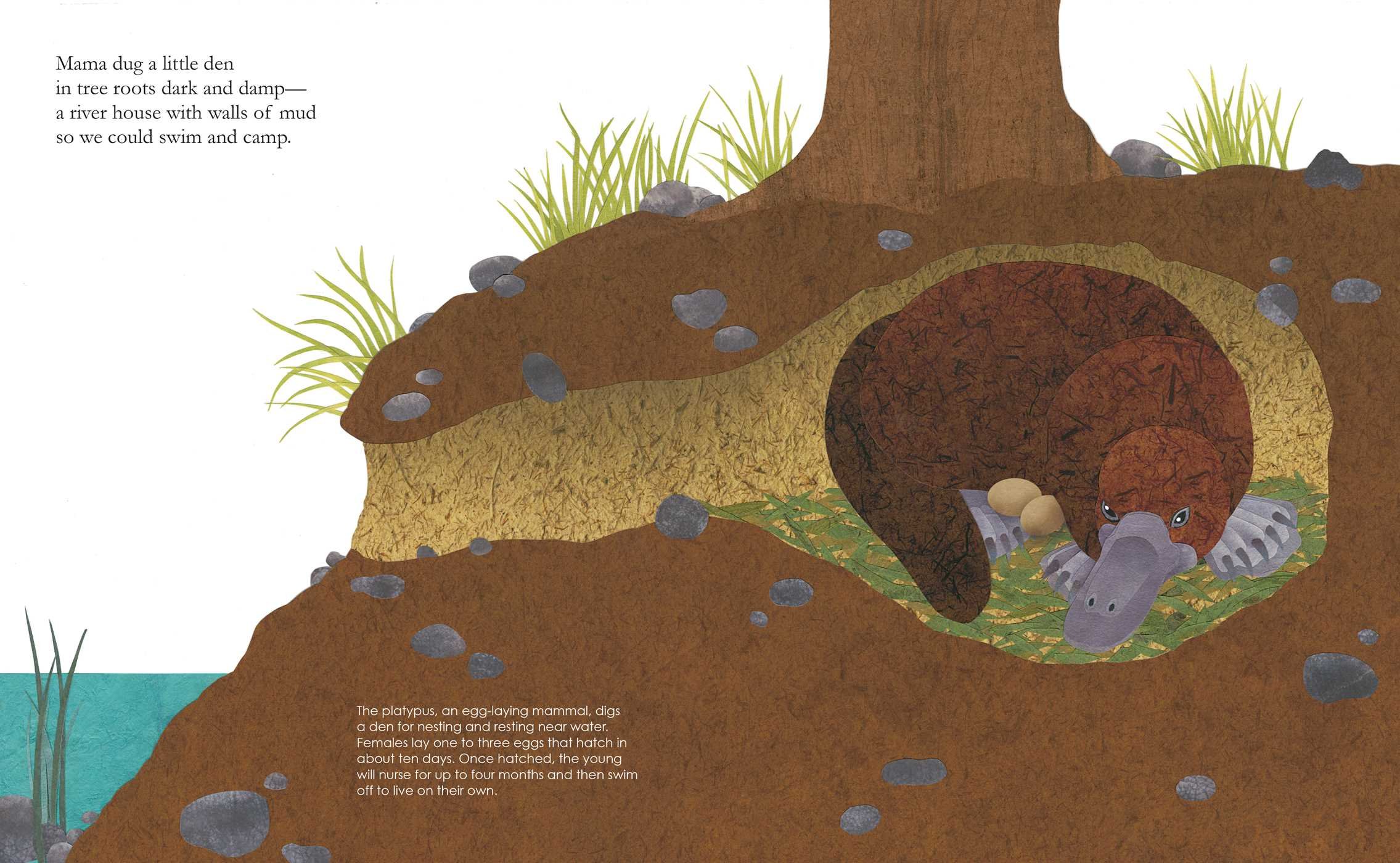
Summary:  Each two-page spread has a rhyme beginning with the line “Mama dug a little den” (“Mama dug a little den/beneath a fallen tree./An earthy home as soft as moss,/a nursery for three” is the first one about red foxes).  A smaller paragraph gives additional information. The illustrations are in Steve Jenkins’ signature cut-paper collage style, and show the animal in its den and some of the surrounding habitat. A final page contains a note from the author about how she came to write the book, and some additional information about what to look for if you find a den to determine what kind of animal lives there.  32 pages; ages 4-8.

Pros:  In this follow-up book to Mama Built A Little Nest, preschoolers will learn a bit about animal homes and how to discover them in their own backyards.  As president of the Steve Jenkins fan club (well, I would be, if there were such a thing), I appreciated the beautiful illustrations.

Cons:  The back matter was so small and unobtrusive, many readers may miss it.

If you would like to buy this book on Amazon, click here.

Louisiana’s Way Home by Kate DiCamillo

Published by Candlewick

Image result for louisiana's way home amazon

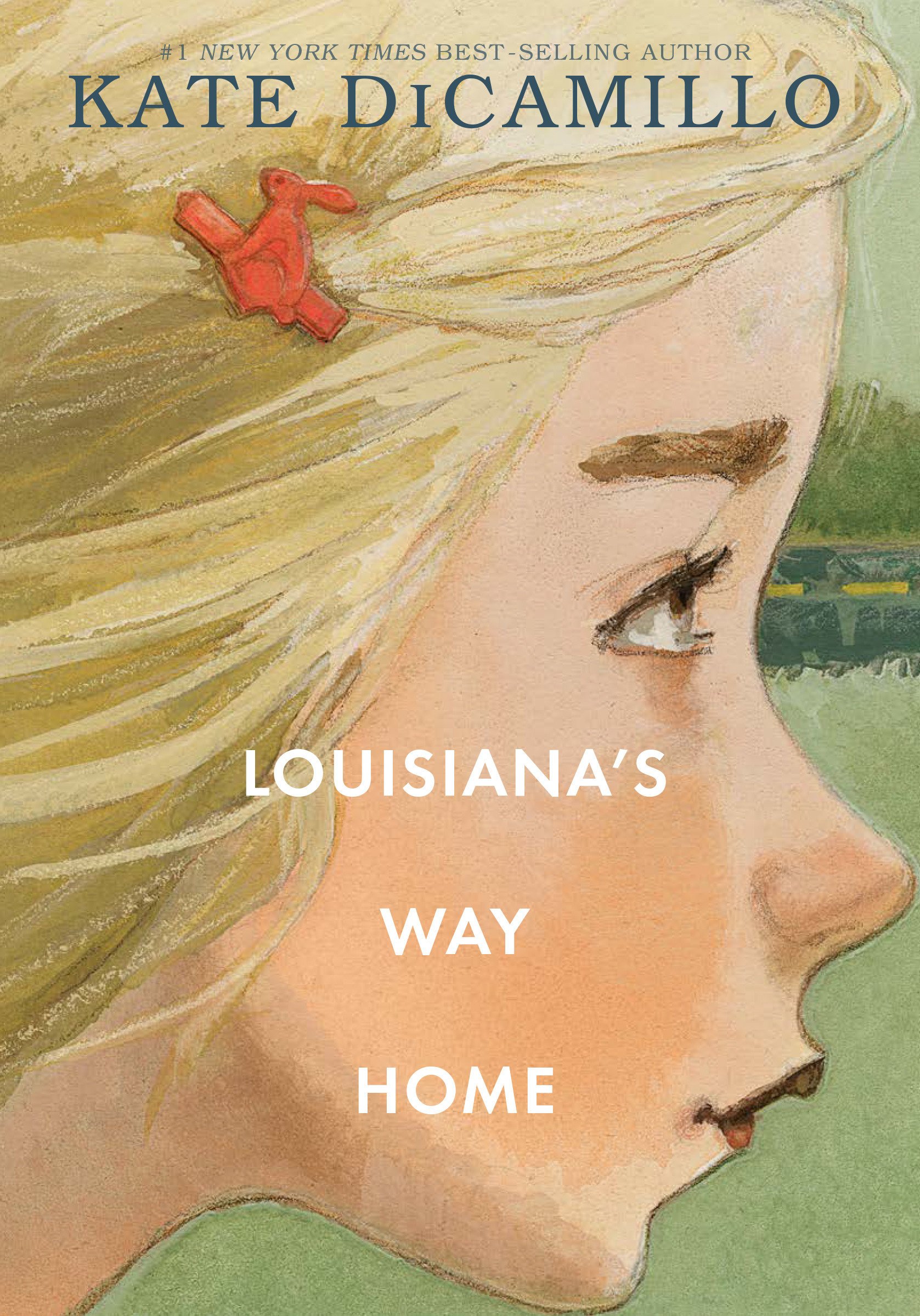
Summary:  Louisiana Elefante, whom readers of Raymie Nightingale will remember, tells the story of breaking a life-long curse and finding a new home.  One night her Granny wakes her up at 3:00 a.m. for an unexpected trip from Florida to Georgia.  Granny is increasing pain from a dental infection, to the point where Louisiana has to take over driving duties and find a dentist.  The two of them end up in the Good Night, Sleep Tight motel, Granny trying to recover from the removal of all of her teeth. Louisiana busies herself getting to know some members of the local community and trying to earn enough money with her singing to pay their hotel bills.  When Granny vanishes, leaving a note revealing that much of what Louisiana believed to be true about herself is lies, Louisiana is forced to re-create herself and to find a new home. Fortunately, she’s met an unusually kind boy named Burke Allen, and he and some of her other new friends help her get settled while still managing to keep her connections to her friends back in Florida.  240 pages; grades 4-6.

Pros:  A beautiful story of finding your way and forgiving the past to move forward.  Louisiana is a memorable character, as are many of those she meets on her journey.  It’s a quick read, but there’s a lot to digest and discuss. With six starred reviews, there are sure to be some awards in store.

Cons:  Okay, I liked it better than Raymie Nightingale, but I still don’t quite see what all the fuss is about.

If you would like to buy this book on Amazon, click here.

This was another advanced reading copy I received from Candlewick.

So Tall Within: Sojourner Truth’s Long Walk Toward Freedom by Gary D. Schmidt, illustrated by Daniel Minter

Published by Roaring Brook Press

Image result for so tall within sojourner amazon

Image result for so tall within sojourner minter

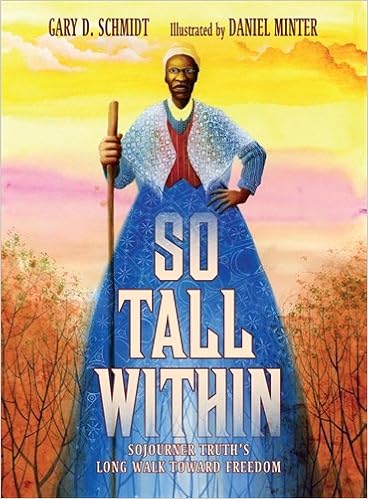
Summary:  Each section of Isabella Baumfree’s life (later renamed Sojourner Truth) begins with a page that starts “In Slavery Time”.  “In Slavery Time, when Hope was a seed waiting to be planted,” or “In Slavery Time, when Happiness was a dream never coming true,”.  The last few sections begin with “In Freedom Time”. Each section tells part of Isabella’s remarkable life, starting with her childhood in slavery, and continuing with the determination that eventually led her to run away to freedom, and to bring a lawsuit to demand her son be returned home from a plantation in Alabama (he was).  Fifteen years after running away, now calling herself Sojourner Truth, she traveled across New York, to Washington, D.C., and to other parts of the country, first working to end slavery, then later speaking for human rights in other areas. She died in her 80’s, and the book ends with her quote: “My lost time that I lost being a slave was made up.”  Includes a biographical note and an extensive bibliography with notes about the various sources. 48 pages; grades 2-5.

Pros:  The poetic text and stunning illustrations give a compelling outline of Sojourner Truth’s life.  The excellent bibliography will help readers learn more. Deserving of an award or two for both the writing and the illustrations.

Cons:  There are some disturbing elements to Sojourner Truth’s story which young readers may need some help with.

If you would like to buy this book on Amazon, click here.

Saving Winslow by Sharon Creech

Published by Joanna Cotler Books

Image result for saving winslow amazon

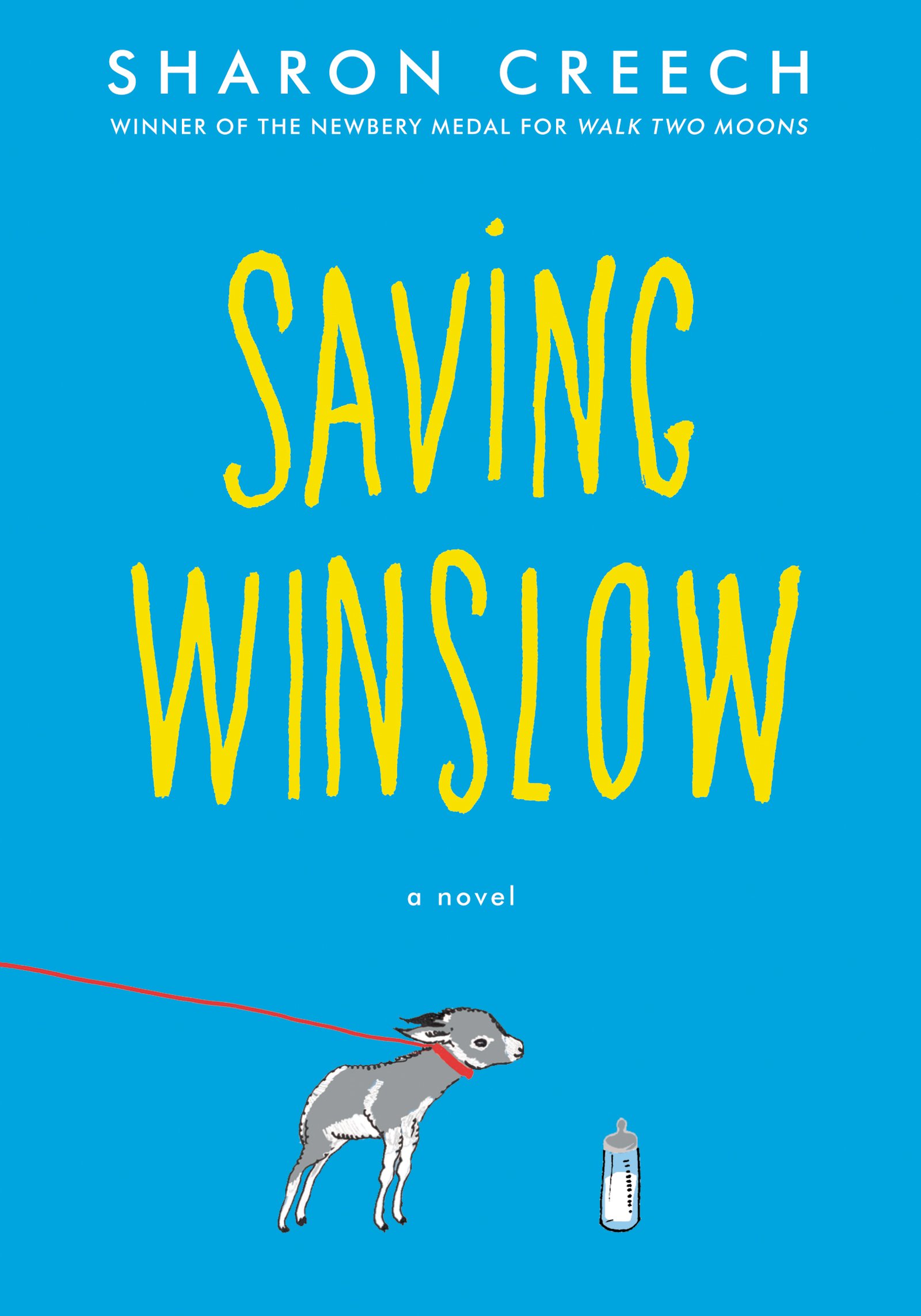
Summary:  When Louie’s dad brings home a sickly newborn donkey whose mother has died, no one has much confidence that it will pull through.  No one, that is, except Louie, who doesn’t let his past bad luck with keeping other animals alive stand in the way of devoting himself to his new pet.  Naming the donkey Winslow, he moves into the basement to sleep next to the baby, teaching him to drink from a bottle and getting up for midnight feedings. There’s a new girl in the neighborhood, the quirky but endearing Nora, who takes an interest in Winslow and tentatively begins to help out.  Both Louie and Nora are dealing with loss–Louie’s older brother has recently left home to join the army and Nora lost her premature baby brother–and sometimes their struggles get in the way of their friendship. But Winslow manages to bring them together. When he gets big enough to move back to the farm where he was born, it’s clear that a lasting bond has been forged between the two kids and their donkey.  176 pages; grades 3-6.

Pros:  Sharon Creech packs a pretty big emotional punch in 176 pages.  The short chapters and small pages keep the book moving along quickly, and would make it a great choice for a read-aloud or a first “real” chapter book.

Cons:  The fire scene toward the end seemed a little bit contrived to me.

If you would like to buy this book on Amazon, click here.

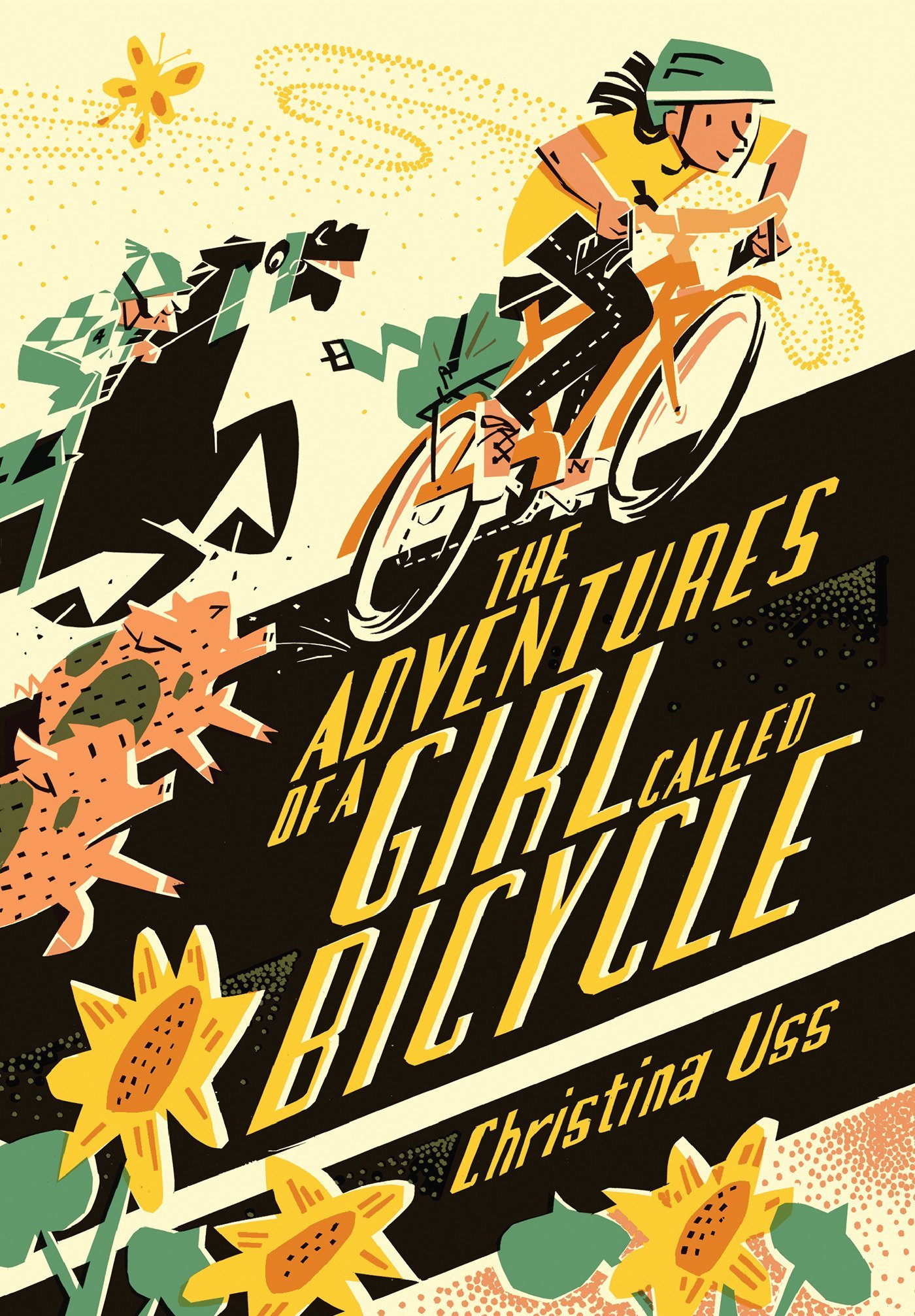
The Adventures of a Girl Called Bicycle by Christina Uss

Published by Margaret Ferguson Books

Image result for a girl called bicycle amazon

Summary:  When a three-year-old girl wearing a t-shirt with the word “Bicycle” on it appears at the Mostly Silent Monastary, retired nun Sister Wanda adopts her and names her Bicycle.  Bicycle is happy living quietly among the monks and nuns, but when she turns 12, Sister Wanda decides it’s time for her to learn how to make friends, and ships the girl and her bicycle, Clunk, to the Friendship Factory for summer camp.  Bicycle, who can’t imagine anything worse, decides to run away to San Francisco to take part in the Blessing of the Bicycles. The rest of the story is a wild and crazy road trip, in which Bicycle and Clunk (and later a new bike named Fortune after Clunk falls apart halfway through the trip) meet a quirky but endearing cast of characters.  By the time Sister Wanda catches up with her in Nevada, Bicycle realizes she has made quite a few friends along the way. She has to give the nun the slip one more time, but they reunite in San Francisco, where Fortune is blessed and Bicycle meets her hero, Polish bicycle racer Zbig. Sister Wanda realizes Bicycle has found her own way of making friends, and the end finds Zbig, Bicycle, Wanda, and a man in a rooster suit pointing their bicycles eastward for the journey home.  320 pages; grades 4-7.

Pros:  A lively and entertaining adventure with a likeable introvert and the fun and interesting characters she meets along the way.

Cons:  Christina Uss works at the town library where I get most of my books, so it’s probably not in my best interest to offer her anything but praise and congratulations on her first novel.

If you would like to buy this book on Amazon, click here.

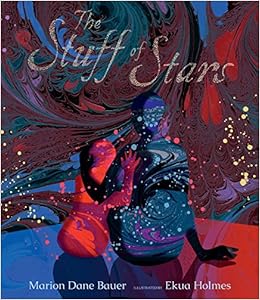
The Stuff of Stars by Marion Dane Bauer, illustrated by Ekua Holmes

Published by Candlewick

Image result for stuff of stars bauer amazon

Image result for stuff of stars ekua holmes

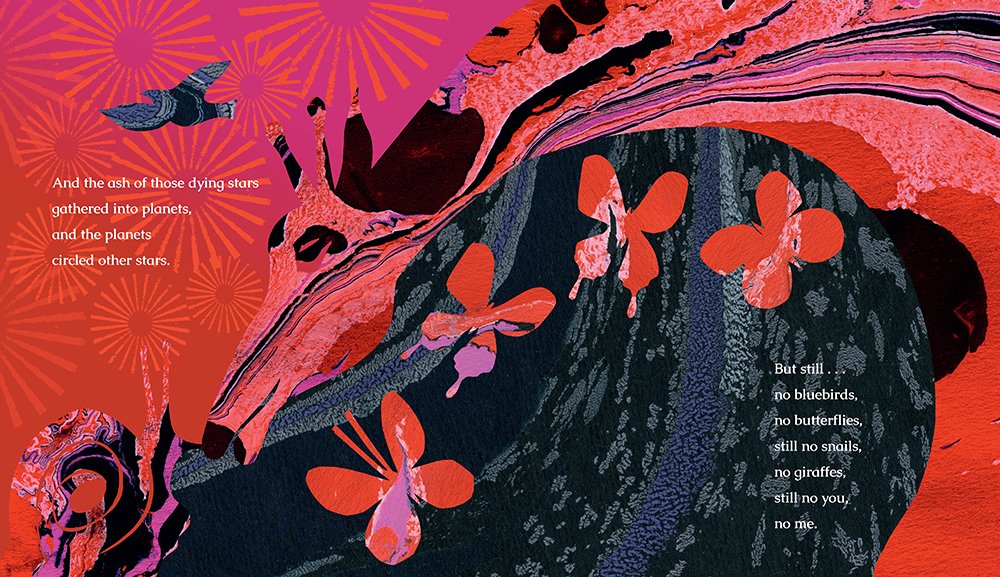
Summary:  “In the dark,/in the dark,/in the deep, deep dark, a speck floated, invisible as thought, weighty as God.”  Then BANG! and the universe was born, a cloud of gas stretching and expanding into trillions of stars. When some of those stars exploded, the ash formed the planets circling other stars, including our sun.  And one of those planets, Earth, was at just the right distance from the sun for life to begin: mitochondria, jellyfish, sharks, dinosaurs, and finally, humans. And after many, many generations came YOU: “You,/and me/loving you./All of us/the stuff of stars.”  40 pages; ages 4-8.

Pros:  An amazing book that traces the history of the universe through a brief, lyrical 40 pages, all illustrated with phenomenal collages on hand-marbled papers.  A multi-award contender for sure.

Cons:  It’s a book I appreciate more than love.  I’m not sure how wide the appeal for kids will be.

Note: I recently received a box of books from Candlewick, which I assume were meant for me to review on my blog.  This was one of them, and I will make note of others as I get to them. Thank you, Candlewick!

If you would like to buy this book on Amazon, click here.

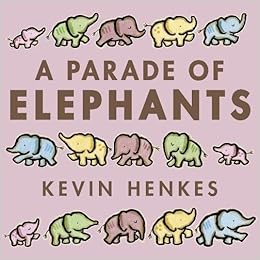
A Parade of Elephants by Kevin Henkes

Published by Greenwillow Books

Image result for parade of elephants henkes amazon

Summary:  “Look! Elephants!” So begins this brief (about 80 words) book showing a group of five elephants on parade.  Kids can pick a favorite and follow it from page to page: they are blue, green, purple, pink, and yellow. The page that introduces them shows them on a graph, with numbers counting from one to five, and a new elephant added on each line.  The elephants go up, down, over, under, in, and out, reinforcing those concepts. At the end, they are ready for sleep, but first they raise their trunks and trumpet, scattering stars across the sky.  40 pages; ages 3-8.

Pros:  The usual Kevin Henkes masterpiece, this is a deceptively simple story that introduces colors, numbers, concepts like up and down, and even introduces graphing.

Cons:  I found the pink and purple elephant a little too similar in color to be distinctive.  Fortunately the pink one was also smaller than the other four.

If you would like to buy this book on Amazon, click here.

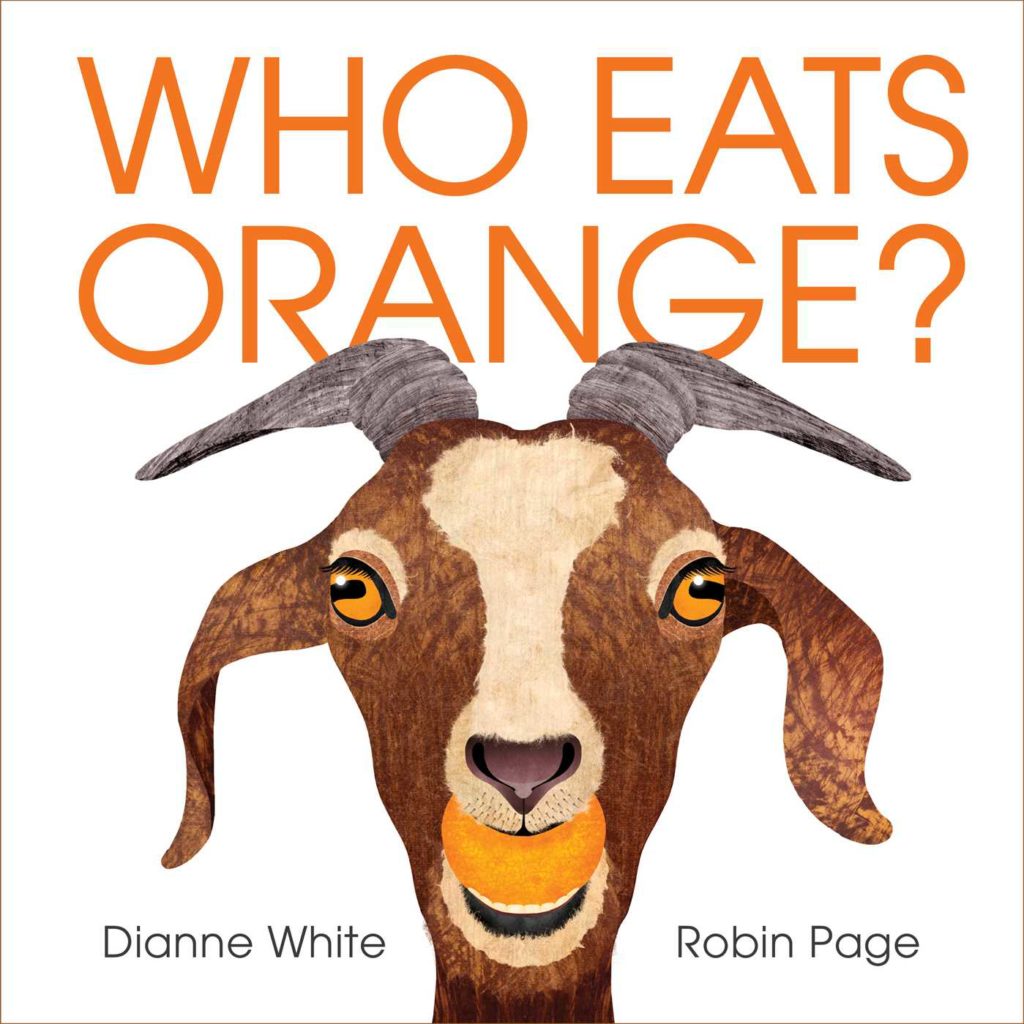
Who Eats Orange? by Dianne White, illustrated by Robin Page

Published by Beach Lane Books

Image result for who eats orange diane white amazon

Image result for who eats orange robin page

Summary:  Animals, foods, colors, and habitats are introduced in this book that has a repeating question and answer format: “Who eats orange? Bunnies in their hutches do. Chickens in the henhouse too.  Who else eats orange? Goats. Pigs. Gorillas too? Gorillas? No! Gorillas don’t eat orange. They eat…green.” The large illustrations have plenty of color on a simple white background. Humans, the book concludes, eat a rainbow of colors.  The last two pages list various habitats with the animals from each listed and additional information about what and how that animal eats. 32 pages; ages 4-8.

Pros:  Catchy rhymes and eye-catching graphics make this an appealing introduction for a wide variety of topics.

Cons:  The habitats listed at the end include farms, Africa, ocean, forest, rainforest, and tundra; but Africa is a continent with many different habitats.

If you would like to buy this book on Amazon, click here.

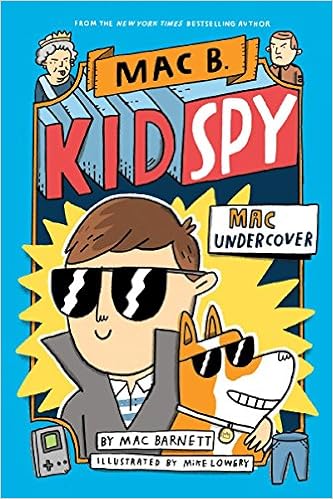
Mac Undercover (Mac B. Kid Spy book 1)

Published by Orchard Books

Image result for mac undercover amazon

Summary:  Mac may just be a kid, but when he gets a call from the Queen of England requesting a favor, he feels he has no choice but to leave his home in Castro Valley, California, and fly to London.  When he gets there, he learns that the Queen’s Coronation Spoon has been stolen, most likely by the King of France. Mac then travels to France on a spy mission to try to get it back.  After a botched robbery of the Mona Lisa from the Louvre (he’s hoping to do a trade), Mac is taken to see the king, who is able to prove his innocence and point Mac in the direction of a suspicious KGB agent.  Mac is finally successful in tracking down not only the spoon, but his missing Game Boy. It turns out this KGB agent has been targeting Mac all along, wanting something that Mac has that is very valuable in the Soviet Union.  A trade takes place, and Mac is able to return home, but on the last page he is shown receiving another call from the Queen, setting up the sequel that’s due out in December. 160 pages; grades 2-5.

Pros:  Lots of laughs in this liberally-illustrated story that takes place during Mac Barnett’s childhood in the 1980’s.  Interspersed with the goofiness are facts about the different places he travels to. A perfect choice for those new to chapter books as well as older reluctant readers.

Cons:  Abraham Lincoln is pictured on the cover of a book about the U.S. Founding Fathers, which doesn’t seem historically accurate.

If you’d like to buy this book on Amazon, click here.