La Princesa and the Pea by Susan Middleton Elya, illustrated by Juana Martinez-Neal

Published by G. P. Putnam’s Sons
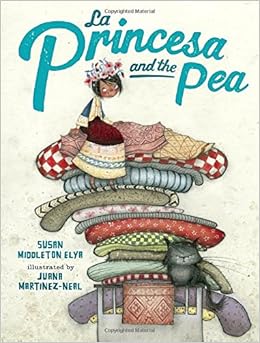
Summary:  The prince is longing for a wife, but no woman is perfect enough for his mother’s approval.  When a maiden happens by, the prince is hopeful, but Mom decides to test her with the old pebble under the mattress(es) trick.  Naturally, the young woman tosses and turns all night, convincing the mother that she’s the one for her son.  There’s a bit of a twist at the end, as it’s revealed that the prince stuck some pitchforks and stones in with the mattresses, but everyone lives happily ever after anyway.  Includes a glossary of Spanish words used in the text and an illustrator’s note explaining how she was inspired by textile arts of indigenous people of Peru in creating her art.  32 pages; ages 4-8.

Pros:  The catchy rhyming text and South American influences in both language and illustrations make this a perfect companion to the more traditional tale of the princess and the pea.

Cons:  Kids will find it helpful to have some background knowledge of the original story before reading this one.
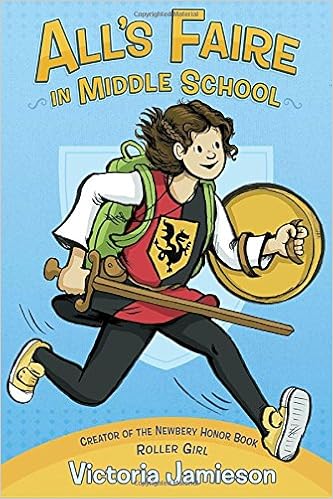
All’s Faire in Middle School by Victoria Jamieson

Published by Dial Books

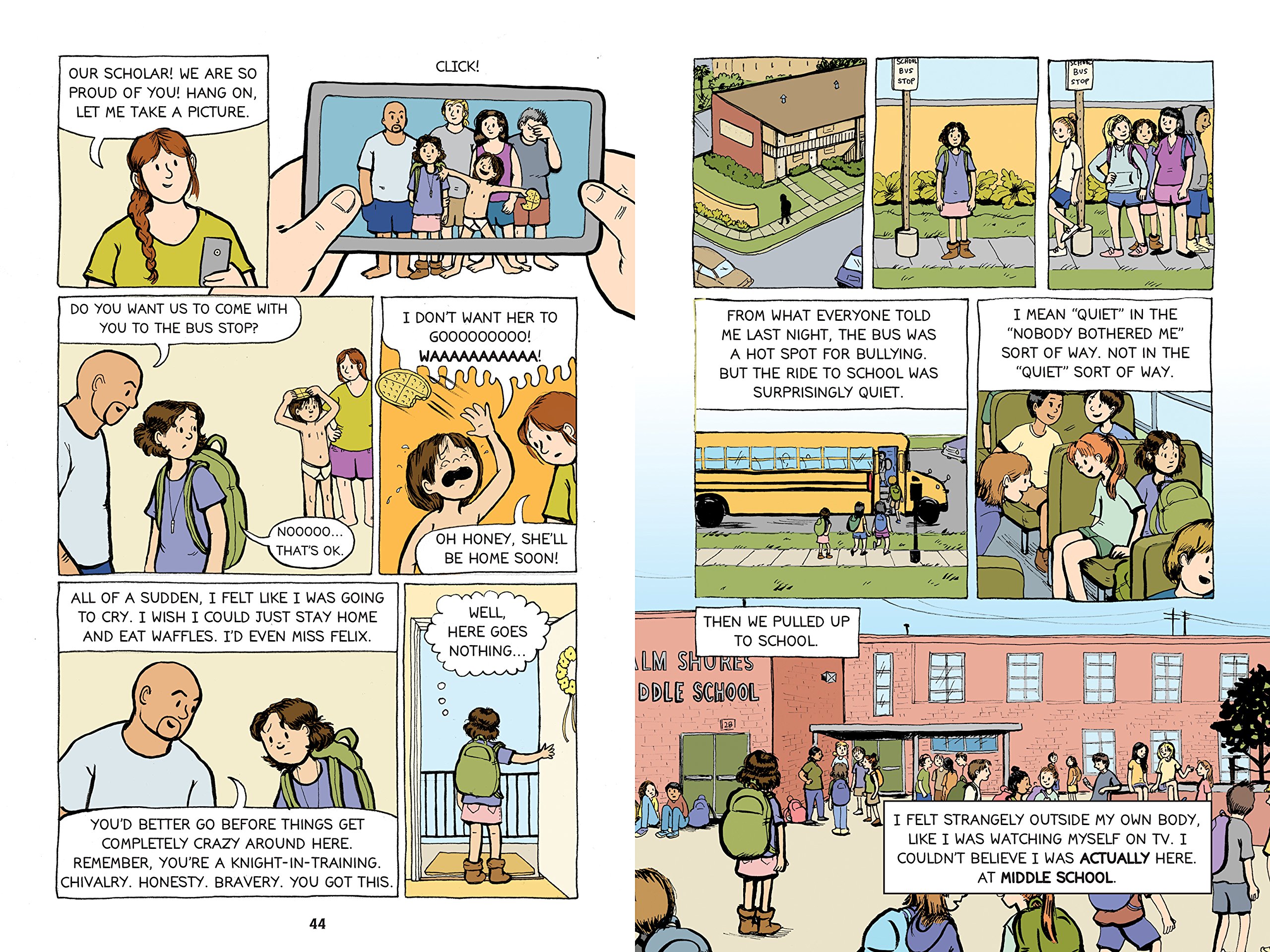
Summary:  Imogene has grown up at the Renaissance Faire, where her parents both work, and been homeschooled all her life.  When she decides to go to public middle school, she’s not quite prepared for a new world of tough teachers, cafeteria food, and figuring out the social hierarchy and where she fits into it.  Each chapter begins with a page that looks like an illuminated manuscript, and chapters switch back and forth between Imogene’s life at school and at home.  The two worlds collide occasionally, once when she realizes that a girl she’s seen bullied is a big Renaissance Faire fan and a potential friend, and again when a group of girls who may or may not be her friends show up for a birthday party.  After a tough week in which Imogene herself is accused of bullying and she throws her little brother’s beloved stuffed squirrel into the lake, she’s ready to move from her role at the Faire from squire to hermit.  But her loving, if unconventional, family and Renaissance community help her come through it all stronger than ever.  248 pages; grades 4-7.

Pros:  Victoria Jamieson’s follow-up to her Newbery-honored Roller Girl does not disappoint in any way.  Imogene is a likeable and believable protagonist, and readers will enjoy learning about the world of the Renaissance Faire the way they did roller derby.  The middle school scenes ring true, and the be-yourself message is inspiring.

Cons:  A couple mentions of sex and a language incident or two may raise a few elementary parent eyebrows.

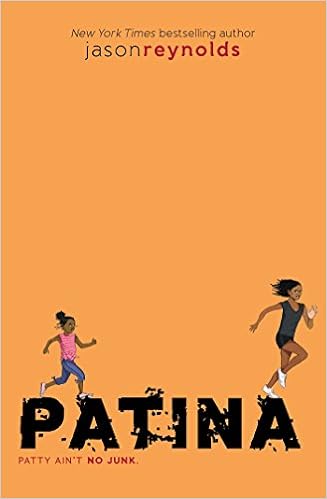
Patina by Jason Reynolds

Published by Atheneum

Summary:  Patina, or Patty, is a ferociously competitive member of the Defenders track team.  In the opening scene she comes in second place in a race, and is so angry at herself she can’t watch the rest of the meet or root for her teammates.  The next week, the coach puts her in a key position of the new relay team, hoping to help her become more of a team player.  Patty struggles with this issue off the team, too, trying to figure out how to deal with the wealthy white girls at her new private school.  Her aunt and uncle are sending her to the school, after Patty and her younger sister Maddie have to move in with them.  Patty’s father is dead, and her mother has lost both legs to diabetes, making Patty fiercely protective of Maddie.  Like Ghost before her, Patina works through her problems through the course of the book in a realistic and sympathetic way, and is struggling to be the first to cross the finish line at a crucial race when the book ends.  240 pages; grades 4-8.

Pros:  The second book in Jason Reynolds’s Track series does not disappoint, offering the same grit and heart as Ghost, with a narrator whose voice is just as true and honest.  Reynolds shows that he can vividly portray a wide range of interesting female characters.  Readers (including this one) will be anxiously awaiting book #3.

Cons:  Patina’s story is a bit more of an internal odyssey than Ghost’s was; readers may miss some of the action from the first book.

AASL Conference

I am excited to be attending the AASL conference in Phoenix this November.  If anyone else is going to be there, I’d love to meet up!  Also, I am staying in an AirBnB about a mile and a half from the conference.  It’s a two room guest house, so plenty of room for someone else if you’re in need of an inexpensive place to stay.  Email me at jkdawson115@gmail.com if you want to talk more.

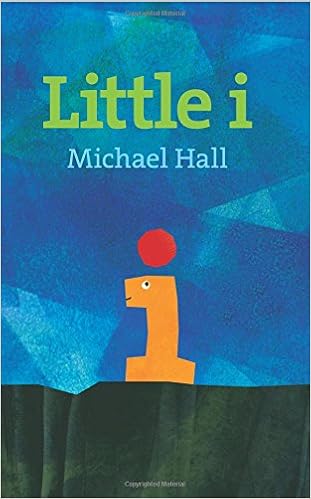
Little i by Michael Hall

Published by Greenwillow Books

Summary:  When Little i loses his dot, he doesn’t know what to do.  Some of the other letters (s, t, r, a, n, g, and e to be precise) think he looks a little odd.  Without a dot, he looks like a number.  So i sets off in search of his dot.  Along the way, he sees many wonders.  A waterfall is exciting! Spectacular! Magnificent! And very loud! (and made up of exclamation marks if the reader looks closely.)  He pauses to admire some sprouts that look like commas.  At long last, i finds his dot, but he has grown on his journey, and no longer feels like he needs it.  Leaving the dot, he heads for home, where he is greeted by friends a, h, o, and y.  They see that he has changed–he’s now a big I, which makes him a whole word!  The other letters cheer–especially b, r, a, v and o.  48 pages; ages 4-8.

Pros:  A clever adventure involving letters and punctuation.  The bold, colorful collage illustrations are eye-catching.

Cons:  The sly humor and hidden punctuation may be lost on younger readers.

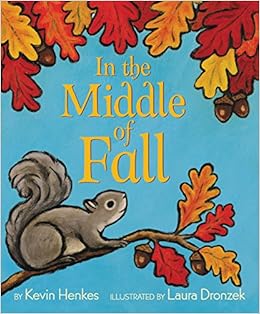
In the Middle of Fall by Kevin Henkes, illustrated by Laura Dronzek

Published by Greenwillow

Summary:  The husband-and-wife team that brought you When Spring Comes have teamed up again with this look at fall.  Squirrels, acorns, apples, pumpkins, and beautiful falling leaves are all featured in the close-up paintings rendered in the brilliant hues of the season, accompanied by only two sentences of text that stretch over the whole book.  A girl and her dog move throughout the book.  By the end, they are gazing at a white sky, ready for the first snowfall.  40 pages; ages 3-7.

Pros:  A perfect introduction to the season.  We can only hope there will be similar homages to winter and summer.

Cons:  The first sentence stretches on for 19 pages, which may not be the best modeling for how to avoid run-ons.

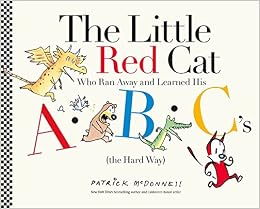
The Little Red Cat Who Ran Away and Learned His ABC’s (The Hard Way) by Patrick McDonnell

Published by Little, Brown

Summary:  In this nearly wordless book, a cat runs away and gets chased by an alligator, bear, and chicken (in that order).  The story unfolds alphabetically, but kids will have to figure out what the word is for each picture.  There’s a happy ending, as a unicorn distributes valentines; the cat waves goodbye to his friends, uses an X on a map to get home, gives a gigantic yawn, then catches some zzz’s.  The whole alphabet is listed on the last page, along with a list of all the words shown in the story.  48 pages; ages 3-6.

Pros:  An intriguing introduction to the alphabet, engaging readers who will have to both figure out the word for each letter and the story those words are telling.

Cons:  The title doesn’t exactly roll right off your tongue.

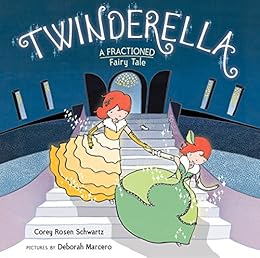
Twinderella: A Fractioned Fairy Tale by Corey Rosen Schwartz, pictures by Deborah Marcero

Published by G. P. Putnam’s Sons

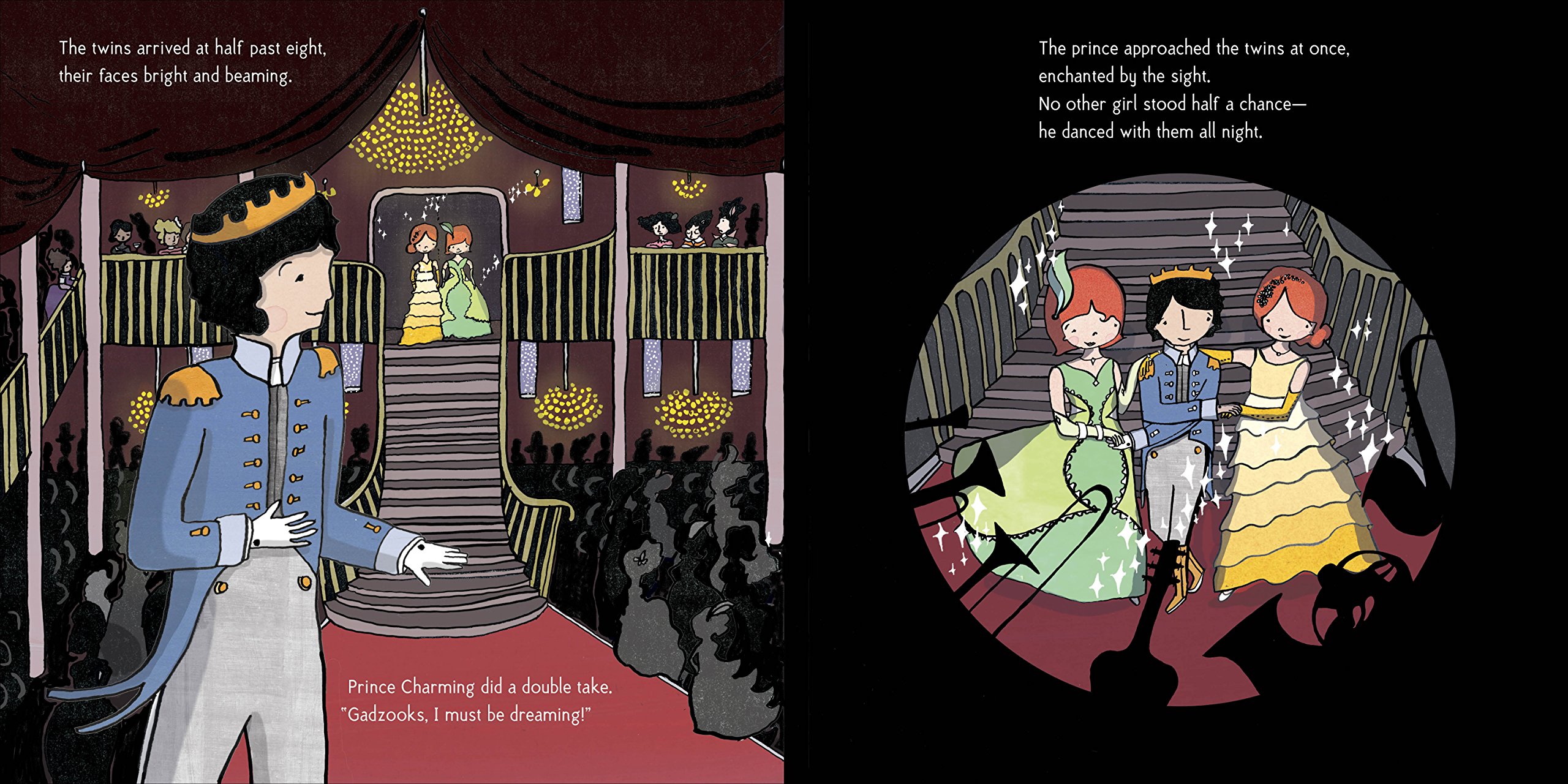
Summary:  What if Cinderella had a twin?  It would make the work easier, as they could divide the chores.  And each one could handle one of the evil stepsisters.  Even going to the ball wouldn’t be so bad, as long as they were willing to divide the jewelry and share the coach.  But the prince is a different matter.  There’s only one Prince Charming.  He has a great time dancing with both Cinderella and Tinderella until midnight, finds the glass slipper, and winds up at their home.  Forced with a difficult decision, the twins bring back their fairy godmother, who magically creates a twin prince.  Before long, there’s a double wedding, then Cinderella and her prince go on to rule the land, while Tinderella and her prince go on to win all the highest math awards.  32 pages; ages 4-8.

Pros:  Schwartz’s infectious rhymes from her ninja fairy tales are back to entertain readers with an unusual and fun twist on the Cinderella story.

Cons:  While the pictures are cute, I missed the Dan Santat illustrations from the previous tales.

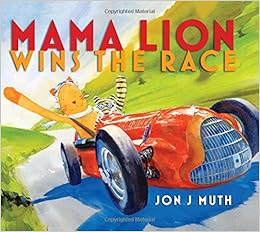
Mama Lion Wins the Race by Jon J. Muth

Published by Scholastic Press

Summary:  Stuffed animals Mama Lion and Tigey are ready for the big car race, going up against such stiff competition as Bun Bun, the Flying Pandinis, and the Knitted Monkeys.  When the flag waves, they’re off, and Mama Lion and Tigey take the lead.  Losing a wheel sets them back, though, and they’re grateful when the Pandinis take a break from the race to help them.  They enter once again, and the race becomes closer than ever as they approach the finish line (with the Knitted Monkeys trying a few unscrupulous tricks to win).  The finish proves perfect for everyone, as Mama Lion and Tigey learn that winning isn’t always the most important result.  56 pages; ages 4-8.

Pros:  Jon Muth takes a break from his Zen picture books to create a detailed world of stuffed animals and a memorable race.  Gentle lessons are inserted through the story, reminding readers that the journey is more important than the final destination and friendships are more valuable than finishing first.

Cons:  American children may not know what a “spanner” is when one is used to repair the broken wheel.

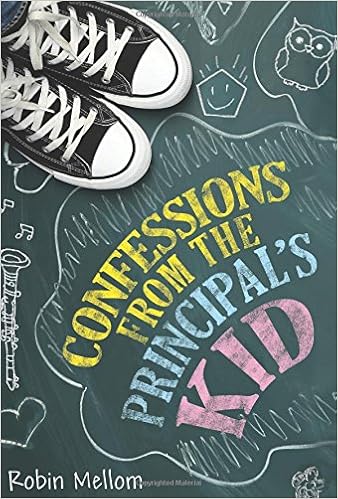
Confessions from the Principal’s Kid by Robin Mellom

Published by HMH Books for Young Readers

Summary:  What would it be like if the principal was…your mom?  Allie give an insider’s view, sharing her stories of staying after school with a small group of kids (the Afters) whose parents all work at school.  It’s fun to have behind-the-scenes access to school, but a drag to have to stay after every day.  Plus, Allie’s best friend Chloe hasn’t spoken to her since an incident in fourth grade where Chloe thought Allie ratted her out to her mom.  Allie’s got some other problems, too–her overworked mom isn’t as much fun as she was when she was a teacher, and Graham–another old friend and fellow After–is acting weird.  Author Robin Mellon draws on her own experiences as a principal’s kid to explain the ups and downs of that role.  272 pages; grades 3-6.

Pros:  Fans of Dork Diaries and other realistic school stories will enjoy Allie’s authentic voice as she shows readers what it’s like to have the insider track at school.  Short chapters keep the action moving quickly.

Cons:  Allie occasionally sounds a little wise beyond her years.