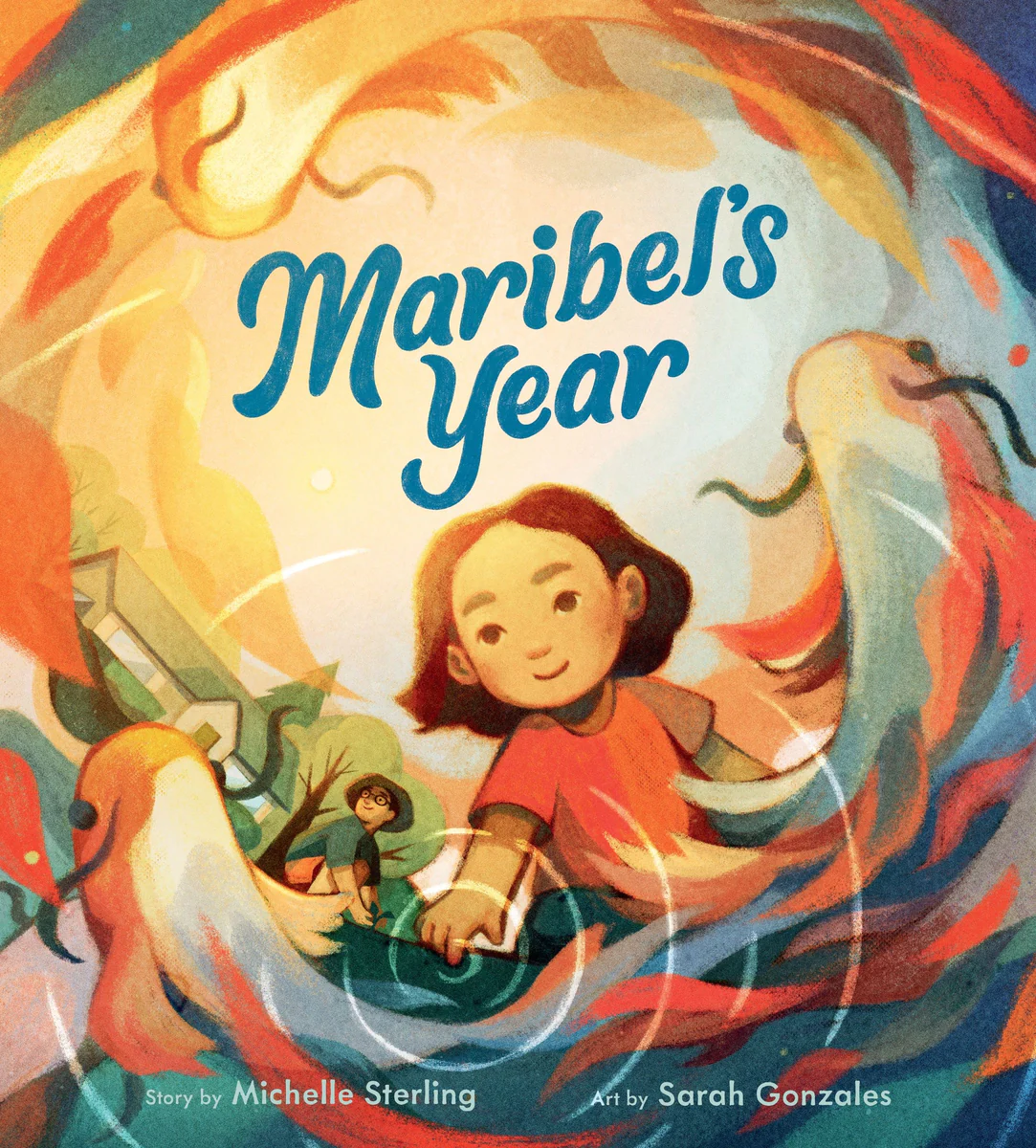
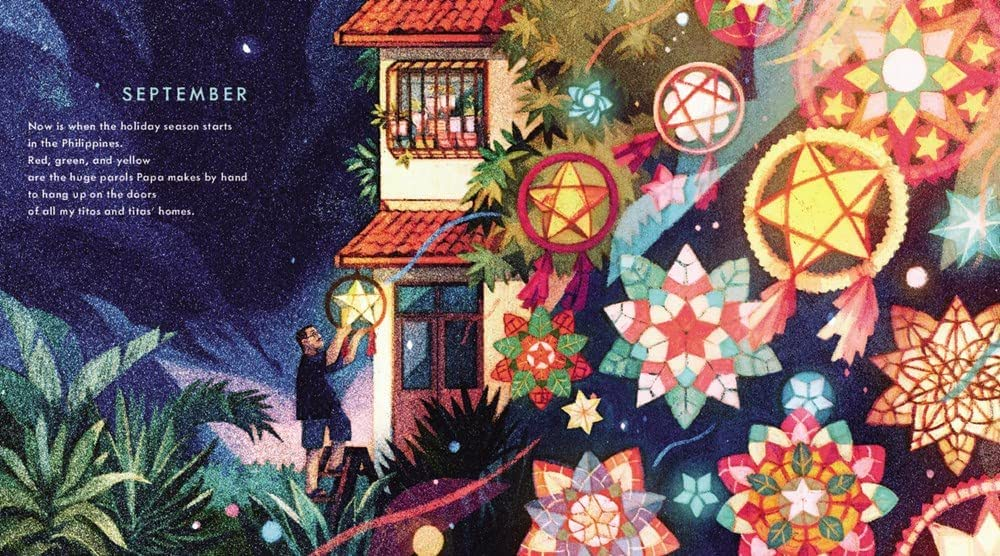
Summary: Maribel tells about her first year in the U.S. after moving from the Philippines with her mother. Papa is still back home, and Maribel misses both him and her home. English is confusing, and the cold, snowy weather feels unfamiliar. But as the year goes on, there’s the promise of a new friend and exciting new experiences like learning to ride a bike, swimming at the beach, and trick-or-treating. By the time the snow falls again, it’s time for Papa to join them, and final pages see the family celebrating Christmas together. 40 pages; ages 4-8.
Pros: Maribel tells her story in verse with slightly muted illustrations showing her experiences. The ups and downs of the immigrant experiences are well expressed, and readers will enjoy sharing the year with Maribel.
Cons: I was curious to know if this is based on a real-life family, but there was no author’s note.
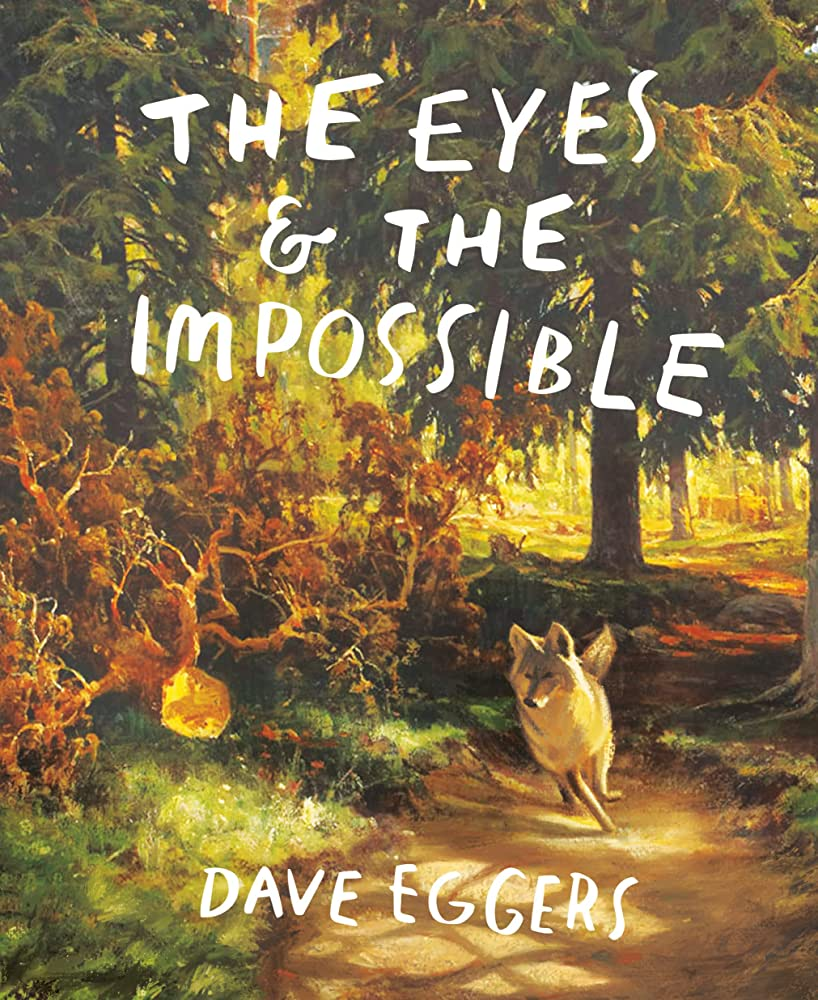
Summary: Johannes is a wild dog who lives in a park populated by other animal friends: a brave and loyal seagull, a group of bright raccoons who are proud of their opposable thumbs, a squirrel who sees more with one eye than most animals do with two, and three wise bison. Johannes can run fast–he estimates that he sometimes surpasses the speed of sound, maybe the speed of light–and he becomes the Eyes of the park, keeping the bison informed about what is going on. A couple of misadventures including a dognapping and the rescue of a human child bring Johannes to the attention of the park staff, and he begins to fear for his freedom. To take his mind off of that worry, he begins to formulate a seemingly impossible plan: to free the bison, assisted by a herd of goats that has recently been transported to the island. All the animals get in on the escape, and all goes off with a minimum of hitches until the crucial moment of boarding the escape boat, when the bison decide they don’t want to be free. Johannes is invited to escape instead, forcing him to decide between his island family and the chance to start a new life of guaranteed freedom. 256 pages; grades 3-7.
Pros: I’m not a big animal fantasy reader, but this book has gotten three starred reviews, so I couldn’t ignore it. I forced myself to start reading and was immediately charmed and engaged by Johannes’s voice, which is simultaneously innocent, wise, and funny. It would be a great choice for an elementary read-aloud or book club, and I certainly hope it will receive some Newbery consideration. The writing is so, so good, and Shawn Harris’s paintings of Johannes perfectly capture his spirit and island home.
Cons: I had my fingers crossed that the constantly maligned ducks would have a moment of redemption during the escape, but they remained the butt of all the other animals’ jokes.
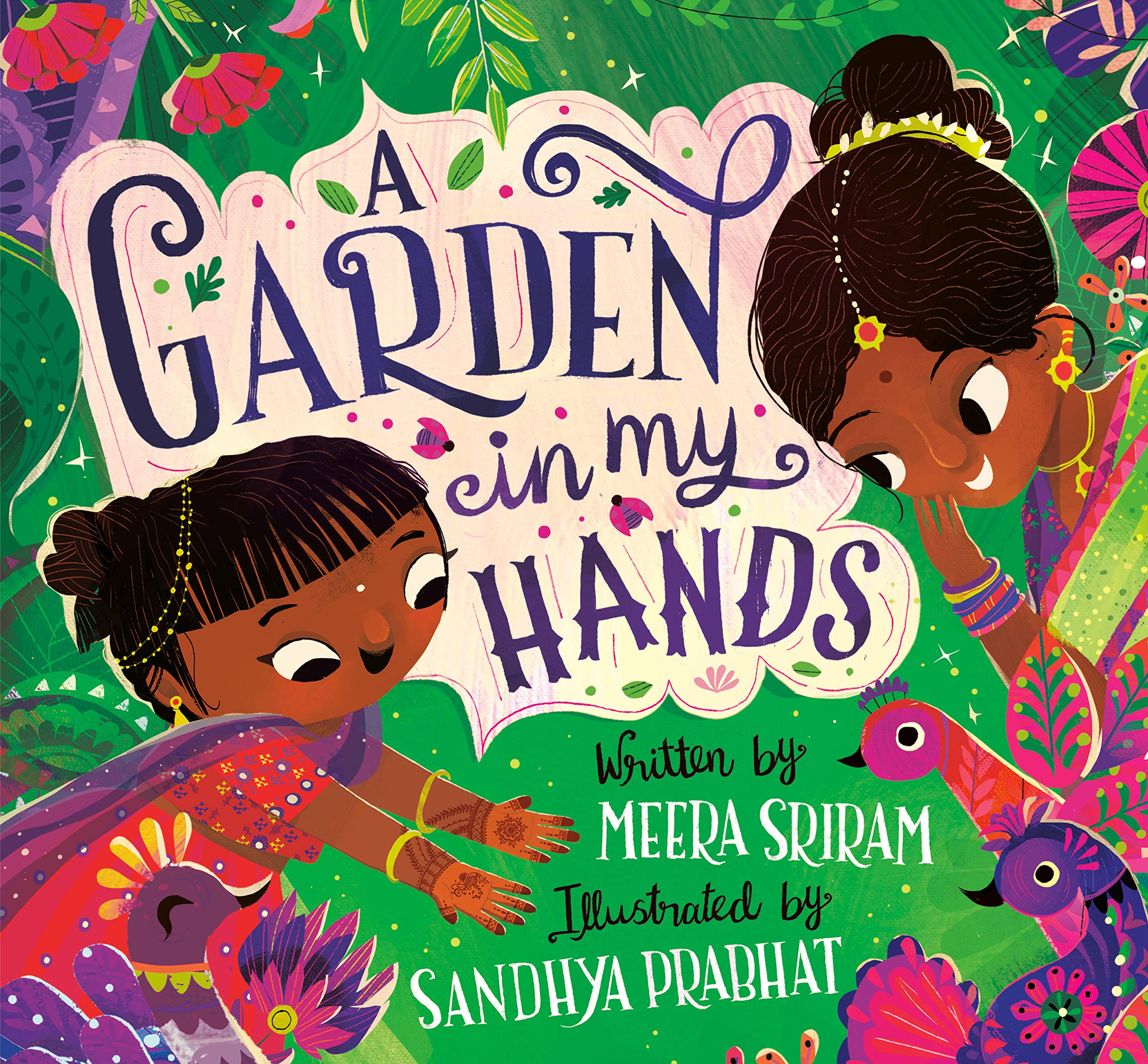
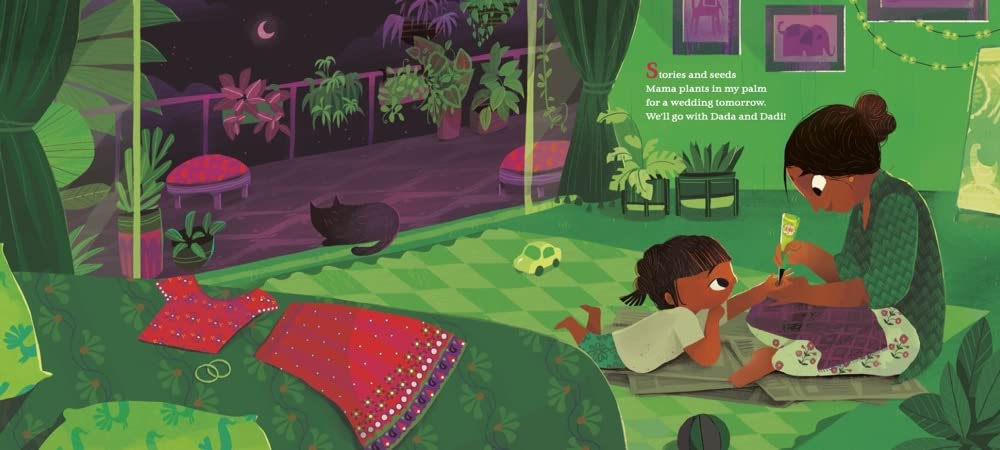
Summary: The night before a wedding, a child describes how their mother decorates their hands and arms with henna, telling them stories from the past as she weaves them into her designs. There’s an anxious evening as the henna dries and the narrator tries not to smear the designs. Gloves are worn to bed, and in the morning the dry henna flakes off, leaving a beautiful design to wear to the wedding. Everyone dances and celebrates together, the henna reminding them of their faraway home and the pride they have in their heritage. Includes additional information about henna and an author’s note describing her own memories of henna from her childhood in India. 40 pages; ages 4-8.
Pros: This beautiful book with its brilliant illustrations will introduce the art of henna to some readers and be appreciated by others for its celebration of a familiar art form.
Cons: It was touch and go there for a while waiting to see how the henna would turn out.
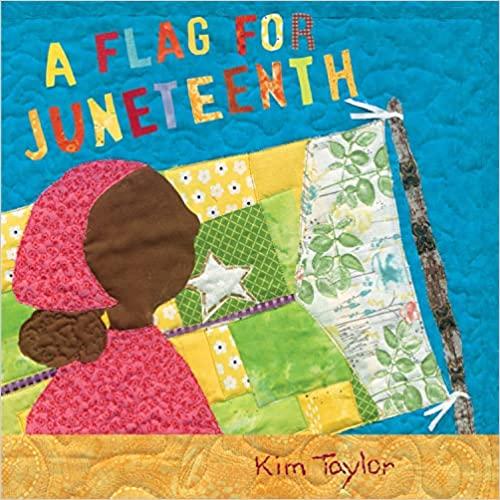
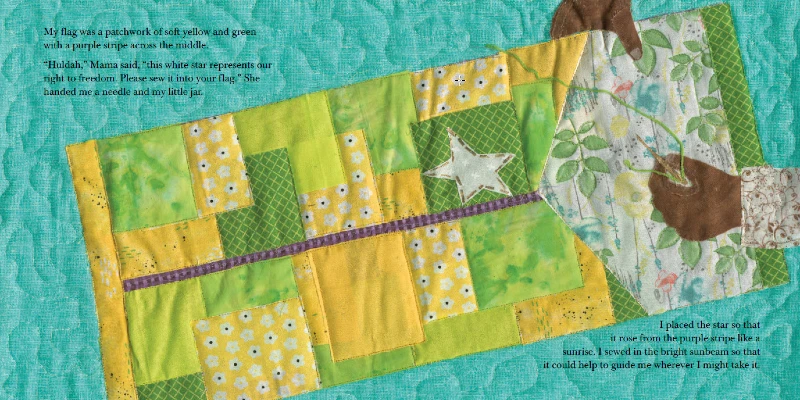
Summary: Huldah is excited to be turning ten on June 19, 1865. That excitement grows when, on the morning of her birthday, soldiers ride up to the Texas plantation where Huldah and her family live and announce that all slaves are free and have been since Abraham Lincoln signed the Emancipation Proclamation two years earlier. All around her is a celebration, and a group of women begins to create freedom flags. Huldah takes some time for herself, climbing a tree to capture a sunbeam in a jar. When she returns, it’s time for her birthday celebration. Her friends and family give her her own freedom flag; later, during a moonlit walk with her family, she wraps her baby sister in the flag, and the family celebrates this day of jubilee. Includes an author’s note about how she came to create the quilts that illustrate this book. 40 pages; ages 4-8.
Pros: With Juneteenth coming up in a few weeks, this is a great introduction for younger readers, illustrated with distinctive quilt-inspired illustrations. Kids may want to design their own freedom flags after reading this.
Cons: There’s not a ton of information about Juneteenth here, so you may want to supplement with some other resources.
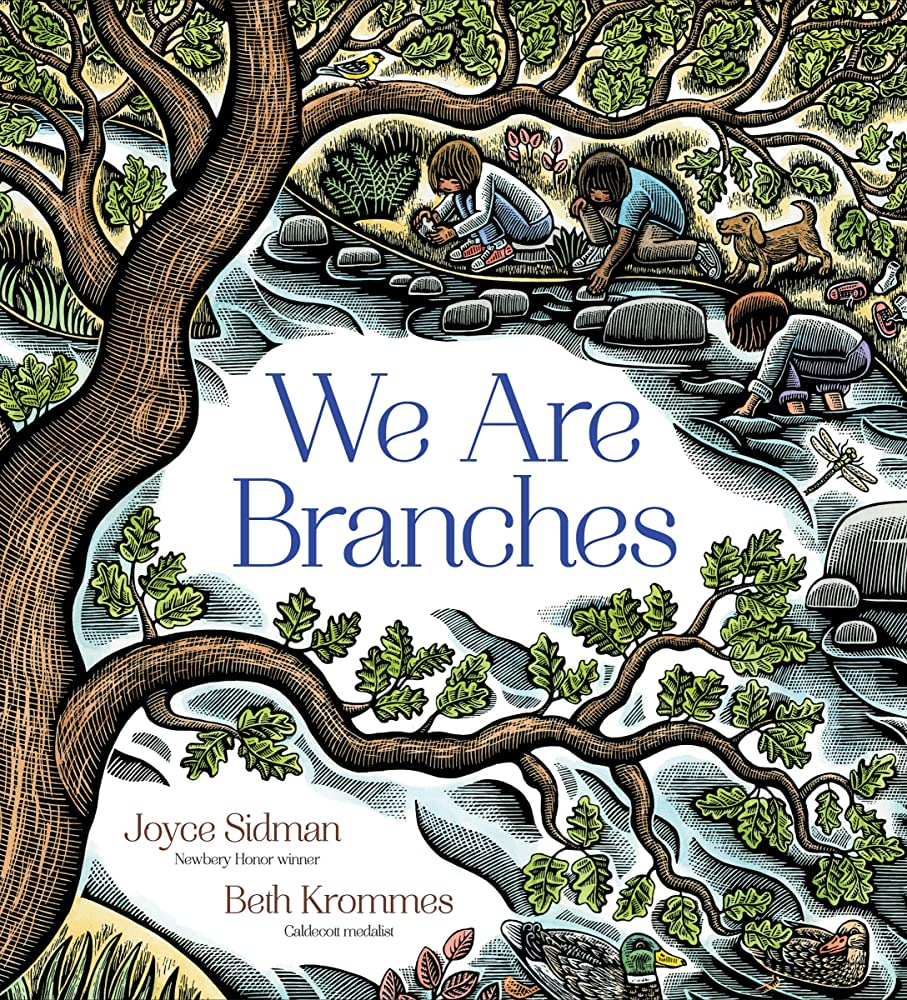
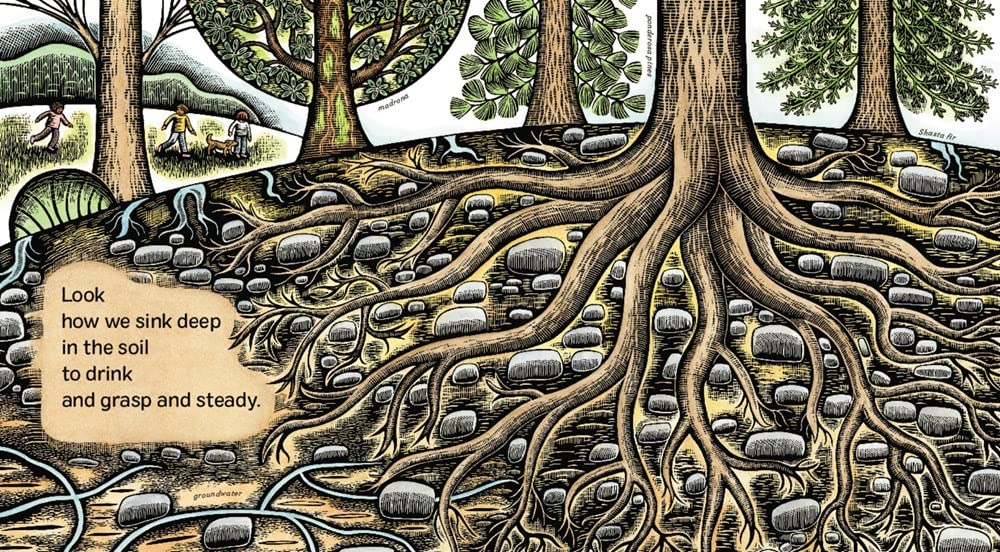
Summary: Branches may call to mind the tops of trees, but the bottoms, their roots, also have branches. So do rivers and bolts of lightning. Look closely, and you’ll notice branches in coral reefs and snowflake crystals. There are branches in bodies, too: bones that branch into fingers and the veins and arteries that allow blood to circulate. Branches are strong and brave! Includes additional information about branching patterns. 40 pages; ages 4-8.
Pros: A Joyce Sidman-Beth Krommes collaboration is always a treat, with beautiful poetic language and distinctive scratchboard illustrations. This is a great addition to STEM collections, encouraging readers to look for patterns in nature.
Cons: The last book on patterns this team did was Swirl by Swirl: Spirals in Nature, published in 2011. I hope they’ll create another pattern book before another dozen years go by.
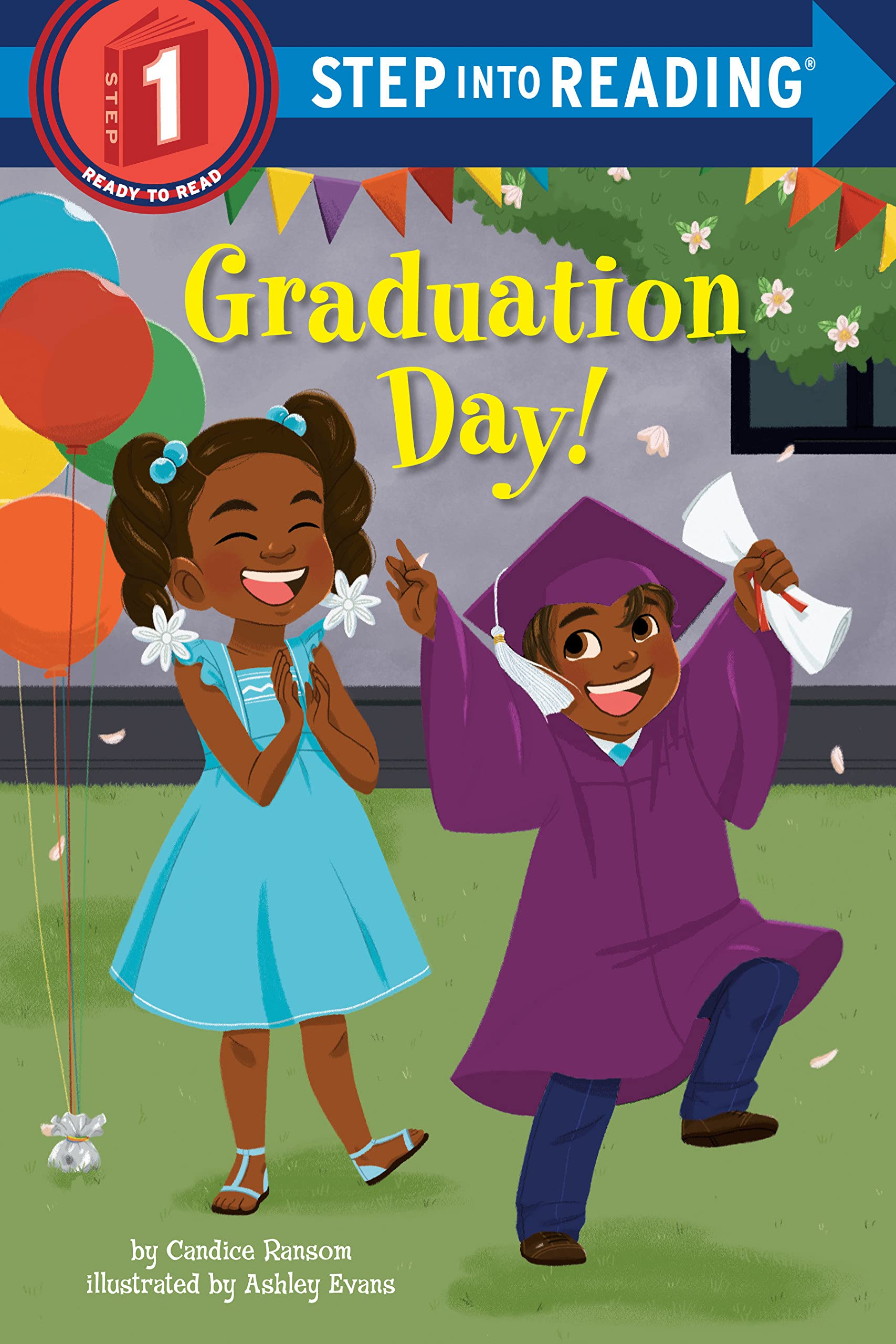
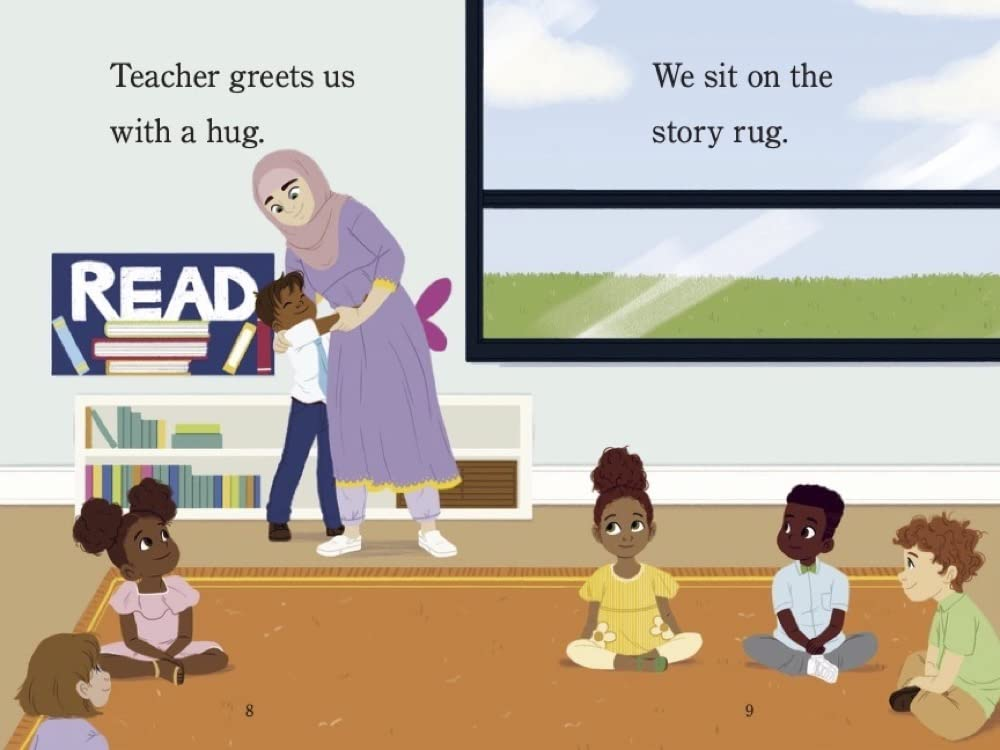
Summary: A boy is excited for his kindergarten graduation. He and his classmates go through their morning routine one last time, and he reflects on all the things he’s learned during the year, although one skill, tying his own shoes, has eluded him. The kids don caps and gowns and line up to go on stage. When he notices his shoe is untied, the boy tries to tie it himself and finds out he’s learned how to do that, too! After graduation, there’s a round of good-byes, and the story ends with the boy picturing himself in first grade. 32 pages; ages 3-6.
Pros: This rhyming early reader, with its illustrations of a diverse and happy school, would make an excellent gift for a preschool or kindergarten graduate.
Cons: In my experience, learning to tie shoes does not occur quite that spontaneously.
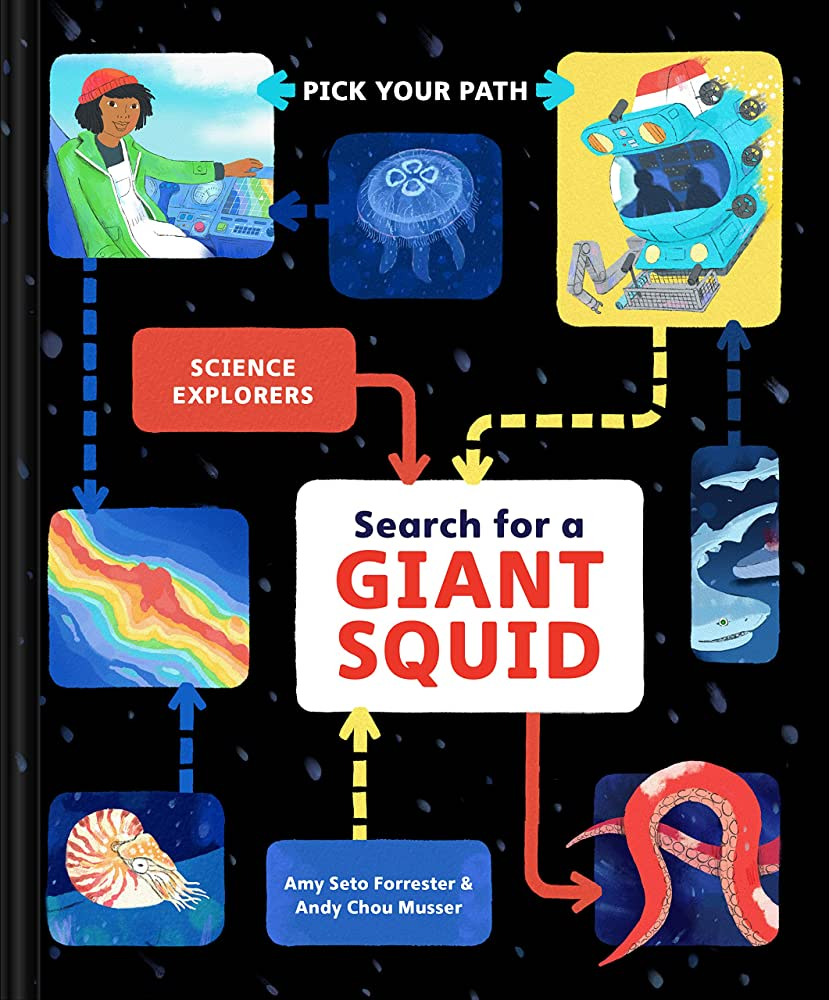
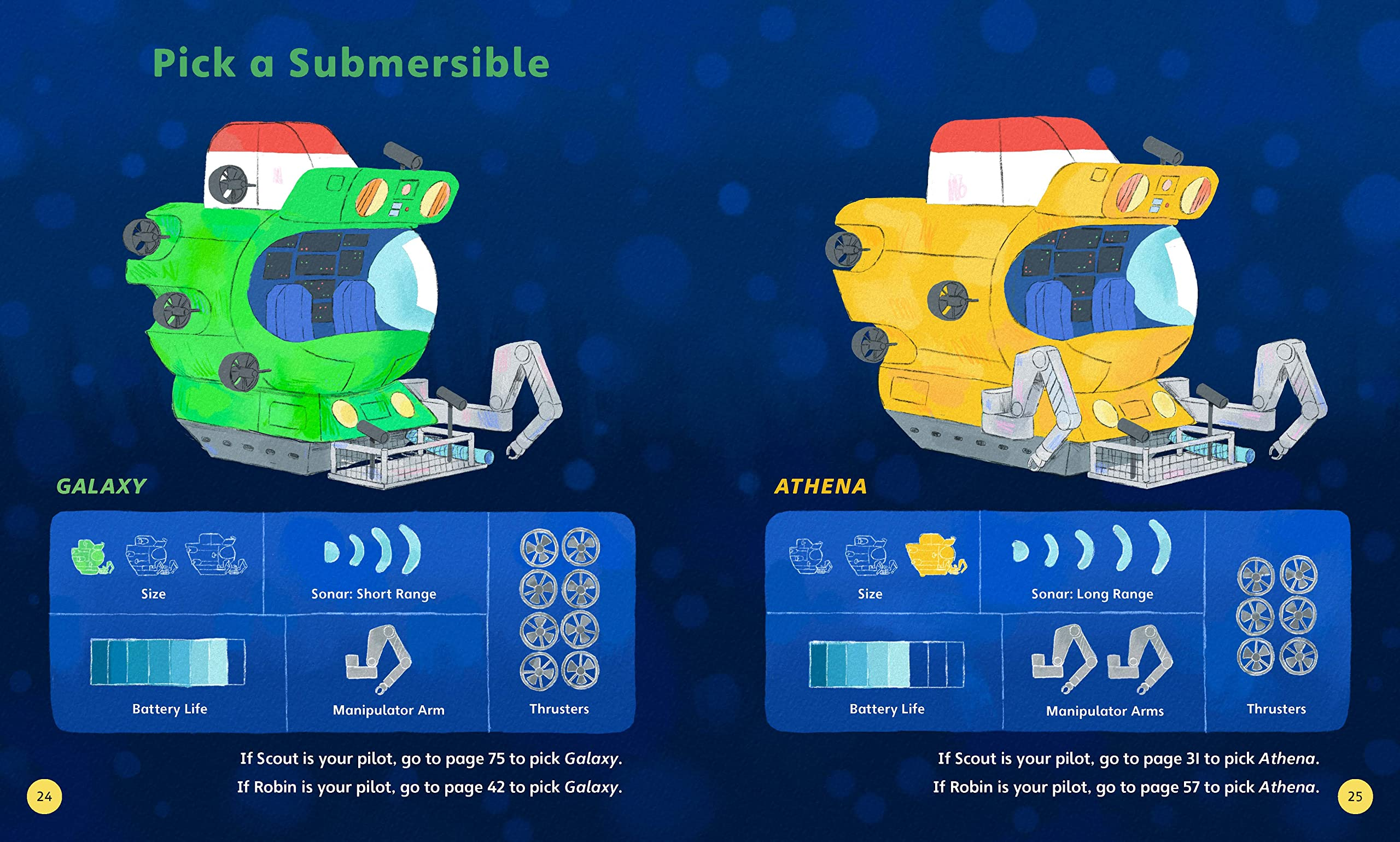
Summary: You’re going on a scientific expedition to search for a giant squid! Choose your team, pick your submersible, decide on a destination, and you’re off. Each decision you make leads to a different outcome, and only one will result in a sighting of the elusive giant squid. Along the way, you’ll learn a lot about this mysterious animal, as well as what it takes to have a successful scientific expedition–and the many things that can go wrong along the way. Keep trying, and you’ll be able to count yourself among the lucky few who have seen the giant squid! Includes a list of animals in the book, a glossary, a bibliography, and a list of additional resources. 96 pages; grades 2-5.
Pros: This is a fun twist on the choose-your-own-adventure model that incorporates a lot of information about squid and science. I hope this turns into a series.
Cons: With 11 ways to fail and only one to succeed, I was starting to get discouraged about ever seeing that squid.
Published by Little, Brown Books for Young Readers
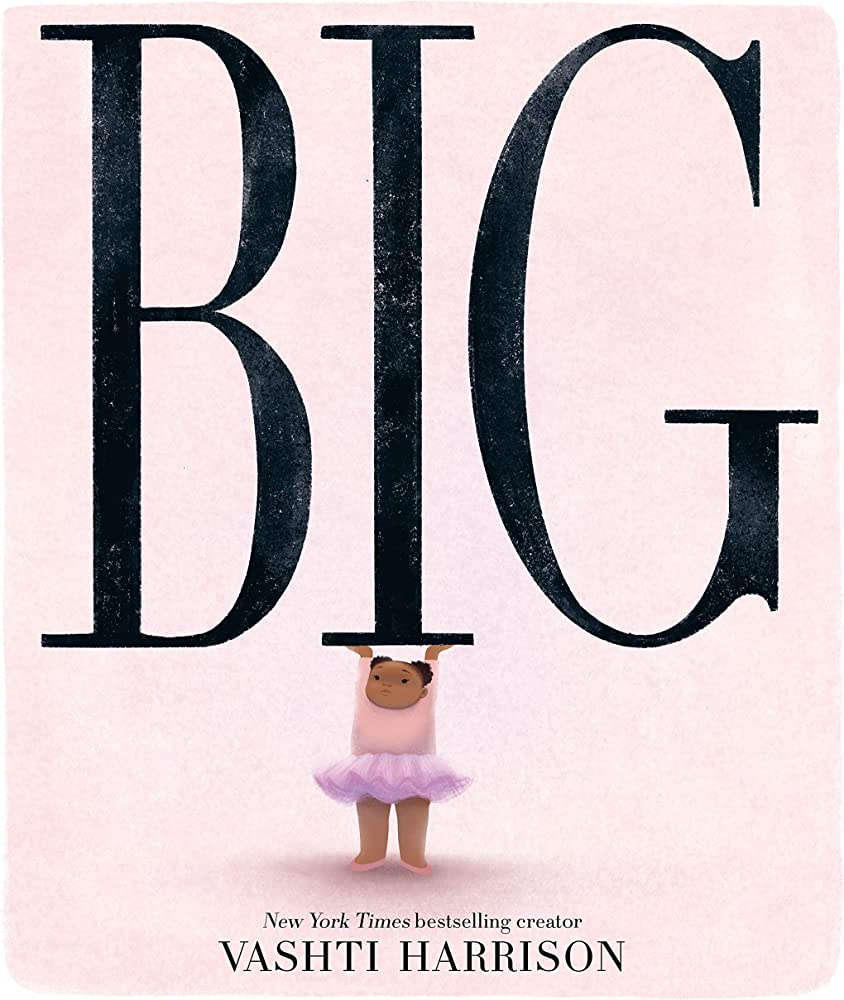
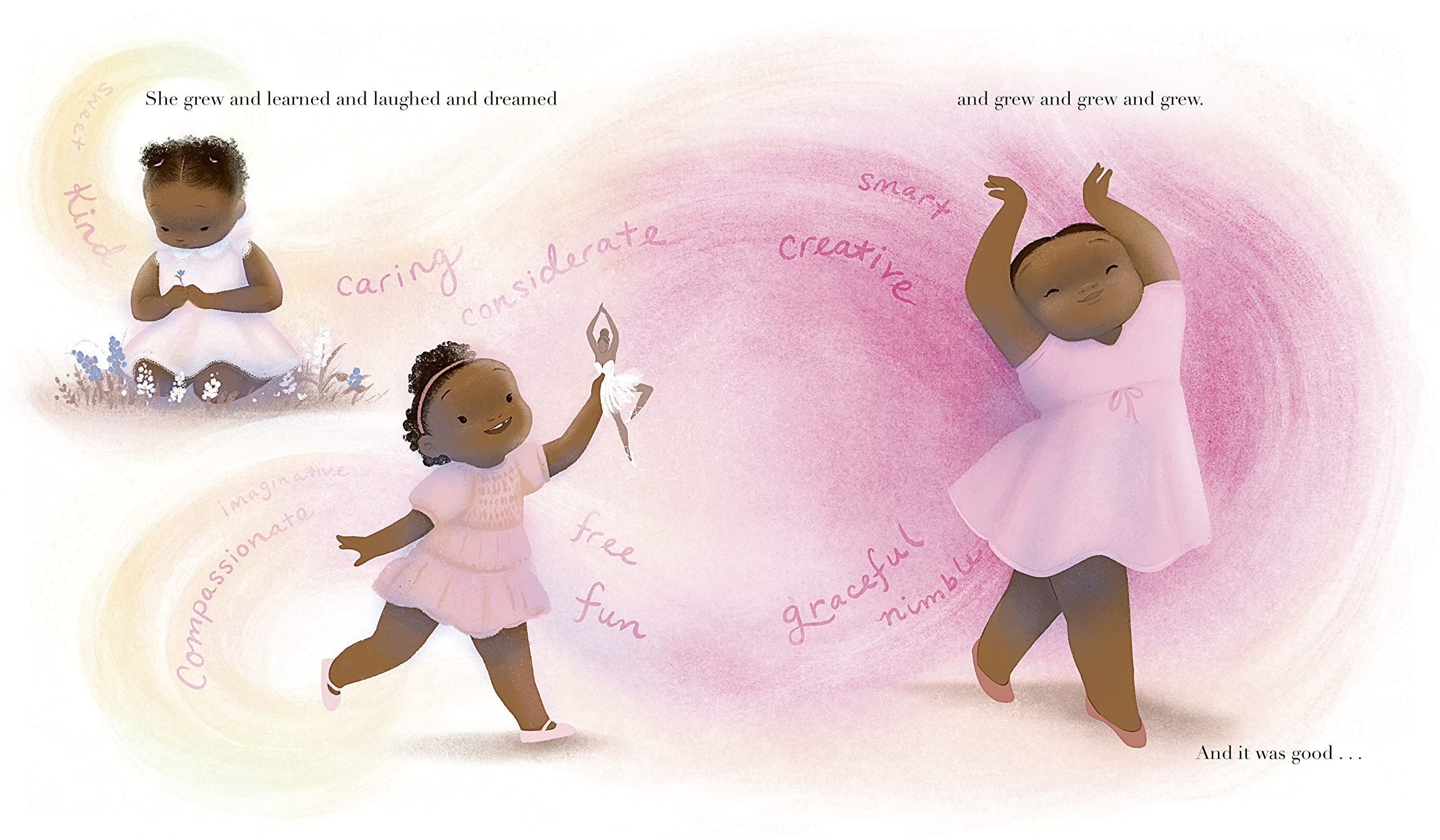
Summary: At first the little girl with a big heart, big laugh, and big dreams loves being big. “What a big girl you are!” adults say happily. But as she gets older, being big is no longer considered a good thing. “Don’t you think you’re too big for that?” a teacher scolds when she gets stuck in a swing, surrounded by classmates who moo and call out other hurtful comments. She tries to blend in, trading her pink ballet costume for a gray one and becoming part of the scenery on stage. She grows bigger and bigger on each page until she is crammed, curled up and crying, on the two-page spread. Her tears turn into words: gray words like “too big” and “big cow” are mixed with pink words like “beautiful” and “creative.” Finally, she gathers up the pink words for herself and hands the gray ones back to the people who said them. Those people don’t always understand, but the girl is good, as she dances in her pink tutu off the final page. Includes an author’s note sharing her own experiences that inspired this book. 60 pages; ages 4-8.
Pros: An important book that addresses anti-fat bias and gives girls, especially Black girls, some tools for self-love and acceptance. The beautiful illustrations are a perfect complement to the text.
Cons: I have mixed feelings about gatefold pages like the one in this book. They are cool, but just don’t hold up well to repeated library use. The Knuffle Bunnies have been driving me crazy this year.
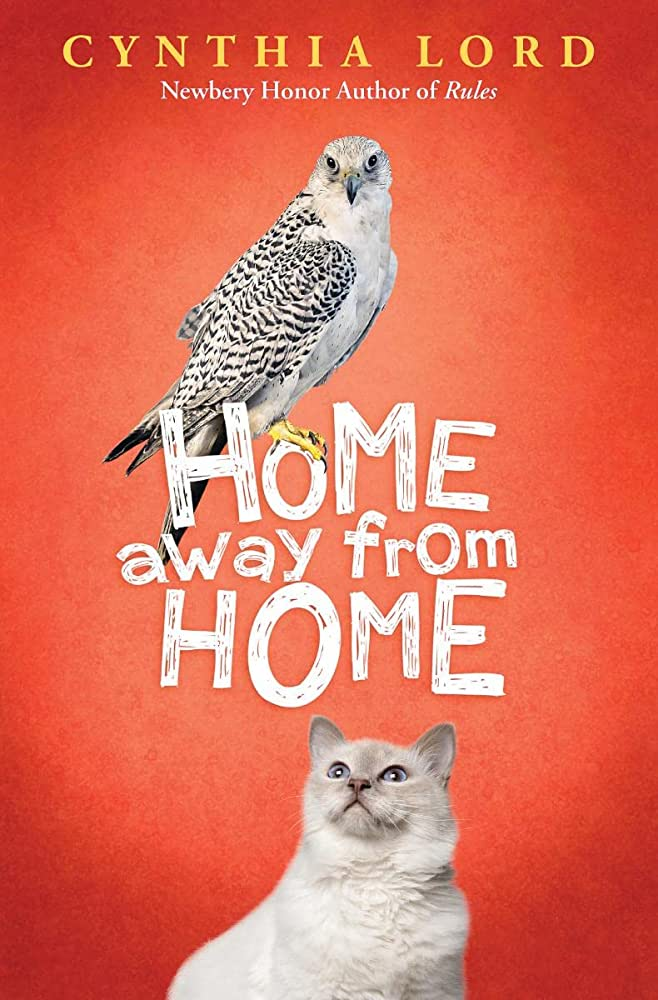
Summary: Mia’s excited about her visit to Stone Harbor, Maine, not only because she loves spending time with Grandma, but because it will get her away from the stress of moving to a new house with her mother and new stepfather. But things are different in Maine than in years past, the most notable change being a new boy named Cayman who hangs around Grandma’s house a lot. Cayman can be bossy, but Mia finds herself enjoying having another kid around. When Mia and Cayman discover a mysterious white bird at the Point, Mia’s sure it’s a sign of better things to come. But the bird ultimately leads to some big mistakes on Mia’s part and a fight that threatens to end her new friendship with Cayman. As Mia tries to repair the damage, she learns that it’s important to trust the people who care about her and that maybe she is braver than she believes. 224 pages; grades 3-7.
Pros: A delightful summer read with relatable kid protagonists, compelling animal stories (there’s a subplot about a stray cat as well as the bird story), and a setting that will make you want to seek out a quaint Maine town for a long July weekend.
Cons: I struggled with the pronunciation of “gyrfalcon”.
Summary: Martin Smatana began collecting good news stories during the pandemic, illustrating them with textile collages created from cast-off clothing. Whether local, (a man who drove his 85-year-old grandmother 40,000 miles so she could see mountains and the ocean for the first time) or international (the eradication of polio in Africa), these 52 stories and pictures are designed to lift the spirits of those weighted down by all the less positive news in the world. Includes a QR code that takes you to a website with additional good news stories. 112 pages; ages 7 and up.
Pros: These happy stories and whimsical illustrations will lift anyone’s spirits and send readers on a search for more news that is positive.
Cons: While I appreciated the human-interest stories, I would have liked to have seen a few more stories with broader scope like the polio one.