CeeCee: Underground Railroad by Shana Keller, illustrated by Laura Freeman (Charlesbridge, 32 pages, grades 1-5). Cecelia, or CeeCee for short, knows that her real name is different, a name that she keeps on a piece of paper hidden away from the people she works for on a Maryland plantation. The mother and two daughters there are always finding ways to scold and punish her, no matter how hard she works, but CeeCee has dreams of one day finding a better life. Binty the cook, in the role of the fairy godmother, sneaks CeeCee food and assures her that she can do anything. She also tells the girl about a prince named Moses who can give her a better life. After months of planning and secretly making herself new clothes to wear, CeeCee is runs away one night to find the mysterious prince. She’s surprised to learn that Moses is a woman named Harriet Tubman, who inspires CeeCee enough to finally share that she is named Edea, after her mama. Includes additional information about Harriet Tubman, names during slavery, Cinderella, and fairy tales.
This is a really interesting combination of Cinderella story and information about Harriet Tubman and the Underground Railroad that would make an excellent compare and contrast exercise with some of the many other versions of Cinderella. The theme of the power of names and the dehumanizing impact of taking away someone’s name could start some good discussions.
The Fairy Tale Fixers: Cinderella by Deborah Underwood, illustrated by Jorge Lacera (Clarion Books, 128 pages, grades 1-5). The Fairy Tale Fixer is just getting ready to go home to a Friday evening pancake supper, when the phone rings. It’s another mouse, and she has an emergency: the house where she lives is filled with screaming and she needs the Fixer to make things right. When the Fixer reluctantly takes the case, he discovers a girl named Cinderella being yelled at by her stepmother and stepsisters. His solution? Send Cinderella to the ball and marry her off to the prince. After all, doesn’t every girl want to marry a prince? But things go off the fairy-tale tracks at that point, and the Fixer learns that it’s a good idea to ask someone what she wants before assuming anything. Cinderella eventually gets her unconventional happily-ever-after, and the Fixer gets a new assistant and a call about a new case: an evil fairy is about to put a princess to sleep for 100 years.
The familiar story gets a fun twist in this new series opener featuring a couple of mice who fracture fairy tales. Kids just starting to read longer books will enjoy the humor and comparing the traditional story to the new version, with the end giving a preview of book 2.
As you’ll see, I’ve been a little resistant to these three books, all of which are currently at or near the top of the Goodreads 2026 Mock Newbery list. I thought I’d dive into them during the last couple weeks of summer before school started. One that I did not get to, and probably won’t, is Max in the Land of Lies by Adam Gidwitz, simply because it’s a sequel which I don’t usually review. I did love the original, Max in the House of Spies, so I feel pretty confident rooting for it to get Newbery acclaim.
Rebellion 1776 by Laurie Halse Anderson (Atheneum/Caitlyn Dlouhy Books, 416 pages, grades 5-9). Elsbeth tells her story from March, 1776 through the end of November, a time when she is working for the Pike family in Boston while searching for her father who’s mysteriously gone missing. He’s the only family member she has left after her mother and siblings died of smallpox when they lived in Philadelphia. There’s a lot going on in 1776 Boston, starting with the evacuation of all British loyalists after the Patriot army takes the city (I finally learned what Evacuation Day is and why it’s still celebrated in Boston). Elsbeth witnesses the financial fall and rise of the Pike family, as well as their struggles with the decision about whether to inoculate their children against smallpox. In the end they proceed, and it falls on Elspeth to nurse them through the mild cases of the disease that they have to suffer in order to create immunity. After months of anxious searching, Elsbeth is finally reunited with her father, and a final chapter gives a report of what happens to her and other characters up until 1781. Includes a note on sources which details the immense amount of research that went into writing this book.
I didn’t know that I wanted to read a 400-page historical fiction novel about the American Revolution, and I’m afraid many middle school readers will feel the same way. Which would be a shame, because this is an extremely compelling story with all sorts of interesting characters, many of whom I’ve had to leave out of my brief review. The chapters are short and the plot keeps humming along, making it a quicker read than I thought it would be. Readers will learn a lot about American Revolution history and find parallels to contemporary life, most notably the vaccine controversy and the fact that ordinary life goes on even when you are living through revolutionary times.
The Undead Fox of Deadwood Forest by Aubrey Hartman (Little, Brown Books for Young Readers, 320 pages, grades 4-7). Clare is an undead fox who has made his home in Deadwood Forest for the last six years, ushering lost animals to their afterlife in one of four realms: Pleasure, Peace, Purpose, or Pain. His life, such as it is, is quiet, and he has learned to keep himself busy reading and tending his mushroom garden to keep away disturbing thoughts about being abandoned by his mother and the car accident that led to his demise as a kit. When he gets wind of a prophecy that could shatter his peaceful life, Clare sets out to make sure that it doesn’t happen. His least favorite animal, a badger, appears at his door, and although he tries to usher her into the afterlife, she seems unable to cross over. As All Hallows’ Eve approaches, Clare begins to have some insights into his life that eventually allow him to let the prophecy unfold and his own path to change dramatically.
I can’t decide how I feel about this book. The story, characters, and world-building are all exceptionally well done, and there are interesting questions about life, death, and self-acceptance that would make this a great choice for a book club. At the same time, I felt myself having to push to get through it, as it started to feel like kind of a heavy read, so it may not be for everyone. Based on the writing alone, though, I would not be unhappy to see it get a Newbery.
The Trouble with Heroes by Kate Messner (Bloomsbury Children’s Books, 368 pages, grades 4-7). This novel in verse opens at the end of the 7th grade school year for 13-year-old Finn Connelly. Not only is he in danger of failing two classes, but he’s in a lot of trouble for vandalizing the headstone of Edna Grace Thomas, a local woman famous for her love of the Adirondack Mountains and her support of other climbers. Edna’s daughter makes Finn an offer: he and his family won’t have to pay for damages if Finn will hike the 46 highest peaks in the Adirondacks over the summer along with Edna’s dog Seymour. Knowing his mom can’t afford to pay, Finn reluctantly agrees to go, accompanied on each hike by one of three local climbers. As the summer progresses, Finn’s resentment gradually gives way to a love of hiking, as he uses the long climbs and the beautiful vistas to process his grief about his dad, a firefighter known for his heroism on 9/11 who struggled with addiction and died while working long hours during Covid. Finn learns more about his dad and slowly unravels his own feelings of grief and anger, while figuring out his own talents and using them to help his family move forward.
This book sounded a bit mawkish to me, but I’m happy to say I was completely wrong. I would love to see it get a Newbery, because I think it has a lot of kid appeal. The verse format makes the 350+ pages move pretty quickly, and Messner injects plenty of humor and lightheartedness despite the weighty topics. Finn goes through some pretty big changes, but they all feel in keeping with being 13 years old. And there’s a pretty lovable dog as the cherry on top.
I’m back to school this morning, so here are two more books to kick off the new year! If you’re looking for more ideas, check out my back-to-school book list.
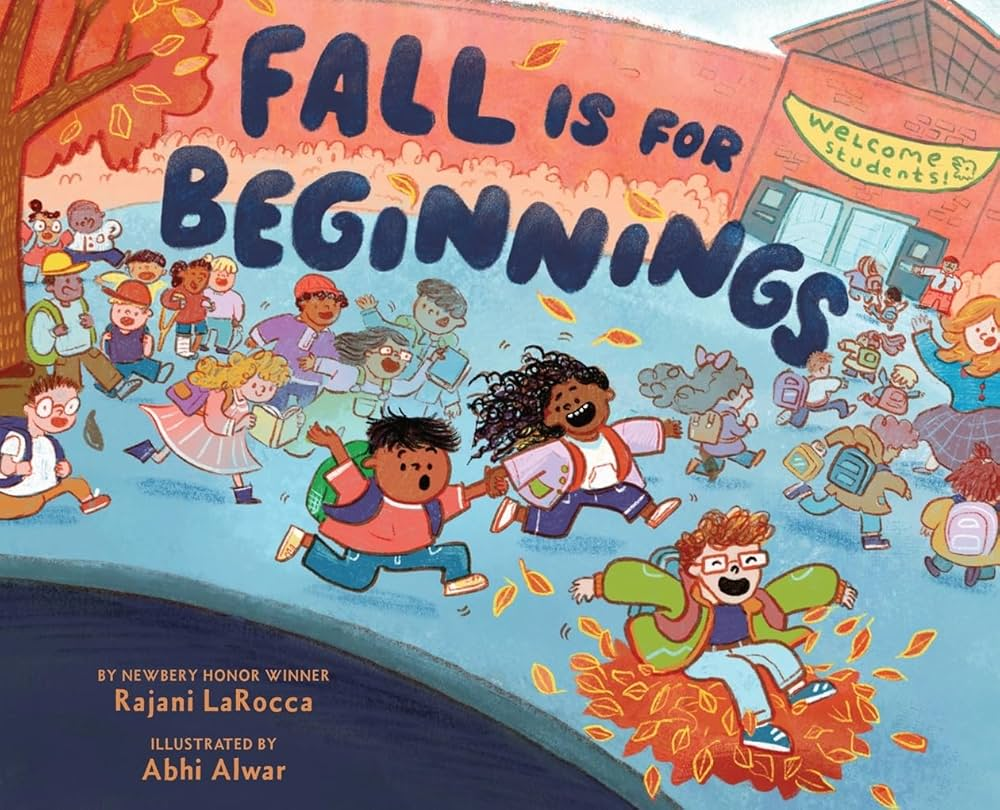
Fall Is for Beginnings by Rajani LaRocca, illustrated by Abhi Alwar (Harry N. Abrams, 40 pages, ages 4-8). In this follow-up to Summer Is for Cousins, Ravi is excited to be going back to school with his best friend Joe. On the first day, new girl Ellie inserts herself into the friendship, declaring, “I just know we’re going to be best friends!” Ravi likes his new teacher and enjoys making an autumn leaf for the class tree to mark new experiences, but he doesn’t know how to deal with Ellie, who seems to be everywhere. She’s a lot of fun, but Ravi already has a best friend. Finally, on Halloween, when she wears her jar of sprinkles costume to go with Joe and Ravi’s ice cream and cone, he tells her, “You are NOT my best friend!” Ellie disappears, and Ravi feels bad. When he talks to his older sister about it, she tells him that she thought he was annoying when he first arrived, but over time she’s gotten used to him and even come to enjoy his company. Ravi starts to shift his perspective, and soon Ellie is back in the middle of his and Joe’s friendship, and Ravi has added another leaf to the tree.
I love how this book introduces the idea that things can be different in a new school year, a reassuring message for kids who may have a hard time dealing with change and who may long for last year. The illustrations perfectly capture the chaos of elementary school, and Ellie looks to be a friend worth keeping.
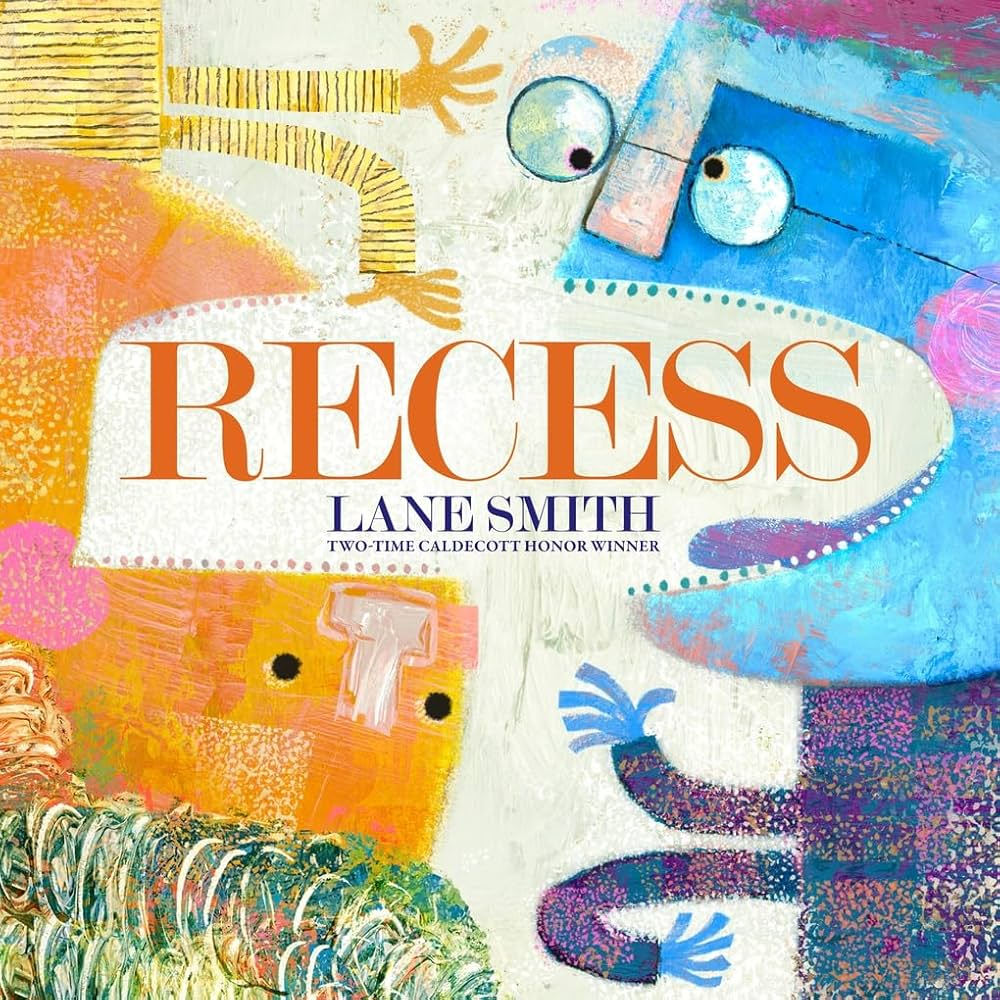
Recess by Lane Smith (Harry N. Abrams, 40 pages, ages 4-8). Everyone knows that there’s not enough recess in the school day. This book endeavors to give kids more, stopping in each class to describe what happens there. Turn the page, and it’s RECESS! where kids get to do activities related to each class like typing in the air, pretending to throw and bounce balls, and slapping your lap and stomping your feet like you’re in a band. The last stop is the calm-down corner, where, after one more burst of crazy fun, everyone takes a deep breath and gets ready to get back to work.
Kids are going to love listening to–and participating in–this book. It may be helpful to lay down a few ground rules ahead of time, but once you do so, this would make a great way to inject a little movement and fun into the school day. Lane Smith’s illustrations add just the right wild and crazy touches to all the action.
Dawn by Marc Martin (Candlewick, 48 pages, ages 4-8). Each page has just one word, starting with “Dawn” and ending with “Sun”. In between, all sorts of animals and plants can be seen in gorgeous watercolor illustrations moving, eating, waking, or making noise, all illuminated by the changing light as the sun rises. Some of the words are alliterative (“sound, spring, still” to describe a series of pictures of a deer), others list the animals on the page (“dragonfly, cicada, bee, beetle”), while still others are a series of action words describing the movements in the panels (“jump, catch, dive, swallow” shows a fish leaping out of the water to catch an insect then diving back in). The final page, with the sun rising over the lake, looks peaceful and still, but readers will know all the activity the water and woods are hiding.
This book is visually stunning, and the different words would make a unique mentor text to show ways to succinctly describe what you see or hear. At 48 pages, it might not be engaging to read the way you would a story, so give the kids things to look for as you savor each of the stunning illustrations.
This Moment Is Special: A Día de Muertos Story by John Parra (Simon and Schuster/Paula Wiseman Books, 40 pages, ages 4-8). A boy narrates the moments of the day as he and his family celebrate Día de Muertos. Starting with breakfast with the family, he travels to school in a bus reading “Oaxaca”, spends a day at school, then comes home to play with his friends and eat dinner with his family. Each page of text has a few sentences in English and one summarizing sentence in Spanish. It’s an ordinary day in some ways, but also a special one marked with the white paint and decorations on people’s faces and hands, a performance at school, and a visit from abuela. The whole neighborhood is shown celebrating at the end, some wearing make-up and others not, carrying flowers and pictures of the dead. An author’s note asks a series of questions inviting readers to think about and celebrate special moments in their own lives.
There really aren’t enough Día de Muertos/Day of the Dead books for kids, and this one makes a nice addition, with John Parra’s distinctive artwork and the bilingual text that not only show readers different aspects of the holiday, but encourage discussion about appreciating people and events in the moment. I would have loved additional information about the holiday at either the beginning or the end of the book, as I know very little about it.
Danilo Was Here by Tamika Burgess (HarperCollins, 304 pages, grades 5-8). Danilo’s family has gone through tough times since his beloved Papá left for the United States to try to find work, shortly before the U.S. bombed his Panamanian neighborhood in December, 1989. Papá has stopped writing and sending money, and Danilo is determined to find out what’s happened to him. When he gets recruited for a California baseball clinic shortly after his family has been forced to move into a refugee camp, he decides to go and try to find his father. Danilo inherited his baseball talent from Papá, and when he discovers his dad lives less than an hour away, he writes a letter inviting him to come watch the team play. But things don’t go as planned, and Danilo finds himself in the unfamiliar position of being the worst player on the team, with PTSD and worries about his mother and sister distracting him from the game. When he finally does connect with Papá, he learns that his dad has moved on, and Danilo and his family can’t count on him for support. Fortunately, Danilo finds caring friends and adults in the U.S., and with their help he’s able to figure out what his dreams are and how best to support his family when he returns to Panamá.
In her second middle-grade novel, Tamika Burgess takes a look at the recent history of Panamá, and the effects the U.S. involvement there had on ordinary Panamanians. Readers will relate to Danilo and his struggles with family, friends, and uncertainty about what he wants to do with his life, even though his experiences are likely to be very different from theirs. I hope this will be considered for a Belpré Award.
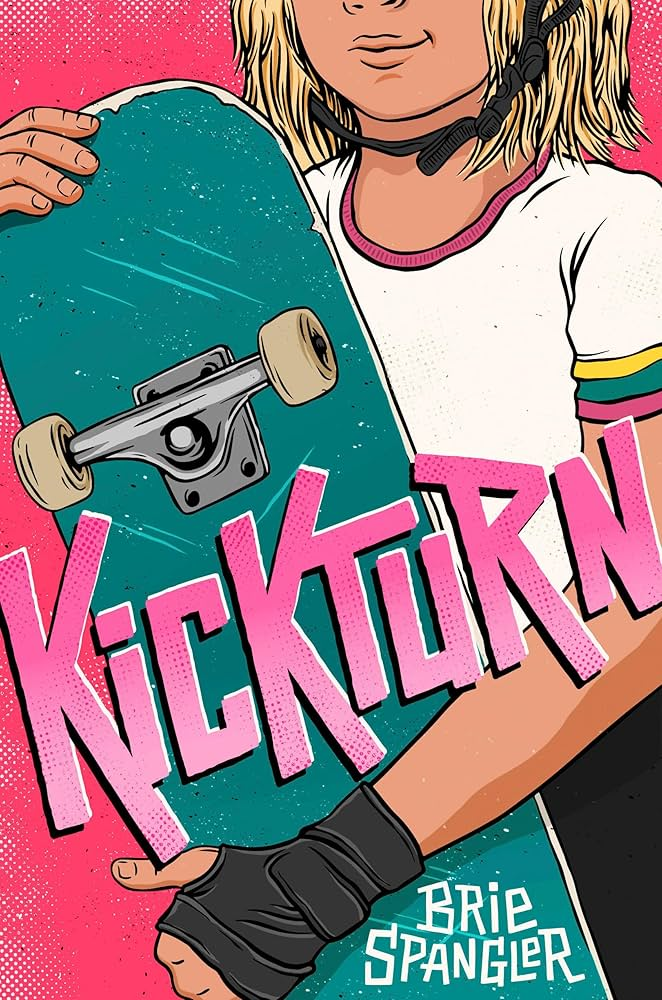
Kickturn by Brie Spangler (Knopf Books for Young Readers, 192 pages, grades 3-6). Ten-year-old Lindy is worn out and jaded after spending two years on a converted school bus, posing for photo shoots for her wellness influencer mom and watching her dad grow increasingly frustrated with the issues of the rundown bus that he quit his tech job for. When the bus completely gives out in San Jose, Lindy is excited to have a place to stay for a while and thrilled to meet some other kids who share her passion for skateboarding. Her hopes for putting down roots are dashed when the local garage is able to miraculously patch the bus together. When her parents start making plans for going back on the road, ignoring their daughter’s pleas, Lindy decides the only way to get their attention is to sabotage the bus. Although they’re furious with her, Lindy’s parents eventually calm down long enough to listen to her concerns (which include failing her fifth-grade homeschool curriculum) and to make a plan that allows them to settle down long enough to make a new plan. Includes sketches and Instagram usernames of real-life kids who love skateboarding.
With its appealing journal format that includes lined pages and lots of sketches and doodles, Lindy provides a behind-the-scenes look at what it’s really like to embrace van life and influencer culture. Although she occasionally sounds a little jaded and world-weary for a fifth grader, her voice is genuine and funny. Even kids who have lived in the same place all their lives will relate to her desires to fit in with friends as well as her struggles to get her parents to listen to what she needs.
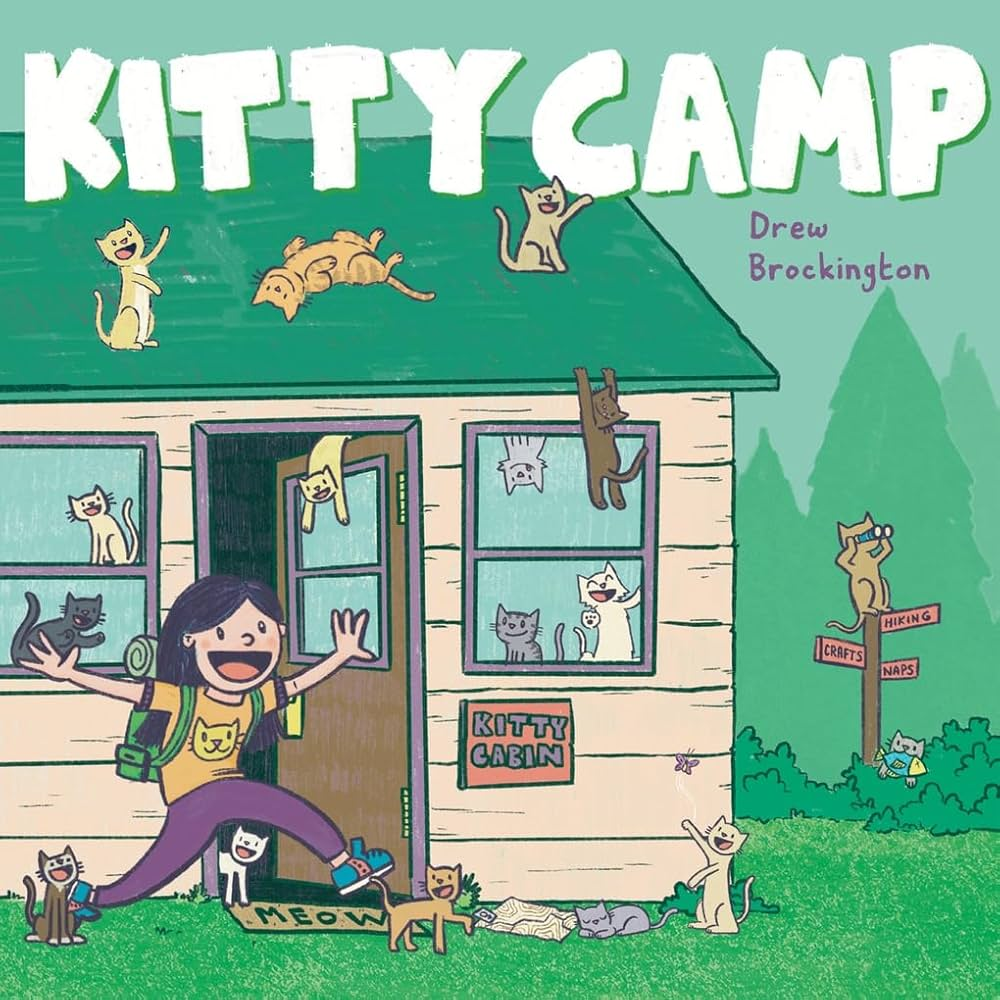
Kitty Camp by Drew Brockington (Harry N. Abrams, 40 pages, ages 4-8). In this follow-up to Puppy Bus, a girl accidentally gets on the wrong camp bus. She’s way more enthusiastic than the Puppy Bus protagonist, excited about camp in general and certain that camp with a bunch of kittens will be even better. But arts and crafts is a chaotic mess, the kitties would rather sleep than hike, it’s impossible to eat her tuna sandwich, and no one wants to join her in the pool. When she sees cats popping out of cardboard boxes, she gets the idea to build everyone a super-sized fort, and before long, she and the cats have found a bunch of ways to have fun together. “Kitty camp just took a little getting used to,” she decides as she boards the bus home. A cameo by the Puppy Bus boy and a surprise ending hints that there may be a third books in the works.
Based on the enthusiastic reactions I’ve had to Puppy Bus over the years (it’s my go-to book for kindergartners starting school), I can’t wait to share Kitty Camp. Those familiar with the ways of cats will get a kick out of seeing how they do camp. It’s a little late in the season now, but keep this in mind for kids going off to summer camp for the first time next summer.
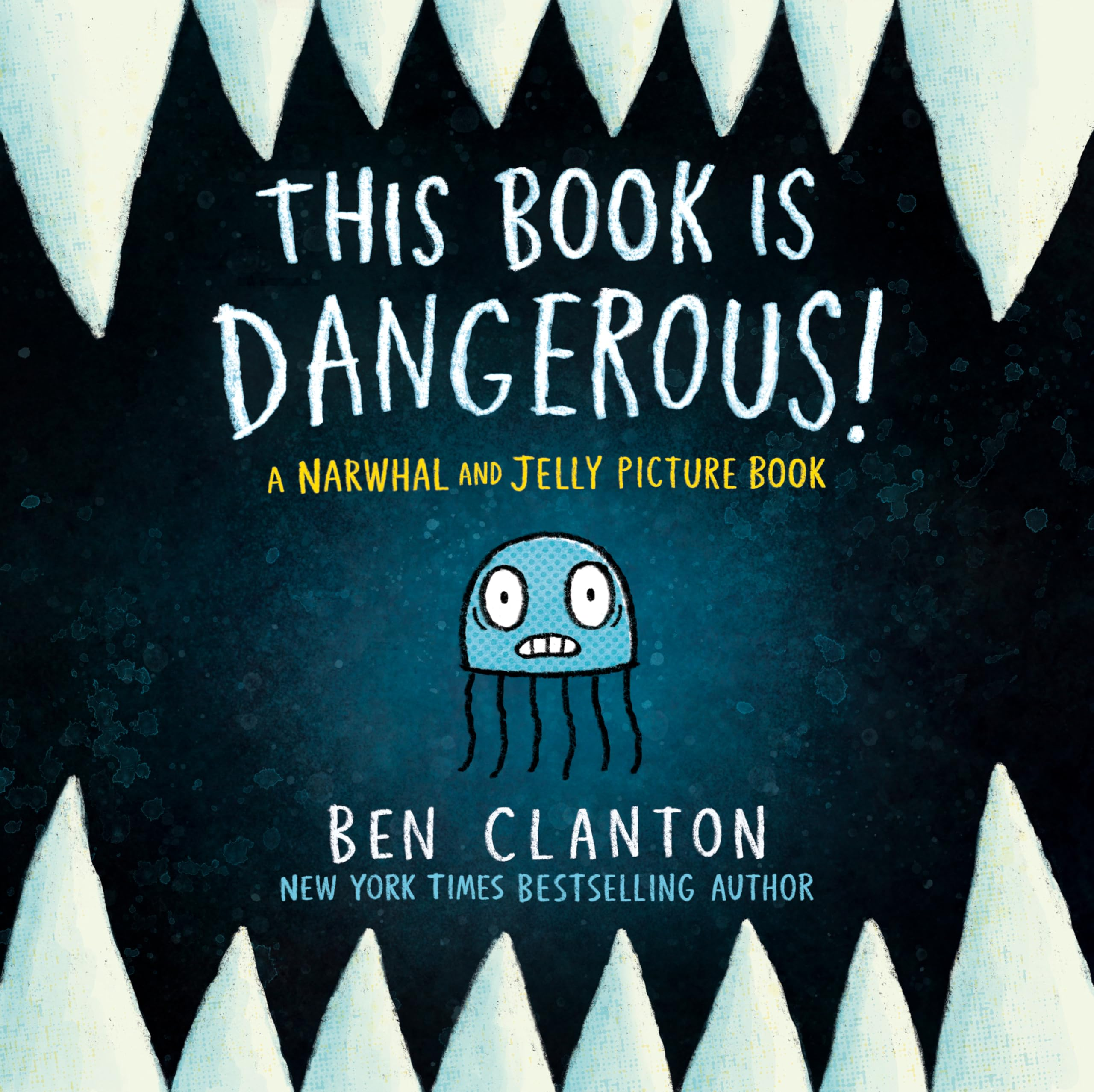
This Book Is Dangerous! A Narwhal and Jelly Picture Book by Ben Clanton (Tundra Books, 44 pages, ages 4-8). The beloved graphic novel characters Narwhal and Jelly now have their own picture book, mostly featuring Jelly the jellyfish, who tells readers, “I don’t do dangerous,” after seeing the title of the book. As he swims through the sea, looking for an escape, he’s faced with all sorts of fearsome creatures, warning readers not to disturb them, then angrily reprimanding them when the animals come after him. His luck unexpectedly changes when he’s swallowed by a shark and discovers a jar of hot sauce in the shark’s stomach. Opening the jar results in a fiery shark explosion that sets Jelly free, only to lead him to the sounds of chewing from another sea creature. But–surprise!–it’s just his friend Narwhal eating a “dangerously delicious” waffle, and giving the book a sweet ending.
One can never have enough Narwhal and Jelly in the library, and this fun interactive picture book is a great way to introduce newly independent readers to the graphic novel series. Those who aren’t quite there yet will love this book on its own merits.
Jellyfish Scientist: Maude Delap and Her Mesmerizing Medusas by Michelle Cusolito, illustrated by Ellen Rooney (Charlesbridge, 32 pages, grades 1-5). Maude Delap never left home or went to school, but she became a scientist by studying the ocean life around her home on Valencia Island, Ireland. This story takes place from June, 1899 until September, 1900, a time when Maude made important discoveries about the compass jellyfish’s life cycle through careful observations in the Department, her name for her home lab. After unlocking the mysteries of this jellyfish, she’s shown on the last page scooping up a blue jellyfish, beginning the process all over again. Includes additional information about Maude, jellyfish (including an illustrated guide to their life cycle on the endpapers), notes from the author and illustrator, and some additional resources.
Told in the present tense, with dates shown on each page, this story conveys an air of you-are-there excitement about the scientific process. Maude had to overcome some very unfair obstacles to have a scientific career, but the main theme in the book is perseverance and the joy of new discoveries. The back matter reveals that she made significant contributions to marine science. The illustrations do a great job of capturing that joy, showing Maude with a young niece assisting her, her lab, and the jellyfish.
The Woman Behind the Magic: How Lillian B. Disney Shaped the Disney Legacy by Brittany Richman, illustrated by Joanie Stone (Beach Lane Books, 40 pages, grades 1-5). As the youngest of ten children, Lilly Bounds never had much, but she always enjoyed the magical moments that she shared with her warm, loving family. After her older siblings left home and her dad passed away, Lilly moved out to California to be near one of her sisters. She got a job at the fledgling Disney Brothers Cartoon Studio, where she inked and colored cartoons, eventually impressing her boss Walt enough that she became his secretary and then his wife. The studio almost went out of business a few times, but Lilly helped behind the scenes, most notably naming Mickey Mouse after Walt proposed the name Mortimer. From Snow White to the opening of Disneyland, Lilly gave her opinions and feedback that shaped the Disney empire. When Walt died shortly before the opening of Walt Disney World, Lilly pushed herself to step into the spotlight for the grand opening. Includes a three-page author’s note with additional information and a timeline of Lillian’s life.
It was fascinating to learn more about the early days of the Disney empire, particularly this quiet unassuming woman who liked to work behind the scenes, but who had a big impact on the Disney we know today and who saved us from Mortimer Mouse. This illustrations are charming, calling to mind some of the older animated Disney movies.
Messi’s Magic: How Lionel Messi Became the G.O.A.T. by Caroline L. Perry, illustrated by Luciano Lozano (Scholastic, 48 pages, grades 1-5). Lionel “Leo” Messi grew up in a loving, soccer-obsessed family in Argentina. From an early age, his talent was obvious, and his Grandma Celia was his biggest fan. As he got older, though, Leo faced obstacles to his soccer career. His grandma passed away, and he was diagnosed with a growth disorder. Without daily injections, he wouldn’t grow big enough to play professional soccer, but his family couldn’t afford the medicine. At the age of 13, he was signed to FC Barcelona, who also agreed to pay for his medical treatment. Leo struggled to fit in at Barcelona’s youth academy, but his soccer skills helped him find his place. He’s gone on to become one of the greatest soccer players of all times, and if you see him pointing to the sky when he makes a spectacular goal, you’ll know that he’s dedicating it to Grandma Celia. Includes a timeline, additional information about Messi, and notes from the author and illustrator.
Thanks to Scholastic for providing me with a copy of this book, which will be released September 2. I know it will be a huge hit in my library, where I have many football/soccer fans. Leo’s story is inspiring, as he never gave up his dreams despite some pretty difficult setbacks, and went on to succeed beyond the wildest of those dreams. The additional information about Messi’s family life and charity work portray him an excellent role model.
In the World of Whales by Michelle Cusolito, illustrated by Jessica Lanan (Neal Porter Books, 52 pages, grades K-4). When a small boat with people in search of sperm whales spots a clan, a free diver (diving without an oxygen tank) goes into the water to investigate. He soon discovers a newborn calf surrounded by its mother and other whales. As he swims nearby, taking pictures, other whales arrive, as if they’ve been summoned to meet the new baby. The mother seems to be introducing them to her newborn, and finally she nudges the baby toward the man. A gatefold page shows him face to face with the baby, while other whales swim around them. Finally, the whales swim away, and the man resurfaces. “He rides home in silence, forever changed.” Includes a labeled diagram of a sperm whale, additional information about free diving and whales, resource lists, and notes from the author and illustrator that tell about Belgian free diver Fred Buyle, who is the inspiration for this story.
Readers will be in awe of the whales in this book, as well as free diving, which seems like a scary but exciting adventure into the ocean. Jessica Lanan’s artwork is breathtaking, and potentially worthy of a Caldecott or another Sibert award.
The Escape Artist: A True Story of Octopus Adventure by Thor Hanson, illustrated by Galia Bernstein (Greenwillow Books, 32 pages, ages 4-8). Inky was a Maori octopus who lived in the National Aquarium of New Zealand. We’ll never know for sure what went on in Inky’s octopus brain, but this story speculates that he had all kinds of questions about the people and animals around him. The biggest question, though, was if there was a world beyond the tank. Inky got to find out out one night when he noticed the lid of his tank was ajar and managed to squeeze himself out (“An octopus body is boneless/like Jell-o wrapped up in a sack”). He couldn’t survive long outside of the water, but he managed to travel across the floor to a drain and slip into it. The next morning, zookeepers were baffled as to where Inky had gone until someone noticed a trail of water across the floor and deduced that he had traveled 164 feet through the pipe and into the sea. Includes additional information about Inky and other octopuses.
I wouldn’t have recommended writing the story of Inky in rhyme, but somehow, it works, thanks to an interesting story and some excellent rhyming that brings it to life. Kids will be cheering for Inky and undoubtedly inspired to learn more about octopuses.
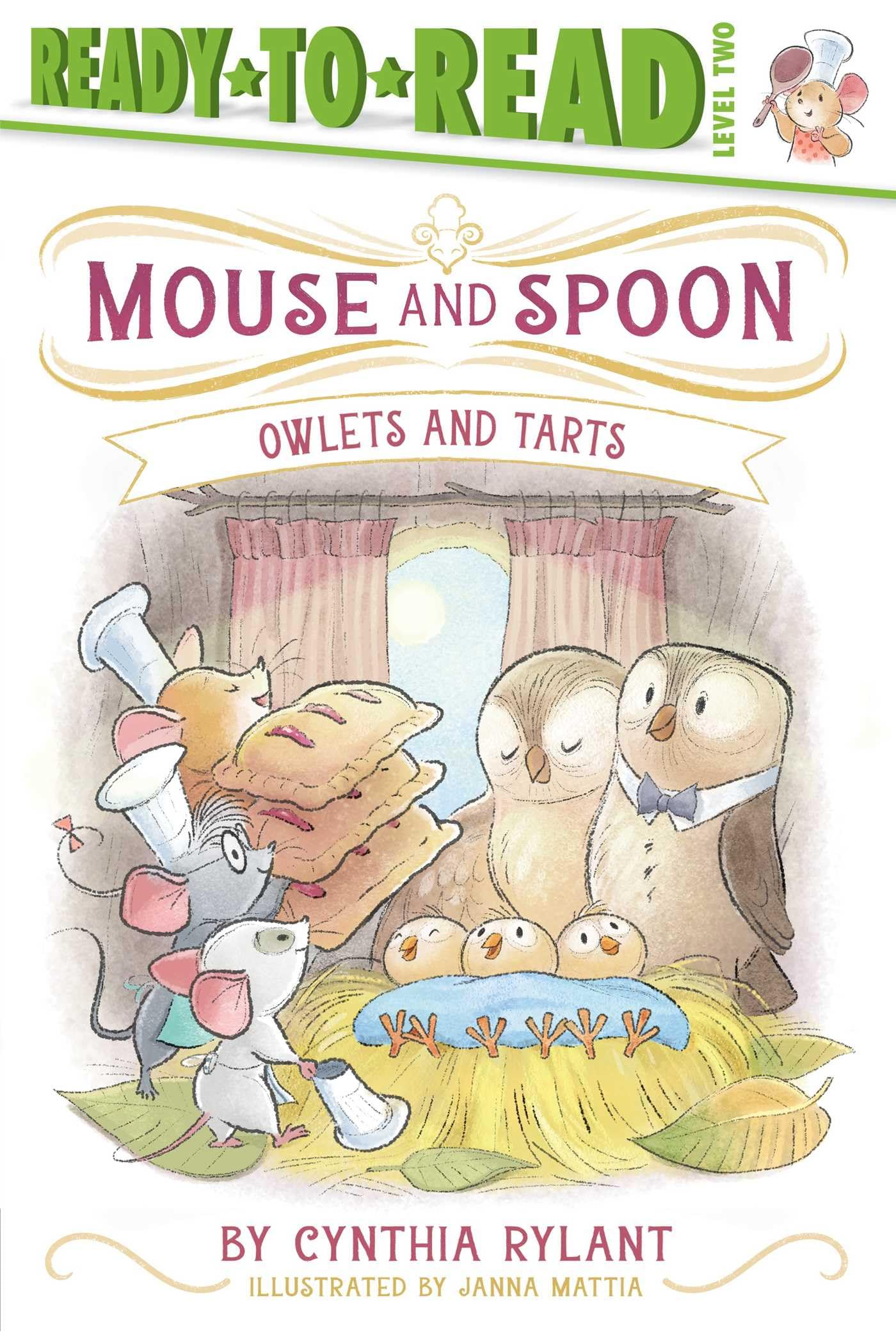
Owlets and Tarts (Mouse and Spoon) by Cynthia Rylant (Simon Spotlight, 32 pages, ages 4-8). Ginger, Piper, and Tom are three mice who run the Mouse and Spoon Bakery. When a sleepy owl dad shows up requesting Pillow Tarts for his three offspring who refuse to sleep, the mice are on it. By 4:00, they’ve made three extra-fluffy tarts, as well as Half-Moon Buns for the parents. Everything is delivered to the owls, and three three owlets are asleep before their little heads hit the tarts. The mice have saved the day (and night), making it a happy ending for all.
Cynthia Rylant has yet another enchanting early reader series that would also make a great read-aloud. I think this is actually book two, although it was released at the same time as book 1, The Elephant’s Birthday. Give this to fans of Henry and Mudge and Poppleton, and don’t get caught up in the dark thoughts I had about owls luring mice to their home.
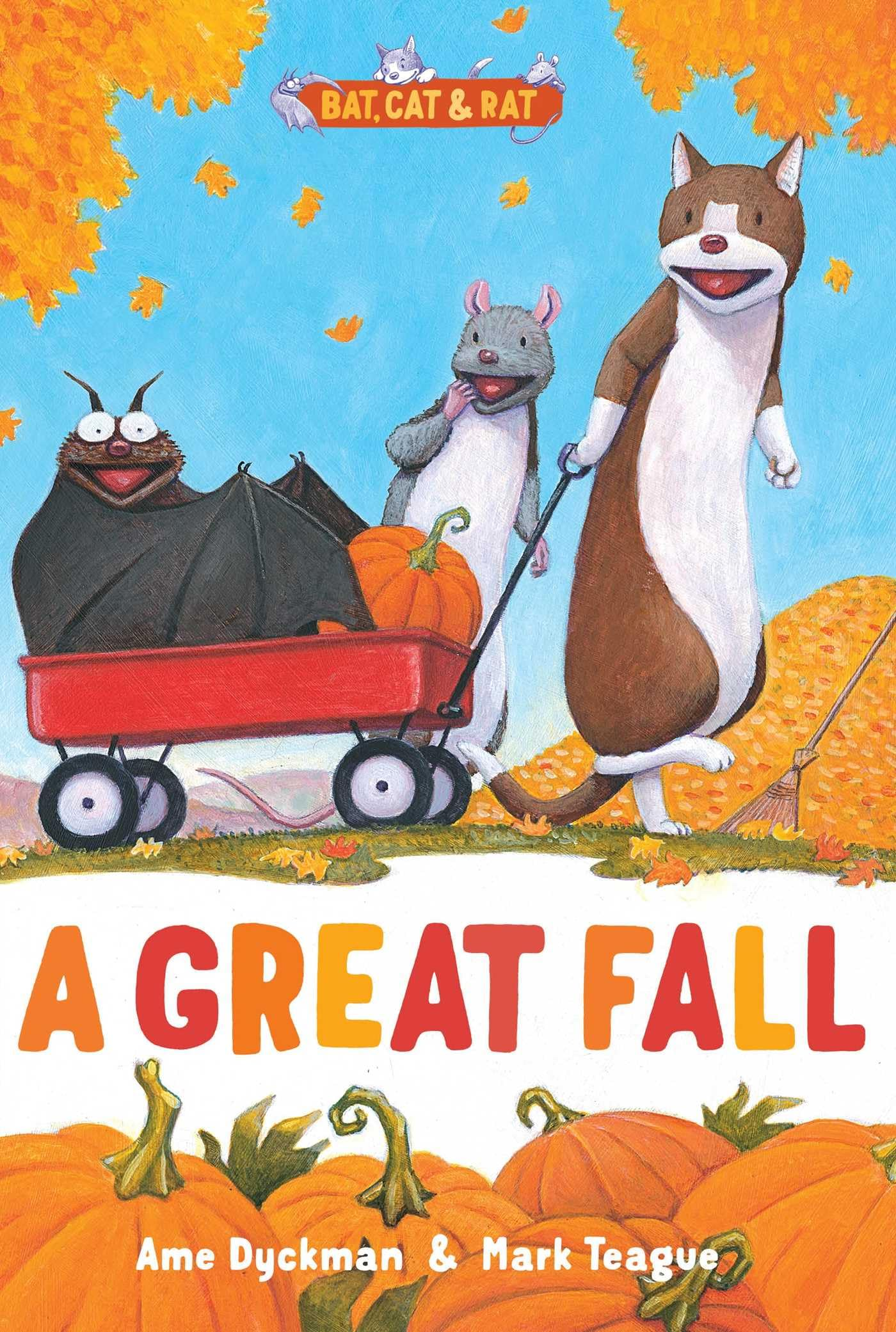
A Great Fall (Bat, Cat, and Rat) by Amy Dyckman, illustrated by Mark Teague (Beach Lane Books, 48 pages, ages 4-8). Friends and housemates Bat, Cat, and Rat enjoy some typical fall adventures: raking leaves, picking pumpkins, and making costumes. In the final half a story, they trade treats on Halloween night so that each one gets what they like best.
This is actually book 4 in a series whose debut I missed last year (#2 won the Theodor Geisel award). Each book has three and a half stories with fairly simple, repetitive text and adorable illustrations of the three friends. Beginning readers will feel a sense of accomplishment reading a chapter book, and now they can enjoy a book for each season.
Radiant by Vaunda Micheaux Nelson (Dutton Books for Young Readers, 320 pages, grades 4-7). Fifth grader Cooper Dale is ashamed of the fact that she sometimes wishes she were white, but she can’t help feeling that it would make her life easier at school where she’s the only Black student. While she shares events like grieving the assassination of President Kennedy and excitement about the Beatles with some of her classmates, she’s also the target of racist bullying by other kids, especially Wade. When Cooper’s mom gets a cleaning job with Wade’s family, Cooper finds out that his mother is dying of cancer. Although it’s hard for her to be compassionate, she learns from those around her, including her parents and older siblings, members of her church, and the new Black boy who is dealing with the loss of his own mother. By the end of the book, Cooper has realized that she and Wade may never be friends, but her empathy can help him get through a difficult time and may even change how he sees her and her family.
This novel in verse does an excellent job of weaving historical events of 1963 into a story that today’s readers will relate to. Cooper’s honest voice expresses both her wish to live up to her parents expectations of being “radiant” and her very human emotions in response to some of the difficult situations she encounters.
Will’s Race for Home by Jewell Parker Rhodes (Little, Brown Books for Young Readers, 208 pages, grades 4-7). Will’s family is barely making it as sharecroppers on a cotton farm in Texas when Father hears about the chance for free land in Oklahoma–if they can win the race to get there. Despite the risks of the journey, Father decides it’s worth a try, and 12-year-old Will successfully makes the case to join him. Along the way they encounter a rattlesnake, a rushing river that must be crossed to get to Oklahoma, and a mysterious ex-Civil War soldier named Caesar with some dangerous enemies. Caesar and his horse Midnight join Father and Will, and the three work together to survive and overcome the racism that threatens to derail their plans. When Caesar gets shot, it’s up to Will to ride Midnight all night, covering the last leg of their trip and making his family’s dream of owning land a reality. Includes an author’s note giving more historical context, particularly on the removal of indigenous groups from the land being claimed in the story and the Tulsa Race Massacre that took place in Oklahoma a generation after Will and his family settled there.
Fans of the I Survived series will enjoy this action-packed adventure featuring a courageous hero committed to helping his family. The author’s note addressed some of the more troubling aspects of the land rush, as well as the fact that the story for Black people settling in Oklahoma was unfortunately not as happily-ever-after as Will’s seems to be. I’m guessing both of these books will receive consideration for Newbery and Coretta Scott King awards.








 A Kids Book A Day