Inside Biosphere 2: Earth Science Under Glass by Mary Kay Carson, with photographs by Tom Uhlman

Published by Houghton Mifflin Harcourt Publishing 

Summary: Back in 1991, eight scientists sealed themselves inside Biosphere 2, a gigantic structure built to approximate different habitats on Earth. They lived there for two years, eating food they raised and breathing oxygen created through photosynthesis.  Those Biospherians have moved on, but the structure still stands in the Arizona desert, and it is still being used by scientists to model various ecosystems.  Chapters in the book cover rainforests, oceans, earth science, and sustainability.  Each chapter profiles a scientist working in one of these fields, the work he or she is doing, and how it is relevant to our lives.  The original experiment is described in the first chapter, and sidebars entitled “Flashback to the Biospherians” scattered throughout the book tell anecdotes about what life inside Biosphere II was like for those eight.  Back matter includes a glossary, bibliography, and how to find out more information.  80 pages; grades 5-8.

Pros: Another excellent entry from the “Scientists in the Field” series which seems to unfailingly be able to make science look both fun and inspiring. As always, the photos and text work together to bring the science to life.

Cons:  I read quite a bit about the Biospherians while working at the Boston Museum of Science in 1991, and they seemed a little loony to me.  This book didn’t do a whole lot to dispel that perception.

The Boy Who Fell off the Mayflower, or John Howland’s Good Fortune by P. J. Lynch

Published by Candlewick 

Summary:  John Howland describes his voyage from England to the New World, working as a servant to John Carver.  He does, indeed, fall off the Mayflower, right in the middle of the storm, and is extremely lucky to be seen and pulled back on board.  For much of the trip, he dreams of his family back in England, and of returning to London to start his own business.  During the first tough year in Plymouth, Carver dies, and Howland is a free man.  When a ship arrives with another group of residents for the new colony, John thinks he will go aboard and sail back to England.  But his friend Lizzy Tilley convinces him to stay with his new community and help build the colony.  An author’s note explains that John and Lizzy got married and had ten children, certainly doing more than their share to populate the New World.  64 pages; grades 2-6.

Pros:  P.J. Lynch is known more for his illustrations than writing, and the pictures here capture the wild sea and sick misery of life on the Mayflower.  The writing is engaging, as well, with John’s voice a perfect blend of 17th century words and 21st century wit.  The whole group of Mayflower passengers really come to life as this story unfolds.

Cons:  Too bad I didn’t read this a few weeks ago.  Oh well, only 50 weeks until next Thanksgiving.

What James Said by Liz Rosenberg, illustrated by Matt Myers

Published by Roaring Brook Press 

Summary:  The narrator is in a fight with her best friend James because James said that she thinks she’s perfect.  How does she know?  Because James told Aiden, who told Hunter, who told Katie, who told Dante, who told Anna, who told Emily, Anna, and Declan, who told his little sister, who told the narrator.  Now she is mad at James and won’t be friends again, even though he tries to find out what’s wrong and is extra-nice to her.  At the end of the day, there’s a big art show.  The narrator’s painting is on display.  “It’s perfect,” says James.  “That’s what I tell everyone.”  The misunderstanding is uncovered, and the narrator is so happy, she doesn’t hear the art teacher announcing her name as the winner for Best in Show.  When she finally gets her ribbon, she changes it to Best of Friends, which is what she and James are once again.  Ages 4-8.

Pros:  An entertaining look at the damaging effects of rumors and gossip.  The big, bright illustrations, decorated with children’s handprints and other artwork, complement the story perfectly.

Cons:  I think someone owes James an apology.

My Wild Family by Laurent Moreau

Published by Chronicle Books 

Summary:  The narrator compares each member of his/her family to an animal.  “My little brother. Flighty and a dreamer, his head is often in the clouds.  He’s also an excellent singer.”  The illustration shows a bird perched on the back of a desk chair in a classroom full of children.  Mom is a giraffe, tall and beautiful who prefers not to stand out.  Uncle is a bear who devours anything and everything.  The book is oversized, and the pictures are so large, it may take kids a few seconds of hunting to find the animal.  The last page invites readers to think about what makes them special.  Ages 3-5.

Pros:  A good introduction to metaphor.  Kids would have fun coming up with their own comparisons for themselves or friends and family members.

Cons:  The grandparent characterizations were a little stereotypical—the sweet, generous grandmother who likes to stay home and watch TV, and the tired and slow grandfather.

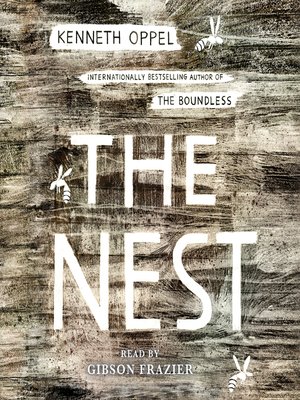
The Nest by Kenneth Oppel, illustrated by Jon Klassen

Published by Simon and Schuster Books for Young Readers 

Summary:  There’s a new baby at Steven’s house, and something is seriously wrong with him.  As near as Steven can tell, the baby has a congenital issue that is causing heart problems, and that may prevent him from ever learning to talk, walk, or feed himself.  Steven himself suffers from anxiety and nightmares, so the last thing he needs is another worry in his life.  When he dreams about an angel who tells him she can fix the baby, he is immensely relieved and ready to do whatever it takes to help.  As the dreams come back night after night, he learns that the angel is really a queen wasp, and her plans for “fixing” the baby start to sound more and more sinister.  Meanwhile, a large wasps’ nest appears right outside the baby’s window; when Steven gets stung, he learns he has an allergy.  Then a shadowy figure starts appearing in the family’s life…is he sinister or a savior?  All forces come together one terrifying day when Steven must learn to draw on courage he never suspected he had.  256 pages, grades 5-8.

Pros:  A psychological thriller told by an unreliable narrator leaves the reader guessing right up to the last chapter.  The creepiness is great fun, but there’s also an interesting message about human perfection and the question of what is normal and what is not.

Cons:  Any phobias around stinging insects?  You may experience some serious nightmares if you read this.

Oskar and the Eight Blessings by Richard Simon and Tanya Simon, illustrated by Mark Siegel

Published by Roaring Brook Press 

Summary:  After the Night of Broken Glass, Oskar’s parents put him on a ship to America.  His father’s last words to him are, “Even in bad times, people can be good.  You have to look for the blessings.”  Oskar arrives in New York City on the seventh day of Hanukkah, which is also Christmas Eve.  He has to walk over one hundred blocks to find his Aunt Esther.  As he walks, he looks for blessings.  An old woman feeding pigeons gives him a loaf of bread to eat.  A boy playing in the snow gives him a pair of mittens.  And Eleanor Roosevelt herself gives him a few kind words.  As night falls, and the Hanukkah candles begin to glow in windows, Oskar at last reaches his destination and finds a new home.  Grades 1-3.

Pros:  A beautifully illustrated, moving story about finding good in the world during a bleak time in history.  An author’s note explains that the events of Christmas Eve 1938 are historically accurate, including Eleanor Roosevelt’s visit to New York City.

Cons:  While very young children would enjoy this story, it does require at least a basic explanation of Nazi Germany and the beginning of the Holocaust.

Happy Hanukkah!

My Family Tree and Me by Dugan Petricic

Published by Kids Can Press 

Summary:  A boy traces his family tree from both sides.  Starting at the beginning of the book, we meet his father’s family back to his great-great grandparents (who look to be of European descent).  The last page of the book shows his mother’s great-great grandparents (apparently Chinese).  Working forward or backward, the reader is introduced to great grandparents, grandparents and parents, until the two families meet in the middle with a two-page family portrait of the narrator with his parents, grandparents, aunts, uncles and cousins.  Studying the pictures, it’s easy to see how physical traits have been passed down from both sides of the family.  Ages 3-7.

Pros:  A fun introduction to family structure and inherited traits.  Kids will be inspired to trace their own family trees.  The cartoon illustrations with somewhat exaggerated features will produce some chuckles.

Cons:  It’s a pretty basic introduction to the topic and doesn’t take into account today’s wide diversity of family structures.


Drowned City: Hurricane Katrina and New Orleans written and illustrated by Don Brown

Published by Houghton Mifflin Harcourt


Summary:  In graphic novel format, Don Brown traces the history of Hurricane Katrina. He begins in early August, 2005, when a “swirl of unremarkable wind” leaves Africa and travels toward North America, gathering strength over the Atlantic Ocean.  As it closes in on New Orleans, residents begin to evacuate, but some choose or are forced to stay behind.  The pictures tell the story, as houses become submerged and residents are forced into their attics and onto their roofs.  Rescue efforts are alternately heroic and ridiculously bungled.  The Superdome debacle is described in detail that is horrific, yet appropriate for younger kids.  The final page describes New Orleans seven years later, still only at 80% of the pre-Katrina population, but slowly rebuilding and coming back to life.  96 pages; ages 10-up.

Pros:  Readers ready to move on from the “I Survived” series will be captivated by this history of a recent U.S. catastrophe.  The graphic novel format is perfect to show what happened from many different perspectives, and the takeaway message is one of resilience.

Cons:  Pretty much every official and politician comes across as inept.

Sonya’s Chickens by Phoebe Wahl

Published by Tundra Books 

Summary:  Sonya loves her three new chickens, and is very responsible about taking care of them.  She gives them food and water every day, cleans the coop, and is thrilled when she finds the first warm brown egg.  One night, she hears a loud squawking and is heartbroken to discover that a fox has found a hole in the fence and gotten one of her chickens.  Sonya’s father comforts her by telling her a story about how the fox needs food to feed his family.  “Even though it’s sad for us,” he explains, “we can understand why he did it.”  The family has a chicken funeral and fixes the fence, and Sonya goes back to taking good care of her chickens.  She is rewarded one day when one of the brown eggs hatches, and she now has three chickens again.  Ages 4-8.

Pros:  The cycle of life and death on a farm is well explained in a story that young children will be able to relate to.

Cons:  It’s not clear how two hens manage to produce a fertilized egg that hatches.

Little Robot by Ben Hatke

Published by First Second          

Summary:  A little girl who likes to explore discovers a box containing a small robot floating down a stream.  Thanks to the first few pages, the reader knows this robot has fallen off a delivery truck.  The girl and robot become friends; although she’s young, the girl is a pretty good mechanic and helps the robot with a few issues.  She also tries to create some robot friends for him. Meanwhile, back at the factory, an alarm goes off when the robot is discovered missing, and a bigger, badder robot is sent in pursuit.  As the girl and her new friend learn the ups and downs of friendship, the mean robot is seen closing in.  Suspenseful chase scenes conclude with a positive resolution brought about by the girl’s ingenuity, mechanical skill, and caring.  The robots she has created celebrate with a loud dance party.  When the noise attracts the attention of a pair of children, the girl and her original robot friend escape into the woods together.  144 pages; grades 1-4.

Pros:  The beautiful artwork of this graphic novel tells most of the story (there are no words until page 27 and they are sparse after that).  Young children will enjoy making up their own tale, with just a little reading thrown in.  The smart, independent girl and funny, caring robot make an endearing pair.

Cons:  I didn’t really understand why the girl and the robot left the party at the end.  She seemed pretty unhappy at the possibility of contact with other humans.