Lucy Tries Soccer by Lisa Bowes, illustrated by James Hearne

Published by Orca Book Publishers

Summary:  Lucy is excited to be playing three-on-three soccer for the first time.  After warming up with some drills, it’s blue versus red as the teams try out the skills they’ve just learned.  Everyone on the team gets a chance to play, so Lucy is called to the sidelines after a few minutes, but her coach praises her for listening and learning.  She watches and cheers as one of her teammates makes a goal.  The two teams line up for some handshaking and congratulations when the game is over.  The last page includes a few fast facts about soccer.  32 pages; ages 3-7.

Pros:  A good introduction for first-time soccer players to get a feel for what to expect at their first practice.  The simple story is told in rhyming text with cute illustrations.  This is part of a series written by a sports reporter…Lucy has also tried luge and short-track speed skating.

Cons:  As a former soccer mom, I feel I can confidently assert that most kids won’t pick up skills as quickly as Lucy and her friends seem to.
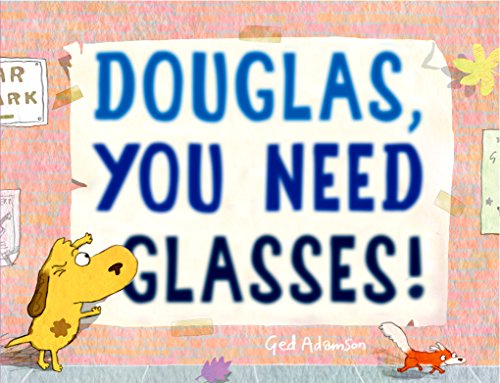
 

Douglas, You Need Glasses! by Ged Adamson

Published by Schwartz & Wade Books 

Summary:  Poor Douglas.  When he and Nancy, his owner, are chasing squirrels, Douglas ends up chasing a leaf instead.  He blissfully ignores signs like “Wet Cement” and “No Dogs” at the skateboard park.  He’s even gone into the wrong house.  But when he mistakes a beehive for a ball during a game of fetch, it’s the last straw for Nancy.  She hustles him off to the eye doctor, where he fails the eye test and gets a prescription for glasses.  After enthusiastically trying many different frames, Douglas is all set with his new specs.  Like anyone who has experienced glasses for the first time, Douglas is amazed by all that he’s been missing.  The last two-page spread shows photos of real kids with glasses, and invites readers to post their own photos at #douglasyouneedglasses.
Pros:  A fast and funny read that would be perfect for anyone who’s been having a little trouble seeing the board.

Cons:  Douglas’s nearsighted foray into the wrong house hit a little too close to home for this nearsighted reader who once wandered into the wrong hotel room in France while not wearing her glasses.

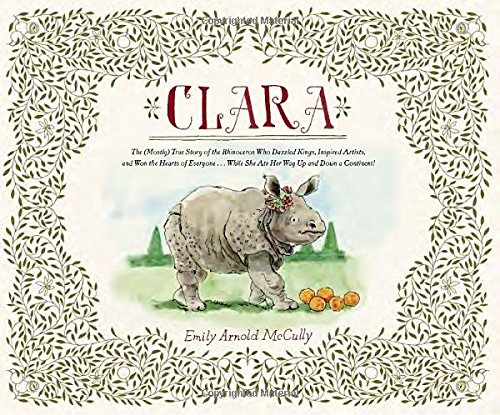
Clara: The (Mostly) True Story of the Rhinoceros Who Dazzled Kings, Inspired Artists, and Won the Hearts of Everyone…While She Ate Her Way Up and Down a Continent by Emily Arnold McCully

Published by Schwartz & Wade Books


Summary:  In the early 1700’s, while visiting a friend in India, Captain Van der Meer was astonished to see a baby rhinoceros wandering about the house.  Thinking he could make a living showing her, the Captain adopted the rhino, named her Clara, and brought her back to his home in Holland.  Clara proved to be a good companion, but a voracious eater, and the Captain was hard-pressed to buy her food.  The two of them eventually traveled all over Europe, even getting an audience with Louis XV of France, who offered to house Clara with his menagerie (the Captain turned him down).  After 17 years of travel, Clara passed away, with the Captain at her side describing her as “the greatest trouper and the truest friend.”  An author’s note tells more about Captain Van der Meer and Clara, and which parts of the story have been fictionalized; endpapers show the routes the two friends traveled.  48 pages; ages 4-8.

Pros:  Readers will be captivated by Clara, who comes across as affectionate and docile as a large dog.  Caldecott Medalist McCully has illustrated her story with colorful, detailed paintings.

Cons:  Beer is mentioned several times as a staple of Clara’s diet.

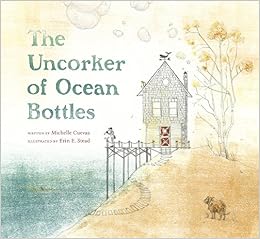
The Uncorker of Ocean Bottles by Michelle Cuevas, illustrated by Erin E. Stead

Published by Dial Books


Summary:  The Uncorker of Ocean Bottles has an important, if lonely, job.  He removes the corks from bottles found in the ocean and delivers the messages to the addressees.  Although he loves his work, the Uncorker wishes he could find a message addressed to him.  Since he doesn’t even have a name, this seems unlikely.  But one day he finds a message with no name on it; it’s an invitation to a party to be held at the beach the next evening.  The Uncorker goes to work, asking around to see if it belongs to anyone.  No one knows about it, but everyone thinks a party seems like a good idea.  That night, the Uncorker goes to the beach to apologize to the sender for not delivering the message.  When he gets there, he discovers a gathering of all the people he asked about the party.  He has such a good time that night that he leaves planning to deliver the same message again the next day.  40 pages; ages 4-8.

Pros:  Beautiful language and voice used to tell a captivating story of new friendship.  The illustrations by Caldecott Medalist Erin E. Stead perfectly capture the dreamy, seaside quality of the text.

Cons:  How did the Uncorker wind up with no name?

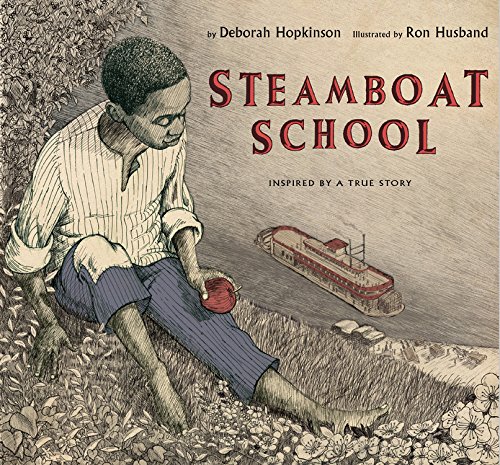
Steamboat School: inspired by a true story by Deborah Hopkinson, illustrated by Ron Husband

Published by Disney Hyperion 

Summary:  James isn’t too enthusiastic on his first day of school.  Held in a windowless church basement, it’s the only school available for free blacks living in Missouri in the 1840’s.  It’s called a Tallow School, because it’s lit by candles.  “We make our own light here,” explains his teacher, Reverend John.  When a state law is passed prohibiting schools for “negroes and mulattoes”, Reverend John is undaunted.  He spends months building and refurbishing a steamboat on the Mississippi river.  Finally, one morning at dawn, the children meet their teacher, who rows them out to the boat.  It’s a school!  And state law doesn’t apply to the river, so the students are safe to resume their education.  An author’s note tells more about John Berry Meachum, who was the real Reverend John.

Pros:  A fascinating and inspiring piece of historical fiction, beautifully illustrated by the first African-American animator at Walt Disney Studios.

Cons:  Not much is known about this school and the students who attended it.

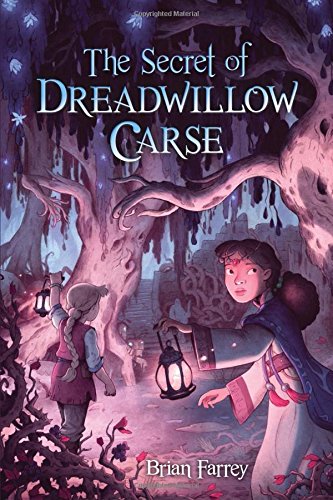
The Secret of Dreadwillow Carse by Brian Farrey

Published by Algonquin Young Readers 

Summary:  Princess Jeniah has just become Queen Ascendant, by virtue of the fact that her mother, the queen, is dying.  Jeniah’s training is rushed due to the circumstances, but she stumbles over one of her most important lessons: if any monarch enters Dreadwillow Carse, then the Monarchy will fall.  The dark, swampy Carse is uninviting, but Jeniah feels she must find a way to explore it.  In her quest to do so, she crosses paths with Aon, a peasant girl who feels broken because she’s the only person she knows who feels emotions other than happiness. She’s also one of the only people to be able to enter the Carse, so Jeniah enlists her to go deeper into it than she ever has before and report back.  As Jeniah learns more about her kingdom and Aon explores the Carse, both girls discover secrets about their land and themselves that threaten the eternal happiness that has been part of the Monarchy for many generations.  256 pages; grades 3-6.

Pros:  An enchanting fairy tale with plenty of adventure and some good messages about embracing the full range of emotions, not just happiness.

Cons:  Putting a 12-year-old in charge of the Monarchy seemed like a bad idea.

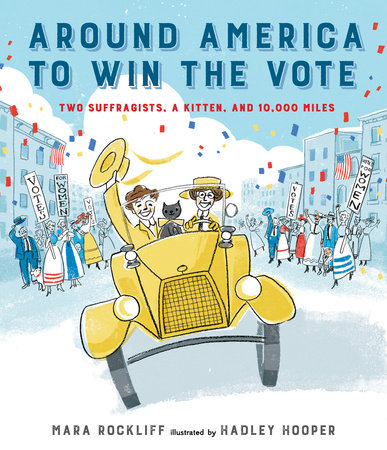
Around America to Win the Vote: Two Suffragists, a Kitten, and 10,000 Miles by Mara Rockliff, illustrated by Hadley Hooper

Published by Candlewick Press 

Summary:  On April 6, 1916, Nell Richardson and Alice Burke drove off from New York City in a little yellow car packed with, among other things, a tiny black kitten.  On September 30, they pulled back into New York City, smiling, sunburned, and with a full-grown cat.  They had circled the United States, driving south out to California and north back to New York, to promote the cause of women’s suffrage.  They got stuck in the mud, drove through a blizzard, and dodged bullets by the Rio Grande.  They attended parties and teas, drove in a circus parade, and won a medal at a fair in California.  It was a remarkable trip, given that the first cross-country car trip had only happened thirteen years before, and these two women doubled that. Each step of the way, they worked tirelessly for their cause, “Votes for women!”  At the end of the journey, Nell stayed home to rest, but Alice boarded a train and began the journey all over again.  The author’s notes give more information about both the drive and women’s struggle to get the vote in the United States; there’s also a list of books for further reading. 40 pages; grades K-3.

Pros:  A great addition to any unit on women’s studies or the right to vote.  The lively text is complemented by the cheerful, predominantly yellow (the color that represented women’s suffrage) illustrations.

Cons:  It seemed kind of icky that the women brought a sewing machine so that if anyone told them women should stay home to cook and sew, Nell would sew while making a speech to prove women could do both.

Sticks & Stones by Abby Cooper

Published by Farrar, Straus, and Giroux


Summary:  Elyse was born with cognadjivisibilitis, or CAV, a disorder in which words people use to describe her show up on her arms and legs.  As a baby, it was soothing words like “adorable”, but by the beginning of sixth grade, there are words like “loser” and “pathetic” that are itchy and uncomfortable.  In elementary school, the kids knew about her CAV and only used kind words, but in middle school, Elyse is determined to hide her condition from her new classmates, wearing pants and long-sleeve shirts year-round.  When she decides she wants to try for Explorer Leader, the biggest honor in sixth grade, she risks losing her anonymity and opens herself up to being the target of labels that are both emotionally and physically painful.  A series of unsigned notes both mystify and inspire Elyse, and by the end of sixth grade she has learned that some rewards are worth the risks, and that good friends can help take the sting out of unkind words.  288 pages; grades 4-6.

Pros:  A fun and interesting take on the theme of rising above what others say about you.  Readers will cheer for Elyse and she moves through sixth grade into a hard-won confidence.

Cons:  It seemed unlikely that anyone as shy and insecure as Elyse would be one of the select few chosen as a candidate for Explorer Leader.

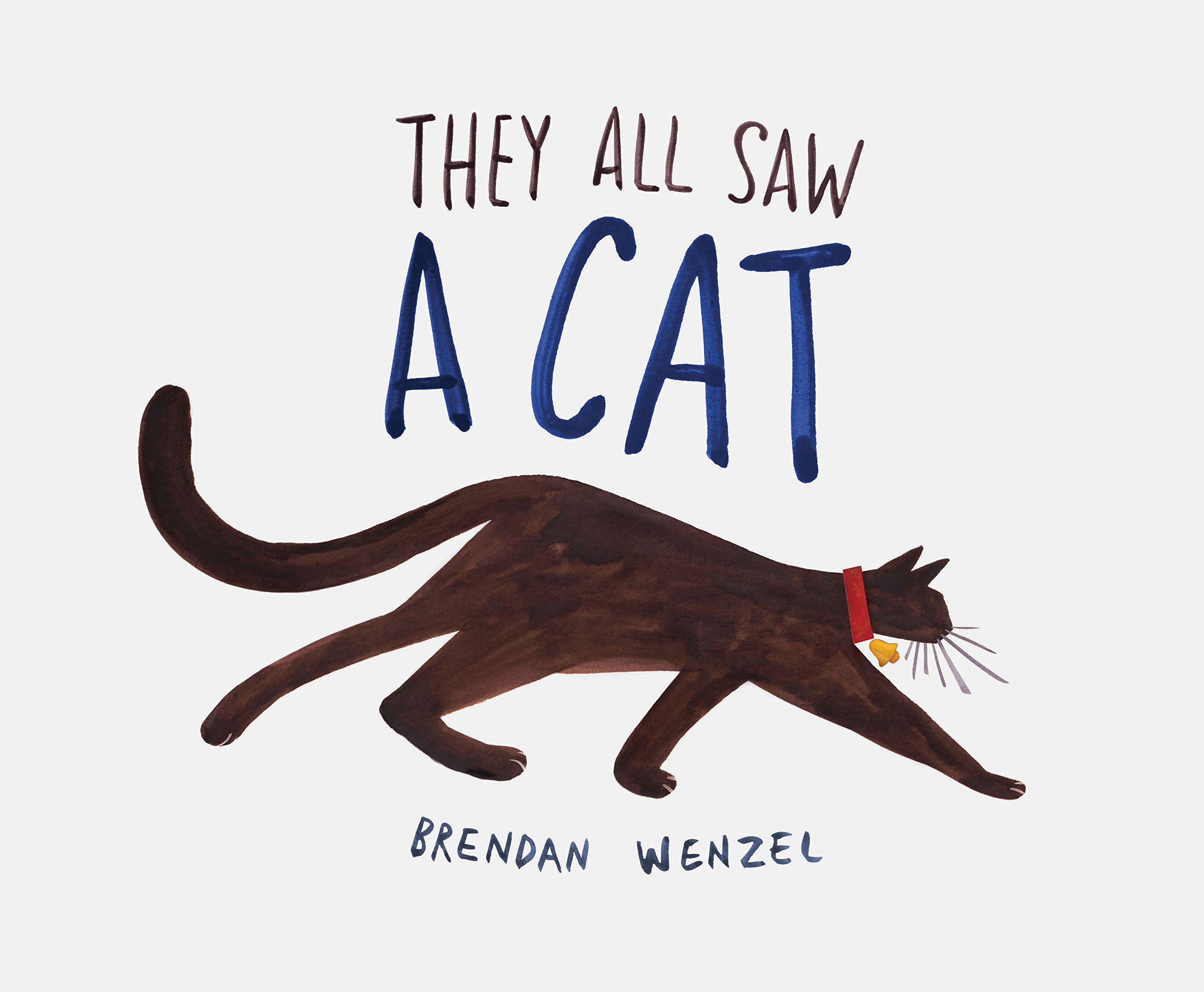
They All Saw a Cat by Brendan Wenzel

Published by Chronicle Books


Summary:  “The cat walked through the world, with its whiskers, ears, and paws…”  So begins this study in perception and point of view.  The refrain is repeated throughout the book, always followed by, “and a child saw the cat,” or “and a dog saw the cat,” and so on, with the illustrations showing how that particular creature sees the cat.  To a child, the cat is friendly and furry, with big round eyes.  To the mouse, it’s a fearsome monster with pointy claws and teeth, surrounded by red.  The fish sees a blurry cat through the water, and the flea is surrounded by a world of cat fur.  Finally, the cat comes to some water, looks in, and the reader is asked, “and imagine what it saw?”  44 pages; ages 3-8.

Pros:  Even the youngest readers will enjoy the cat in its various incarnations, and older readers will get to think about questions about observation and perception.

Cons:  This is more of a thinking exercise than a real story.

Painting Pepette by Linda Ravin Lodding, illustrated by Claire Fletcher

Published by Little Bee Books


Summary:  Young Josette Bobette lives in a house filled with paintings, many of them portraits of family members.  One day she realizes that there are no portraits of her stuffed rabbit Pepette, so she goes out into the streets of Paris to try to find a painter.  It’s the 1920’s, when artists were everywhere, so she has no trouble finding someone who will do the portrait.  Each man has his own style, but none satisfies Josette and Pepette.  Returning home at the end of the day, Josette decides the only way to get what she wants is to do it herself.  She gets out her own box of paints, and pretty soon Pepette’s portrait is hanging with the other family members’.  An author’s note identifies the various painters Josette meets as Marc Chagall, Pablo Picasso, Salvador Dali, and Henri Matisse.  40 pages; ages 4-8.

Pros:  A charming story, as well as an introduction to the works of early 20th century artists.

Cons:  It’s hard to get a sense of the artists’ styles from the small pictures of Pepette that are in the illustrations.