A Is for Elizabeth by Rachel Vail, illustrated by Paige Keiser

Published by Feiwel and Friends
Image result for a is for elizabeth rachel vail

Summary:  Elizabeth is excited to be in second grade and getting homework, just like her big brother Justin (from Vail’s Justin Case series).  But she’s dismayed when she finds out the homework–posters showing everyone’s names–will be displayed in alphabetical order, meaning that bossy Anna will get to go first, like always.  When Anna tells Elizabeth “Sticks and stones may break my bones, but names will never hurt me,” Elizabeth decides to make her poster by gluing sticks and stones to form the letters of her name.  She also uses a phonetic (sort of) spelling, which means her name now starts with a double A. The poster doesn’t come out quite as she planned, and when she has to show it to the class, she deflects attention from it by staging a protest against alphabetical order.  The whole class gets involved in the discussion, and their wise teacher leads them to a decision about how to make sure everyone gets to go first sometimes. First in a four-book series. 128 pages; grades 1-3.

Pros:  Junie B. Jones fans will enjoy meeting this spunky narrator who deals with difficulties in a very second-grade way.  Short chapters and plenty of illustrations make this a good first chapter book.

Cons:  I’m normally a fan of short chapters, but many of these are only a few sentences, which felt just a bit too choppy.
If you would like to buy this book on Amazon, click here.

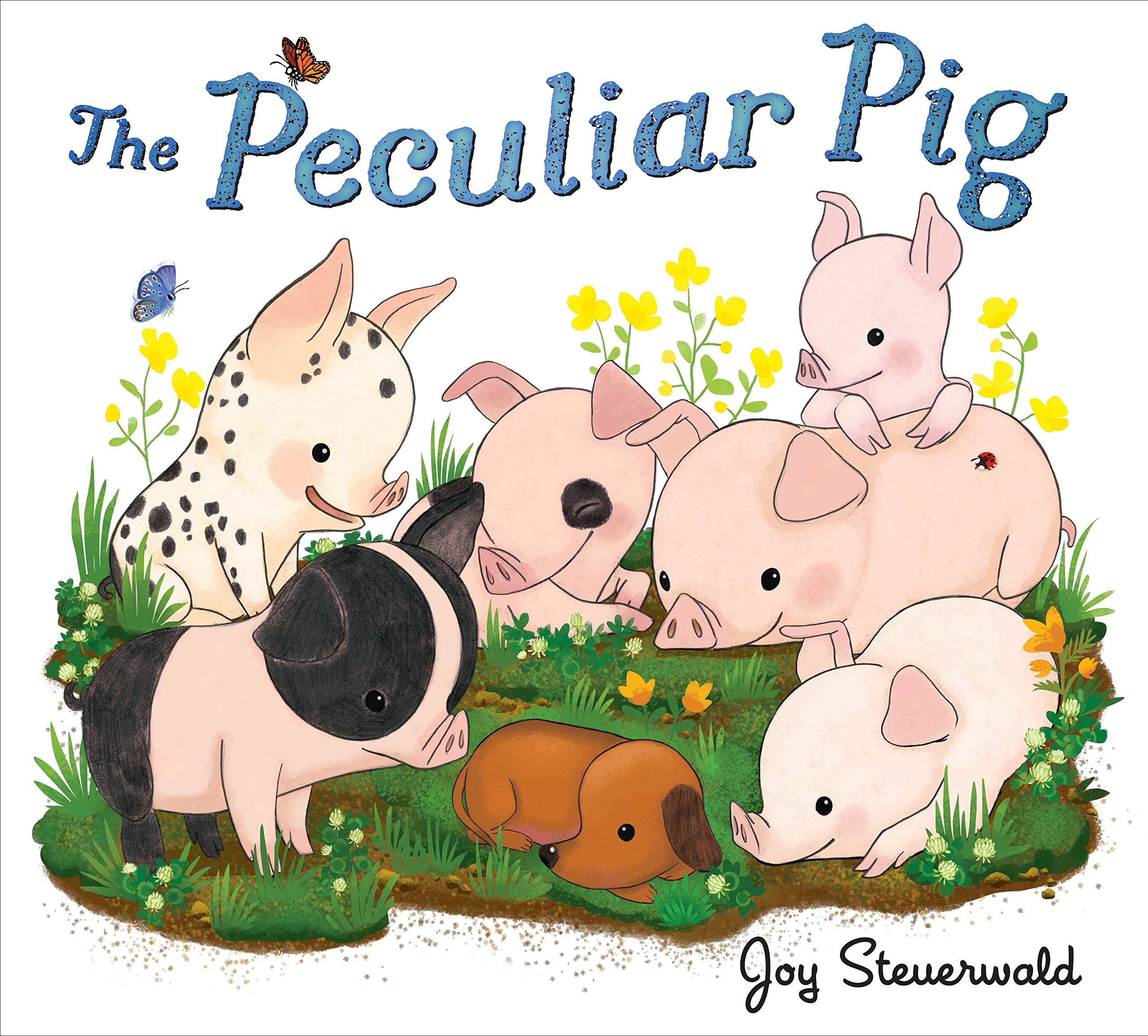
The Peculiar Pig by Joy Steuerwald

Published by Nancy Paulsen Books

Image result for peculiar pig joy amazon

Image result for peculiar pig joy amazon

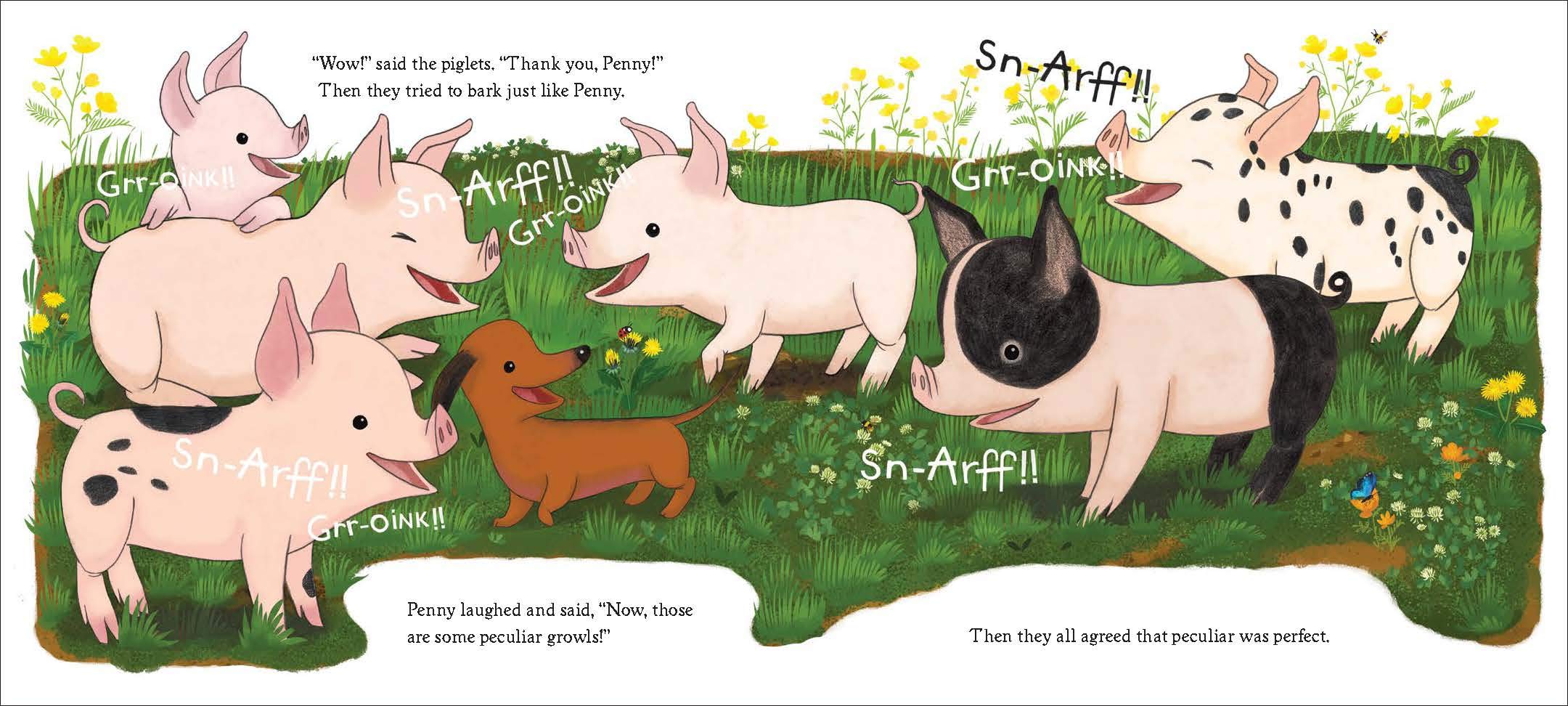
Summary:  “A different sort of piglet” appears in the pigpen one spring morning.  She’s brown instead of pink; she barks instead of oinks; and she digs with her paws instead of with her snout.  The other pigs comment on these differences, but Mama Pig loves all her children the same, and she names “her shining little one” Penny.  One day, when the pigs are out playing, they come across a snake in their path. Penny uses some of her growls and barks to scare it away.  Finally, her piggie siblings are impressed, and start trying to figure out how they can bark and growl too. 32 pages; ages 3-6.

Pros:  Adorable illustrations of baby animals provide an easily accessible story about what it’s like to be different than other members of your family.  This could easily lead to discussions about adoption or other issues where kids may see themselves as different from their siblings.  I didn’t mean to do two pig books in a row, but if you want to have a piggie storytime, you are all set.

Cons: How are no humans noticing what’s going on in the pigpen?

If you would like to buy this book on Amazon, click here.

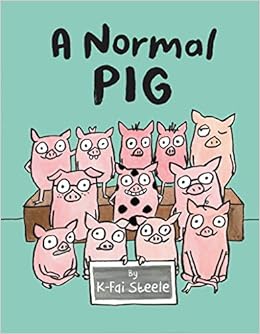
A Normal Pig by K-Fai Steele

Published by Balzer + Bray

Image result for normal pig amazon

Image result for normal pig steele

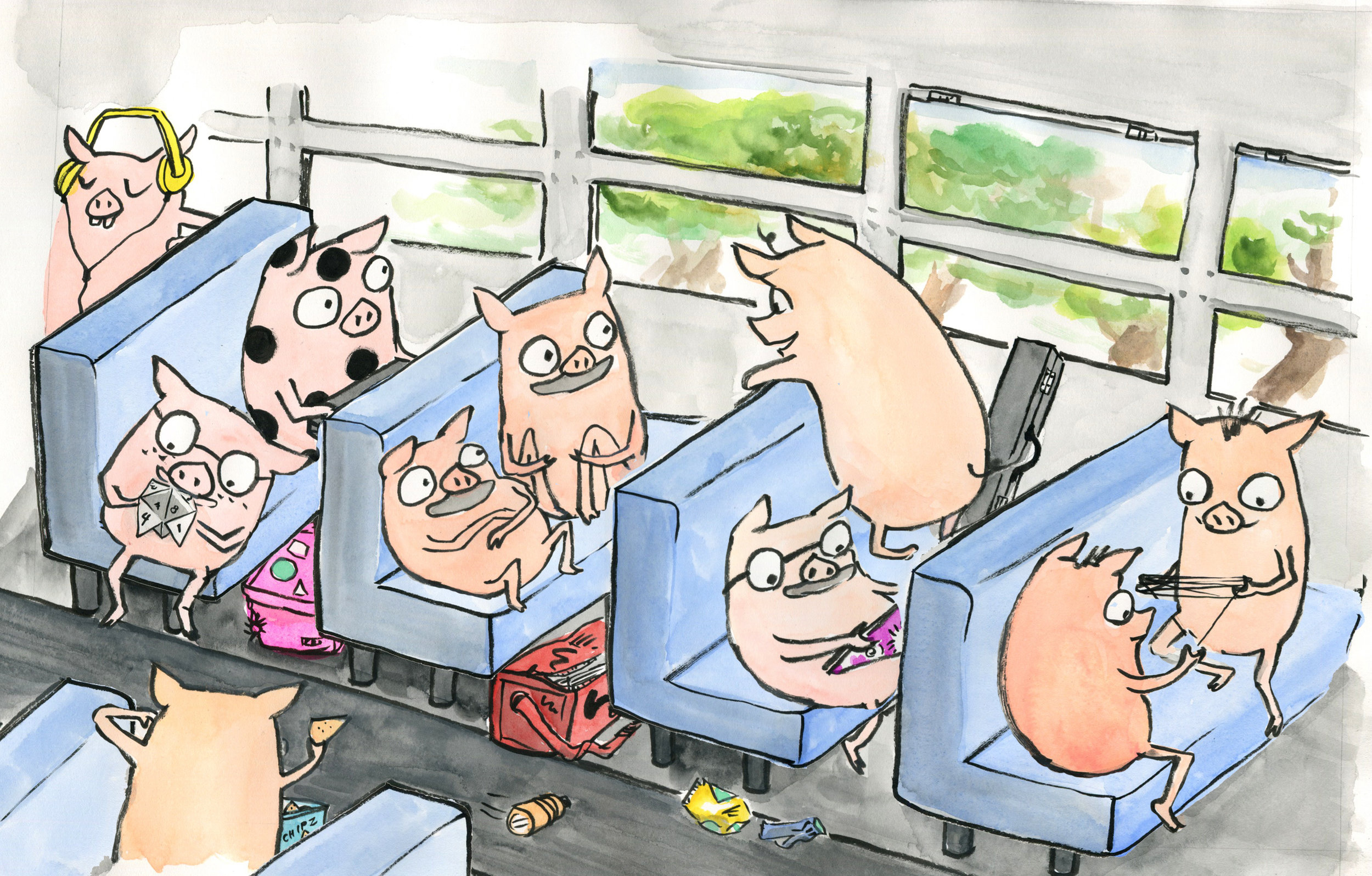
Summary:  Pip considers herself a pretty normal pig.  She likes doing art, hanging out with her family, and dreaming about what she might do when she grows up.  Then one day a new pig comes to school–you know the type–and starts making fun of Pip’s lunch and art. When she asks if Pip’s mother (who is gray, unlike the other pink pigs) is her babysitter, Pip has had enough.  She goes home and demands a “normal” lunch. Her parents’ wise response is to take her to the city the next weekend, where she sees pigs of many different colors, speaking a variety of languages, and eating all sorts of food.  When Pip calls the food “weird”, another pig responds, “Maybe it’s weird for you, but not for me. I like it.” Pip tries this line out the next week in school, and soon even the new pig wants to trade lunches. By the final page, Pip is back to feeling “pretty normal” once again.  40 pages; ages 4-8.

Pros:  A great be-yourself message that may give kids some ideas about how to deal with those who think that being different is somehow uncool.

Cons:  The new pig appears extra big on one page, but not on any of the others, which slightly confused me the first time I read the book.

If you would like to buy this book on Amazon, click here.

Image result for normal pig steele

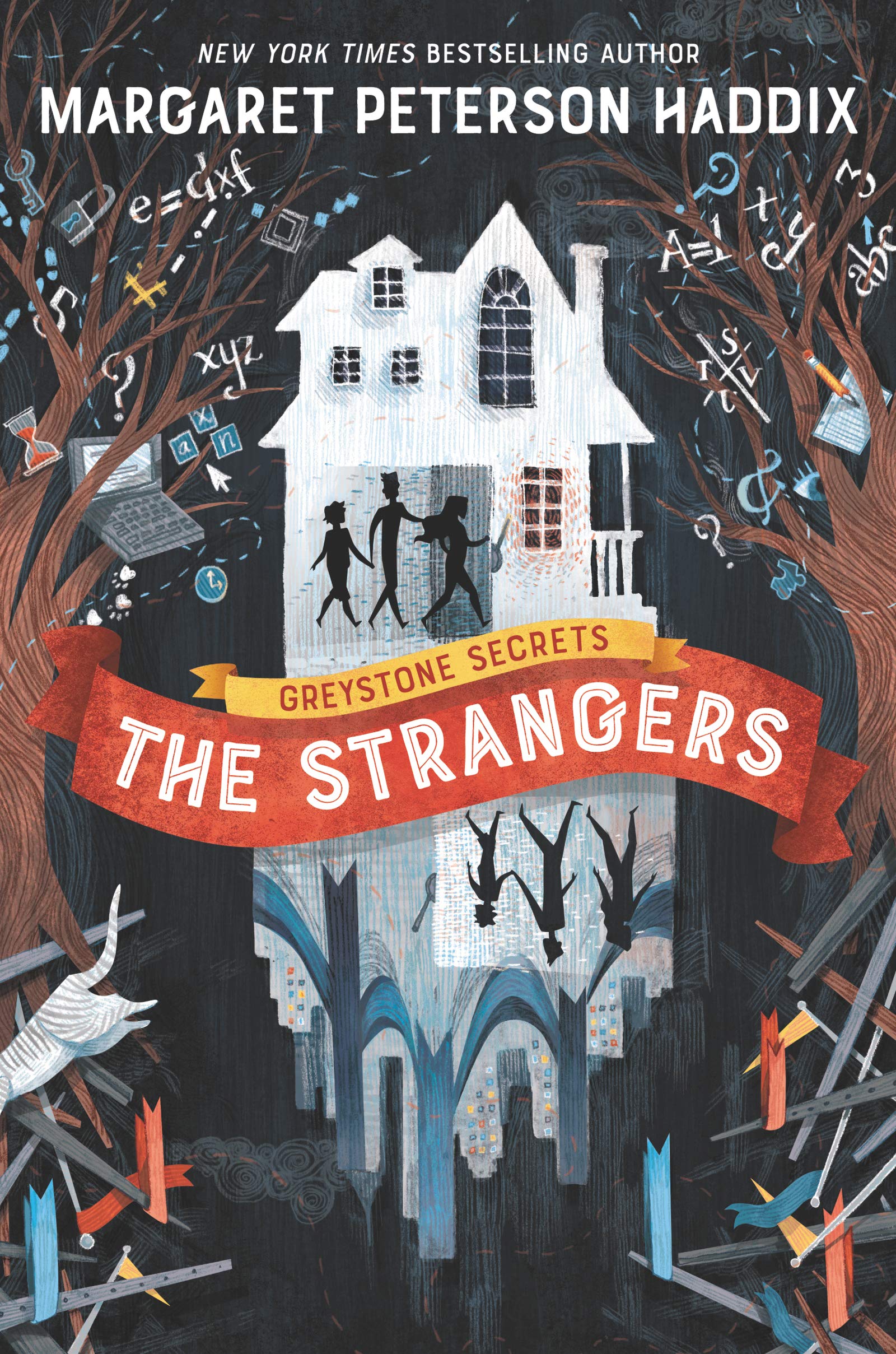
The Strangers (Greystone Secrets book 1) by Margaret Peterson Haddix

Published by Katherine Tegen Books

Image result for strangers haddix amazon

Summary:  Chess, Emma, and Finn Greystone, ages 12, 10, and 8, live with their mom in Ohio.  One day they hear on the news that three kids in Arizona have been kidnapped. As the story unfolds, they learn that these three children have exactly the same names as them.  And exactly the same birthdays. Their mom seems especially disturbed by this bizarre coincidence, and the next day she abruptly announces that she is going on a business trip and isn’t sure when she’ll return.  She arranges them to stay with a woman named Mrs. Morales and her daughter, Natalie, people who are pretty much strangers to the three children. When the kids discover their mom left her computer and phone at home, and that the phone has been programmed to send texts to Mrs. Morales about the trip, they begin to suspect that their mother has disappeared and may never return.  As they delve further into the mystery, they discover some horrifying secrets about their family that could put all of them–as well as Natalie and her mom–in serious danger. A cliffhanger ending paves the way for book #2. 405 pages; grades 5-8.

Pros:  Like the best books by Margaret Peterson Haddix, this one is a total page-turner, keeping the reader guessing as one bizarre clue after another is revealed.  Kids not quite ready for The Hunger Games may enjoy the glimpses of a dystopian world toward the end of the book.

Cons:  Developing realistic characters doesn’t seem to be Haddix’s greatest strength.  I found preciously cute Finn especially annoying.

If you would like to buy this book on Amazon, click here.

Linus the Little Yellow Pencil by Scott Magoon

Published by Disney-Hyperion

Image result for linus yellow pencil amazon

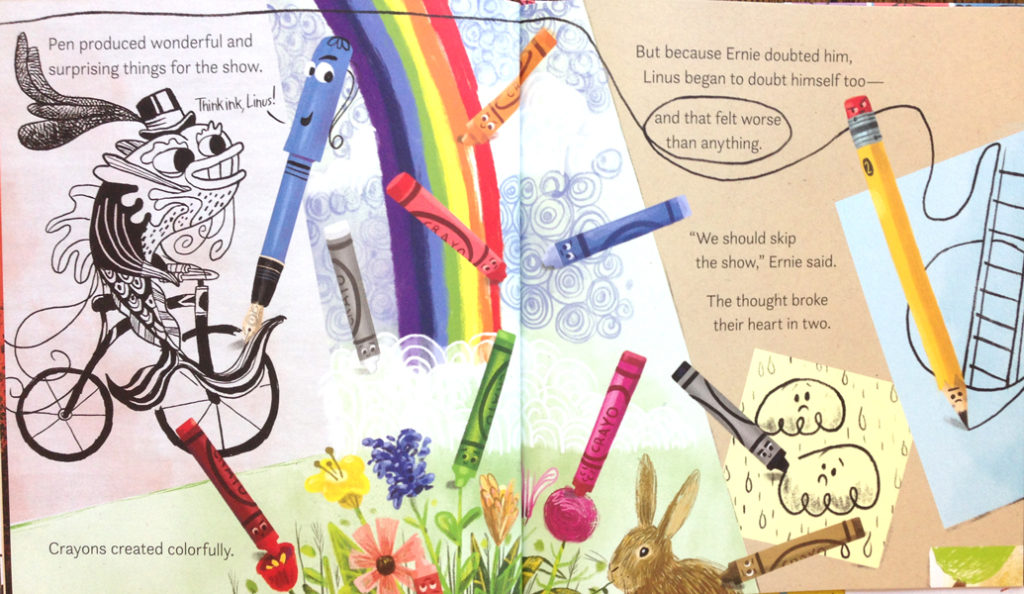
Summary:  Linus is excited about entering the big art show, but Ernie, his eraser, won’t stop critiquing his work.  Ernie tells Linus his lines are too curvy, his stick figures aren’t good enough, and before long, Ernie has convinced Linus that he shouldn’t enter the art contest, and that he’s not really an artist at all.  When Linus heads for the pencil sharpener, he meets Smudge waiting in the darkness, unable to draw. He encourages Linus to let the eraser erase and to find his path by drawing it. Newly inspired, Linus starts working with Ernie to create enough amazing art to fill a wall at the art show.  The large crowds that attend the show agree: Linus and Ernie’s work has the most heart. 32 pages; ages 4-8.

Pros:  Cute illustrations, lots of plays on words, and a nice message about not letting your inner critic shut you down.

Cons:  The end seemed like a little bit of an anti-climax, and I wasn’t really sure I had “gotten it”.

If you would like to buy this book on Amazon, click here.


Liberty Arrives! How America’s Grandest Statue Found Her Home by Robert Byrd

Published by Dial Books

Image result for liberty arrives byrd

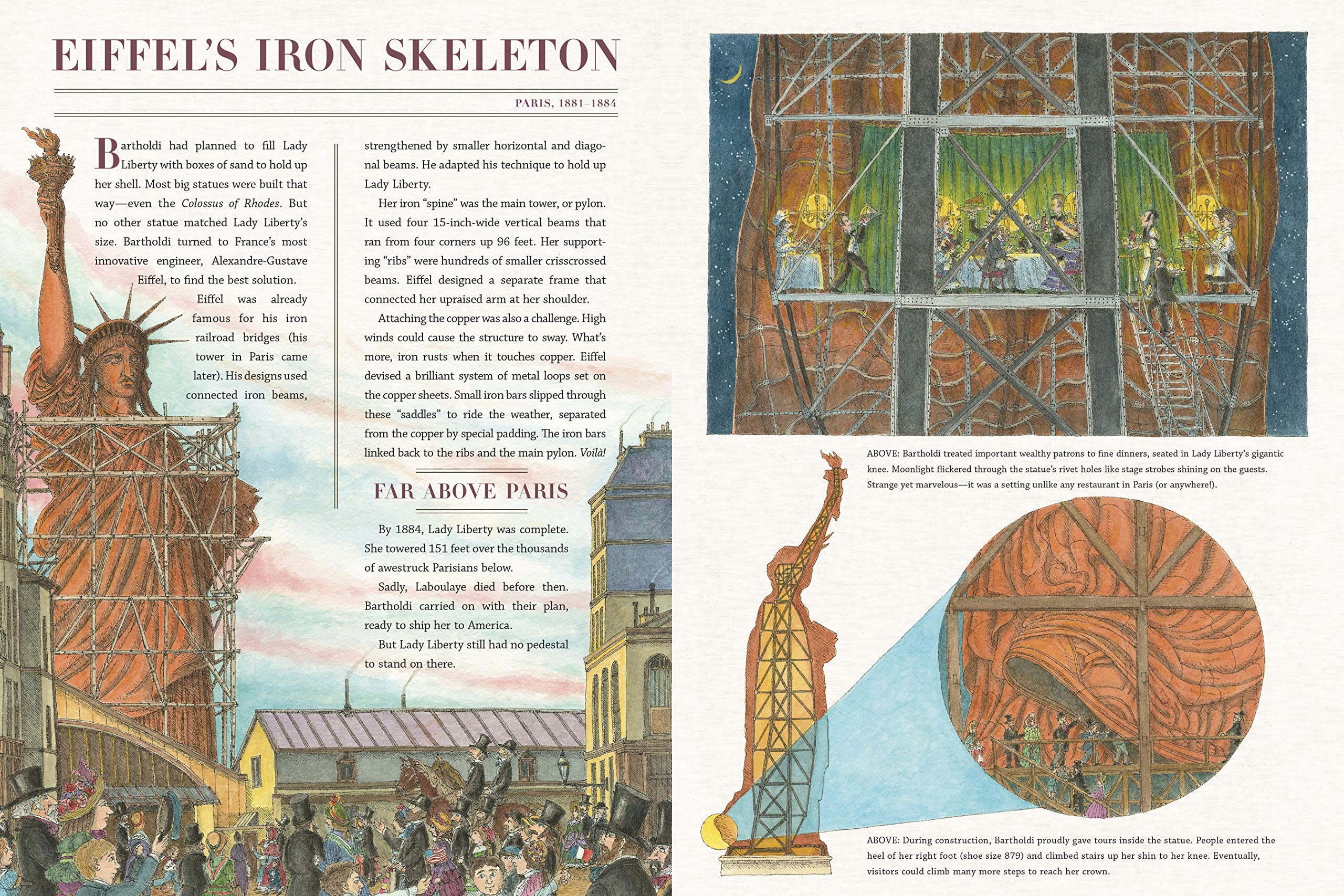
Image result for liberty arrives byrd

Summary:  The idea for the Statue of Liberty began in France in 1865 when Édouard de Laboulaye, a wealthy French judge who admired America, dreamed of presenting the United States with a gift for the 1876 centennial.  He enlisted sculptor Frédéric-Auguste Bartholdi who specialized in large creations. Little did the two of them realize it would take more than two decades before their dream would finally come to fruition–and Laboulaye wouldn’t live to see it.  Part of the reason for the slowdown was the logistics of constructing a 151-foot statue and shipping it to the U.S.; the other part was money for covering the cost of creating the statue, shipping it, and building the base for her to stand on. Joseph Pulitzer finally solved the problem by challenging Americans to donate through his newspaper, the World, and approximately 121,000 people sent in $102,000.  On October 28 , 1886, Liberty Enlightening the World–more commonly known as the Statue of Liberty–was dedicated in New York Harbor.  Includes a diagram showing measurements of different parts of the statue; a timeline; a bibliography of books for adults and children and online sources; and Emma Lazarus’s poem printed on both endpapers.  40 pages; grades 2-6.

Pros:  This oversized book offers a wealth of fascinating, engagingly written information about the origins of the Statue of Liberty, all illustrated with Robert Byrd’s detailed watercolors.  Fun for browsing, and plenty of facts for research.

Cons:  The small, dense text may be a bit off-putting to kids.

If you would like to buy this book on Amazon, click here.