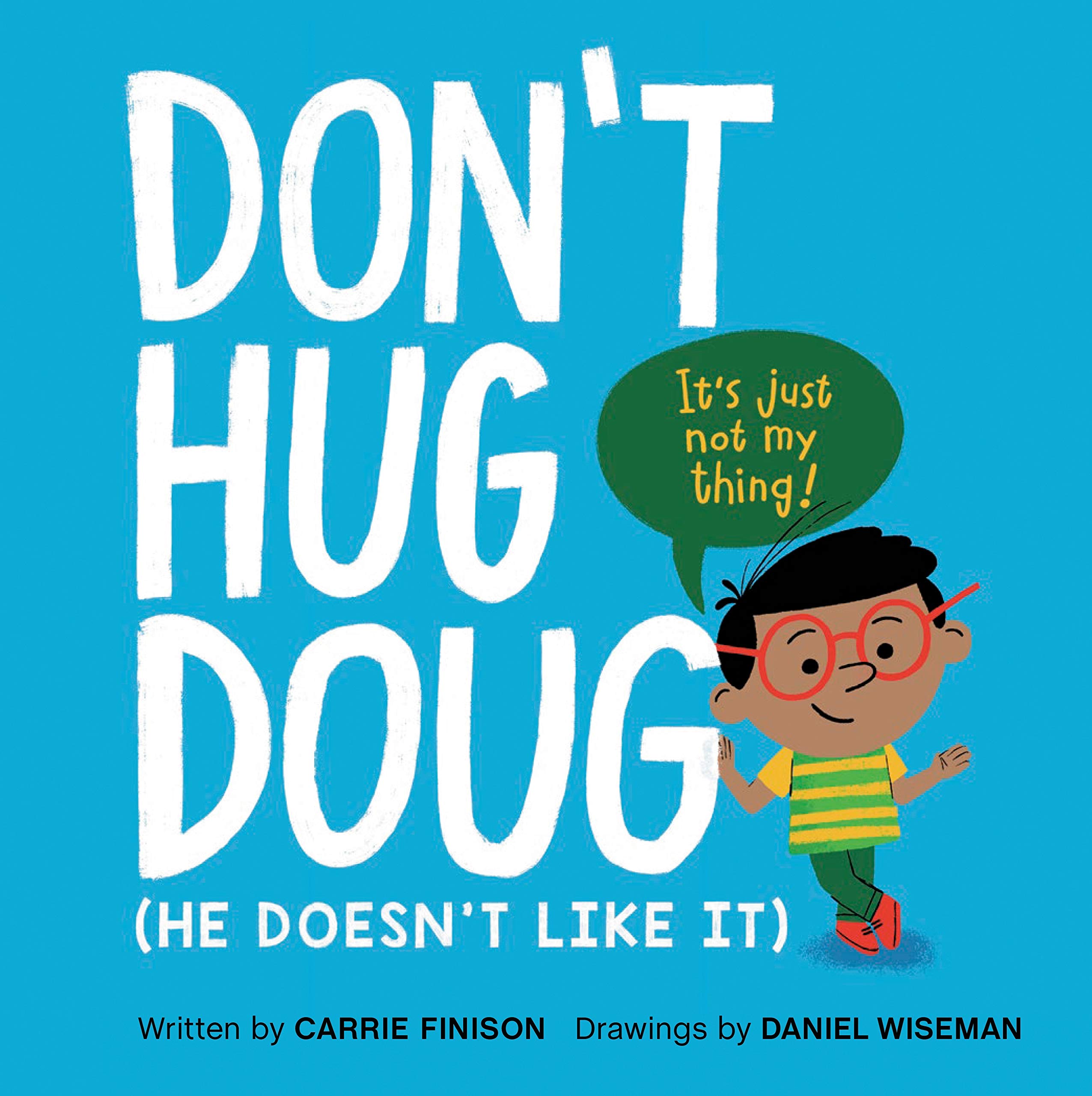
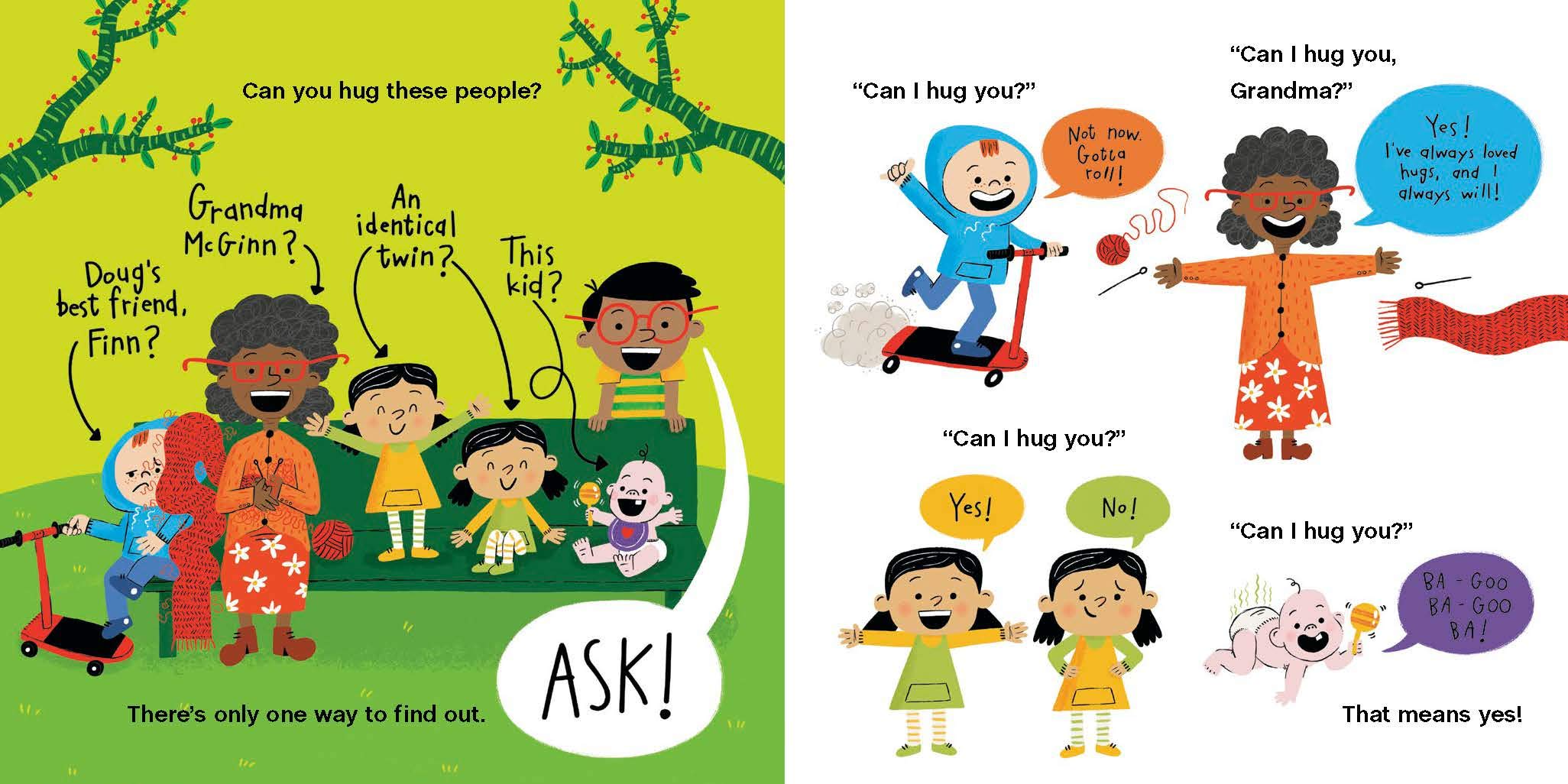
Summary: You can hug a pug, a bug, or a slug (ewww!), but don’t hug Doug. It’s just not his thing. The only hug he likes is a NOT squeezy one from his mom at bedtime. Don’t worry, Doug likes you, and he likes lots of other things, too: his rock collection, his sock collection, drawing with his chalk collection. And he’s really good with high-fives. Turns out Doug’s not the only one, so when considering a hug, be sure to ask first. 32 pages; ages 3-7.
Pros: This lighthearted book about consent touches on quite a few topics: why not everyone likes hugs, the importance of asking before hugging, and that rejecting a hug isn’t the same as rejecting a person. There’s plenty of humor in both the text and illustrations, and Doug is a good-natured guide.
Cons: I’ve definitely made some of the mistakes described by Doug.
Summary: This biography of Nelson Mandela covers his early life in the first few pages, focusing primarily on his imprisonment from 1963 until 1990. Mandela studied and taught others while in prison, reaching out to both white guards and black prisoners. His isolation gradually decreased as reforms slowly came to South Africa, and on February 2, 1991, he was released from prison. Three years later, he voted for the first time in his life–and was elected president of South Africa. Includes extensive back matter: lengthy author’s and illustrator’s notes; additional information on apartheid, the ANC, and Mandela’s imprisonment; a timeline of Mandela’s life and South Africa’s journey to democracy; and lists of books, videos, and websites with additional information (but, surprisingly, no photos). 48 pages; grades 3-6.
Pros: An inspiring look at Nelson Mandela’s life, with beautiful, brilliant acrylic paintings to illustrate it, and lots of material to support further research.
Cons: I wish this book had been edited more; the text is lengthy, and some of Mandela’s story could have been more effectively shown rather than told.
Published by Little, Brown Books for Young Readers
Summary: Growing up in Portland, Oregon, Hazel Ying Lee was a fearless girl who loved running races with her brothers. She fell in love with flying as a teenager, taking a job as an elevator operator (one of the few jobs open to Chinese Americans) to fund her flying lessons. When World War II began, she signed up for the Women Airforce Service Pilots (WASPs), and became one of the few women to fly high-powered fighter jets. In 1944, a radio tower miscommunication resulted in a collision between Hazel’s plane and another, and she died two days later from her injuries. Her family had to appeal all the way to the White House for permission to bury her in the whites-only cemetery of their choice. An author’s note gives additional information, including the facts that WASPs finally received veteran status from Jimmy Carter in 1977 and Barack Obama awarded them the Congressional Gold Medal in 2009; also includes a list of additional resources. 48 pages; grades 1-5.
Pros: Just in time for Women’s History Month (or at least the last ten days of it), this excellent picture book biography tells the story of a courageous young woman who overcame many obstacles to pursue her dream. The additional resources make it a great starting point for more research.
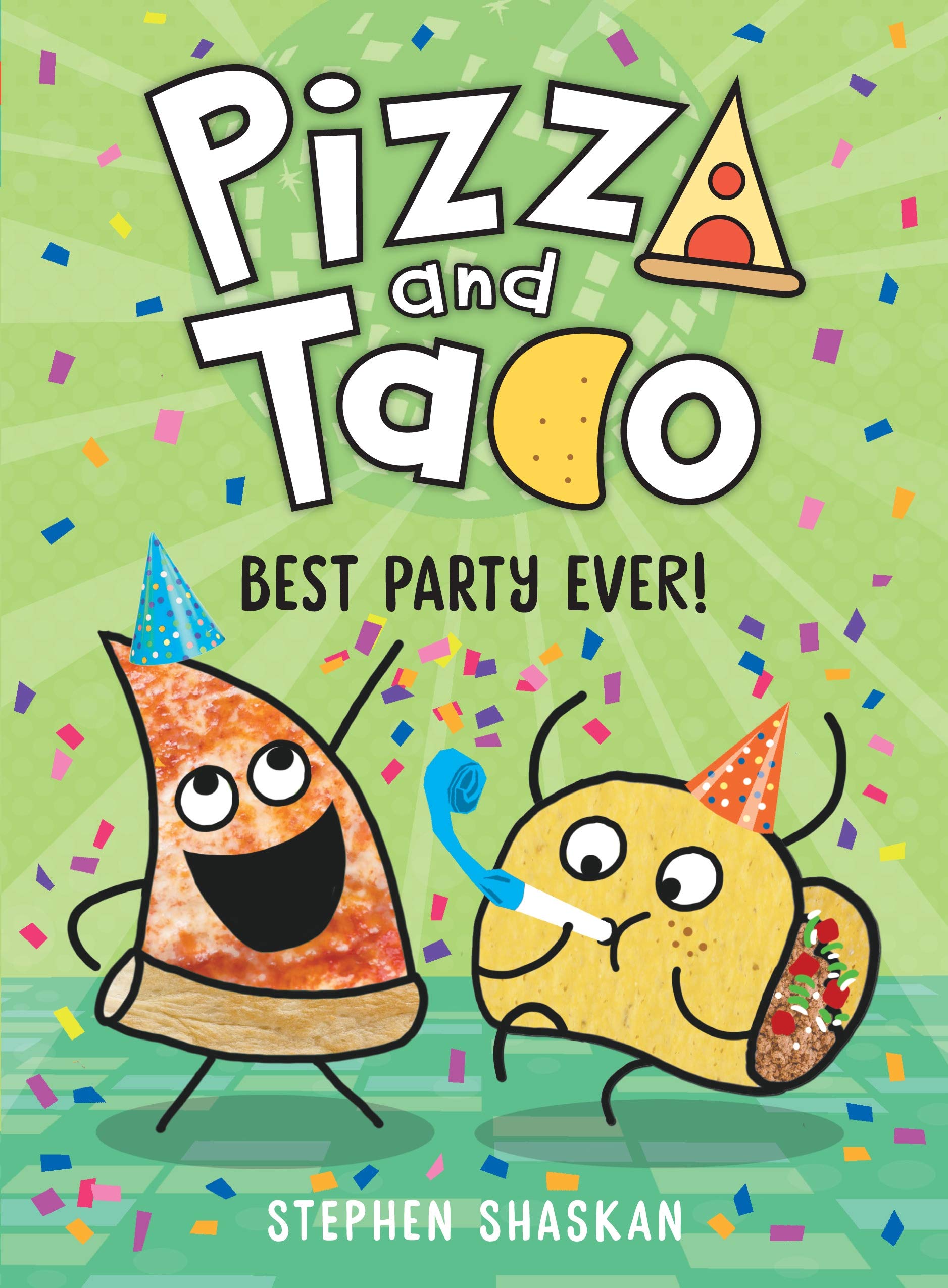
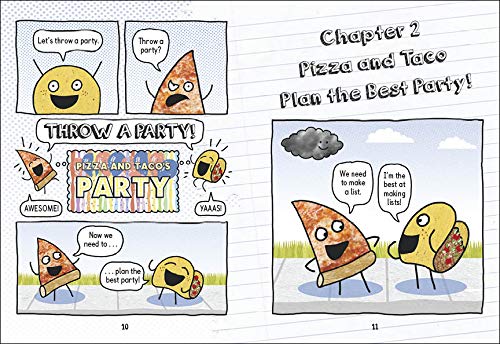
Summary: Friends Pizza and Taco, bored with nothing to do, decide to throw a party at the water park. Unfortunately, they forget a few details like finding out if the water park is open and checking the spelling on the sign advertising their “farty”. One by one, the guests (Ice Cream, Cake, Hamburger, Hot Dog, Cheeseburger, and the Chicken Tender Twins) get fed up (pun intended) with the party’s lameness and go home. Pizza and Taco conclude with a party-planning list for next time based on what they’ve learned. 72 pages; grades K-3.
Pros: Somehow I missed this fast food duo’s 2020 debut, but it seems like a sure-fire hit: comic book format, friendly banter, humorous word play (“Loud noises make Ice Cream Melt Down”) and a third book on the way. There’s a list of Random House’s other “Awesome Comics for Awesome Kids” at the end that look to be in a similar vein.
Cons: I was hoping for some redemption for grumpy Cheeseburger, but instead he ended up on the party-planning list of don’ts: “Don’t invite Cheeseburger”.
Published by G. P. Putnam’s Sons for Young Readers
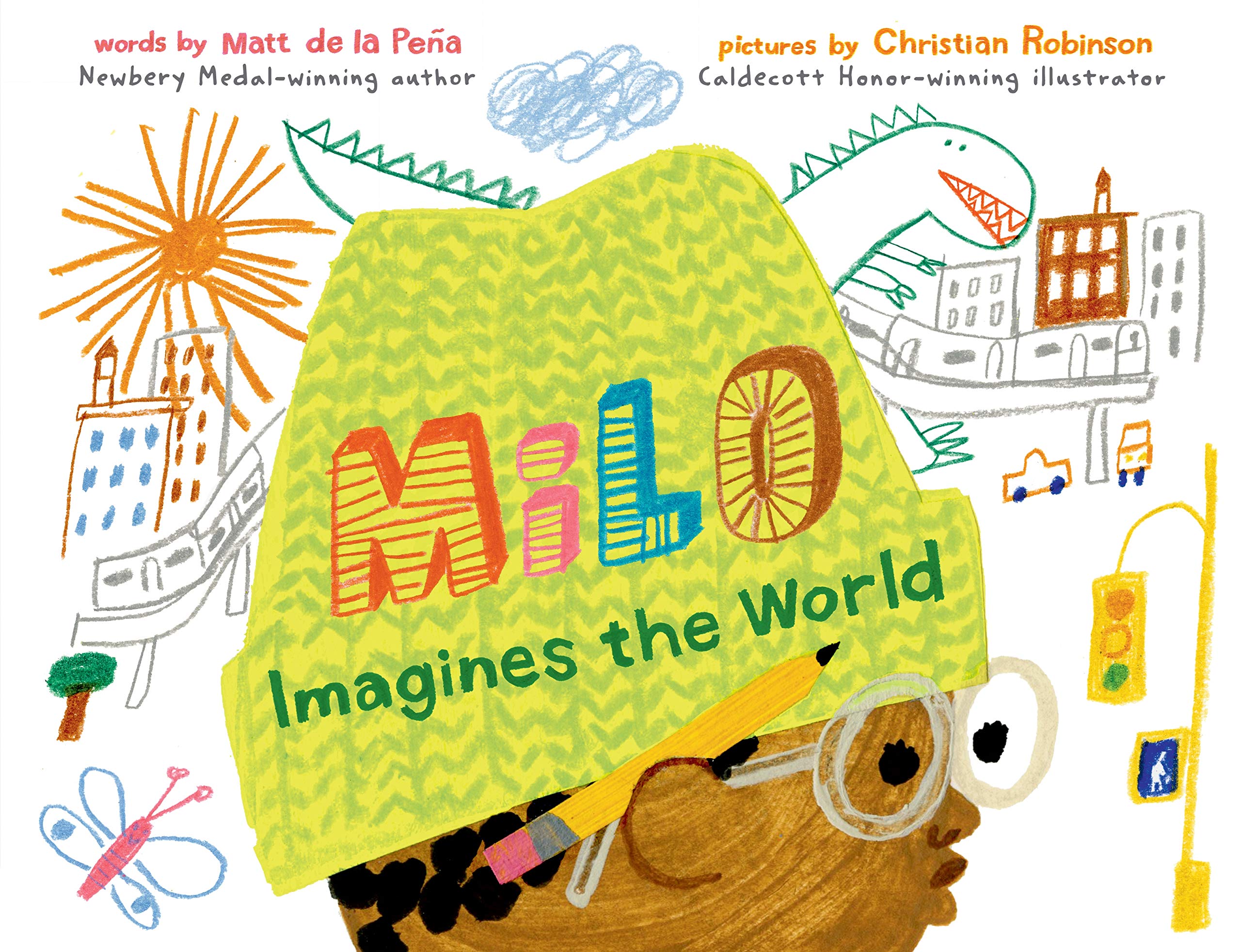
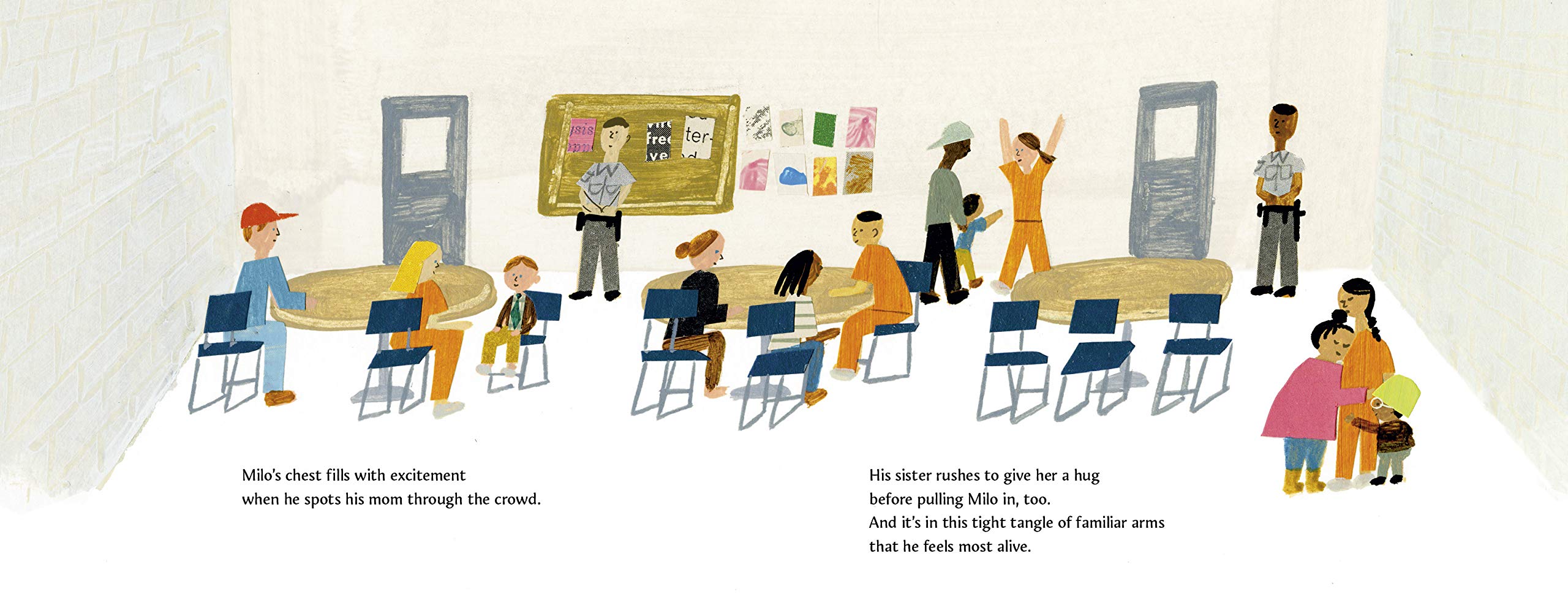
Summary: Milo and his older sister are riding on the subway: “These monthly Sunday subway rides are never ending, and as usual, Milo is a shook-up soda.” To pass the time, he observes the people around him: a whiskered man, a bride in a wedding dress, a boy in a suit. What happens to them when they get off the subway? He draws pictures of what he imagines. For Milo and his sister, the destination is a prison, and the boy in the suit is in the line with them to go through the metal detector. This is so different from what Milo imagined that he starts thinking of different scenarios for all the people he drew. “Maybe you can’t really know anyone just by looking at their face.” Inside, Milo hugs his mother and shows her a special picture he made: him, Mom, and his sister sitting on the front steps of their home eating ice cream. 40 pages; ages 4-8.
Pros: Another home run hit by the award-winning team that brought us Last Stop on Market Streetand Carmela Full of Wishes. I loved Milo’s drawings, especially when he reimagined what happened to the people. The lesson–you can’t tell who people are from looking at them–is delivered with subtlety and grace. Readers may be surprised by the ending, which reinforces the message of not judging people by appearances or circumstances.
Cons: This team has hit on a winning formula: family members on a journey together that culminates with an unexpected ending. Because they do it so well, it’s not exactly a “con”, but it will be interesting to see if they can move beyond this storyline to create something different in future books.
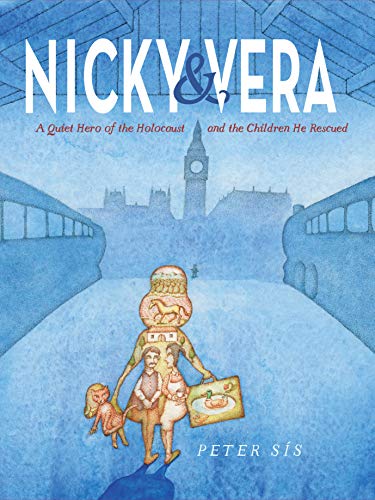
Summary: Nicholas Winton was a young man living in England when Germany invaded Czechoslovakia in 1938, and a friend asked him to come to Prague to help. England was accepting refugees under the age of 17 if they had families to take them in. Nicky set up an office in Prague and began collecting names and photos of children. One of those children was Vera, a 10-year-old girl whose Czech parents wanted to send her to England. A few months later, Nicky returned to London to recruit families to take the children. He eventually got almost 700 children (including Vera) on eight trains out of Czechoslovakia. A ninth train with 250 children never made it out after the borders were closed, and only two children on that train survived the war. After the war, Vera returned home, but her entire family had perished, so she moved permanently to England. Nicky never told anyone what he had done until his wife discovered his lists in 1989 and arranged a TV reunion with many of the people he rescued. Nicky never thought of himself as a hero. “I only saw what needed to be done.” Includes a long author’s note with additional information and a photo of a young Nicholas Winton. 64 pages; grades 2-6.
Pros: Peter Sis uses spare, understated text and folk art-style illustrations to tell this amazing story of a quiet hero and the girl whose life he saved (among many others). Keep a Kleenex handy as you read this compelling story which is sure to engage readers well into middle school and may be considered for a few awards next year. And while you have the tissues out, watch this YouTube clip of Nicholas and Vera’s 1988 reunion on British television.
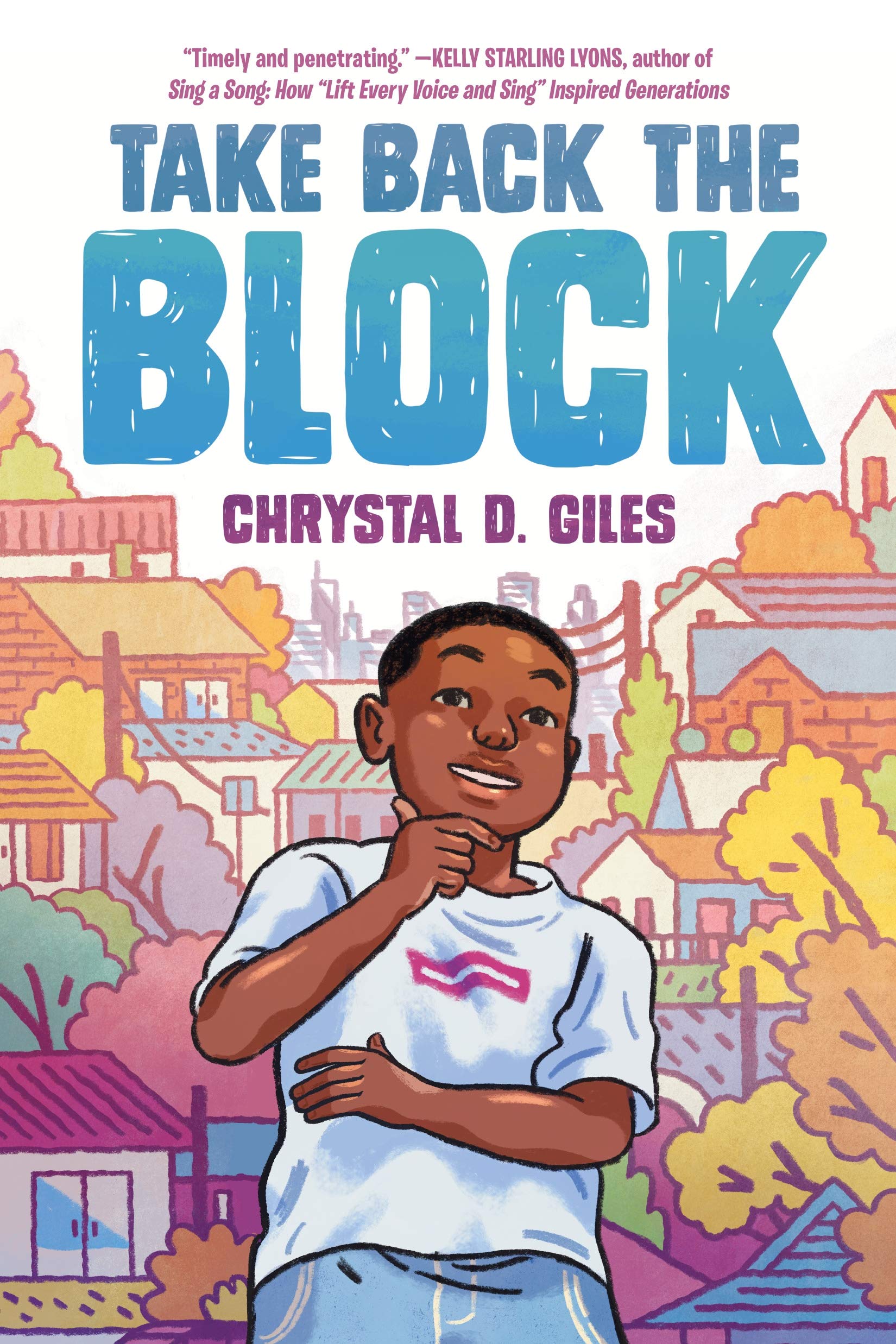
Summary: Wes loves his neighborhood of Kensington Oaks, surrounded by friends, neighbors, and his social-activist parents. When a developer offers to buy the houses in the Oaks, it seems as though his community is going to go the way of other gentrified neighborhoods in the city. As friends start moving away, Wes gets increasingly determined to find a way to save the Oaks. A social studies project unexpectedly gives him a possible way to fight the developers, but he’ll need the help of his whole community to make it happen. 240 pages; grades 3-7.
Pros: Wes’s funny, distinctive voice provides a great narrative to explore the issues of gentrification, Black history, and racial profiling. Along with all the social justice storylines is a good dose of middle school life, friendship ups and downs, and a budding romance.
Cons: Wes’s friend Kari had an interesting story, but the resolution felt a little rushed.
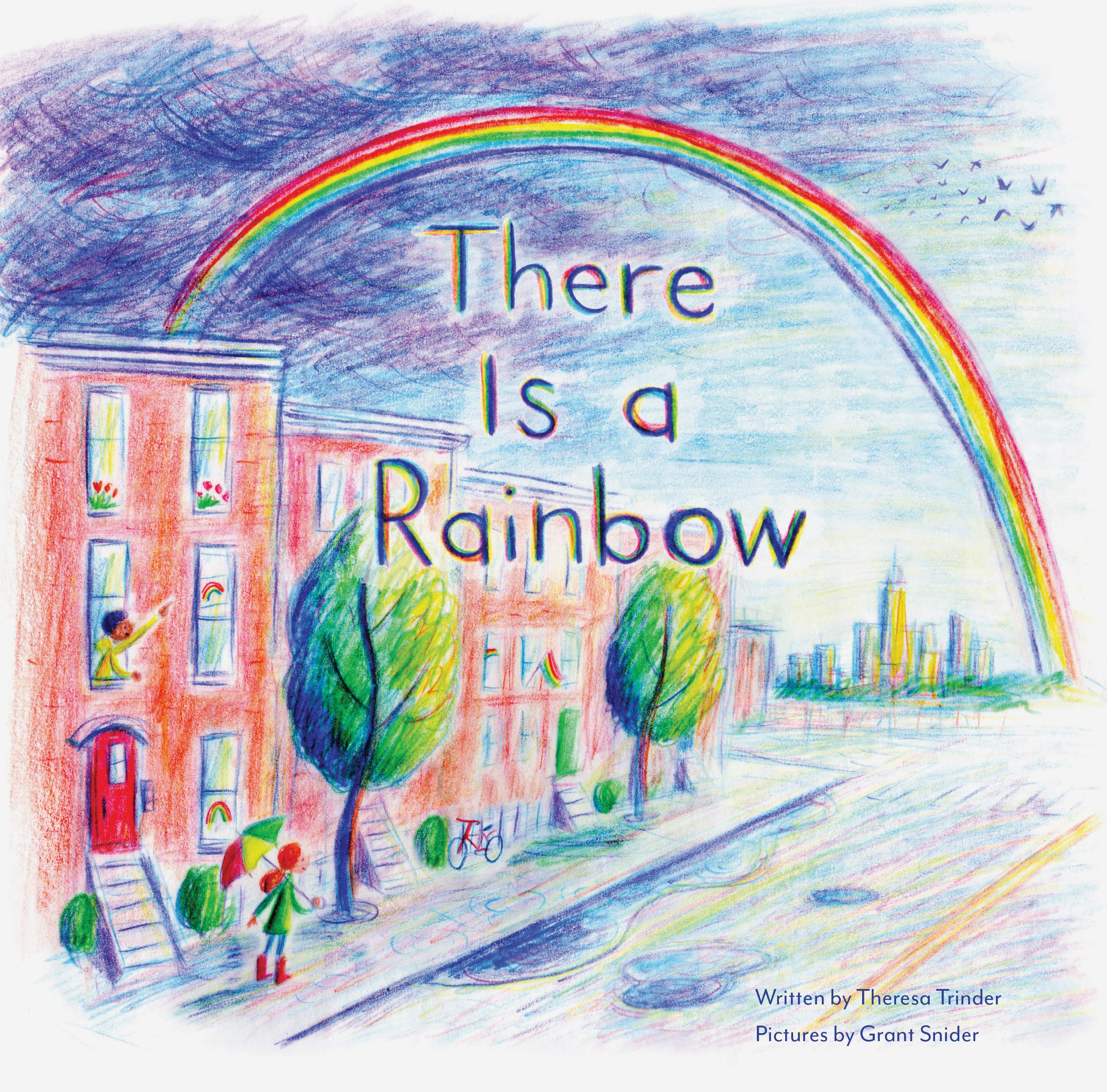
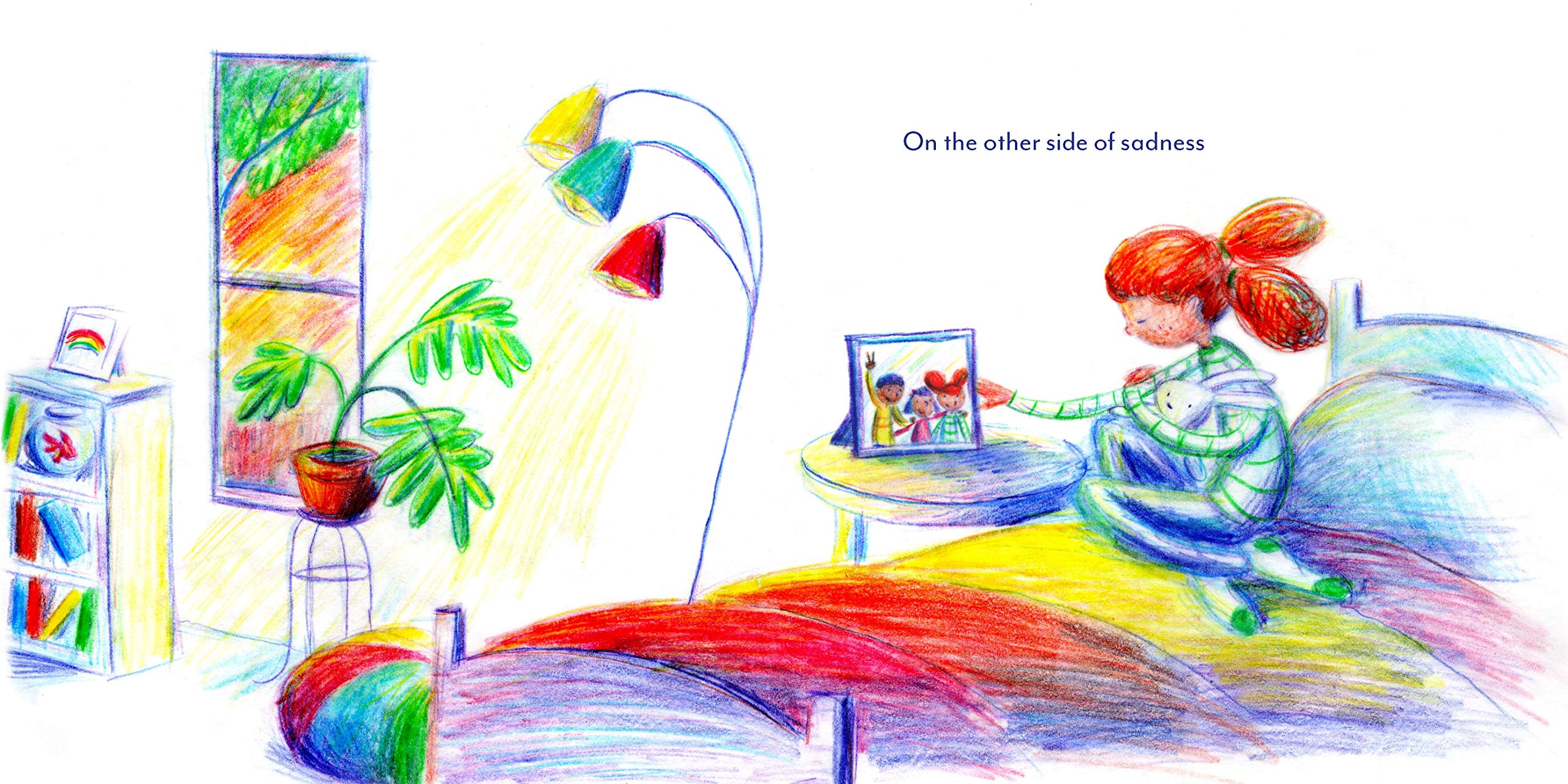
Summary: Inspired by rainbows her children hung in their windows at the beginning of the pandemic, the author starts with the statement that every story has a beginning and an end. The illustration shows two kids drawing a rainbow on the sidewalk, also with a beginning and an end. She then goes on to show what’s on the other side of things: on the other side of a screen is a school; on the other side of a window is a neighbor; on the other side of sadness there are hugs. And on the other side of today is tomorrow, a tomorrow pictured here as unmasked children and their parents heading toward an open school. Includes an author’s note. 52 pages; ages 3-8.
Pros: As we keep our fingers crossed that we’re heading for the other side of the pandemic, this book really captures the emotions and experiences we’ve shared in the past year, both through the brief text and the rainbow-themed illustrations, which, I might add, are the first I’ve ever seen done by a moonlighting orthodontist.
Cons: This book seems like it will feel dated in a short period of time. Let’s hope so.
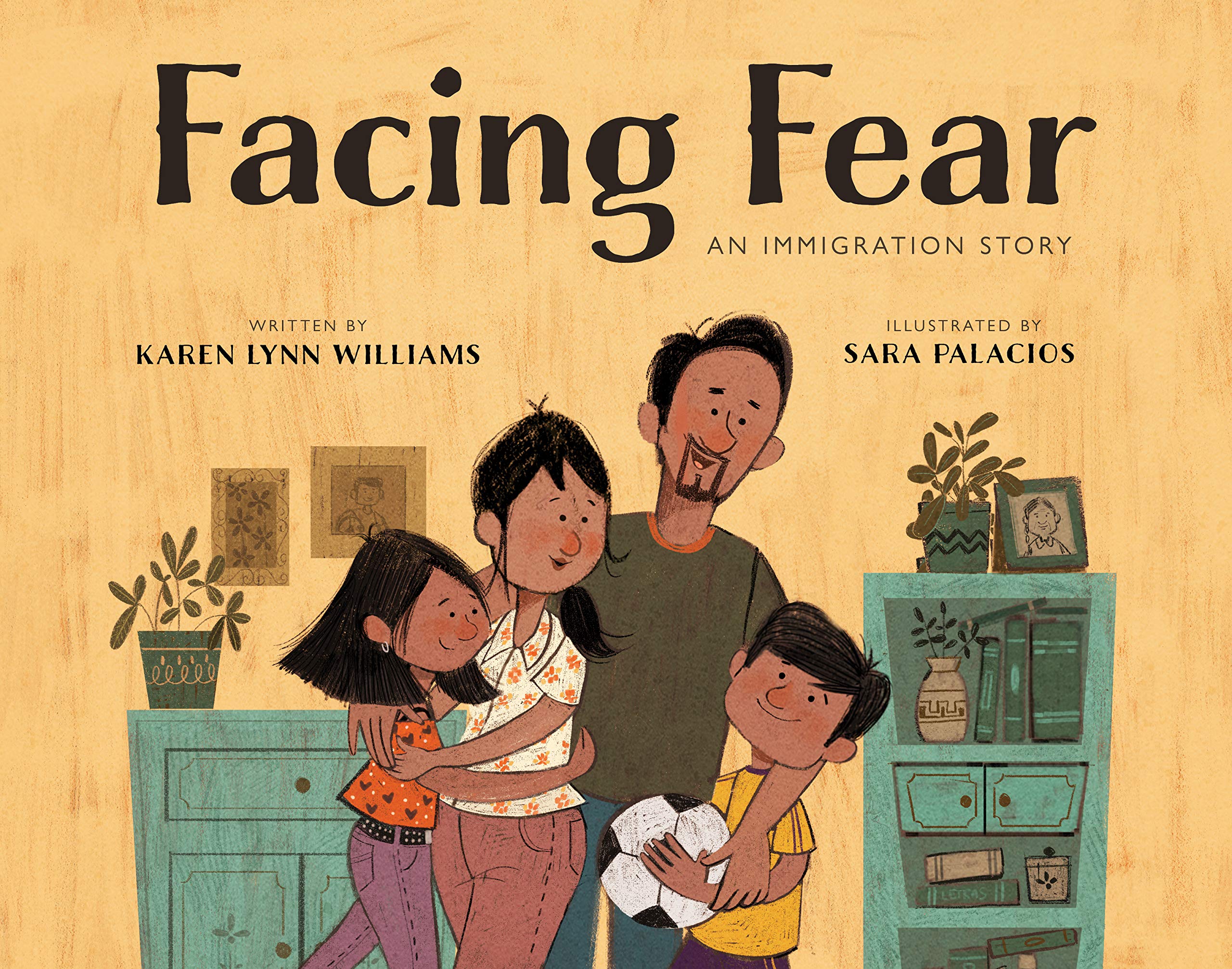
Summary: Enrique is excited when his soccer team makes it to the tournament, then disappointed when his dad says he can’t go. The team will have to pass through a checkpoint, and Enrique’s parents and older sister are undocumented. Enrique thinks his dad is just scared, and decides to forge his signature on the permission slip. Before he gets a chance to turn it in, though, there’s a rumor of a round-up, and the family goes to his Tía’s house to hide. There, for the first time, Enrique hears the full story of his family’s escape to the U.S., and decides his parents are both very brave. After telling his team he’s decided not to play, they show up at his house to tell him they’re not going either, and everyone makes plans for a father-son game the next day. Includes an author’s note; additional information on immigration and checkpoints; a list of organizations assisting and advocating for immigrant families; and a list of recommended reading. 44 pages; grades K-4.
Pros: A compelling story about a boy forced to make a difficult decision that brings to light many of the issues faced by undocumented families. The resources at the end provide excellent additional information.
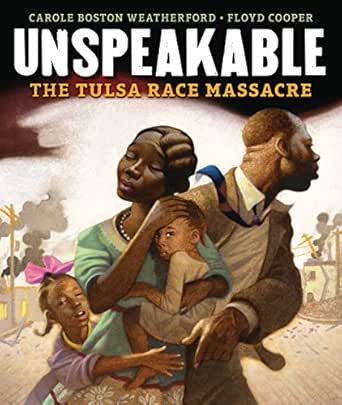
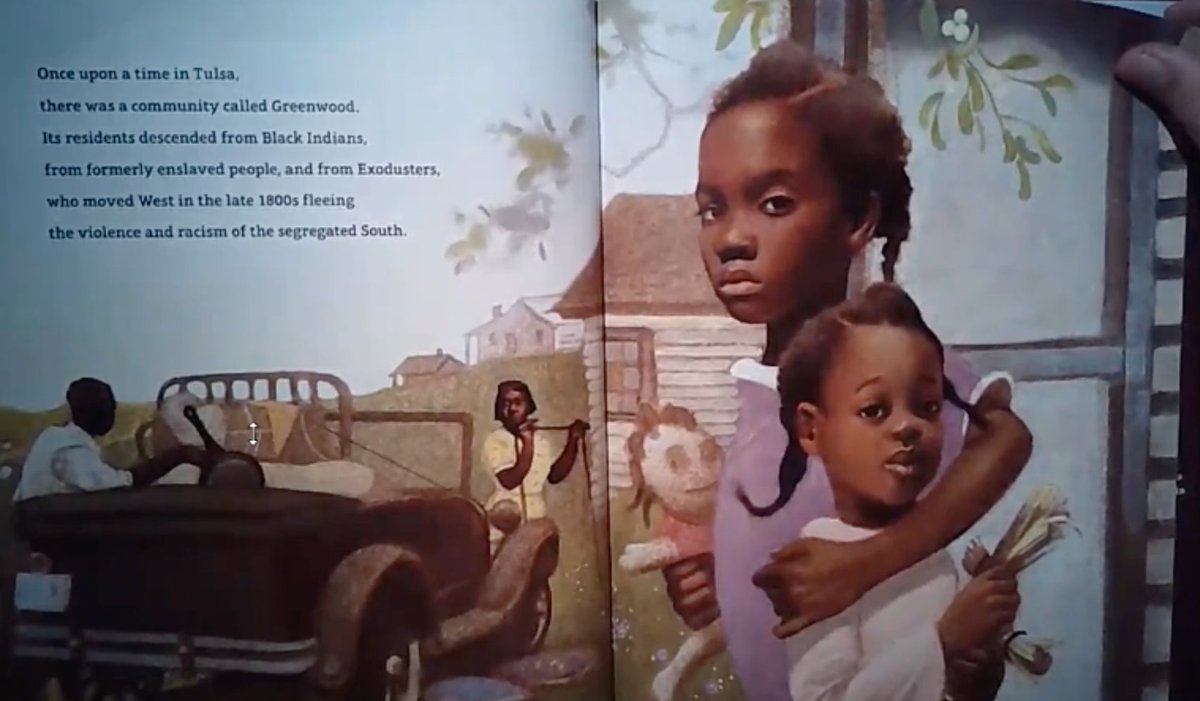
Summary: “Once upon a time in Tulsa, there was a community called Greenwood.” Although this was a segregated community, the Black part of town thrived, with excellent schools, libraries, medical facilities, and enough businesses to call Greenwood Avenue “Black Wall Street”. But in 1921, accusations by a young white woman that a black teenager had assaulted her ignited a series of events that ultimately left up to 300 Black people dead, hundreds more injured, and more than 8,000 homeless when their community was burned to the ground. The town was rebuilt, but the massacre was covered up; it was 75 years before an investigation took place that revealed that police and city officials plotted with the white mob to destroy the Black community. Includes notes from both the author and illustrator describing their connections to this event, as well as photos of Greenwood burning and the Tower of Reconciliation that stands in Tulsa’s Reconciliation Park. 32 pages; grades 3-6.
Pros: With six starred reviews, this book will surely be considered for multiple awards next January. The structure of the story is perfect, describing the amazing community of Greenwood before the massacre as a place where Black people demonstrated that they could build thriving businesses and community services. The massacre is described in a few heartbreaking pages, and Weatherford and Cooper don’t shy away from laying the blame squarely on the white community. Their ending notes are fascinating, particularly Floyd Cooper’s story about his grandfather who survived the massacre.
Cons: The endpapers are before and after pictures of Greenwood. I wish the front endpaper was a photo like the back one is, but maybe there isn’t a photo in existence of what Greenwood looked like as a flourishing community.





 A Kids Book A Day