Hidden Planet: Secrets of the Animal Kingdom by Ben Rothery

Published by Tilbury House Publishers
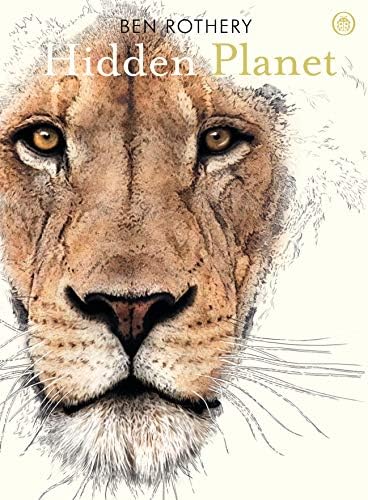
Hidden Planet: Rothery, Ben: 9780241361016: Amazon.com: Books
Hidden Planet: An Illustrator's Love Letter to Planet Earth: Rothery, Ben:  9780241361009: Amazon.com: Books

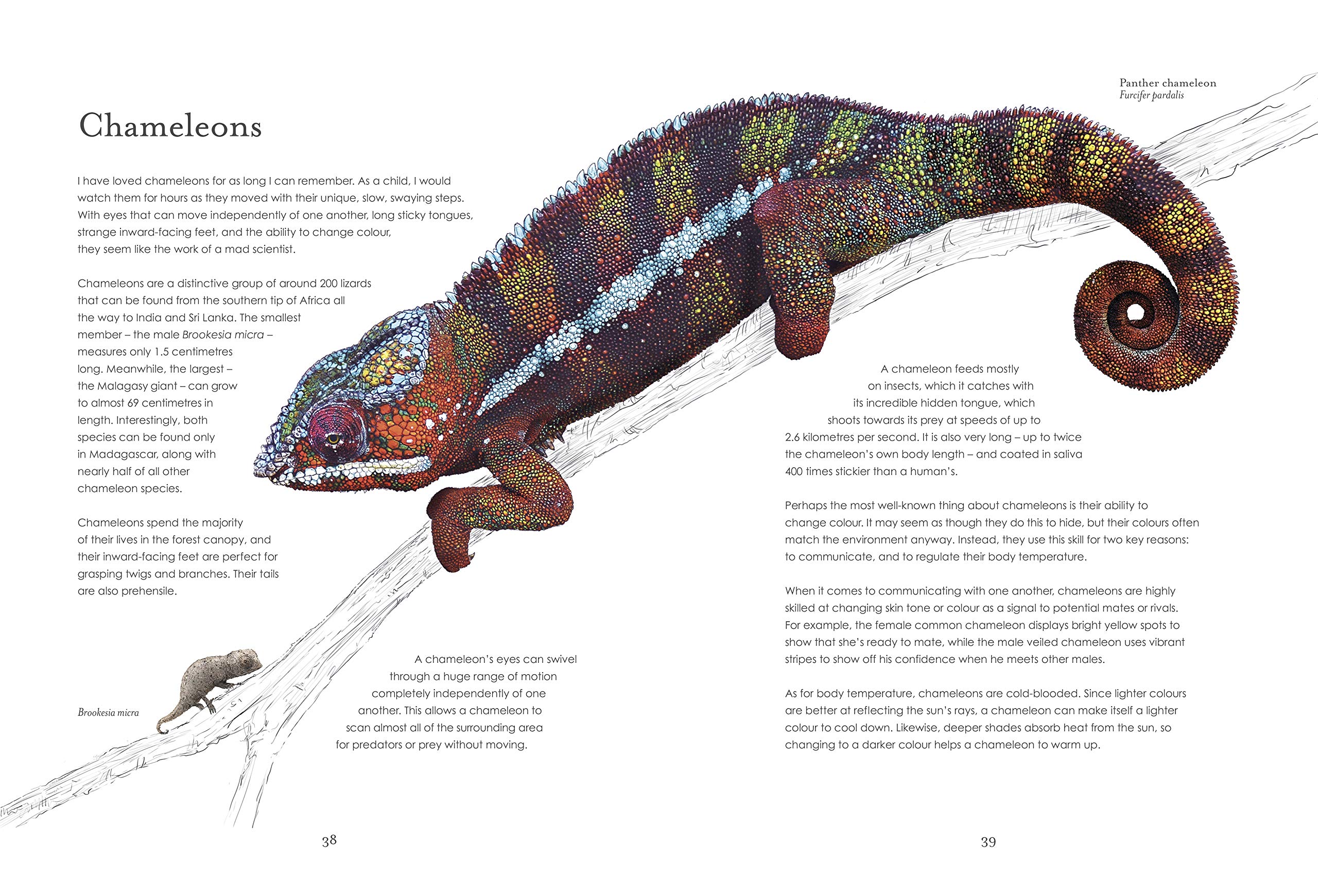
Summary: This animal book focuses on secret or hidden aspects of the animal kingdom.  There are hidden relationships like mutualism and parasitism; hidden families, like the surprising connections among the elephant, the manatee, the dugong, and the rock hyrax; and hidden abilities, such as camouflage and other defenses.  Each oversized page contains at least one illustration (sometimes filling the whole page), and often has two, three, or more, some in color and some black and white.  Includes an introduction and a final author’s note that explain how he became interested in illustrating and writing about animals, why it’s so important to understand animals better, and an invitation to readers to start their own writing and drawing; also, an index.  96 pages; grades 3-8.

Pros:  The wealth of information and especially the illustrations are phenomenal.  Any kid interested in animals will love this book, whether it’s just to browse through the gorgeous pictures or to pore over the interesting facts. 

Cons:  So many of the full-color illustrations are suitable for framing; if I were a kid with an Exacto knife, well…I might not be responsible for my actions.
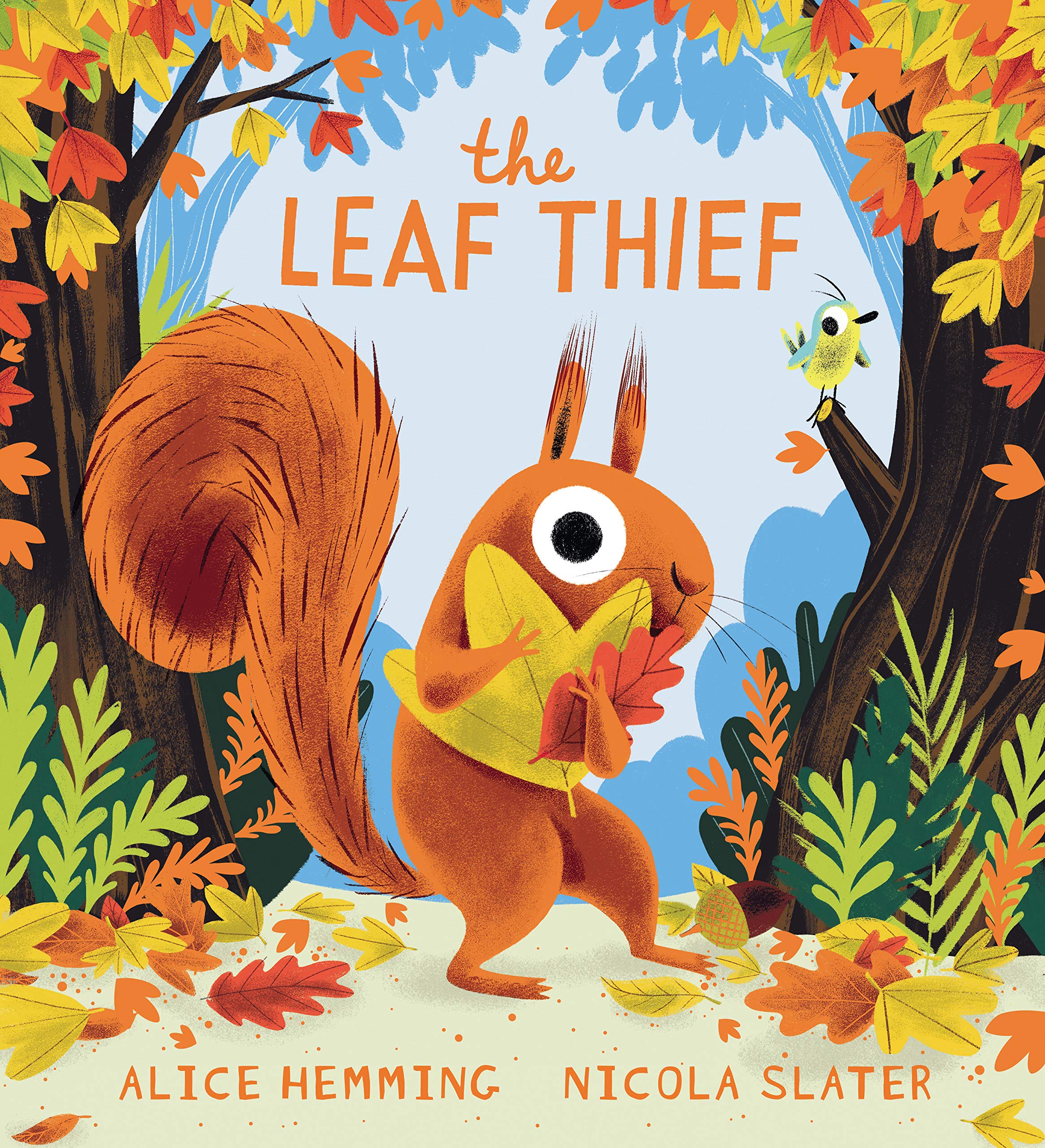
The Leaf Thief by Alice Hemming, illustrated by Nicola Slater

Published by Sourcebooks Jabberwocky

The Leaf Thief: Hemming, Alice, Slater, Nicola: 0760789305887: Amazon.com:  Books

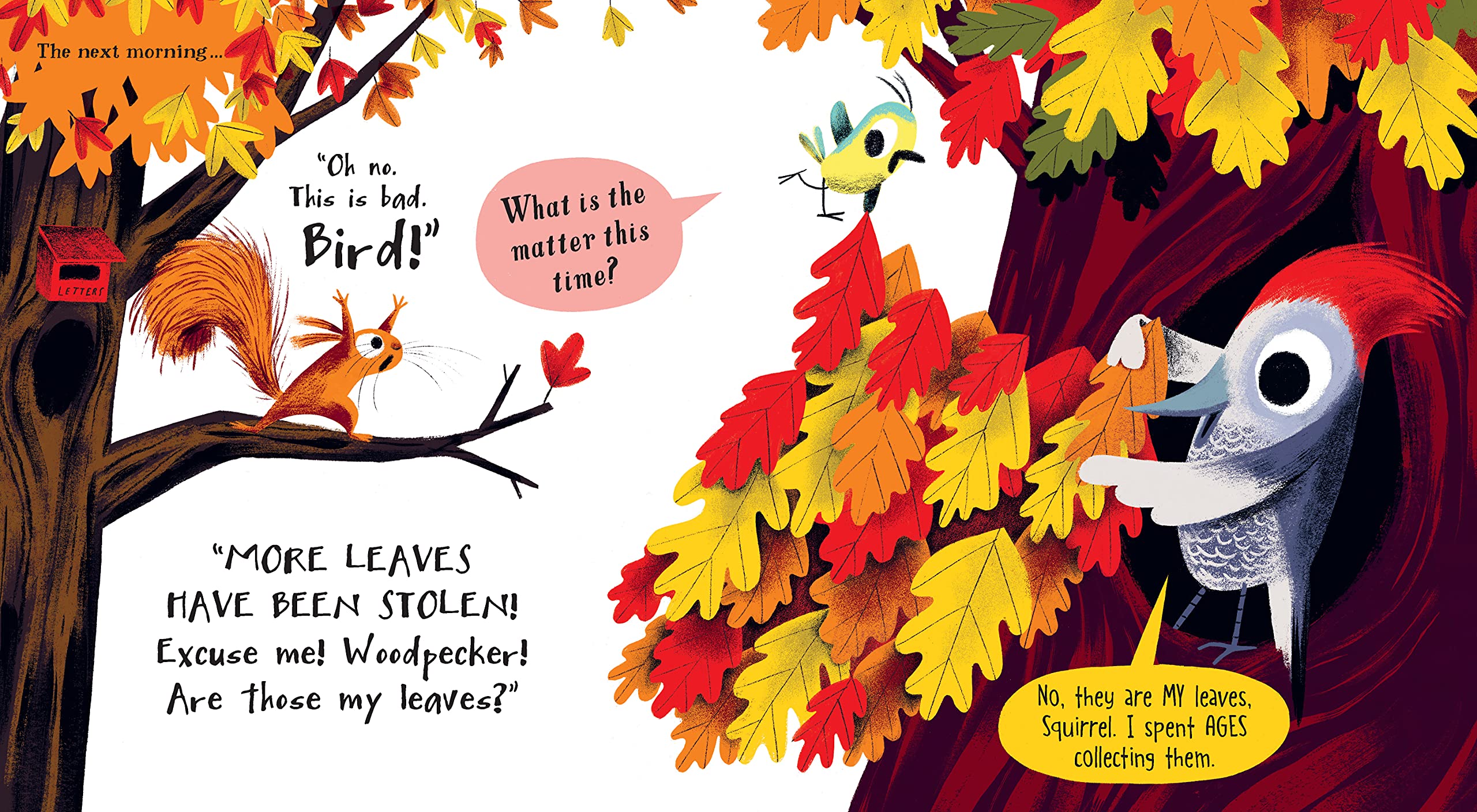
Summary:  Squirrel is in a panic when he notices that one of his leaves is missing, and immediately runs to his friend Bird’s house to report the theft.  Bird reassures him that it’s normal to lose a leaf or two at this time of year, but the next day, Squirrel freaks out again when more leaves go missing.  He accuses some of the other animals, but eventually Bird reminds him that this has happened before, and that the only one stealing leaves is the wind.  Squirrel is finally able to calm down…until he wakes up on a snowy morning, and realizes that someone has stolen the GRASS!  Includes two pages of facts about autumn and the changes deciduous trees undergo during the fall season.  32 pages; ages 3-7.

Pros:  I have nothing against Halloween and Thanksgiving books, but sometimes you just want a good fall story; this one is sure to be a hit with younger kids who will undoubtedly find Squirrel’s antics hilarious.  As a bonus, there’s some good, age-appropriate information to share about the season.

Cons:  The fall facts are printed on the back cover.  Someday, in my ideal world, publishers will listen to me and stop doing that, so we librarians won’t have to cover them up with the dust jackets. 

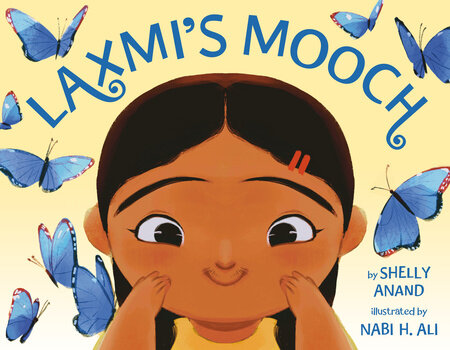
Laxmi’s Mooch by Shelly Anand, illustrated by Nabi H. Ali

Published by Kokila

Laxmi's Mooch by Shelly Anand: 9781984815651 | PenguinRandomHouse.com: Books
Laxmi's Mooch: Anand, Shelly, Ali, Nabi H.: 9781984815651: Amazon.com: Books

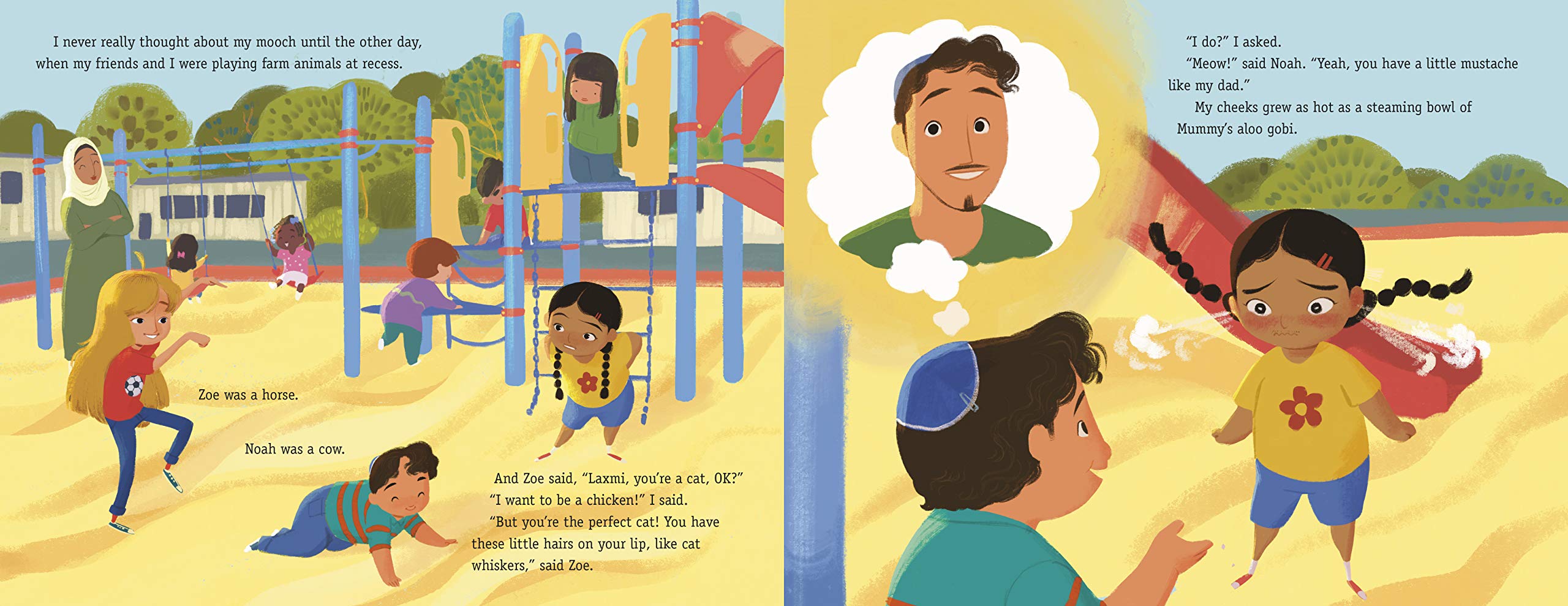
Summary:  When the kids play a farm animal game at school, Laxmi wants to be a chicken, but Zoe says she should be a cat because she has whiskers.  Laxmi’s never noticed the hairs above her lip, but after that she becomes self-conscious about them, as well as the ones on her arms, legs, and in between her eyebrows.  When she tells her parents about the incident, they immediately assure her that all the women in the family (including her mother) have a mooch, and that everyone has hair on their bodies to keep them warm.  The next day at recess, Laxmi says that she wants to be a tiger, because of her whiskers, and suggests that Zoe can use her golden whiskers to be a lion.  Zoe denies having whiskers, but a trip to the bathroom mirror proves otherwise.  Noah wants whiskers, but doesn’t have them, so Zoe draws some on his face, and then proceeds to decorate everyone in her class–even the teacher–with a mooch.  32 pages; ages 4-8.

Pros:  A great story about self-acceptance, with Laxmi’s parents rocking their role of helping their child feel good about herself.  

Cons:  Mooch or no, it seems way more fun to pretend to be a cat than a chicken.

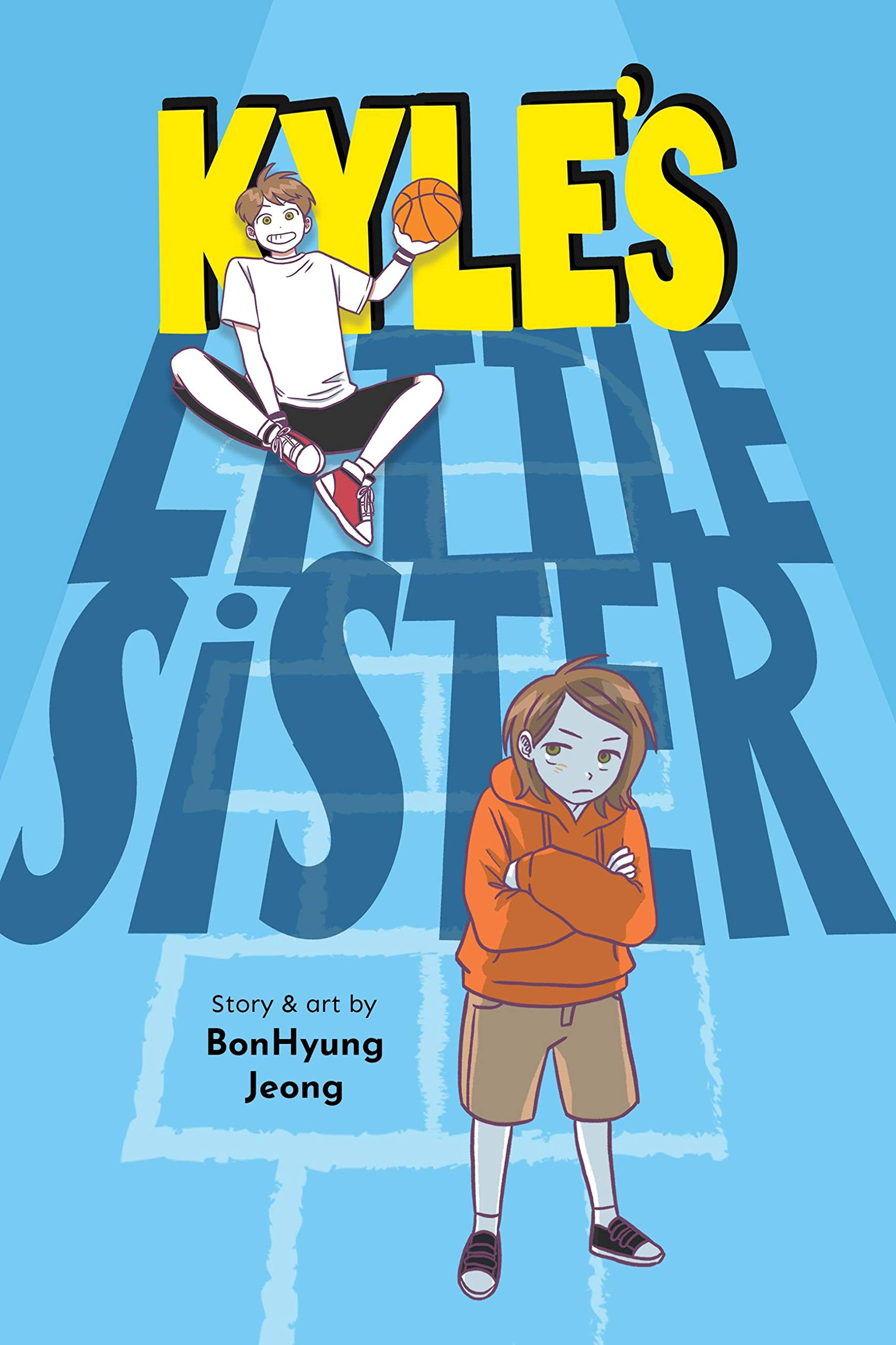
Kyle’s Little Sister by BonHyung Jeong

Published by JY

Kyle's Little Sister: Jeong, BonHyung: 9781975316549: Amazon.com: Books
Kyle's Little Sister by BonHyung Jeong, Paperback | Barnes & Noble®

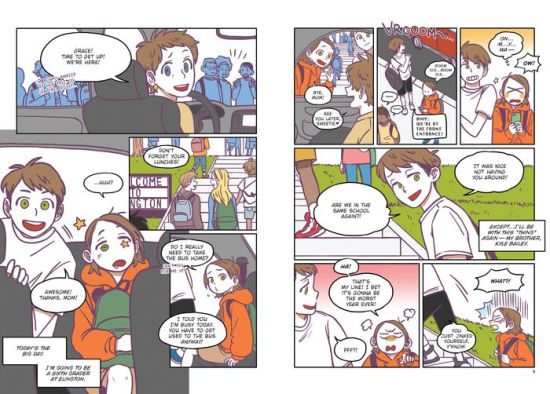
Summary:  Grace is excited to be starting middle school, but before long she’s dealing with what’s been a lifelong problem for her: living in the shadow of her popular, athletic brother Kyle.  One of her two best friends, Jay, has a crush on Kyle, and the other friend, Amy is trying to push the shyer Jay into telling Kyle how she feels about him.  Finally, Jay and Grace have had enough, and the whole friendship falls apart at a disastrous sleepover.  Feeling friendless, Grace welcomes the overtures of a more popular girl named Cam, and enjoys hanging out with her and her friends until she starts to notice what a bully Cam can be, particularly towards Amy.  When Grace learns that Cam has a crush on Kyle and is just using Grace to get to her brother, she realizes that Cam isn’t a real friend…and that Amy and Jay were.  Fortunately, the two other girls have come to a similar conclusion, and the friendship is soon back and better than ever (and even Kyle turns out to be not such a bad guy).  240 pages; grades 3-6.

Pros:  Did you follow all that?  There is a LOT of middle school drama in these 240 pages, but it is true to life, and fans of the realistic fiction graphic novel genre will love both the story and the anime-style art.

Cons:  At times, dialog was written in bubbles with no little tail indicating who was saying the words, which I found a bit confusing.

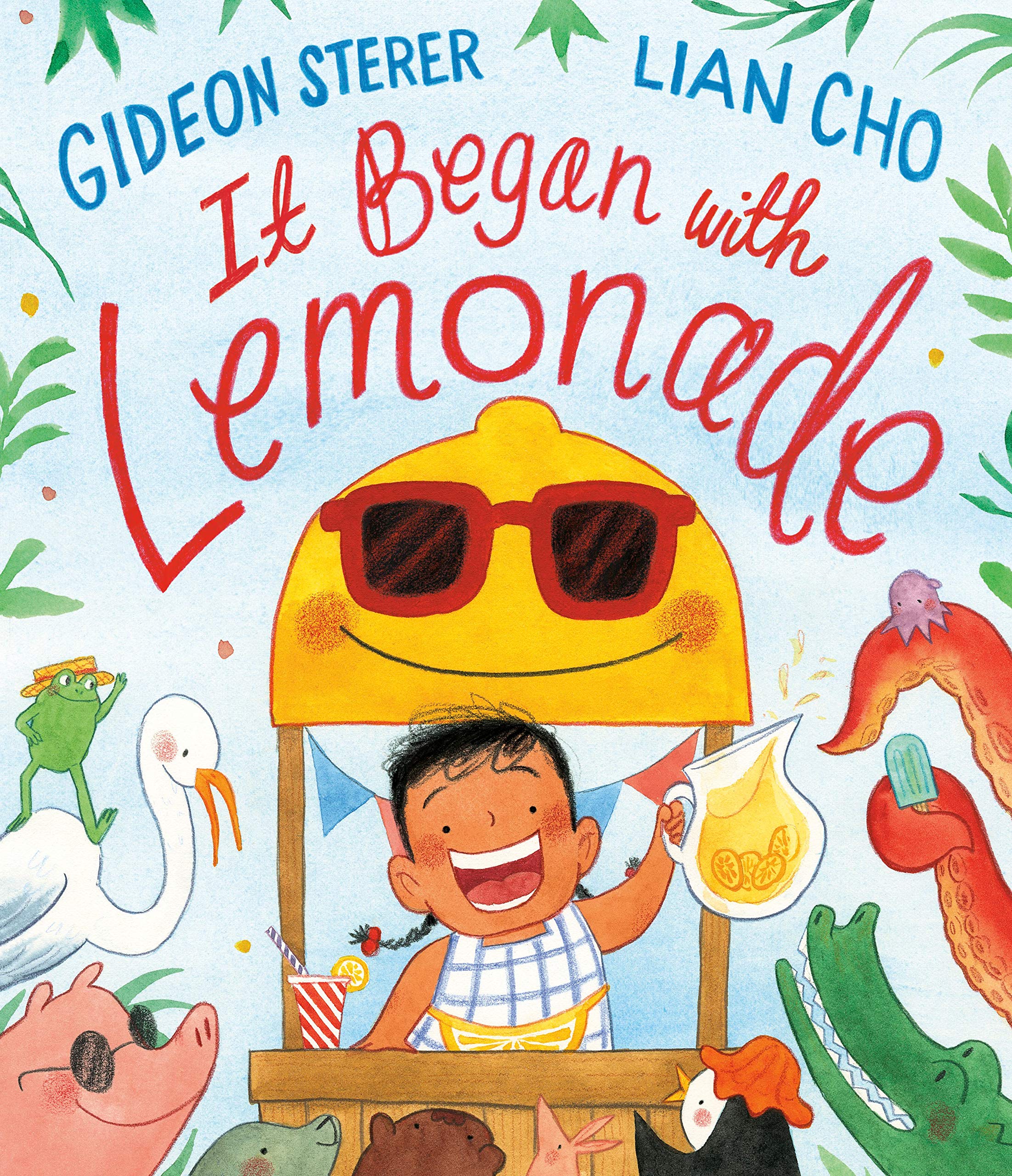
It Began with Lemonade by Gideon Sterer, illustrated by Lian Cho

Published by Dial Books

It Began with Lemonade: Sterer, Gideon, Cho, Lian: 9780735228283: Amazon.com:  Books

Summary:  An enthusiastic girl puts together a lemonade stand on wheels and heads out to make some sales, but soon finds that other lemonade sellers have gotten ahead of her.  She pushes her stand through the busy streets until suddenly it gets away from her, and she’s forced to chase it out of town and through the woods.  It finally lands by the river, where she sits, feeling terrible, until a man comes along in a boat.  She sells him a glass of lemonade, then starts hawking her wares.  Before long, she has an octopus, a bear, a couple of crocodiles, and a host of other animal customers lining up.  After selling out, she heads for home, where she falls asleep dreaming of another fantastic day of sales tomorrow. 40 pages; ages 3-8.

Pros:  Enjoy the last few weeks of summer with this imaginative tale that is literally about making lemonade when life gives you lemons.  

Cons:  I’m thirsty.

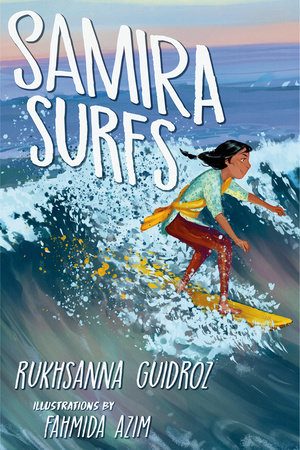
Samira Surfs by Rukhsanna Guidroz, illustrated by Fahmida Azim

Published by Kokila

Samira Surfs by Rukhsanna Guidroz: 9781984816191 | PenguinRandomHouse.com:  Books

Summary:  Samira and her family are Rohingya refugees from Burma, living outside a camp in Bangladesh because they are not allowed to officially register as refugees.  She spends her days selling hard-boiled eggs on the beach, and the friendships she forms with other girls selling there enrich her life.  Some of the girls surf, as does Samira’s brother Khalad, and Samira starts to get interested in trying it herself.  When a surfing contest is announced with a substantial cash prize, she daydreams about what a win could mean for her family.  She has to learn to surf in secret, though; her parents disapprove of swimming for girls, and fear the water after her mother’s parents drowned during their escape from Burma.  On the eve of the contest, it seems as though Samira’s surfing dreams have come to a crashing end, but her courage and the connections she has formed with friends and family ultimately save the day.  Includes an author’s note with additional information about the Rohingya, and a list of websites for learning more and getting involved.  416 pages; grades 4-7.

Pros:  This novel in verse brings to light a group of people that most of us probably know very little about.  Samira’s narration doesn’t shy away from her fears and worries, but also shows her courage and determination to create a new life for herself and her family.

Cons:  Looking at recent news, it appears that the Rohingya situation in both Burma Bangladesh hasn’t changed much since 2012, when this book takes place.

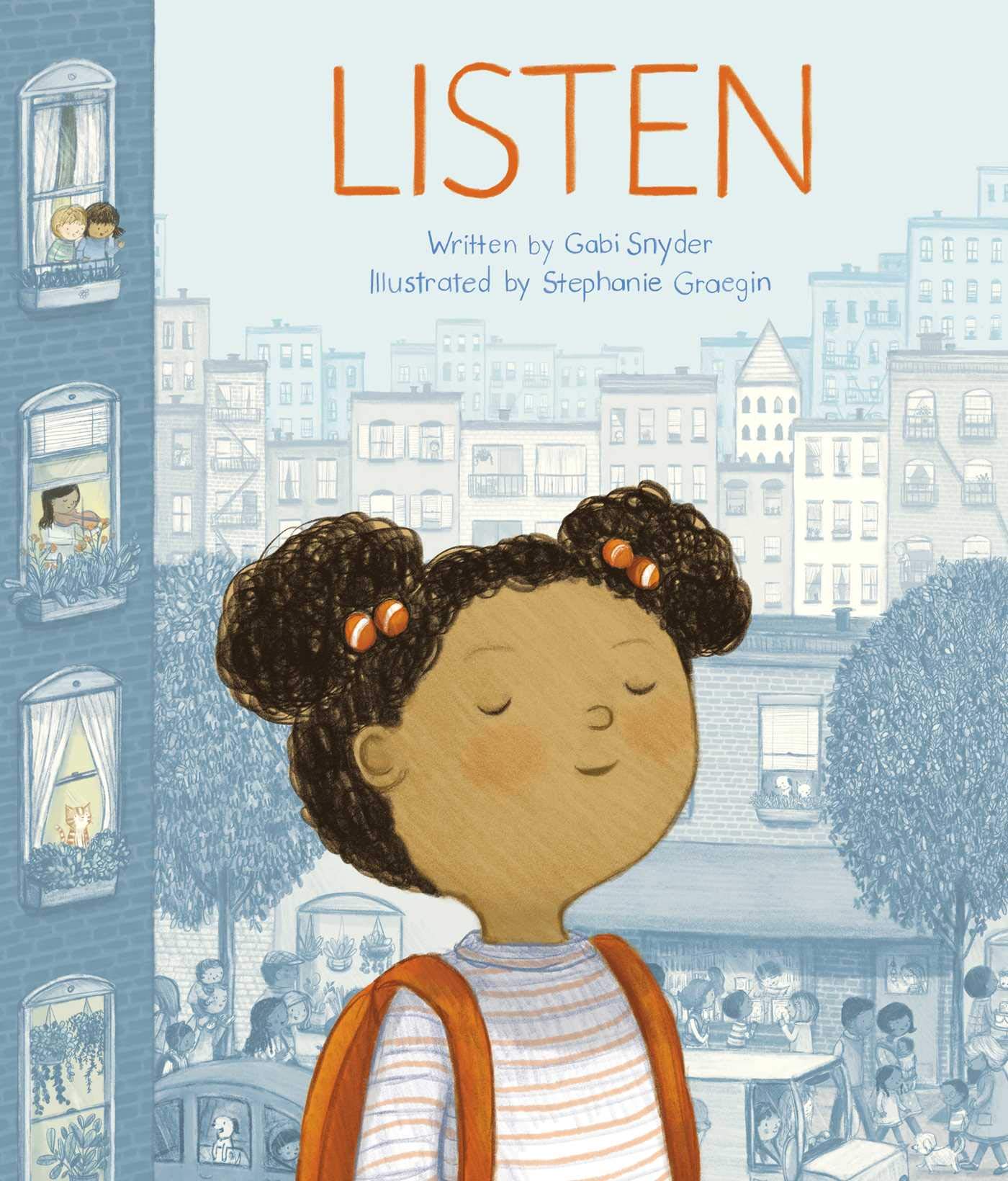
Listen by Gabi Snyder, illustrated by Stephanie Groegin

Published by Simon and Schuster

Listen: Snyder, Gabi, Graegin, Stephanie: 9781534461895: Amazon.com: Books

Listen: Snyder, Gabi, Graegin, Stephanie: 9781534461895: Amazon.com: Books

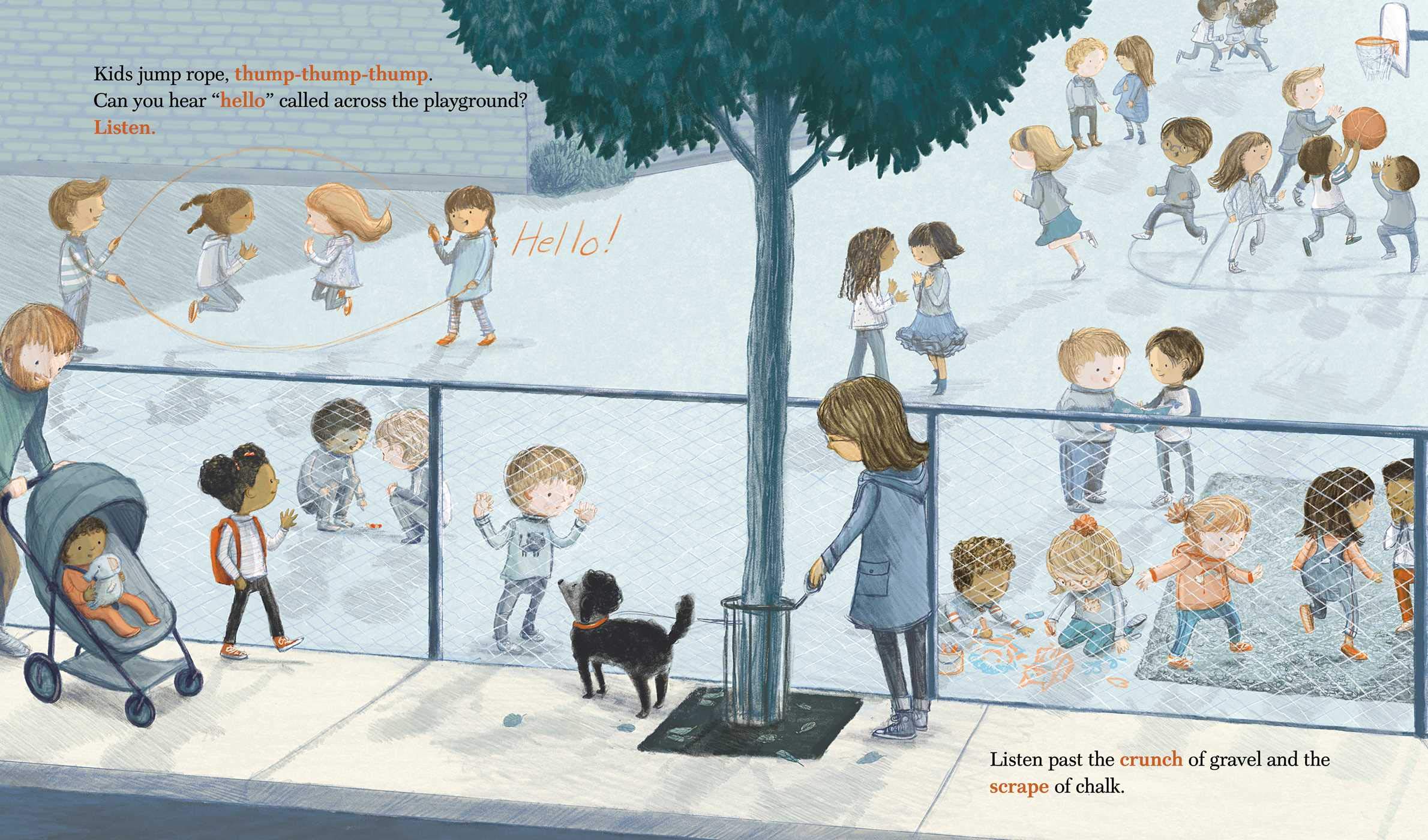
Summary:  The world is full of noise, but if you stop, close your eyes, and listen, you can hear each individual sound.  You can also listen to words: some are quick and snappy, others are long and leisurely.  Words can be filled with joy or painful to hear.  Sometimes if you listen carefully, you can hear the feelings of the person who is speaking the words.  Even when it’s night and time for bed, there are still plenty of sounds around that you can listen for before falling asleep.  Includes additional information about listening with definitions of terms like “startle response” and “bottom-up response”.  40 pages; ages 4-8.

Pros:  An excellent resource to teach a variety of listening, focusing, and mindfulness skills, all presented in a child-friendly way.  I loved the illustrations, which I realized were done by the creator of one of my favorite wordless picture books, Little Fox in the Forest

Cons:  A list of additional resources would have been nice,

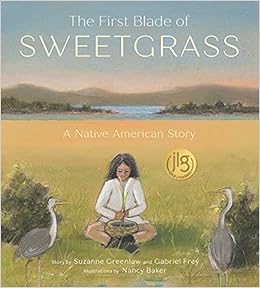
The First Blades of Sweetgrass: A Native American Story by Suzanne Greenlaw and Gabriel Frey, illustrated by Nancy Baker

Published by Tilbury House Publishers

The First Blade of Sweetgrass: Greenlaw, Suzanne, Frey, Gabriel, Baker,  Nancy: 9780884487609: Amazon.com: Books

Summary:  When Musquon goes with Grandmother to gather sweetgrass, she has to learn how to identify it among the other grasses.  Her grandmother gives her a lesson, but at first, Musquon just pulls up handfuls of grass.  Patiently, Grandmother goes through the steps again, then reminds her granddaughter that her ancestors are there to help.  Musquon closes her eyes and imagines her grandmother as a little girl with her grandmother.  When she looks at the grasses again, she can see which blades are sweetgrass.  She reaches to pick them, but then remembers her grandmother’s words: “If we never pick the first blade, we will never pick the last one.”  Musquon picks the next blade she sees, continuing until she has enough to show her grandmother.  Grandmother praises her, then says she will next teach her how to braid the sweetgrass into baskets. Includes an author’s note with additional information about sweetgrass and the Wabanaki Confederacy, and a list of the Passamaquoddy-Maliseet words used in the text, with a dictionary website for more information.  32 pages; ages 4-8.

Pros:  A beautiful story that celebrates sweetgrass, the Wabanaki, ecology, and the power of handing down stories and arts from one generation to the next.

Cons:  I would have enjoyed seeing a photo of the sweetgrass.

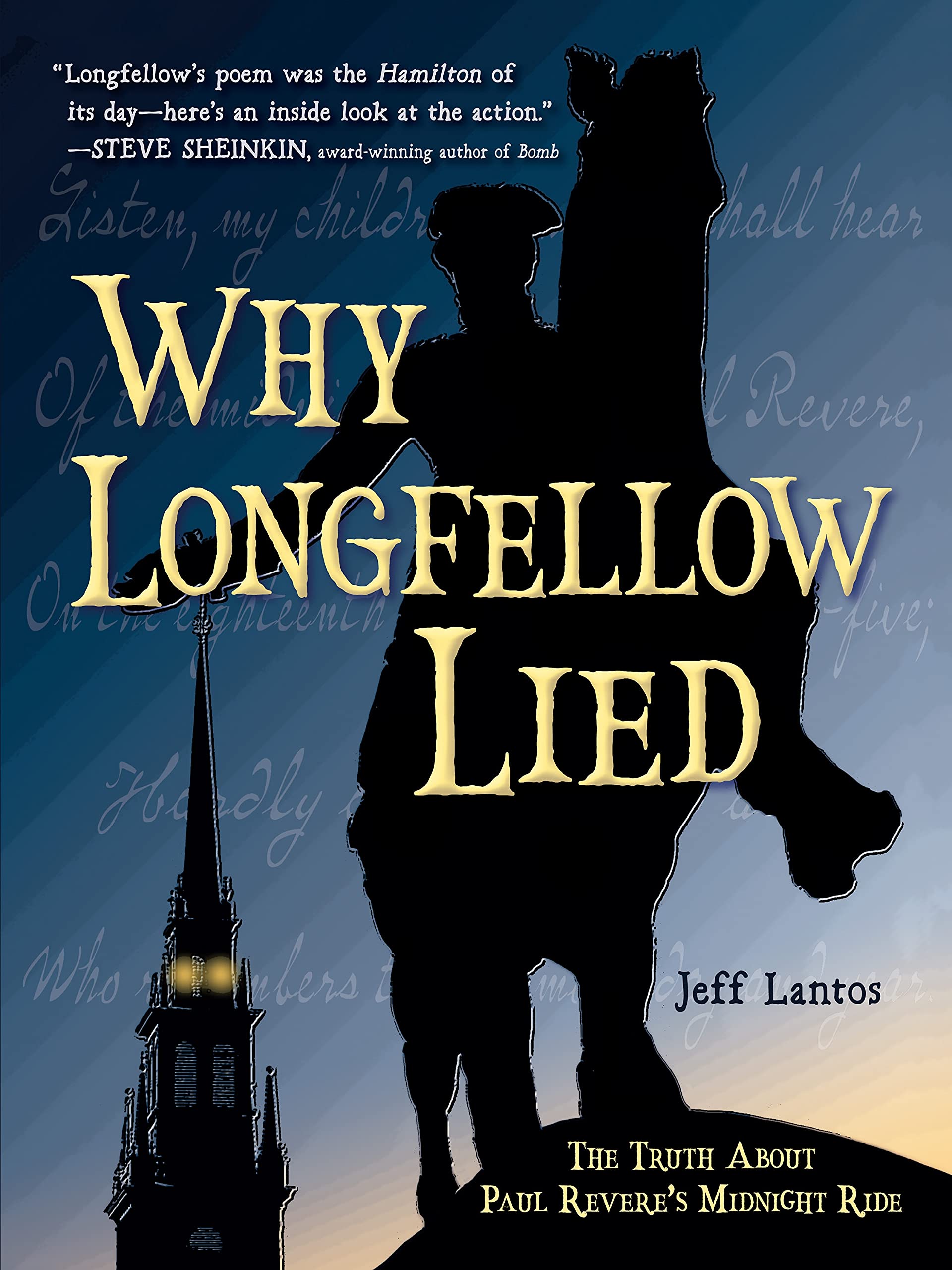
Why Longfellow Lied by Jeff Lantos

Published by Charlesbridge

Why Longfellow Lied: The Truth About Paul Revere's Midnight Ride: Lantos,  Jeff: 9781580899338: Amazon.com: Books

Summary:  Listen, my children: many of us have grown up with at least some knowledge of Henry Wadsworth Longfellow’s poem “Paul Revere’s Ride”.  Jeff Lantos takes a deeper look, going through it piece by piece with a retelling of the actual events and how they compare with the poem.  Both the prologue and the final chapter give additional context to the poem and the reasons that Longfellow wrote it in the early days of the U.S. Civil War.  Includes a cast of characters (the people mentioned in the book); the complete text of the poem; many illustrations, photos, maps, and sidebars; 18 pages of source notes; a six-page bibliography; and an index.  160 pages; grades 5 and up.  

Pros:  A lively addition to any American history curriculum, which not only presents the facts around the events of April 18-19, 1775, but also puts Longfellow’s poem in the context of the U.S. Civil War, and his fervent hope to end slavery and preserve the Union.  The plentiful illustrations and maps, the brief but interesting sidebars, and the extensive source material make this an excellent nonfiction resource.

Cons:  The title seems a bit of a harsh judgement on Longfellow, although I guess “Why Longfellow Used Artistic License in Recounting Historical Events in a Heartfelt Attempt to Preserve the Union” isn’t quite as catchy.  

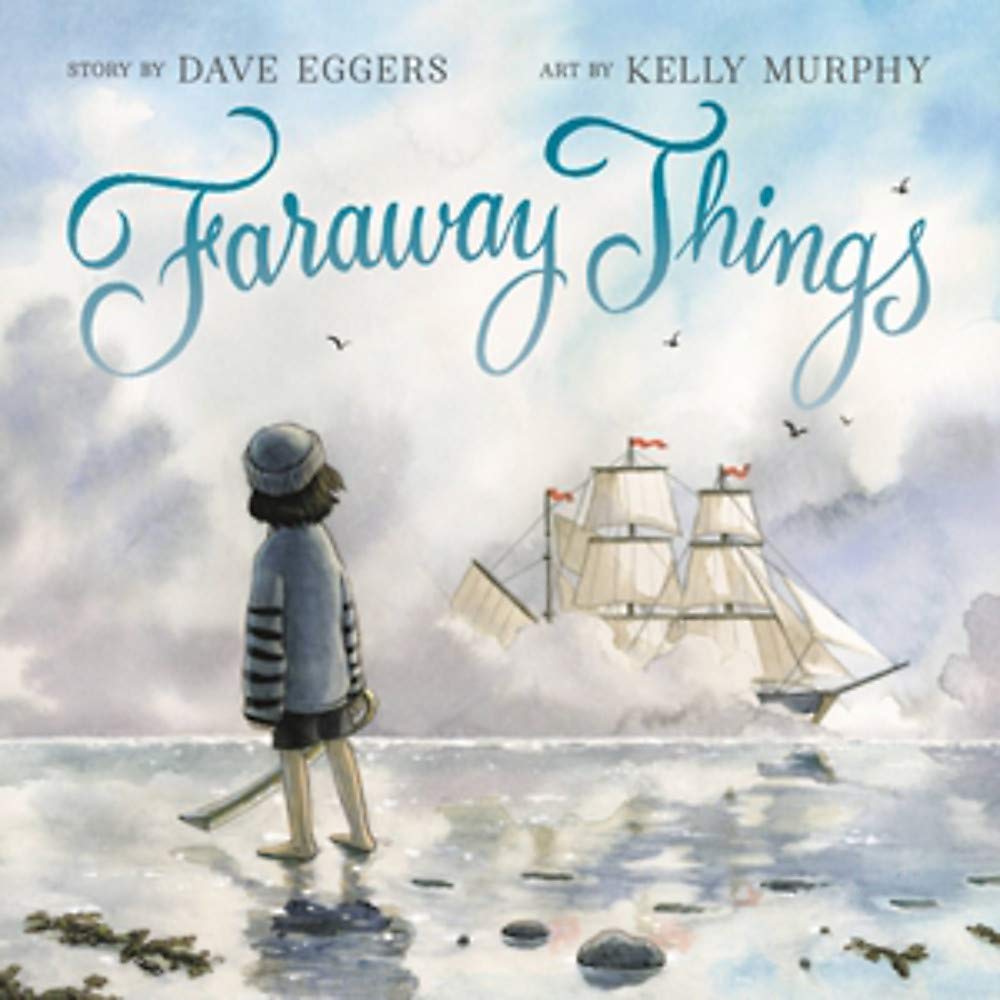
Faraway Things by Dave Eggers, illustrated by Kelly Murphy

Published by Little, Brown Books for Young Readers

Faraway Things: Eggers, Dave, Murphy, Kelly: 9780316492195: Amazon.com:  Books
Faraway Things by Dave Eggers, Kelly Murphy, Hardcover | Barnes & Noble®

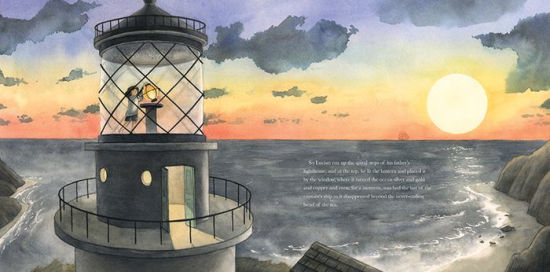
Summary:  Lucian lives with his mother in a lighthouse and loves exploring the beach, looking for what his late father used to call “faraway things”: items washed up from the sea.  One day he finds a beautiful cutlass, and hangs it on his wall, dreaming about it at night, and playing with it on the beach the next day.  In the afternoon, a ship sails into view, and when three men disembark, Lucian learns that his cutlass belongs to the captain.  The men are unhappy because their ship is stuck on a sandbar–something they couldn’t see in the dark because the lighthouse wasn’t working.  The captain makes a generous offer, though: he’ll trade Lucian anything from the ship’s treasure room for the cutlass.  Lucian rows out to the ship with the men, and chooses a new light for the lighthouse from the treasures.  The final page shows him fitting the new light into the lighthouse, its beam shining over the sea to the ship that’s sailing away. 40 pages; grades K-5.

Pros:  A beautifully told and illustrated story that has just the right touch of fantasy while also subtly dealing with grief and loss.  The length and themes of the story would make it an excellent choice for reading aloud to older elementary students.

Cons:  Parts of the story are pretty ambiguous: what happened to Lucian’s father and to the lighthouse?