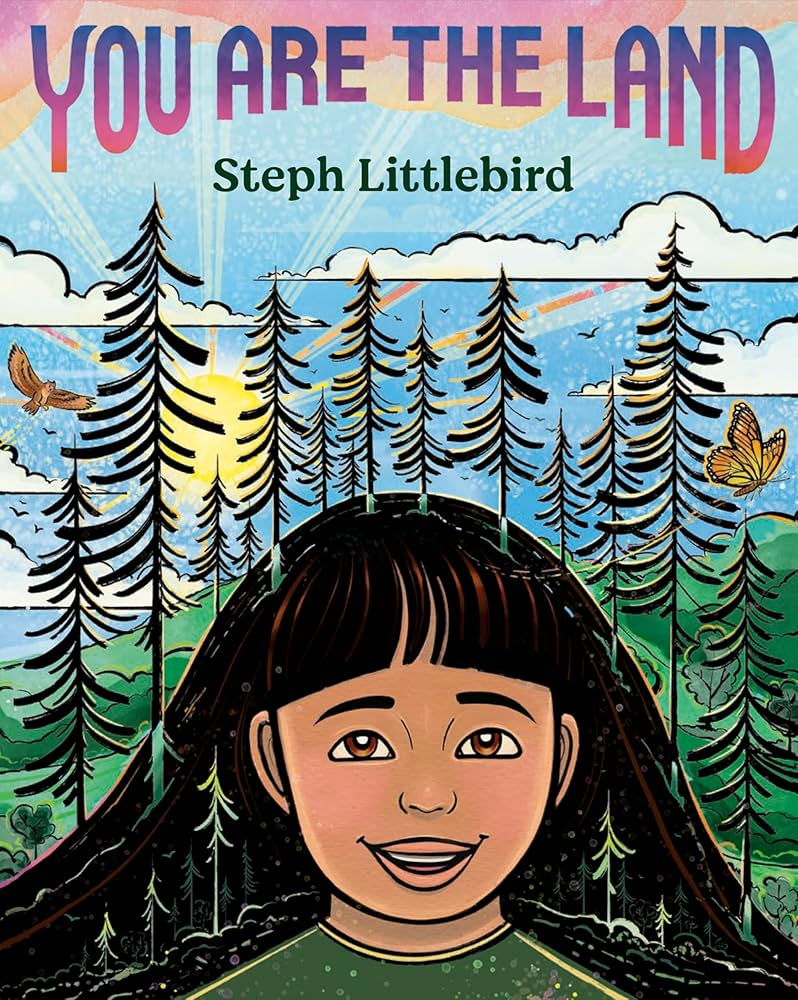
You Are the Land by Steph Littlebird (Nancy Paulsen Books, 32 pages, ages 4-8). From the time she’s born, a Native girl is surrounded by love, both from her family members and the natural world. She compares the two: her grandmother is like a flower with petals to wrap around her and keep her safe; her grandfather is like water, nurturing her and teaching her to use her voice like a thundering waterfall. Her parents, too, take care of her and teach her about the world, lessons that she passes on when she grows older and has a little sister. At her first powwow, she comes to appreciate her community, and she carries those lessons forward as that community works together to protect their land. “My culture teaches me that I am the land,” she concludes, “and the land is me.” Includes an author’s foreword telling how her Atfalati Kalapuya and Clatsop Chinook tribal connections have taught her to take care of the land and encouraging readers to do the same.
I love the environmental message of this book, with its emphasis on family, community, and connection to the land, but it’s the illustrations that make it truly spectacular. showing the girl and her family in a variety of beautiful nature scenes filled with a rainbow of colors. Those familiar with Steph Littlebird’s illustrations in My Powerful Hair will appreciate the way she connects the girl’s hair to the natural world.
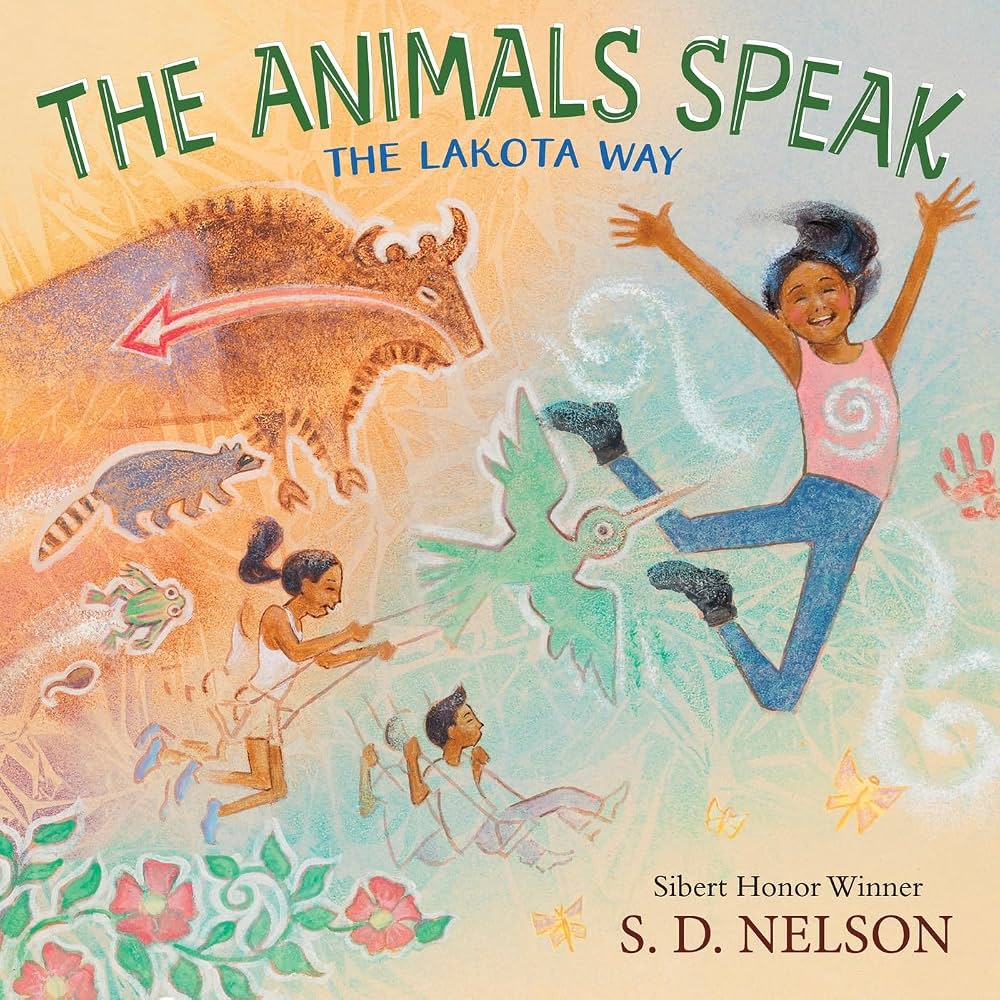
The Animals Speak: the Lakota Way by S.D. Nelson, translated by Dakota Goodhouse (Harry N. Abrams, 48 pages, ages 4-8). “If you look with your eyes and listen with your ears, our animal relatives will share their ancient wisdom with you,” the author tells readers on the first page. “This is the Lakota way.” From there, each spread introduces a different animal with both the English and Lakota names and what that animal can teach: buffalo shows how to share and be generous, raven teaches how to listen and make wise choices. There are 16 animals (actually 15 and a tree) in all, with humans being the 17th on the last page. Each animal is shown in its habitat with symbols that suggest interconnectedness. Includes an author’s note with additional information about what humans can learn from animals and the art and traditions of the Lakota that inspired this book.
Another beautifully illustrated book by an Indigenous author, this could be used as a prompt for kids to consider their favorite animals and the lessons those animals teach. Each picture invites contemplation, with its interesting symbols and various portrayals of animals.
 A Kids Book A Day