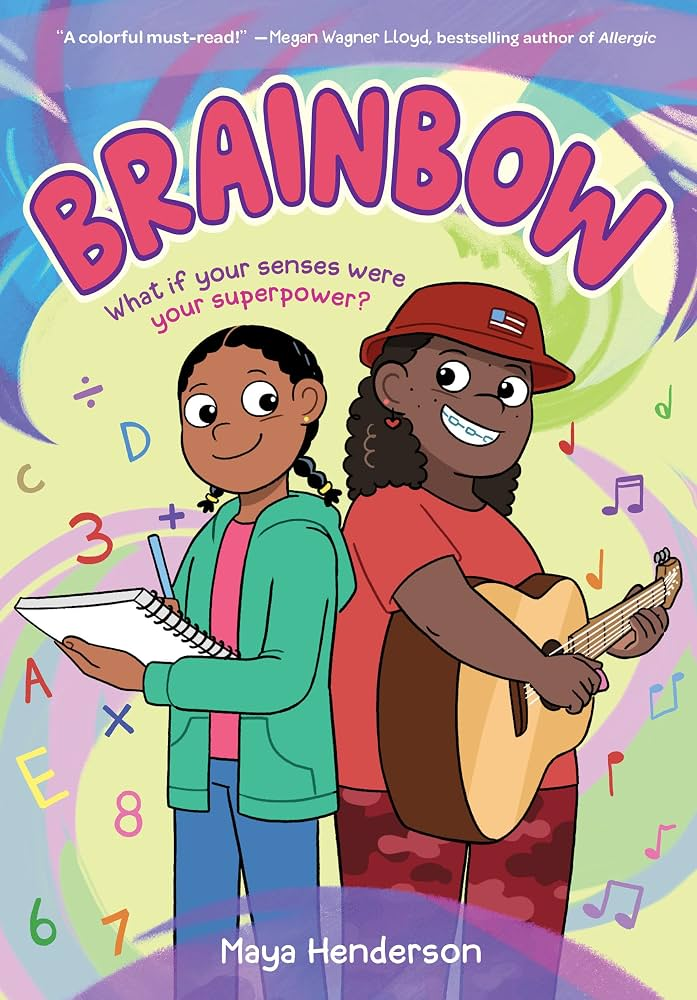
Brainbow by Maya Henderson (Little, Brown Ink., 248 pages, grades 3-7). Rosie’s hoping middle school will be easier if she follows in her best friend Harper’s footsteps. They both try out for the school’s math league, but only Harper makes it. The teacher agrees to let Rosie be the team manager, but almost immediately there’s trouble when Rosie speaks up about the kids using the “wrong” colors for the letters on their team t-shirts. When a new friend named Yara explains to Rosie about a condition she has called synesthesia, Rosie realizes that she has it, too, explaining why she seems letters and numbers as having their own distinct colors, and why she likes creating art when she listens to music. As Rosie and Yara become closer, Harper feels jealous and starts being mean to Rosie. When Harper steals the math league money and lets Rosie take the fall, Rosie has had enough and stands up to her former best friend. By the end, she’s realized where her true talents–and friendships–lie and has decided to leave the math league to hang out with Yara at art club. Includes additional information about synesthesia and an author’s note telling about her own experience with it.
Since approximately 4% of the population has some form of synesthesia (as I learned from this book), readers may discover they have this condition or know someone else who does. Maya Henderson does a great job of showing Rosie’s perceptions through the illustrations, and the information about synesthesia is effortlessly woven into the plot. It’s also a fun middle school friendship story with a particularly terrible ex best friend.
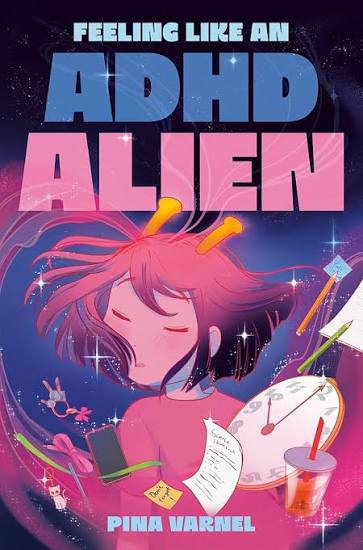
Feeling Like an ADHD Alien by Pina Varnel (Rocky Pond Books, 336 pages, grades 5-10). Kiki has always longed to be “normal,” but she struggles all the time with things that others seem to find easy, like being on time, getting things done, and regulating her emotions. After one particularly difficult interaction with one of her best friends, she starts to consider that she may have ADHD. It’s tough talking to her mother about it, but after initially resisting the idea, Mom sets up an appointment for an evaluation. Kiki gets an ADHD diagnosis, a prescription for medication, and ongoing support to help her with coping strategies. Although it’s hard for her to let go of the idea that she’ll one day be “normal,” getting a diagnosis and treatment helps her to live the life she’s always wanted for herself. Includes several pages of coping strategies for different symptoms of ADHD and a list of resources.
This is a great resource for any tween or teen wondering if they may have ADHD or adjusting to an ADHD diagnosis. The first five chapters deal with different aspects of ADHD like executive functioning and working memory, showing how Kiki struggles with these in her daily life and going into some details about how her brain works differently than others’. The last two chapters are about her getting her diagnosis and what her life is like afterwards. One of her friends also has ADHD, but her symptoms present differently. She opts not to take medication, and their discussion is helpful in helping kids decide which route is best for them. Although there’s not much of a story, the information is presented in a way that’s easy to absorb and will be helpful to many.
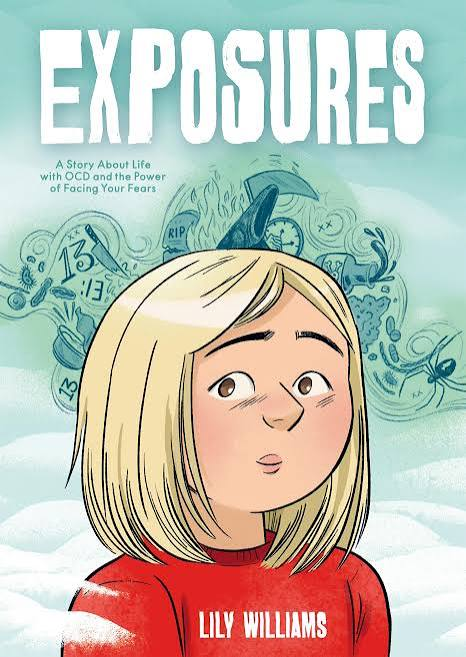
Exposures: A Story About Life with OCD and the Power of Facing Your Fears by Lily Williams (First Second, 352 pages, grades 5-8). 12-year-old Peyton’s life is increasingly dictated by her fears, which she deals with by counting, picking at her scalp, and avoiding things like the color red and the number 13. When her twin sister’s ballet accomplishments mean some changes to the family’s schedule, Peyton has a huge panic attack. Her concerned parents get her an appointment with a therapist who diagnoses Peyton with obsessive compulsive disorder and begins exposure therapy to help her face her fears. Peyton learns that she’ll never be “cured” of her OCD, but that with intensive (and sometimes extremely difficult) therapy, she can learn to lessen her anxiety around the things that scare her and be able to live her life freer of their control. By the end of the story, readers can see evidence that her hard work has paid off: she’s considering trying out for the ski team (which she avoided because the uniforms were red), she has a closer relationship with her sister and parents, and she’s able to get through the school day without being overwhelmed by anxiety. Includes an author’s note about her own OCD, which wasn’t diagnosed until she was an adult, and how this inspired her to create this book.
Peyton’s story is so compelling I read the whole thing in a day. It really shows the thought processes of a person with OCD and the extremely hard and sometimes scary work that’s necessary to go through exposure therapy. The illustrations are especially effective, using different colors to show flashbacks and portraying Peyton’s anxiety attacks with the color red, and her fearful thoughts filling the page. This is an excellent example of a book being both a mirror and a window that will help both kids who have OCD and those who know someone who suffers from it.

