Just Like Jackie by Lindsey Stoddard

Published by HarperCollins

Summary:  Robinson wishes she could be more like her namesake Jackie Robinson, who could stay focused and get the job done even when people were cruel to him.  But Robbie has a short temper, and gets into trouble when she repeatedly fights with her nemesis, a boy named Alex.  To make matters worse, her beloved grandfather, her only family, is having memory problems.  He’s always refused to tell her about her parents, and she worries that he’ll forget and she’ll never learn about them.  When her class is assigned a family tree project, Robbie discovers she’s not the only one worried about loved ones.  She winds up with the guidance counselor, working with three other kids to address their family issues.  One of those kids is Alex, and Robbie begins to understand why he is such a bully.  Just as things at school begin to get better, Robbie has to face a crisis at home.  Slowly and at times reluctantly, she learns how to trust those around her to find solutions that will support both her and her grandfather moving into the future.  256 pages; grades 3-7.

Pros:  First-time novelist Lindsey Stoddard hits a home run with this touching story of a rough-around-the-edges but loveable protagonist.  Fans of Fish In a Tree will enjoy getting to know Robbie.

Cons:  It seemed like Robbie’s teacher could have been a bit more sensitive to the meltdowns engendered by her family tree project.

If you would like to buy this book on Amazon, click here.
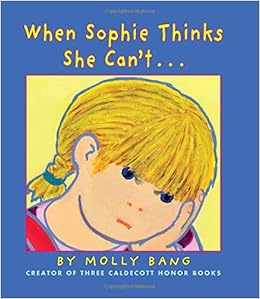
 

When Sophie Thinks She Can’t… by Molly Bang

Published by Blue Sky Press

Summary:  Sophie is back, once again learning how to deal with her feelings.  This time, she’s frustrated when she’s trying to do a tangram puzzle and her older sister solves it in a minute, telling her “Too bad you’re not smart”.  When her teacher gives the class a math challenge the next day, Sophie doesn’t want to try, telling herself she can’t do puzzles and is never smart at math.  Her teacher and friends give her more positive messages, and ultimately Sophie is able to contribute to the different ways her classmates solve the problem.  She learns the power of “yet”, as in, “I haven’t figured this out…yet”, which helps her to persist and bring that lesson of perseverance home to her father.  Includes a page entitled “About this book” that tells more about the work of Carol Dweck and the growth mindset versus the fixed mindset.  40 pages; ages 4-8.

Pros:  Caldecott honoree Molly Bang has created another beautifully illustrated book to help young children understand their emotions and think empowering thoughts.  This would be a great discussion starter in a primary classroom.

Cons:  Having sat through more than one professional development on growth mindset and the power of “yet”, this book felt a bit didactic to me.

If you would like to buy this book on Amazon, click here.
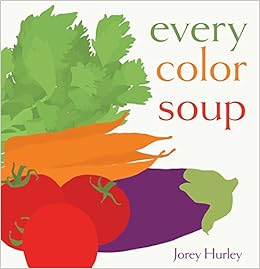
Every Color Soup by Jorey Hurley

Published by Simon and Schuster

Summary:  Each two-page spread has the name of a color and an ingredient for soup that is that color.  Most are vegetables, but there is also white salt, black pepper, and clear water (or broth).  The last few pages are action words: chop, drop, and bubble; the final page shows a bowl of soup and the word “yum”.  Includes a page identifying all the ingredients and a recipe.  40 pages; ages 3-7.

Pros:  Like a good soup, this book is simple yet satisfying, with large colorful illustrations that would look nice hanging on my kitchen wall.  The vivid designs with plenty of white space make this a good introduction to colors and vegetables for the youngest readers.

Cons:  Is clear a color?

If you would like to buy this book on Amazon, click here.
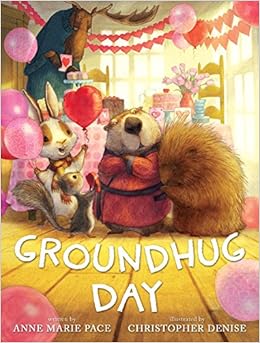
Groundhug Day by Anne Marie Pace, illustrated by Christopher Denise

Published by Disney-Hyperion

Summary:  Moose is throwing a Valentine’s party; all his friends are excited, except Groundhog, who is still hibernating.  While the others get into a heated discussion about how  to make Groundhog stay above ground after February 2, they don’t notice their friend emerge, take one long around, and dive back into his burrow.  When they plead with him to come back, he tells them he’s afraid of shadows.  His friends convince him to come out so they can show them there’s nothing to be scared of, then show him how to make silhouettes and shadow puppets.  In the end, though, it’s too cold for Groundhog to stick around for the party, and he goes back to sleep until St. Patrick’s Day.  By then, he’s ready to party, but now Bunny is holed up, preparing for the next spring holiday.  48 pages; ages 3-7.

Pros:  You can kill two birds with one stone with this book that celebrates Groundhog Day and Valentine’s Day (with nods to St. Patrick’s Day and Easter, as well).  The digital illustrations are cute and colorful, and the shadows are well portrayed.

Cons:  Whoops, just noticed this book was released in December 2017.  Back to 2018 tomorrow.

If you would like to buy this book on Amazon, click here.

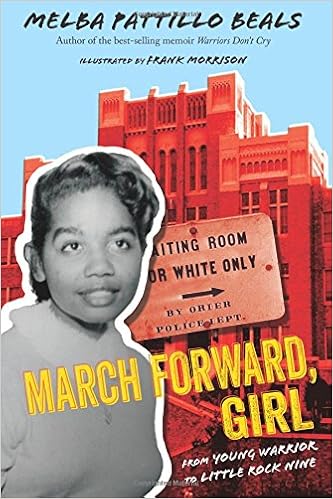
March Forward Girl: From Young Warrior to Little Rock Nine by Melba Beals, illustrated by Frank Morrison

Published by Houghton Mifflin Harcourt

Summary:  Melba Beals, who told her story of helping to integrate Little Rock’s Central High School in Warriors Don’t Cry, recounts her early days, growing up in Jim Crow Arkansas.  At the age of three, she observed her family making the house quiet and dark each night, hoping the Ku Klux Klan would leave them alone.  She raged at seeing her beloved parents and grandmother slighted and scolded whenever they went into town, and at having to use inferior facilities everywhere, while white people got the best of everything.  As she grew up, her fear and anger turned into a determination to change things and to get out of Arkansas.  She jumped at the chance to go to Central High School, a huge, beautiful school that she had admired for years.  The main part of the book ends right before she starts high school; an epilogue describes the violent and frightening experience of integration.  The text is illustrated with drawings and a few photographs.  224 pages; grades 6-9.

Pros:  Readers will gain a better understanding of what it was like for African Americans living in the South in the 1940’s.  Beals’ conversational tone draws the reader in, and her story is so powerful and compelling (and at times, horrifying) that the book is hard to put down.

Cons:  This book is recommended for grade 5 or age 10 and up.  Be aware that there is a scene in which the KKK storms into a prayer meeting, and 5-year-old Melba witnesses a lynching from the church rafters; at age 11, she gets lost on a dark, isolated road and narrowly escapes being raped and/or murdered by a group of Klansmen.

If you would like to buy this book on Amazon, click here.
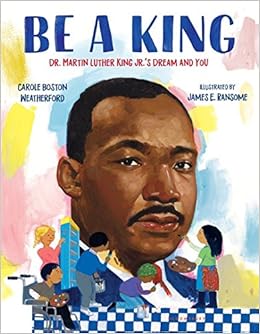
Be A King: Dr. Martin Luther King Jr.’s Dream and You by Carole Boston Weatherford, illustrated by James Ransome

Published by Bloomsbury

Summary:  “Everybody can be great, because everybody can serve….You only need a heart full of grace, a soul generated by love.”  Martin Luther King Jr.’s words speak to children in this book showing how anyone can “be a King.”  Illustrations portraying scenes from King’s life are interspersed with others in a different style showing kids working together to paint an MLK mural.  Ideas for how to be a King include standing for peace, having a dream, and doing your very best at whatever you do.  The last page shows the kids gathered around the mural with the advice, “You can be a King.  Set your sights on the mountaintop.  Climb a little higher every day.”  An author’s note gives biographical information.  40 pages; ages 4-9.

Pros:  I liked how this book connected the sometimes abstract concepts of King’s work and speeches with concrete actions that kids can take to make the world a better place.  This would be an excellent book to use in conjunction with the day of service aspect of the Martin Luther King Jr. holiday.  There is a lot to look at in the illustrations, with two stories interwoven.

Cons:  Having biographical information on the pages with the pictures of King–even just a sentence or two–would have made this even more useful in helping kids understand his life.

If you would like to buy this book on Amazon, click here.

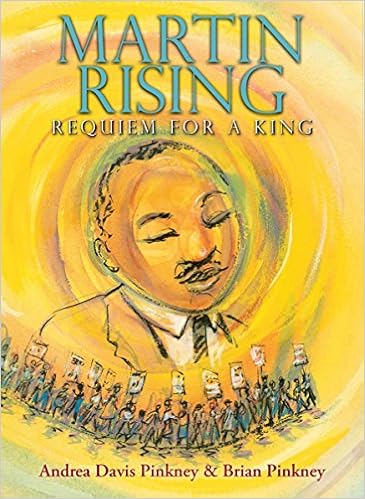
Martin Rising: Requiem for a King by Andrea Davis Pinkney, illustrated by Brian Pinkney

Published by Scholastic Press

Summary:  The Pinkneys relate the story of Martin Luther King, Jr.’s assassination, beginning with a “Henny Penny Prelude”, in which the fairy tale hen tries to warn of the bitter events ahead.  The remaining poems are in three sections: “Daylight”, “Darkness”, and “Dawn”, in which King’s work is described, particularly the sanitation workers’ strike that brought him to Memphis, Tennessee in March and April of 1968.  The assassination occurs part way through “Darkness”, and includes poems about Coretta Scott King, the Kings’ four children, and James Earl Ray.  “Dawn” is made up of just three poems, concluding with “Rejoice the Legacy” which celebrates MLK’s legacy, including the holiday celebrating his birth.  Back matter includes author’s and artist’s reflections, four pages of text describing the events from the poems called “Now Is the Time” (with several photographs), a timeline, and sources.  128 pages; grades 4-8.

Pros:  Both the poetry and the illustrations are majestic and give the reader much to think about.  The author’s note suggests that the poems could be performed with the “Now Is the Time” section as narration and adding poems to the appropriate parts of the story.

Cons:  The Henny Penny motif was a bit confusing to me.

If you would like to buy this book on Amazon, click here.
Betty Before X by Ilyasah Shabazz and Renee Watson

Published by Farrar, Straus, and Giroux

Summary:  During the three years this book covers (1945-1948), Betty Sanders moves out of her abusive mother’s home and is adopted by a prominent Detroit couple who get her involved with community activism.  As junior members of the Housewives’ League, Betty and her friend Suesetta work to convince other African Americans not to patronize white businesses that have racist hiring practices.  The two girls lose a good friend because of their convictions.  Betty is also active in her church, Detroit’s Bethel AME Church, which hosted speakers like Thurgood Marshall and Paul Robeson.  Betty’s early life prepares her for her marriage to Malcolm X and her work as an educator and activist.  Her later years are described in a lengthy back matter section.  256 pages; grades 4-8.

Pros:  Written by Renee Watson and Malcolm’s daughter, Ilyasah Shabazz, this historical fiction book with its first-person narration, short chapters, and interesting cast of characters is an engaging and educational read.

Cons:  Readers not familiar with Malcolm X may not quite grasp the significance of Betty’s life.

If you would like to buy this book on Amazon, click here.
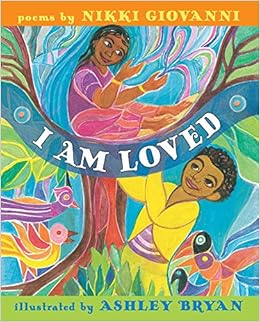
I Am Loved: A Poetry Collection by Nikki Giovanni, illustrations by Ashley Bryan

Published by Atheneum

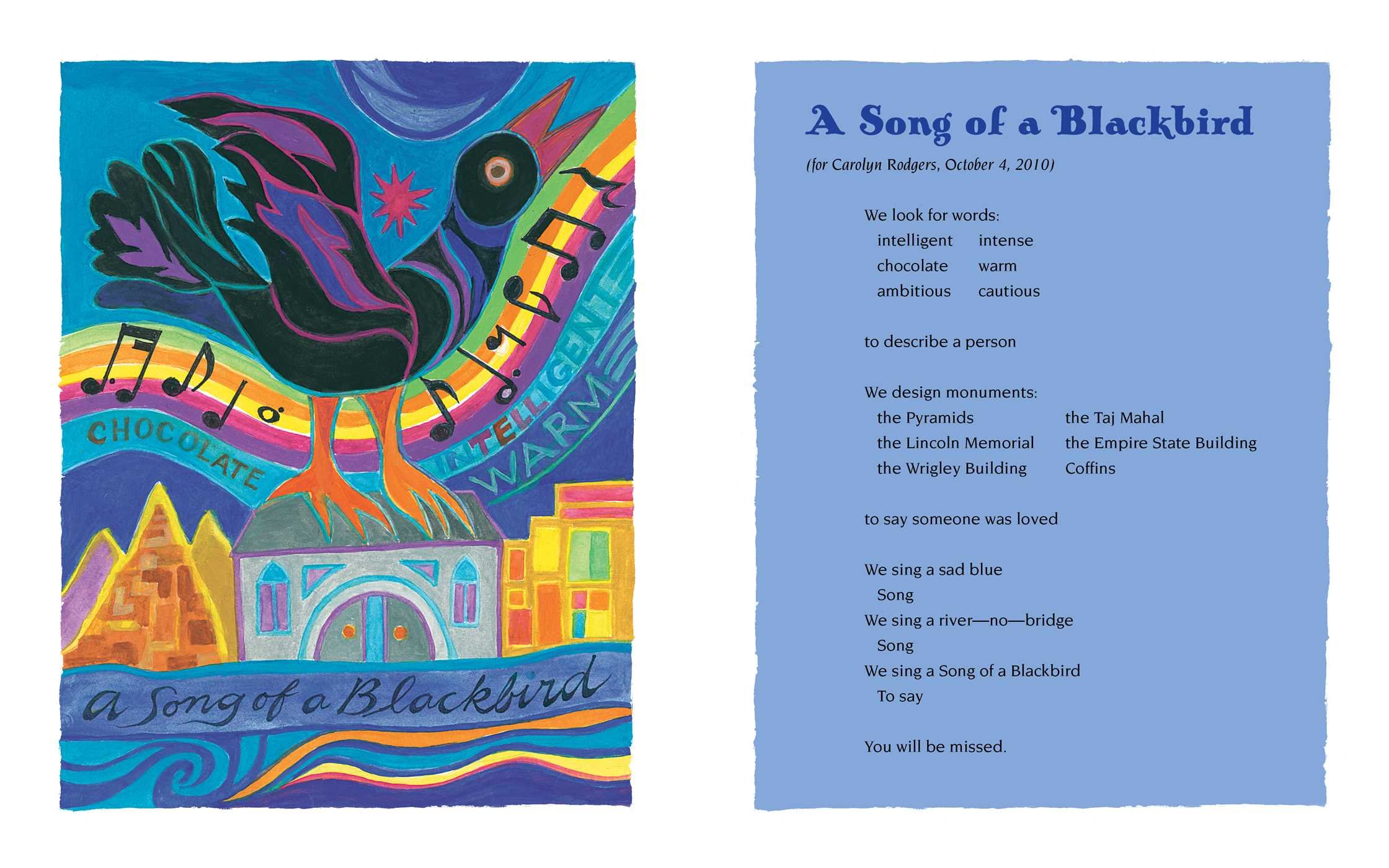
Summary:  In 11 short poems, Nikki Giovanni expresses love, both for the reader and for the simple everyday pleasures surrounding him or her.  Wildflowers, cats, and quilts are all celebrated.  In “No Heaven”, she asks how there can be no heaven when there is so much to appreciate all around.  “A Song of Blackbird” looks at how we describe people and remember them when they’re gone.  “I Am a Mirror” comes with a mylar mirror for the reader to reflect on, and mentions the auction block and middle passage.  The final poem, “Do the Rosa Parks” is a catchy song that encourages readers to sit down with those who are suffering and stand up to injustice.  32 pages; ages 4-8.

Pros:  Award winners Giovanni and Bryan team up for a perfect introduction to poetry for the youngest readers, illustrated in Bryan’s trademark colorful folk-inspired paintings.

Cons:  The mylar mirror may not survive repeated library use.

If you would like to buy this book on Amazon, click here.
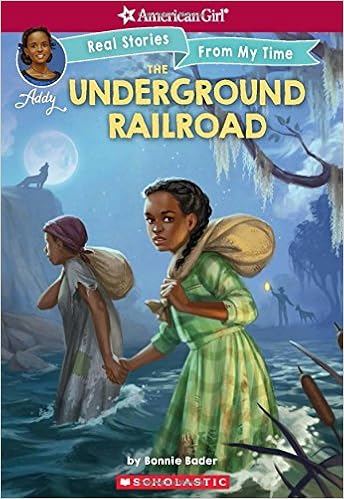
The Underground Railroad (American Girl: Real Stories from My Time series) by Bonnie Bader, with Addy stories by Connie Porter; illustrated by Kelley McMorris

Published by Scholastic

Summary:  The story of the Underground Railroad and slavery in America is told in this chapter book that includes sections on these two topics as well as abolitionists, slave catchers, and the Emancipation Proclamation.  Each chapter ends with two pages told by Addy Walker, the American Girl whose story includes an escape from slavery.  Her narrative is in her voice, drawing from the original American Girl books.  Black and white illustrations and photographs appear every two or three pages.  Includes a note about Addy’s dialect, a glossary, a map of free and slave states and territories in 1856, a timeline, and source notes.  112 pages; grades 3-6.

Pros:  What could have been a simple marketing tool for Addy is actually a very informative, engagingly written nonfiction book.  Other topics in the series will include the Boston Tea Party, the Titanic, and Pearl Harbor.  I will leave it to you to match the topic with the American Girl.

Cons:  On page 25, Quakers are described as “a Christian group who believe that people should shake and tremble at the word of the Lord.”  Having been part of a variety of Quaker meetings for the last fifteen years, I can safely say I have yet to meet a Quaker who fits this description.

If you would like to buy this book on Amazon, click here.