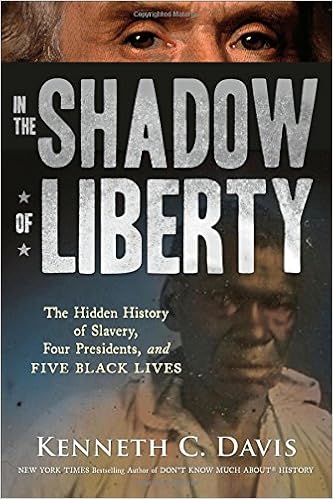
Wonderful Winter: All Kinds of Winter Facts and Fun by Bruce Goldstone

Published by Henry Holt 

Summary:  All kinds of facts about winter are presented, illustrated with large, colorful illustrations.  There’s scientific information about the solstice, snow, animal adaptation, cold, and the simple machines that are used to shovel snow.  The sounds, sports, tastes, holidays, and feelings of winter are all highlighted with their own two-page spreads.  The final four pages include photos and instructions for six winter activities.  This is a follow-up to Bruce Goldstone’s book Awesome Autumn, and from the looks of things at the end of this book, I would say Spectacular Spring cannot be far behind.  48 pages; ages 4-8.

Pros:  A very thorough introduction to winter for the primary grades.  Easy-to-understand science information is interspersed with quick takes on some of the words used to describe winter.  Young readers will enjoy the large, clear photos of familiar winter objects.

Cons:  The “fake snow” activity that involves shredding a disposable diaper sounds a bit messy.

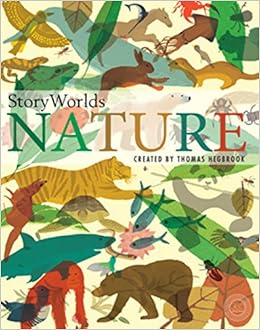
Storyworlds: Nature by Thomas Hegbrook

Published by 360 Degrees 

Summary:  “Every picture tells a story.  What do you think that story is?”  These words on the title page invite the reader to study the 100 wordless pictures that follow and think about what the story is.  On the verso of the title page (I hope I’m using that word right…the page to the left of the title page) are the words Observe, Inspire, and Wonder, with a sentence about each. The final pages show smaller versions of each of the preceding page, with an animal fact about each one.  The final sentence reads, “What do you think that story is?”  64 pages; ages K-5.

Pros:  A unique book that invites creativity, wonder, and a closer observation of the natural world.  The pictures are beautiful, and I could see certain kids spending literally hours studying them all and making up stories about what is happening in each.

Cons:  The size and $25.00 price may make this a less-than-ideal choice for libraries.

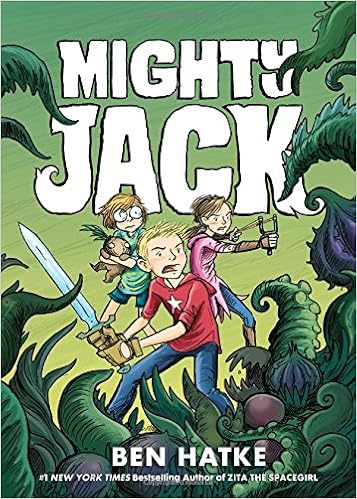
Mighty Jack by Ben Hatke

Published by First Second 

Summary:  Jack’s summer is not looking too great: he’s expected to take care of his autistic sister Maddie while his single mom struggles to make ends meet with two jobs.  At a flea market, an unsavory vendor (with the help of Maddie, speaking for the first time) trades Jack a box of seeds for the keys to his mother’s car.  Needless to say, this doesn’t go over too well with Mom.  The next day, Maddie is outside at the crack of dawn, digging up the backyard to plant the seeds.  Before long, the two kids have created a garden of plants that come to life in more ways than one, and that attracts both the neighbor girl, Lilly, and a talking dragon.  After a gigantic snail almost crushes Maddie, Jack has had enough, and tries to burn the entire garden.  But complete destruction seems impossible, and by the end of this book, Maddie’s been carried off by a garden monster, and Lilly and Jack are arming themselves to go after her.  Readers will have to wait for the next installment to see if they will be successful.  208 pages; grades 4-7.

Pros:  This graphic novel retelling of Jack and the Beanstalk has all the adventure, compelling characters, and fantastic artwork to make it irresistible to middle grade readers.

Cons:  The cliffhanger ending.

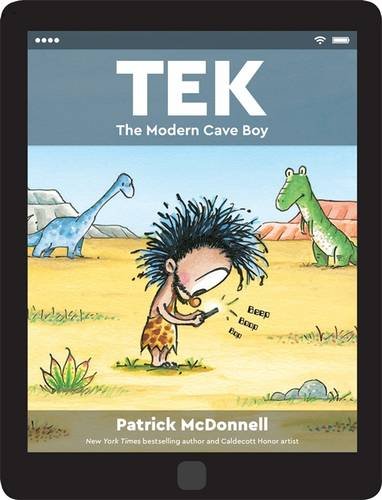
Tek: the Modern Cave Boy by Patrick McDonnell

Published by Little, Brown 

Summary:  Young Tek lives in the Stone Age, but wants nothing so much as to stay in his cave, playing with his tablet, phone, and game box.  Prehistoric friends come to visit, but he refuses to go outside and play with him.  The Ice Age and evolution are going on around him, but Tek is oblivious.  Finally Big Poppa, the village volcano, decides it may be time for an eruption intervention.  Thankfully, this dislodges Tek from his cave, and forces him into the great outdoors.  Disconnected at last, the boy discovers the beautiful world around him and enjoys a day and night playing outside with his friends.  40 pages; ages 4-8. 

Pros:  With a cover designed to look like a tablet, this story is sure to resonate with kids everywhere.  There’s plenty of humor to tickle the funny bones of the intended audience, both in the text and the illustrations of Caldecott honoree McDonnell. 

Cons:  The “put down your electronics and get outside, kids” message was not exactly subtle.

The Best Man by Richard Peck

Published by Dial Books for Young Readers 

Summary:  Beginning and ending with a wedding, Archie Magill tells the story of his life from a disastrous turn as a six-year-old ring bearer to the present.  His home and school are peopled with memorable characters, including his car-loving father, his cool Uncle Paul, his outspoken best friend Lynette, and his celebrity student teacher Mr. McLeod.  Mr. McLeod arrives in military uniform, triggering a lockdown, and when everything gets straightened out, he’s become a viral online sensation.  He wins Archie’s respect when he helps the victim of some sixth-grade bullies, washing off the word “gay” they’ve written on the boy’s forehead, then revealing himself as gay to the bullies and their classmates.  A romance develops between Uncle Paul and Mr. McLeod, and Archie is determined to help his commitment-shy uncle see their relationship through.  The story closes with a wedding, with Archie serving as best man for his old uncle Paul and his new uncle, Mr. McLeod.  240 pages; grades 4-7.

Pros:  Funny and touching, with plenty of memorable characters, this book is getting some Newbery buzz.  An excellent addition to LGBTQ literature for kids that shows a mature, real relationship between two men.

Cons:  If you’re putting this in a public library, be aware there’s a gay romance that is central to the story.

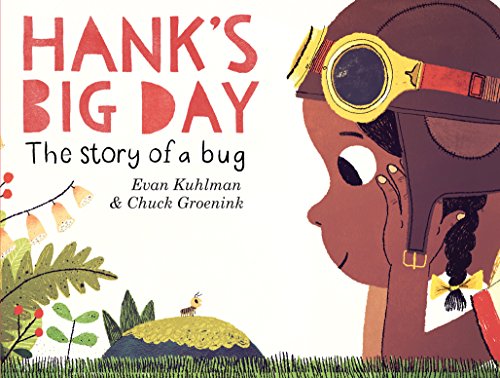
Hank’s Big Day: The Story of a Bug by Evan Kuhlman, illustrated by Chuck Groenink

Published by Schwartz & Wade 

Summary:  A day in the life of Hank, the pill bug, begins with him crawling out from beneath his rock home and setting forth through the grass, across the sidewalk, and to the home of his best friend, a girl named Amelia.  Today Amelia is pretending to be Amelia Earhart, and she puts Hank on top of her leather helmet and takes him for a ride.  After an afternoon playing together, the two friends gaze at each other lovingly (an illustration labeled “what friendship looks like”), then Hank reverses his morning journey to get back home.  The last page pictures him happily asleep under his rock.  40 pages; ages 3-7.

Pros:  This would make a great springboard for young writers to imagine other animals’ days.  The illustrations are large and colorful with many humorous labels.

Cons:  Pill bugs are nowhere near this cute in real life.

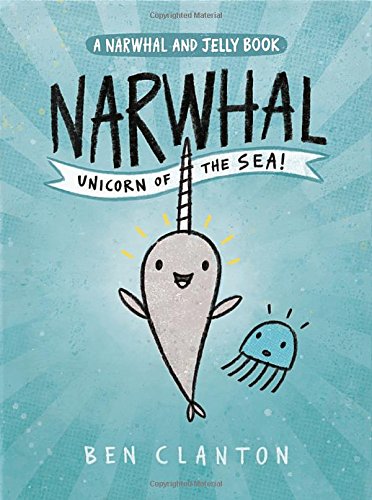
Narwhal: Unicorn of the Sea! by Ben Clanton

Published by Tundra Books 

Summary:  Narwhal is a happy-go-lucky fellow with a perpetual grin on his face (right under his horn).  He meets up with the more serious Jellyfish (“Jellyfish? Hee hee! That sounds funny!”), and the two become unlikely friends.  There are three stories in this beginner graphic novel.  The friendship happens in the first one; Narwhal delivers horns to various sea creatures and creates a pod (“Podtastic!”) in the second; and Narwhal shows Jellyfish how a blank book can be an interesting read in the third.  In between the first two stories are two pages of Really Fun Facts about narwhals and jellyfish, and in between the third and fourth is “The Narwhal Song” which involves limited lyrics and a considerable amount of hand clapping.  Good news for fans: it looks like the second Narwhal and Jelly Book will be out next May.  64 pages; grades K-3.

Pros:  Elephant and Piggie aficionados will enjoy stepping up to the world of Narwhal and Jelly.  The humor is similar and the reading just a level or two above.

Cons:  The artwork is pretty primitive with a somewhat limited palette.

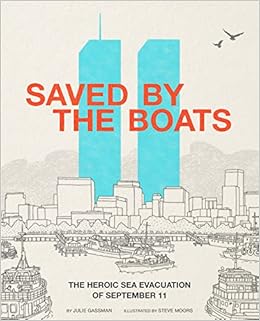
Saved by the Boats: the Heroic Sea Evacuation of September 11 by Julie Gassman, illustrated by Steve Moors

Published by Capstone Press 

Summary:  On September 11, 2001, after the collapse of the World Trade Center, more than a million people were looking to get out of Manhattan.  New York City was under attack, and bridges, tunnels, and subways were closed.  The only way to escape was by water.  When lines for the ferries became miles long, the Coast Guard put out a call for any boat to come help with the evacuation.  “If it floated, and it could get there, it got there,” said an engineer who was part of the rescue effort.  Wondering if there would be more attacks, the ships and their crews knew they were easy targets, but they courageously sailed on.  Some put out sheets with their destinations in New Jersey painted on them.  They tried to help the shocked, distraught people who boarded their boats, and then they took them safely across the water.  In about nine hours, just under 500,000 people were helped, the largest sea evacuation in history.  Back matter includes an author’s note telling of her 9/11 experience being rescued by a boat, a brief glossary, and a few additional resources and source notes.  32 pages; grades 3-7.

Pros:  An interesting and inspiring slice of history, focusing on the courage of the ordinary people who answered the call of duty to help their fellow New Yorkers.  The illustrations are mostly sepia toned, with bright spots of color in the sky and water, symbolizing the brightness of the rescue effort on this tragic day.

Cons:  The glossary (“tragedy—a very sad event”) seemed superfluous for the intended age group.

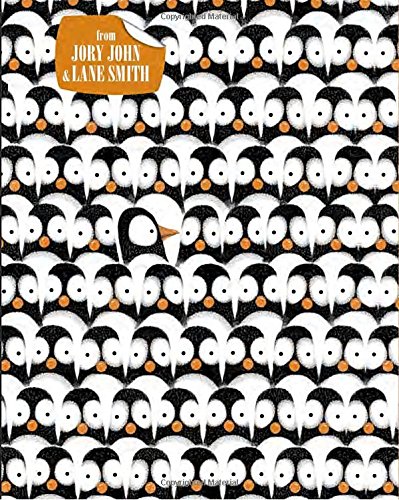
Penguin Problems by Jory John, illustrated by Lane Smith

Published by Random House 

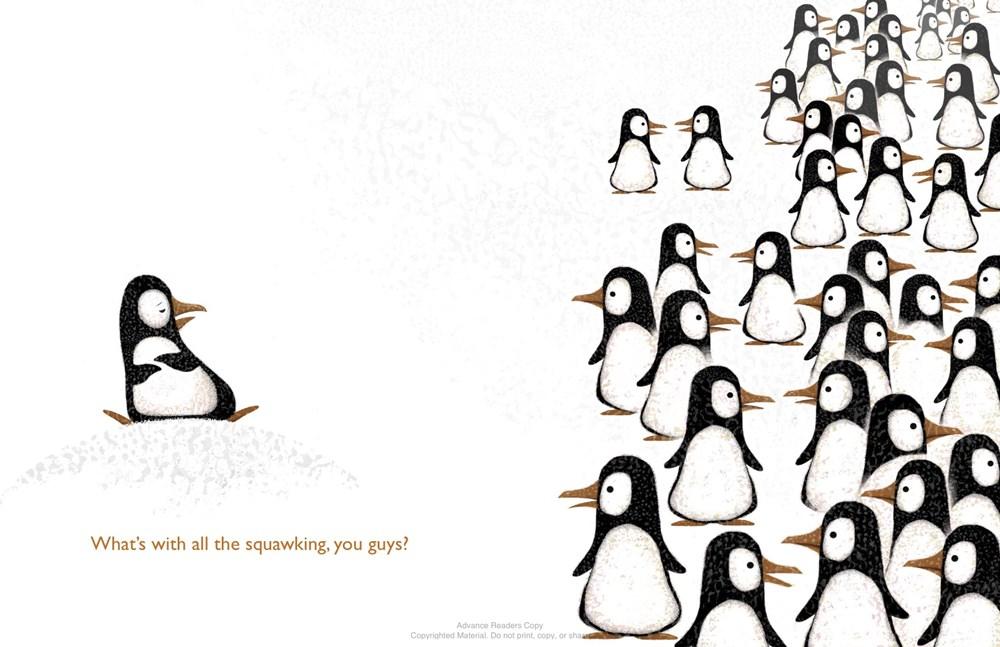
Summary:  The penguin narrator has a laundry list of problems:  he doesn’t like snow, he can’t fly, he’s not buoyant enough and sinks in the ocean.  He looks silly when he waddles, he wishes he could fly, and all the penguins look so much alike, he can’t fine his parents (“Mom?”  “I literally have no idea who you are.”).  Finally an old walrus taps him on the shoulder and gives him some advice.  Yes, life can be challenging, but it’s important to notice the beautiful ocean, the warm sun, and the love of the rest of the penguins all around him.  The young penguin gets the message…sort of.  32 pages; ages 3-8.

Pros:  A cute and funny story that makes a good point about appreciating life instead of complaining all the time.

Cons:  The penguin is still complaining on the last page.

In the Shadow of Liberty: the Hidden History of Slavery, Four Presidents, and Five Black Lives by Kenneth C. Davis

Published by Henry Holt and Company 
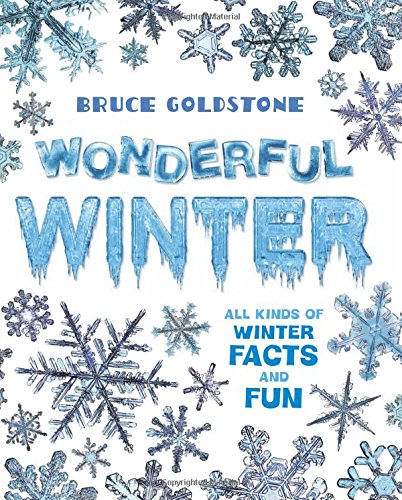
Summary:  Did you know that thirteen American presidents owned enslaved people or grew up in slaveholding households?  (The last one was Woodrow Wilson, born in Virginia in 1856.)  This book profiles four of them–George Washington, Thomas Jefferson, James Madison, and Andrew Jackson—and five of the African Americans who were enslaved by them.  These five were present at many pivotal moments of American history, including various Revolutionary War battles and the burning of the White House in 1812, yet they remained in the shadows due to their positions in life.  As the author points out in his afterword, they were more fortunate than most in that their names and stories have survived and they were all set free by the ends of their lives.  The stories of the four Presidents are equally fascinating, as their thinking about slavery evolved over the course of their lives.  Yet they all bought and sold slaves, punished them, housed them in primitive shacks, and never gave them their freedom.  The extensive research that went into this book is demonstrated in the nine pages of source notes and the four-page bibliography.  304 pages; grades 6 and up.

Pros:  An amazing historical work, heavily illustrated with photos and drawings, with a timeline of slavery at the end of each chapter.  This should be required reading for all high school history students.

Cons:  You’ll never look at the Founding Fathers in quite the same way after reading this.