A Day in Concord, Massachusetts

I’m trying a new experiment: travelogues for families with book recommendations to read in conjunction with the visits. Over my February school vacation week, I took a day trip to Concord, Massachusetts, a town I’ve been to many times, since I lived for 20 years in neighboring Stow. Despite my familiarity with Concord, I still made some new discoveries. I focused on the transcendentalists rather than the Revolutionary War aspect, partly because of my own interests and partly because I found so many books about them. Here’s my report from that visit.

I started my day with breakfast at The Club Car Cafe in West Concord (note: West Concord is officially part of Concord but has its own downtown). This is a converted railroad depot with a model train running along a track overhead, or if you have a train aficionado in the family it’s a fun place to get breakfast or lunch. The West Concord train station is nearby, so you may see the real thing as well.

The Old Manse

From there I headed to the Old Manse, a historic house owned by the Trustees of Reservations. It was built by Ralph Waldo Emerson’s great-grandfather, William, in 1769, and you can see Old North Bridge from at least one of its windows, so it’s a good way to connect the Revolutionary and transcendentalist histories of Concord. Both Ralph and Nathaniel Hawthorne lived there, and there’s a windowpane where Hawthorne’s wife carved a pretty lengthy message with her diamond ring, commemorating the beauty of an ice storm that she shared with her 10-month-old daughter.

I took the “family friendly” tour of the Old Manse, which I’m sure seemed like an odd choice since I was the only one on the tour. I explained what I was doing, and the tour guide, at my request, treated me like an 8-year-old for most of the tour to show me how she interacts with kids. She did a good job of being engaging and focusing on details that would be interesting to kids, and the tour was 30 minutes instead of the standard 50 minutes.
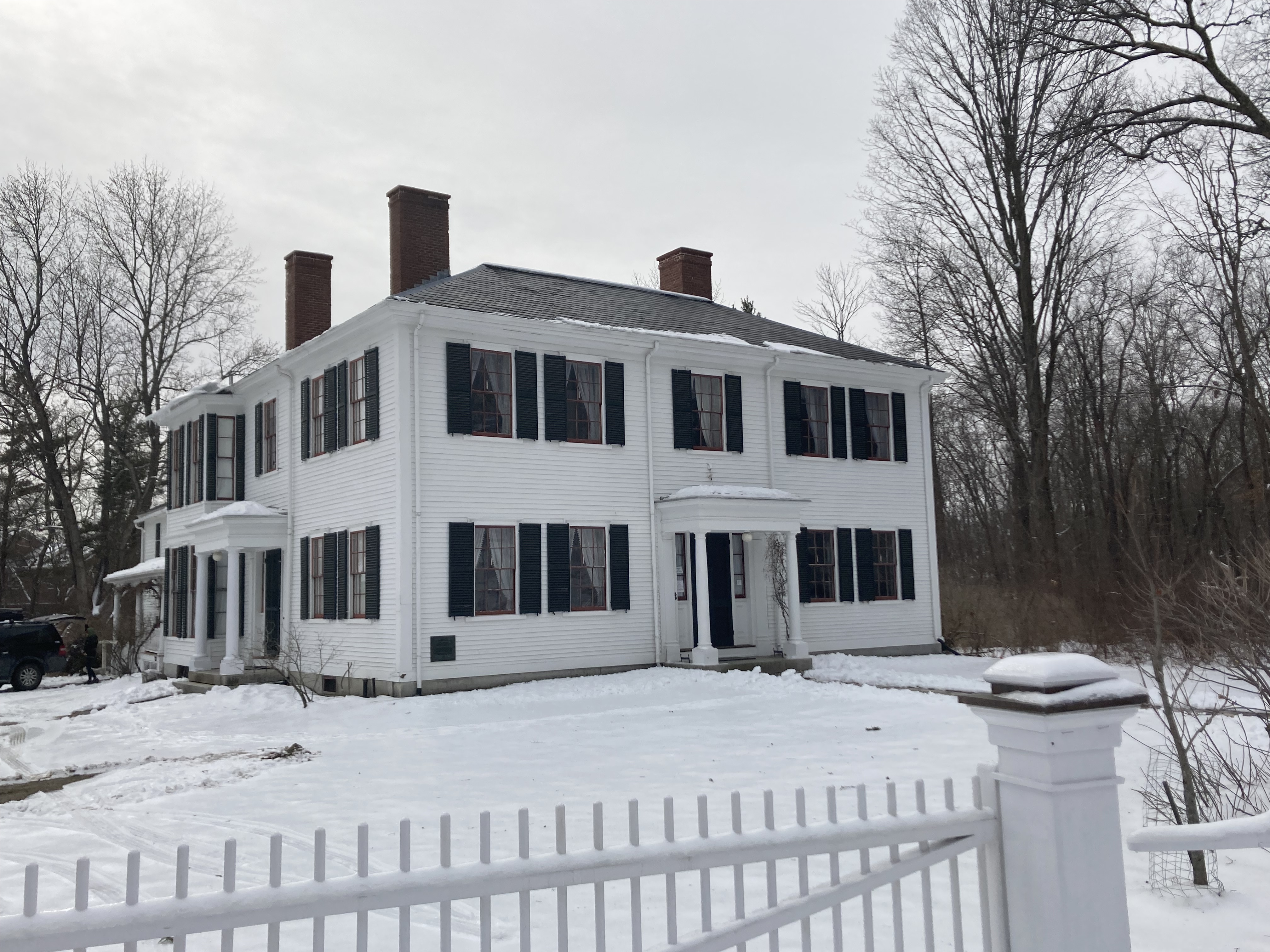
Ralph Waldo Emerson’s house

From there, the logical next step would have been Ralph Waldo Emerson’s house, but unfortunately it was closed for the winter. I’ve never given RWE much thought but reading A Home for Mr. Emerson by Barbara Kerley (Scholastic, 2014) got me interested enough in him and his house (which burned to the ground when he lived there) that I was sorry I couldn’t get a tour. The book does a good job describing Emerson’s life, house, and his importance to Concord, and it distills his philosophy into small, easily digestible chunks, which, as near as I can tell, is no easy feat.

Lunch was at Helen’s on Main Street, a family-friendly restaurant that’s been in Concord for almost 90 years and always seems to be hopping. If you’re looking for pancakes, a burger, or ice cream, this is a great choice. After lunch, I walked along Main Street, stopping in The Concord Bookshop, which is just a few years younger than Helen’s and will fill all your Concord-related reading needs. When my kids were little, we used to love visiting The Toy Shop on the corner of Main and Walden. I thought the pandemic had done them in, but it turns out they’ve moved across the street as The Concord Toy Box. It’s smaller and less prominent than the former store, but definitely worth seeking out.
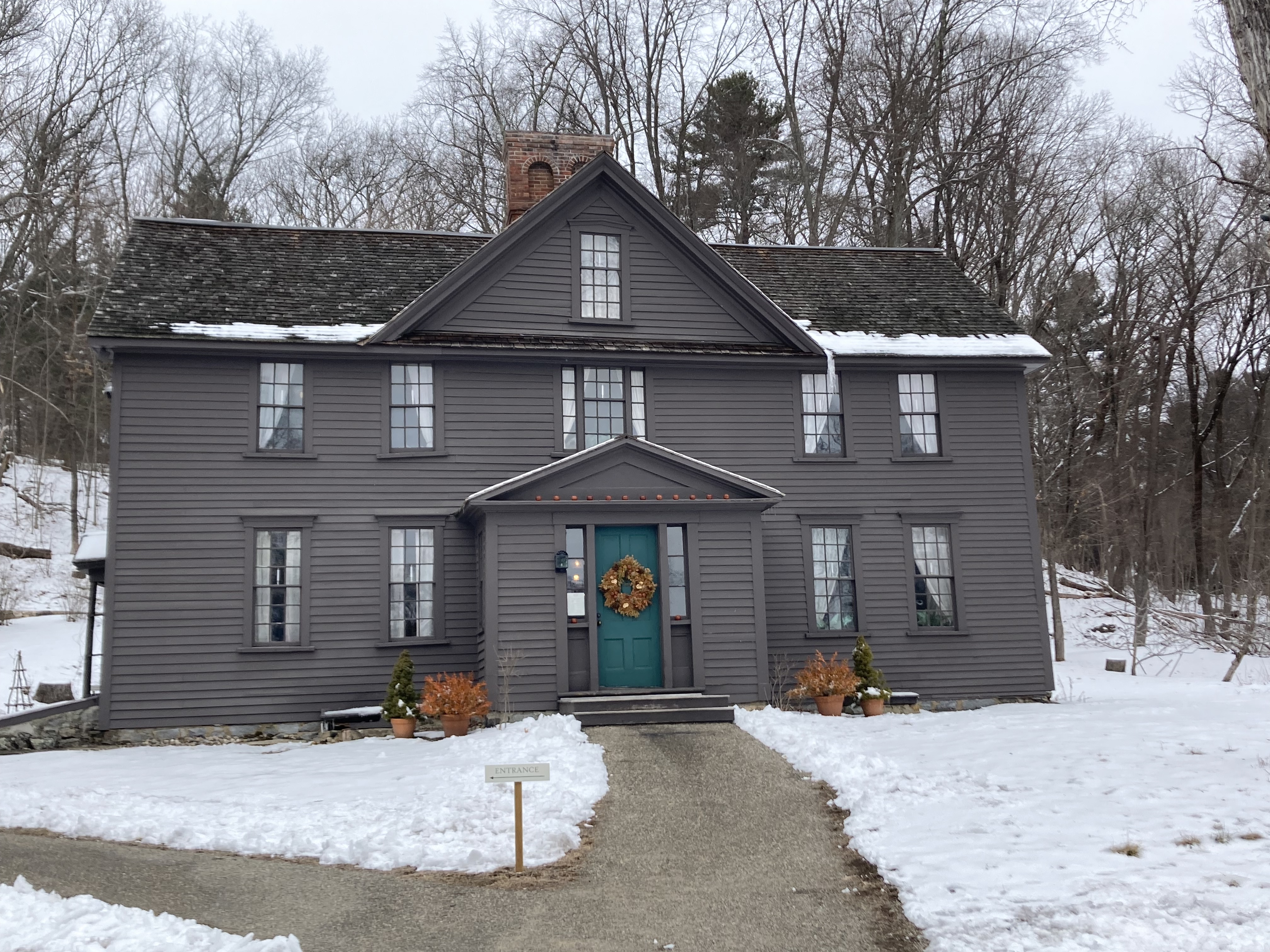
Orchard House
The School of Philosophy

Louisa May Alcott’s Orchard House is right down the street from Emerson’s, and I had signed up for a tour at 1:45. This was a tour I’d done a few times before, and I was probably a bit jaded going into it. The guide struck me as a bit fawning about the Alcott family, but the young women in my group loved it, and you probably will too. We began the tour by viewing a film in the School of Philosophy started by Louisa’s father Bronson (located behind the main house), then we were split into two groups. The other group included some pretty young kids, and they seemed to move through the house quite a bit more quickly than we did, so it appears that tours can be tailored for the age group.

If you want to learn more about Louisa May Alcott, start with Louisa: The Life of Louisa May Alcott by Yona Zeldis McDonough (Henry Holt, 2009), which is an excellent introduction to Louisa and her family. Another good choice that ties Louisa to another of Concord’s leading lights is Louisa May & Mr. Thoreau’s Flute by Julie Dunlap and Marybeth Lobiecki, illustrated with striking woodcuts by Caldecott winner Mary Azarian (Dial, 2002). If you share my suspicion that the family succeeded in spite of, not because of, Bronson Alcott, this book will really seal that deal.

For older kids, you can’t beat the original Little Women and/or one of the many film versions. Middle school readers might want to go from there to a modern graphic version of the story like Jo: An Adaptaion of Little Women (Sort of ) by Kathleen Gross (Quill Tree, 2020) or Meg, Jo, Beth, and Amy by Rey Terciero (Little, Brown Books for Young Readers, 2019). It’s fun to see what’s the same and what’s different from the original, and–spoiler alert–both give Beth a happier ending.

A statue of Henry David Thoreau outside his house
The inside of Thoreau’s house

My last stop for the day was Walden Pond. I’ve been there many times, often in the summer when the parking lot gets filled by noon. But on this 20-degree day, the lot was almost completely empty. I parked by the visitor center and traipsed through icy snow to look at the replica of Thoreau’s house, which gives new meaning to “tiny house.” I didn’t venture across the street to the pond, as it was freezing outside and pretty icy under foot. Having visited in all seasons, I’d recommend spring or fall for a good hike around the pond when you won’t have to fight for a parking spot.

I love the idea of Walden (the book, that is), and I’ve attempted to read it multiple times, but there’s a lot to wade through to get to the good stuff. I discovered a graphic version called Thoreau at Walden by John Porcellino (Little, Brown Ink 2018) that distills out some of the more memorable lines from the original in an easy-to-read comic version. It’s a great introduction for older elementary school and middle school kids, and honestly could serve as a sort of Cliff’s Notes version for those assigned to read the book in high school or college.

Another title for that age group is I Begin With Spring: The Life and Seasons of Henry David Thoreau by Julie Dunlap (Tilbury House, 2022). Part nature journal, part Thoreau biography, it tells the essentials of Henry’s life in an engaging way with plenty of illustrations.

Younger kids will enjoy the Henry series by D. B. Johnson starting with Henry Climbs a Mountain (HMH Books for Young Readers, 2003). Henry is a bear, but his adventures are drawn from Thoreau’s life and include a lot of his philosophy.

If You Spent a Day with Thoreau at Walden Pond by Robert Burleigh (Christy Ottaviano, 2012) is a beautiful picture book for slightly older readers, imagining a journey through time to see how Henry would have spent the day at Walden.

Finally, I discovered a new book called Of Walden Pond: Henry David Thoreau, Frederic Tudor, and the Pond Between by Lesa Cline-Ransome (Holiday House, 2022) that takes an interesting look at the intersecting lives of Thoreau and Frederic Tudor, an entrepreneur who harvested ice from Walden Pond and figured out how to preserve it and ship it to India. This was featured as a StoryWalk on the Woods Path when I visited.
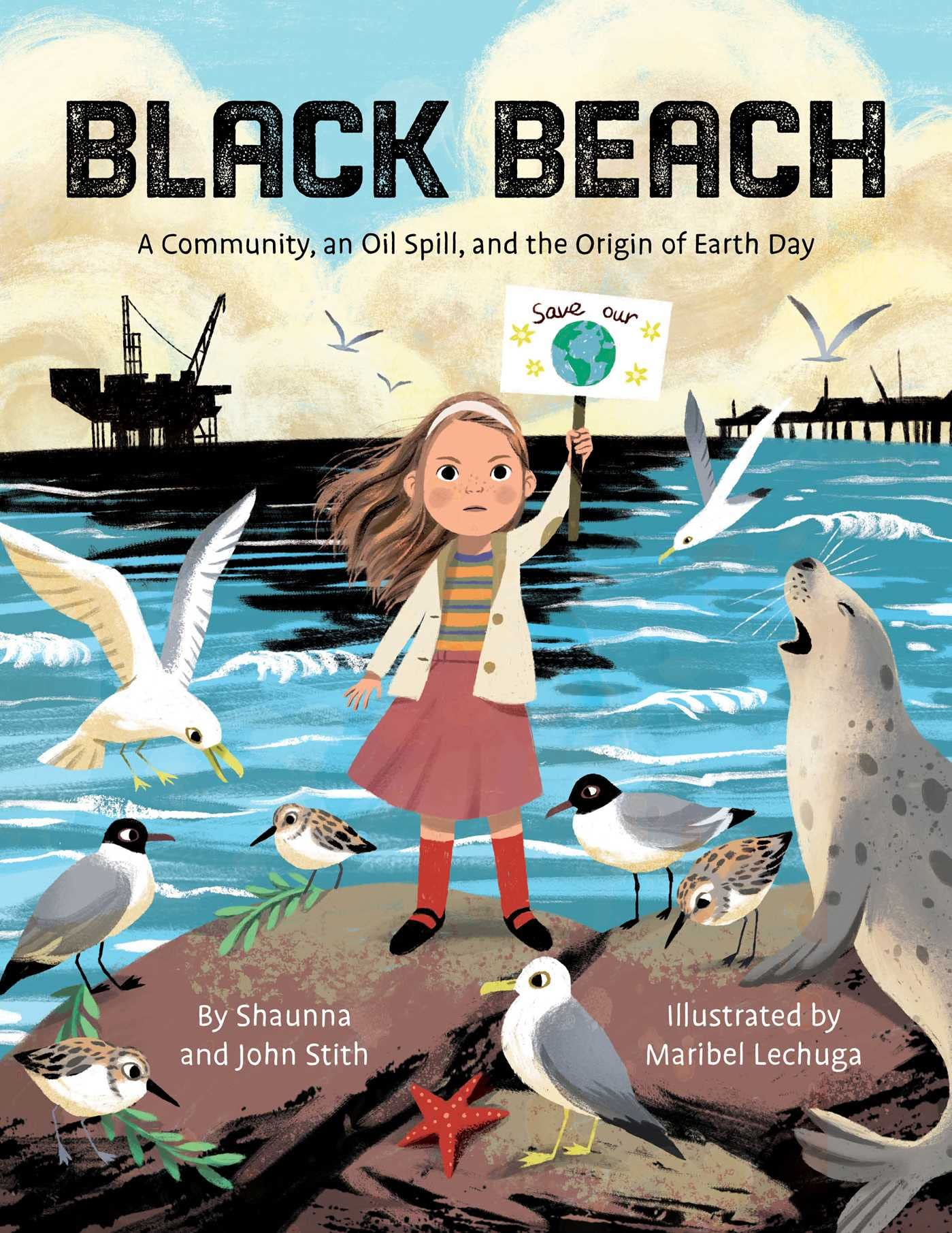
Black Beach: A Community, an Oil Spill, and the Origin of Earth Day by Shaunna and John Stith, illustrated by Maribel Lechuga

Published by little bee books

Summary:  Sam is in class drawing a picture of her favorite Santa Barbara beach when the principal walks in and whispers something to her teacher.  She finds out the news at home when her parents tell her about the oil spill that’s polluting her beloved beach.  As the oil starts to wash ashore, Sam feels sad, then angry, as she watches her parents and other volunteers try to clean up the damage.  She and her friends fill bottles with the oil and mail them to politicians.  News coverage increases, and several months later, U.S Senator and environmental activist Gaylord Nelson visits the beach, inspiring him to organize the first Earth Day.  On April 22, 1970, people around the world celebrated, protested, and taught about the environment, beginning a movement that continues today.  Includes an authors’ note, a bibliography, a timeline, additional information about Earth Day, and a list of ten ways to become an environmental activist.  40 pages; ages 4-8.

Pros:  An excellent read-aloud for Earth Day.  The perspective of the fictional Sam brings this true story to life for kids, and the additional information gives them concrete actions to take for the environment.

Cons:  Showing the damage wrought by the oil company, then urging kids to take shorter showers and turn off the lights feels like misplaced responsibility.

All Rise: The Story of Ketanji Brown Jackson by Carole Boston Weatherford, illustrated by Ashley Evans

Published by Crown Books for Young Readers

Summary:  Our newest Supreme Court Justice gets her own picture book biography with the repeating refrain of “she rose.”  Ketanji rose from a childhood filled with the love and support of parents and grandparents who took pride in their heritage and valued education.  She rose to overcome teachers who made fun of her name and discouraged her from applying to Harvard to follow her dream of becoming a lawyer and then a judge.  And ultimately, she rose to the challenge of four days of tough questions by the Senate Judiciary Committee to become the first Black woman Supreme Court justice.  Includes a letter from the author to her granddaughter and “all our daughters” and a timeline of Ketanji Brown Jackson’s life.  40 pages; grades K-4.

Pros:  This inspiring biography will help kids get to know Ketanji Brown Jackson.  Her own quotes are sprinkled throughout the text, adding her voice to her story. 

Cons:  No photos.

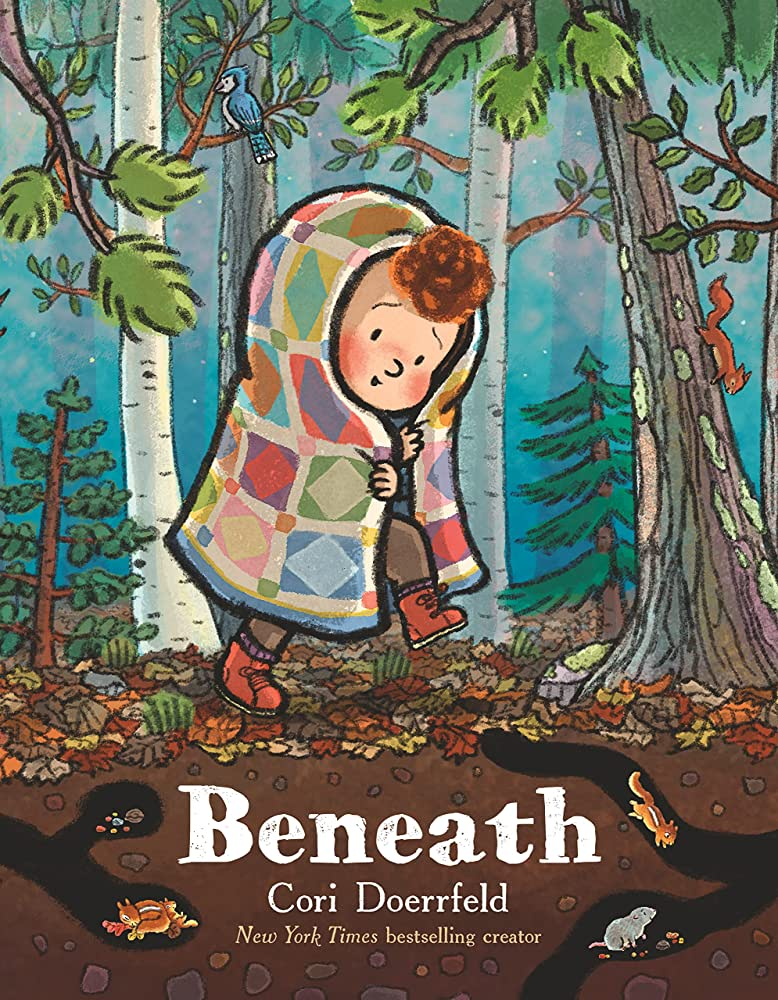
Beneath by Cori Doerrfeld

Published by Little, Brown Books for Young Readers

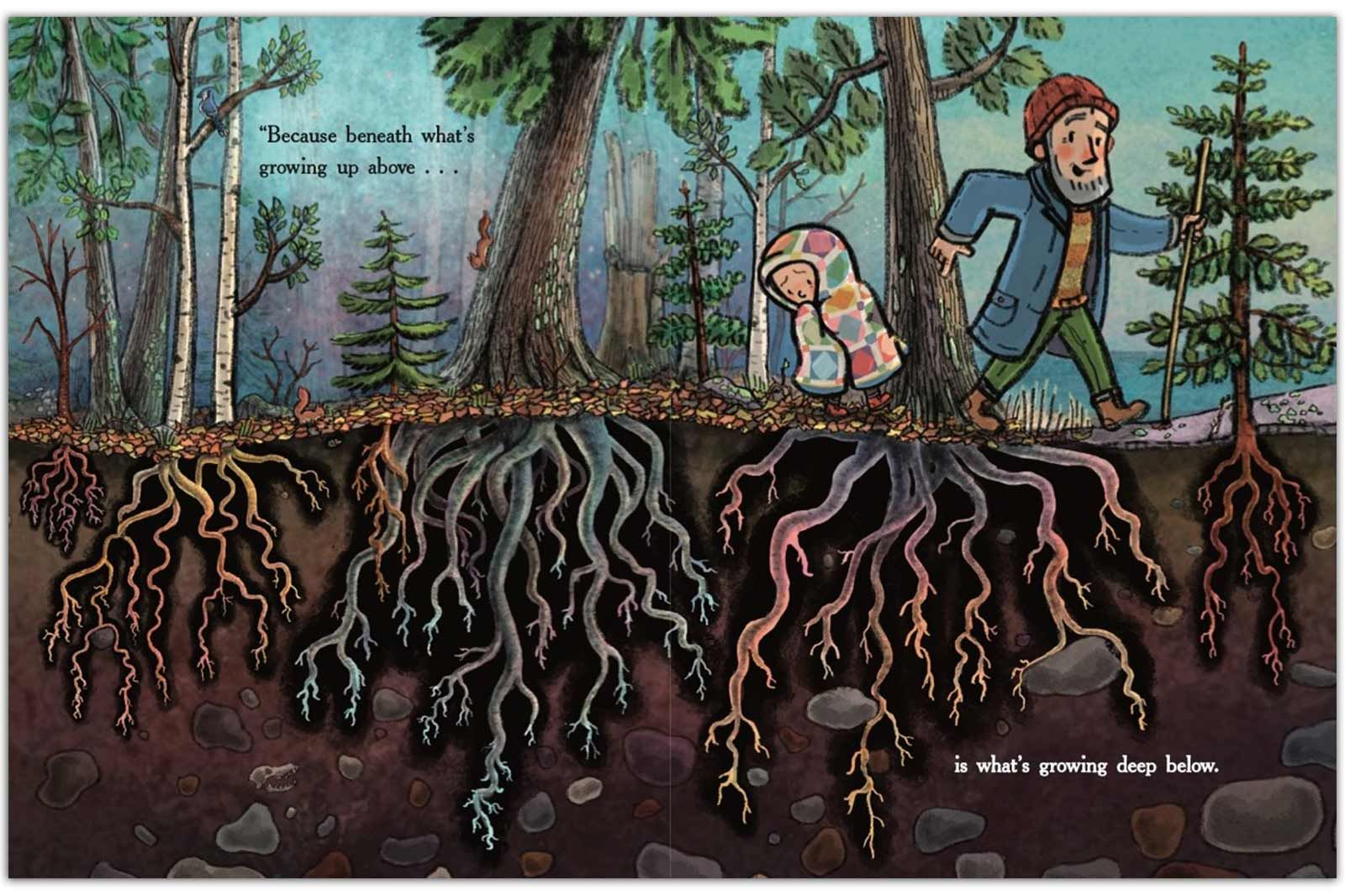
Summary:  Finn is in a horrible mood, sitting on his bed completely covered by a patchwork quilt.  Grandpa wants to talk, but Finn tells him that he won’t understand.  Finally, Finn agrees to go for a walk, but only if he can stay underneath his quilt.  “Don’t worry,” says Grandpa, “I’ll remember to think of what’s beneath.”  As they walk, Grandpa points out that beneath the trees, there are roots; beneath the still water, there are fishing swimming around; beneath appearances are experiences, and beneath what’s different is what’s the same.  “And sometimes,” says Grandpa, “Beneath someone who looks like they won’t understand…is someone who knows exactly how you feel.”  The illustrations reveal that both Finn and Grandpa have broken hearts, maybe from the loss of the person who made the patchwork quilt.  As night falls, the quilt is transferred from Finn’s head to Grandpa’s shoulders, and both of them are shown with hearts that are no longer broken.  40 pages; ages 4-8.

Pros:  There are many layers to this little story, and it will take an astute reader of both the words and the illustrations to catch them all.  Grandpa is truly a wise man who sees much more than meets the eye, and Finn is lucky to have him as they both process loss and grief.

Cons:  It would be difficult to get everything from this book with just one reading.

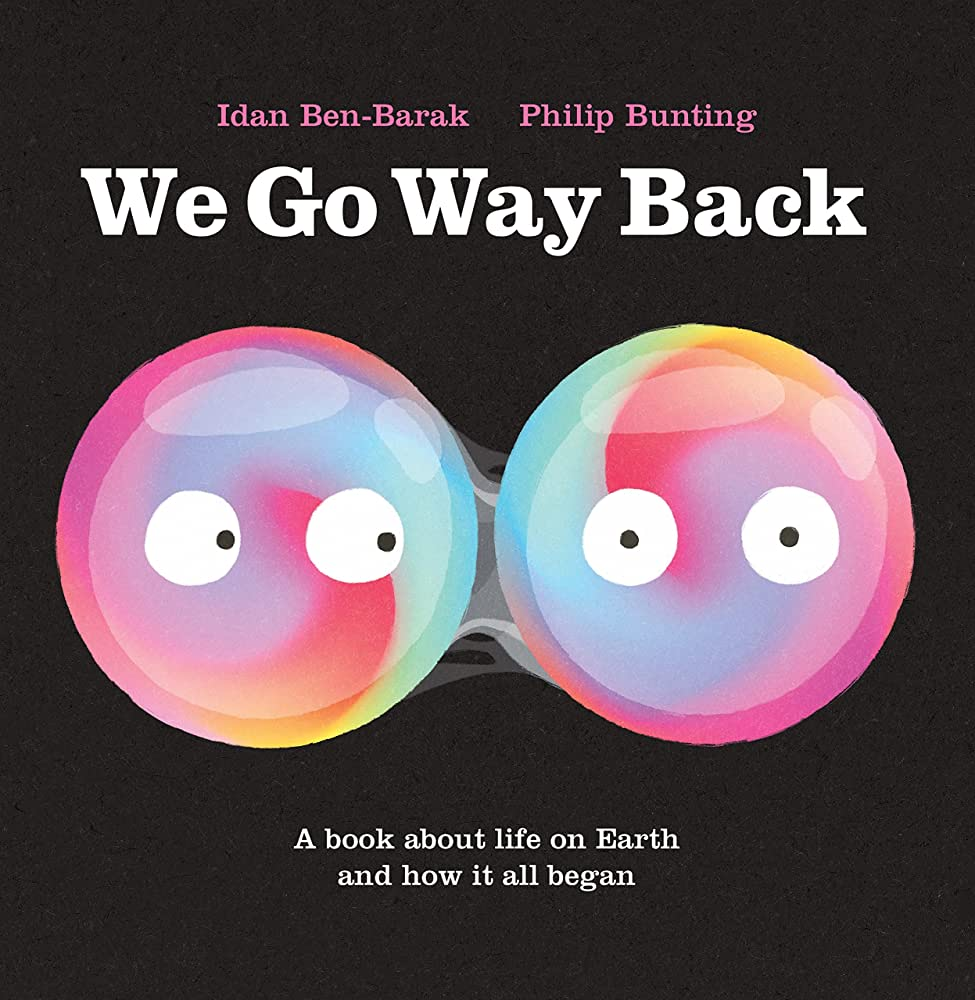
We Go Way Back: A Book About Life on Earth and How It All Began by Idan Ben-Barak, illustrated by Philip Bunting

Published by Roaring Brook Press

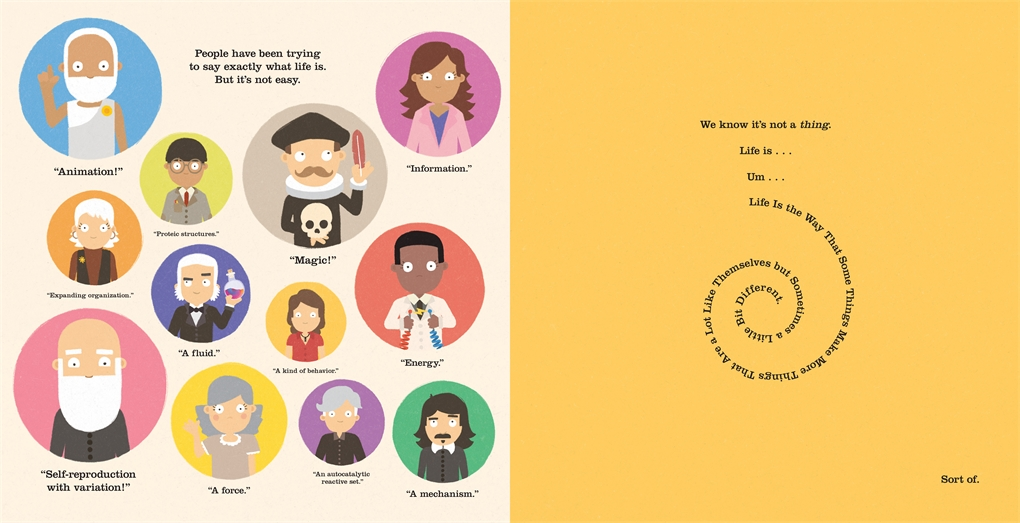
Summary:  Idan Ben-Barak and Philip Bunting have created a picture book about life on Earth and how it started.  Going back to a time when “there was a lot going on” on Earth (erupting volcanoes, raining meteors, lightning strikes), they explain how elements in Earth’s seas joined together to form molecules.  The molecules turned into bubbles until one day, a “special bubble” formed that could make copies of itself, each one just a little bit different.  From this process, all sorts of life forms began to evolve.  The final page is a three-part vertical gatefold that opens up to show the many branches on the tree of life.  40 pages; grades 1-4.

Pros:  This deceptively simple book takes on some enormously complex scientific concepts and manages to clearly explain them with the help of some pretty adorable illustrations.

Cons:  I would like to sit down and have a serious conversation with the editor who decided there was no need for back matter in this book.

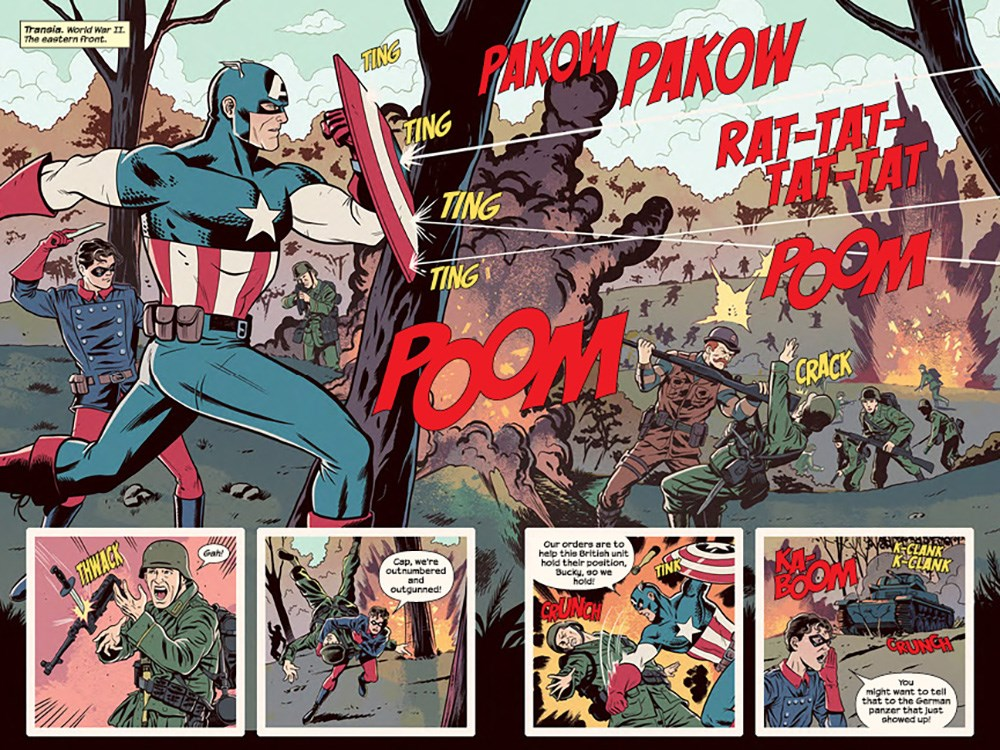
Captain America: The Ghost Army by Alan Gratz, illustrated by Brent Schoonover

Published by Graphix

Summary:  Captain America and his sidekick, 15-year-old Bucky, take on an army of ghosts during World War II.  The ghosts are attacking villages, and Captain America and Bucky are tasked with figuring out how they are being created, then destroying the machinery.  The evil goes even deeper than they first suspect, and they need the help of others that they meet: British fighter “Dum Dum” Dugan; Japanese American soldier Jim Morita who’s a master at creating illusions to trick the Germans; and local resistance fighter Andrei and his granddaughter Sofia, who has a bit of a clean-cut romance with Bucky.  At the end of the day, the good guys squeak out a victory, but the villain escapes, setting up the possibility of a sequel.  176 pages; grades 4-8.

Pros:  A superhero graphic novel is going to be wildly popular no matter what I say about it, and Alan Gratz has already proven himself a master of suspenseful historical fiction.  Readers will appreciate the excellent artwork and the non-stop action.

Cons:  The plot seemed kind of ridiculously far-fetched to me, but I am the first to admit this is not my favorite genre.

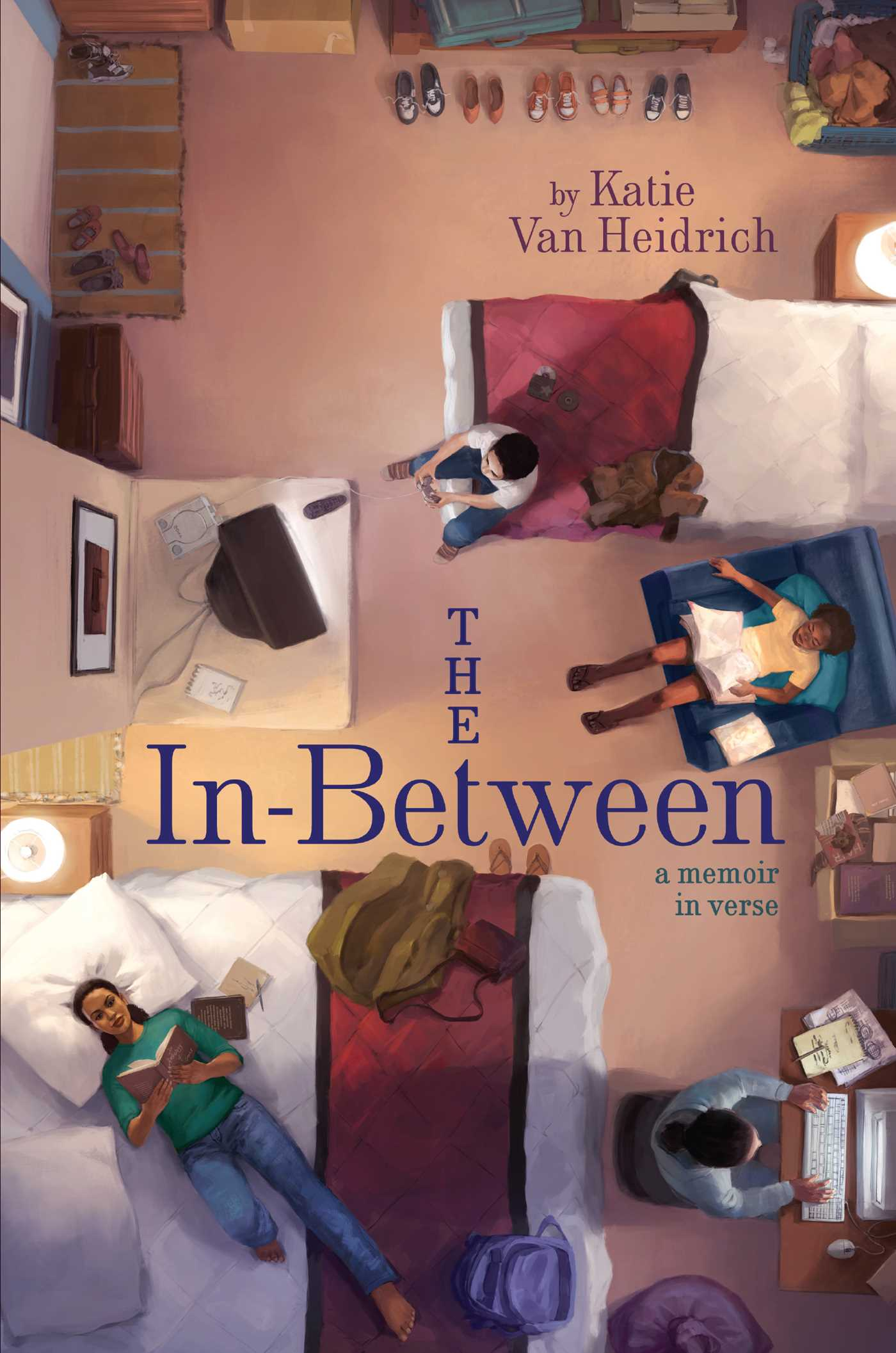
The In-Between: A Memoir in Verse by Katie Van Heidrich

Published by Aladdin

Summary:  In this debut memoir in verse, Katie Van Heidrich writes about a six-week period when she lived with her mother and two younger siblings in a motel room.  It’s an “in-between” time when her mom is between jobs and unable to keep their apartment.  As Katie tries to adjust to her circumstances while pretending everything is normal to her seventh-grade classmates and teachers, she reflects on the past and her relationship with the members of her family.  Her Black mother and white father have always worked to be in her life, even after they divorced, and she recognizes how her dad has provided structure while her mom has allowed her to dream.  The kids spend weekends with their dad, who’s recently remarried and living in the suburbs, but Katie slowly learns the reasons why they can’t live there all the time.  By the time a tenuous happy ending arrives, Katie’s learned that she can’t always please her parents and that her voice is an important part of the family.  Includes seven pages of photos.  304 pages; grades 5-8.

Pros:  Katie Van Heidrich has a masterful debut with verse that is both expressive and concise and beautiful pacing that slowly reveals each family member’s personality and how the past has brought them to the present moment.

Cons:  While there’s nothing in this book that makes it inappropriate for upper elementary, the emotions are so pitch-perfect for middle schoolers that it might be better appreciated by older readers.

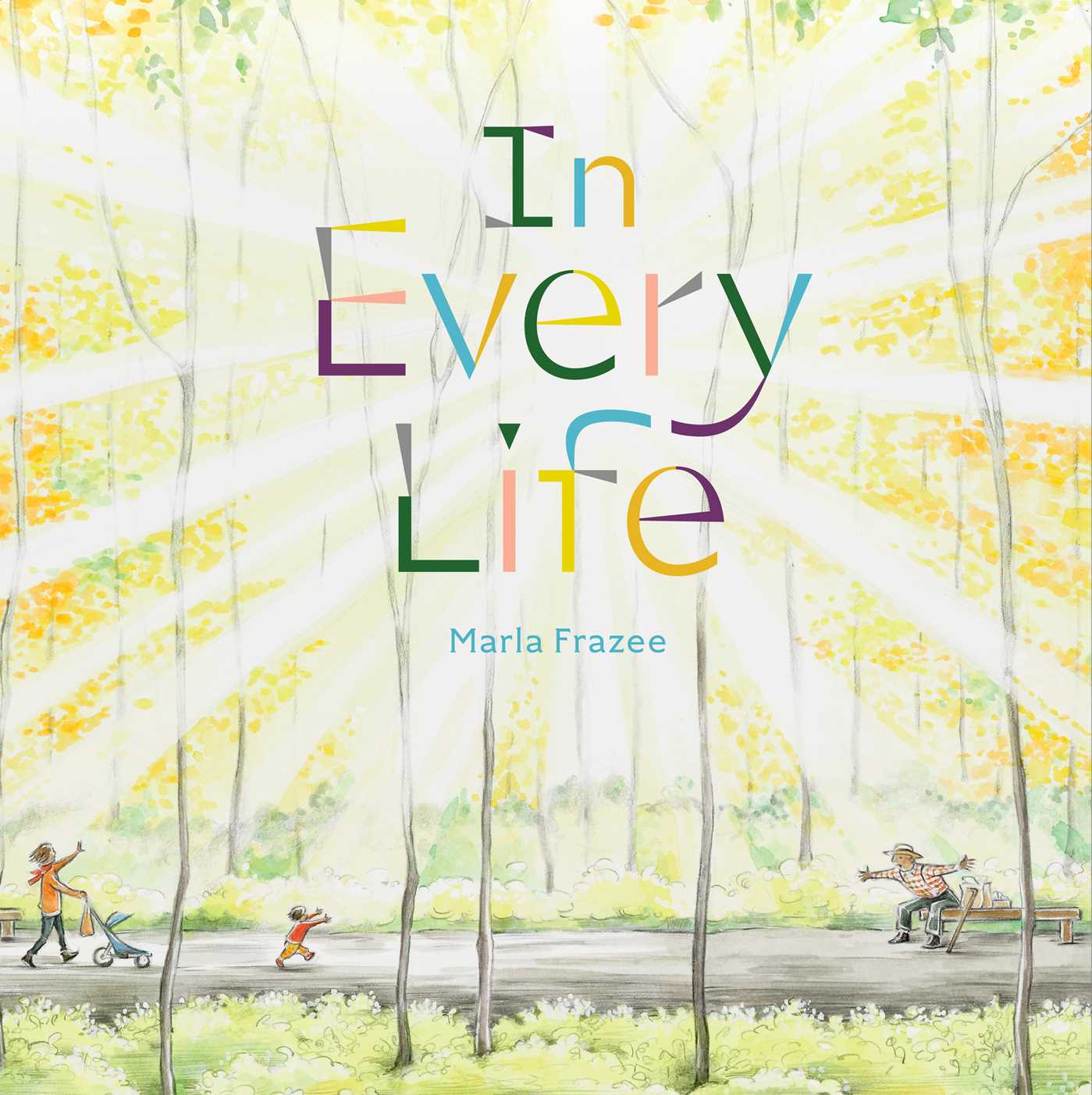
In Every Life by Marla Frazee

Published by Beach Lane Books

Summary:  Based on a call-and-response version of a baby-naming blessing Marla Frazee heard at a church service, this book seeks to honor aspects of life that we all experience.  “In every birth, blessed is the wonder,” the book begins, showing two pages of newborn babies with their families.  The next wordless page depicts a family enjoying the wonder of a sunset, the sky filled with pink clouds.  That format continues with sentences that begin “In every…” and show a blessing, followed by a wordless page depicting the blessing.  Smiles, hope, sadness, comfort, mystery, tears, love, and life are all parts of life and parts of this book.  32 pages; ages 3+

Pros:  This beautiful book should be considered for a Caldecott and would make a lovely gift for a new baby, graduate, or anyone going through a life transition. Despite the serious topics, the illustrations add a light touch with plenty of humor.

Cons:  The author’s note at the beginning is in a gold font so light that I missed it the first time I read the book.

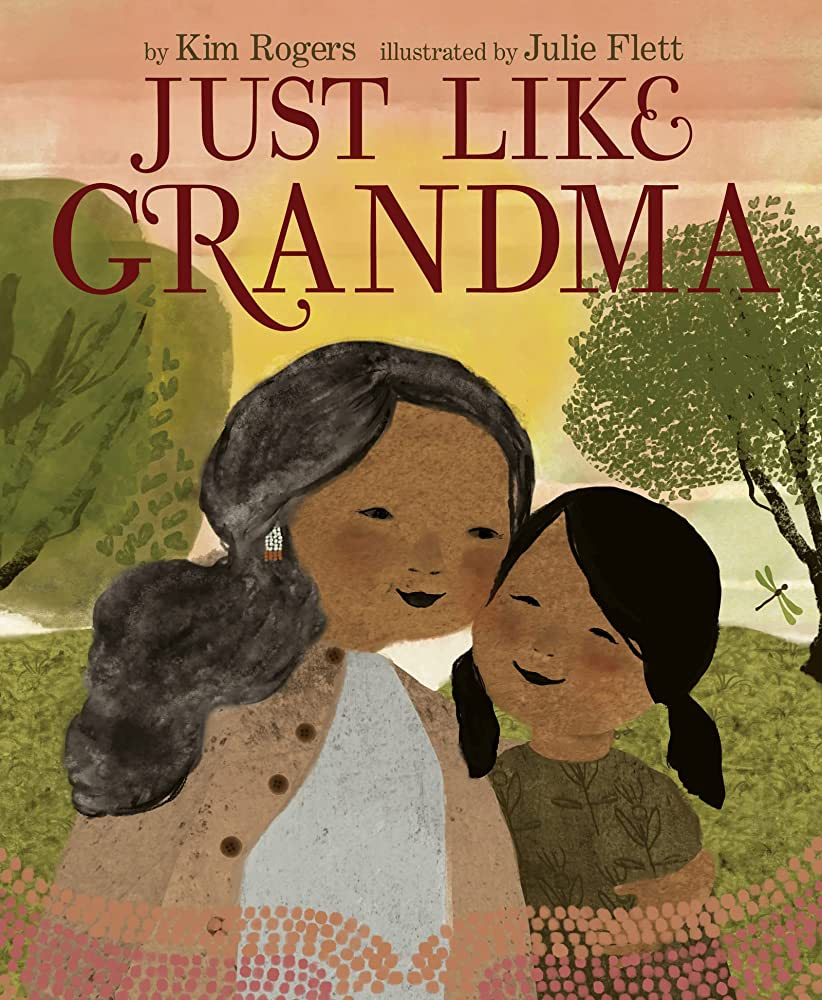
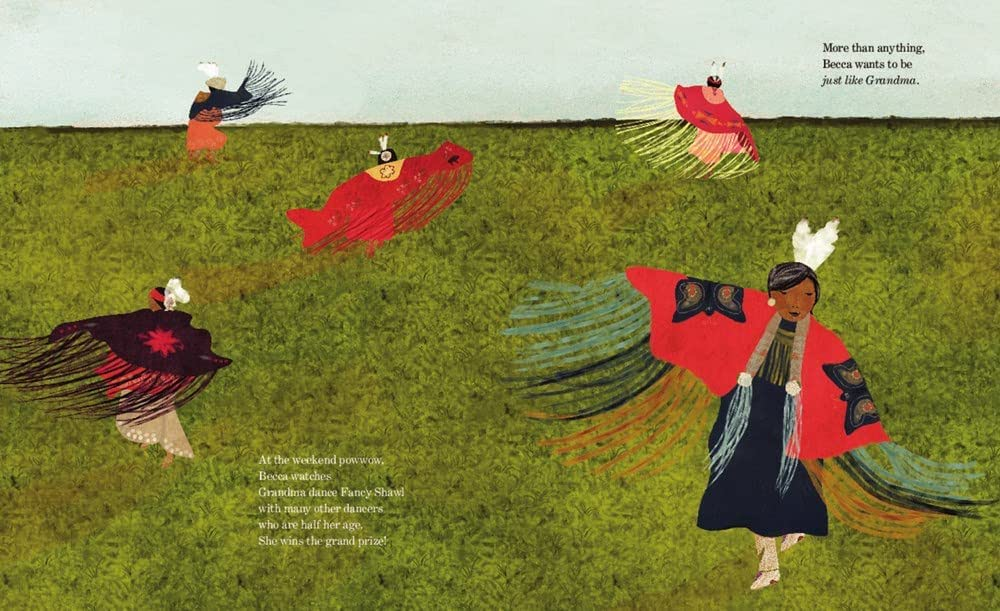
Just Like Grandma by Kim Rogers, illustrated by Julie Flett

Published by Heartdrum

Summary:  Becca loves watching her grandma bead and paint and dance.  “More than anything, Becca wants to be just like Grandma.”  She asks Grandma to let her try, and together they bead and paint and dance. After each activity, Grandpa calls them in to eat the foods that he’s prepared.  As Becca gets older, she tries basketball, and Grandma starts to learn from her.  “And Grandma knows that she is just like Becca.”  Includes a glossary, additional information about beadwork, and notes from the author and Cynthia Leitich Smith of Heartdrum.  32 pages; ages 4-8.

Pros:  Heartdrum continues their excellent work with this lovely picture book celebrating intergenerational bonds and grandparents who are raising their grandchildren.  The repeating text helps readers focus on the details of Becca’s life which includes many Native traditions and arts.

Cons:  I wish the back matter had included more information on Grandma’s dancing.

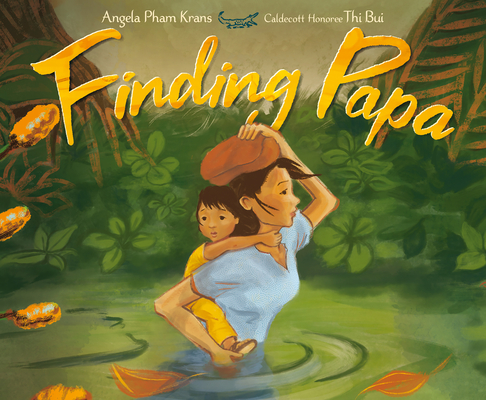
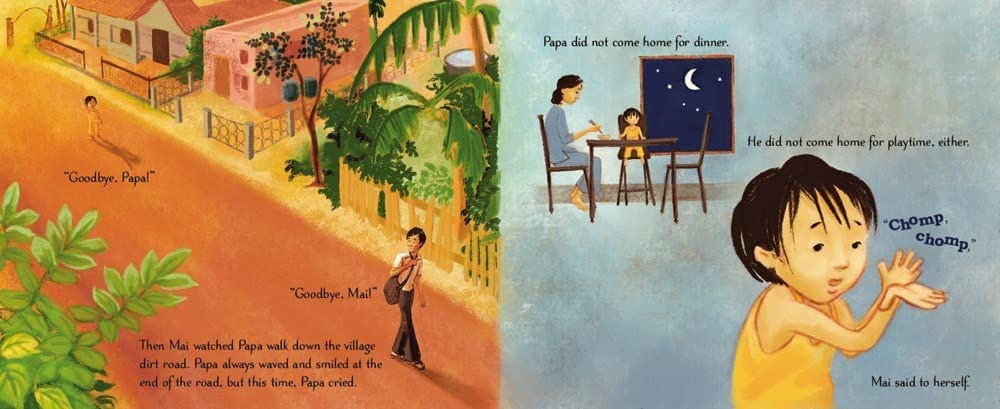
Finding Papa by Angela Pham Krans, illustrated by Thi Bui

Published by HarperCollins

Summary:  Mai loves to play with her father, whose favorite game is to make his hands into a chomping crocodile, but one day he says goodbye to her and her mother and leaves.  They start getting letters from him, and after a long wait, Mai’s mother tells her they are going to find Papa.  Their journey takes them to a small boat, where they face the dangers of stormy seas and little food and water until they’re rescued by a large ship.  In a refugee camp, Papa’s letters help the workers know where to send Mai and her mother, and they eventually make their way in America.  Mai doesn’t recognize the strange man who greets them there until he makes his chomping crocodile, and she and her parents have a joyful reunion.  Includes notes from the illustrator and the author, who wrote this story about her own family’s journey from Vietnam in 1983.  40 pages; ages 4-8.

Pros:  A beautiful story told through the eyes of the child narrator showing the courage needed to start a new life.  The mom is particularly heroic as she carries, comforts, and encourages her daughter, and the final reunion is perfect.

Cons:  I wish I could have read the illustrator’s note, but since it was printed on the back cover, the taped-down flap of the book jacket prevented me from doing so.