Some brave girls

Small Shoes, Great Strides: How Three Brave Girls Opened Doors to School Equality by Vaunda Micheaux Nelson, illustrated by Alex Bostic (Carolrhoda, 40 pages, grades 2-5). Ten minutes before Ruby Bridges entered William Frantz Elementary School on November 14, 1960, three other six-year-old girls, Leona Tate, Tessie Provost, and Gail Etienne, started school across town at McDonogh 19 Public School. Escorted by U. S. Marshals, the girls were in a first-grade class taught by Miss Florence Meyers. Although there were other white students at school that day, they quickly left, leaving the girls as the only three students in the building for the rest of the year.

The girls were heroic, as were their parents, Miss Meyers, and the marshals, who helped them find the courage to keep going and made their first-grade year as normal as possible. Second grade proved a bit easier; after Christmas, about twenty-five new students arrived, and the kids were allowed to go outside for recess. Unfortunately, the girls were sent to a different school the following year, where they experienced bullying, racism, and occasional physical violence from students and even some of the teachers. In the end, the girls “survived and helped change our nation.”

This fascinating book will appeal to kids who are familiar with Ruby Bridges’s story. Leona, Tessie, and Gail were all interviewed for the book, as was one of the surviving U.S. Marshals. The text is quite long, and there’s a ton of back matter: more about school desegregation in New Orleans and Norman Rockwell’s painting based on it, what happened to the three girls when they grew up (two opted for all-Black schools in sixth grade, but all graduated high school, and two finished college.) There are also photos, a glossary, a bibliography, and websites with additional information.

Do You Know Them? Families Lost and Found After the Civil War by Shana Keller, illustrated by Laura Freeman (Atheneum Books for Young Readers, 40 pages, grades 1-4). After the Civil War, Lettie and her Uncle Charlie are searching for lost family members. The newspapers are filled with ads, mostly people seeking information about their families, but occasionally someone reporting that a loved one has been found. Lettie holds on to this hope as she saves her pennies and reads the ads aloud to the congregation at church. Finally, she and Uncle Charlie have saved the fifty cents needed for an ad. Weeks go by, until one Sunday, Lettie is able to share the ad from a woman saying she knows their family. “Hallelujah!” rings out through the church, celebrating with Lettie.

This moving historical fiction story of the post-Civil War years weaves some of the real ads into the narrative (the author’s note at the end tells more about them) and doesn’t shy away from stories that don’t end as happily as Lettie’s. The illustrations are beautiful, incorporating the ads and the pennies Lettie saves into the main pictures.

Two artists from Harlem

Jimmy’s Rhythm and Blues: The Extraordinary Life of James Baldwin by Michelle Meadows, illustrated by Jamiel Law (HarperCollins, 48 pages, grades 2-5). Growing up in Depression-era Harlem, the oldest of nine children, James “Jimmy” Baldwin had plenty to do to help support the family. But he always loved words and found time to read everything he could get his hands on. His love of writing and art eventually led him to Paris, where he published his first novel, Go Tell It on the Mountain. Jimmy divided his time between France and the U.S., working for civil rights and interviewing Southerners for his essay collection The Fire Next Time. In 1971, devastated by the assassinations of Malcolm X, Medgar Evers, and Dr. Martin Luther King, Jr., he moved to an idyllic village in the south of France, creating a home that became a gathering place for friends and family from around the world. Includes an author’s note, James Baldwin’s oeuvre, a timeline, and photos on the endpapers.

This is a captivating biography of James Baldwin, with striking art by debut illustrator Jamiel Law. I’m ashamed to admit that I’ve never read anything by James Baldwin, but this book piqued my curiosity about his novels and essays. I do find it difficult to figure out the niche for picture books like this. Many reviewers recommend it for ages 4-8, but in my opinion, there’s not much here that would hold the interest of that age group. I would almost save it for middle school or high school, where it could serve as an introduction to Baldwin’s writing.

Everywhere Beauty Is Harlem: The Vision of Photographer Roy DeCarava by Gary Golio, illustrated by E. B. Lewis (Calkins Creek, 48 pages, grades 2-5). The narrative follows photographer Roy DeCarava as he wanders through Harlem after work on a summer evening, taking pictures as he goes. Most of his subjects are people, although one is a close-up of a crumpled soda can. The narrative, interspersed with quotes from Roy, is like a snapshot from his life. Readers will learn more about him through the additional information, photos, and timeline at the end, with resources provided to do more research.

The text and illustrations feel impressionistic, with just enough of a story to whet readers’ appetites. It would make a great introduction to photography, encouraging kids to look around their own neighborhoods for interesting subjects. Although there’s a list of museums featuring Roy’s photographs, it would have been nice to include a few in the book.

New Black history picture books

With Martin Luther King, Jr. Day in January and Black History Month in February there are always new books about Black history to start the year off. Today, I bring you three nonfiction picture books, but there’s more to come! Stay tuned for some historical fiction and longer nonfiction–even a YA book, as I expand my horizons in the new year.

Fighting With Love: The Legacy of John Lewis by Lesa Cline-Ransome, illustrated by James Ransome (Simon and Schuster/Paula Wiseman Books). This comprehensive look at Lewis’s life begins with John’s Alabama childhood, surrounded by the love of family and church, and continues through his early years of activism, particularly with the Freedom Riders, ending with him about to lead the march across the Edmund Pettus bridge. 

The back matter gives some additional information about Lewis’s life, including a timeline, sources, a bibliography, and photos of the author and illustrator with John Lewis. At 48 pages, each with a pretty good chunk of text, it’s a great and thorough biography, although perhaps a tad long for younger listeners. (48 pages, grades 2-5)

When the Schools Shut Down by Yolanda Gladden, as told to Dr. Tamara Pizzoli, illustrated by Keisha Morris (HarperCollins). When Yolanda Gladden was ready to start school, the public schools in her town of Farmville, Virginia were closed. From 1959-1963, Prince Edward County closed its schools to avoid integration, opening a private academy for white children. Black parents scrambled to find ways to educate their children, and Yolanda went to school at First Baptist Church until she was 10 years old, when the public schools finally re-opened. She was at the top of her class and kept the lessons she had learned in resiliency and pride in her heritage. Includes authors’ notes, photos, a timeline, and sources for further reading.

This is an inspiring story about an important–and shocking–chapter of U.S. history that has often been neglected. However, having just finished a longer book on this topic (coming soon in another blog post), I found Yolanda’s story a bit too rosy. The real story is more complicated and didn’t have this happy of an ending for many kids. (40 pages; grades 1-4)

We Dream a World by Yolanda Renee King, illustrated by Nicole Tadgell (Orchard Books). Yolanda Renee King, the only grandchild of Dr. Martin Luther King, Jr. and Coretta Scott King, expresses gratitude to her grandparents for their vision and hard work. She then shares her own dreams for the future, inviting others of her generation to create a better world. Yolanda has been an activist from a young age, as her parents explain in the back matter, describing the 2018 March for Our Lives where she was asked to address the crowd and made an excellent impromptu speech (watch it here). There are plenty of photos in the back matter, too, as well as some information about Martin Luther King, Jr.

It’s an inspiring read that encourages kids to dream and to speak up for what they think is right, all beautifully illustrated with soft watercolors. It would be easy to get some writing prompts from the text, and I can imagine kids being extremely interested in the backmatter with the photos and description of Yolanda’s activism. A little more editing would have served the book well, giving it a sharper focus. (40 pages; grades K-5)

Please note, I’ve updated my Black History book list, adding books from last year. 

Virginia Wouldn’t Slow Down: The Unstoppable Dr. Apgar and Her Life-Saving Invention by Carrie A. Pearson, illustrated by Nancy Carpenter

Published by Norton Young Readers

Summary:  Ginny Apgar was an active child, shunning traditional female pursuits and curious about the world around her.  She decided to become a doctor, specializing in the relatively new practice of anesthesiology, and eventually became the second woman to be board certified in the field.  Working in the delivery room, she noticed that doctors and nurses were usually more focused on the mothers than the babies, whose needs for breathing assistance often went unnoticed.  Ginny started paying attention to the babies, using her knowledge as an anesthesiologist to help them.  When a young doctor asked her for signs of health in a newborn, she quickly scribbled down the five markers she checked for.  Ginny’s last name lent itself to the acronym that became a test for newborn health, and today most babies receive an APGAR score within minutes of birth.  Includes an author’s note with additional information, a timeline, and a couple of photos.  48 pages; grades 1-5.

Pros:  I didn’t expect to find this book so engaging, featuring a woman who dealt with career obstacles (she had to give up her dream of becoming a surgeon due to financial constraints) but went on to make a huge contribution to medicine.  She sounds like a real character, and as a New Jersey native who often traveled on the Garden State Parkway before the age of E-ZPass, I particularly appreciated the special gun she had for firing quarters at toll booths so she wouldn’t have to slow down.

Cons:  This may not be a topic kids will be drawn to on their own.

On the Line: My Story of Becoming the First African American Rockette by Jennifer Jones and Lissette Norman, illustrated by Robert Paul Jr.

Published by HarperCollins

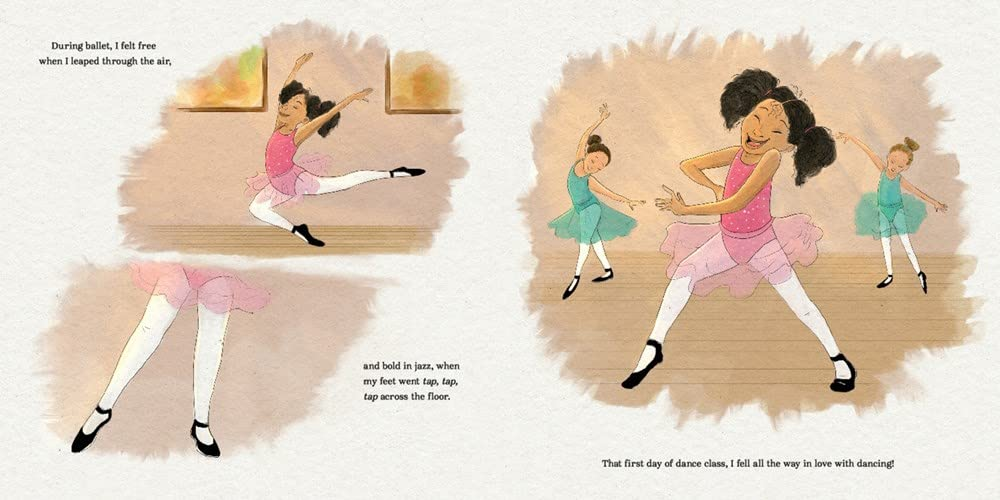
Summary: Jennifer Jones fell in love with dance in her first class at age nine. Dance was a way to express herself when she felt shy, which was often. With a white mother and a Black father, Jennifer felt conspicuous and out of place in her New Jersey hometown. When a supermarket clerk made racist remarks and told her that “girls like you don’t become dancers,” Jennifer’s mom set up a dance studio in their basement. Seeing The Wiz on Broadway showed her that people like her could be dancers, and Jennifer auditioned for the Rockettes at age 19. As there had never been a Black Rockette since the group’s start in 1925, she was up against tough odds, but in 1987, Jennifer became the first African American Rockette. She ends the book by acknowledging her family’s support of her dreams and encouraging readers to figure out what they love to do and pursue it. Includes additional information about Jennifer Jones and the Rockettes. 40 pages; grades K-4.

Pros: An inspiring story of a woman whose passion led her to break down barriers and open doors for others. The conversational tone of the story makes Jennifer feel like an old friend, encouraging kids to follow their dreams as she did hers.

Cons: A few photos would have made a nice addition.

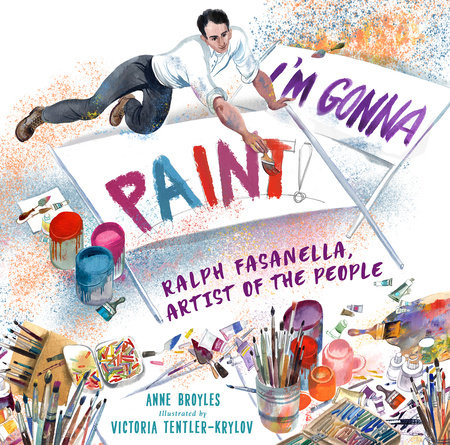
I’m Gonna Paint! Ralph Fasanella, Artist of the People by Anne Broyles, illustrated by Victoria Tentler-Krylov

Published by Holiday House

Summary:  Ralph Fasanella’s early life didn’t seem particularly auspicious for becoming a renowned artist.  The son of Italian immigrants, Ralph grew up in a tenement with five siblings and was in and out of a Catholic reform school from the age of ten.  He left school as a teenager and took a series of jobs before becoming a trade union organizer.  When he started having pain in his hands, a friend recommended drawing, and Ralph created his first art at the age of 31.  Recalling his mother’s labor activism, as well as his own union experiences, Ralph focused on working people and political messages in his paintings.  Family members supported him so he could quit working and paint full time.  His works hang today in the Smithsonian, Ellis Island, and other museums around the world, as well as in union halls and subway stations.  “I didn’t paint my paintings to hang in some rich guy’s living room,” Ralph said.  “My paintings are about people, and they should be seen by people, not hidden away.”  Includes additional information with photos and reproductions of some of Ralph’s paintings; a timeline of his life with relevant events from American history; a list of some of his paintings; and additional resources.  48 pages; grades 1-5.

Pros:  A fascinating, well-written introduction to the life of an artist who captured many important moments from American history, with illustrations that perfectly reflect Ralph’s style.  This would pair nicely with Cynthia Levinson’s The People’s Painter, about Ralph’s contemporary Ben Shahn.

Cons:  Although several museums were mentioned, I wish there had been a list of places to see Ralph Fasanella’s works.

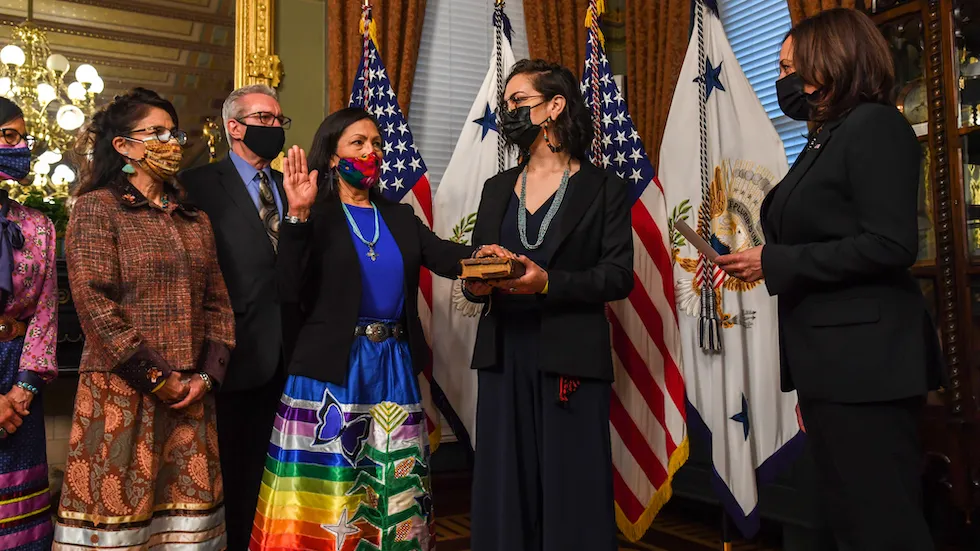
What Your Ribbon Skirt Means to Me: Deb Haaland’s Historic Inauguration by Alexis Bunten, illustrated by Nicole Neidhardt

Published by Christy Ottaviano Books

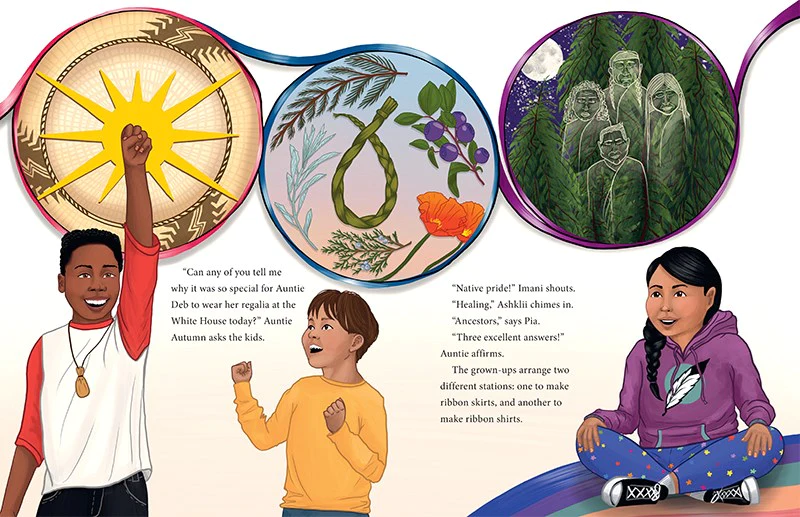
Summary:  At the end of the school day, Pia is excited to go to the Native American Center.  Everyone is gathered around the TV to watch the inauguration of Deb Haaland as Secretary of the Interior.  After the ceremony, there’s a potluck feast, then the adults help the kids make ribbon shirts or ribbon skirts, like the one Auntie Deb wore on TV.  As they work, they talk about the significance of the ribbon skirt.  When her skirt is done, Pia decides to give it to Jasmin, a new girl at the center, to help her feel welcome.  Includes additional information about Deb Haaland, with a photo of her swearing-in ceremony, as well as more about ribbon skirts and suggestions for writing a letter to the government about preserving the environment.  40 pages; ages 4-8.  

Pros:  Details about Turtle Island indigenous culture (food, prayers, clothing) are woven into this story which also does a good job of introducing Secretary of the Interior Deb Haaland.  I liked how the back matter encourages kids to take action.

Cons:  It would take me a lot longer than the time shown here to put together a ribbon skirt.


Tomfoolery!: Randolph Caldecott and the Rambunctious Coming-of-Age Children’s Books by Michelle Markel, illustrated by Barbara McClintock

Published by Chronicle Books

Summary:  In this follow-up to Balderdash! John Newbery and the Birth of Children’s Books, Michelle Markel looks at the man who was the namesake for another famous children’s literature award.  Despite a weak heart, Randolph Caldecott loved being outdoors, hanging out with animals, and capturing what he saw on paper.  His father sought to quash his love of art with a career as a banker, but Randolph kept drawing.  When offered a chance to illustrate children’s books, he went against the prevailing fashion of stilted decorations and created art with plenty of action and animals.  Kids and adults loved his work, and Randolph became an international success, his work continuing to influence illustrators 150 years later.  Includes a list of the Caldecott reproductions included in the illustrations; a list of annotations; a picture of the Caldecott medal; additional information about illustrated Victorian periodicals and the big three toy book illustrators (Caldecott, Walter Crane, and Kate Greenaway); and a list of books by Randolph Caldecott.  44 pages; grades K-3.

Pros:  This exuberant book brings Randolph Caldecott to life with beautiful illustrations inspired by his art.  It seems only fitting for this to be considered for a Caldecott medal or honor.

Cons:  There’s a great illustration of several Caldecott medalists reading their own books; I wasn’t able to identify all of them, and I wish the back matter had included a list.

On the Tip of a Wave: How Ai Weiwei’s Art Is Changing the Tide by Joanna Ho, illustrated by Catia Chien

Published by Orchard Books

Summary:  Chinese artist Ai Weiwei spent his childhood in a labor camp after his father, a renowned poet, was targeted by the government.  They lived in an underground hole, where Ai would create sculptures from the dirt.  He grew up to be an artist, studying in the US before returning to China where he was imprisoned for criticizing the government.  After his release, he moved to Germany where he uses his art to bring attention to the plight of refugees, people displaced from their homes the same way he was.  One of his most famous works was created from lifejackets left behind by refugees landing in Greece.  Ai’s art “challenged the world to see differently…[and] invited the world to take action.”  Includes four pages of additional information and photos.  48 pages; grades 3-8.

Pros:  A beautiful and moving tribute to Ai Weiwei’s work with illustrations in shades of blue and orange that incorporate photos of refugees and his art into the pictures.

Cons:  I think this would be a very difficult book for kids to understand without having a considerable amount of background knowledge.  I was pretty confused by the story until I read the information at the end. 

Game of Freedom: Mestre Bimba and the Art of Capoeira by Duncan Tonatiuh

Published by Harry N. Abrams

Summary:  Manoel dos Reis Machado, a.k.a. Bimba, loved capoeira, a sport involving martial arts-like moves done to musical accompaniment.  Involving predominantly Black players, the sport had been banned in Brazil by the all-White government who considered it barbaric.  In 1932, Bimba became Mestre Bimba when he opened a school to teach the art of capoeira, introducing a rigor and discipline that eventually made it appealing to a wealthier clientele.  It took twenty years of hard work, but in 1953, Mestre Bimba and his students were invited to do a demonstration for the president of Brazil.  This removed the last of the discrimination against capoeira, and although Mestre Bimba passed away in 1974, the sport is widely popular throughout Brazil today.  Includes a glossary, an author’s note, photos, and a bibliography.  48 pages; grades 3-6.

Pros:  Illustrated in Duncan Tonatiuh’s trademark folk-art style, this fascinating biography will have readers heading over to YouTube to see some live demonstrations of capoeira.  Tonatiuh has won both the Pura Belpré Award and Robert F. Sibert Medal, and this book could be a contender for both.

Cons:  I saw some recommendations for as young as preschool, but I would say this is definitely for upper elementary and middle school kids.