How Do You Spell Unfair? MacNolia Cox and the National Spelling Bee by Carole Boston Weatherford, illustrated by Frank Morrison

Published by Candlewick

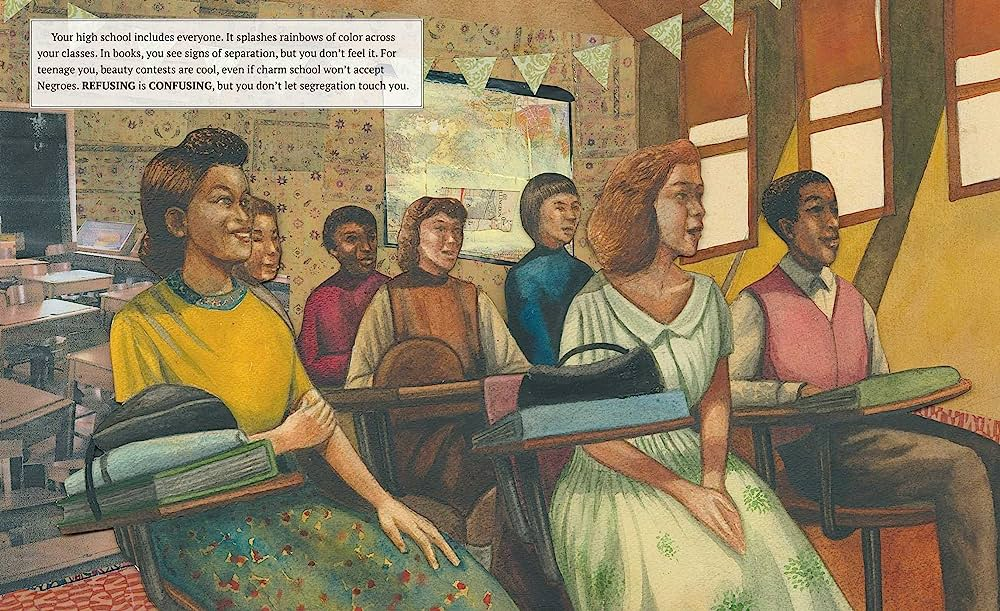
Summary:  MacNolia Cox loved reading, studying, and spelling, which paid off when she won her eighth-grade spelling bee in 1936.  This victory qualified her for the Akron, Ohio all-city bee, where her correct spelling of “voluble” made her the first African American winner of that contest and sent her to the National Spelling Bee in Washington, D.C.  After weeks of preparation, fundraising, and a bit of celebrity, MacNolia and her mother were on their way to Washington.  As they headed south, they had to move to the Blacks-only car, and in D.C., they stayed with a local doctor, since they were barred from the all-white hotel.  She and another Black girl had to enter the spelling bee stage from the back door and sit at a separate table from the other contestants.  Despite the discrimination, MacNolia succeeded, advancing to the final five before getting out on the word “nemesis” (which was questioned, since it hadn’t been on the official list).  She didn’t win, but MacNolia helped level the playing field for spellers of the future, including Zaila Avant-garde, who in 2021 became the first African American to win the Scripps National Spelling Bee.  Includes an epilogue with additional information about the fight to end racism and discrimination in spelling bees.  40 pages; grades 2-5.

Pros:  A fascinating story about a courageous girl who persevered to follow her dreams.  The text cleverly asks readers to spell words appropriate to the story, and Frank Morrison’s distinctive illustrations portray MacNolia and her family with dignity and grace.

Cons:  I was sorry to read in the epilogue that MacNolia couldn’t afford college and worked as a maid for a doctor.

Jackie Ormes Draws the Future: The Remarkable Life of a Pioneering Cartoonist by Liz Montague

Published by Random House Studio

Summary:  Jackie Ormes loved drawing from an early age and captured her dreams of adventure through her art.  After high school, she took a job as a freelance reporter for the Pittsburgh Courier, a Black newspaper, and eventually created the cartoon character Torchy Brown, a fashionable nightclub star who moved from the South to Harlem.  Torchy made people laugh but also addressed issues like racism and segregation.  When Jackie and her husband moved to Chicago, Torchy’s run ended, and Jackie had the opportunity to formally study art for the first time in her life.  Several years later, she returned to the world of comics with Patty-Jo, a six-year-old girl who spoke out about current events, and who would become Jackie’s most famous creation.  Includes additional information about Jackie Ormes and Patty-Jo, including a photo of the Patty-Jo doll, described as “America’s first upscale Black play doll,” an author’s note, and a list of selected sources.  40 pages; grades 2-5.

Pros:  A fun and insightful look at cartoonist Jackie Ormes’s life, with illustrations inspired by Jackie’s work, and an emphasis on the theme of the perseverance that led to her success.  Kids will relate to Jackie’s love of art and her determination to be successful and make a difference.

Cons:  The story ends shortly after World War II, and Jackie died in 1985; like another recent biography of Ormes, this doesn’t tell much about the second half of her life.

Contenders: Two Native Baseball Players, One World Series by Traci Sorell, illustrated by Arigon Starr

Published by Kokila

Summary:  The story opens with a key moment of the 1911 World Series: Charles Bender of the Philadelphia Athletics pitching to John Meyers of the New York Giants, who hits a double, then goes on to score the winning run of Game One.  Both Charles and John were from Native Nations, and the book goes back to trace the stories of how each one got to play in the World Series.  Charles grew up on the White Earth Reservation in Minnesota before being sent to an Indian boarding school in Philadelphia.  John’s childhood was spent on the Cahuila reservation in California.  Each endured poverty and racism as they pursued their love of baseball and eventually wound up in the major leagues.  Together, they played in nine World Series; Charles was elected to the Baseball Hall of Fame in 1953, and both were inducted into the American Indian Hall of Fame when it opened in 1972.  The book ends with a list of Native MLB players today, and the racism that’s still present with racist team mascots.  Includes an author’s note, timeline, and list of sources.  48 pages; grades 1-5.

Pros:  A fascinating look at two men who faced hardship and racism throughout their lives but rose above it to become excellent athletes who exemplified sportsmanship and teamwork.

Cons:  Kids I work with seem to have no interest in professional baseball these days.

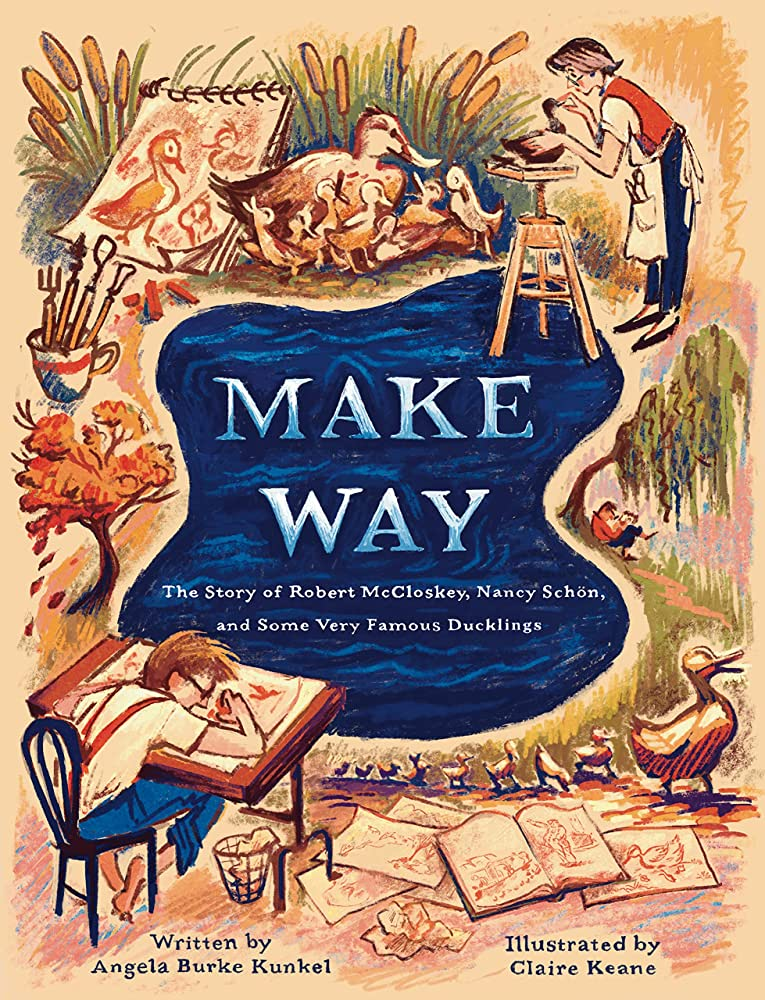
Make Way: The Story of Robert McCloskey, Nancy Schön, and Some Very Famous Ducklings by Angela Burke Kunkel, illustrated by Claire Keane

Published by Random House Studio

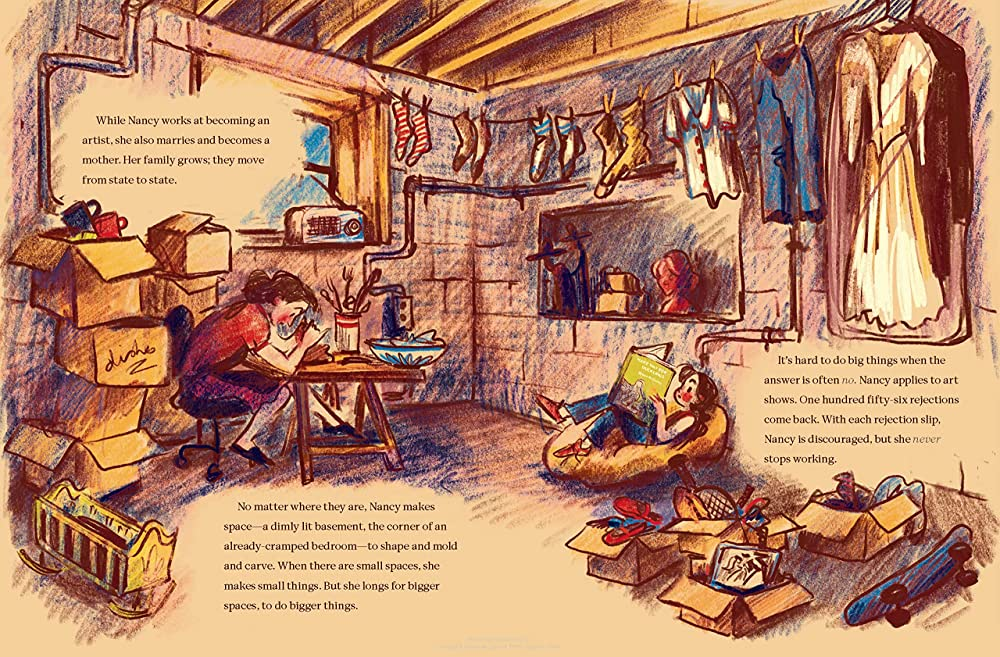
Summary:  Robert “Bob” McCloskey spent his childhood in Hamilton, Ohio, his active mind and hands always creating.  Nancy Schön spent hers–many years later–in Newton, Massachusetts, where she found solace in working with clay in art class.  Bob moved to Massachusetts to study art, and eventually wrote the classic Make Way for Ducklings.  Nancy struggled with her art for years, receiving one rejection after another, before being inspired to create a sculpture of Bob’s ducklings.  It wasn’t an easy process, but she was finally ready to unveil her project to Bob, who gave it a hesitant seal of approval.  When he saw kids interacting with the ducks, he became more enthusiastic.  The statues were installed in October 1987, and you can visit them in the Boston Public Garden today.  Includes an author’s note, timeline, and bibliography.  48 pages; ages K-4.

Pros:  A heartwarming story of two artists and the famous book and statues they created, with cozy illustrations that are reminiscent of Robert McCloskey’s books.  

Cons:  There’s a photo of several of the ducks (wearing rainbow sweaters for Pride) with the author’s note, but it would have been nice to include a photo of the entire family.

Ketanji Brown Jackson: Justice for All by Tami Charles, illustrated by Jemma Skidmore

Published by Simon and Schuster Books for Young Readers

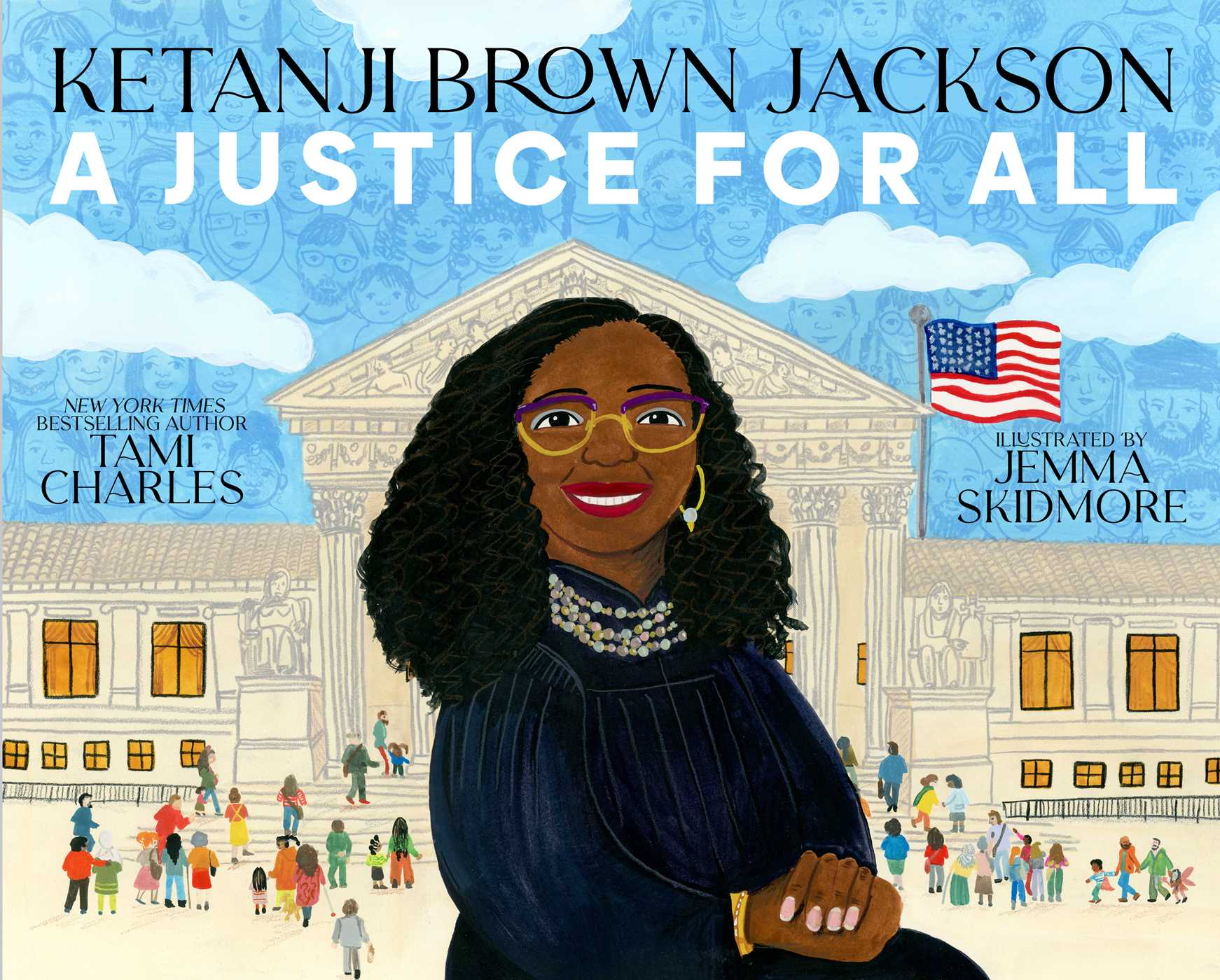
Summary:  “Every dream begins with the smallest step.”  A young girl visits the Supreme Court Building with her mother, where they see statues of the 115 justices, only six of them women, and none of those women Black…until now.  The story of Ketanji Brown Jackson’s life is told, along with the story of the ancestors who lived in Africa, then were enslaved and forced to come to America.  There’s also the story of her parents, who attended segregated schools and became the first in their families to graduate from college.  Important civil rights cases and other Black female lawyers and judges that helped Ketanji get to the Supreme Court are woven into the narrative.  “And now,” says the girl, “because of them, because of her, I know one day I will and certainly can!”.  Includes an author’s note with additional information, a list of important dates, and facts about the important people and history shown in the art.  40 pages; grades K-5.

Pros:  Like All Rise by Carole Boston Weatherford, this picture book biography of Ketanji Brown Jackson shows not only her own hard work and determination to overcome racist and sexist obstacles, but also the people who came before her that made her rise possible.  The poetic text and illustrations convey big ideas but are presented in ways that make them easily understood by younger readers.

Cons:  While the author’s note mentions how she was inspired by a photo of Brown’s daughter Leila Jackson looking at her mother with loving pride, the photo is not in the book.

The Story of the Saxophone by Lesa Cline-Ransome, illustrated by James E. Ransome

Published by Holiday House

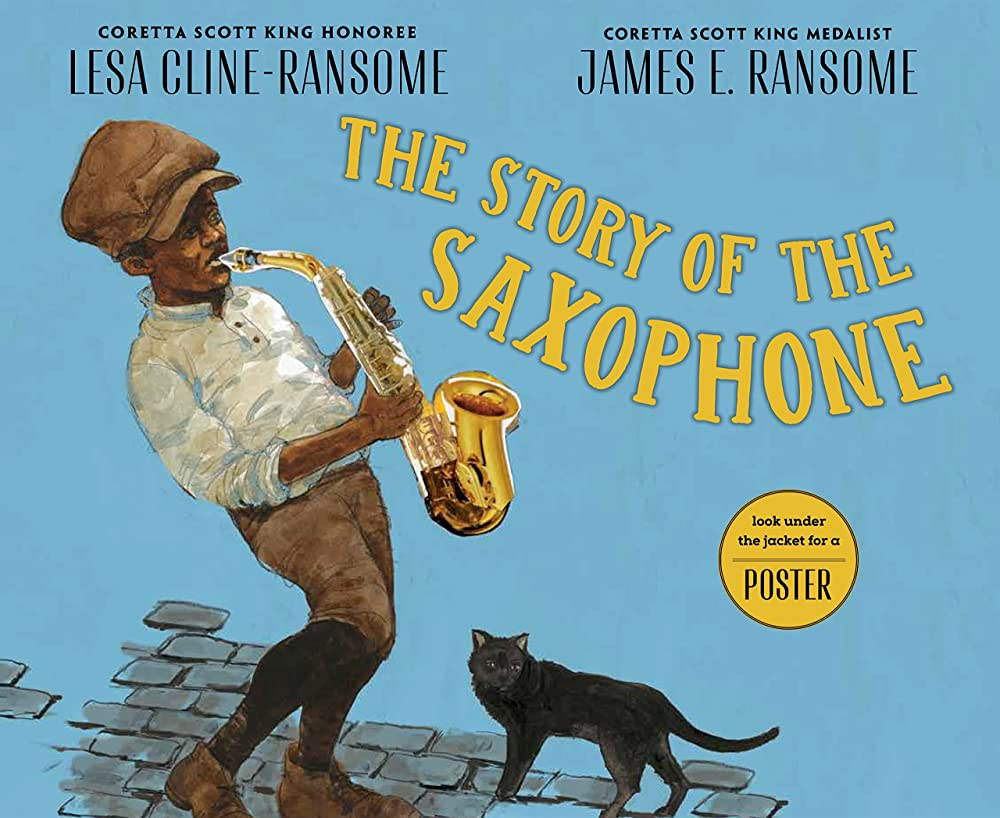
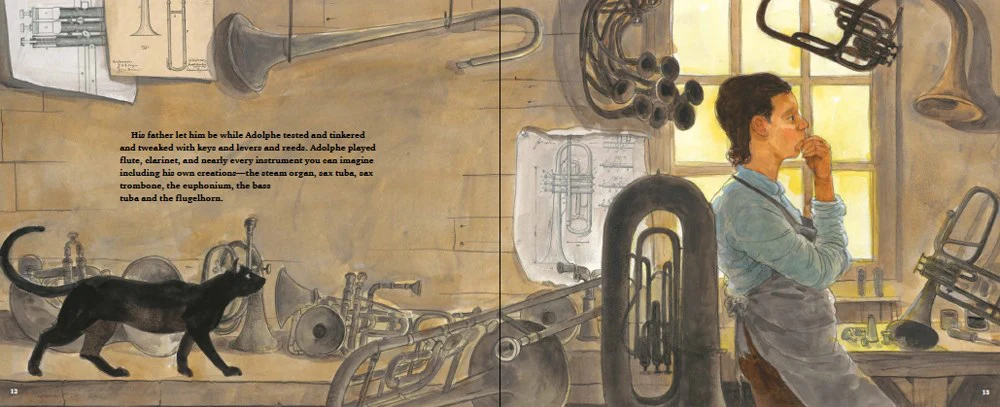
Summary:  Although the saxophone is known for its role in American jazz music, its story starts in 19th-century Belgium with a young man named Joseph-Antoine Adelphe Sax.  The son of an instrument maker, Adolphe was curious and inventive.  He loved creating new instruments and decided that symphonies and marching bands needed one whose volume was between a clarinet and a trumpet.  The result, the saxophone, was mostly met with disdain or even downright hatred until the French composer Hector Berlioz fell in love with it.  Soon, the saxophone was sweeping through regimental bands all over Europe.  When France went to war with Mexico in 1861, a member of the Mexican Cavalry Band got his hands on a saxophone and eventually brought it to New Orleans, where jazz musicians embraced it and continue to do so today.  Includes portraits of jazz saxophonists on the endpapers.  40 pages; grades 1-5.

Pros:  This would make an excellent addition to a music library, and budding saxophonists will find the history of their instrument inspiring.  James Ransome’s illustrations bring the various characters and time periods to life.

Cons:  I was looking forward to additional information about Sax and his instrument, with maybe a timeline and additional resources, but there were none of those things.

The Fire of Stars: The Life and Brilliance of the Woman Who Discovered What Stars Are Made Of by Kirsten W. Larson, illustrated by Katherine Roy

Published by Chronicle Books

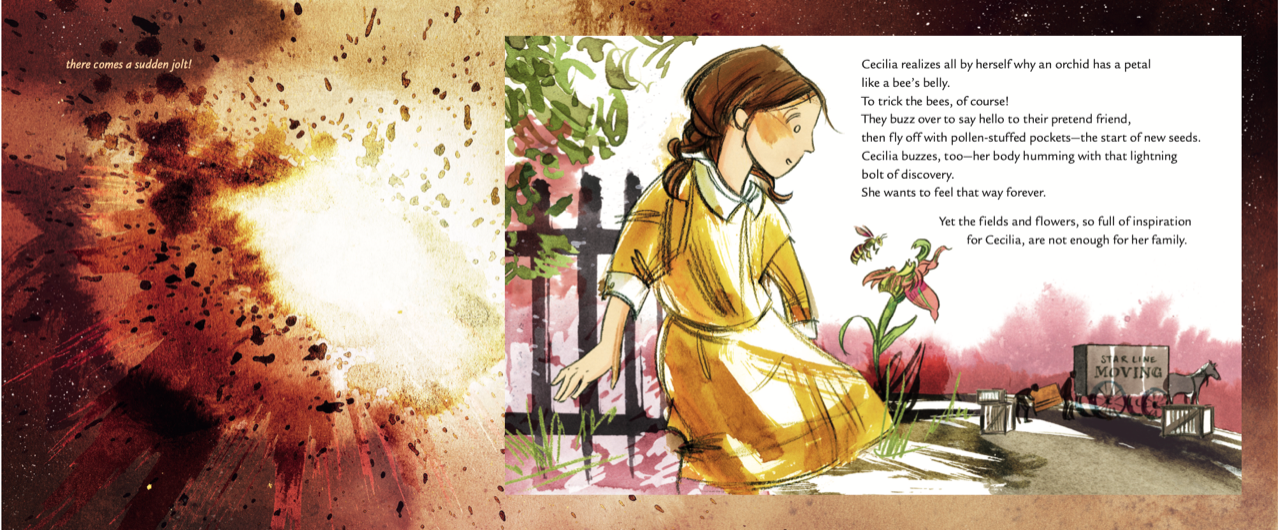
Summary:  Cecilia Payne’s curiosity about the natural world didn’t get much support when she was growing up in England.  Her family moved from the country, where she loved to explore nature, to London so her brother could go to school in the city.  Cecilia was sent to a religious school that didn’t offer any of the math and science classes that she loved.  She went on to study at Cambridge, where she switched her focus from botany to astronomy after hearing a talk by astronomer Arthur Eddington.  There was no place for her at Cambridge after graduation, so she moved to the other Cambridge (Harvard), where she was surrounded by like-minded women scientists.  Persistence with her research paid off as she made important discoveries about what the stars are made of, discoveries that fired up her imagination to ask even more questions.  Includes additional information about both Cecilia Payne and the birth of stars, as well as a timeline and a bibliography.  48 pages; grades 2-5.

Pros:  This fascinating biography is enhanced by the beautiful illustrations that show the parallels between Cecilia Payne’s life and the birth of a star.  A great read for Women’s History Month.

Cons:  There wasn’t much about Payne’s research after she discovered what stars are made of, a discovery she made at the age of 25.

Jovita Wore Pants: The Story of a Mexican Freedom Fighter by Aida Salazar, illustrated by Molly Mendoza

Published by Scholastic Press

Summary:  Jovita wanted to wear pants, but girls growing up in 1910’s rural Mexico were expected to wear dresses.  She played with her brothers every chance she got, learning about the countryside: how to find food and water, where dangerous animals lived, and how to read the weather.  When revolution came to her village, her father and brothers joined the fight, but Jovita wasn’t allowed to.  War brought one tragedy after another, as her house was burned down, she was captured and held hostage for a time, and her father and brothers were killed.  After their deaths, Jovita cut her hair, put on pants, and joined the revolution as a soldier named Juan.  Her knowledge of the countryside made her a natural leader, and she fought for six years before finally agreeing to a truce with the government.  The President of Mexico was so impressed with her fighting skills that he invited her to a meeting.  She went on her own terms, still wearing the pants she loved.  Includes five pages of additional information with photos, plus notes from the author and illustrator.  48 pages; grades 1-5.

Pros:  Badass doesn’t begin to describe Jovita Valdovinos, whose legendary feats make for inspiring Women’s History Month reading.  The colorful illustrations capture her energy, and the additional information makes for some very interesting reading.

Cons:  Despite her heroics, Jovita’s early life sounds pretty terrible.

A First Time for Everything by Dan Santat

Published by First Second

Summary:  Dan Santat’s graphic memoir tells the story of his trip to Europe in 1989, the summer before he started high school.  Flashbacks show difficult times in middle school that have made him lose confidence in himself and want to stay invisible.  Surrounded by a supportive group of kids and an awesome teacher/chaperone, Dan flourishes in Europe, having adventures in several different countries that include sampling beer, smoking a cigarette, getting lost one night and stealing a bicycle to get home, and falling in love.  By the end of the trip, he’s experienced heartbreak but also grown and become more confident, presumably leading him to a high school experience very different from middle school.  Includes nine pages of photos and an author’s note that tells more about the trip and how he has kept in touch with the friends he made there.  320 pages; grades 5-9.

Pros:  This highly entertaining memoir will have you packing your bags for a European vacation.  Dan perfectly captures all the angst and bravado of being 13 years old, and of course his artwork is outstanding, showing many European landmarks with incredible detail.

Cons:  I was definitely planning to buy this for my elementary school library, but after reading it, I think it will be appreciated more by middle school readers.

The Indestructible Tom Crean: Heroic Explorer of the Antarctic by Jennifer Thermes

Published by Viking Books for Young Readers

Summary:  Tom Crean grew up on the coast of Ireland and went to sea like most of the other young men around him.  But his fate took an unusual turn when he volunteered to be a last-minute replacement on board Robert Scott’s ship Discovery sailing for Antarctica.  This was the first of three trips Tom took to Antarctica: he was also part of Captain Scott’s attempt to be the first to reach the South Pole and was on board the ill-fated Endurance with Ernest Shackleton.  In fact, Tom was one of three men responsible for the rescue for the rest of the Endurance crew.  Shackleton tried to convince Tom to go on one more Antarctic exploration, but by then Tom had settled down in Ireland, opening the South Pole Pub (still operating today) with his wife, and raising three children.  Includes an afterword with additional information, a timeline, and a list of sources.  56 pages; grades 2-5.

Pros:  I love Jennifer Thermes’ illustrations, especially her maps, and am delighted to see on Amazon that she has a book about the history of America coming out this summer.  The illustrations are delightful, and the story is riveting, with plenty of back matter to make it a pretty complete biography.

Cons: Made Antarctica seem unappealing as a travel destination.