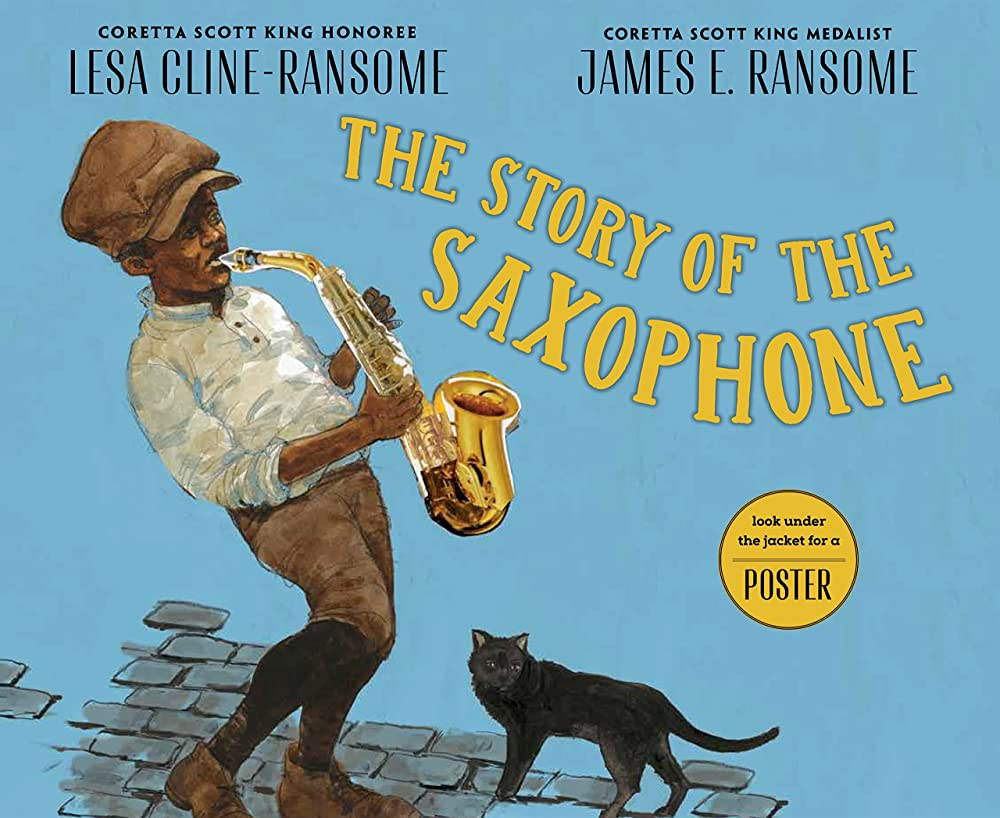
The Story of the Saxophone by Lesa Cline-Ransome, illustrated by James E. Ransome

Published by Holiday House

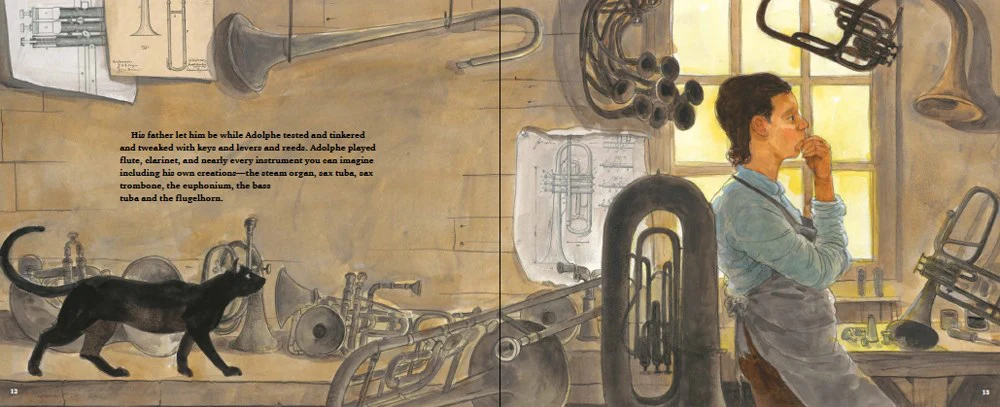
Summary:  Although the saxophone is known for its role in American jazz music, its story starts in 19th-century Belgium with a young man named Joseph-Antoine Adelphe Sax.  The son of an instrument maker, Adolphe was curious and inventive.  He loved creating new instruments and decided that symphonies and marching bands needed one whose volume was between a clarinet and a trumpet.  The result, the saxophone, was mostly met with disdain or even downright hatred until the French composer Hector Berlioz fell in love with it.  Soon, the saxophone was sweeping through regimental bands all over Europe.  When France went to war with Mexico in 1861, a member of the Mexican Cavalry Band got his hands on a saxophone and eventually brought it to New Orleans, where jazz musicians embraced it and continue to do so today.  Includes portraits of jazz saxophonists on the endpapers.  40 pages; grades 1-5.

Pros:  This would make an excellent addition to a music library, and budding saxophonists will find the history of their instrument inspiring.  James Ransome’s illustrations bring the various characters and time periods to life.

Cons:  I was looking forward to additional information about Sax and his instrument, with maybe a timeline and additional resources, but there were none of those things.

The Fire of Stars: The Life and Brilliance of the Woman Who Discovered What Stars Are Made Of by Kirsten W. Larson, illustrated by Katherine Roy

Published by Chronicle Books

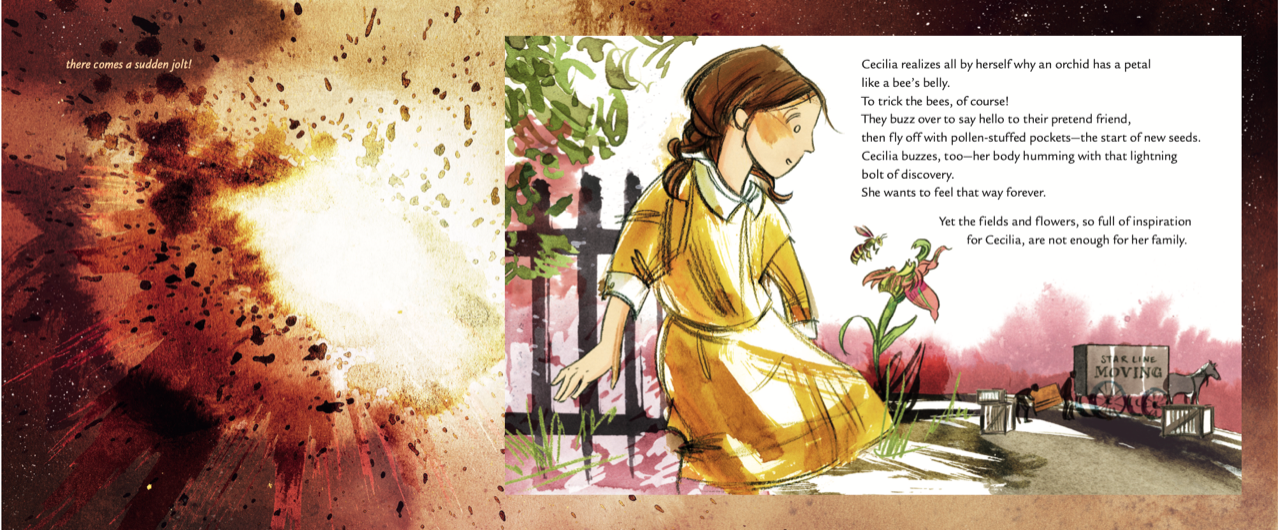
Summary:  Cecilia Payne’s curiosity about the natural world didn’t get much support when she was growing up in England.  Her family moved from the country, where she loved to explore nature, to London so her brother could go to school in the city.  Cecilia was sent to a religious school that didn’t offer any of the math and science classes that she loved.  She went on to study at Cambridge, where she switched her focus from botany to astronomy after hearing a talk by astronomer Arthur Eddington.  There was no place for her at Cambridge after graduation, so she moved to the other Cambridge (Harvard), where she was surrounded by like-minded women scientists.  Persistence with her research paid off as she made important discoveries about what the stars are made of, discoveries that fired up her imagination to ask even more questions.  Includes additional information about both Cecilia Payne and the birth of stars, as well as a timeline and a bibliography.  48 pages; grades 2-5.

Pros:  This fascinating biography is enhanced by the beautiful illustrations that show the parallels between Cecilia Payne’s life and the birth of a star.  A great read for Women’s History Month.

Cons:  There wasn’t much about Payne’s research after she discovered what stars are made of, a discovery she made at the age of 25.

Jovita Wore Pants: The Story of a Mexican Freedom Fighter by Aida Salazar, illustrated by Molly Mendoza

Published by Scholastic Press

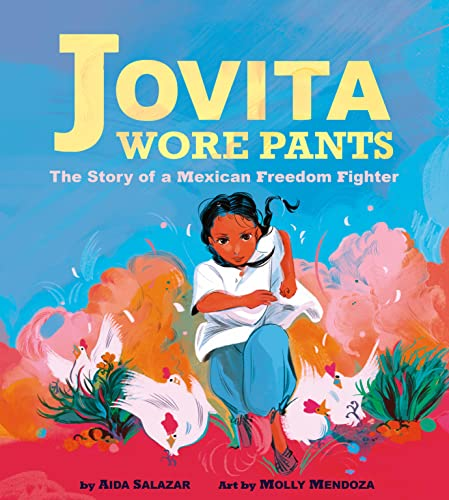
Summary:  Jovita wanted to wear pants, but girls growing up in 1910’s rural Mexico were expected to wear dresses.  She played with her brothers every chance she got, learning about the countryside: how to find food and water, where dangerous animals lived, and how to read the weather.  When revolution came to her village, her father and brothers joined the fight, but Jovita wasn’t allowed to.  War brought one tragedy after another, as her house was burned down, she was captured and held hostage for a time, and her father and brothers were killed.  After their deaths, Jovita cut her hair, put on pants, and joined the revolution as a soldier named Juan.  Her knowledge of the countryside made her a natural leader, and she fought for six years before finally agreeing to a truce with the government.  The President of Mexico was so impressed with her fighting skills that he invited her to a meeting.  She went on her own terms, still wearing the pants she loved.  Includes five pages of additional information with photos, plus notes from the author and illustrator.  48 pages; grades 1-5.

Pros:  Badass doesn’t begin to describe Jovita Valdovinos, whose legendary feats make for inspiring Women’s History Month reading.  The colorful illustrations capture her energy, and the additional information makes for some very interesting reading.

Cons:  Despite her heroics, Jovita’s early life sounds pretty terrible.

A First Time for Everything by Dan Santat

Published by First Second

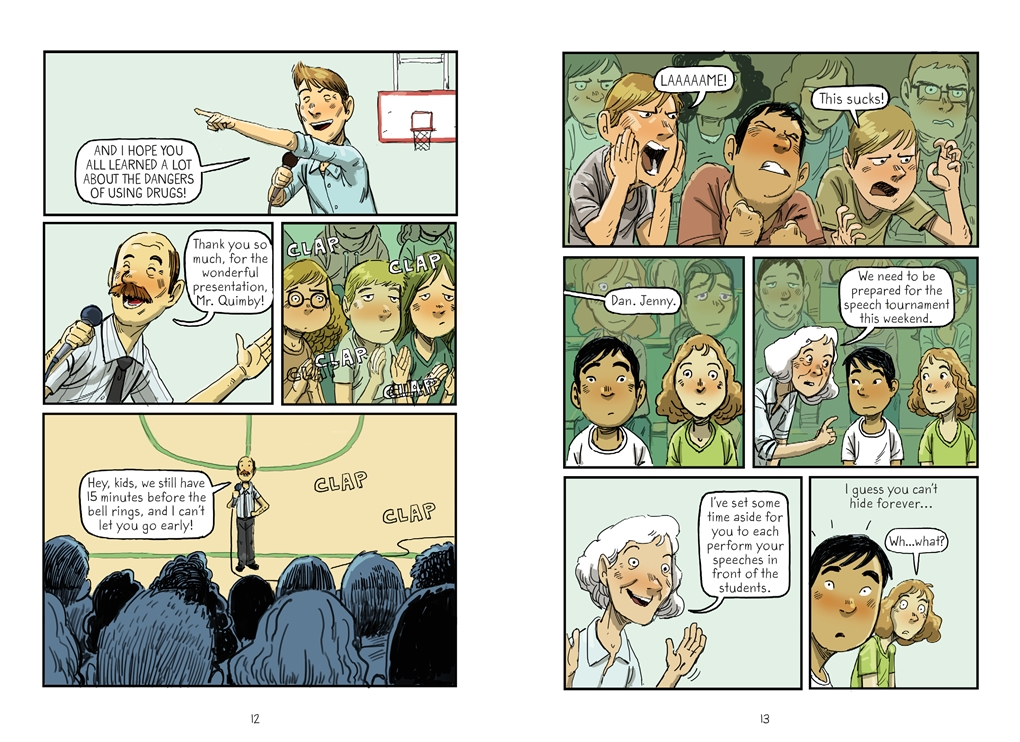
Summary:  Dan Santat’s graphic memoir tells the story of his trip to Europe in 1989, the summer before he started high school.  Flashbacks show difficult times in middle school that have made him lose confidence in himself and want to stay invisible.  Surrounded by a supportive group of kids and an awesome teacher/chaperone, Dan flourishes in Europe, having adventures in several different countries that include sampling beer, smoking a cigarette, getting lost one night and stealing a bicycle to get home, and falling in love.  By the end of the trip, he’s experienced heartbreak but also grown and become more confident, presumably leading him to a high school experience very different from middle school.  Includes nine pages of photos and an author’s note that tells more about the trip and how he has kept in touch with the friends he made there.  320 pages; grades 5-9.

Pros:  This highly entertaining memoir will have you packing your bags for a European vacation.  Dan perfectly captures all the angst and bravado of being 13 years old, and of course his artwork is outstanding, showing many European landmarks with incredible detail.

Cons:  I was definitely planning to buy this for my elementary school library, but after reading it, I think it will be appreciated more by middle school readers.

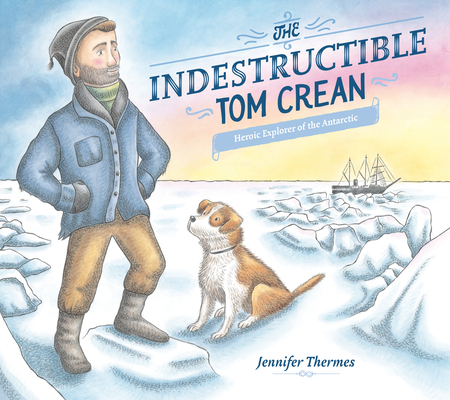
The Indestructible Tom Crean: Heroic Explorer of the Antarctic by Jennifer Thermes

Published by Viking Books for Young Readers

Summary:  Tom Crean grew up on the coast of Ireland and went to sea like most of the other young men around him.  But his fate took an unusual turn when he volunteered to be a last-minute replacement on board Robert Scott’s ship Discovery sailing for Antarctica.  This was the first of three trips Tom took to Antarctica: he was also part of Captain Scott’s attempt to be the first to reach the South Pole and was on board the ill-fated Endurance with Ernest Shackleton.  In fact, Tom was one of three men responsible for the rescue for the rest of the Endurance crew.  Shackleton tried to convince Tom to go on one more Antarctic exploration, but by then Tom had settled down in Ireland, opening the South Pole Pub (still operating today) with his wife, and raising three children.  Includes an afterword with additional information, a timeline, and a list of sources.  56 pages; grades 2-5.

Pros:  I love Jennifer Thermes’ illustrations, especially her maps, and am delighted to see on Amazon that she has a book about the history of America coming out this summer.  The illustrations are delightful, and the story is riveting, with plenty of back matter to make it a pretty complete biography.

Cons: Made Antarctica seem unappealing as a travel destination.

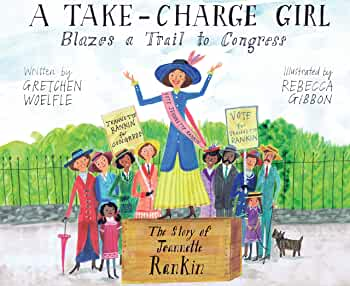
A Take-Charge Girl Blazes a Trail to Congress: The Story of Jeannette Rankin by Gretchen Woelfle, illustrated by Rebecca Gibbon

Published by Calkins Creek

Summary:  Jeannette Rankin was a take-charge girl from the start, helping out on her Montana ranch wherever she could.  Traditional female roles didn’t appeal to her, but social justice did, and she moved from working at a settlement house to campaigning for women’s suffrage.  After a victory for the cause in Montana, Jeannette decided to expand her influence by running for Congress.  On November 7, 1916, Jeannette won the election, becoming the first U.S. Congresswoman.  Five months later, she took her seat in the House of Representatives as a representative from Montana, declaring, “I may be the first woman member of Congress, but I won’t be the last.”  40 pages; grades 1-5.  Includes additional information about Jeannette Rankin, a timeline of her life, and additional resources.

Pros:  I’ve been working on a picture book biography of Jeannette Rankin off and on for the last few years, and this book is far better than anything I’ve been able to come up with.  The writing and illustrations are lively and capture Jeannette’s can-do spirit.

Cons:  To me, one of the most interesting things about Jeannette is that she voted against both World War I and World War II (the only member of Congress to do so for WWII), which was political suicide but supported her pacifist beliefs.  This part of her career is relegated to the back matter.

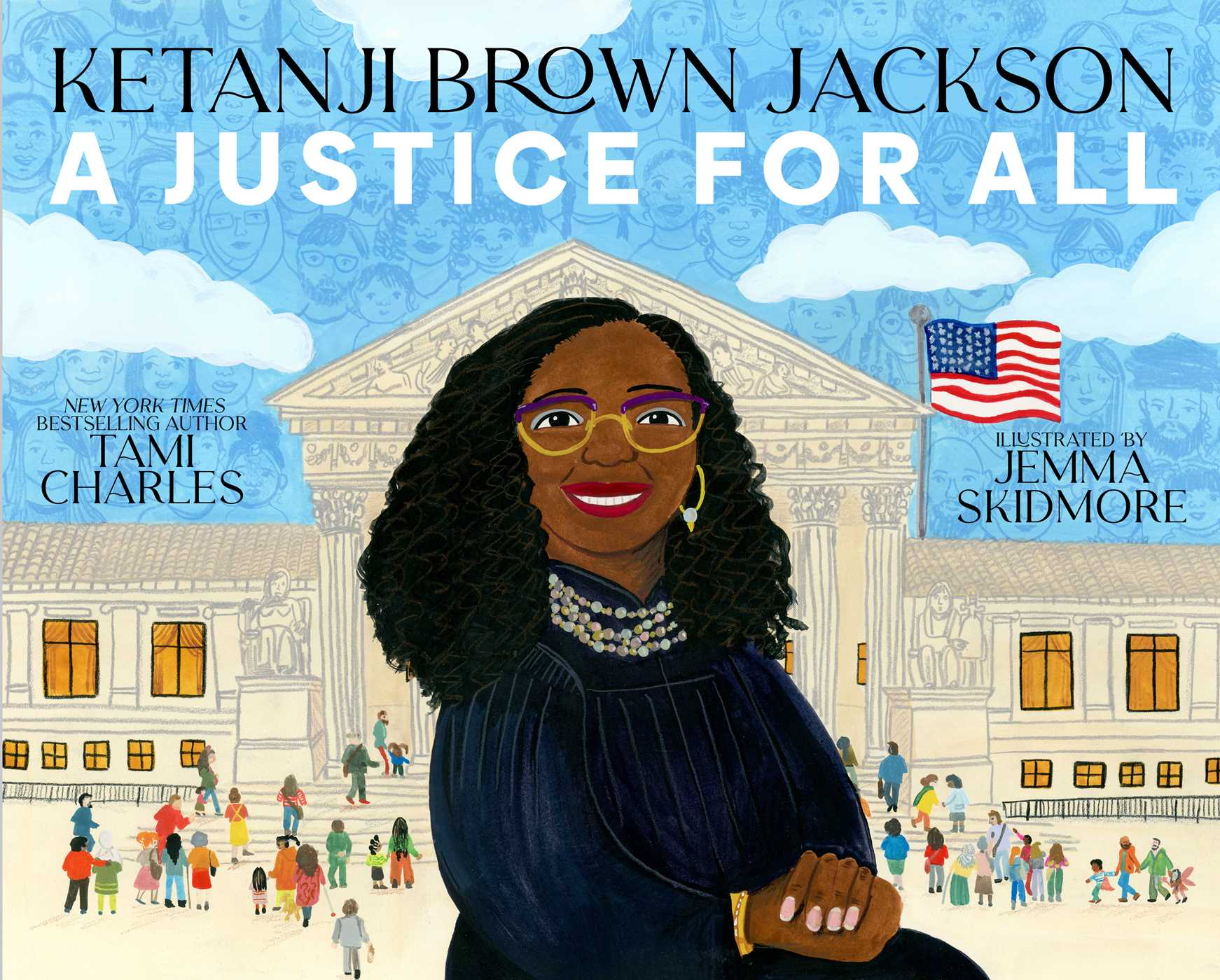
All Rise: The Story of Ketanji Brown Jackson by Carole Boston Weatherford, illustrated by Ashley Evans

Published by Crown Books for Young Readers

Summary:  Our newest Supreme Court Justice gets her own picture book biography with the repeating refrain of “she rose.”  Ketanji rose from a childhood filled with the love and support of parents and grandparents who took pride in their heritage and valued education.  She rose to overcome teachers who made fun of her name and discouraged her from applying to Harvard to follow her dream of becoming a lawyer and then a judge.  And ultimately, she rose to the challenge of four days of tough questions by the Senate Judiciary Committee to become the first Black woman Supreme Court justice.  Includes a letter from the author to her granddaughter and “all our daughters” and a timeline of Ketanji Brown Jackson’s life.  40 pages; grades K-4.

Pros:  This inspiring biography will help kids get to know Ketanji Brown Jackson.  Her own quotes are sprinkled throughout the text, adding her voice to her story. 

Cons:  No photos.

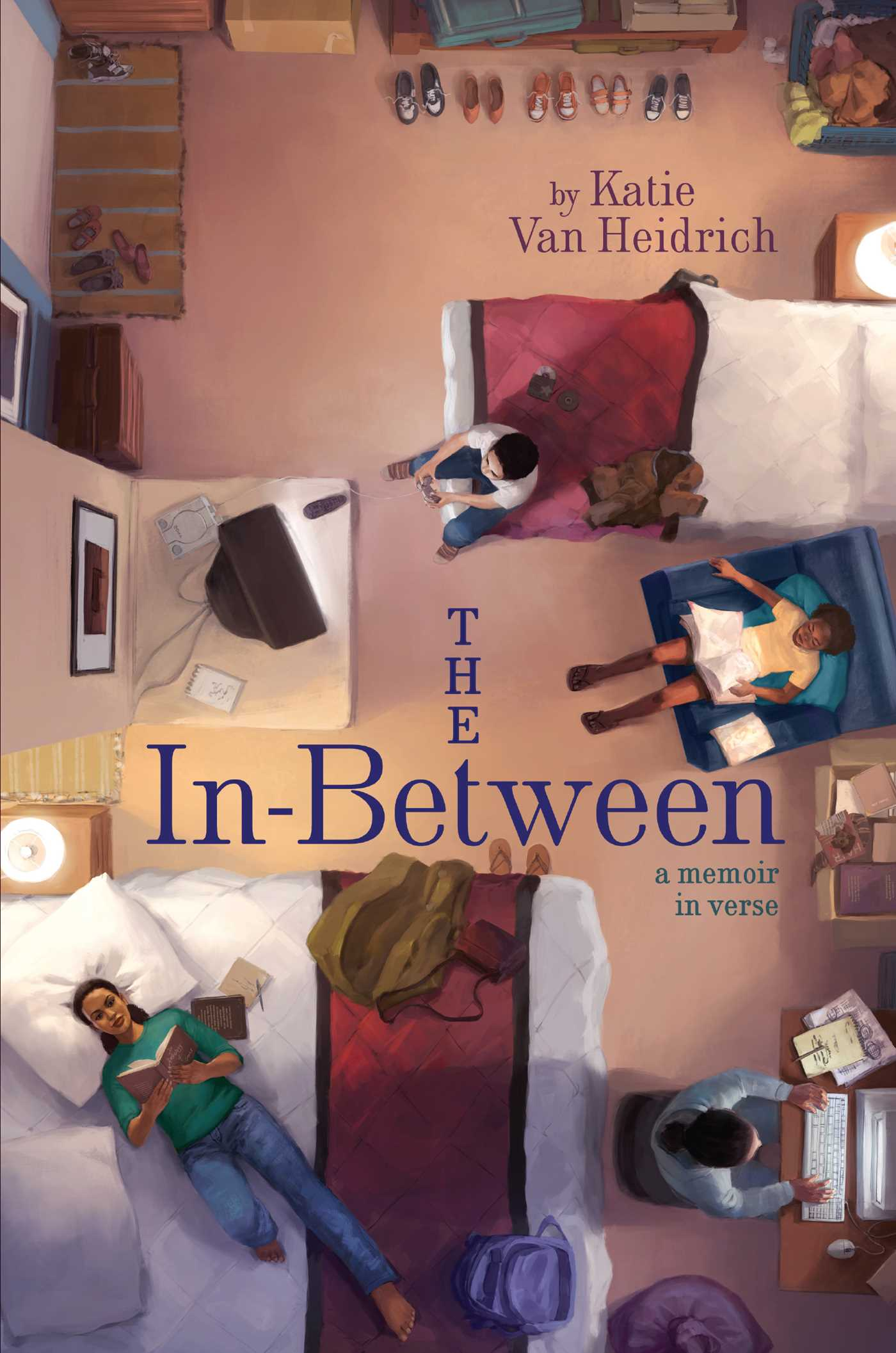
The In-Between: A Memoir in Verse by Katie Van Heidrich

Published by Aladdin

Summary:  In this debut memoir in verse, Katie Van Heidrich writes about a six-week period when she lived with her mother and two younger siblings in a motel room.  It’s an “in-between” time when her mom is between jobs and unable to keep their apartment.  As Katie tries to adjust to her circumstances while pretending everything is normal to her seventh-grade classmates and teachers, she reflects on the past and her relationship with the members of her family.  Her Black mother and white father have always worked to be in her life, even after they divorced, and she recognizes how her dad has provided structure while her mom has allowed her to dream.  The kids spend weekends with their dad, who’s recently remarried and living in the suburbs, but Katie slowly learns the reasons why they can’t live there all the time.  By the time a tenuous happy ending arrives, Katie’s learned that she can’t always please her parents and that her voice is an important part of the family.  Includes seven pages of photos.  304 pages; grades 5-8.

Pros:  Katie Van Heidrich has a masterful debut with verse that is both expressive and concise and beautiful pacing that slowly reveals each family member’s personality and how the past has brought them to the present moment.

Cons:  While there’s nothing in this book that makes it inappropriate for upper elementary, the emotions are so pitch-perfect for middle schoolers that it might be better appreciated by older readers.

Cut! How Lotte Reiniger and a Pair of Scissors Revolutionized Animation by C. E. Winters, illustrated by Matt Schu

Published by Greenwillow Books

Summary:  Who created the first full-length animated film, inventing the multiplane camera and storyboarding in the process?  If you answered Walt Disney, it’s time for you to pick up this book and learn about Lotte Reiniger, a German artist who developed a love of shadow puppetry as a child and became renowned for her creations.  After studying filmmaking and stop-motion animation with director Paul Wegener, she started making short animated films but didn’t think any audience would be interested in a feature-length one.  A friend convinced her to try, though, and she spent the next three years creating The Adventures of Prince Achmed. When it was finally completed in 1926, she had trouble finding a theater that would show it, but it eventually became a big success.  Lotte went on to make approximately sixty films, including one in a basement during the bombing of Berlin before she emigrated to England.  Includes a timeline, a list of sources, and an author’s note with additional information about Lotte.  40 pages; grades 1-5.

Pros:  Don’t forget, March is Women’s History Month, and this would make a fascinating read-aloud, maybe shown with the Prince Achmed trailer.  The story is well-told, and the illustrations capture the feel of Lotte’s work with film and silhouettes.

Cons:  The thought of making a film like this makes me want to lose my mind.  Lotte must have had incredible patience.

Just Jerry: How Drawing Shaped My Life by Jerry Pinkney

Published by Little, Brown Books for Young Readers

Summary:  Award-winning illustrator Jerry Pinkney was working on this memoir at the time of his death in 2021.  He writes of his childhood, growing up in the Germantown section of Philadelphia in the 1940’s and 1950’s, surrounded by a chaotic but loving family and neighborhood.  Due to dyslexia (the book is written in a font created for those with dyslexia), he struggled in school, but always found solace in sketching and art.  His memories of home, school, and summers at the Jersey shore describe the racism he and his family had to deal with but also the support he got from his family, friends, and members of the community. Thanks to hard work and a little luck, he finds his way to beginning an art career by the end of the book. The epilogue describes how his early life led to his success as an illustrator. 160 pages; grades 3-7.

Pros:  Jerry Pinkney has created a wonderful memoir, showing what it was like to grow up in a loving family that also struggled with racism; with an undiagnosed learning disability; and with a passion and talent for art.  He emphasizes the positives in his childhood without shying away from some of the difficulties.

Cons:  Because Jerry died before this was completed, the illustrations are his rough sketches.  I enjoyed them but couldn’t help feeling wistful about what might have been.