Two chapter books for younger elementary kids

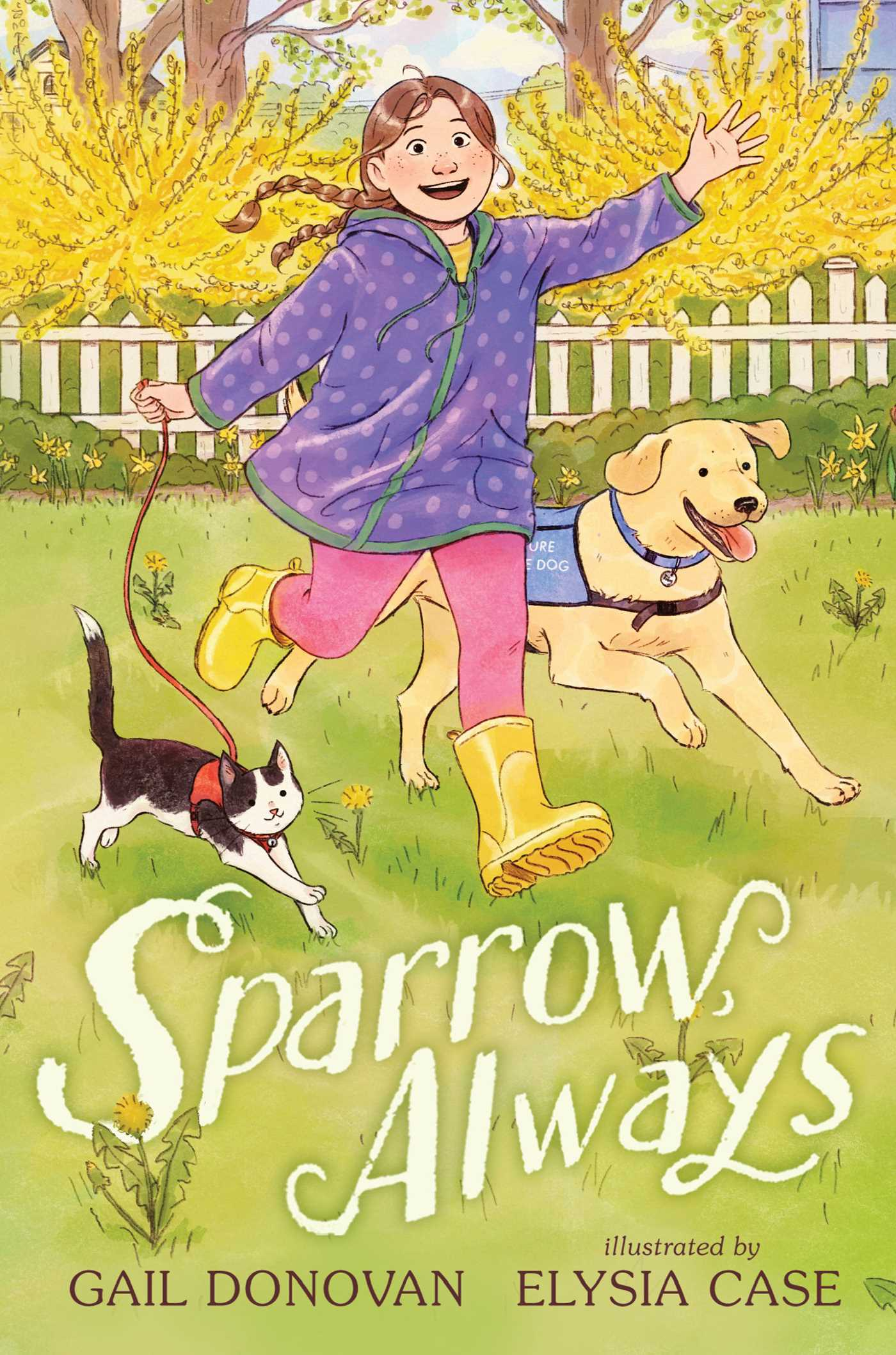
Sparrow, Always by Gail Donovan, illustrated by Elysia Case (Atheneum Books for Young Readers, 160 pages, grades 2-5). Sparrow’s dealing with a lot in fourth grade: a new baby brother, a best friend who seems to be growing up faster than Sparrow is, and some difficulties following directions at school that get her placed in a friendship group with a counselor. She loves animals, though, and the incentive of getting to helping Toby, the new puppy next door, pass his guide dog test motivates her to do better in school. Despite her difficulties, Sparrow’s heart is in the right place, and as fourth grade ends, she realizes that she’s a good friend, sister, and dog trainer, and that if she stays true to herself, she’ll be okay in fifth. Readers will enjoy the last chapter which tells about the guide dog test in Toby’s own voice.

I missed book one of this series, Sparrow Being Sparrow, which came out in 2024. Books 2 and 3 were released together, and I accidentally read book 3, but no prior knowledge was needed for me to thoroughly enjoy it. Sparrow has a Ramona Quimby vibe, and as I’ve said before, I always like discovering real middle grade books about third and fourth graders, which tend to be a bit of a rarity. Unfortunately, I find it hard to pry my students away from graphic novels long enough to read a book like this one, but I know there are many who will relate to and enjoy Sparrow’s adventures if they give her a try.

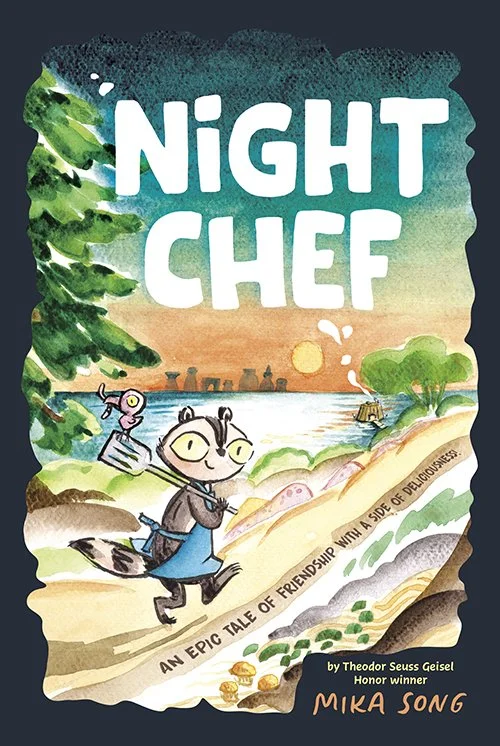
Night Chef by Mika Song (Random House Graphic, 160 pages, grades 1-4). The Night Chef is a raccoon who has learned cooking by living in the walls of a restaurant. After saving a baby crow that she names Ichi, the Night Chef decides to go on a journey to return Ichi to his flock. Along the way, the chef does a cooking stint at an animal-run restaurant called Mole’s Hole that’s being terrorized by an owl, travels as a stowaway on a train (more cooking, to pay her fare), and finally finds the crows and returns Ichi. On the way home, she stops back at the Mole’s Hole where she’s able to rescue them from the owl’s tyranny, aided by Ichi and the crows who return at just the right moment. The Night Chef learns about her early connection to the crows and discovers that she belongs at the Mole’s Hole, creating delicacies for the animals.

This cute animal graphic novel is sure to be popular with early elementary kids. It took me a minute to understand Night Chef’s circumstances and relationship to humans, but I loved all her animal adventures and the way she used her cooking talents to help herself and others, and the ending was extremely satisfying.

Early reader graphic novels: two mysteries and quite possibly the weirdest book ever!

Cabin Head and Tree Head by Scott Campbell (Tundra Books, 88 pages, grades K-4). Obviously, Cabin Head is a creature with a cabin on his head, complete with a family inside and smoke coming out of the chimney, and Tree Head likewise has a tree on his (aww, look at the kid in the tire swing!). They’re best friends who also enjoy hanging out with other members of their community like Library Head, Pool Head, Volcano Head, and Outhouse Head. In a series of stories, they show that they may not be the brightest lightbulb heads in the chandelier head, but they are loyal friends and funny storytellers. Readers will cheer at the declaration on the final page: “Cabin Head and Tree Head shall return for more wonderful book times.”

Around page 11, I paused to consider: is this the weirdest book I have ever read? I mean, we do have the Noodleheads, not to mention a hit series based on the premise of a dog’s head being attached to a man’s body. But Cabin Head and Tree Head are definitely in the running for weirdest, but also for funniest, and I found myself laughing aloud throughout the book, particularly at the illustrations. I predict great things for these two, so be sure to stock up and keep an eagle eye out for book 2.

Detective Beans and the Case of the Missing Hat by Li Chen (Andrews McMeel, 208 pages, grades 1-4). Beans is an adorable cat detective who sets out to solve the case of the mystery note giver when he finds a series of encouraging notes stuck to his stuff. He’s derailed from this case almost immediately, though, when his lucky detective hat goes missing. Beans spends the day traveling around town, tracking down clues, generally just one step behind the hat as it’s passed from one owner to the next. He finally gets it back, and in the process accidentally catches a wanted diamond thief. The last few pages remind the reader that the mystery note giver still hasn’t been identified, but perhaps this mystery is unraveled in book 2, which came out earlier this year.

This is actually a 2024 book, but I was unable to resist the cute cover, and the rest of the book did not disappoint. Kids will love the artwork, and the story is simple yet engaging enough to hook those who are just starting to read independently. 

Detective Stanley and the Mystery Museum by Hannah Tunnicliffe, illustrated by Erica Harrison (Flying Eye Books, 64 pages, grades 1-4). Detective Stanley is enjoying his first morning of retirement from the Narlybone Criminal Investigation Department when a letter arrives at his doorstep begging him to come to the Narlybone Museum and figure out who’s behind the break-in there. Unable to resist a heartfelt plea–despite having to leave his pancakes behind–Stanley heads to the museum, where he finds a big mess but no stolen items. When he’s framed for the theft of a police officer’s watch, Stanley unexpectedly winds up in jail. From his cell, he’s able to puzzle out what really happened at the museum and convince a police officer to accompany him back to the scene of the crime. There, he unmasks the real thief in dramatic fashion and is able to return to his pancakes in time for supper. Includes information on Piet Mondrian, whose artwork is featured in the story, as well as a preview of book 2.

Another fun mystery for early readers, this one had a surprising number of twists for such a short story, some sly humor, and artwork full of cute animals that brought to mind Richard Scarry’s work as they go about their day.

A ghostly vacation and a creepy operation

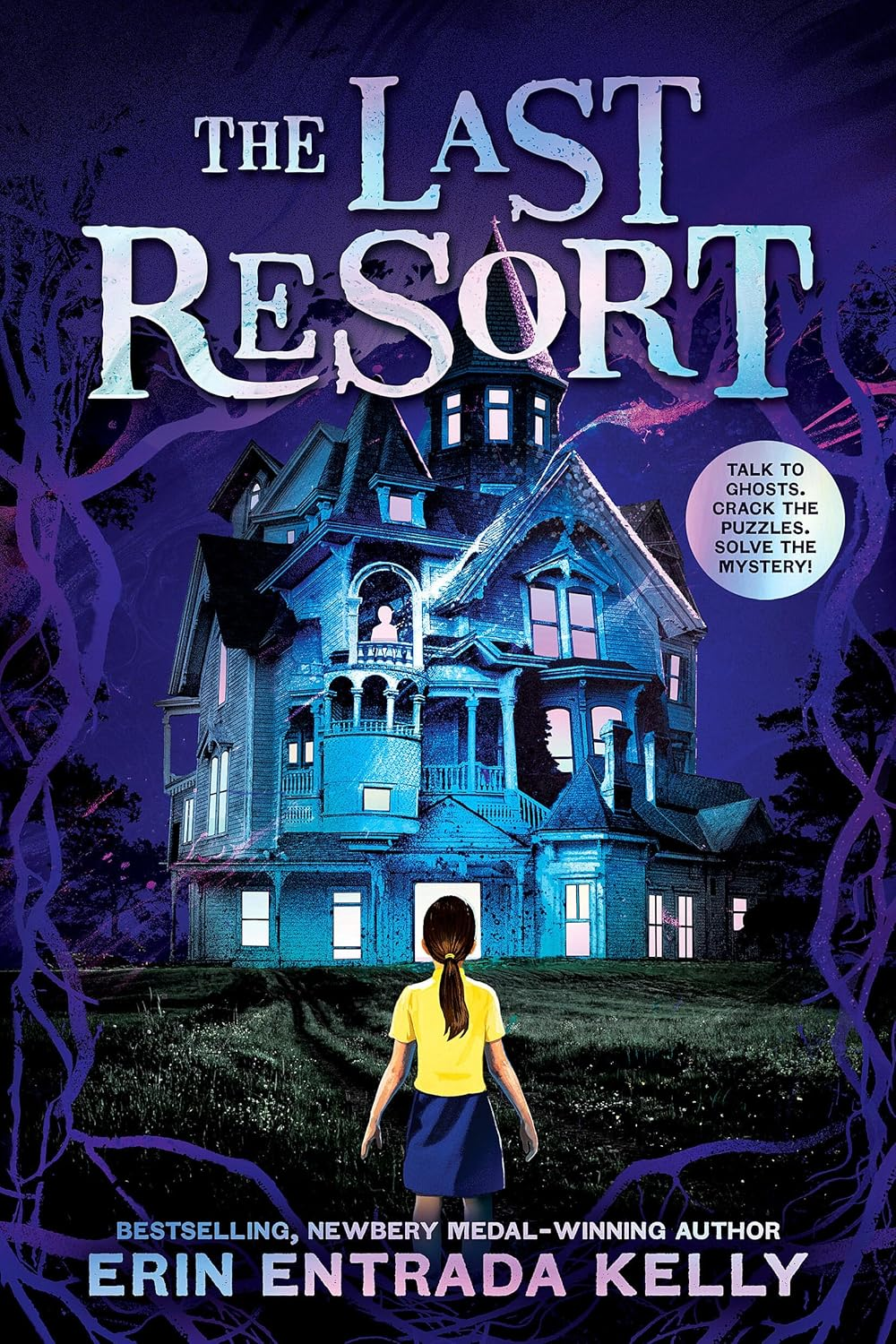
The Last Resort by Erin Entrada Kelly (Scholastic Press, 240 pages, grades 4-7). When Lila’s Grandpa Clem dies, leaving an old inn to her father, the whole family has to leave their home in Phoenix to spend the summer at the inn in Ohio, sorting out the estate. Lila’s despondent about the trip, fearing it will further estrange her from her two former best friends, who have started accusing her of being overdramatic and leaving her out of things. The inn is pretty creepy, and Lila begins seeing strange people appear and disappear, including her late grandfather who she never met. When he tells her he was murdered, Lila is determined to figure out what happened to him and teams up with her neighbor Teddy and her brother Caleb to solve the mystery. As the people around her start having nightmares that reflect their worst fears, the situation becomes increasingly desperate, and Lila finds that the personality traits she’s often been criticized for having are an asset when it comes to dealing with ghosts and haunted mansions. Thanks to Scholastic for providing me with a free copy of this book.

This is a classic Scholastic series: a bunch of popular authors each write a book in a series, combined with a gimmick that will have kids clamoring for the latest installment at their book fairs or Scholastic flyers (think 39 Clues or Horizon) In this case, a few of the illustrations have QR codes that lead readers to a site where the ghosts tell their stories and allow readers to solve mysteries. While this method of storytelling is unlikely to showcase Newbery winners like Kelly (and book 2’s Jasmine Warga) at their creative best, this is a fun ghost story with an engaging protagonist who learns that what she’s been told is “too much” is actually her own imaginative and courageous personality.

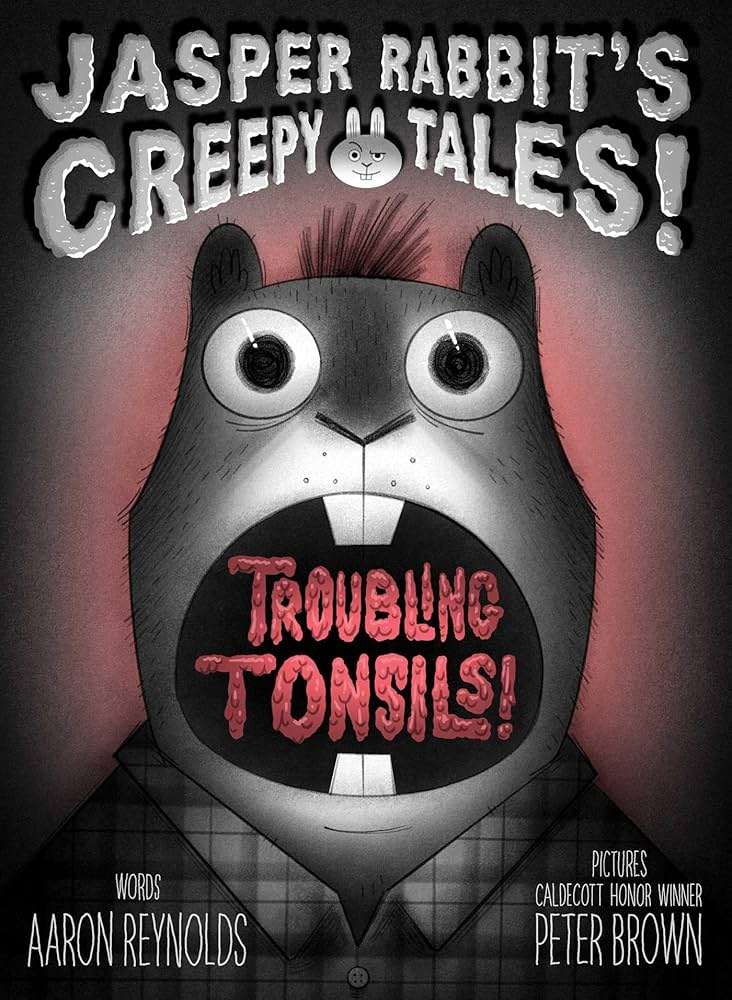
Troubling Tonsils! (Jasper Rabbit’s Creepy Tales) by Aaron Reynolds, illustrated by Peter Brown (Simon and Schuster Books for Young Readers, 88 pages, grade 1-4). Our old Creepy Carrots/Crayon/Pair of Underwear friend Jasper Rabbit introduces main character Charlie Marmot and his tonsils, then the tale begins innocently enough with Charlie coming down with a sore throat. A trip to the doctor reveals tonsillitis, and an operation is scheduled for a few days hence. Charlie’s actually excited, asking the doctor if he can put the tonsils in a jar to bring in for show-and-tell. By the time surgery day arrives, Charlie’s throat feels better, and the doctor is shocked when he does a quick pre-op check and discovers that the tonsils are gone! No one can explain this, but Charlie is sent home, where he starts to experience strange sights and sounds in the middle of the night. Finally, exhausted, he falls into a deep sleep one night, only to discover upon waking that he….

Well, now, I guess you’ll just have to read this short chapter book to find out, won’t you? To be honest, the Creepy books aren’t my favorites, but kids can’t get enough of them, and I trot them out every Halloween to universal joy. Fans will be delighted to see this new chapter book series, perfect for those who are just moving up to that level. The story is a perfect blend of funny and creepy, with an ending worthy of The Twilight Zone. Look for book 2, Unsettling Salad, in February, 2026.

Early chapter books

Sweet Magic (Witchycakes #1) by Kara LaReau, illustrated by Ariane Moreira (Random House Books for Young Readers, 80 pages, grades 1-4). Young witch Blue is still working on their magical powers, but they love being involved of all aspects of their mother’s bakery. When they’re sent out on a delivery mission, accompanied by their seagull familiar Gully, they encounter a series of opportunities to practice magic. For the most part, the magic fails, but Blue is able to help people anyway, using their own natural instincts to figure out what’s needed in each situation. Returning home, Blue’s mother assures them that imagination and kindness are just as important and magic, and that Blue is on their way to becoming a great witch. Includes a recipe for Mama Moon’s Beach Crumble.

This enchanting early chapter book by the author of The Infamous Ratsos portrays a cozy beach town and an enchanting cast of characters that will have readers heading right for book 2. Just like with the Ratsos, LaReau weaves an uplifting message into a fun story.

Hut! Hut! Hike! (Sports Zone! #1) by Andrew Maraniss, illustrated by Aishwarya Tandon (Scholastic, 96 pages, grades 1-4). Jasper and his two best friends Mo and Ruby decide to try out for their town’s flag football team. Jasper is a dedicated fan of the game and is confident that he’ll not only make the team but be one of the best players. Tryouts go pretty well, but Jasper makes a few mistakes, and he realizes that he still has a lot to learn. The three kids are thrilled to make the team, which names themselves the Frogs. The Frogs look forward to their first game against the Beagles, but when the big day arrives, the kids learn they still need some lessons in teamwork to be able to pull out a win.

The newest addition to Scholastic’s branches series is a pretty straightforward sports story interspersed with sidebars giving additional information about topics like the game of football, the specifics of flag football, and some of the greatest players from the NFL. With plenty of illustrations, including a few comic book style panels, and a fast-paced story, this is a good choice for early chapter book readers. Having said that, I still think Branches does best with fantasy books like The Last Firehawk, Dragon Masters, and Kwame’s Magic Quest. Thanks to Scholastic for providing me with a free review copy of this book.

Elementary heroines

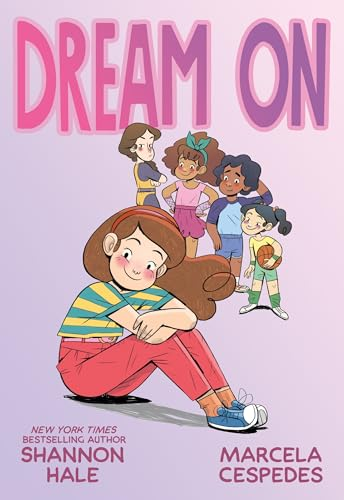
Dream On by Shannon Hale, illustrated by Marcela Cespedes (Roaring Brook Press, 240 pages, grades 3-6). Fourth-grader Cassie has a lot of big emotions as she navigates the difficult terrain of growing up in a small house with a large family and dealing with changing friendships at school. When she sees a flyer in the mail telling her she’s won some fancy prizes, she starts to dream about how this could change her life. Usually, she would enjoy sharing those dreams with her best friend Vali, but recently Vali’s been spending more time with another girl who alternates being friendly and being mean to Cassie. Cassie’s frequently told that she’s too sensitive, but she can’t help the way she feels, and as the story goes on, she learns that being sensitive also means having a greater sense of wonder about the world around her. Things don’t magically resolve themselves, but having good conversations with her mom (who’s often too busy for such things) and with Vali about their friendship helps Cassie feel better about her problems and to find a way to a new normal at school and at home. Includes a note from Shannon Hale about the parallels between Cassie’s 1980’s childhood and her own.

Fans of Shannon Hale’s Real Friends series will be delighted to discover this new graphic novel, with book 2 coming in August 2026. Just as with Real Friends, I found the tone of this book a little melancholy, but it’s a realistic portrayal of a character who is extra sensitive, making her prone to lower moods but also extra appreciative of more joyful ones.

Amina Banana and the Formula for Friendship by Shifa Saltagi Safadi, illustrated by Aaliya Jaleel (G. P. Putnam’s Sons, 128 pages, grades 2-5). Amina’s both excited and nervous about her first day of third grade in America. Her family has recently relocated from Syria to Indiana, and all of them have had to overcome many difficulties, with obstacles still ahead. Being scientifically inclined, Amina writes a five-step formula for making friends at her new school, only to find herself crossing off one step after another after a series of discouraging setbacks. But she finds a kind group of girls who help her with her English and encourage her to share her culture with them and with the rest of the class. By the final pages, Amina has found new friends and the courage to be herself in her new country.

I was wowed and humbled by the courage of Amina and her family in this early chapter book series starter (book 2 is out, and #3 will be published in January). Her dad, a pharmacist in Syria, is working at a fast food restaurant while her physician mom studies to pass the boards so she can practice medicine in the U.S. Despite their hardships, the family is loving, supportive, and has fun together. I’m always happy to find books featuring protagonists in younger elementary grades, so it was nice to discover these two books with girls in fourth and third grades.

Cinderella stories

CeeCee: Underground Railroad by Shana Keller, illustrated by Laura Freeman (Charlesbridge, 32 pages, grades 1-5). Cecelia, or CeeCee for short, knows that her real name is different, a name that she keeps on a piece of paper hidden away from the people she works for on a Maryland plantation. The mother and two daughters there are always finding ways to scold and punish her, no matter how hard she works, but CeeCee has dreams of one day finding a better life. Binty the cook, in the role of the fairy godmother, sneaks CeeCee food and assures her that she can do anything. She also tells the girl about a prince named Moses who can give her a better life. After months of planning and secretly making herself new clothes to wear, CeeCee is runs away one night to find the mysterious prince. She’s surprised to learn that Moses is a woman named Harriet Tubman, who inspires CeeCee enough to finally share that she is named Edea, after her mama. Includes additional information about Harriet Tubman, names during slavery, Cinderella, and fairy tales.

This is a really interesting combination of Cinderella story and information about Harriet Tubman and the Underground Railroad that would make an excellent compare and contrast exercise with some of the many other versions of Cinderella. The theme of the power of names and the dehumanizing impact of taking away someone’s name could start some good discussions.

The Fairy Tale Fixers: Cinderella by Deborah Underwood, illustrated by Jorge Lacera (Clarion Books, 128 pages, grades 1-5). The Fairy Tale Fixer is just getting ready to go home to a Friday evening pancake supper, when the phone rings. It’s another mouse, and she has an emergency: the house where she lives is filled with screaming and she needs the Fixer to make things right. When the Fixer reluctantly takes the case, he discovers a girl named Cinderella being yelled at by her stepmother and stepsisters. His solution? Send Cinderella to the ball and marry her off to the prince. After all, doesn’t every girl want to marry a prince? But things go off the fairy-tale tracks at that point, and the Fixer learns that it’s a good idea to ask someone what she wants before assuming anything. Cinderella eventually gets her unconventional happily-ever-after, and the Fixer gets a new assistant and a call about a new case: an evil fairy is about to put a princess to sleep for 100 years.

The familiar story gets a fun twist in this new series opener featuring a couple of mice who fracture fairy tales. Kids just starting to read longer books will enjoy the humor and comparing the traditional story to the new version, with the end giving a preview of book 2.

Classic novels to graphic novels

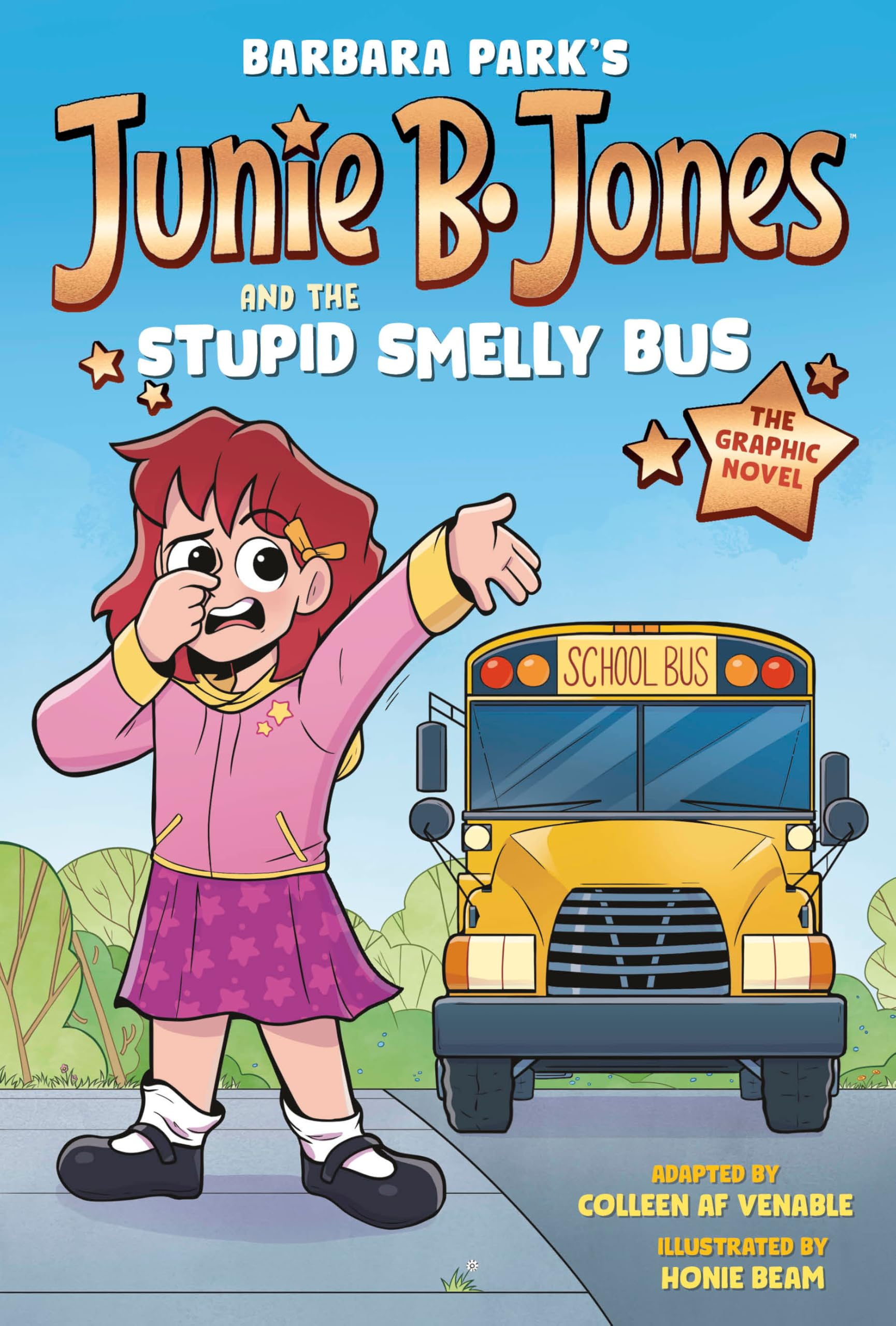
Barbara Park’s Junie B. Jones and the Stupid Smelly Bus: the graphic novel by Colleen AF Venable, illustrated by Honie Beam (Random House Books for Young Readers, 160 pages, grades 1-3). Junie B. is excited about going to kindergarten after acing her orientation, but she’s less thrilled about riding on the stupid, smelly bus. The reality turns out to be even worse than she had imagined, and as she end of the day approaches, she decides she can’t face a return trip. She hides during dismissal, then roams the school after hours, exploring the library, gym, nurse’s office, and more, all with her own unique take on things. Her frantic parents and teacher finally track her down, and the introduction of a new friend helps Junie B. feel like she can face the bus ride in the morning.

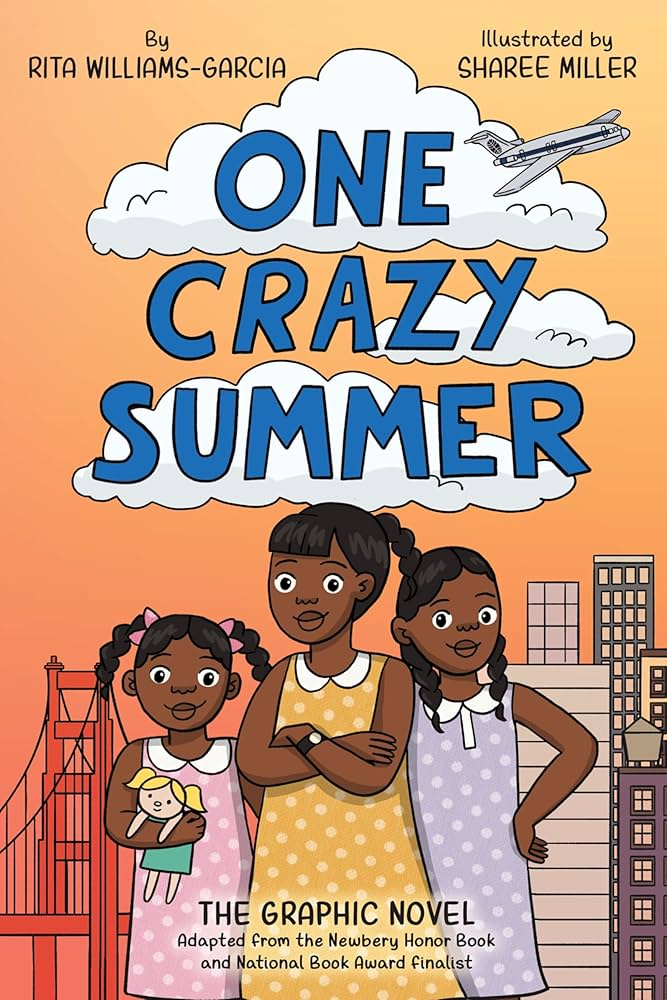
One Crazy Summer: the graphic novel by Rita Williams-Garcia, illustrated by Sharee Miller (Quill Tree Books, 304 pages, grades 4-7). 11-year-old Delphine tells the story of spending the summer of 1968 with their mother, Cecile, when she and her two younger sisters, Vonetta and Fern, are sent to Oakland to get to know the mother who abandoned them when Fern was a baby. The trip was decided on by their father and grandmother back in New York, and Cecile wants no part of the visit. Busy with her mysterious work, she sends the three girls to the kids’ program at the Black Panthers’ People’s Center. There, they get free meals along with lessons in Black Power and resisting the police. After Delphine leads them on an excursion to San Francisco, the girls return to see their mother being arrested along with a few others from the Black Panthers. After cleaning up Cecile’s destroyed workspace and discovering some of her poems, they move in with friends. A performance of one of her poems at a Black Panther rally concludes with a reunion with Cecile, whose time in jail seems to have changed her enough to have an honest conversation with Delphine about why she left. The girls return home with some new ideas and insights about their family and what it means to be Black in America.

Is it okay to have mixed feelings that it feels like every classic book is being turned into a graphic novel? Both of these are extremely well done, both the art and the storytelling, and I’m delighted that new audiences will be introduced to these characters. Junie B. will find a ready audience with fans of Baby-Sitters Little Sisters and the Magic Tree House (both now graphic novels that are way more popular than the originals). And reading One Crazy Summer reminded me of how that trilogy introduced me to so much from that era, completely changing my childhood perceptions of the Black Panthers. I missed the nuances of the original, though, for instance, the way Cecile’s complex character is slowly (and only partially) revealed throughout the story. In this version, the changes she makes toward the end of the story feel somewhat abrupt. So it does make me both a little sad to see Newbery books like A Wrinkle in Time, Turtle in Paradise, and now, One Crazy Summer turned into graphic novels, yet glad that these stories will now reach a wider audience.

Disabilities

Whale Eyes: A Memoir About Seeing and Being Seen by James Robinson, illustrated by Brian Rea (Penguin Workshop, 304 pages, grades 6 and up). James Robinson was born with strabismus, or misaligned eyes. He shares with readers how this affected him in school, both his struggles with reading and the reactions of others, whom he addresses as “Starers.” He grew up to be a documentary filmmaker, and the book is based on a short film he created for the New York Times to help people understand how he perceives the world. The book has some visuals and activities from the film, giving kids an opportunity to get some idea of how James sees things. The last part is more of a memoir, telling how his mom creatively homeschooled him and his older brother who had dyslexia, helping them to pursue their passions and succeed. Includes a list of citations.

Readers will learn a lot about what it takes to succeed when you have a disability, and James (and his mom, who sounds amazing) offer inspiring lessons about persevering when it feels like there is little or no progress. The illustrations are very cool and an excellent aid in understanding James’s condition. The book felt a little disjointed, with the last part feeling quite different than the rest of the story.

We Are the Scrappy Ones by Rebekah Taussing, illustrated by Kirbi Fagan (Carolrhoda Books, 32 pages, ages 4-8). This celebration of people with disabilities portrays a diverse group of kids and adults with all kinds of disabilities. Whether they’re in a wheelchair, walking with a white cane or a guide dog, or getting some sort of medical treatment, they are shown dancing, playing, making art and music, and always surrounded by others, sharing a sense of belonging. They are celebrated for adapting and overcoming difficulties and accepting help without thinking of themselves as a burden. All of this can be exhausting, and resting and taking care of yourself are also encouraged. A two-page spread near the end portrays several inspiring disability activists, with information about each in the back matter. There are also notes from the author and illustrator, who both drew on their experiences growing up with disabilities to create this book.

I was glad to find this book just as I was finishing up Whale Eyes, and it seemed like it would have been super helpful to James Robinson after hearing of his struggles with the label “disability” to describe his vision. This beautiful poem will inspire and reassure kids with disabilities, as well as their peers, but I think they will be especially drawn to the illustrations that portray so many different types of people living life joyfully and in community. The notes at the end about the author’s and illustrator’s experiences add an extra dimension.

Catty Corner Lands on Her Feet (Catty Corner, book 1) by Julie Murphy (Union Square Kids, 128 pages, grades 1-4). Like her mother, Catty is half-cat, half-human (Dad’s just a regular person), and she’s been homeschooled all her life, never having to worry about containing her feline instincts. But when her mom gets a job, it’s time for Catty to try school. She’s nervous, but also excited about the possibility of making new friends. Her first day is something of a disaster, in which she shreds a map when her teacher uses a laser pointer and bites a potential new friend when someone steps on her tail. Back home, Mom shares her mother’s and her own childhood diaries, which show some of the cat-astrophes they experienced. Catty’s able to return to school the next day with new confidence and learns that she can fix her mistakes and contribute with her own unique talents. Book 2 was published simultaneously.

This may seem like a strange choice for this post–and honestly, it’s one of the more bizarre premises for a book series that I’ve come across–but I was struck when reading it how Catty is different from her classmates in ways that are similar to kids with disabilities. She faces stares and mean teasing and has to work extra hard to fit in with a body that’s different from her classmates’. It could make an excellent starting point for some interesting discussions with primary elementary kids.

A beginning reader bonanza

Dino Poet: a graphic novel by Tom Angleberger (Harry N. Abrams, 96 pages, grades 1-4). When a Coelophysis takes a break from writing poetry to have a froggy snack, the frog in question tells him that he hates his poem. The frog then proceeds to give the dinosaur poetry pointers, like how to express his emotions and use his senses to perceive the world. Desperate not to be eaten, the frog introduces different forms of poetry like limericks and speed haiku, while both creatures keep a sharp lookout for larger dinosaurs who may want to consume them both. The frog is so successful that by the end, the Coelophysis calls him a friend, refuses to eat him, and gets him his own notebook and pen so that they can write together.

Always expect the unexpected with Tom Angleberger, as evidenced by this book which is short for a graphic novel, long for a picture book, and has the unlikely premise of two animals from different eras becoming friends and writing poetry together. I love the way it introduces poetry and gently (and humorously) encourages kids to try their own. The simple collage art and the photo of art supplies at the beginning may also inspire readers in their artistic endeavors.

The Truth About the Tooth Fairy (Miriam’s Magical Creature Files book 1) by Leah Cypess, illustrated by Sarah Lynne Reul (Harry N. Abrams, 112 pages, grades 1-3). 6-year-old Miriam is the youngest of three siblings, slightly jaded about things her family tells her, and a firm believer in testing them out to find out if they’re true or not. For instance, after being told, “Sugar makes you hyper,” she eats a lot of it at a birthday party and feels fine. So when she realizes she has her first loose tooth, Miriam is ready to find out if the tooth fairy is real. Her methodology involves staying up and catching her parents in the act. Does she succeed? Readers will have to draw their own conclusions, but whatever they decide, they can look forward to book 2, The Discovery of Dragons, coming in August.

Miriam is a spunky and smart protagonist, part of an Orthodox Jewish family whose traditions are woven into the story and illustrations. The book resembles a scrapbook, with Miriam’s lists, charts, notes, and drawings on what looks like paper torn from a notebook. Fans of Junie B. Jones and other feisty early elementary narrators will enjoy this beginning chapter book.

The Bad Idea and Other Stories (Earl and Worm book 1) by Greg Pizzoli (Knopf Books for Young Readers, 72 pages, ages 4-8). In the classic style of such literary friendships as Elephant and Piggie, Frog and Toad, Frank and Bean, Beak and Ally, etc., Worm is a grumpy introvert who initially is annoyed by early bird Earl who gives friendly greetings and plays music for his plants first thing in the morning. The second chapter sees Worm getting increasingly annoyed by what she perceives as Earl’s copying her good ideas about home decor. When she tries to trick Earl by telling him about an outlandish plan to paint the outside of her house, Earl surprises her by painting it for her, leaving her with a house she doesn’t like and the realization that the whole thing was a bad idea. Earl’s persistent cheerfulness slowly wins over Worm, and by the third chapter, Worm is committed enough to their friendship to write a poem that celebrates it.

I’m a pretty big Greg Pizzoli fan, and, while I personally feel this whole introvert/extrovert friendship theme in early readers is a little tired, Pizzoli does an excellent job of creating two fun characters and three funny stories, particularly the one about the bad idea. I love the illustrations, especially the way Worm is portrayed doing all sorts of tasks without any limbs. Try this out on fans of some of the series mentioned above.

Enchanting early chapter books

Eliza and the Flower Fairies (Fairy Door Diaries book 1) by Megan McDonald, illustrated by Lenny Wen (Candlewick, 96 pages, grades 1-3). At the end of the school day, Eliza hurries home and retreats to the space behind her bedroom that she’s set up with as a magical retreat where she can read about fairies. The magic turns out to be real, and she’s transported to a fairy kingdom where she befriends the flower fairies. But when Eliza accidentally enters the realm of two evil witches, she has to call on her own courage and wits to save herself and one of her new fairy friends. Back home again, she discovers that her story has magically appeared in her diary, which she enjoys sharing with her little sister Bee.

New chapter book readers will love this magical tale from the Judy Moody creator, full of enchanting colored illustrations that will spark their imaginations. The story was a little too precious for me (I prefer more of a Princess in Black vibe in my enchanted heroines), but I’m sure it will find a big audience with those who love imagining themselves into fairy tales. I can’t find any evidence of a book 2, but I can’t imagine that this won’t be a series.

Search for the Silver Shell (Coral Keepers book 1) by Robin Yardi, illustrated by Paul Kellam (Scholastic, 96 pages, grades 1-4). Princess Finn is the daughter of Queen Ula, ruler of the queendom of Anjeea. Although Finn is a shark magician with magical power over sharks, she has failed her test to become a Coral Keeper four times. When the evil magician Rozaro (who has allegedly stolen Finn’s father’s magical powers and kept him prisoner) comes to the queendom, Finn has a vision of a silver shell she must find, with the help of her friends, siblings Moon and Light. When Rozaro steals the powers of the Coral Keepers, it’s up to the three kids to go on a quest to save their people. A cliffhanger ending will leave readers eagerly awaiting book 2, due out in June.

Like many of the Scholastic Branches fantasy series, this one is surprisingly complex for an illustrated chapter book under 100 pages and does an excellent job of world building that will draw readers into this new series. I fear the cover will keep some boy readers from going any further, but I hope they will be open-minded it enough to give it a try.