Teamwork makes the dream work

Neecy and Nay Nay and the Tangled, Hairy Mess (Neecy and Nay Nay, book 1) by Simone Dankenbring and Syrone Harvey, illustrated by Maya Henderson (little bee books, 112 pages, grades 2-4). When Nay Nay wakes up with a big wad of gum in her hair, Big Mama takes her and her twin sister Neecy to Ms. Yvonne’s hair salon, where a spoonful of peanut butter takes care of the problem. The girls are inspired to open their own salon, which fits in nicely with the entrepreneurship project that they’re working on at school. After a successful style with one of their friends, they expand to facials and manicures, using a creative assortment of household items and producing some disastrous results. Instead of giving up, the girls learn from their mistakes and put together an A+ report on the do’s and don’ts of starting a small business. Includes Big Mama’s snickerdoodle recipe, a glossary of the big words Neecy likes to use, and a preview of book 2, which was released at the same time as this book.

Early chapter book readers will enjoy this new series. Each twin has her own distinctive personality and style, and there’s an interesting cast of supportive characters, including a close friend who lives in a foster family. The girls aren’t afraid to try new endeavors and are resilient when things don’t go as planned. Books 3 and 4 are due out by the end of the year.

Jojo vs. Middle School (Team Awkward, book 1) by Joy McCullough and Veeda Bybee (Aladdin, 192 pages, grades 3-7). Jojo’s first day of sixth grade gets off to a rough start: her mom’s embarrassing new boyfriend, online cat influencer Mr. Meow, has given Jojo a new kitten, who (unbeknownst to her) has chewed a hole in her new leggings. After she realizes that her cat-patterned underwear has been visible to the whole school all morning, Jojo retreats to an abandoned part of the school where she meets three other girls hiding from their catastrophic first mornings. A tentative friendship is born, and when they meet on the second day, they wind up sheltering in place after a bobcat sighting at the school. This results in not only a two-hour conversation that deepens their friendship, but a series of hilarious mishaps that cements it into Team Awkward. They wind up back at Mr. Meow’s with the “bobcat,” having inadvertently saved the day, and Jojo begins to see that Mr. Meow, whom she now calls Paul, may not be so bad. Book 2, featuring Team Awkward member Leah, will be out in June.

This book feels like a bit of a throwback, in a good way, since so many stories like this are being written as graphic novels these days. The chapter book format allows the introduction of many interesting characters, both at school and in each girl’s family, whom I hope we will get to see more of in upcoming books. Try it out on fans of Dork Diaries.

A collection of mysteries and the mystery of collections

Casey’s Cases by Kay Healy (Neal Porter Books, 160 pages, grades 2-5). Fifth grader Casey aspires to be a detective, and sees a mystery in almost every situation. Who is the new girl? Where is her missing hair band? What did her crush write in his notebook? Who is the owner of the lost cat she found? Some mysteries are solved in a few minutes (the hair band), while others take the whole book to solve (the new girl, Jan, who becomes Casey’s best friend), and some have surprise twists (the stray cat, whose growing belly turns out not to be from eating too much tuna). Here’s hoping that Casey and Jan will team up for another book of mysteries.

The humor, simple story line, and short chapters will make this an appealing choice for beginning and/or reluctant readers, who may also enjoy copying the drawings that employ basic shapes, such as the triangle-headed Casey.

Monti and Leo: A Mystery in Pocketville by Sylvie Kantorovitz (Walker Books, 80 pages, grades 1-4). Monti and Leo enjoy looking at Mrs. Sheep’s collection of small figurines on display at the local library. In fact, Monti is so enchanted with one item in the collection that he’s a prime suspect when it disappears. Leo wrestles with his feelings that Monti might have wanted it enough to take it, but ultimately he believes in his friend’s innocence and sets out to solve the mystery. When he starts hearing about other missing items around town, he discovers a bird he’s never seen before flying overhead with an item in her beak. Leo runs after the bird, climbs a huge tree, and discovers all the missing treasures–including the figurine–in the bird’s nest. In the final chapter, Monti thanks his friend and reveals his new collection: containers, each one holding a mini collection of different small items.

This is book two of a series I missed last year (thank you, Walker Books for sending me a review copy). The animal cast will appeal to fans of Mr. Wolf’s Class, and it would make a good book for those just starting with chapter books. I’m always fascinated by animal stories in which some of the animals act like humans and others are more like animals (like how Marc Brown’s Arthur has a pet dog), so I was intrigued by the fact that one crow was living in a nest acting bird-like, while another one was the local librarian.

A Pocket Full of Rocks by Kristin Mahoney, illustrated by E. B. Goodale (Knopf Books for Young Readers, 40 pages, ages 3-8). Mom may say a pocket full of rocks will make your coat dirty, Dad might ask where your other mitten will go, and your sister will dismiss them as ordinary, but you know those rocks will make excellent chairs for fairies, or let you write on the sidewalk if you don’t have chalk. There are other collections to fill your pockets as the year goes on: petals in the spring, seashells in the winter, and acorns in the fall. Each object fires up your imagination, and at the end of the year, you can use them for presents: a bowl of shells for Dad’s dresser, tiny pictures on the acorns for your sister, and a bag of petals for Mom to put in the drawer with her sweaters. And a pocket full of rocks for you to make sleds for the fairies.

Wow, this book really took me back, as my older daughter–soon to turn 30–was a collector just like the narrator. I don’t remember flower petals, but our house had plenty of rocks, shells, and acorns, with imaginative stories about each collection. This would be a lovely book to begin a conversation about collecting, seasons, or making crafts from your imagination, with illustrations that beautifully capture each season.

Five favorite early chapter books

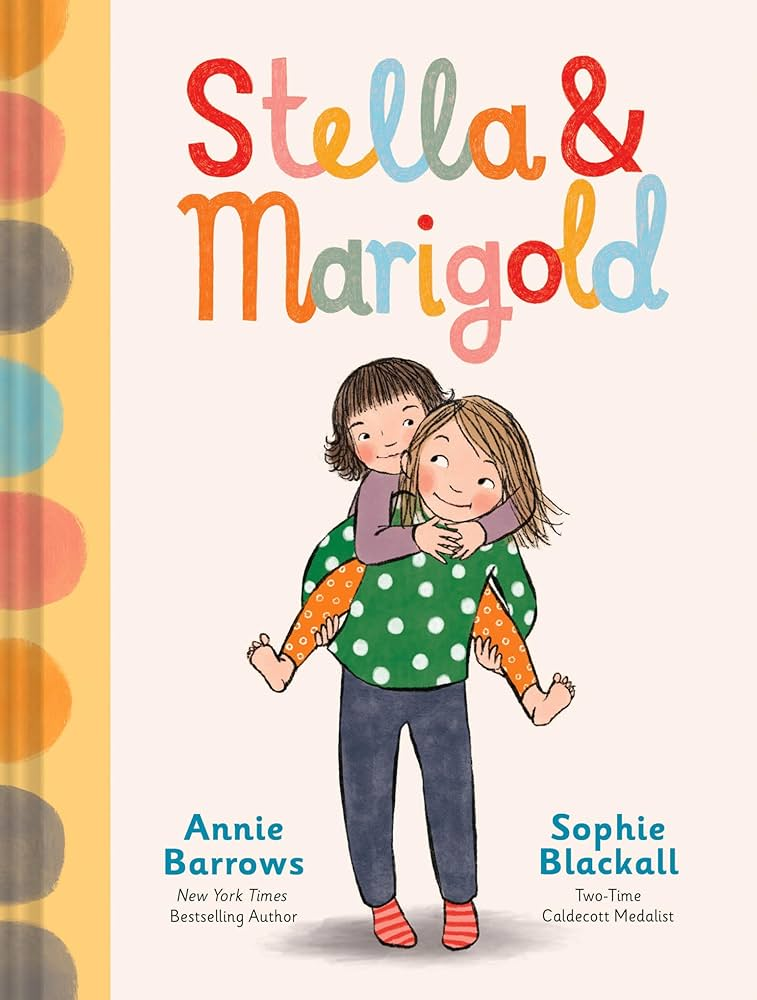
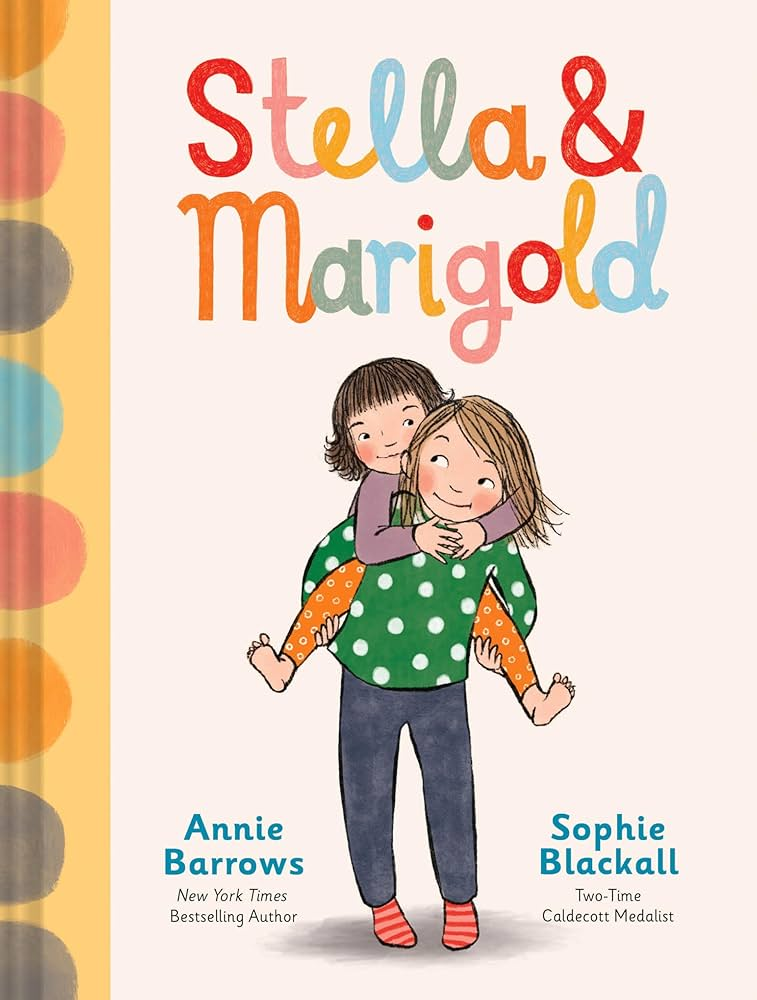
Stella & Marigold by Annie Barrows, illustrated by Sophie Blackall (Chronicle Books, 101 pages, ages 6-9). This beautiful book about two sisters by the author and illustrator of Ivy and Bean would make an excellent read-aloud. Each chapter is a stand-alone story, although the stories do connect somewhat. This would also make a nice gift for a new big sibling.

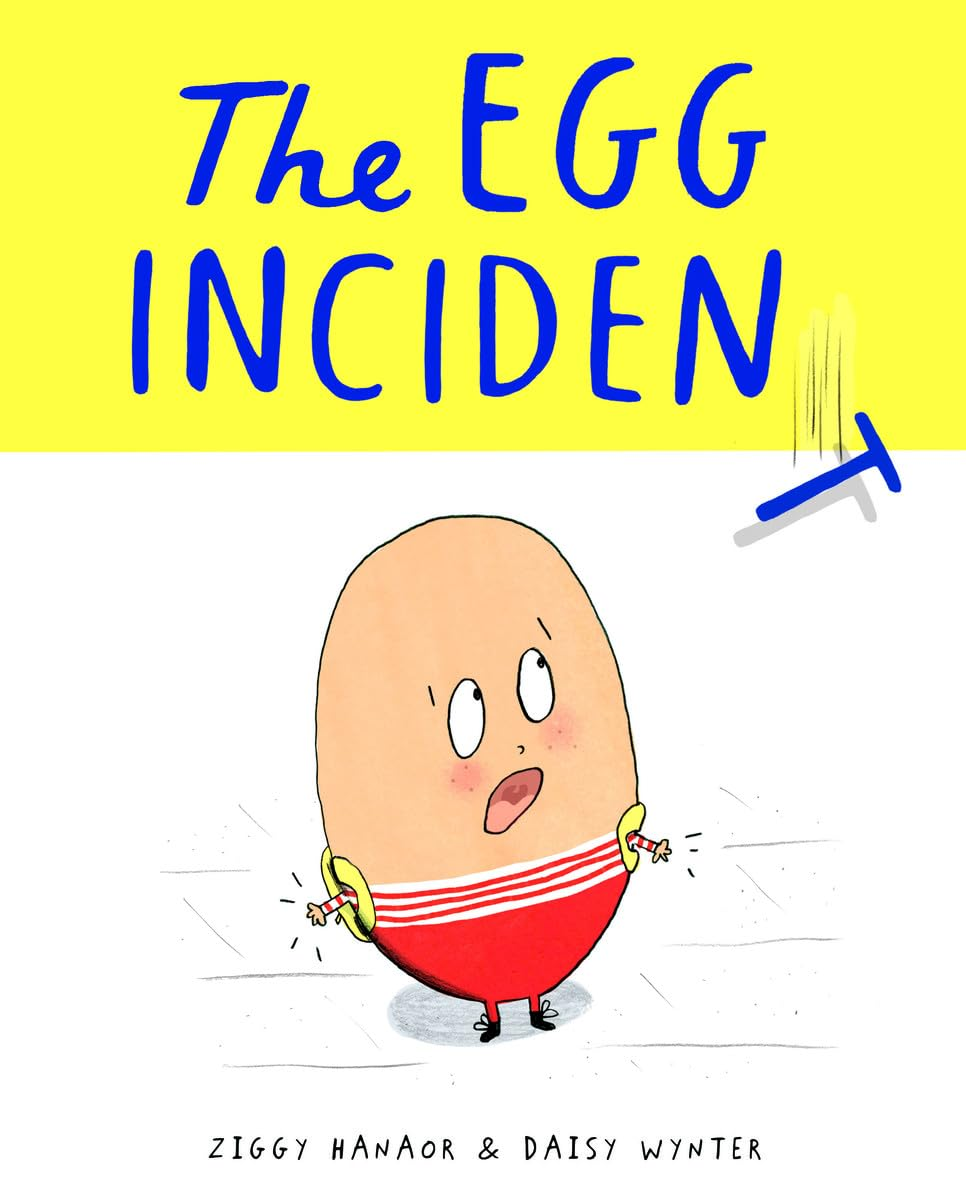
The Egg Incident by Ziggy Hanaor, illustrated by Daisy Wynter (Cicada Books, 72 pages, grades 1-4). Humphrey Dumpty has the world’s most overprotective parents after the incident involving his Uncle Humpty. But an adventurous princess changes Humphrey’s perspective and he in turns helps his parents to loosen up a bit. Somewhere between a picture book and a graphic novel, this delivers humor that both kids and adults will appreciate, as well as a gentle message for parents who may have helicopter tendencies.

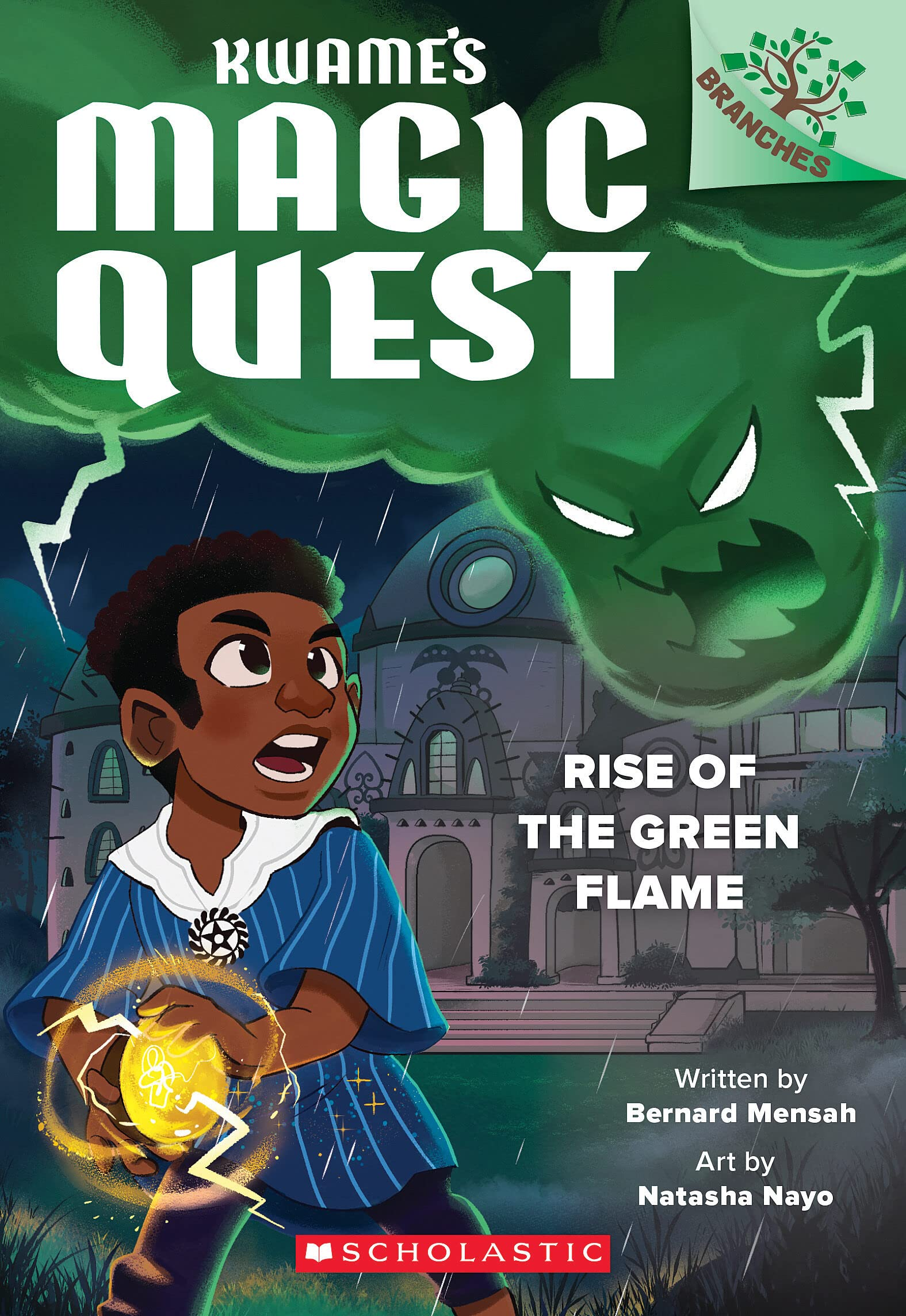
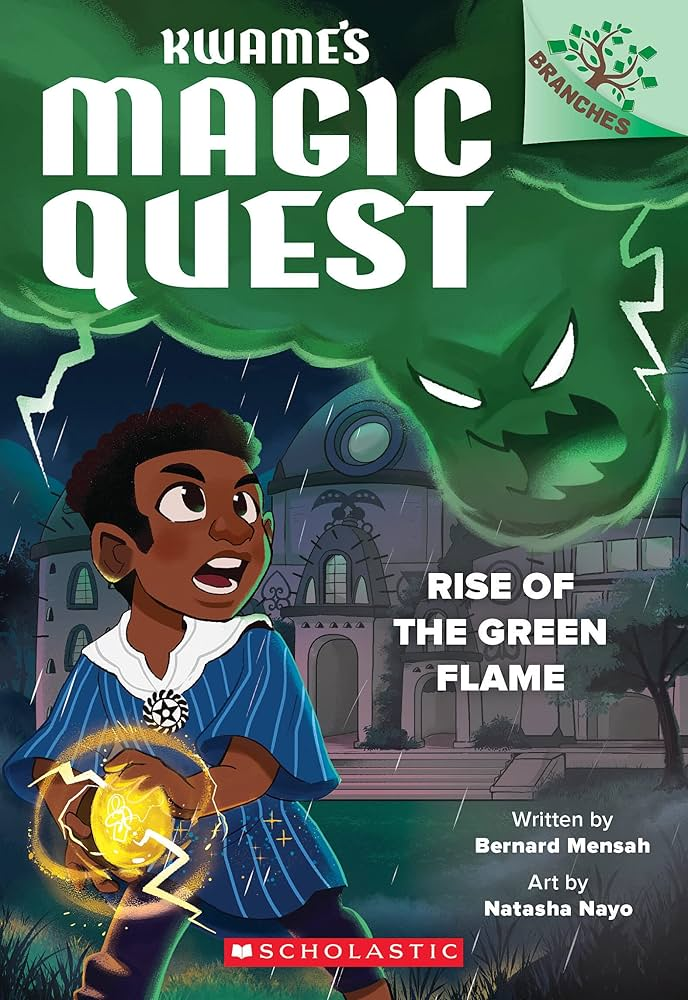
Rise of the Green Flame (Kwame’s Magic Quest book 1) by Bernard Mensah, illustrated by Natasha Nayo (Scholastic, 96 pages, grades 1-4). There’s plenty of action and a Harry Potter vibe in this new Branches series that takes place at a school of magic in Ghana. I’m looking forward to using this as a third grade book club book in January.

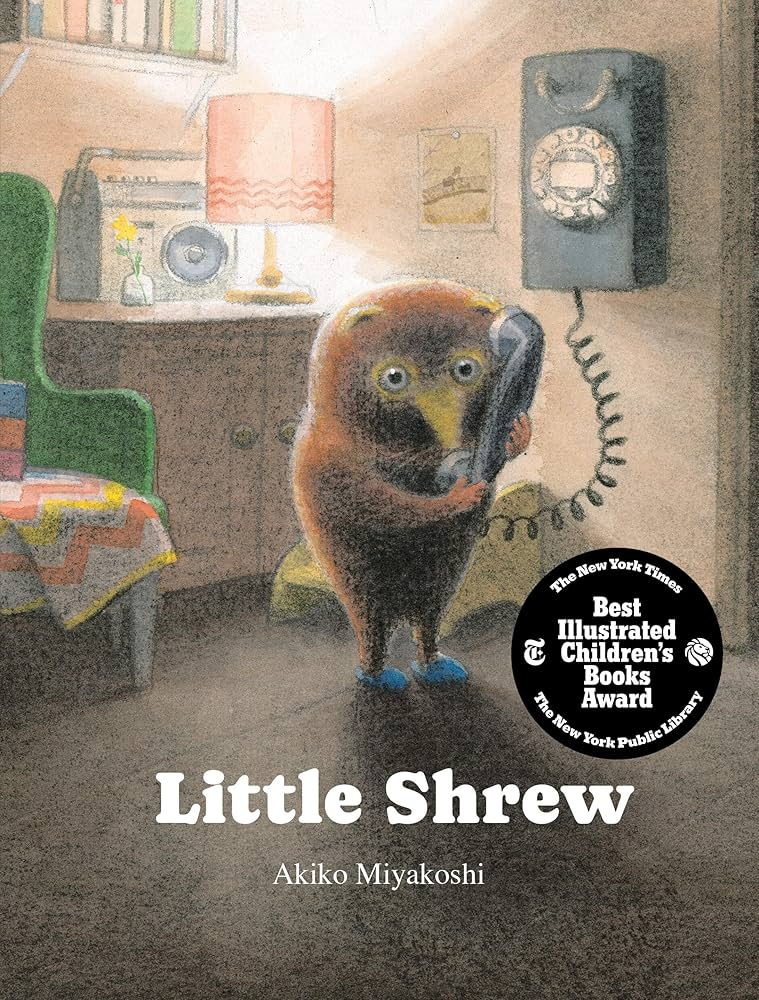
Little Shrew by Akiko Miyakoshi (Kids Can Press, 72 pages, grades K-3). I found myself thinking about this book for quite awhile after I read it, appreciating the mindfulness and joy Little Shrew brings to his daily routines. Sure, it’s a cute early chapter book that kids will enjoy, but perhaps also a meditative tool for adults to use as they contemplate their lives.

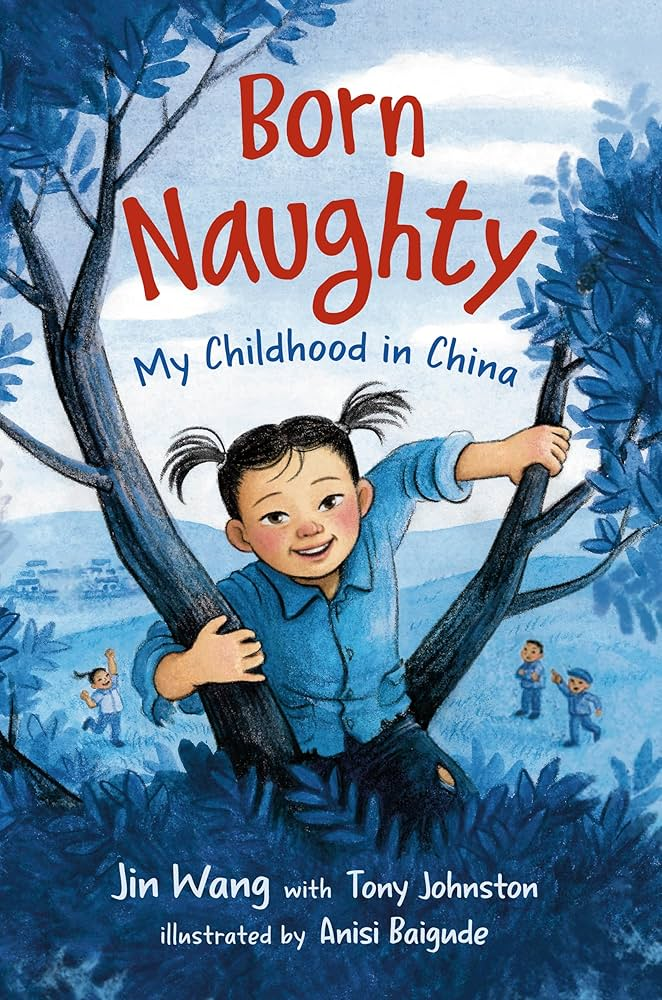
Born Naughty: My Childhood in China by Jin Wang with Tony Johnston, illustrated by Anisi Baigude (Anne Schwartz Books, 112 pages, grades 2-5). Imagine Ramona Quimby living in 1980’s Mongolia, and you’ll have a good sense of Jin Wang’s lively childhood memoir. Her adventures may seem like they took place in a different world (and century), but her happy home and village feel universal.

A couple of early chapter books

Emma McKenna, Full Out (The Kids in Mrs. Z’s Class book 1) by Kate Messner, illustrated by Kat Fajardo (Algonquin Young Readers, 128 pages, grades 1-4). Emma is excited and nervous about starting third grade at the new Curiosity Academy. Her nerves get the better of her, though, when Lucy, a former best friend turned enemy, walks through the classroom door. Emma does her best to make new friends, but she sometimes feels like her classmates are more interesting than she is. When the school has a competition for a new mascot, Emma chooses a capybara, an animal that is curious and makes friends with all kinds of other animals. By the end of the book, Emma has started to find her groove, giving an almost-winning presentation on the capybara, and making tentative overtures toward mending her differences with Lucy.

Each book in this series focuses on a different kid in Mrs. Z’s class and is written by a different author (librarians, be careful how you catalog this, or the series will end up scattered through your fiction collection). It’s a fun premise for a series, and the first four books are now available, with more coming in 2025. I found Emma’s story perfectly serviceable, although not particularly distinguishable from other spunky girls who are featured in other early chapter book series.

Wrath of the Rain God (Legendarios book 1) by Karla Arenas Valenti, illustrated by Vanessa Morales (Aladdin, 144 pages, grades 2-5). Twins Emma and Martín are not happy to be moving from Cuernavaca, Mexico to Chicago for their father’s new job. Before they leave, their abuela gives them a book of Mexican legends that turns out to be a portal to the places in the stories. They find themselves in an Aztec village that is on the verge of being wiped out by floods. From there, the twins are sent on a quest to help retrieve the lightning bolt belonging to Tlaloc, the rain god, so that he will stop the torrential downpours. The twins are very different from each other, but each has strengths that help them to complete their quest and return home to Chicago, which starts to feel more like home by the end of the book. Includes a glossary.

This has a Percy Jackson vibe, complete with a stolen lightning bolt. Kids who have seen The Lightning Thief movie or TV show but aren’t quite ready for the books may be interested in trying this series instead. They’ll learn a bit about Mexican and Aztec cultures and mythology in a page-turning adventure story with two unique protagonists. Book 2 of the series came out in August, and book 3, a few weeks ago.

New Branches books

Having read two Branches books with book clubs this fall (Pets Rule! and perennial favorite Dragon Masters), I got to wondering the other day if there were any new series and discovered a couple I hadn’t read.

Rise of the Green Flame (Kwame’s Magic Quest book 1) by Bernard Mensah, illustrated by Natasha Nayo (Scholastic, 96 pages, grades 1-4). Kwame’s excited to be starting Nkonyaa School, a boarding school where he’ll receive his calabash and learn which of the four types of magic he possesses. But when it’s his turn, the Nkonyaa Tree flashes red and his calabash doesn’t respond the way the other kids’ do. Kwame enjoys his new school and makes friends with his roommate Fifi, but his unresponsive calabash makes him feel like he’s falling behind with his magical training. A bullying incident leads Fifi to steal the evil green Boni calabash, and by the end of the book, Kwame has learned that he has the special powers he will need to rescue Fifi from the dark side.

Wildlife Rescue (Disaster Squad book 1) by Rekha S. Rajan, illustrated by Courtney Lovett (Scholastic, 96 pages, grades 1-4). Siblings Jaden and Leela live in an RV with their parents, traveling to various disasters where their journalist mom reports and their doctor dad takes care of injured people, while the kids enjoy helping animals in trouble. In the first installment, they head to a California wildfire, where the kids learn about what causes wildfires, how to be safe in one, and how firefighters battle them. Encounters with a baby bear and several deer teach Jaden and Leela the right and wrong ways to help wildlife. At the end of the book, the family is off to the Gulf Coast of Texas where a hurricane is brewing.

I’m going to say an enthusiastic thumbs-up on Kwame, a little less excitement on the Disaster Squad. Nikonyaa School has a Hogwarts feel, with the Nkonyaa Tree standing in for the Sorting Hat, and takes place in an interesting Ghanaian setting. If anything, there was a bit too much crammed into the first book, but the cliffhanger ending will leave kids wanting to find out what’s going to happen in book two. They may also enjoy reading how the Disaster Squad deals with various weather events, but I couldn’t get past the fact that these two crazy parents were driving their kids directly into danger, and for what? To do some freelance reporting and medical care, two functions that are already probably being carried out by actual news organizations and hospitals. The story also felt a bit contrived to teach readers about natural disasters. I’ll probably order both series for the library, but Kwame is the only one I want to try out with a book club.

A trio of duos

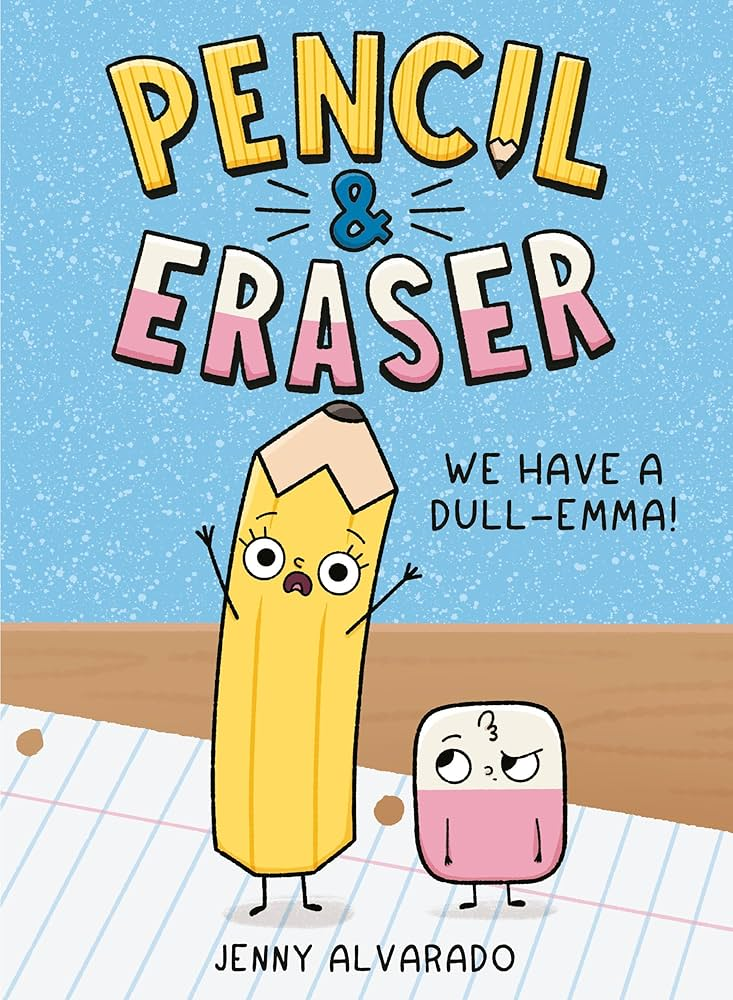
Pencil & Eraser: We Have a Dull-Emma by Jenny Alvarado (G. P. Putnam’s Sons, 67 pages, grades K-2). When Penciil discovers she’s lost her point, she’s ready to go on an adventure to find a sharpener. Eraser serves as both sidekick and voice of reality, keeping Pencil’s wild schemes in check. When they find out the classroom sharpener is broken, they’re forced to venture down the hall to another class. The pressure’s on to get back before recess is over, but they make it just in time…only to have Eraser discover there was a small sharpener in their pencil case all along. Includes step-by-step instructions for drawing Pencil and Eraser.

Fans of Pizza and Taco will enjoy this silly graphic novel, and the large font and short amount of text on each page makes it a good choice for those ready to take the next step from Elephant and Piggie.

Stella & Marigold by Annie Barrows, illustrated by Sophie Blackall (Chronicle Books, 101 pages, ages 6-9). Stella and Marigold are sisters, ages 7 and 4, who have been close friends ever since the day Marigold came home from the hospital. Their story is told in seven chapters, each of which could be read on its own. Marigold has a mind of her own and can’t always understand why adults don’t get why she drops her hairclip down the drain or gets lost in the meerkat tunnel at the zoo. Stella serves as a sort of go-between, interpreting the world for Marigold and helping the grown-ups understand the perspective of a four-year-old. But it’s Marigold who uses her cuteness and her fearlessness to help Stella when a second-grade best friend makes a new friend. The last chapter is a funny homage to the Laura Ingalls Wilder books and shows both girls using their active imaginations at full power.

This new book from the Ivy and Bean author and illustrator will undoubtedly be a series starter. The reading level is a bit high for a book about characters under the age of eight, and that combined with the stand-alone nature of each chapter and the adorable full-color illustrations make it feel more like a read-aloud than a book for early independent reading. It’s sure to be a holiday gift this year from many parents and grandparents.

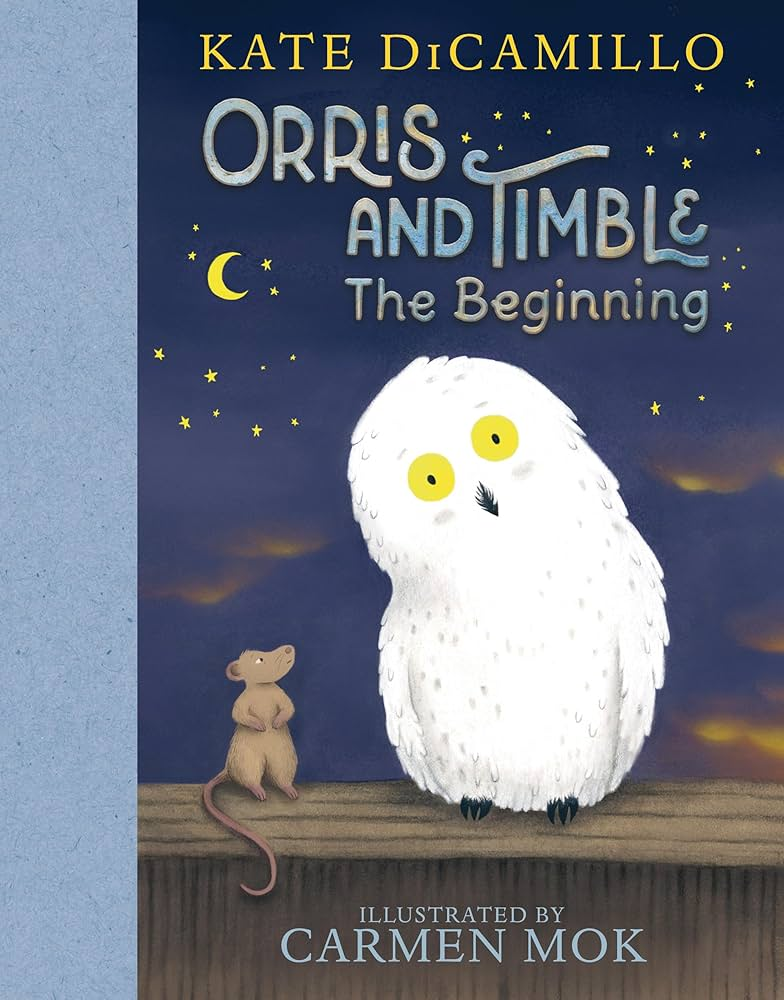
Orris and Timble: The Beginning by Kate DiCamillo (Candlewick, 76 pages, grades K-3). Orris the rat lives in a comfortable nest inside the old wall of an abandoned barn. One night he hears a snap and discovers an owl named Timble has gotten his foot caught in an old mouse trap. After wrestling with his conscience, Orris helps free Timble, sharing the story of the lion and the mouse to try to discourage Timble from eating him. Timble, who seems to have missed the memo that owls are supposed to be wise, brings Orris a butterscotch candy and asks for more stories. By the end of the book, Orris is willing to admit that the two have become friends.

As I’ve mentioned previously, I’m not a big Kate DiCamillo fan and have pretty much given up reading her books. This one was donated to my library, so I decided to make an exception. It’s a cute story with beautiful illustrations, supposedly the first in a planned trilogy (book 2 is slated for April of next year), and would make a good side-by-side read-aloud with Jerry Pinkney’s The Lion and the Mouse. It lacks the humor and cast of quirky characters of the Mercy Watson series, but more introverted, introspective early readers will appreciate the quiet nature of this book.

The cat’s meow

Picture Purrfect (Bodega Cats, book 1) by Hilda Eunice Burgos (Henry Holt and Company, 144 pages, grades 2-5). Told in the alternating voices of Miguel, a human boy, and Lolo, a cat, this story unfolds in Miguel’s parents’ New York City bodega. When Miguel finds a stray cat outside, he brings it into the bodega and convinces his parents to let him keep it. Lolo’s nervous at first, but eventually he feels comfortable enough in the bodega to head upstairs to the family’s apartment. He tries to be a good friend to Miguel, who’s having issues with his parents. They want him to excel in math and science, while real passion is art. Meanwhile, Lolo has worries of his own about a yellow stray cat who starts coming around the bodega. One memorable day, Miguel lies to his parents so he can go on a field trip to the Cloisters, and Lolo rescues the yellow cat right before she’s due to have kittens. After narrowly escaping disaster, Miguel finally has an honest conversation with his parents that results in a happy ending for all.

With a relatively low page count and plenty of illustrations–including Miguel’s comic book art–this is an engaging start to a new series for kids moving up to chapter books. Miguel’s family issues are relatable, with his hardworking Dominican immigrant parents and some interesting extended family members. Some kids may struggle with the alternating points of view, but it’s fun to get things from a cat’s perspective. A bodega full of newborn kittens in the last chapter should make for an interesting segue to book 2, due out in the spring.

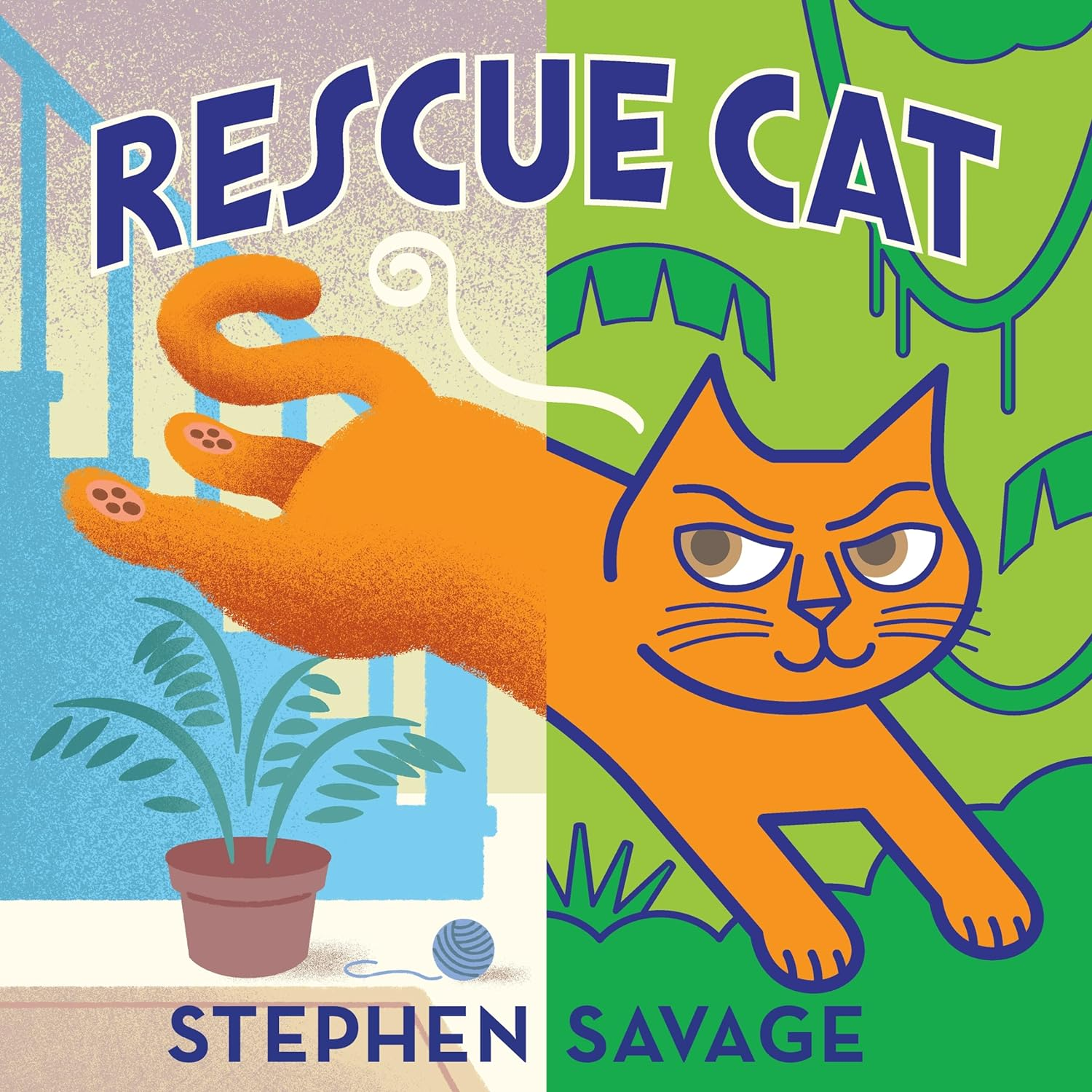
Rescue Cat by Stephen Savage (Roaring Brook Press, 32 pages, ages 3-7). Butterscotch lives a cushy life, but it wasn’t always that way. Before she became a rescue cat, she lived on the streets, alone and scared. Now she finds new meaning in the term rescue cat: when she sees a lion cub being hunted by a hungry crocodile on TV, she jumps through the screen and roars at the crocodile. He chases Butterscotch and the cub, but they leap back to the safety of the living room. The cub plays there for a few minutes before returning to his TV family. Butterscotch knows that she is a brave rescue cat as she settles down for a nap with her toy crocodile.

Young readers will enjoy this cute story and be inspired by Butterscotch’s courage, even when she’s feeling scared. The “rescue cat” double meaning makes for some fun wordplay.

Adorable anthropomorphism from around the world

Mouse on the River by Alice Melvin (Thames and Hudson, 32 pages, ages 4-8). Mouse embarks on a two-day journey in a rowboat on the river from his house in the woods to his friend’s home by the sea. Rhyming text and busy, colorful, lift-the-flap illustrations show all the sights he sees along the way: trees that hide several different birds, a lock with a lock keeper who helps Mouse keep his boat on the river, a town with a cafe and shops. After a happy night camping on the boat, Mouse reaches his friend’s house, and the two enjoy gazing out to sea. This book, a Scottish import, could not be any cozier, although by page two I was pretty sure I would never buy it for my library due to the many flaps. One-on-one sharing would be delightful, though, and kids will want to revisit the book many times to find all the details. A map in the front, and lists in the back of some of the sights Mouse sees and what he packs complete this magical picture book. Read more about Mouse in his first book, Mouse’s Wood: A Year in Nature (2022).

Little Shrew by Akiko Miyakoshi (Kids Can Press, 72 pages, grades K-3). In this early chapter book originally published in Japan, readers get to follow Little Shrew’s somewhat mundane life as he cooks his meals, takes the train to his job at the Exchange, and works hard all day before coming home to a variety of leisure activities like exercising or doing his Rubik’s cube. In two other chapters, he buys a TV at a yard sale and sees images that make him dream of taking a trip some day, and he gets a visit from a couple of friends who come to see him every year. Like Mouse, Little Shrew notices and enjoys small details from everyday life, and early chapter book readers may enjoy the slow, quiet pace of the writing and illustrations.

Marching to the beat of your own drum

Frankie D., Vegan Vampire by Sally and Brian Dutra (Kids Can Press, 192 pages, grades 2-5). Frankie and his family have moved from Transylvania to the U.S., hoping, like so many immigrants before them, for a better life. In their case, that life is eternal, since they’re a family of vampires. Being immortal is just the beginning, as Frankie and his family struggle to hide their fangs, their ability to turn into bats, and the fact that they’re used to sleeping during the day (and in coffins). Switching to a healthy vegan diet has fortunately dampened their taste for blood, and Frankie enjoys starting fourth grade and making new friends. He suspects that one classmate, Eddie, might be a troll, but as he learns more about Eddie, he comes to realize why he’s such a bully. The family successfully negotiates having one of Frankie’s new friends and his family to dinner, and Frankie has fun at a human birthday party, but the grand finale comes with the school concert, when Frankie and Eddie save the fourth-grade performance. Pumped after this success, Frankie decides to fly home and burn off some of his excess energy, only to realize that Eddie has seen him transform into a bat.

There’s plenty of humor in this de-fanged vampire story, and the last page makes me hopeful that there will be a sequel. It’s an illustrated chapter book, but at close to 200 pages, I wouldn’t exactly call it an early chapter book. Still, I think it could find an audience with fluent readers in the earlier years of elementary school, and maybe older kids who are reading a bit below grade level.

Band Camp #1: All Together Now! by Brian “Smitty” Smith (little bee books, 80 pages, grades 1-4). This early graphic novel gives summer camp a new twist: all the campers are musical instruments. Bunk J, a.k.a. Junk Bunk, the cabin that always loses all the competitions, has four unique residents this summer: Trey the triangle, Kaylee the ukelele, Zook the kazoo, and Cordelia the accordion. Each instrument has a unique personality and well-defined likes and dislikes, but they’re united in their determination to put an end to the Bunk J legacy. In a relay race at the end of this book, they combine their talents for an unexpected victory. Camp’s not over yet, though, and book 2 is due out in September.

As a veteran of eight–yes, eight!–band camps, I love this premise and was amazed at how Smith was able to create instruments with real personalities. Early readers will get a kick out of the story and illustrations. The ending seemed abrupt, and I kind of wish the whole camp session had been included in a single volume.

If you like Junie B. Jones…

Rachel Friedman Breaks the Rules by Sarah Kapit (Henry Holt Books for Young Readers, grades 1-4). Eight-year-old Rachel has plenty of energy and sometimes doesn’t understand the reason for having so many rules in her life–at home, at school, at the temple when she and her dad and brother attend Shabbat services. But when Rachel wants to meet famous gymnast Holly Luna when she comes to town, her dad makes a deal: if Rachel can follow all the rules for a week, he’ll let her go with her best friend Maya to see Holly. Rachel makes it through six days, but then a situation arises where she feels that she must break a rule. She and her dad don’t see eye to eye, and when Rachel stages a rebellion at a Shabbat service, Dad puts his foot down. But a conversation with the rabbi leads to a greater understanding and a compromise that satisfies everyone.

Bibsy Cross and the Bad Apple by Liz Garton Scanlon, illustrated by Dung Ho (Knopf Books for Young Readers, 128 pages, grades 1-4). Bibsy is another eight-year-old who has always loved school and her teachers until she hits third grade. Mrs. Stumper doesn’t seem to like Bibsy, especially the many contributions to class discussions Bibsy loves to make. A bulletin board features each student’s name on an apple that hangs from a tree, but which gets moved to the ground for behavior issues. Bibsy’s apple frequently falls to the ground, but things come to a head one day when Bibsy, defending what she’s sure will be a championship science fair project, goes too far and gets a worm hole punched in her apple. She has to bring the apple home to show her parents, which leads to a good conversation about how to handle her situation. Mrs. Stumper will probably never be Bibsy’s favorite teacher, but they come to an understanding, and Bibsy and her best friend Natia enjoy science fair success.

Both of these series openers feature spunky girls who have strong opinions and are not afraid to share them. Rachel’s book is a conventional chapter book with illustrations, while Bibsy’s is written almost like a book in verse, making it perhaps a more manageable choice for those just transitioning to chapter books. Both feature black and white illustrations, with highlights of apple-red in Bisby’s. While no new ground is broken–there are plenty of early chapter books featuring spunky girls–these are both sure to find an audience among the newly independent reader crowd who enjoy relatable protagonists and situations with plenty of humor.