
Phoenix (Ride On, book 1) by Kimberly Brubaker Bradley (Dial Books, 176 pages, grades 5-8). 11-year-old Harper refers to the event that blew her life up as the Bomb–her mother discovered that her dad was having an affair with the mom of Harper’s best friend Cat. Now Harper and her mom have moved to a small, dilapidated house a couple hours away from their Knoxville home and are trying to start over. The house overlooks a barn, and Harper soon finds herself curiously watching the kids who take riding lessons and beginning some tentative friendships with a few of them. When a “kill truck” transporting horses to be slaughtered dumps one of them off at the farm, Harper is immediately drawn to him, naming him Phoenix, and overseeing his near-constant care and feeding. Neither of her parents is thrilled with the idea of taking on the expense and responsibility of horse ownership, but they put off a final decision while Harper takes riding lessons and watches Phoenix slowly getting better. By the end of this series opener, Harper has discovered a love of riding and horses, has begun to reconcile with Cat, and is feeling more at home with the other kids at the barn. Includes an author’s note describing her own love of horses and how it evolved over many years.
This is a fun and fast read, introducing a lot of interesting characters and situations, and will appeal to anyone with even the slightest interest in horses. There are lots of storylines left open to lay the groundwork for book 2. It’s a little tough to say what age it’s best for–the whole dad cheating on mom situation feels like more of a middle school topic, while Harper and her friends are on the younger side for those readers.
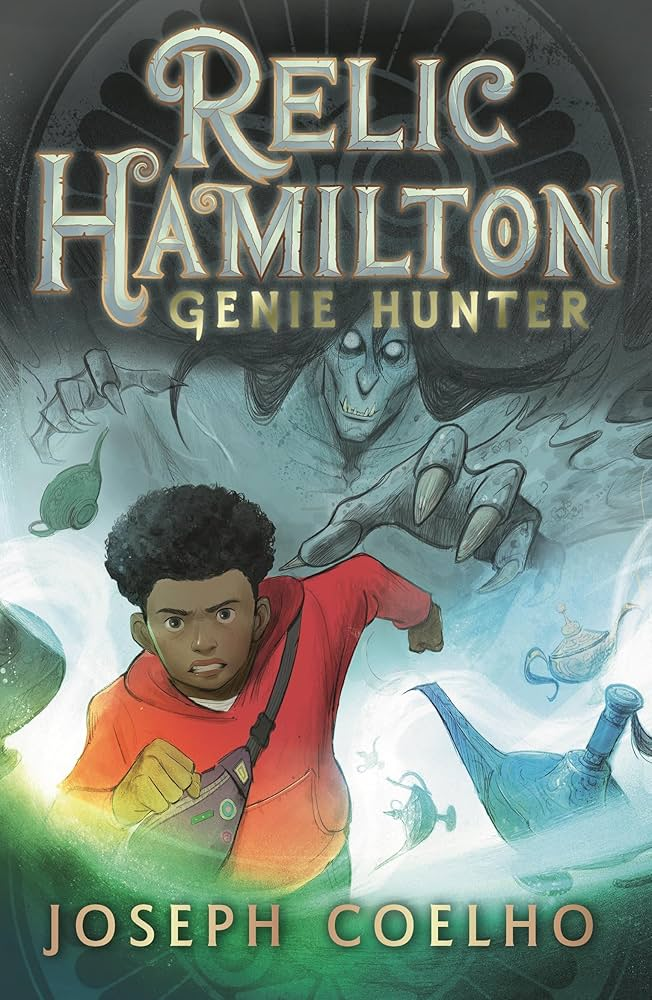
Relic Hamilton, Genie Hunter by Joseph Coelho, illustrated by Hyun Song We (Candlewick, 288 pages, grades 4-7). 12-year-old Relic Hamilton lives with his grandfather in an apartment over the antiques store they run in London. One day while helping out in the store, Relic polishes an old lamp he finds, releasing an evil genie that sends his grandfather into a coma. This leads Relic to the discovery that Grandfather is a member of a genie-hunting society, a group that soon recruits Relic to try to help heal his grandfather. Relic is sent on an undercover mission to a school where he meets Taya, a girl who’s been taken over by the powers of the evil genie. The two of them inadvertently travel back through time where they meet up with a crew of genie-hunting pirates. Along the way, Relic uncovers his own powers and discovers courage that he didn’t know he had. In the end, the evil genie is contained, Grandfather is restored, and Relic stands at the beginning of his genie-hunting career. Stay tuned for book 2.
Readers are immediately swept into this fast-paced fantasy adventure, which will undoubtedly appeal to Rick Riordan fans. The action, short chapters, and illustrations make it a good choice for reluctant readers. Fantasy’s not my favorite genre, but I definitely got caught up in this story.



 A Kids Book A Day