Mystery, fantasy…it must be summer

Mystery and fantasy aren’t my favorite genres, so I usually hold off on reading them until I have a little extra mental energy to devote to reading…which, not surprisingly is during summer vacation.

Medusa (Myth of Monsters, book 1) by Katherine Marsh (Clarion Books, 288 pages, grades 4-7). Ava tries to control her anger using the techniques that her mother has taught her, but when class bully Owen goes too far, she loses her temper, and Owen mysteriously freezes. The next day, Ava and her older brother Jax are suddenly told they’ll be starting immediately at their mother’s alma mater, the Accademia del Forte in Venice. It’s a startling enough change, but things really get weird when Ava learns on the first day that the Greek myths she loves are all true, gods and goddesses still exist, and that the students are all descended from monsters, sent to the school to be taught to control their powers. With her curly hair and freezing power, Ava soon discovers, to her dismay, that her ancestor is Medusa. But a group of faithful friends help her to discover the misogyny of Greek mythology and that many monsters and other mythological beings–especially the female ones–have been misrepresented. When Ava and her friends stand up to the gods, chaos ensues, and they find themselves one step ahead of angry deities, looking to discover the truth about Medusa and Ava’s family.

Fans of Rick Riordan will love this Greek mythology-inspired fantasy, which features engaging kid characters, each with an emerging superpower, and plenty of white-knuckle adventures. I loved the feminist message and the reimagining of many of the myths, although it occasionally felt a little heavy-handed. Nevertheless, it’s a fast-paced and inspiring story, and it appears that readers can look forward to at least one sequel.

The Cookie Crumbles by Tracy Badua and Alechia Dow (Quill Tree Books, 320 pages, grades 4-7). Best friends Lucy and Laila dream of attending high school at Sunderland, a private school where Lucy hopes to hone her journalistic skills while Laila gets to explore her passion for baking. When Laila’s given the chance to compete in the Golden Cookie Competition with a grand prize of a free ride at Sunderland, Lucy goes along to write about the contest with the hope of improving her scholarship chances. Five competitors, two chefs, and the one of the chef’s assistants are the only occupants of Sunderland as the contest begins. Laila’s in the lead when Chef Remi takes a bite of her cookie and collapses. He ends up in a coma in a nearby hospital, with Laila the prime suspect in his attempted murder. As Lucy and Laila investigate, they learn that everyone had a reason for wanting to get rid of Chef Remi. When a storm strands them at the school, it soon becomes obvious that unless they can identify the would-be killer, the two of them may be in danger as well.

This is a classic mystery setup: a group of strangers is brought together in an unfamiliar location, a crime is committed, and the detective(s) must figure out who that criminal is before it’s too late. Laila and Lucy’s alternate-chapter narrations keep things moving along, and the reality show-style baking competition adds to the fun.

One of these things is not like the other, take 2

Warrior on the Mound by Sandra W. Headen (Holiday House, 272 pages, grades 4-7). Cato loves baseball more than just about anything and aspires to join the Negro Leagues like his father, Daddy Mo, and his older brother Isaac. Daddy Mo died suddenly four years ago, and Cato is being raised by his grandparents, who have never told him the circumstances around his dad’s death. When white store owner Luke Blackburn builds a new baseball field for his son’s team, Cato and his friends sneak over to try it out themselves. When they’re caught, it’s the beginning of a chain of events that results in not only a baseball game between Cato’s team and the white team, but the revelation of Daddy Mo’s death, his friendship with Luke, and the guilt Luke carries about his role in the murder.

In the middle of all this, Isaac is brought home bloodied and unconscious, having been beaten as he tried to travel home during a break in the baseball season. As Isaac slowly recovers, he coaches Cato, not only in the finer points of baseball, but in surviving as a young Black man in the Jim Crow south of the 1930’s. There’s plenty of back matter to add historical context to this story, and readers will enjoy both the sports action and the history lessons. I did question if a friendship like Daddy Mo’s and Luke’s would have really survived to adulthood in that environment, but I’d like to think that it was possible.

One Big Open Sky by Lesa Cline-Ransome (Holiday House, 304 pages, grades 4-7). Just as I was finishing reading Warrior on the Mound, this book arrived for me at the library. It’s a novel in verse told by three female narrators: 11-year-old Lettie; her mother, Sylvia; and 18-year-old Philomena, an orphan with plans to be a teacher. They’re all traveling west, along with Lettie’s dad, who hopes to find a better life in Nebraska than the one they have in Mississippi. I know I would enjoy this book, but the font was tiny, and then I got distracted by another action-packed book.

And what was that book? I was looking through the most recent Scholastic flyer, and this book caught my eye: The Liars Society by Alyson Gerber (Scholastic, 304 pages, grades 4-7). Much of what is in Scholastic these days is pretty much trash, even in my low brow opinion, but this looked good, and I’ve enjoyed other books by Alyson Gerber. This one is a series opener featuring Weatherby and Jack, who take turns narrating the story. They meet at a sailing regatta, which Weatherby wins, gaining her a surprise scholarship to the prestigious Boston School, a private academy where her dad went and was part of the sailing team.

Weatherby has never met her dad, and as she gets involved with Boston and starts to learn more about her classmates, she begins to suspect that her mom has not been completely honest with her about her father. There’s a web of deception surrounding the school, and Weatherby is no exception. When she and her friends get recruited to join a powerful secret society, some of the lies begin to come to light. The twist at the end reveals an unexpected connection between Jack and Weatherby and leaves plenty of loose ends to investigate in book 2.

This book is a lot less likely to receive starred reviews or awards than One Big Open Sky, but it was a lot of fun! I did think Weatherby’s guilty secret was pretty lame, but she seemed tortured enough about it, and it got her admission into the Liars Society. It’s a promising opening for a series, with plenty of kid appeal for upper elementary and middle school readers.

The Case of the Strange Splash (Detective Duck #1) by Henry Winkler and Lin Oliver, illustrated by Dan Santat

Published by Harry N. Abrams

Summary:  Willow is a duck who’s been raised by a beaver since her egg was washed out of the nest and got stuck in a dam.  She’s curious and dreams of being a detective, so when a large black object mysteriously lands in her pond, she and her friends get to work figuring out what it is and where it came from.  Once they’ve established that it’s a car tire, they realize it’s bad for them to have it in their pond and get to work removing it.  Their teamwork results in a successful outcome, and Willow is able to convey a “recycle” message to the truck driver who left his tire behind.  80 pages; ages 6-9.

Pros:  A good beginner mystery with a nice environmental message and fun illustrations by Dan Santat (side note: I was thrilled that Santat won the National Book Award last week for A First Time for Everything).  Happily, this is billed as book 1, so we can look forward to reading more about Willow and her friends.

Cons:  Getting the tire out of the pond, billed as a mystery, seemed more like just a problem to solve.

The Mona Lisa Vanishes: A Legendary Painter, A Shocking Heist, and the Birth of a Global Celebrity by Nicholas Day, illustrated by Brett Helquist

Published by Random House Studio

Summary:  When the Mona Lisa was stolen on August 21, 1911, the Louvre was a sleepy museum where guards sometimes left their posts to take naps or get a snack, and the Mona Lisa was just another Renaissance portrait.  The theft changed everything, becoming a detective story that captivated a global audience, and making the Mona Lisa the most famous painting in the world.  Alternating between the 20th-century whodunit and the 16th-century tale of Leonardo da Vinci and Lisa Gherardini, the story captures many details of both pre-World War I Europe and the Renaissance.  Includes 16 pages of sources and an index.  288 pages; grades 5 and up.

Pros:  Holy Isabella Stewart Gardner Museum!  I was engaged immediately by this impeccably researched and humorous tale that takes readers on a roller coaster ride of (botched) detective work and life with the original Renaissance man.  Complemented perfectly with art by–Lemony Snicket!–Brett Helquist, this is sure to be a serious contender for some awards.

Cons:  I struggled to keep straight the many characters with unfamiliar French and Italian names.


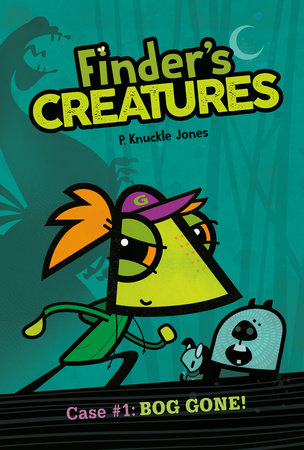
Bog Gone! (Finders Creatures, Book 1) by P. Knuckle Jones

Published by Penguin Workshop

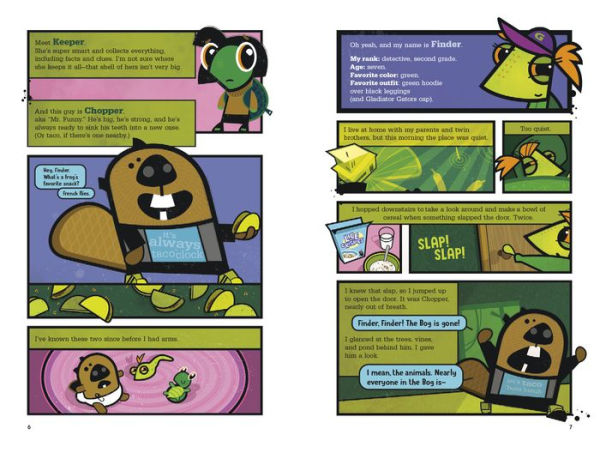
Summary:  Second grader Finder (frog) and his friends Keeper (turtle), and Chopper (Beaver) have their hands/paws full when the other animals from Belly Acre Bog disappear.  Finder’s hero is Seymour Warts, a brilliant detective based on Sherlock Holmes, who solves his own mystery during the course of the story.  A series of misadventures ensues, but both Finder and Seymour manage to crack their cases.  112 pages; grades 2-4.

Pros:  The many fans of early graphic novels like The Bad Guys, Max Meow, and The InvestiGators will enjoy this mystery, which includes plenty of madcap humor.  The word choices and color-coded speech bubbles makes this a good choice for newly independent readers.

Cons:  No sign yet of book 2.

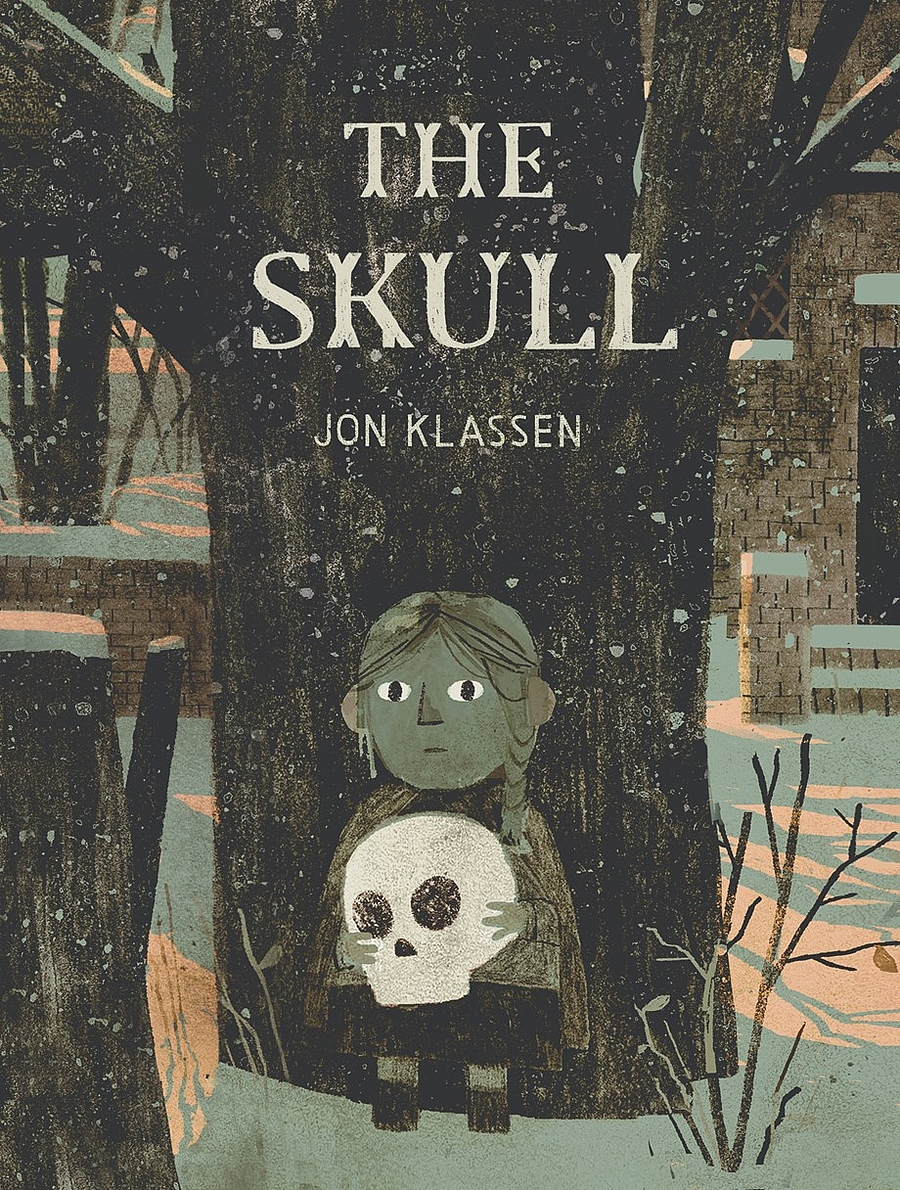
The Skull: A Tyrolean Folktale by Jon Klassen

Published by Candlewick

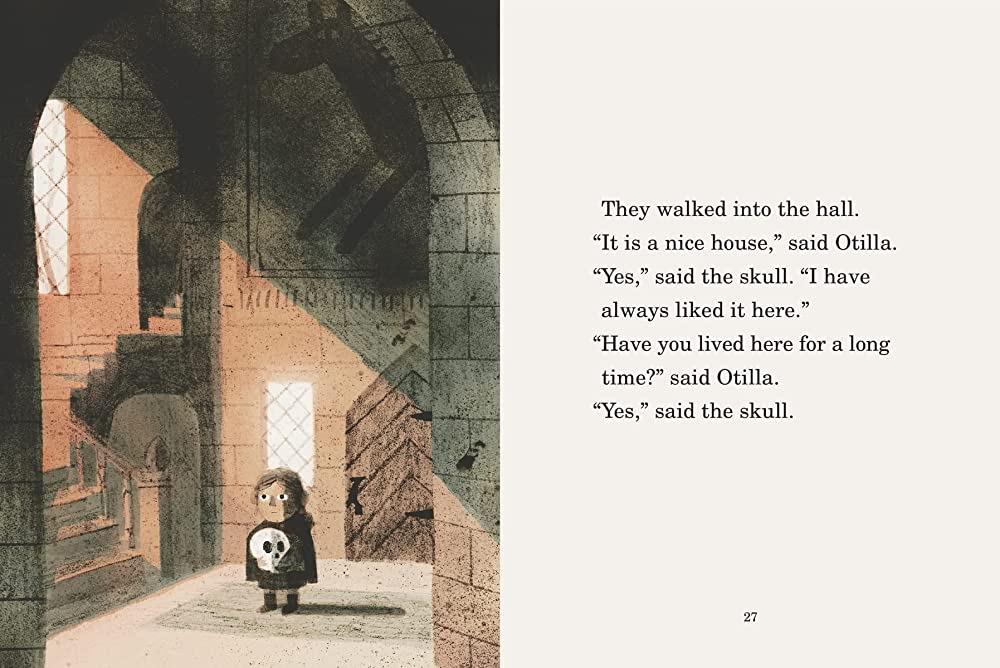
Summary:  Otilla is running away and lost in the forest.  She stumbles upon an old house that looks abandoned but turns out to be inhabited by a skull.  The skull shows her around: there are creepy masks, a dangerously high tower, and a bottomless pit.  He invites her to stay for the night but warns her of a headless skeleton that chases him every night, and “I am not as fast as I used to be.”  Sure enough, the skeleton shows up in the middle of the night, but Otilla is ready.  By the time the story ends, that skeleton will not be bothering anyone ever again, and the skull and Otilla have decided that she will stay in the house.  Includes an author’s note about how he came to write this folktale retelling which gives a pretty interesting spin on the oral tradition.  112 pages; grades 1-4.

Pros:  As usual with Jon Klassen, expect the unexpected.  This book, which looks more like a chapter book than a picture book, is told in five parts, but can probably be read in one longish sitting.  It’s creepy and funny and just dark enough to give kids the shivers.  Perfect for the Halloween season, with the distinctive Klassen illustrations that I’m sure will be considered for a Caldecott. The author’s note, featuring a wise Alaskan librarian, would make a good addition to folktale units.

Cons:  I’m always worried that Jon Klassen books are too dark and/or too weird for early elementary. Yet they never are.

The Firefly Summer by Morgan Matson

Published by Simon and Schuster Books for Young Readers

Summary:  When Ryanna gets an invitation from her estranged maternal grandparents to spend the summer at their house on a lake in the Poconos, she’s not sure if she wants to go.  But questions about her late mother motivate her to accept, and what she had imagined as a few quiet months with grandparents turns out to be a fun, busy summer surrounded by aunts, uncles, and cousins.  Partway through her time there, she learns that her grandparents have been forced to sell the camp, and that everything will be bulldozed and developed into condos in the fall.  Ryanna and her cousins discover a treasure hunt her mother created when she was 12 that could lead to the piece of paper her grandparents need to stop the sale of their property.  It’s a race against time as the kids slowly figure out the mystery and Ryanna unravels her own mystery about her mother and the early days of her own childhood.  385 pages; grades 4-7.

Pros:  A perfect summer read with an idyllic setting, lots of interesting characters, some family secrets to discover, and a mystery or two to solve.  Morgan Matson perfectly captures the feel of a tech-free summer spent outdoors with friends, and the pacing will keep readers turning the pages all the way to the end.

Cons:  I know from sad experience that a lot of readers in the intended demographic will be turned off by the page count.     

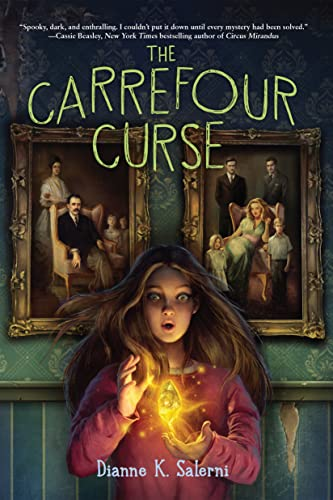
The Carrefour Curse by Dianne K. Salerni

Published by Holiday House

Summary:  Garnet has always loved her mother’s stories about growing up with her large extended family at the Crossroad House, but her mom fled the house long ago, and Garnet has never seen it.  It takes an episode of vomiting frogs to get the two of them back there, where they find the house in disrepair and the family dealing with the family patriarch, Jasper, who is staying alive by sucking the life energy from anyone he can.  As Garnet learns more about her magical family and their history, she discovers powers of her own beyond the magic she has always practiced.  When a crisis threatens her and her cousins, she must use those powers to save herself and to put her family on a new and more promising path.  224 pages; grades 4-7.

Pros:  Buckle yourself in for a magical mystery tour of an ancient house and family that holds more than its share of dark secrets.  Anyone who enjoys a good mystery with a generous dose of spookiness is in for a treat. Dianne Salerni does an amazing job of creating a richly detailed magical family history in just over 200 pages.

Cons:  I struggled to keep all the members of the family straight.  I wish the family tree, which I had to refer to frequently, had been at the beginning of the book instead of on pages 10 and 11.

The Mystery of the Love List by Sarah Glenn Marsh, illustrated by Ishaa Lobo

Published by Viking Books for Young Readers

Summary:  As the only porcupine in her class, Pippa sometimes feels like she stands out.  It’s a lonely feeling.  When her teacher makes a Valentine’s assignment to compile a list of “things that take up room in your heart”, Pippa would rather read her latest Sherlock Gnomes book.  But when she finds a heart with a list that’s similar to her own, she puts her detective skills to work trying to figure out who her potential friend might be.  It’s a tough case to crack, but when Pippa finally figures it out, she comes up with the perfect way to connect: writing a new story called “Sherlock Gnomes and the Mystery of the New Best Friend,” which she leaves for her friend to find in her desk.  The last page shows Pippa and new friend Mitzie the Mouse meeting up in the forest.  32 pages; ages 4-8.

Pros:  A cute story for Valentine’s Day that celebrates friendship and introduces some elements of mystery books.  Kids will have fun spotting Pippa’s new friend in the pictures before she figures out who it is.

Cons:  It doesn’t feel like the right week to be thinking about Valentine’s Day.

The Ghost Tree (Spooky Sleuths #1) by Natasha Deen, illustrated by Lissy Martin

Published by Random House Books for Young Readers

Summary:  Asim is new in the island town of Lion’s Gate, Washington, where both of his parents work at the island’s somewhat mysterious lab.  On his first day of school, Asim discovers a mysterious tree in the cemetery that grows unusually fast and seems to be destroying other life around it.  He witnesses a construction worker touch the tree and undergo a complete personality change.  Later, he befriends Rokshar, a girl in his class who aspires to be a scientist and takes a more skeptical view of events that Asim interprets as supernatural.  When their teacher, Mx Hudson, is also negatively affected by the tree, Asim, Rokshar, and some of their friends have to figure out a way to destroy the tree–even if it puts them in danger.  Includes an author’s note about the Guyanese folklore that inspired the story and a sneak peek at book #2.  95 pages; grades 2-4.

Pros:  This illustrated chapter book will appeal to the many kids who like scary stories, but who may not be ready for horror.  It’s a promising series starter with interesting characters and just the right amount of spookiness mixed with scientific skepticism.

Cons:  It’s unclear how Rokshar’s brothers go from being bullies to allies so quickly.