If the World Were 100 Animals: A Visual Guide to Earth’s Amazing Creatures by Miranda Smith, illustrated by Aaron Cushley

Published by Crown Books for Young Readers

Summary:  Since there are over 20 quintillion animals on Earth (that’s 20 followed by 18 zeros), it’s easier to get a grasp on that population by reducing it to 100.  For instance, if there were 100 animals on Earth, 6 would be vertebrates and 94 invertebrates.  If there were 100 animals in the ocean, 9 would be known and 91 left to be discovered.  If we imagine 100 animals have lived during the history of the Earth, 10 would still be living and 90 would be extinct.  The final two pages address the issue of extinction and encourage kids to work to save endangered animals.  32 pages; grades 2-5.

Pros:  I found myself thinking “Wow!” on almost every page; I can’t wait to share this book with kids.  Kudos to Aaron Cushley for creating illustrations that really bring these ideas to life.  

Cons:  There are no source notes or resources listed.

Before Music: Where Instruments Come From by Annette Bay Pimentel, illustrated by Madison Safer

Published by Harry N. Abrams

Summary:  Each section of this book begins with a person observing a natural phenomenon, like the sound rocks make when banged against each other, the sound of a silk thread being plucked, or the sound of air through a reed.  From there, the narrative looks at how that particular item inspired the creation of musical instruments, instruments in different categories (“rock instruments that are struck”, “rock instruments that are blown”) and musical innovators.  Includes a list of selected sources and instructions for making your own instrument.  88 pages; grades 3-7.

Pros:  An excellent addition to any music library, encouraging readers to look deeper into the history of music and instruments, with fabulous illustrations portraying instruments and musicians.

Cons:  This book is almost 15 inches tall, which felt unnecessarily large and unwieldy to read.  Also, I would have appreciated a table of contents, index, and/or glossary to give a little more structure.

A Seed Grows by Antoinette Portis

Published by Neal Porter Books

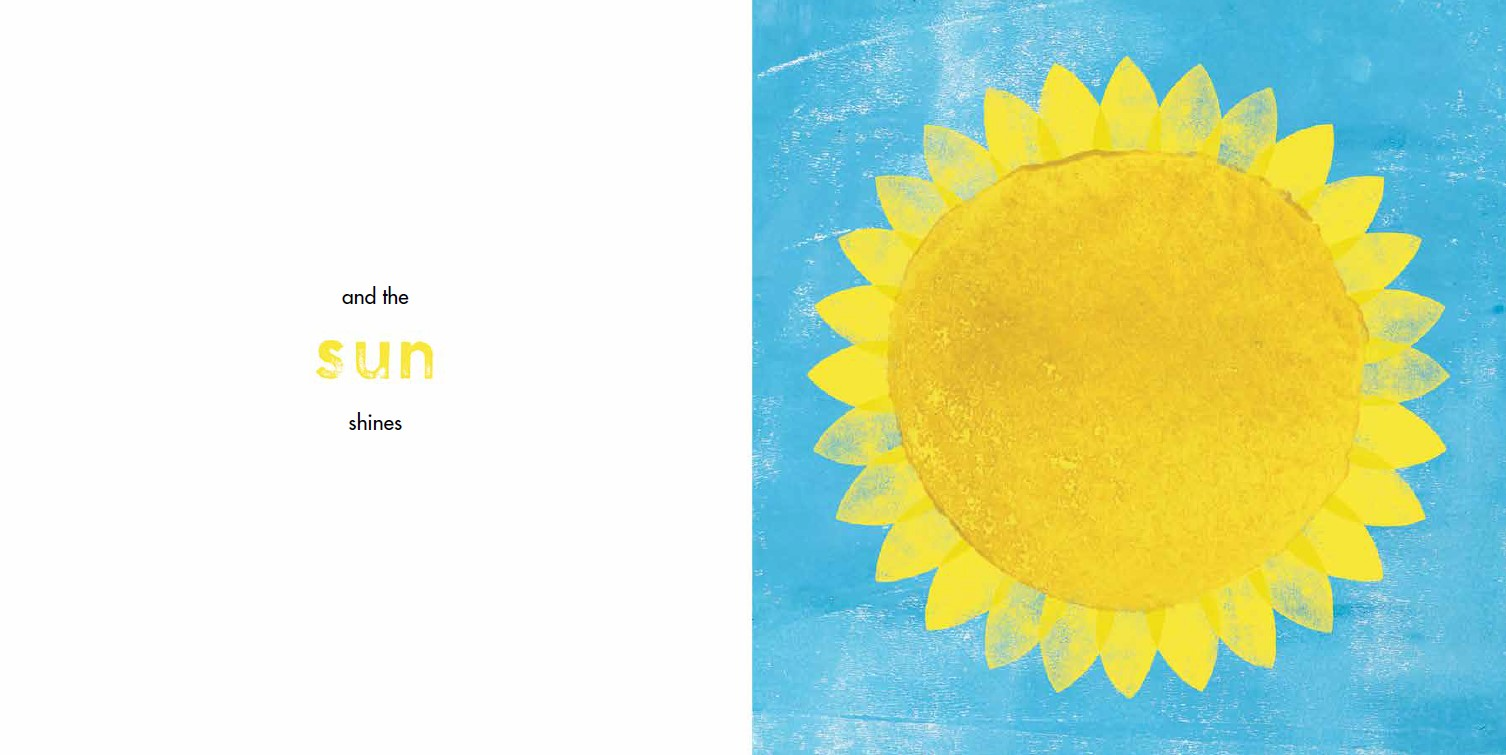
Summary:  A bird with a seed in its beak is on the title page, apparently the source for the seed that falls on page 1.  That seed settles into the soil, and sun and rain help it turn into a sprout, growing to at last become a sunflower (big enough to need a foldout page).  The flower is filled with seeds, which birds feed on when the plant droops to the ground.  When one bird drops the seed from the top of a tree, the cycle begins again.  Includes two pages of additional information and a list of resources.  40 pages; ages 3-7.

Pros:  I am already excited to read this book to preschoolers when they start learning about seeds next spring.  I like how key words like seed, sprout, and bud are written in a large colorful font to emphasize them, and kids always enjoy a foldout page.  Another great early science resource from Antoinette Portis to go with her award-winning Hey, Water!

Cons:  Those foldout pages get torn a lot in library books.

Honeybee Rescue: A Backyard Drama by Loree Griffin Burns, photographs by Ellen Harasimowicz

Published by Charlesbridge

Summary:  Mr. Connery keeps bees in hive boxes in his yard.  One day he discovers that some of the honeybees have swarmed and built a hive in a dilapidated garage where they may not survive the winter.  He calls Mr. Nelson, a beekeeper who specializes in relocating honeybee hives.  The text and photographs show the many careful steps needed to move the hives into a box.  For the next several days, Mr. Connery slowly transitions the box from its garage location to his yard where the bees can join the other hives he keeps there.  Everyone celebrates with a little taste of honey.  Includes an interview with Jon Nelson, a glossary, an author’s note, and lists of sources and books for further reading.  40 pages; grades 1-5.

Pros:  An outstanding nonfiction book for elementary kids, with a large font, plenty of photos, and clear descriptions of what is going on.

Cons:  Anyone with apiphobia may get a little freaked out.

Building by Henry Cole

Published by Katherine Tegen Books

Summary:  “Building, building.  That is what beavers do best.”  This is the repeated refrain in a story that follows a pair of beavers through a year beginning in late winter.  They pick a spot to live by a stream and build a dam and a lodge.  The dam creates a pond, and the lodge provides a safe place for babies.  As the seasons progress, the beavers face a coyote and a heavy rainstorm, but their defenses protect them from these dangers.  They gather enough twigs and branches to survive the winter, then settle down in the lodge as the snow begins to fall.  Includes an author’s note with additional information about beavers.  40 pages; ages 4-8.

Pros:  As he did with robins in Nesting, Henry Cole tells a gentle story about beavers as they journey through the seasons.  The detailed illustrations are mostly in black and white with highlights of seasonal colors (green grass, red leaves).  The author’s note invites wonder by contemplating the beavers’ amazing engineering feats.

Cons:  The interaction with the coyote wasn’t quite as dramatic and exciting as the snake attack in Nesting.

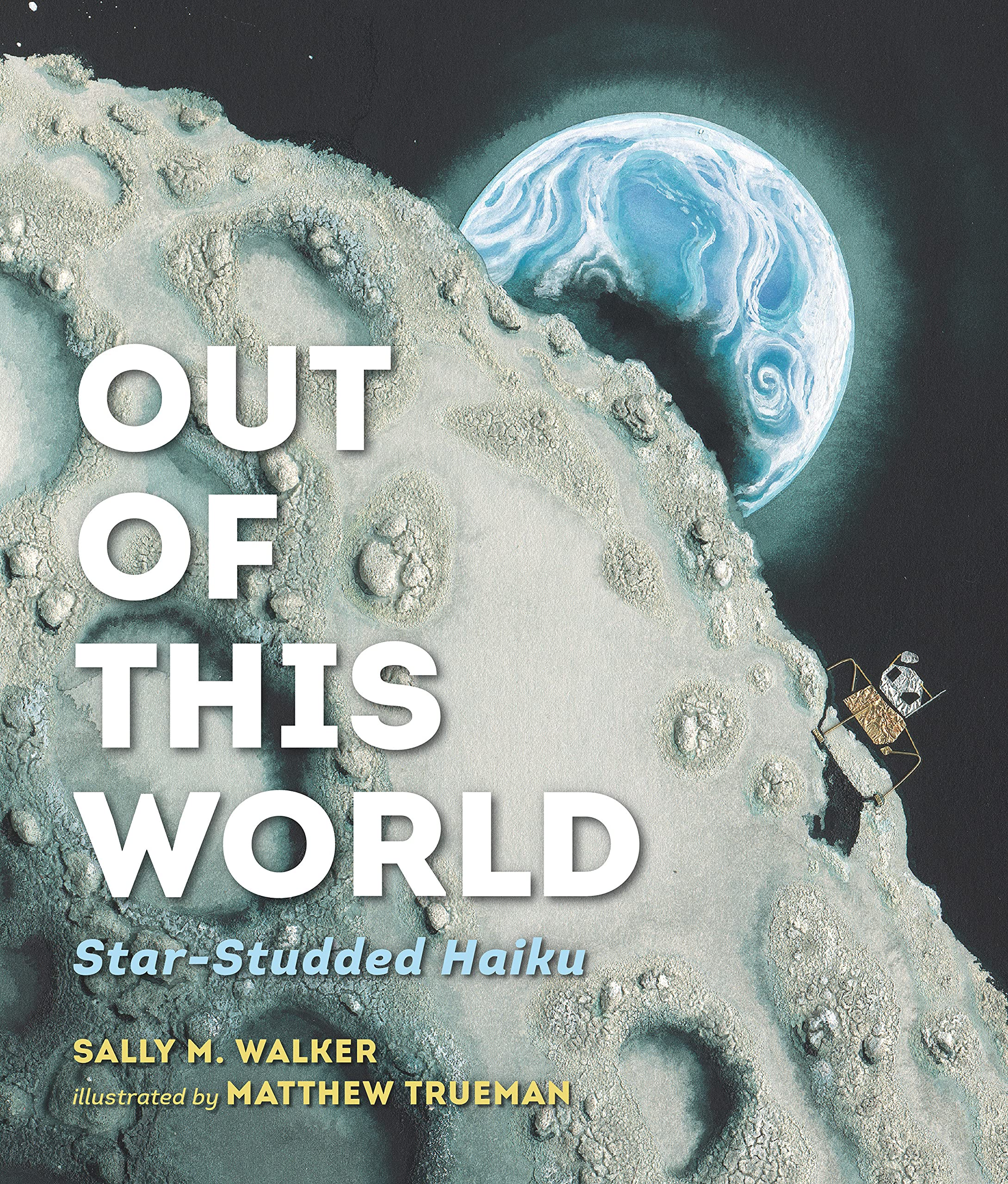
Out of this World: Star-Studded Haiku by Sally M. Walker, illustrated by Matthew Trueman

Published by Candlewick

Summary:  This collection of haiku looks at different aspects of the universe including constellations, astronomers, stars, the sun, all the planets (even Pluto!), moons, comets, and asteroids.  Each poem is supported with mixed media art to show various spacescapes.  Includes additional information for each section, a glossary, a reading list, and a list of online resources.  48 pages; grades 2-6.  

Pros:  This book will appeal to many different types of readers: poets (a great intro to haiku), scientists, and artists.  The illustrations are awe-inspiring and will fire up kids’ imaginations about the wonders of space.

Cons:  I wish someone had come up with a slightly more imaginative title than the hackneyed “Out of This World”.

Star Child: A Biographical Constellation of Octavia Estelle Butler by Ibi Zoboi

Published by Dutton Books for Young Readers

Summary:  This biography of science fiction writer Octavia Butler is told through a collection of poetry, photographs, and quotations from Butler.  Starting with her early life as a solitary child growing up in 1950’s Pasadena, readers get to see how Octavia’s struggles in school, her introverted nature, and her love of books combined to lead to her a life as a writer.  She was fascinated by science fiction, although almost all of the writers and heroes of the stories were white men.  After years of rejection, she finally began selling her stories and eventually wrote books that earned her Nebula and Hugo awards as well as a MacArthur fellowship.  Includes a final chapter on Ibi Zoboi’s connection to Octavia Butler (they shared a birthday and met in person several times, including a science fiction writing workshop) and a list of Butler’s books.  128 pages; grades 7-12.

Pros:  This unique biography is a pretty quick read but gives an intimate look at Octavia Butler’s life and writing.  Readers who are not familiar with Butler’s work (like me) may be motivated to seek it out after getting this introduction.

Cons:  I saw some recommendations for this book starting in fifth grade, but I think it would be better appreciated by middle school and high school students, since Butler’s books are for young adults and adults.

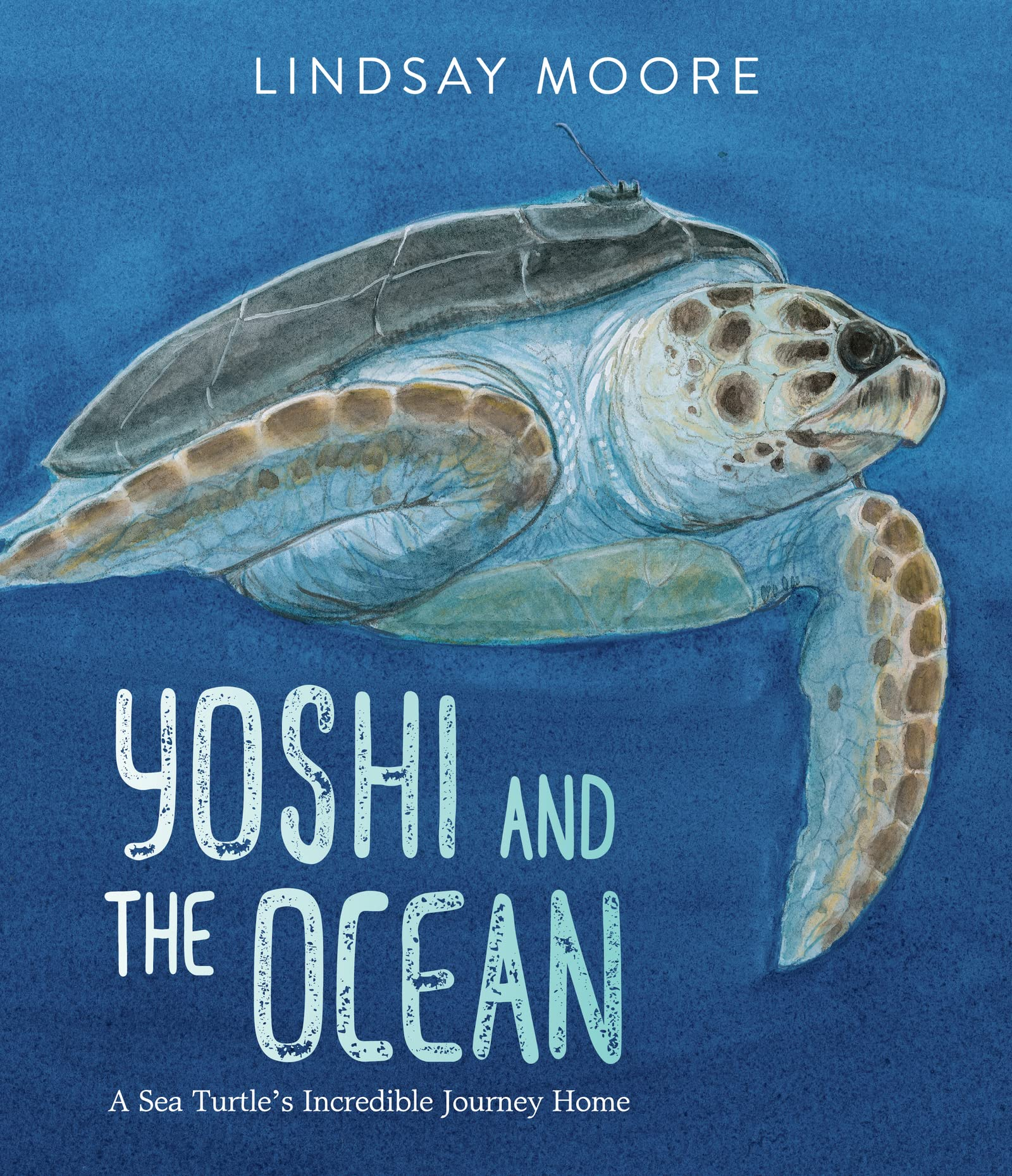
Yoshi and the Ocean: A Sea Turtle’s Incredible Journey Home by Lindsay Moore

Published by Greenwillow Books

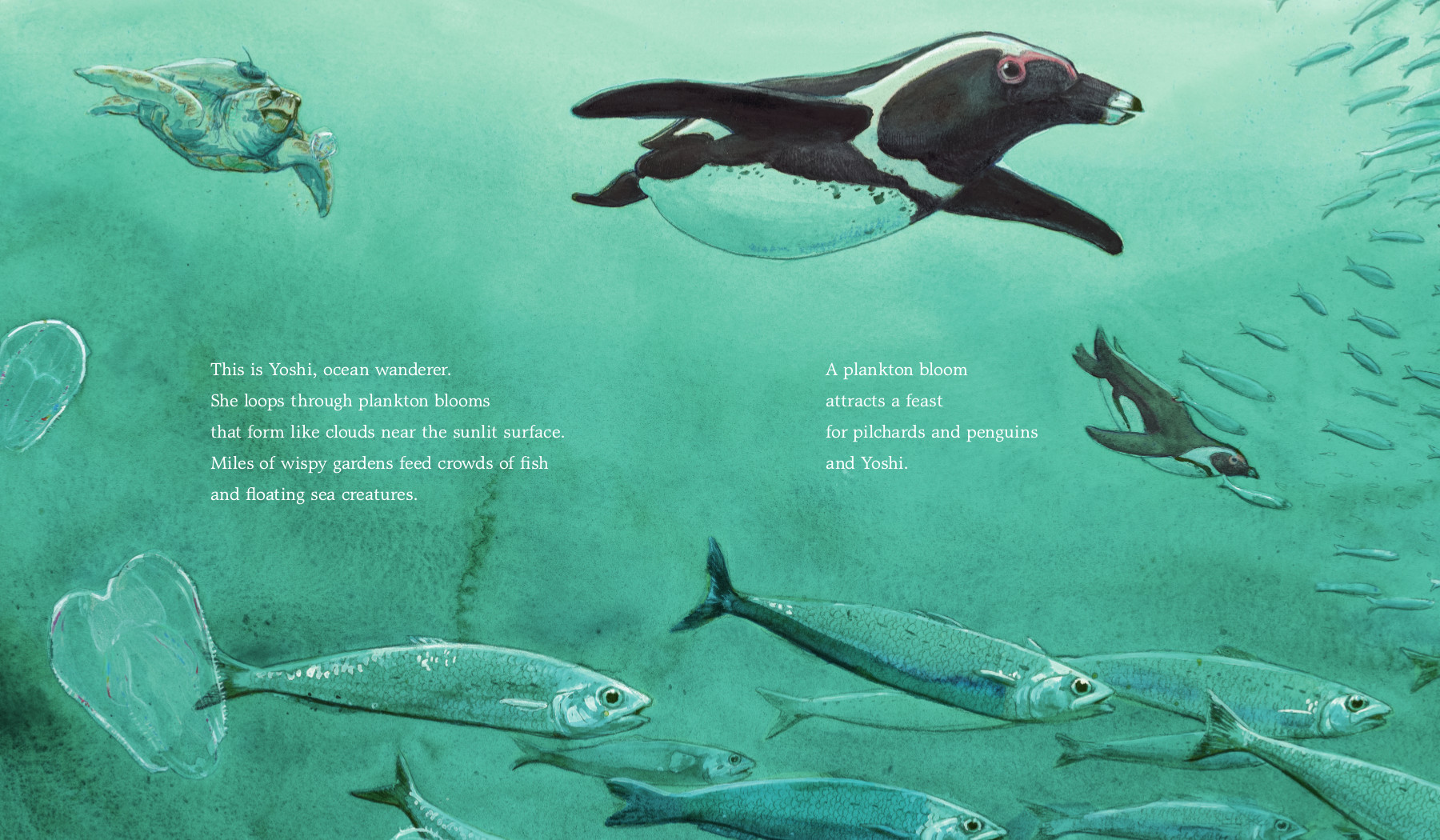
Summary:  Yoshi is a young, injured sea turtle when she is rescued by fishermen and sent to an aquarium in Cape Town, South Africa.  She thrives there, growing and swimming in a giant tank for twenty years, until she starts to display some restlessness.  The scientists want to return her to the wild, but they’re worried that she won’t be able to survive.  They attach a tracking device to her shell before releasing her back into the ocean.  At first her travels seem random, but eventually she starts heading east.  In February 2020, more than two years after her release, Yoshi completed a 25,000-mile journey to reach the Australian waters where she was born.  Includes a labeled map with additional information about Yoshi’s journey, a labeled diagram of a sea turtle, and additional information about turtles, their habitat, and tracking devices.  64 pages; grades 2-5.

Pros:  The beautiful watercolor illustrations do an amazing job of portraying Yoshi and her ocean environment.  I liked how the repeated refrain “Hello from Yoshi.  I am here” showed how the tracking device helped scientists follow her journey.  There’s a ton of excellent back matter which makes this a great research book.

Cons:  I found Yoshi’s lengthy journey a bit monotonous at times.  Maybe she did too.

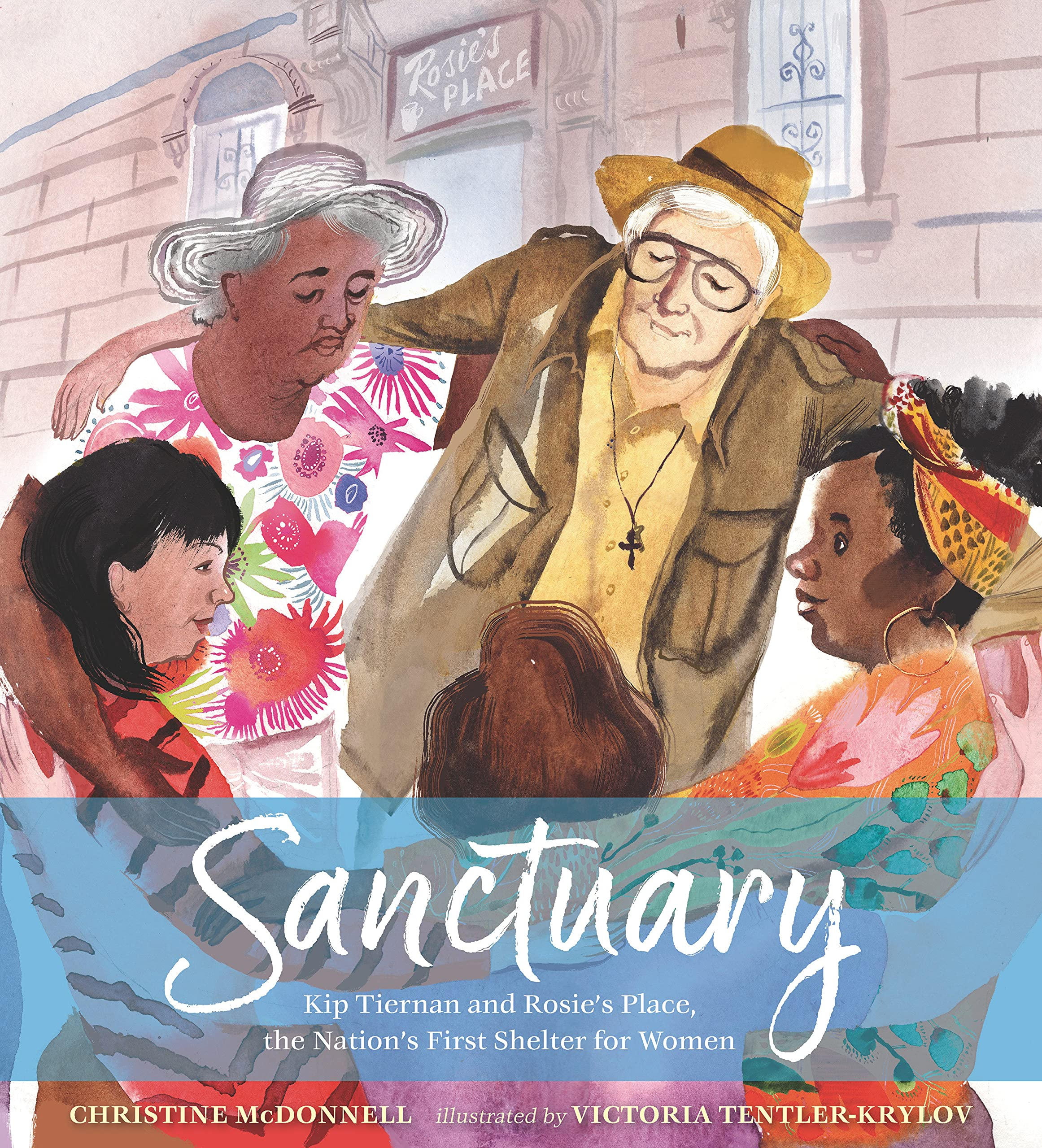
Sanctuary: Kip Tiernan and Rosie’s Place, the Nation’s First Shelter for Women by Christine McDonnell, illustrated by Victoria Tentler-Krylov

Published by Candlewick

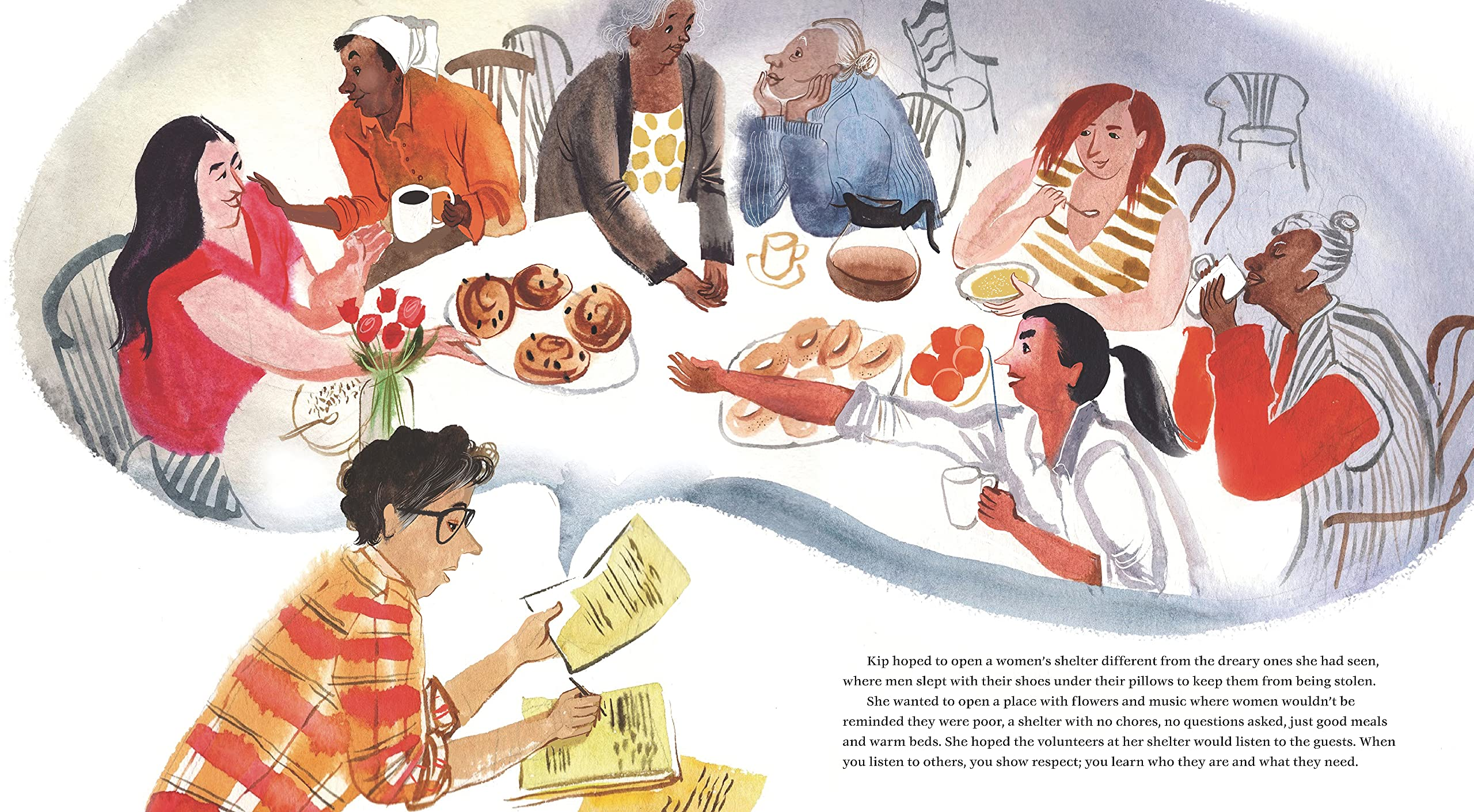
Summary:  Kip Tiernan learned about helping others as a child growing up during the Great Depression.  Her grandmother used to keep a pot of soup on the stove and would feed anyone who came to the door for a meal.  In the 1960’s Kip gave up her advertising business to help the poor.  While working in shelters, she saw that women had to disguise themselves as men to get a meal and a bed.  Noticing how many homeless women there were on the streets, she became determined to find a way to help them.  In 1974, she opened Rosie’s Place, the first homeless shelter in the country just for women.  Over the years she expanded the services offered there to help women become self-sufficient.  The book concludes with a story of Kip riding on a bus many years after starting Rosie’s Place.  The bus driver pulled over to thank her, stating that he would not have had food to eat as a child if it hadn’t been for her.  Includes additional information about Kip Tiernan and a list of quotations from her.  40 pages; grades 1-5.

Pros:  An inspiring story of a woman who worked tirelessly to provide the services she envisioned, and who truly saw the humanity of every individual.

Cons:  The story is a bit long to use as a read-aloud for younger kids.

Because of You, John Lewis: The True Story of a Remarkable Friendship by Andrea Davis Pinkney, illustrated by Keith Henry Brown

Published by Scholastic Press

Summary:  Tybre Faw grew up learning Black history and was particularly inspired by John Lewis.  In 2018, at the age of ten, he convinced his grandmothers to take him to Selma to be part of the commemoration of 1965’s Bloody Sunday.  Tybre met John on the Edmund Pettus Bridge, and the two became friends.  They walked together again in 2019 and in 2020 when John Lewis had been diagnosed with cancer.  Lewis died a few months later, and Tybre was invited to recite one of the congressman’s favorite poems, “Invictus” by William Ernest Henley at the memorial service.  Includes additional information about both John Lewis and Tybre Faw, a timeline of Lewis’s life, a list of sources and resources for further reading, photos from both the 1960’s and the interactions between John and Tybre, and the text of “Invictus”.  40 pages; grades 2-5.

Pros:  I marvel at the way this book is written, using beautiful poetry and watercolor illustrations to weave together the lives of both John Lewis and Tyre Faw, and showing the intersection between the civil rights and Black Lives Matter movements.  The back matter adds a lot and gives resources for further exploration.

Cons:  I found it a little difficult to figure out when and at what age Tybre met John; it would have been helpful to me to have those dates included in the timeline.