Some Bodies by Sophie Kennen, illustrated by Airin O’Callaghan

Published by Sleeping Bear Press

Summary:  “Our bodies can get us from here to there/When we have big feelings, it’s our bodies that share.  So bodies are useful, you’ll surely find/but they’re also unique–one of a kind!”  The rhyming text and illustrations explore all sorts of different bodies.  Size, color, wheelchairs, prosthetics, glasses, tattoos, top surgery, hair, and the amount covered by clothing are all touched upon in a light-hearted body-positive way.  The author is an elementary school teacher who based the book on questions and comments she’s heard in the classroom, and she includes some sample scripts for answering children’s questions, encouraging adults to have those conversations in a positive manner.  32 pages; ages 3-8.

Pros:  Both the text and the illustrations celebrate all kinds of bodies in a way that will both engage young children and encourage them to talk about what they notice about their own bodies and others’.  

Cons:  Although one of the sample questions is “Why is that man fat?” fat people are not represented in the illustrations.

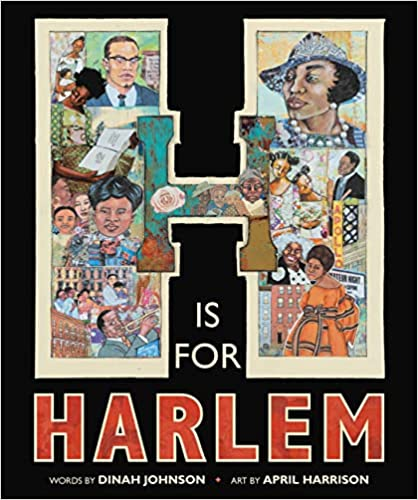
H Is for Harlem by Dinah Johnson, illustrated by April Harrison

Published by Christy Ottaviano Books

Summary:  An author’s note introduces Harlem, giving a little historical context before exploring the neighborhood from A to Z.  Whether historical (W for Madam C. J. Walker, X for Malcolm X) or contemporary (C for Harlem Children’s Zone, I for Impact Farm), the text and illustrations combine to bring Harlem to life as a vibrant neighborhood with a rich history.  Readers will learn of places to visit like the Apollo Theater and the National Jazz Museum and of performances like the Boys (and Girls) Choir of Harlem and the Harlem Globetrotters that they may want to attend someday.  48 pages; grades K-4.

Pros:  I was ready to hop on the train and take a trip to Harlem after reading this colorful book with its lively illustrations of so many fascinating people and places that have shaped this amazing neighborhood over the years. A definite contender for a Coretta Scott King Award.

Cons:  Some additional resources, particularly websites, would have been a great addition.

Pizza! A Slice of History by Greg Pizzoli

Published by Viking Books for Young Readers

Summary:  Sure, everyone loves pizza, but where did it come from originally?  A pizza-loving rat guides readers through a somewhat random assortment of facts (Americans eat 350 slices of pizza every second!) to trace its history from pizza-like (but not quite pizza) foods of the ancient world to the early pizzas of Italy (it helped that Italians, unlike other Europeans, didn’t think tomatoes were poisonous).  The immigration of four million Italians to the US between 1880 and 1924 brought pizza to America, and its popularity increased after World War II when American soldiers returned from Italy.  A review of different pizzas around the US and the world rounds things out.  “Right now somewhere in the world, someone is enjoying a pizza.  Are you?”  56 pages; grades 1-4.

Pros:  A fun and quirky nonfiction book about a topic that everyone will enjoy.  The text draws the reader in with lots of questions and the colorful cartoon illustrations are appealing.

Cons:  Some of the text could have used a bit more context, like comparing the colors of a pizza to the Italian flag with no flag pictured.  Also, I was sad to find no back matter.

Hope Is an Arrow: The Story of Lebanese-American Poet Kahlil Gibran by Cory McCarthy, illustrated by Ekua Holmes

Published by Candlewick

Summary:  Gibran Khalil Gibran was a shy boy growing up in Lebanon.  He loved his country, but there was unrest there, and he often escaped into nature, hiking in the woods or swimming in the ocean.  After his father was jailed, he and his mother and three siblings left for America.  They settled in Boston’s South End, where a teacher changed his name to Kahlil Gibran, and where he often saw his mother treated disrespectfully despite her hard work as a shopkeeper.  Kahlil often felt divided between his American self and his Lebanese self and began expressing himself through his poetry and art.  Studying in Beirut and losing his mother, sister, and brother in a short period of time deepened and intensified his art, and in 1923, he published his most famous work, The Prophet.  Includes source notes and additional stories from Kahlil Gibran’s life.  40 pages; grades 2-5.

Pros:  The lyrical text and beautiful illustrations capture Kahlil Gibran’s spirit.  Many of his quotes are included (including my favorite, “Work is love made visible”) which are helpful in introducing his writing.  As usual, Ekua Holmes’s art is worthy of award consideration.

Cons:  I wasn’t crazy about the format of the source notes and additional stories, which did not seem particularly kid friendly.

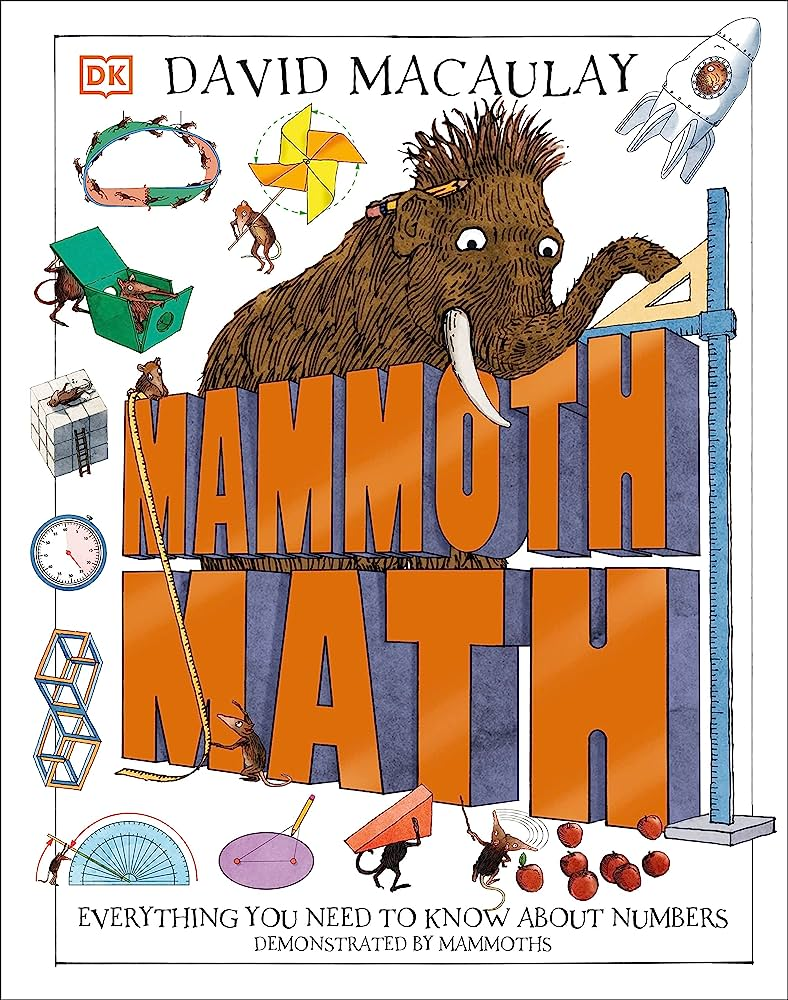
Mammoth Math: Everything You Need to Know About Numbers by David Macaulay

Published by DK Children

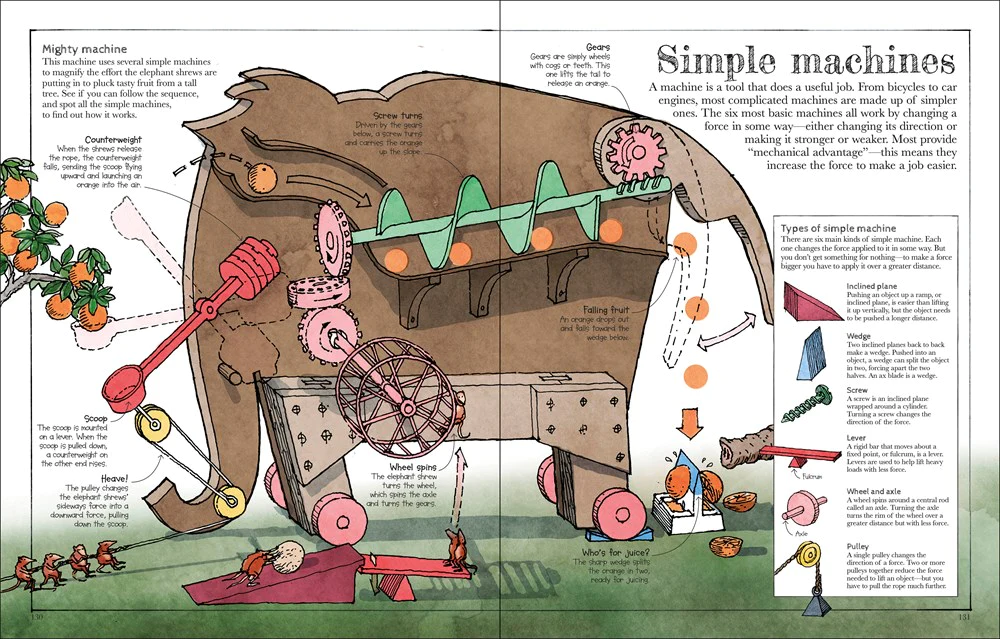
Summary:  A wooly mammoth and an elephant shrew take readers on a tour through all different mathematical concepts including counting, number know-how, patterns and sequences, geometry, maps, measurement, and using data.  David Macaulay still has his gift for using illustration to show a variety of concepts, with mammoths and shrews appearing on every page to add plenty of humor.  Includes a reference section with multiplication tables, illustrations showing fractions and percentages, geometrical shapes, units of measurement, and signs and symbols; also, an extensive glossary and an index.  160 pages; grades 2-6.

Pros:  Wasn’t it just a few weeks ago that I said there aren’t enough good math books in the world?  This one is amazing, with so many topics covered, great illustrations, and plenty of humor.  Math fans will have fun just browsing through it, and teachers will find it useful to engage those who aren’t yet fans.

Cons:  Somehow, I missed Mammoth Science, which came out in 2020.

To Change a Planet by Christina Soontornvat, illustrated by Rahele Jomepour Bell

Published by Scholastic Press

Summary:  One person, one carbon molecule, one degree of warmth can all seem insignificant, but when they are multiplied, they can wreak havoc on a planet.  Likewise, one person can also feel insignificant when it comes to making positive changes to help our planet, but combined with the efforts of others, they can make a real difference.  Includes back matter with additional information about climate change and what people can do to make a difference.  40 pages; ages 4-8.

Pros:  A perfect introduction to climate change and the need for environmental activism.  The text is spare, just a sentence or two per page, but it really shows the impact, both positive and negative, of small changes.  The colorful illustrations help show this as well.

Cons:  I find every book about climate change anxiety-inducing.

Lola Out Loud: Inspired by the Childhood of Activist Dolores Huerta by Jennifer Torres, illustrated by Sara Palacios

Published by Little, Brown Books for Young Readers

Summary:  Lola loves helping out at the hotel where she lives with her mother and grandfather.  Her mother is always ready to help guests; if they don’t have money to pay, she’ll accept food or even just a handshake and a promise.  Lola is an enthusiastic worker, but she sometimes gets in trouble for talking too much.  “Lolita Siete Lenguas (seven tongues)” her grandfather calls her teasingly, reminding her that sometimes it’s good to be quiet but other times “one strong voice is just what we need.”  Lola remembers this lesson when she’s the only one who sees a woman and girl thrown off the streetcar in front of her house because they can’t pay the fare.  She stays quiet about the two at first, but, remembering Grandpa’s words, she rallies her family and the other hotel guests to help them, using words that she would later become famous for, “¡SÍ se puede!”  Includes additional information about the labor leader Lola grew up to be: Dolores Huerta.  32 pages; ages 4-8.

Pros:  Keep this book in mind for the upcoming Hispanic Heritage Month, especially if you’re looking for something for younger readers.  They’ll enjoy the story of young Lola, learn a little about Dolores Huerta, and take away an empowering message about using your voice to speak up about injustice. The illustrations add just the right touch of fun and energy.

Cons:  It would have been nice to have a list of additional resources for older kids to dive into.


Keepunumuk: Weeâchumun’s Thanksgiving Story by Danielle Greendeer, Anthony Perry, and Alexis Bunten illustrated by Garry Meeches Sr. 

Published by Charlesbridge

Summary:  Maple and Quill love visiting N8hkumuhs (pronounced NOO-kuh-mus), their grandmother, and hearing her stories.  One story she tells is of Weeâchumun (corn), and how she and her sisters Beans and Squash helped new people who came to their land.  They sent dreams to the First People to alert them of the newcomers’ plight, and the people sent Ousamequin and Tisquantum to greet them and show them how to plant corn, beans, and squash.  When there was a successful harvest, the First People and the new people celebrated together with a three-day feast.  “Many Americans call it a day of thanksgiving,” concludes N8hkumuhs.  “Many of our people call it a day of mourning.” Includes a glossary and introduction at the beginning and additional information about the Wampanoag tribes, storytelling tradition, harvest feasts, and tradition of giving thanks at the end, as well as a recipe and a photo of the real Maple and Quill.  32 pages; grades K-4.

Pros:  An excellent addition to Thanksgiving collections that gives the Wampanoag perspective and includes some good information in the back matter.  The illustrations beautifully portray various animals and the spirits of the Three Sisters.

Cons:  Kids might need some help with the transition between the opening scene with N8hkumuhs, Maple, and Quill and the main story. I was confused until I realized that the weeâchumun (corn) that N8hkumuhs mentioned was the same as Weeâchumun, the spirit of corn and the protagonist of N8hkumuhs’ story.

More Than Peach: Changing the World…One Crayon at a Time by Bellen Woodard, illustrated by Fanny Liem

Published by Scholastic

Summary:  When Bellen Woodard noticed that her classmates were using the term “skin-colored” when asking for a peach crayon, she felt confused.  Her mom suggested she hand them the brown crayon instead, but that didn’t feel right either.  She decided to ask them what color they wanted because skin “can be any number of beautiful colors”.  Her friends appreciated the reminder, so she kept going, changing the language in her classroom, her school, and, eventually, the larger world.  The last five pages tell the history of Bellen’s More than Peach Project and give kids steps for creating their own campaigns.  40 pages; grades K-3.  

Pros:  This inspiring story tells how one young girl made a difference in her community and beyond and gives readers good advice, from one kid to another, about how they can become activists.

Cons:  I liked the part of the back matter written in Bellen’s voice, but the page giving her history read like it was written by a proud parent.

What Is Math? by Rebecca Kai Dotlich, illustrated by Sachiko Yoshikawa

Published by Christy Ottaviano Books

Summary:  Rhyming text and lively illustrations show the many ways that math is used in everyday life from cooking to making change to building a house.  Many mathematical concepts are introduced including counting, measuring, comparing, geometry, money, and patterns.  The illustrations show lots of busy children using math in a variety of activities which may better answer the question of how math is used than what math is.  40 pages; ages 4-8.

Pros:  A spirited introduction to math for preschool and early elementary kids.  It would be fun to spend some time brainstorming about how math is used before reading this book.  There are not enough math picture books in the world, and this is a good addition to that limited collection.

Cons:  I wanted to weep when I reached the last page and discovered there was no back matter.