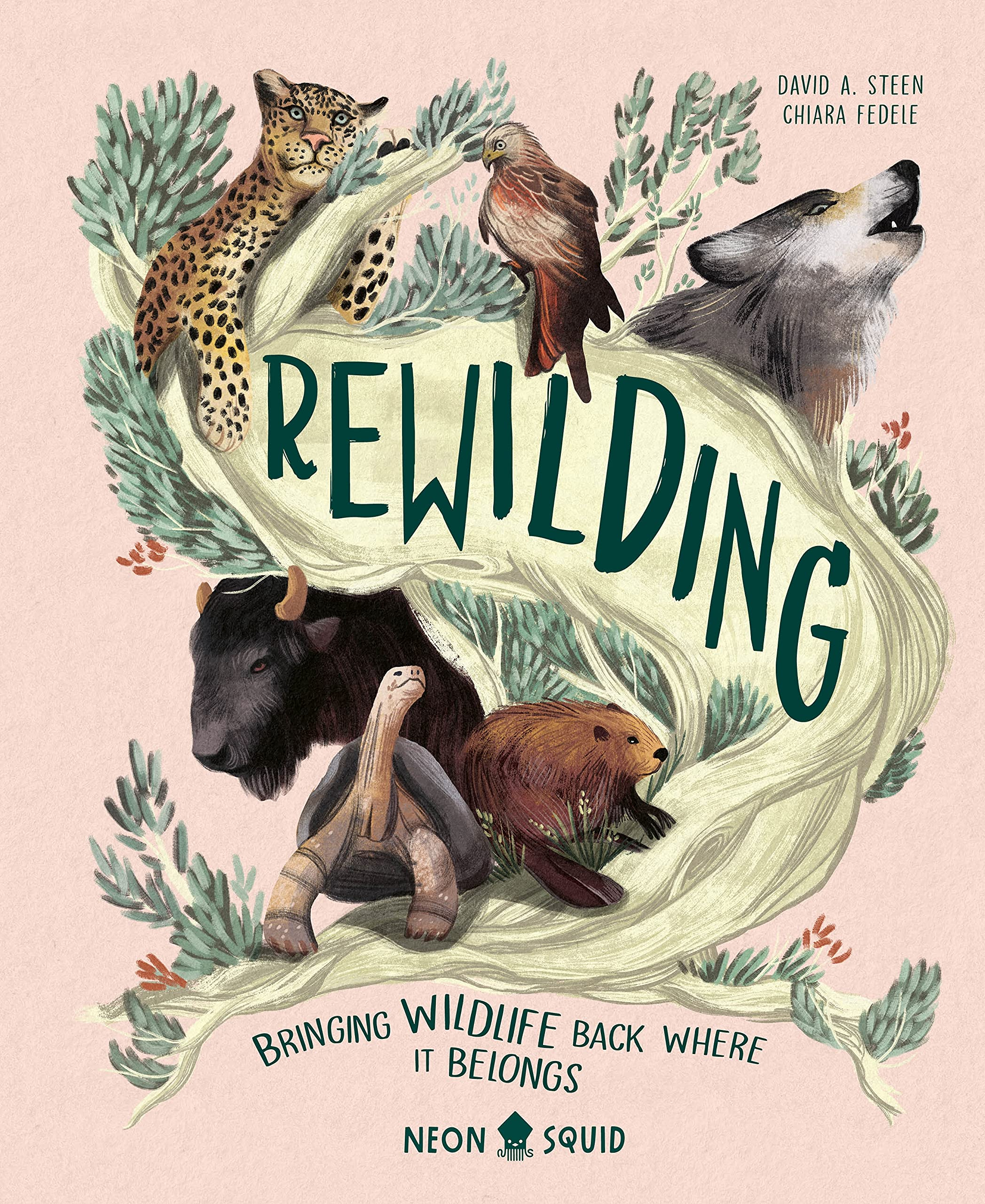
Rewilding: Bringing Wildlife Back Where It Belongs by David A. Steen, illustrated by Chiara Fedele

Published by Neon Squid

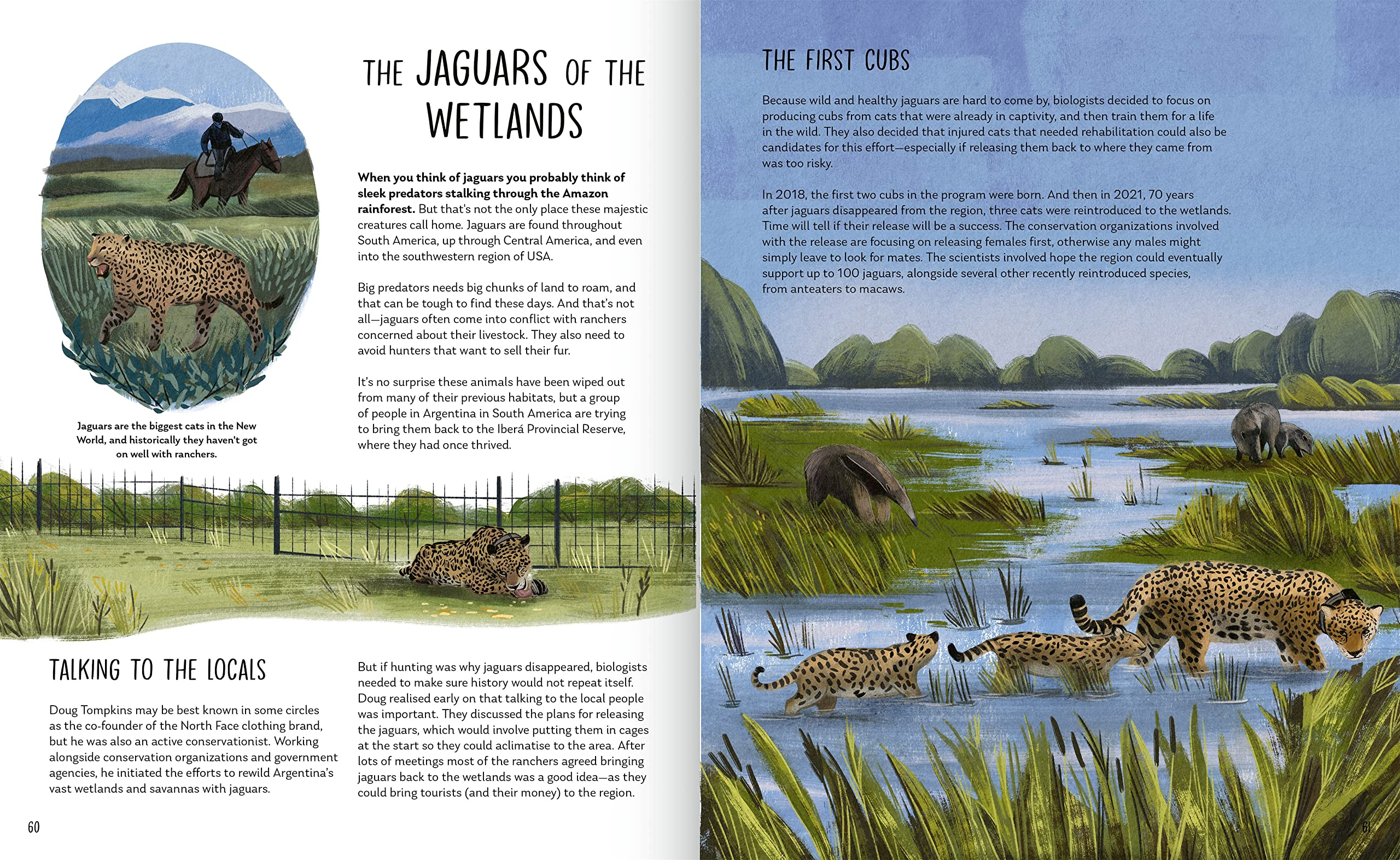
Summary:  Humans have done much to damage or eliminate the populations of so many animals; rewilding seeks to reverse some of that damage by introducing animals raised in captivity to the wild or relocating a wild animal population.  This book looks at dozens of animals, giving each a two-page spread with information about a rewilding project (including successes and failures) and plenty of illustrations.  Other pages address wider questions like why animals go extinct and how scientists measure the success of a rewilding project.  Includes information on what kids can do, a glossary, and an index.  80 pages; grades 3-6.

Pros:  It’s refreshing to find a book that offers at least some glimmers of hope and optimism amidst our current global crises.  The writing and the illustrations are engaging, and the last couple pages offer readers some concrete actions to take.

Cons:  Each story was so interesting that two pages didn’t seem enough to cover it.

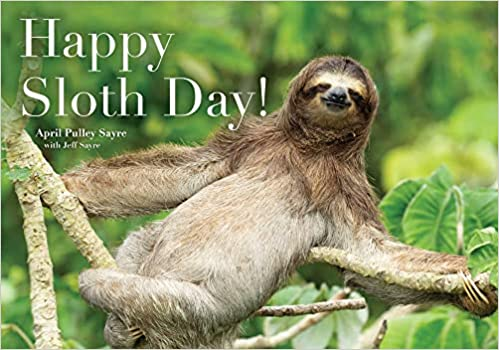
Happy Sloth Day! by April Pulley Sayre with Jeff Sayre

Published by Beach Lane Books

Summary:  Follow a sloth through its day in the rainforest as it eats, climbs, rests, and hides.  The photos mostly tell the story, along with a few short sentences.  Longer side bars on every other page add additional information.  The story ends with “the changing of the sloths” as the diurnal three-toed sloth falls asleep and the nocturnal two-toed sloth awakens.  Includes additional information about sloths and a list of four resources “for more leisurely chewing.”  48 pages; ages 4-10.

Pros:  April Pulley Sayre’s photos never disappoint, and these capture sloths doing all kinds of interesting things.  The short text and photos make this a good read-aloud for preschoolers, while the sidebars and back matter make it just as good a choice for older kids.

Cons:  A book about sloths is not a thrilling page-turner.

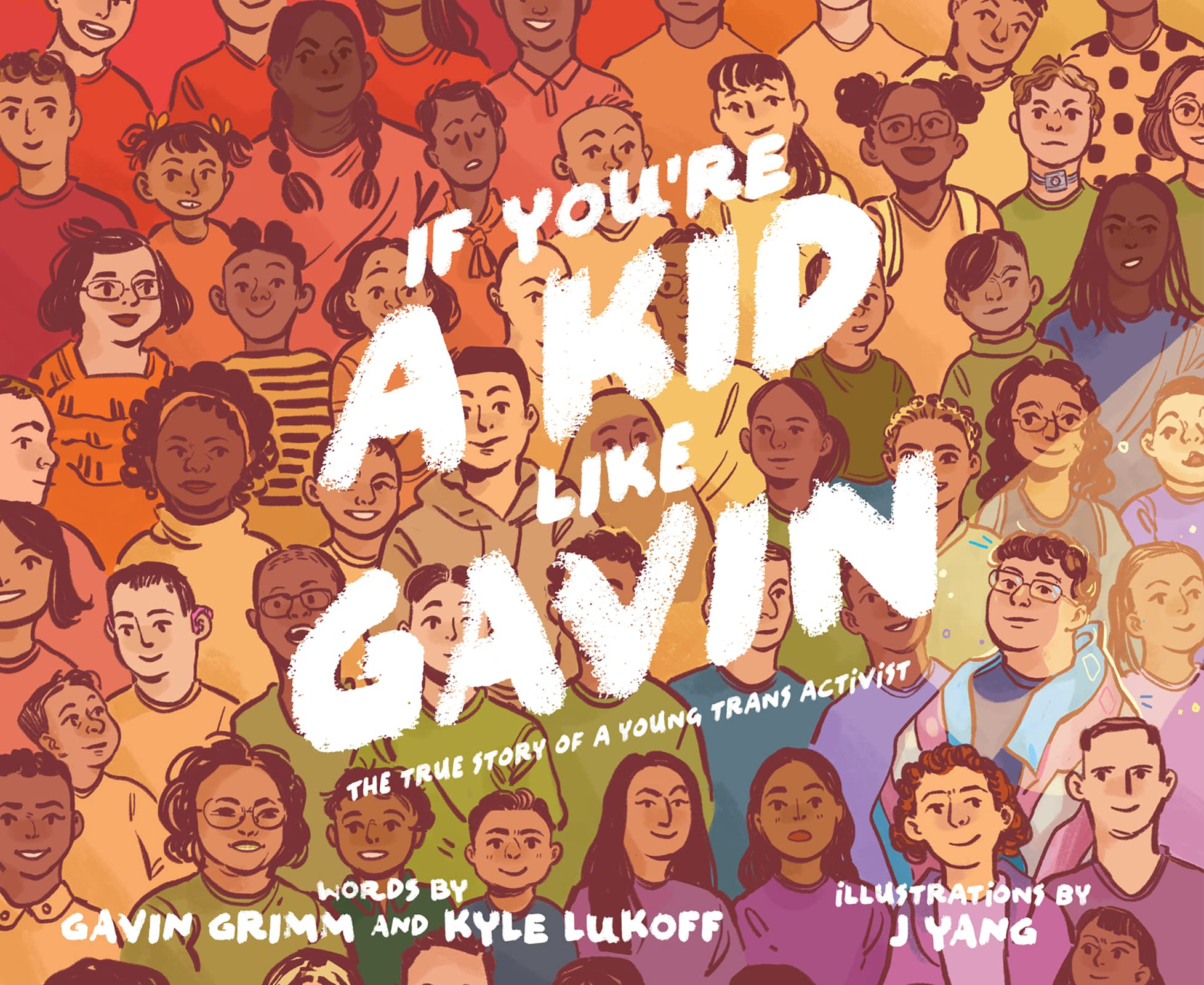
If You’re a Kid Like Gavin: The True Story of a Young Trans Activist by Gavin Grimm and Kyle Lukoff, illustrated by J Yang

Published by Katherine Tegen Books

Summary:  There are some choices kids get to make and others they don’t.  Gavin Grimm didn’t choose to be a boy or a girl, but as a transgender kid, he chose to talk about it, to tell his family he was a boy, and to start high school as a boy with a new name.  At school, though, he didn’t have a choice about what bathroom to use; he had to use the bathroom in the nurse’s office.  As months went by, and no one seemed to care, Gavin started to use the boys’ room.  A teacher objected, and kids started bullying.  So Gavin decided to speak up.  When this didn’t work at his school, he went on the news and to the ACLU and has continued to fight for his rights and those of other trans kids.  And “since you’re a kid like Gavin Grimm, you can always decide to believe in yourself and fight for what you believe in.”  Includes notes from both authors and a link to the ACLU’s webpage for students about their rights.  40 pages; grades 2-5.

Pros:  Kids will relate to Gavin’s personal story which lays out his choices in terms that are understandable for an elementary audience.  An excellent resource for trans kids and those who work or go to school with them.

Cons:  A list of resources (besides the ACLU site) would have been useful.

If the World Were 100 Animals: A Visual Guide to Earth’s Amazing Creatures by Miranda Smith, illustrated by Aaron Cushley

Published by Crown Books for Young Readers

Summary:  Since there are over 20 quintillion animals on Earth (that’s 20 followed by 18 zeros), it’s easier to get a grasp on that population by reducing it to 100.  For instance, if there were 100 animals on Earth, 6 would be vertebrates and 94 invertebrates.  If there were 100 animals in the ocean, 9 would be known and 91 left to be discovered.  If we imagine 100 animals have lived during the history of the Earth, 10 would still be living and 90 would be extinct.  The final two pages address the issue of extinction and encourage kids to work to save endangered animals.  32 pages; grades 2-5.

Pros:  I found myself thinking “Wow!” on almost every page; I can’t wait to share this book with kids.  Kudos to Aaron Cushley for creating illustrations that really bring these ideas to life.  

Cons:  There are no source notes or resources listed.

Before Music: Where Instruments Come From by Annette Bay Pimentel, illustrated by Madison Safer

Published by Harry N. Abrams

Summary:  Each section of this book begins with a person observing a natural phenomenon, like the sound rocks make when banged against each other, the sound of a silk thread being plucked, or the sound of air through a reed.  From there, the narrative looks at how that particular item inspired the creation of musical instruments, instruments in different categories (“rock instruments that are struck”, “rock instruments that are blown”) and musical innovators.  Includes a list of selected sources and instructions for making your own instrument.  88 pages; grades 3-7.

Pros:  An excellent addition to any music library, encouraging readers to look deeper into the history of music and instruments, with fabulous illustrations portraying instruments and musicians.

Cons:  This book is almost 15 inches tall, which felt unnecessarily large and unwieldy to read.  Also, I would have appreciated a table of contents, index, and/or glossary to give a little more structure.

A Seed Grows by Antoinette Portis

Published by Neal Porter Books

Summary:  A bird with a seed in its beak is on the title page, apparently the source for the seed that falls on page 1.  That seed settles into the soil, and sun and rain help it turn into a sprout, growing to at last become a sunflower (big enough to need a foldout page).  The flower is filled with seeds, which birds feed on when the plant droops to the ground.  When one bird drops the seed from the top of a tree, the cycle begins again.  Includes two pages of additional information and a list of resources.  40 pages; ages 3-7.

Pros:  I am already excited to read this book to preschoolers when they start learning about seeds next spring.  I like how key words like seed, sprout, and bud are written in a large colorful font to emphasize them, and kids always enjoy a foldout page.  Another great early science resource from Antoinette Portis to go with her award-winning Hey, Water!

Cons:  Those foldout pages get torn a lot in library books.

Honeybee Rescue: A Backyard Drama by Loree Griffin Burns, photographs by Ellen Harasimowicz

Published by Charlesbridge

Summary:  Mr. Connery keeps bees in hive boxes in his yard.  One day he discovers that some of the honeybees have swarmed and built a hive in a dilapidated garage where they may not survive the winter.  He calls Mr. Nelson, a beekeeper who specializes in relocating honeybee hives.  The text and photographs show the many careful steps needed to move the hives into a box.  For the next several days, Mr. Connery slowly transitions the box from its garage location to his yard where the bees can join the other hives he keeps there.  Everyone celebrates with a little taste of honey.  Includes an interview with Jon Nelson, a glossary, an author’s note, and lists of sources and books for further reading.  40 pages; grades 1-5.

Pros:  An outstanding nonfiction book for elementary kids, with a large font, plenty of photos, and clear descriptions of what is going on.

Cons:  Anyone with apiphobia may get a little freaked out.

Building by Henry Cole

Published by Katherine Tegen Books

Summary:  “Building, building.  That is what beavers do best.”  This is the repeated refrain in a story that follows a pair of beavers through a year beginning in late winter.  They pick a spot to live by a stream and build a dam and a lodge.  The dam creates a pond, and the lodge provides a safe place for babies.  As the seasons progress, the beavers face a coyote and a heavy rainstorm, but their defenses protect them from these dangers.  They gather enough twigs and branches to survive the winter, then settle down in the lodge as the snow begins to fall.  Includes an author’s note with additional information about beavers.  40 pages; ages 4-8.

Pros:  As he did with robins in Nesting, Henry Cole tells a gentle story about beavers as they journey through the seasons.  The detailed illustrations are mostly in black and white with highlights of seasonal colors (green grass, red leaves).  The author’s note invites wonder by contemplating the beavers’ amazing engineering feats.

Cons:  The interaction with the coyote wasn’t quite as dramatic and exciting as the snake attack in Nesting.

Out of this World: Star-Studded Haiku by Sally M. Walker, illustrated by Matthew Trueman

Published by Candlewick

Summary:  This collection of haiku looks at different aspects of the universe including constellations, astronomers, stars, the sun, all the planets (even Pluto!), moons, comets, and asteroids.  Each poem is supported with mixed media art to show various spacescapes.  Includes additional information for each section, a glossary, a reading list, and a list of online resources.  48 pages; grades 2-6.  

Pros:  This book will appeal to many different types of readers: poets (a great intro to haiku), scientists, and artists.  The illustrations are awe-inspiring and will fire up kids’ imaginations about the wonders of space.

Cons:  I wish someone had come up with a slightly more imaginative title than the hackneyed “Out of This World”.

Star Child: A Biographical Constellation of Octavia Estelle Butler by Ibi Zoboi

Published by Dutton Books for Young Readers

Summary:  This biography of science fiction writer Octavia Butler is told through a collection of poetry, photographs, and quotations from Butler.  Starting with her early life as a solitary child growing up in 1950’s Pasadena, readers get to see how Octavia’s struggles in school, her introverted nature, and her love of books combined to lead to her a life as a writer.  She was fascinated by science fiction, although almost all of the writers and heroes of the stories were white men.  After years of rejection, she finally began selling her stories and eventually wrote books that earned her Nebula and Hugo awards as well as a MacArthur fellowship.  Includes a final chapter on Ibi Zoboi’s connection to Octavia Butler (they shared a birthday and met in person several times, including a science fiction writing workshop) and a list of Butler’s books.  128 pages; grades 7-12.

Pros:  This unique biography is a pretty quick read but gives an intimate look at Octavia Butler’s life and writing.  Readers who are not familiar with Butler’s work (like me) may be motivated to seek it out after getting this introduction.

Cons:  I saw some recommendations for this book starting in fifth grade, but I think it would be better appreciated by middle school and high school students, since Butler’s books are for young adults and adults.