Stonewall: A Building. An Uprising. A Revolution. by Rob Sanders, illustrated by Jamey Christoph

Published by Random House

Image result for stonewall christoph amazon

Image result for stonewall christoph amazon

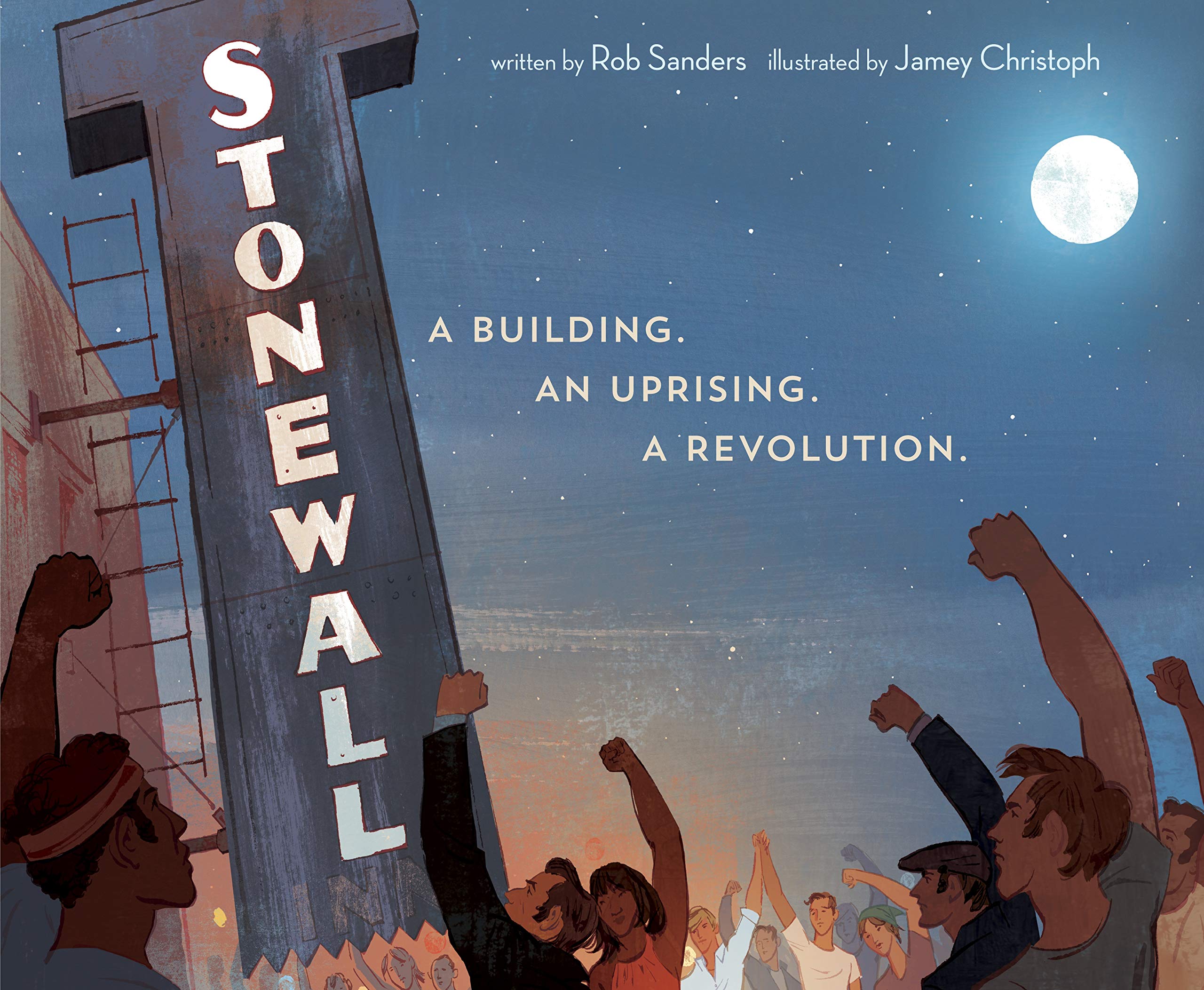
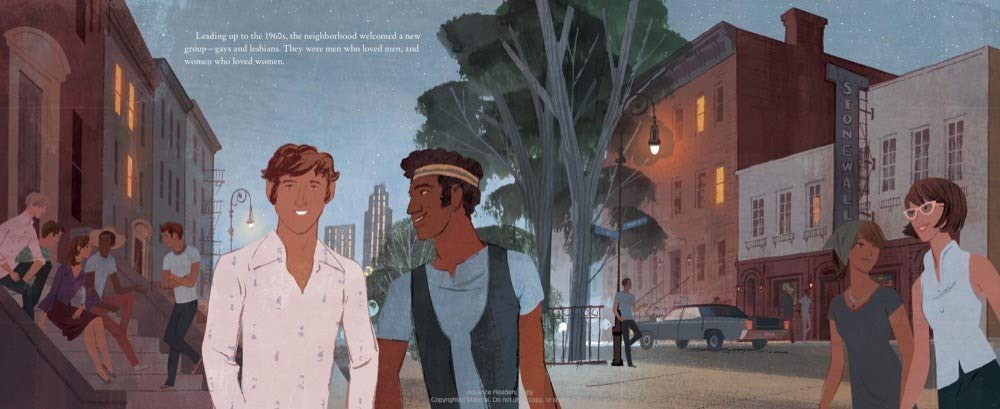
Summary:  Narrated by the building that became Stonewall, this story begins in the 1840’s when the original structure was created to stable horses.  There’s a brief history of the building’s other incarnations and the evolution of Greenwich Village before reaching the 1960’s when the Stonewall Inn became a club for gay men and women, as well as for “teenagers, transgender people, drag queens, veterans, businesspeople, students, people of different colors, religions, and cultures”.  The club was raided regularly, and each time some of its clientele would be arrested, while the rest would quietly go home. But on the night of June 28, 1969, the angry crowd confronted the police, who were driven inside Stonewall until they could call in reinforcements. In the 50 years since that night, people have celebrated June 28 as the beginning of the movement for LGBQT+ rights.  Includes additional history and photos of the Stonewall Inn; an interview with activist and Stonewall Uprising participant Martin Boyce; a glossary; and a list for further reading. 40 pages; grades K-5.

Pros:  An excellent introduction to the Stonewall Uprising that emphasizes the importance of inclusivity through the story as well as with the gorgeous illustrations.  Using the building as a narrator is a perfect way to relate the entire history of the place, placing the night of June 28, 1969 in context.

Cons:  A few reviews I saw felt there was not enough inclusion of trans people in this telling; since I’m not familiar with the history, I can’t say if this is true or not.

If you would like to buy this book on Amazon, click here.


Comics: Easy As ABC!: The Essential Guide to Comics for Kids by Ivan Brunetti

Published by TOON Books

Image result for easy as abc comics ivan amazon

Image result for easy as abc comics ivan

Summary:  Budding cartoonists will enjoy this drawing book that gives how-to’s on drawing people and animals, as well as creating perspective and communicating emotions through body language and facial expressions.  A few prompts are given to encourage readers to create their own stories. Advice is offered from some heavy-hitters in the comic world, including Roz Chast, Neil Gaiman, Jeff Smith, and Art Spiegelman. There’s a section at the end for parents, teachers, and librarians on reading comics to kids (I believe this is standard in many of the TOON books).  52 pages; grades 2-5.

Pros:  Fun and accessible for many elementary-age kids, this is a good basic introduction to get graphic novel fans busy on their own creations.

Cons:  Each section is pretty brief; serious artists will outgrow this fairly quickly.

If you would like to buy this book on Amazon, click here.

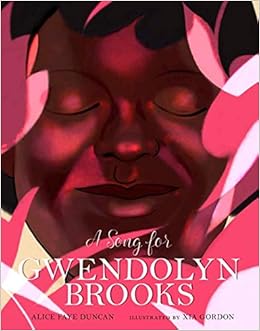
A Song for Gwendolyn Brooks by Alice Faye Duncan, illustrated by Xia Gordon

Published by Sterling Children’s Books

Image result for song for gwendolyn brooks

Image result for song for gwendolyn brooks

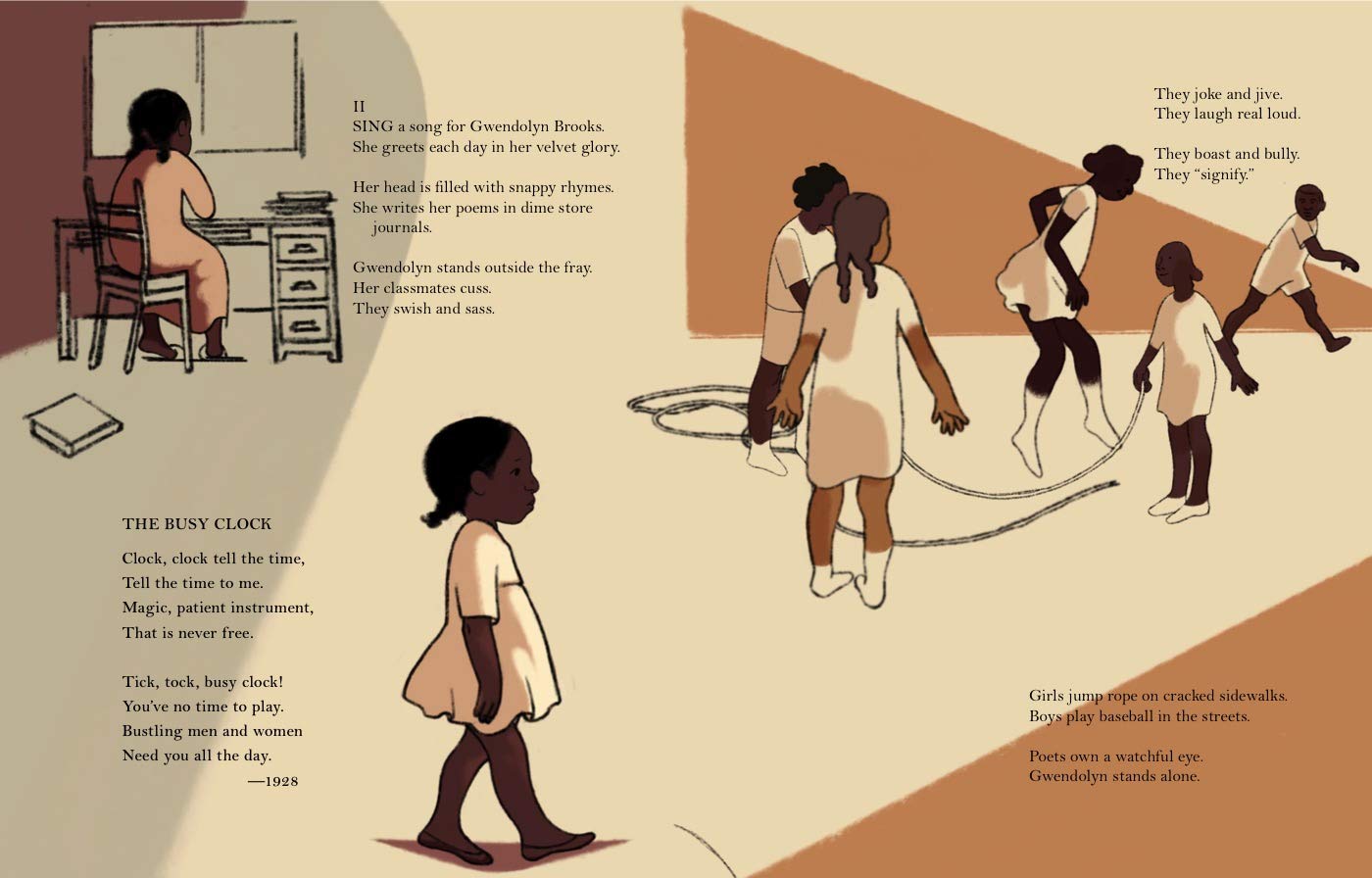
Summary:  From an early age, Gwendolyn loved words and poetry.  Fortunately, her parents were supportive of her interests and allowed her to opt out of chores if they knew she was working on a poem  When a teacher accused her daughter of plagiarism, Gwendolyn’s mother marched to the school and had Gwendolyn write a poem on the spot to prove her talent.  As an adult living on the South Side of Chicago, Brooks didn’t let marriage and family stop her from writing, and in 1950 she won a Pulitzer Prize for her poetry collection Annie Allen.  Includes an author’s note with additional information about Gwendolyn Brooks; a timeline; a list of some of her poetry books; and a bibliography.  48 pages; grades 2-6.

Pros:  Although this beautifully illustrated book is suggested for elementary ages, it would also make an excellent text to use in a middle school introduction to poetry.  Brooks’ poems are sprinkled throughout the story, and older kids might resonate with the poet’s more introverted nature.

Cons:  The fonts used for the main text and the poems were so similar, it was sometimes difficult to distinguish the difference between the two.

If you would like to buy this book on Amazon, click here.

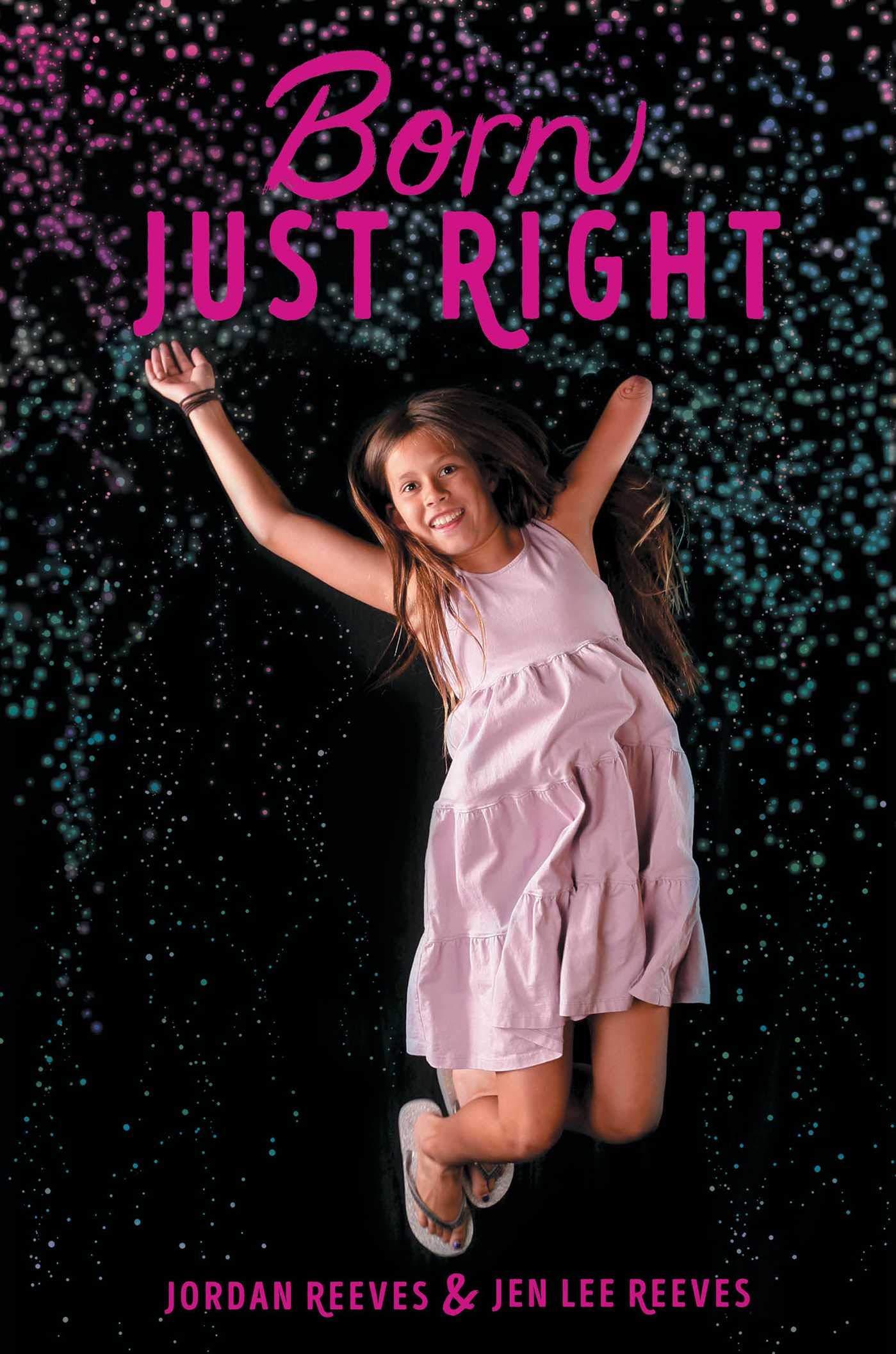
Born Just Right by Jordan Reeves and Jen Lee Reeves

Published by Jeter Publishing

Image result for born just right

Summary:  Jordan Reeves was born with what she calls a “little arm”; her left arm ends just above the elbow.  Her mom has become her strongest advocate, making sure she participates in every area of life she can, including dance, soccer, softball, and Crossfit.  Jordan also has become passionate about design and STEAM, launching her Project Unicorn, a device she invented that can fit onto her left arm to shoot glitter.  Through her design work, she has become a spokesperson for people with disabilities, including working with Mattel to help design Barbies and American Girl dolls with limb differences. She and her mom cover a variety of topics in this book, not only their family’s story, but also what it’s like to have a disability, how to talk to a person about their disability, and resources for getting involved with design and the maker movement.  Includes a list of websites. 160 pages; grades 4-7.

Pros:  Kids will learn a lot about what it’s like to have a disability and how to interact with people with disabilities.  Jordan is unfailingly upbeat, but also honest about her occasional frustrations and sadness about her arm. Her mom has written a few sections giving her perspective which makes this a useful resource for parents as well as kids.

Cons:  It was hard for me to get as excited about a glitter shooter as Jordan seems to be about it.

If you would like to buy this book on Amazon, click here.

Image result for born just right

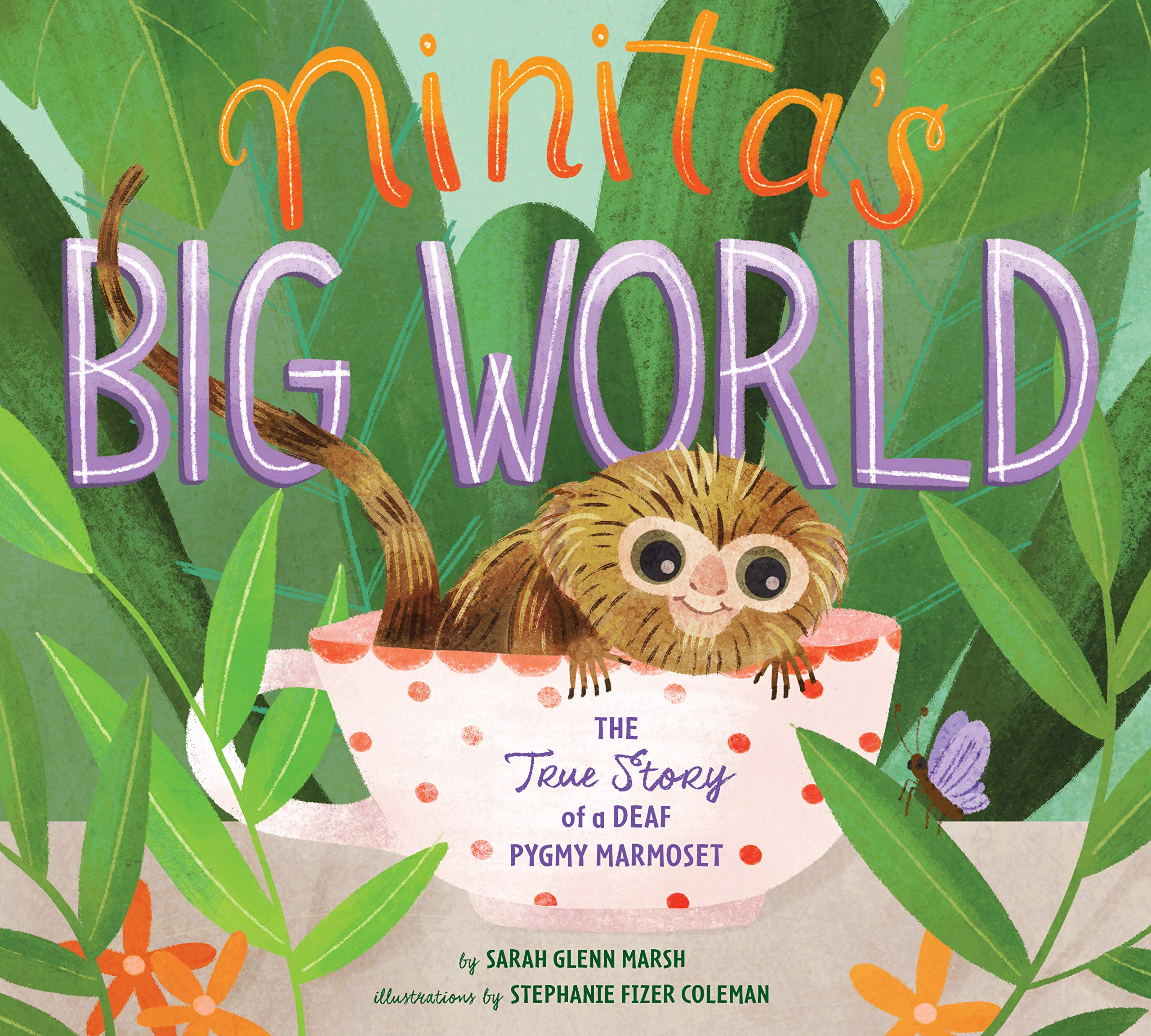
Ninita’s Big World: The True Story of a Deaf Pygmy Marmoset by Sarah Glenn Marsh, illustrations by Stephanie Fizer Coleman

Published by Clarion Books

Image result for ninita's big world amazon

Summary:  Ninita is a pygmy marmoset, the smallest kind of monkey in the world, who was born deaf and abandoned by her parents after a few weeks.  Rescued by humans, she found a new home at the Rare Species Conservatory Foundation in Florida, where she thrived. Eventually, she was introduced to a male pygmy marmoset, Mr. Big, and the two now live together at the Foundation.  Includes additional information about pygmy marmosets and the Rare Species Conservatory Foundation, along with a couple of photos of Ninita. 32 pages; ages 4-8.

Pros:  This cute animal story with its messages of love and friendship will undoubtedly appeal to a wide variety of young readers.  

Cons:  There’s quite a bit of anthropomorphism, e.g., “Ninita wished she had a marmoset friend to share her adventures.”

If you would like to buy this book on Amazon, click here.

Image result for ninita's big world

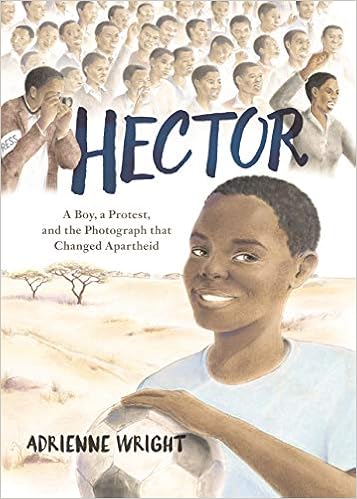
Hector: A Boy, A Protest, and the Photograph That Changed Apartheid by Adrienne Wright

Published by Page Street Kids

Image result for hector a boy a protest and the photograph that changed apartheid

Image result for hector a boy a protest and the photograph that changed apartheid

Summary:  In 1976, Hector Pieterson was an ordinary 12-year-old boy living in Soweto, South Africa.  He went to school, played soccer, did chores, and hung out with his friends. On June 16, he went to school like he did every day; when he got there, he discovered a student demonstration going on to protest a new law forcing them to have half their lessons in Afrikaans instead of English.  A single moment is shown from three different perspectives: Hector, his older sister Antoinette, and Sam Nzima, the photojournalist who took a picture of Hector getting shot by police. The police confiscated all the film, but Sam managed to hide a roll in his sock. His picture of Hector’s lifeless body appeared in The World newspaper the next day, ending Sam’s career, but opening up the eyes of the world to apartheid in South Africa.  48 pages; grades 3-8.

Pros:  I didn’t know this story, and was shocked when Hector was killed at the end of it, much as Hector’s family must have been shocked by the turn of events on June 16, 1976.  This is an important book for American kids, many of whom are probably unfamiliar with South African apartheid.

Cons:  It’s difficult to know what ages to recommend this for.  It definitely could be disturbing to younger kids, and would be best read with some adult discussion.

If you would like to buy this book on Amazon, click here.

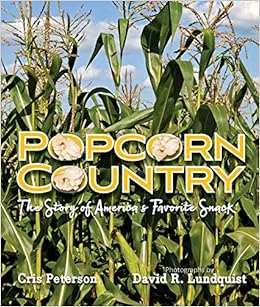
Popcorn Country: The Story of America’s Favorite Snack by Cris Peterson, Photographs by David R. Lundquist

Published by Boyds Mills Press

Image result for popcorn country cris peterson amazon

Summary:  Who can resist a bowl of buttery, salty popcorn?  It’s one of the top snacks in the U.S., this book tells us, with an annual consumption of four and a half billion gallons.  If you’ve ever wondered how the popcorn gets to your movie theater, you’ll find some answers here, beginning in the Corn Belt, where over ninety million acres of corn are grown each year.  You’ll learn about the different types of corn, how popcorn is processed, and what causes the hard kernels to explode into the light, fluffy snack. There’s a brief history of popcorn at the end, along with a list of books and websites for further research.  32 pages; ages 4-8.

Pros:  The straightforward writing with kid-friendly explanations (“plants that stretch so tall that they could tickle the chin of a young giraffe”) and lots of photos showing a diverse group of kids make this a great nonfiction choice for preschool and early elementary ages.

Cons:  I guess it’s unknowable, but I’ve always wondered how the first consumers of popcorn figured out that those hard kernels could pop.  This book doesn’t offer any speculation on that.

If you would like to buy this book on Amazon, click here.

The Important Thing About Margaret Wise Brown by Mac Barnett, illustrated by Sarah Jacoby

Published by Balzer + Bray

Image result for important thing about margaret wise brown amazon

Summary:  “The important thing about Margaret Wise Brown is that she wrote books.”  And some of the important things about this book about Margaret Wise Brown are that it’s 42 pages because she lived 42 years.  That it celebrates the quirkiness of both Brown and her books. That the illustrations pay homage to many of Brown’s works. That critics of her works are humorously but firmly put in their place (Anne Carroll Moore, New York City’s children’s librarian, does not fare well here).  That you may not learn everything there is to know about Margaret Wise Brown, but you will learn interestingly odd facts like that every copy of the first edition of Little Fur Family were covered in fur.  That “sometimes you find a book that feels as strange as life does…Margaret Wise Brown wrote books like this, and she wrote them for children, because she believed children deserve important books.”  42 pages; grades K-5.

Pros:  Mac Barnett is not afraid to go way outside the box in this picture book that pays tribute to Margaret Wise Brown, her art, and her books.  It is full of the kinds of details that kids will love, like the fact that, as a child, Brown skinned one of her pet rabbits after it died and wore the pelt around her neck.  Or that she bought every flower on a flower cart after selling her first book, then had a big party in her flower-filled house. Any readers who aren’t familiar with Brown’s books will want to go looking for them after reading this one.

Cons:  Some will definitely find this book odd.  On the other hand, isn’t that kind of the point?

If you would like to buy this book on Amazon, click here.

Image result for important thing about margaret wise brown jacoby

Enemy Child: The Story of Norman Mineta, a boy imprisoned in a Japanese American internment camp during World War II by Andrea Warren

Published by Margaret Ferguson Books

Image result for enemy child andrea warren amazon

Summary:  Norman Mineta spent his first decade living a happy middle class life with his family in San Jose.  His father sold insurance and his mother was a housewife. Both his parents were born in Japan, but second-generation Norm felt very much an American.  After World War II started, though, all Japanese Americans were seen as suspect, and in May of 1942, the Mineta family was forced to leave behind their home and business for the Heart Mountain Internment Camp in Wyoming.  They were more fortunate than most: Norm’s father eventually got a job in Chicago, and after a little over a year in the camp, the family was able to relocate there. They rented their San Jose house, and moved back at the end of the war.  During his time at the camp, Norm met a local boy named Alan Simpson at a Boy Scout gathering; the two became friends, and later reunited when both served in Congress as adults. Extensive back matter tells more about the Japanese American experience during World War II and lists many resources for further research.  224 pages; grades 5-8.

Pros:  The story of Norm’s journey from a seemingly all-American childhood to being held prisoner by his own country is an eye-opening one that is told in terms many young readers will relate to.  The Mineta family’s unwavering optimism and courage is inspiring.  Andrea Warren should receive some Sibert award consideration.

Cons:  It would have been interesting and informative to hear more details about some of the Japanese American families who didn’t fare so well at the end of the war.

If you would like to buy this book on Amazon, click here.

The Girl Who Named Pluto: The Story of Venetia Burney by Alice B. McGinty, illustrated by Elizabeth Haidle

Published by Schwartz + Wade

Image result for girl who named pluto amazon

Image result for girl who named pluto elizabeth haidle

Summary:  Growing up in Oxford, Venetia Burney loved learning.  Her grandfather, the former head librarian at Oxford University, encouraged her curiosity.  When Grandfather shared a news item with 11-year-old Venetia about the discovery of a new planet beyond Neptune, she thought of how frozen, dark, and lifeless it must be.  It reminded her of the underworld in Greek mythology, and so she suggested naming it Pluto. Her grandfather sent a letter with her suggestion in it to a friend at the Royal Astronomical Society; he liked it, and eventually the name was voted on by astronomers.  Fast forward more than 70 years later: on the day before her 89th birthday, Venetia, still active and curious, gets an invitation to the Observatory Science Centre, where she finally gets a chance to see the planet she named. Includes an author’s note with additional information about Venetia and Pluto–including the change in its designation from plant to dwarf planet–and a bibliography. 40 pages; grades 1-4.

Pros:  A fun story for kids learning about space; they will be inspired to hear how a planet was named by a kid, albeit one with a wealthy, connected grandfather.

Cons:  I think we all still feel a little sad about the fate of former planet Pluto.

If you would like to buy this book on Amazon, click here.