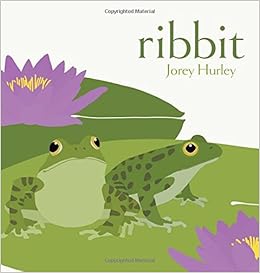
Ribbit by Jorey Hurley

Published by Simon and Schuster

Summary:  The life cycle of a frog is described through illustrations and one word of text per page.  It begins with “Wait”, as two frogs swim near a mass of eggs, and ends with “Ribbit”, as one of the hatchlings, now an adult, finds a mate. In between, the eggs hatch, a tadpole transforms into a frog, and that frog catches an insect and hibernates in the mud.  An author’s note gives more information about frogs and their life cycles.  40 pages; ages 3-7.

Pros:  Young children will love the bright, clean illustrations depicting the frog and its environment around a pond.  The single words convey a lot of information.

Cons:  A list of books and/or websites about frogs would have been a nice addition.

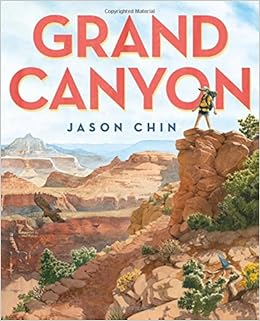
Grand Canyon by Jason Chin

Published by Roaring Brook Press

Summary:  A man and his daughter take a backpacking trip through the Grand Canyon, learning about the geological history as they go.  Starting at the bottom, they study the rocks and fossils of each layer traveling upward to discover what Earth was like in the past.  The girl imagines herself in different eras, with illustrations showing what the canyon looked like in those times.  Small cutouts in some pages give preview peeks as to what’s ahead on the next page.  Borders of many of the main illustrations show the flora and fauna that live at the different levels within the canyon.  The final two pages of the main text open up into an amazing four-page spread of the “the grandest canyon on Earth.”  Back matter includes quite a bit more information on the Grand Canyon, as well as a long list of sources and some books for further reading.  56 pages; grades 2-7.

Pros:  Jason Chin produces another natural history masterpiece, with illustrations so lifelike they almost look like photographs.  The pages are packed with information, both in the text and the pictures and diagrams.  Readers will want to be on the next flight out to Arizona to experience the Grand Canyon for themselves.

Cons:  While extremely informative, the text isn’t always quite as engaging as the illustrations.

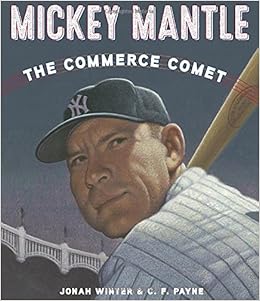
Mickey Mantle: The Commerce Comet by Jonah Winter, illustrated by C. F. Payne

Published by Schwartz and Wade

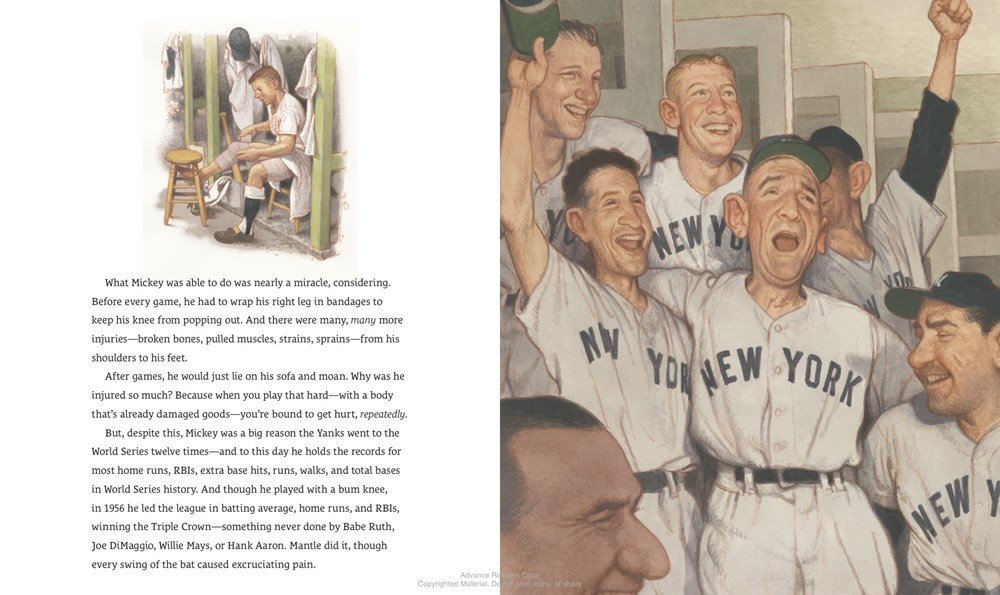
Summary:  Right from the author’s note before the title page, it is clear that Mickey Mantle was a flawed character.  The note mentions the poverty and abuse that marred his childhood, as well as the alcoholism that led to his death at the age of 63.  But it is equally clear that Mantle was an amazing baseball player, chosen to replace the legendary Joe DiMaggio on the New York Yankees, and a winner of baseball’s Triple Crown in 1956 (league leader in batting average, home runs, and RBI’s), a feat not achieved by DiMaggio, Willie Mays, Babe Ruth, or Hank Aaron.  He could belt powerful home runs from either the left or the right, and could run from home plate to first base in 2.9 seconds…until a debilitating knee injury raised his time to 3.1.  Plagued by injuries, he still led his team to the World Series 12 times, and, although fans knew he wasn’t perfect, they cheered him on for 17 years.  40 pages; grades 2-5.

Pros:  The large full-color illustrations bring Mantle’s story to life, told in a conversational voice with a slight Oklahoma (Mantle’s home state) twang.

Cons:  I could have enjoyed a seeing a photo or two.

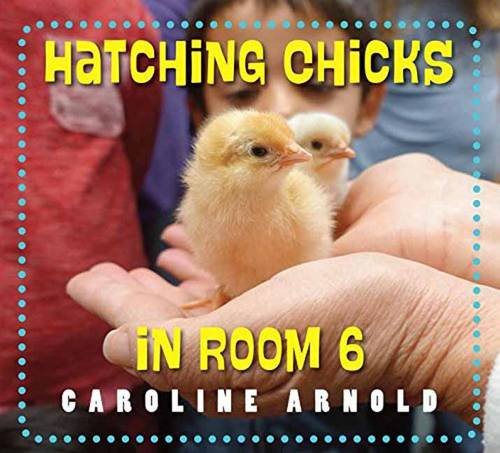
Hatching Chicks in Room 6 by Caroline Arnold

Published by Charlesbridge

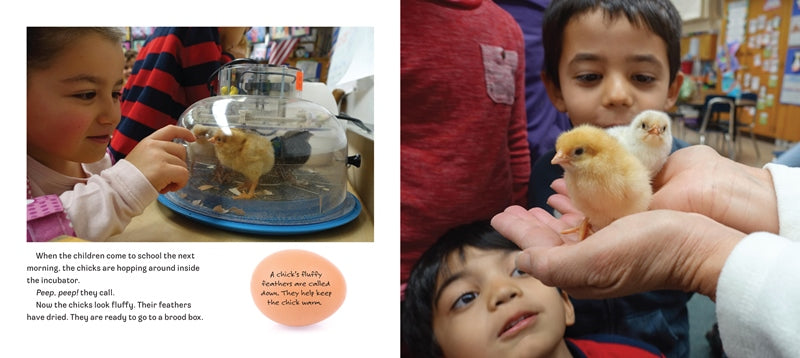
Summary:  Mrs. Best raises chickens in her backyard, and she brings in some eggs for her kindergarten class to observe.  The class keeps the eggs in two incubators and counts down the 21 days it will take for them to hatch.  They–and the reader–learn about chickens and what is going on inside the egg.  Excitement grows as day 21 arrives, and cracks start appearing in the shells.  Pretty soon, there are 14 baby chicks in the incubators.  From there they move into a brood box, then an outdoor pen, and finally, when they are a month old, back to Mrs. Best’s house to join the rest of her chickens.  Includes questions and answers, a glossary, and books and websites with additional information.  40 pages; ages 4-8.

Pros:  This is a must-have for any classroom that embarks on an egg-hatching project.  Even if you’re not that ambitious, it is an engaging introduction to the life cycle of the chicken, with plenty of great photos of Mrs. Best, her class, and the eggs and chicks at various stages.

Cons:  The list of books at the end doesn’t include the awesome A Chicken Followed Me Home by Robin Page (2015).


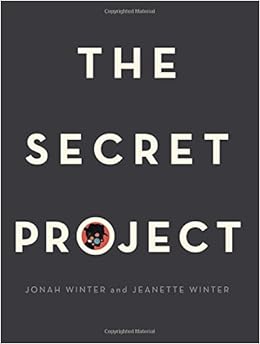
The Secret Project by Jonah Winter, illustrated by Jeanette Winter

Published by Beach Lane Books

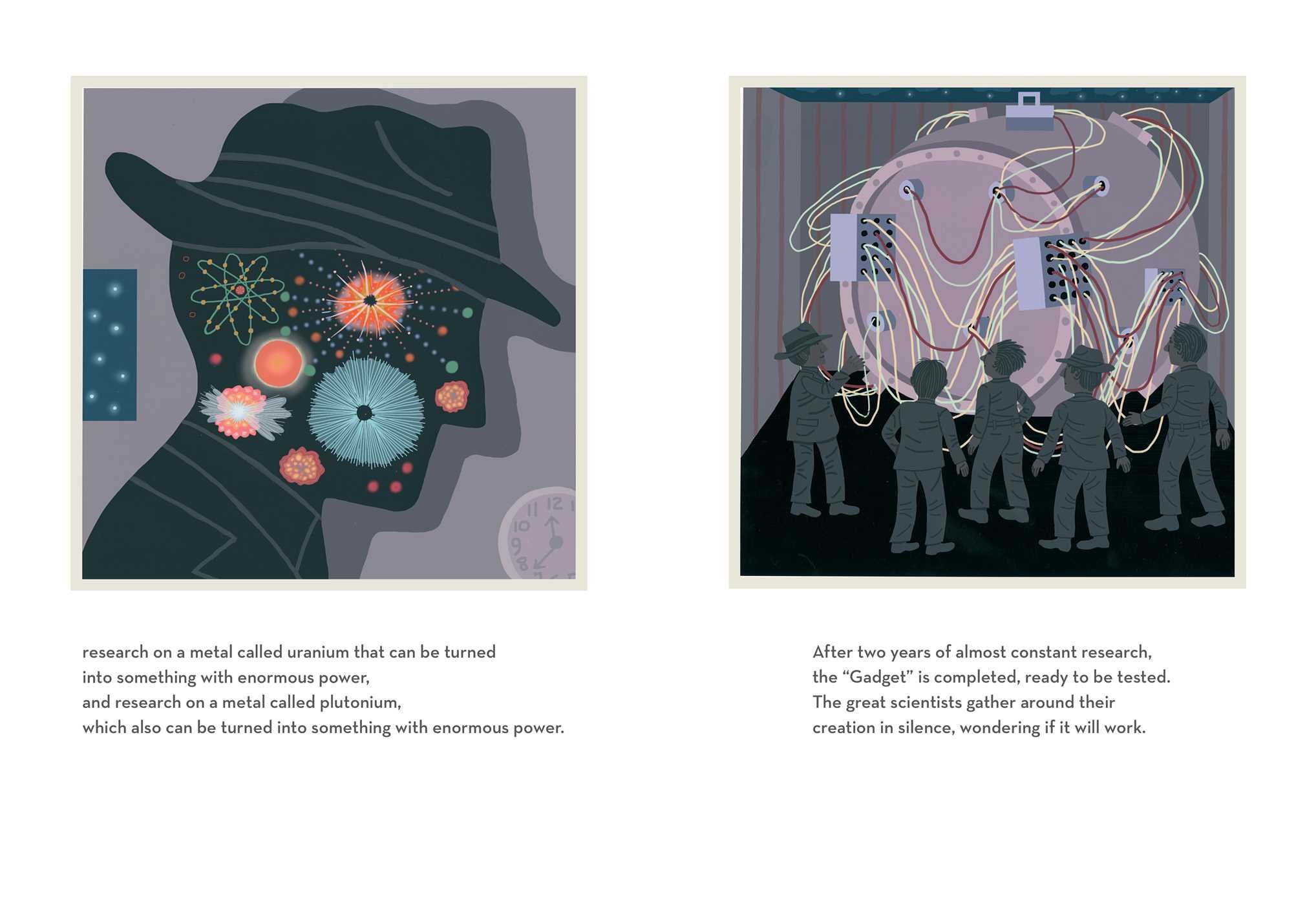
Summary:  A peaceful boys’ school in the New Mexican desert is suddenly ordered closed by the U.S. government.  Scientists arrive from all over the country to work on a top-secret project known simply as “The Gadget”.  Other workers don’t know what the scientists are working on, and the outside world has no idea their project even exists.  The scientists work long at hard, trying to figure out how to split atoms from uranium and plutonium.  At last, The Gadget is ready.  It’s placed on a stand in the middle of the desert, then the scientists drive far away.  The countdown begins…10, 9, 8, 7, 6, 5, 4, 3, 2, 1.  A huge fireball erupts, turning into a gigantic orange mushroom cloud .  The text ends with  two blank black pages.  Includes an author’s note giving more history of the Manhattan Project, and a list for further reading.  40 pages; grades 2-5.

Pros:  Mother-son team Jeanette and Jonah Winter have created a remarkable book, giving a brief history of the Manhattan Project in a way that is accessible for elementary school kids.  The illustrations convey the air of secrecy about the project, showing the scientists as black shadows throughout the story.  

Cons:  All the scientists portrayed are men. In reality, quite a few women scientists and mathematicians worked on the Manhattan Project.

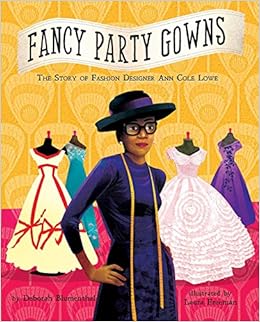
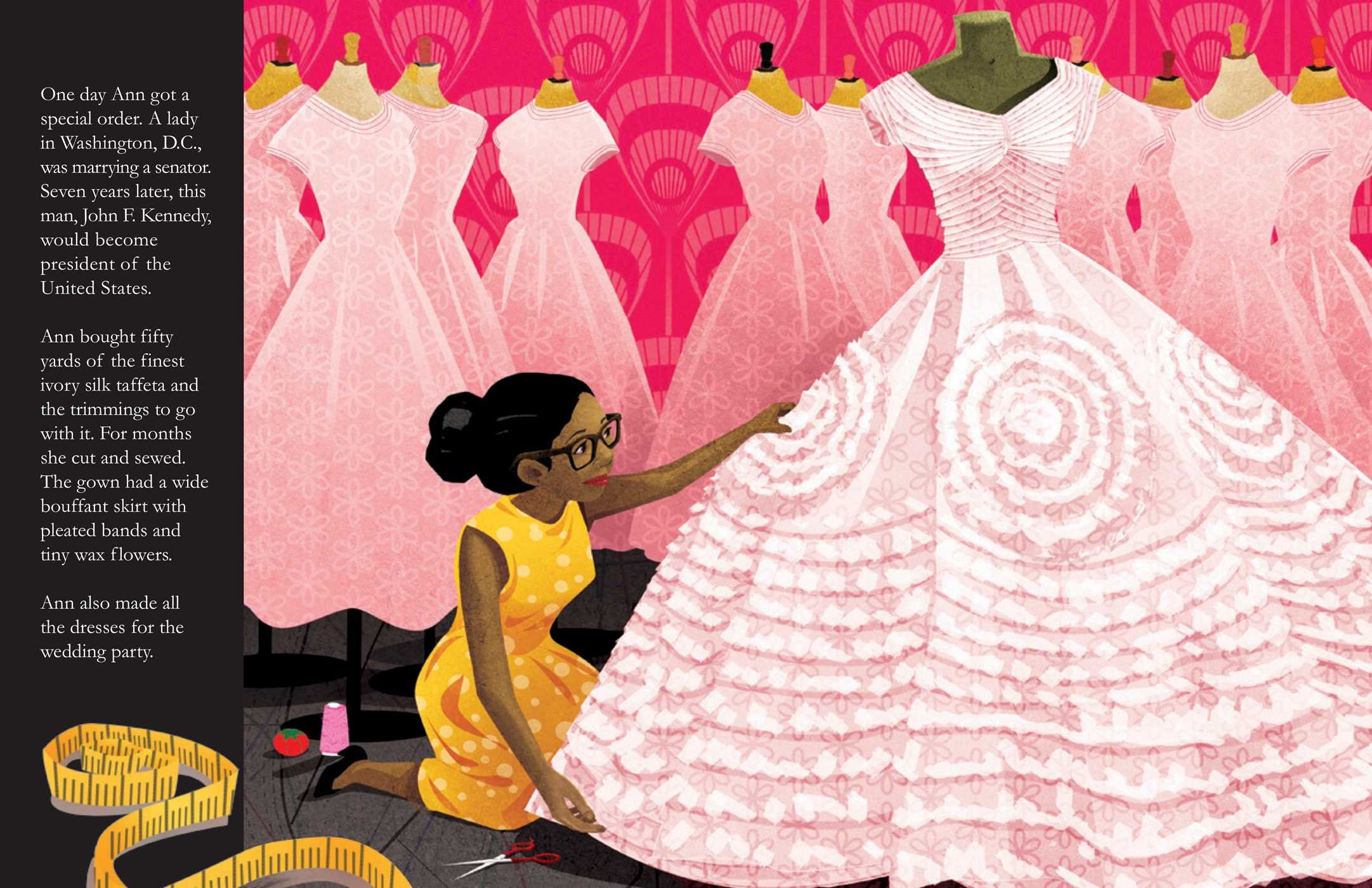
Fancy Party Gowns: The Story of Fashion Designer Ann Cole Lowe by Deborah Blumenthal, illustrated by Laura Freeman


Published by Bonnier Publishing

Summary:  Growing up in Alabama, Ann Cole Lowe loved to watch her mother sew beautiful dresses for women to wear to fancy parties.  When Ann was 16, her mother died, and Ann took over the business.  A few years later, a customer from Florida sent her to design school, where Ann had to study in a separate classroom, due to segregation.  After graduation, she moved to New York and opened her own shop.  Although she never made a lot of money, her gowns became well-known.  Her most famous design was Jacqueline Kennedy’s wedding dress and bridesmaid gowns.  Less than two weeks before the wedding, a pipe in Ann’s shop burst, and ten of the sixteen dresses were ruined.  She rallied, hired extra help, and got the job done, even though she lost any profit.  She continued designing and sewing well into her 70’s, her primary motivation, “to prove that a Negro can become a major dress designer.”  40 pages; grades 1-4.

Pros:  An inspiring story of a little-known woman.  The repeating refrain of the story is, “Ann thought about what she could do, not what she couldn’t change.”  Beautifully illustrated, with some of Ann’s designs gracing the endpapers.

Cons:  My constant search to find Tim Gunn and Heidi Klum lurking in the illustrations indicates I have been watching too much “Project Runway”.

Loving Vs. Virginia: A Documentary Novel of the Landmark Civil Rights Case by Patricia Hruby Powell, illustrated by Shadra Strickland

Published by Chronicle Books
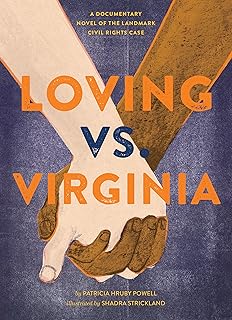
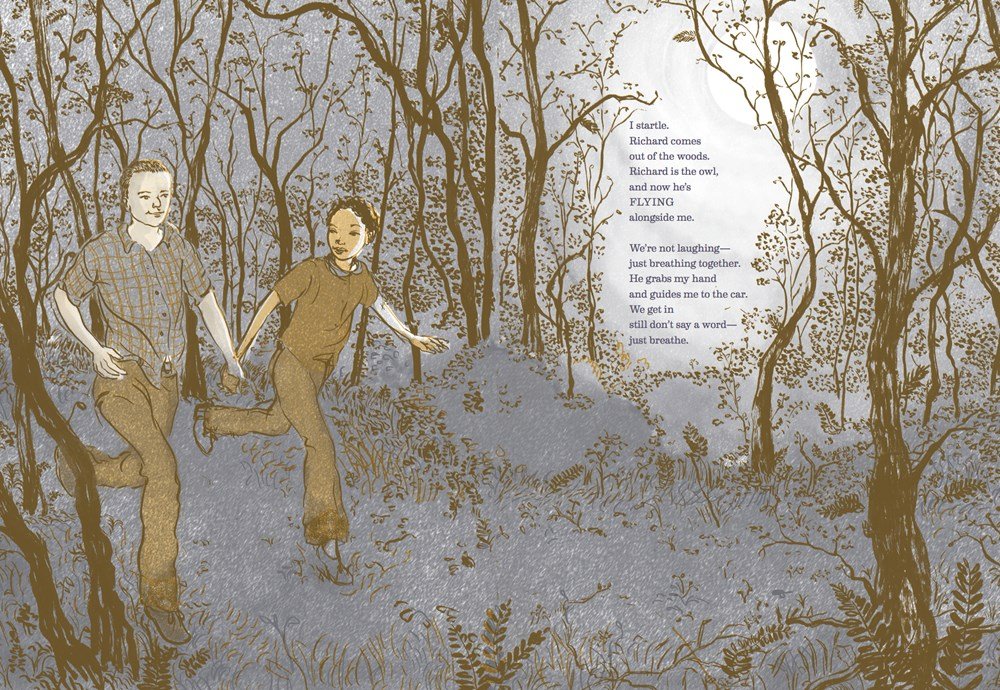
Summary: This verse novel, related in the alternating voices of Mildred Jeter and Richard Loving, tells the story behind the Supreme Court case of 1967, which ruled that interracial marriage is legal.  Mildred, of African and Native American descent and considered “colored”, and Richard, who was white, grew up as neighbors in a close-knit, integrated Virginia community.  They fell in love, had a child, and got married.  Shortly after the wedding, the local sheriff barged into their home one night, arrested them both, and sent them to jail.  They pleaded guilty and were given a suspended sentence.   Forced out of Virginia, they moved to Washington, D.C., where both were miserable.  Over the course of the next nine years, their case was appealed, finally going all the way to the Supreme Court.  The decision was overturned on June 12, 1967, and at last, they could move back near their families to raise their three children.  The story is interspersed with text and photos describing the history of the Civil Rights Movement during the same time period as the case.  A final note tells what happened to the Lovings (sadly, he was killed and she was blinded in one eye by a drunk driver in 1975); also includes a timeline and an extensive bibliography.  260 pages; grades 7-up (some PG language).

Pros:  A fascinating, timely book.  Kids may have seen the 2016 movie Loving about this case.  The first person narration makes it a personal story.

Cons:  Although the book has many beautiful illustrations, I would have liked to have seen some photos.
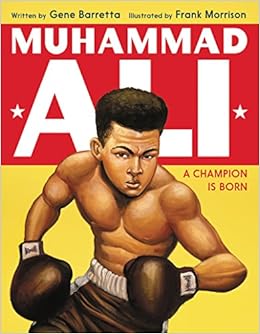
Muhammad Ali: A Champion is Born by Gene Barretta, illustrated by Frank Morrison

Published by Katherine Tegen Books

Summary:  If 12-year-old Cassius Clay hadn’t had his bicycle stolen in 1954, there might never have been a heavyweight champion named Muhammad Ali.  When Cassius went to the police station to report the theft, Officer Joe Martin suggested he try out his boxing gym.  The boy fell in love with boxing right away, and pushed himself to become the greatest.  He would run alongside the school bus to build his endurance, and have his brother throw stones at him to improve his reflexes.  His dream came true, first at the 1960 Olympics, where he earned a gold medal, and in the years after that, when he won 56 of 61 professional fights, was 3-time heavyweight champ, and defended his title 19 times.  Out of the ring, he fought for the rights of those who were treated unfairly because of race or religion.  Two pages at the end give additional information, including photos of Ali in 1954 and 1966.  There’s also a bibliography and a list of additional resources.  40 pages; grades 1-5.

Pros:  Kids will enjoy the action-packed writing and illustrations, and be inspired by Muhammad Ali’s hard work and compassion.

Cons:  Ali’s biggest fights are described at the beginning, with the story then flashing back to his childhood; the ending seems a little abrupt, since the fights aren’t covered at that point.


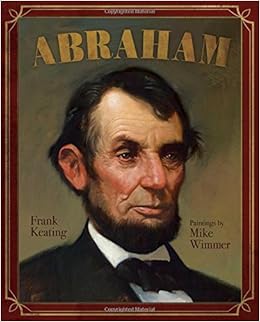
Abraham by Frank Keating, paintings by Mike Wimmer

Published by Simon & Schuster/Paula Wiseman Books  


Summary:  Abraham Lincoln narrates the story of his life, beginning with his birth in a one-room log cabin.  He tells of growing up in poverty, reading every book he could get his hands on, working at many different jobs until he was able to study law in Springfield, Illinois.  From there, it’s a pretty quick hop to becoming involved in the fight against slavery, then President of the United States during the Civil War.  The book ends with the Union’s victory, with no mention made of Lincoln’s assassination.  The Gettysburg Address and a brief bibliography are included at the end.  32 pages; grades 1-4.

Pros:  Told in a folksy voice interspersed with some of Lincoln’s own quotes, this would be a good introduction for primary grades.  The paintings add realistic details.

Cons:  When George, Theodore, and Abraham have been published in the “Mount Rushmore Presidential series”, there’s not much element of surprise about what the next book will be.

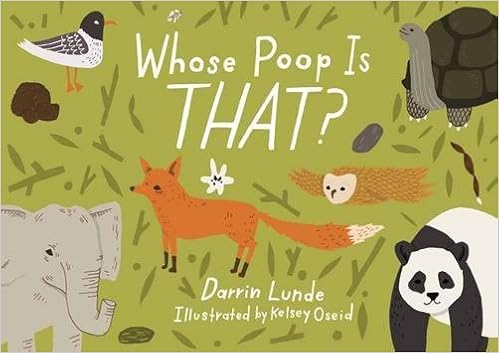
Whose Poop Is That? By Darrin Lunde, illustrated by Kelsey Oseid

Published by Charlesbridge

Summary:  Which animal’s poop can be a foot high?  Whose has splinters in it?  Is that bundle of fur and bones a poop?  A question is posed on one page, with a picture of the waste material in question, then the answer is given next, showing the animal who produced it.  Seven animals are profiled, including the extinct ground sloth, which introduces the concept of fossilized poop.  Two pages at the end give additional facts about poops and the animals who make them.  32 pages; ages 3-7.

Pros:  After kids pick themselves up off the floor after splitting their sides over the fact that the word “poop” is in the title of this book, they will actually find out how waste can be used to learn something about animals.  The question-and-answer format makes this a good interactive read-aloud.

Cons:  My Google images search for “Whose poop is that?” had some interesting results.