Best in Snow by April Pulley Sayre

Published by Beach Lane Books 

Summary:  “A freeze. A breeze. A cloud. It snows.”  So begins this photo essay on snow, a follow-up to last year’s Raindrops Roll by Sayre.  Each page has a large photo or two of snowflakes in action, covering trees, animals, and the ground.  The sun comes out, the snow softens, and the ice begins to melt.  But before long, the snow begins again.  The final two pages give quite a bit of additional information on snow, along with a short list of books you can read to learn more.  40 pages; ages 3-8.

Pros:  A visually stunning science book which can be enjoyed by all ages.  Not only does it provide excellent information and beautiful photographs, but the writing would be a good mentor text on using strong verbs.

Cons:  Stopping after the thaw would have provided a happier ending.


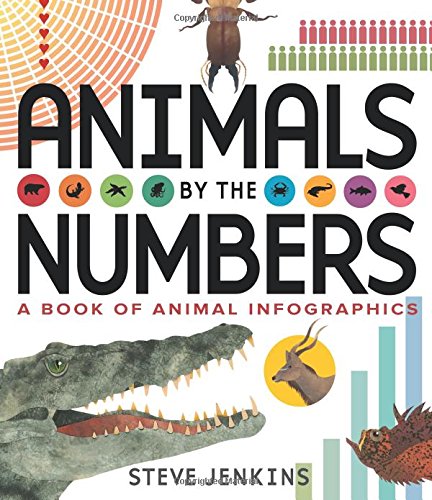
Animals by the Numbers: A Book of Animal Infographics by Steve Jenkins

Published by Houghton Mifflin Harcourt 

Summary:  Teaching kids how to read graphs and charts?  Want to wow kids (or adults) with amazing animal facts (the biomass of termites is twice that of humans; the pistol shrimp makes a sound that’s louder than a jet plane taking off)?  This book has you covered on all fronts.  Looking at many different aspects of animals, including life spans, speed, size, and deadliness, every page has a different infographic that brings the information to life.  The sobering last few pages graph the winners and losers of mass extinctions of the past, including one that is going on right now, and chart the numbers left of some of the most endangered species.  Additional books and websites are listed at the end.  48 pages; grades 2-6.

Pros:  You won’t hear much from any child you hand this book to; he or she will be way too absorbed studying the graphs and charts on every page.  That reader may emerge on occasion to share some fascinating fact with you (a koi fish can live 226 years!  There are 20 times more spider and scorpion species than mammals!).  I’ve already raved about Steve Jenkins’ cut-paper illustrations enough times to fill a pie chart, so I’ll spare you another round.

Cons:  It’s hard to believe those pesky squirrels in my backyard sleep twice as many hours as I do.

The Tragic Tale of the Great Auk by Jan Thornhill

Published by Groundwood Books
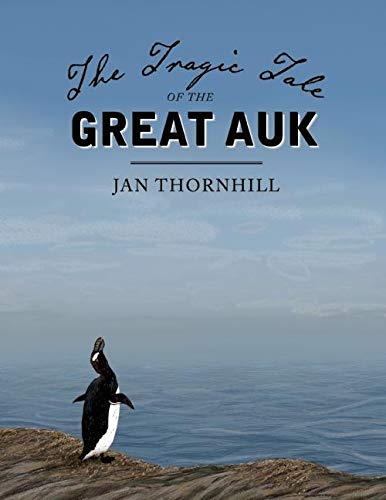
The Tragic Tale of the Great Auk: Thornhill, Jan: 9781554988655: Amazon.com:  Books

The Tragic Tale of the Great Auk: Thornhill, Jan: 9781554988655: Amazon.com:  Books

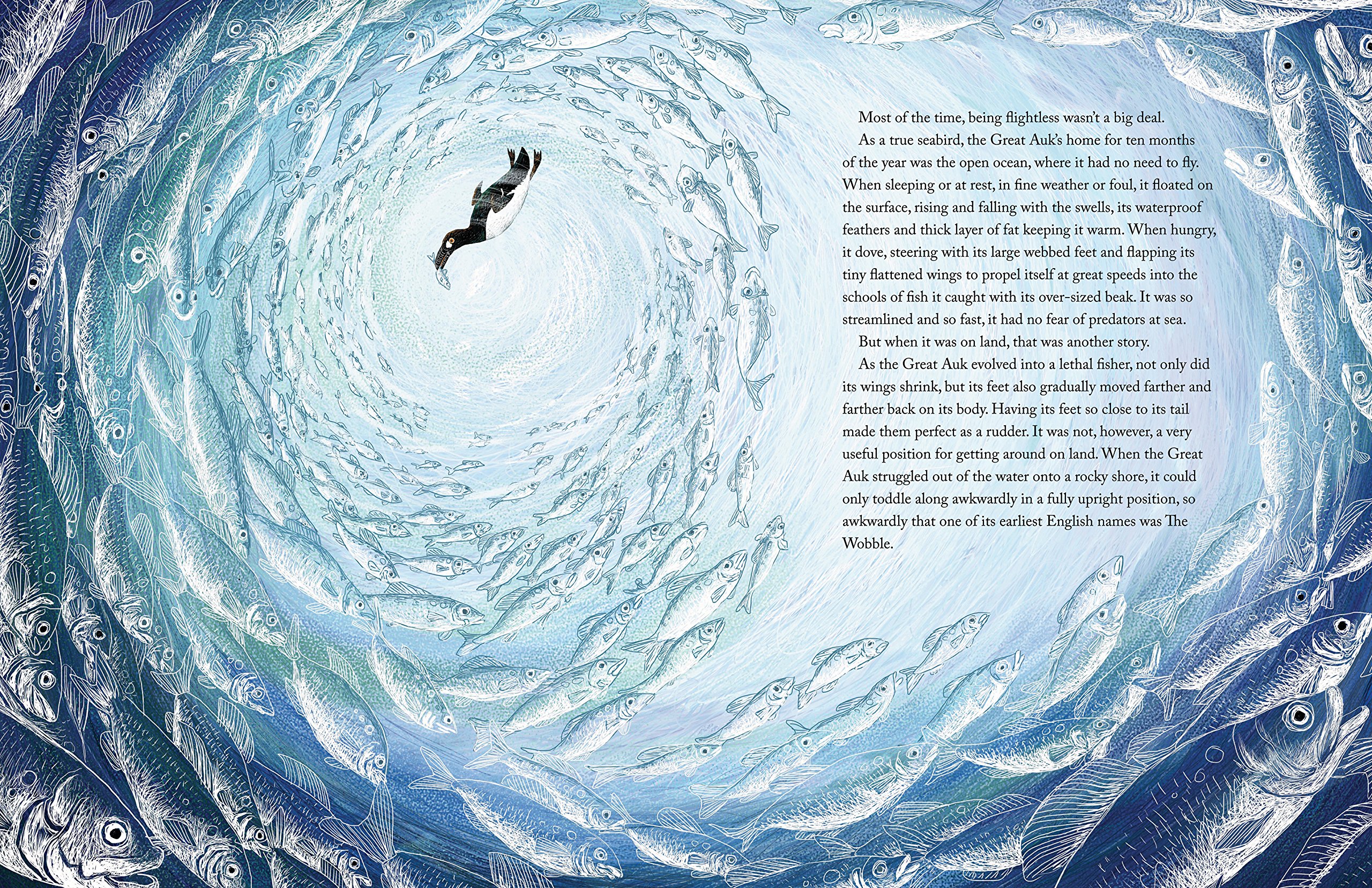
Summary:  For thousands of years, the Great Auk lived in northern seas.  It evolved to live in the water, only coming ashore to mate and lay a single egg once a year.  On land, it was slow and clumsy, but it nested in rocky places that were difficult for predators to reach.  Humans coexisted with the Great Auk for centuries.  The birds and their eggs were hunted, but not to excess.  When Europeans started traveling to North America, though, everything changed.  Ships’ crews were delighted to find fat, slow birds in great numbers to replenish their dwindling supplies of food during a long journey.  Eventually, the birds started dying off until entire colonies disappeared.  Later, birds and eggs were hunted by collectors, who would kill and stuff the birds for their displays.  In 1844, the last pair was killed by Icelandic hunters hired by a Danish collector.  This sad story ends on a few positive notes.  Funk Island, once home to many Great Auks is now a preserve for sea birds.  The decomposing bodies of the many Auks that were killed there turned into soil that covered the rocks, making the island hospitable to puffins.  The final page invites readers to join the ordinary people from around the world who are working to conserve other species before they, like the Great Auk, disappear.  44 pages; grades 2-6.

Pros:  Informational writing at its best; the Great Auk’s story is engagingly told and beautifully illustrated, touching on all kinds of topics from evolution to adaptation to conservation.  Readers will be horrified by the wasteful hunting of the birds, and hopefully inspired to help prevent other species’ extinctions.

Cons:  There’s a lot of text for a read-aloud.

Ugly: a memoir by Robert Hoge

Published by Viking


Summary:  When Robert Hoge was born in 1972, he was missing most of his left leg, his right leg was deformed, and he had severe facial abnormalities.  At first, his mother couldn’t bear the thought of bringing him home to join his four older siblings, but eventually she came around and became his staunchest defender.  Despite many surgeries to rebuild his nose, move his eyes closer together, and amputate part of his right leg, Robert strove—and for the most part succeeded—to have a happy childhood.  His memoir tells of universal kid experiences making friends, trying different sports, and getting in trouble.  It also relates the teasing he got from other kids, including his top ten list of nicknames with ratings for originality and power to hurt.  When Robert was 14, his parents told him doctors were ready to perform a big operation on him to improve his appearance.  After weighing the risks and potential rewards, Robert decided he had come as far as had with his face the way it was, and would forego the operation to move forward being himself.  200 pages; grades 4-8.

Pros:  Called by some a real-life Wonder, this book has a more matter-of-fact tone, but is inspiring nonetheless. There’s plenty of dry British humor (the Hoge family is Australian), and Robert is a quick study figuring out how to fit in with his peers without compromising his own sense of self.

Cons:  Robert’s decision not to have the final operation seemed somewhat abrupt, and left me hoping for a sequel to find out how he made it through the rest of his teen years.

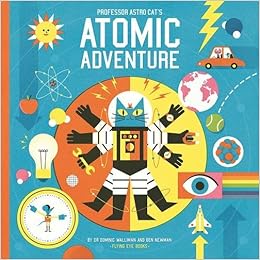
Professor Astro Cat’s Atomic Adventure by Dr. Dominic Walliman and Ben Newman

Published by Flying Eye

Summary:  Professor Astro Cat takes readers on a tour through the world of physics.  After announcing that physics holds the answers to many questions (“Why is the sky blue?” “How does a boat float?”), he covers many of the basics of physics, including gravity, sound, light, atoms, matter, energy, and more.  Each two-page spread of this oversize book has a dizzying array of graphics giving facts, answers to questions, and real-life examples.  This is a British import, so there are some British spellings and measurements.   A glossary-index is included at the end.  56 pages; grades 2-6.

Pros:  A very complete introduction to physics, explained in a kid-friendly but not condescending way, with eye-catching illustrations throughout.

Cons:  It will take a dedicated science fan or some adult support to get through all the content here.

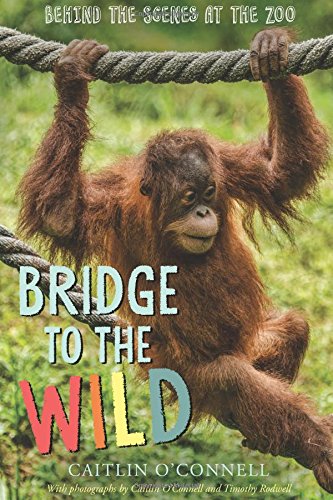
Bridge to the Wild: Behind the Scenes at the Zoo by Caitlin O’Connell, with photographs by Caitlin O’Connell and Timothy Rodwell

Published by HMH Books for Young Readers


Summary:  Caitlin O’Connell, elephant scientist and science writer, expands her horizons here to many other zoo animals.  Touring Zoo Atlanta in Atlanta, Georgia, she gives readers a behind-the-scenes look at how zoo staff study animal behavior.  Readers will learn how panda mothers interact with their babies, how hierarchies work with various social animals like elephants and gorillas, and how zoo staff handle deadly poisonous snakes.  Much of what is learned about animals in captivity can be applied to helping species survive in the wild.  The last chapter describes ways humans have been able to help endangered animals such as Brazil’s lion tamarin.  Includes extensive bibliography, source notes, and index.  208 pages, grades 5-7.

Pros:  Animal lovers will learn a lot from this book, and come away with a new appreciation for zoos and the people who work there.  Excellent photographs illustrate almost every page.  Chapters could be read in isolation by those interested in a specific animal.

Cons:  At 208 pages, it will take a pretty dedicated young zoologist to get through the whole book.

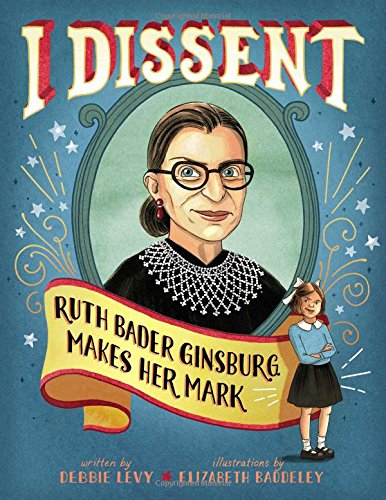
I Dissent: Ruth Bader Ginsburg Makes Her Mark by Debbie Levy, illustrated by Elizabeth Baddeley

Published by Simon and Schuster 

Summary:  Growing up in the 1940’s, Ruth Bader noticed many prejudices and injustices.  There were hotels and restaurants that banned her family because they were Jewish.  Girls weren’t expected or encouraged to do many of the things boys could do.  Even as a left-handed person, Ruth faced discrimination, getting a “D” in penmanship when she was forced to write with her right hand.  Ruth’s mother took her to the library and encouraged her to get an education; although she died the day before Ruth’s high school graduation, Ruth persisted and went to college and law school.  Overcoming the difficulties of being hired as a female lawyer, she eventually became a law professor, then a judge.  In 1993, Ruth Bader Ginsburg was appointed to the Supreme Court.  Throughout her career, up to the present day, she has fought for the rights of those who experience discrimination.  Now the oldest member of the Supreme Court, there are those who think it’s time for her to retire.  Ruth Bader Ginsburg dissents.  Includes an extensive author’s note with additional biographical information, notes on the Supreme Court cases mentioned in the text, and a bibliography.  40 pages; grades 1-4.

Pros:  The first picture book about this woman who continues to inspire.  Building Ruth’s story around her experiences with discrimination and passion for justice gives the story a good focus.  The illustrations add a bit of humor and incorporate some of the text into the pictures.

Cons;  Those whose politics don’t match Ginsburg’s may disagree with the way some of the Court cases are described.

I

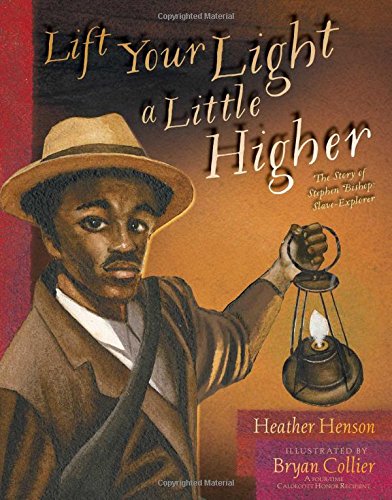
Lift Your Light a Little Higher by Heather Henson, illustrated by Bryan Collier

Published by Atheneum


Summary:  Stephen Bishop invites you to join him on a tour of Kentucky’s Mammoth Cave.  Born a slave, Bishop was trained as a tour guide for this huge cave system (the longest in the world) that was on his master’s plantation.  Although other slaves also guided visitors, Stephen became the most famous.  He discovered new animals and forged new paths through the caves.  He shows visitors his name on the cave wall, written along with his wife’s and many other visitors’, with the smoke from a candle tied to a long stick.  Little is known of Stephen Bishop’s life, which ended at the age of 37.  He is buried not far from the entrance to Mammoth Cave.  Author’s and illustrator’s notes at the end give more information about Bishop and how this book was created.  32 pages; grades 1-4.

Pros:  The lyrical text and beautiful illustrations by Bryan Collier bring this little-known man to life, along with the caves he loved and studied for many years.  Since so little is known about him, this isn’t really a biography, but more an imagined meditation on slavery, race, and life.

Cons:  Read the author’s note first, or the story will be hard to understand.

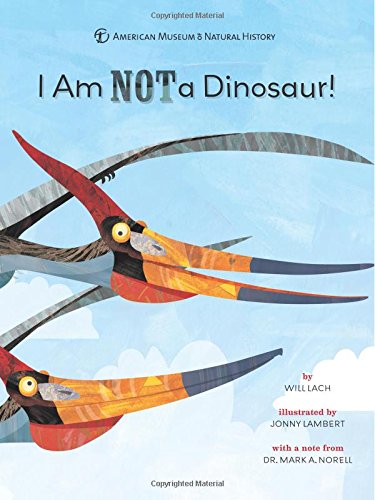
I Am NOT a Dinosaur! by Will Lach, illustrated by Jonny Lambert

Published by Sterling Children’s Books 

Summary:  Sure, we all know T-Rex, Stegosaurus, and Triceratops, but they weren’t the only vertebrates around in prehistoric times, not by a long shot.  The rhyming text introduces some of the other key players, like the familiar saber-tooth cat and woolly mammoth, and the less-well known dunkleosteus and glyptodont.  An introductory note from Dr. Mark A. Norrell, paleontologist at the American Museum of Natural History starts things off, and a final author’s note puts the prehistoric eras into some perspective, comparing the 170 million years of dinosaurs with 200,000 years of modern humans.  There’s also a bit more information on each animal and a timeline showing the different geologic time periods and which of the animals lived in each one.  40 pages; grades K-3.

Pros:  There’s more to this book than meets the eye.  Young dinosaur fans will enjoy learning about some new animals, but the front and end notes add a lot more information.  If you’ve followed this blog for a while, you may know what a fan I am of cut-paper illustrations, and these are right up there with Steve Jenkins’ work.

Cons:  You might be sorry if you don’t glance at the pronunciation guides in the end matter before attempting a read aloud.

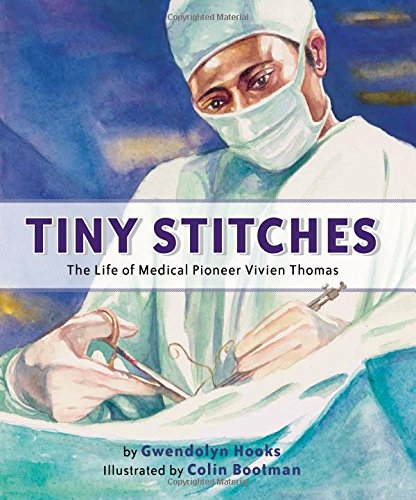
Tiny Stitches: The Life of Medical Pioneer Vivien Thomas by Gwendolyn Hooks, illustrated by Colin Bootman

Published by Lee & Low Books 

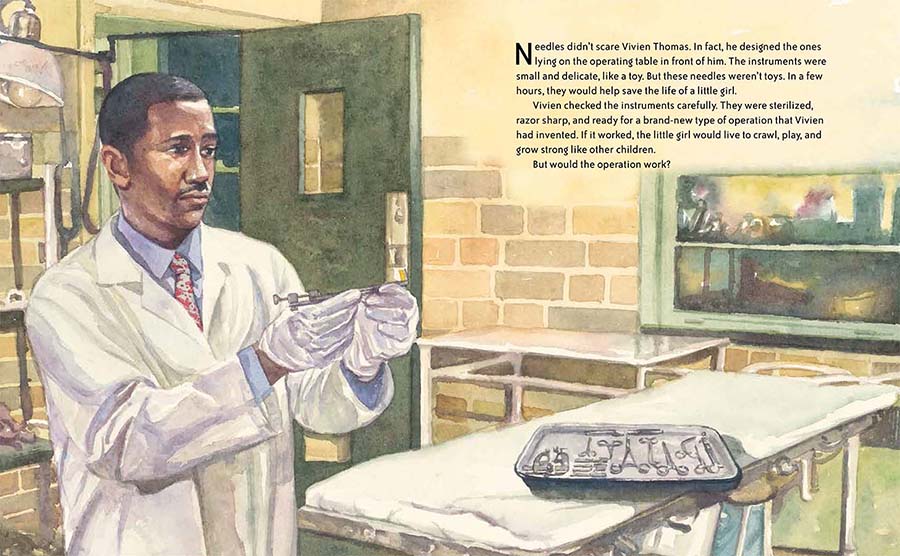
Summary:  Vivien Thomas dreamed of becoming a doctor, but when the Great Depression hit, he lost all his college savings.  Determined to pursue a medical career, he found a job as a research assistant for Dr. Alfred Blalock at Vanderbilt University.  Vivien proved to be a quick study and soon was conducting his own experiments and mastering surgical skills like suturing blood vessels.  In 1941, Dr. Blalock was offered a job at Johns Hopkins University.  He accepted it on the condition that Vivien would go with him.  At Johns Hopkins, the two men met Dr. Helen Taussig, a pediatric cardiologist who was trying to find a cure for so-called “blue-babies” whose skin turned blue because of a heart defect.  Vivien Thomas ended up doing a large portion of the research, developing a procedure, and designing a needle tiny enough to do the surgery.  When Dr. Blalock performed the ground-breaking surgery in 1944, it was Vivien who stood behind him and coached him, a role he would continue to play after the first surgery was a success.  More than a quarter of a century went by before Vivien finally got the recognition he deserved, having his portrait hung in Johns Hopkins Hospital and being awarded an honorary doctorate.  Back matter includes more information about the surgical procedure and Vivien Thomas, as well as a medical glossary and sources.  32 pages; grades 2-5.

Pros:  A compelling story of a little-known African-American scientist who overcame a myriad of prejudices to make an important contribution to medicine.  Kids who find this book interesting may want to read last year’s Breakthrough! How Three People Saved “Blue Babies” and Changed Medicine Forever by Jim Murphy.

Cons:  There is a lot of text and somewhat technical information for a picture book.