A couple of nonfiction picture books

Clever Crow by Chris Butterworth, illustrated by Olivia Lomenech Gill (Candlewick, 32 pages, ages 4-8). “Wherever you are right now, there’s sure to be a crow or two nearby.” Crows are easy to spot, but also easy to miss. They tend to be plain, not particularly fancy fliers, and have a hoarse caw instead of a melodious song. But they’re smart enough to use tools and store food, and sometimes you can see them acting playfully. To summarize, they are “smart, clever, crafty and playful…just like you!” Includes a list of suggestions for learning more about crows and a short index.

The illustrations in this book are stunning, beginning with the endpapers, which show various crow eggs in the front and the birds that hatch out of them in the back. The text is quirky but interesting, although it left me wanting to know a lot more…for instance, is a crow a specific bird or a family of birds? I was surprised by the inclusion of a blue jay on the back endpapers, since I don’t think of it as a crow, but a quick Google search revealed that it’s part of the crow family. This is an eye-catching introduction, but curious readers will want to dig deeper for more information.

Sleepy: Surprising Ways Animals Snooze by Jennifer Ward, illustrated by Robin Page (Beach Lane Books, 32 pages, grades K-3). Whether it’s the half-sleeping brain of the dolphin, the deep torpor of the hummingbird, or the eyes-wide-open slumber of a snake, animals get their rest in a variety of fascinating ways. Each page features a close-up illustration of the animal with four lines of rhyming text describing its sleep, with a paragraph of additional information giving more details. The last page features a human child experiencing what scientists call “monophasic sleep.” Includes a list of the types of sleep in the book, a list of sources, and pie charts showing sleeping and waking times for all 16 animals and five more showing humans at different developmental stages.

As much as I mourn the loss of Steve Jenkins, his talented wife Robin Page has found an able partner with Jennifer Ward, whose rhyming text and fascinating facts reminded me of many a Jenkins book. The pie charts were very similar to some in his Animals by the Numbers (and the fact that I know that is a testament to how many times I’ve shared that book with classes.) The rhyming text and pictures will appeal to younger readers, and older ones will enjoy the additional information about each animal.

Stories and songs

Go Forth and Tell: The Life of Augusta Baker, Librarian and Master Storyteller by Breanna J. McDaniel, illustrated by April Harrison (Dial Books, 40 pages, grades 2-5). Augusta Baker was raised on her grandmother’s tales of Br’er Rabbit and King Arthur. A college class on folklore encouraged Augusta to become a storyteller herself, and she got a job at a branch of the New York Public Library in Harlem, where she found audiences of children eager for her stories. While most of her young patrons were African American, the books Augusta found in the library rarely had Black characters, and when they did, the portrayals were “RUDE, MEAN, and JUST PLAIN WRONG.” She searched for books (and wrote some of her own) that sought to correct that, compiling lists to share those books with others. Over the years, her work influenced Black writers and educators like James Baldwin, Audre Lorde, Carter Woodson, John Steptoe, and Virginia Hamilton. She extended her outreach through teaching at Columbia and the University of South Carolina, a radio show, and an appearance on Sesame Street and is honored by the city of Columbia, SC each year with a festival called A(ugusta) Baker’s Dozen. Includes a timeline, citations, an author’s note, and photos.

Bridges Instead of Walls: The Story of Mavis Staples by Mavis Staples and Carole Boston Weatherford, illustrated by Steffi Walthall (Rocky Pond Books, 48 pages, grades 2-5). Mavis Staples tells the story of her life (in third person), beginning with her family’s trip north during the Great Migration. Mavis was the youngest, born in Chicago, and as she grew older, she began singing with her father and siblings. They became popular as the Staples Singers, performing gospel music in churches around the Midwest, gradually expanding their repertoire to include blues and folk music. Although their lives and music were firmly grounded in their faith, eventually their fame spread to the secular entertainment world, as well as to supporting Martin Luther King, Jr. and the civil rights movement. Mavis also enjoyed a solo career, which continues to this day, as she is the last surviving member of the Staples Singers. Includes a timeline and lists of recommended listening (songs by the Staples Singers and Mavis Staples) and recommended viewing (documentaries).

These two excellent picture book biographies will introduce readers to amazing Black women who overcame discrimination and other barriers to share their gifts of storytelling and singing. Both are pretty long with lots of references to historical figures that will likely need some introductions for kids. The illustrations in both are amazing and do a great job of incorporating each woman’s art into the story.

Labor pains

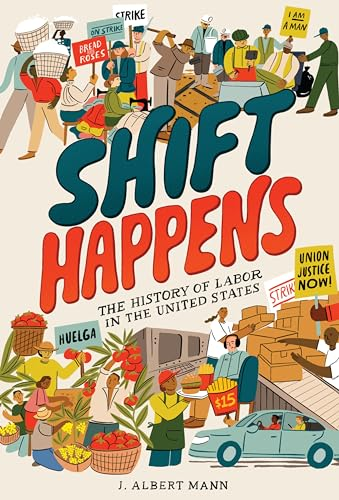
Shift Happens: The History of Labor in the United States by J. Albert Mann (HarperCollins, 416 pages, grades 8-12). Low wages, long hours, wealth inequality, immigrants accused of “stealing” jobs: issues workers face today have in fact been around since the earliest days of United States history. This breezy but thoroughly researched account tells the painful story of American labor, in which actions for improved conditions have all too often been met with resistance, violence, and even murder. There are occasional hard-won victories for workers, and the twentieth century brought substantial legislation and improvements for labor–until they were eroded during the backlash of the Reagan years and beyond. The media is also implicated here for telling stories that favor capitalists and demonize labor organizers and unions. Teens looking for the truth about labor’s history will find plenty to think about, presented with short chapters and irreverent humor that will keep them engaged.

It’s taken me weeks to work my way through this book, but it was well worth it, with fascinating and disheartening stories that make it a good companion to Lies My Teacher Told Me. I was hoping to be able to recommend this for younger kids, but there’s definitely some language that might raise a few middle school eyebrows (starting with the title), and I think that, and the complexity of the topic make it more appropriate for high school.

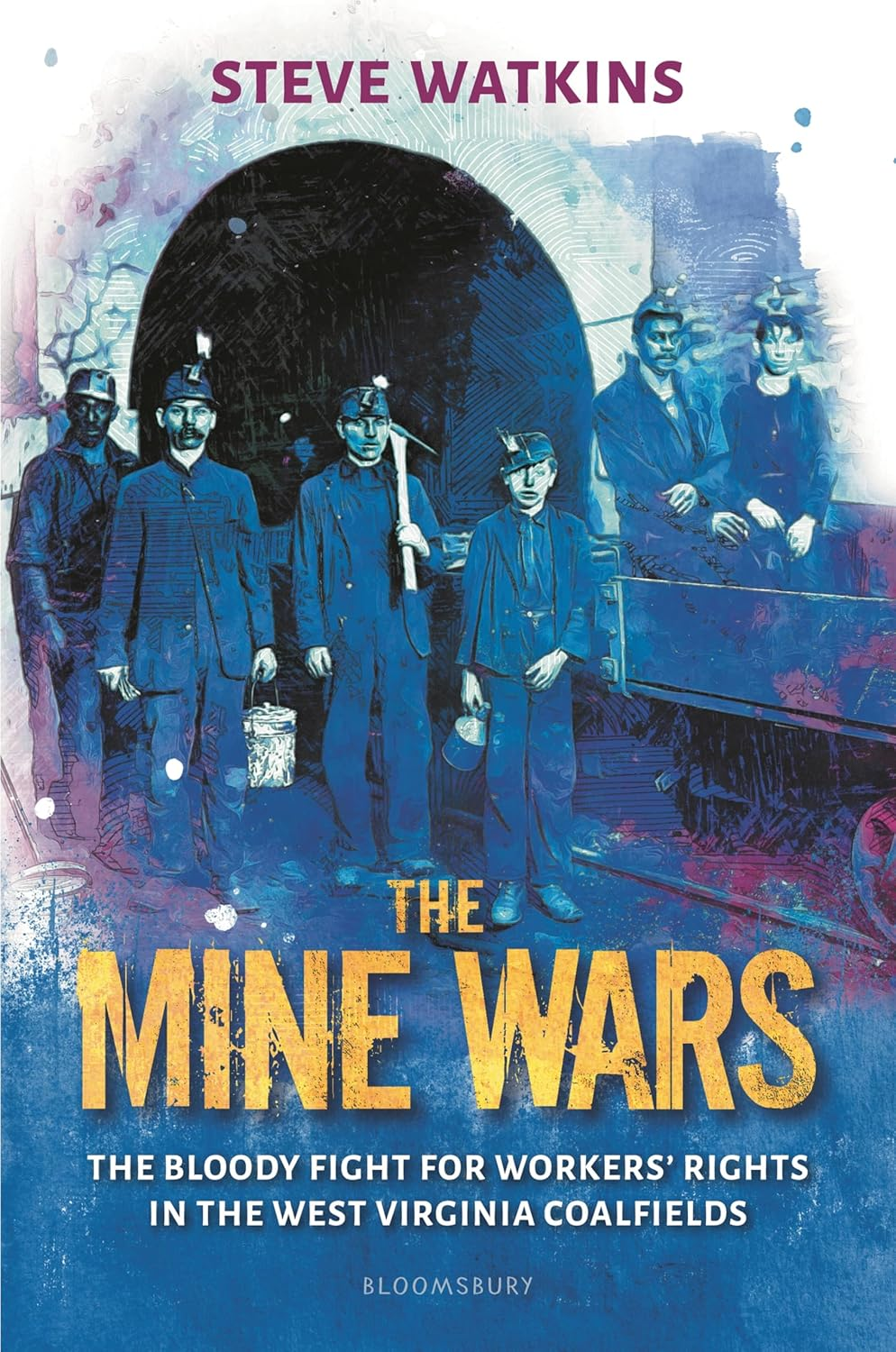
For a more in-depth look at a single incident in U.S. labor history, try The Mine Wars: The Bloody Fight for Workers’ Rights in the West Virginia Coalfields by Steve Watkins (Bloomsbury Children’s Books, 272 pages, grades 6-10). I was too saturated on labor history from Mann’s book to read this one, but it looks like it includes many of the elements I read about: workers paid paltry wages in scrip for long hours of dangerous and back-breaking labor, and a strike that ultimately resulted in several killings. This particular story takes place in West Virginia in the early 1920’s, an era when it was particularly dangerous to be part of a union. This might be a better choice for a middle school introduction to labor history and will potentially appeal to fans of Steve Sheinkin.

Animal books

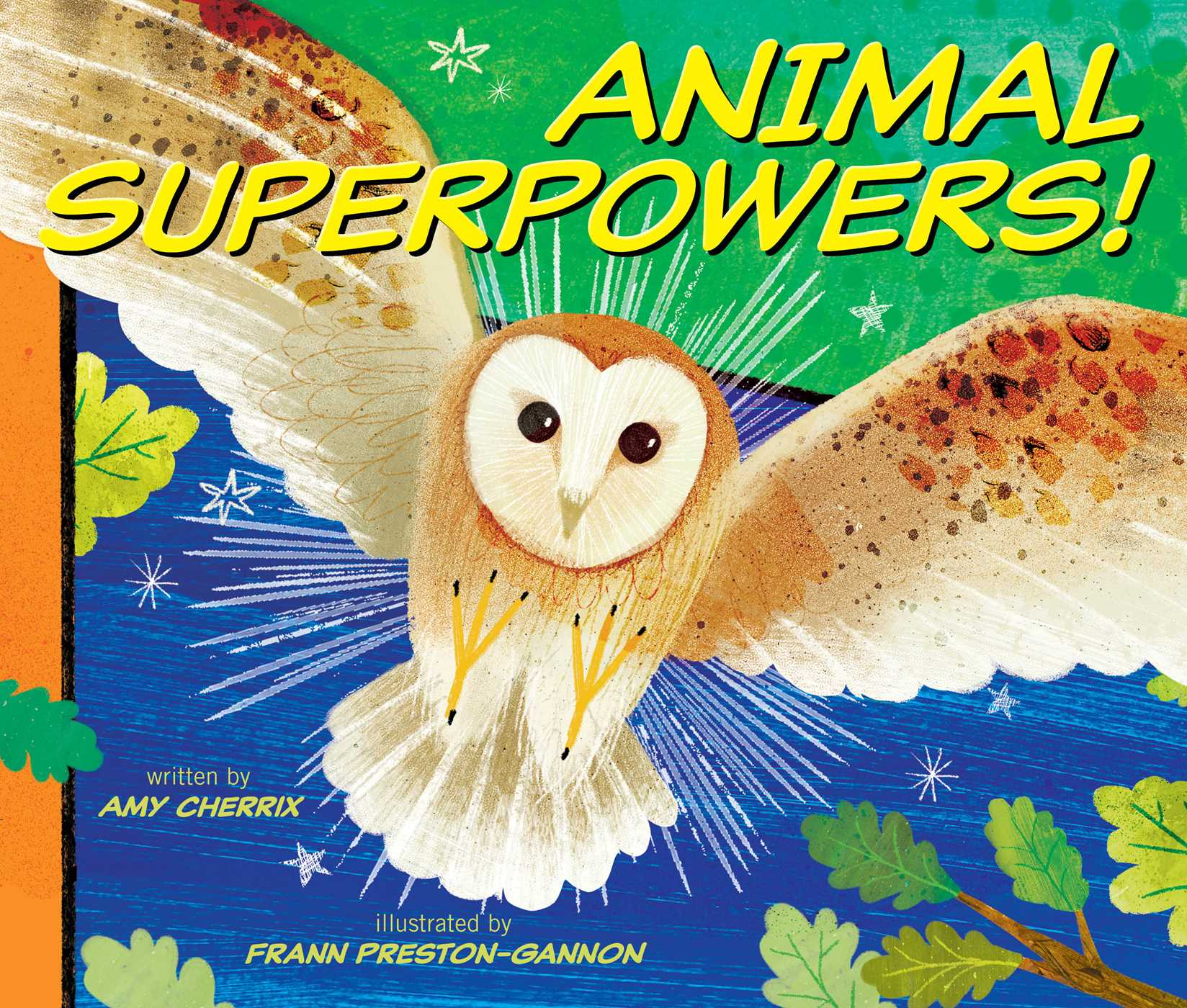
Animal Superpowers by Amy Cherrix, illustrated by Frann Preston-Gannon (Beach Lane Books, 48 pages, grades K-4). From a seemingly immortal jellyfish to a gravity-defying ibex to a snake-killing, venom-resistant opossum, these animals have superpowers that allow them to survive and thrive in their environments. Even your pet dog has a smelling superpower! Each two-page spread has a vivid illustration with boxed text. One spread gives the introduction to the power, then turn the page to reveal what it is and how the animal uses it. The last couple pages, entitled “Action is your superpower!”, tells how the different animals are threatened by pollution and climate change, encouraging kids to take action to help them. There’s also a list of sources.

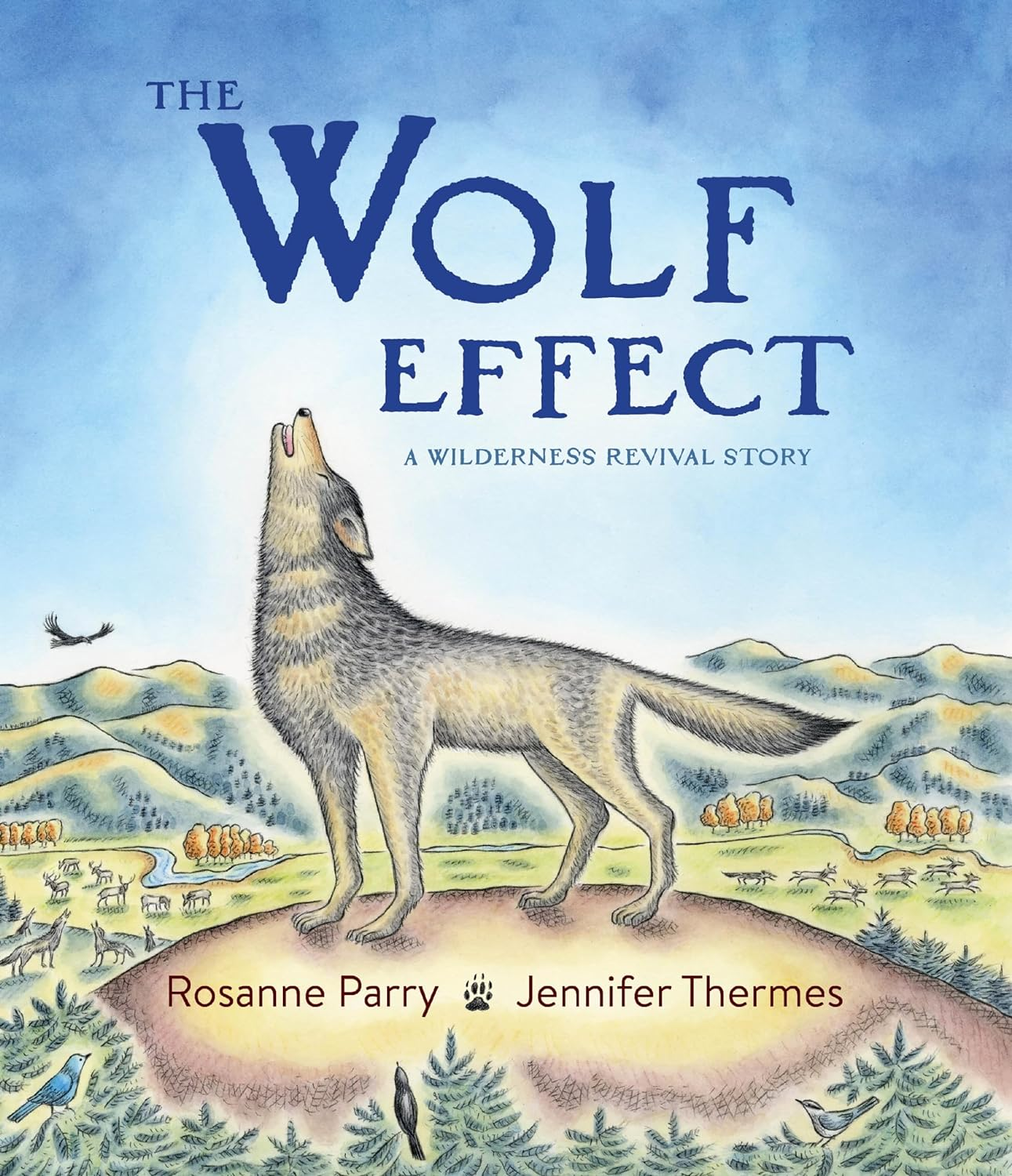
Wolf Effect: A Wilderness Revival Story by Rosanne Parry, illustrated by Jennifer Thermes (Greenwillow Books, 40 pages, grades K-4). The story of wolves in Yellowstone, from their disappearance due to hunting to their reintroduction in the 1990’s, is told with rhyming text, prose, and illustrations. The wolves’ demise is told in verses, showing farmers and rangers hunting the wolves, with newspaper headlines declaring that Yellowstone is free of them. Then the text goes into a sort of “house that Jack built” rhyme, showing the ripple effects of reintroducing the wolves on the environment, as beavers, willows, and songbirds all return to the park. Boxes of narrative text provide more details, as do the illustrations, which sometimes depict a bear and a coyote discussing the effects of the wolves’ return. Eighteen animals from the pages are shown at the end; there are also notes from the author and illustrator, as well as a glossary and a list of resources.

Animal fans will be happy to see both of these books on the library shelves, with their eye-catching covers and beautiful illustrations. Animal Superpowers will appeal to readers who like collecting interesting facts while Wolf Effect is more of a story. I found the way the latter book was written a bit confusing, and I’m not sure that rhyming verses were the best way to go, particularly from an author as knowledgeable about wolves as Rosanne Parry (A Wolf Called Wander is one of my all-time favorite animal stories). Jennifer Thermes is amazing, though, and I found the illustrations to be the main attraction of both books.

A basketball ace, a designer of space, and an ultramarathon race

Wat Takes His Shot: The Life & Legacy of Basketball Hero Wataru Misaka by Cheryl Kim, illustrated by Nat Iwata (Lee & Low Books, 40 pages, grades 2-5). Wataru Misaka was an active child, growing up in Utah as a second-generation Japanese American, or Nisei. His father taught him the Japanese word gambatte, meaning to do your best, and Wat took the lesson to heart, pushing himself to work hard in school, on the basketball court, and later, after his father died, to help support his family. During World War II, Wat’s family escaped being sent to concentration camps, since they didn’t live on the coast, but they still faced discrimination. At the University of Utah, Wat slept under the bleachers in the gym when the segregated dorms were full. He made the college basketball team, but at first didn’t get to play and was barred from away games. When he did get on the court, spectators yelled racist slurs at him. Keeping in mind gambatte, Wat never gave up, eventually leading his team to a national championship. He was recruited by the Knicks, becoming the first player of color in the BAA (later the NBA). After being released from his contract, Wat returned to school and got his engineering degree. He excelled throughout his life, at work, in the community, and on the golf course and bowling alley. The last page shows him exchanging jerseys at a meeting with Asian American NBA star Jeremy Lin. Includes a lengthy author’s note, a photo of Wat in 2008, and a list of sources.

Basketball fans will enjoy this biography, although it’s a bit lengthy with quite a bit of historical context, making it perhaps a better choice for older kids. The history is fascinating, though, with lots of action-packed illustrations, and the lesson in perseverance is an inspiring one.

Mr. Pei’s Perfect Shapes: The Story of Architect I. M. Pei by Julie Leung, illustrated by Yifan Wu (Quill Tree Books, 40 pages, grades 1-5). As a boy in China, Ioeh Ming Pei was fascinated by the volcanic rock statues in his grandfather’s hometown of Suzhou that took shape over many years from water falling on them. His love of structure continued as he grew up, sketching buildings he saw being built in Shanghai before coming to America at the age of 18 to study architecture. He rose to fame in 1964 when Jackie Kennedy selected him to design the John F. Kennedy Presidential Library and Museum. His innovative designs and ways of seeing shapes led to other famous buildings like the Louvre Pyramid and the Rock and Roll Hall of Fame. He returned to Suzhou at the age of 90 for the installation of an art museum he had designed for the city, admiring once again the rock statues he had seen as a child. Includes a timeline and additional resources.

Although I’ve heard of I. M. Pei I didn’t know the many famous buildings he designed. His innovative way of thinking and problem solving is emphasized in the text and especially the illustrations, which show of the beauty of the modernistic architecture Pei helped create.

Daughter of the Light-Footed People: The Story of Indigenous Marathon Champion Lorena Ramírez by Belen Medina, illustrated by Natalia Rojas Castro (Atheneum Books for Young Readers, 40 pages, grades K-4). Lorena Ramírez has become an unlikely ultramarathon champion, competing in races wearing the traditional clothing of her Rarámuri (meaning “light-footed”) people: a skirt and rubber-soled huarache sandals. The story takes place over the course of sixty-mile race, during which she reflects on her past that has brought her to this point. Growing up in a remote corner of Mexico, she became a strong runner by herding goats and cows, playing ball games with her siblings, and walking for hours to buy food. At the end of the race, she is the first to cross the finish line. Includes a two-page note with additional information about Lorena and a list of sources.

Lorena Ramírez’s story is fascinating, the way she has become a champion in an unconventional way, holding onto her people’s traditions and honoring them in the way she dresses. The beautiful illustrations show the people, animals, and landscape of her home. I do wish books like this would give the introductory information at the beginning so the reader (at least this reader) isn’t trying to figure out what is going on throughout the whole story.

Games people play

The Life-Changing Magic of Chess by Maurice Ashley, illustrated by Denis Angelov (Harry N. Abrams, 40 pages, grades 2-6). Maurice Ashley, the first Black Chess Grandmaster, weaves together his own story with some basics of playing chess. The book is divided into ten tips from Ashley (#1 – It’s like being a magician, #2 – Everyone starts as a beginner), which he elaborates on in a series of two-page spreads. In addition to introducing the pieces and explaining how they move, he includes a few suggested series of plays. It’s clear that becoming a good chess player involves a lot of hard work and research, and Maurice talks about some of the setbacks he experienced on the road to Grandmaster, encouraging kids to persevere and hold onto their dreams. The last few pages include more information about him, along with several photos, and there’s also a glossary.

This new series includes The Life-Changing Magic of Skateboarding, with drumming and baking due out at the end of the summer. Although I have never understood chess nor had the inclination to play it, I found this book very engaging, and I like the way Maurice Ashley tells his own story as he explains the fundamentals of the game. The illustrations add a lot and are essential for showing how to move the pieces to start or end a game. I hope there will be many more additions to this series.

Curveball by Pablo Cartaya, illustrated by Miguel Diaz Rivas (Disney Hyperion, 192 pages, grades 3-7). Elena is an excellent baseball player, the only girl on the boys’ team, with a mother whose support borders on helicopter parenting. When Elena hurts her knee at the beginning of the summer, she’s a bit relieved to have to give up her planned baseball clinic, but she soon realizes that she has no friends outside of baseball. With nothing else to do, she starts hanging out with her younger brother and his live action role-playing (LARP) pals. Elena’s kind of forgotten how to use her imagination and have fun, but the other kids talk her through it, and before long she’s not only figured out a way to combine baseball and LARP, but she’s met a couple of sporty girls her age who have learned how to strike a balance between athletic competition and fun. Their example helps Elena find the courage to talk to her mom, who reveals how her own early disappointments have fueled her passion for Elena’s baseball playing and agrees to let Elena have more autonomy over her own life.

Part Roller Girl, part Cardboard Kingdom, this colorful graphic novel has something for everyone, with a strong Latina character (Spanish is expertly woven into the dialog), and a nice message about finding a balance in life.

Lucky Scramble by Peter Raymundo (Dial Books, 192 pages, grades 3-7). The story of the national Rubik’s Cube championship focuses on 12-year-old Tyler Gooden, an up-and-coming cuber who got his start after his dad died three years ago. The Rubik’s cube was a gift from his father, and although Tyler had never solved it, focusing on it after his dad’s death helped him with his grief. Other competitors are profiled, including egotistical champion Dirk Speedman, 8-year-old prodigy Eli Newton and his obnoxious dad who will stop at nothing to see his son win, twins Izzy and Lizzy who are learning to establish their own identities, and 1980’s great Miles Wizzinski, who’s hoping for a comeback despite his carpal tunnel syndrome. The national championship competition brings out the worst–and eventually the best–in many of the characters, as they all learn and grow on their way to fighting it out for the title.

This hybrid mix of illustrated chapter book and graphic novel is sure to be a hit with its colorful cartoon-style illustrations and intriguing, if slightly one-dimensional, characters. Watching the competitors solve the cube in record-breaking times will surely have readers seeking out winning strategies on YouTube.

Memories of China

Growing Up Under a Red Flag: A Memoir of Surviving the Chinese Cultural Revolution by Ying Chang Compestine, illustrated by Xinmei Liu (Rocky Pond Books, 40 pages, grades 2-6). Ying grew up during China’s Cultural Revolution, with parents, both doctors, who were targeted for being part of the educated class. Her father taught her English and told her stories of his days studying in San Francisco, and the Golden Gate Bridge became a symbol of that life. Ying recalls the day her dad was forced to burn all his English books and papers, hiding his ties to the west from the government. Shortly after that, he was arrested, and life grew increasingly difficult for Ying and her mother, with food shortages and worries about the future. After Mao’s death in 1976, the family was reunited. Ying eventually moved to the U.S. to study, and the final picture shows the family eating with her father’s teacher, Dr. Smith, the Golden Gate Bridge in the background.

Born Naughty: My Childhood in China by Jin Wang with Tony Johnston, illustrated by Anisi Baigude (Anne Schwartz Books, 112 pages, grades 2-5). Imagine Ramona Quimby living in 1980’s Mongolia, and you’ll have a good idea of the vibe of Jin Wang’s lively childhood memoir. Living in a one-room mud hut with her parents and two younger brothers, Jin embraces all of life experiences, whether it’s traveling with her father to fetch the family’s precious water supply, beating the boys at tree-climbing, harvesting mushrooms and potatoes, or learning calligraphy. Real dangers are never far away, and her story of being attacked by a potentially rabid dog is harrowing. The last chapter shows the family taking a break from their demanding lives to celebrate the new year together. In the authors’ notes, Jin Wang shares more details of her life, including a 2019 trip back home that affirmed her happy childhood memories, and she and Tony Johnston relate how they met in yoga class and created this book together.

These two very different memoirs offer contrasting views of Chinese childhoods just a decade apart, one of a middle-class family dealing with government persecution and hardship, the other of a much poorer rural family facing different hardships but able to lead a freer life. Jin Wang’s memoir would make a great book club choice for second or third graders. There are plenty of similar stories for this age group that would make an interesting contrast to Jin’s childhood. While Ying’s story is a picture book, it may appeal to older students up into middle school, who might have a better understanding of the Cultural Revolution and what it meant to the people living through it.

Animals, dead and alive

Life After Whale: The Amazing Ecosystem of a Whale Fall by Lynn Brunelle, illustrated by Jason Chin (Neal Porter Books, 48 pages, grades 2-5). When a 90-year-old blue whale dies on her annual northern migration, her body slowly sinks a mile before settling on the bottom of the ocean. Scavengers like hagfish and sleeper sharks, attracted by the chemicals released to this rare source of food, start devouring the whale meat. This process can go on for years until only the skeleton is left. A second stage begins with a new set of scavengers (hello, bone-eating zombie worms), who feed on the whale remains for decades. 150 years later, the bones are still releasing chemicals that feed algae, which in turn feed krill. The krill is eaten by a pregnant blue whale, thus completing the cycle of life that includes the old blue whale and the new one. Includes additional information about blue whales, ecosystems, and the four phases of a whale fall ecosystem, as well as additional resources.

This beautiful, well-written science book is sure to be a contender for the Caldecott and the Sibert awards, both of which amazing illustrator Jason Chin has won before. The information is fascinating, with descriptions of a process and animals that exist so far under the sea that scientists are just beginning to learn about them. There’s a lot of text and scientific information, which made me wonder if the book would hold the attention of younger elementary readers. If it’s too much, you can direct them to Melissa Stewart’s Whale Fall.

I Was: The Story of Animal Skulls by Katherine Hocker, illustrated by Natasha Donovan (Candlewick, 40 pages, grades 2-5). A skull says, “I was,” as the teeth, bones, holes, and cracks help tell the story of the animal it belonged to. Each two-page spread shows a skull with the voice of the animal describing part of the skull that hints at its identity. Turn the page and see the animal as it looked when it was alive. There’s a lynx, a deer, a beaver, a hummingbird, a wolf, and an owl. The last few pages celebrate the human skull, which protects the brain that allows us to understand the world around us. Includes a labeled diagram of a human skull with additional information about different parts, more information about the animals in the book and the human skull, and a few additional resources.

The large, vivid illustrations capture both the skulls and the animals beautifully. I always enjoy a book that gives kids the opportunity to guess what’s coming next, as it makes for a more engaging read-aloud. I found the premise kind of sad, though, with dead animals describing themselves when they were alive, and I wish the name of the animal had been included with the picture.

Survival of the Fittest: Who Will Come Out on Top? by Rebecca Donnelly, illustrated by Misa Saburi (Henry Holt and Co., 112 pages, grades 2-5). A reality TV show has six animals competing for the best engineering feat, with a hermit crab serving as host and three sharks judging. A chameleon, humpback whale, gecko, elephant, peacock mantis shrimp, and diabolical ironclad beetle each make a case for why it should be the winner, showing off a unique adaptation that allows it to survive. A winner is declared in the final chapter, and additional information about each animal’s “invention” is given on the last few pages.

Billed as book 1, this looks to be the start of a graphic novel series that may appeal to fans of the Who Would Win series. It’s cute and funny, with some interesting animal information, although not nearly as much as Who Would Win provides. The winner seemed like kind of a random choice, but I guess that’s more or less in keeping with the nature of reality TV.

Poetry for scientists

A Planet Is a Poem by Amanda West Lewis, illustrated by Oliver Averill (Kids Can Press, 40 pages, grades 2-5). An introduction explains that a planet is a poem, and a poem is a planet, setting the stage for the integration of science and poetry. There’s a poem for each planet, as well as for the sun (but, surprisingly, not the moon), the Kuiper Belt, Arrokoth (an object located in the Kuiper Belt), and one for future astronomers. Each poem is on a page that unfolds to a gatefold that contains additional information on both the subject of the poem and the poetic form, with illustrations that expand as well. It’s a clever concept that educates about both planets and poetry, but I’m hesitant to get this for my library, knowing how even one gatefold page tends to get destroyed pretty quickly. Back matter includes information about writing your own poem, with facts about Planet X to serve as possible inspiration; a glossary of space terms; and a list of sources and resources.

The City Sings Green & Other Poems About Welcoming Wildlife by Erica Silverman, illustrated by Ginnie Hsu (Clarion Books, 40 pages, ages 4-8). In a dozen poems, Erica Silverman describes projects around the world where a single person or small group has made a difference with conservation. Each poem is spread over two or three pages, accompanied by colorful illustrations and a paragraph describing the project. From rewilding the playground in Los Angeles to cleaning a beach and restoring a sea turtle habitat in India to creating a bee “highway” in Norway, these projects will inspire kids to find ways to make a difference. With plenty of resources in the back, this would make a great starting place for a unit on ecology that might inspire hands-on projects.

June holidays

They Built Me for Freedom: The Story of Juneteenth and Houston’s Emancipation Park by Tonya Duncan Ellis, illustrated by Jenin Mohammed (Balzer + Bray, 32 pages, ages 4-8). Emancipation Park in Houston, Texas tells its history, beginning on June 19, 1865, when enslaved people in Texas learned that they were free. Most of the spreads begin with the words “they built me”: “They built me to celebrate,” “They built me to show they were strong,” “They built me to play.” Illustrations show Black people building a park on the ten acres they purchased, enjoying picnics and barbecues, swimming in a pool that allowed them access, and enjoying a baseball game. The park eventually fell into disrepair, but a new generation restored it and rededicated it in 2017. An afterword gives more information about the park, including a brief paragraph at the end about Juneteenth.

This lovely book celebrates Emancipation Park, and, to a slightly lesser extent, Juneteenth. Although the holiday provides the starting point, much of the book is dedicated to Black people persevering to create a beautiful park for themselves that allows them to experience joy, community, and celebration, which is captured in both the text and the illustrations. I wish the afterword were a foreword, as the book is more interesting with some background knowledge.

With Dad by Richard Jackson, illustrated by Brian Floca (Neal Porter Books, 40 pages, ages 4-8). A boy reminisces about a magical camping trip he took with his father, fishing, eating the fish cooked over the campfire, and sleeping in a tent from which they can hear the hoot of an owl. The last few pages fast forward to winter, when Tim and his mother are reading an airmail letter from Dad, who is overseas fighting in a war. “I want Dad home safe and soon and warm,” Tim says, planning to pick up where they left off with another camping trip.

Wow, the end of this book just about broke me! Good picture book memoirs aren’t easy to create, and this one is phenomenal, with so many details of the camping trip that show a loving father teaching his son without ever being overbearing, all enhanced by Brian Floca’s beautiful illustrations. While not explicitly about Father’s Day, this would make a perfect gift for the holiday.