One Dark Bird by Liz Garton Scanlon, illustrated by Frann Preston-Gannon

Published by Beach Lane Books
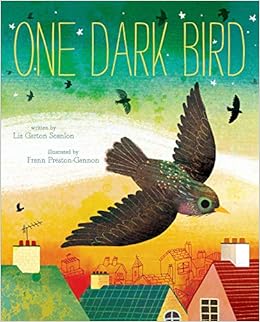
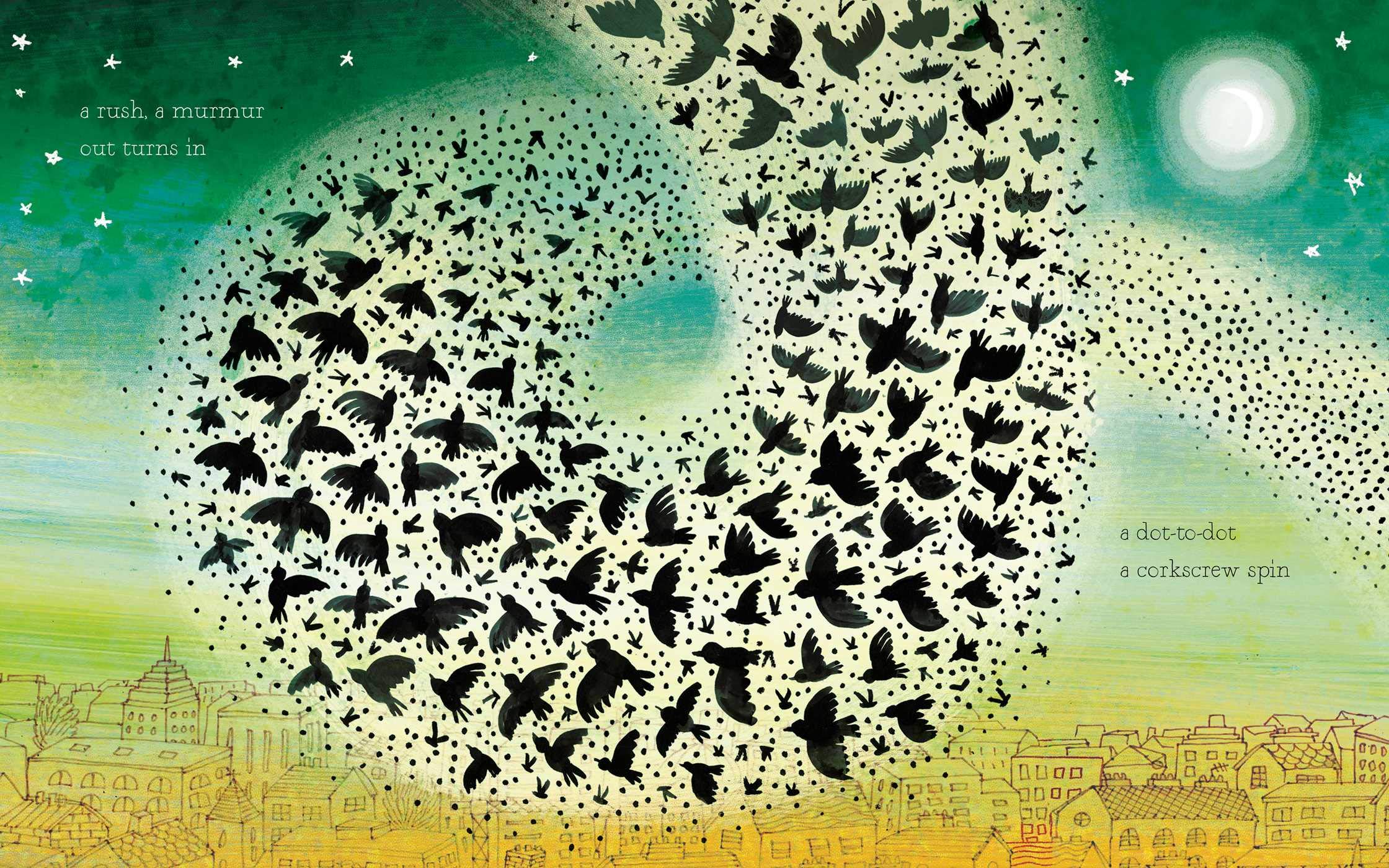
Image result for one dark bird liz garton scanlon

Image result for one dark bird liz garton scanlon

Summary:  On the title page, we learn that if starlings are threatened, they will sometimes form what’s called a murmurration: a huge flock that can fly in a coordinated mass, almost like a dance.  The book goes on to count starlings from 1 to 10; when they are startled by a bird of prey, hundreds come together to move in a flock through the sky. When danger passes, they go their separate ways, and the countdown goes from 10 to 1.  The last one falls asleep in a tree as a full moon is rising. 40 pages; ages 2 -7.

Pros:  Readers will learn a little bit about starlings and counting as they enjoy the gorgeous illustrations.  The single starlings are a medley of jewel-toned colors, and the murmurration against the evening sky is quite spectacular.

Cons:  I would have liked a little more information or additional resources about starlings.
If you would like to buy this book on Amazon, click here.

Ultrabot’s First Playdate by Josh Schneider

Published by Clarion Books

Image result for ultrabot's first playdate amazon

Image result for ultrabot's first playdate schneider

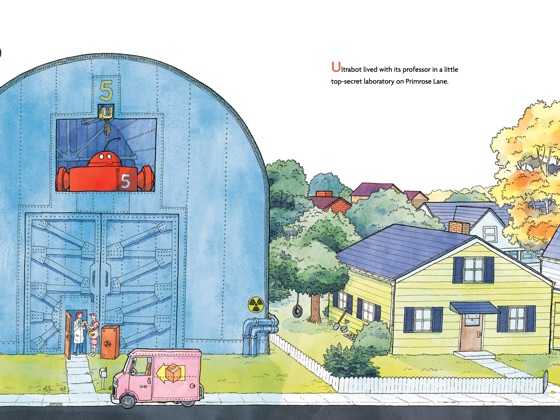
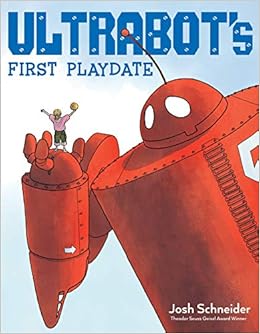
Summary:  Ultrabot lives with its professor in a top secret lab…which happens to be right next door to the home of a girl named Becky.   When the professor tells Ultrabot that she’s arranged for the robot to have a playdate with Becky, Ultrabot is worried, imagining Becky as a giant hairy monster.  But when Becky shows up the next day, the two enjoy playing with a ball and drawing. At lunchtime, they discover that they both like having the crusts cut off of their sandwiches…even if Ultrabot’s sandwich happens to be made of diesel fuel and requires a welder to trim off the crusts.  The two friends can hardly wait for their next playdate, and the last picture shows Becky opening her front door to see Ultrabot’s giant eye peering inside. 32 pages; ages 4-8.

Pros:  Kids will love Ultrabot and get a laugh out of his giant toys that correspond to their own stuff.  The message that it’s okay to feel anxious about a new situation and that it usually works out just fine is delivered with lots of humor and sympathy.  

Cons:  Ultrabot is roughly the size of Becky’s house, so it’s not clear how that second playdate will work out.

If you would like to buy this book on Amazon, click here.

The Evil Princess vs. the Brave Knight by Jennifer L. Holm vs. Matthew Holm

Published by Random House Books for Young Readers

Image result for evil princess vs brave knight

Image result for evil princess vs brave knight

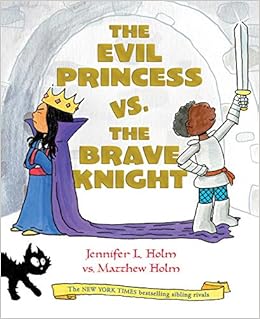
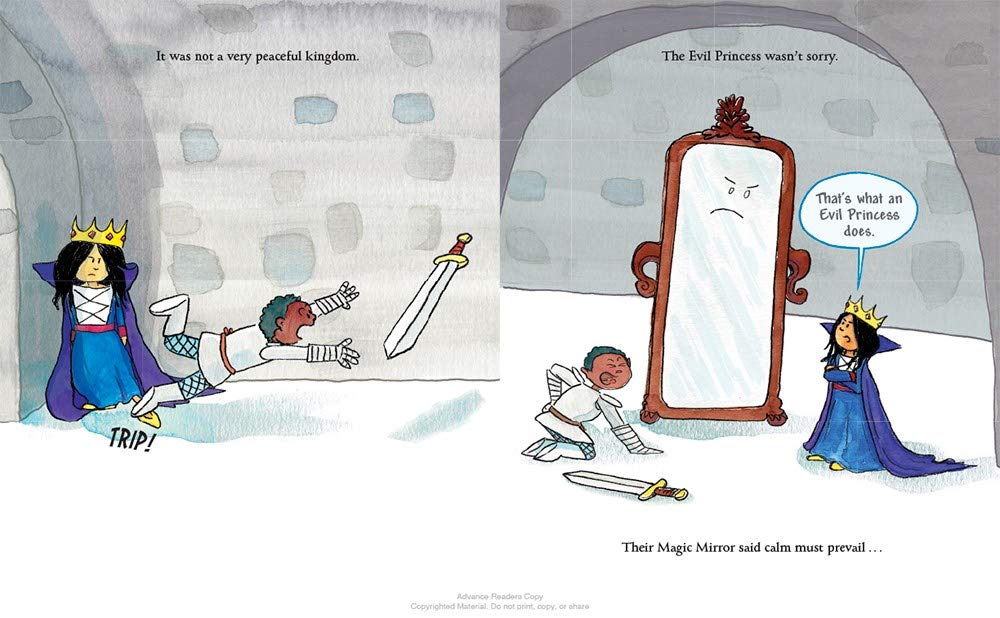
Summary:  The evil princess and brave knight share a castle, but they don’t always enjoy having to live together.  When the princess trips the knight, the magic mirror sees and orders them both to their rooms.  Finally, they’re released if they agree to play nicely. But playing nicely is boring, and before long they’re off on a quest together that results in a flooded bathroom.  They band together when the magic mirror catches up with them, blaming the cat for the mess. Nevertheless, they have to clean it up, and the last page shows the brave knight running with a stack of towels, while the evil princess has her foot out to trip him once again.  This is billed as book 1, so there may be more to come. 40 pages; ages 3-7.

Pros:  Jennifer and Matt Holms already have legions of fans from their Babymouse and Sunny graphic novels.  Anyone with a sibling will recognize the love-hate relationship between these two.  The cartoon illustrations are appealing, and even very young kids will connect with what it’s like to have a brother or sister.  

Cons:  No great lessons are learned by either party.

If you would like to buy this book on Amazon, click here.

Butterflies on the First Day of School by Annie Silvestro, illustrated by Dream Chen

Published by Sterling Children’s Books

Image result for butterflies on the first day of school

Image result for butterflies on the first day of school annie silvestro

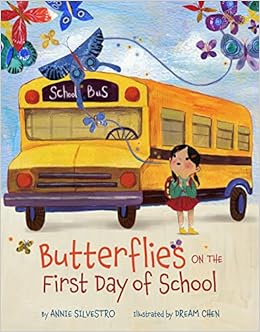
Summary:  Rosie can’t wait to start school, but when the big day arrives, she finds she can’t eat any breakfast.  Her mother tells her she’ll be fine, that she just has butterflies in her stomach. Riding the bus that morning, she makes a new friend, and a butterfly flies out of her mouth.  As the day goes on, the butterflies reappear in her stomach, then are released as she has fun in school and meets new people. When she introduces herself to a shy girl at recess, she gets to see a butterfly come out of her new friend’s mouth.  By the end of the day, she’s able to give her mom a glowing report about school. 32 pages; ages 3-7.

Pros:  This time of year, you can’t have enough first-day-of-school books.  This is a lovely and reassuring story for the youngest kids going off to preschool or kindergarten.  

Cons:  You’ll need to explain the meaning of the expression “butterflies in your stomach” or kids might get a little freaked out at the prospect of a butterfly coming out of their mouth.

If you would like to buy this book on Amazon, click here.

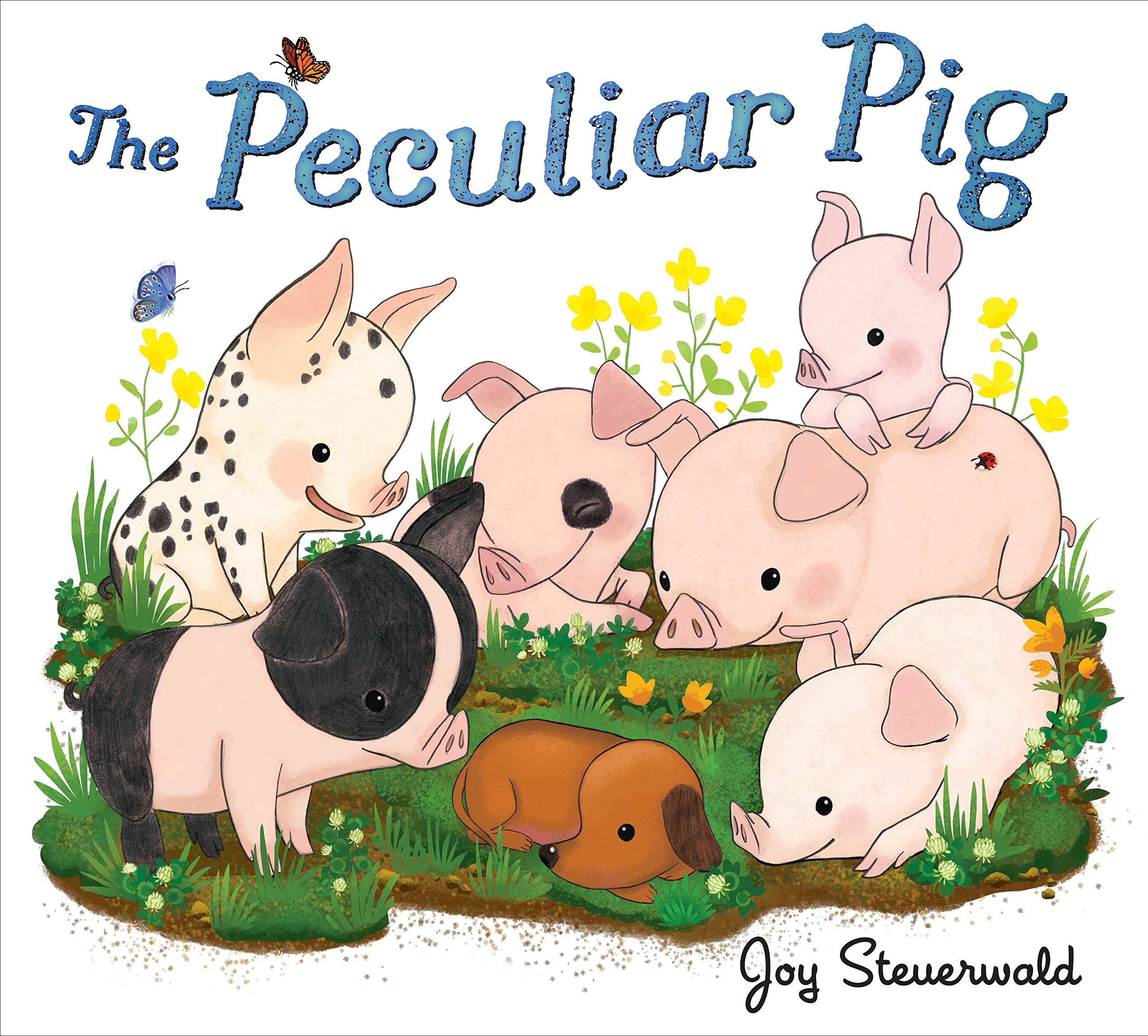
The Peculiar Pig by Joy Steuerwald

Published by Nancy Paulsen Books

Image result for peculiar pig joy amazon

Image result for peculiar pig joy amazon

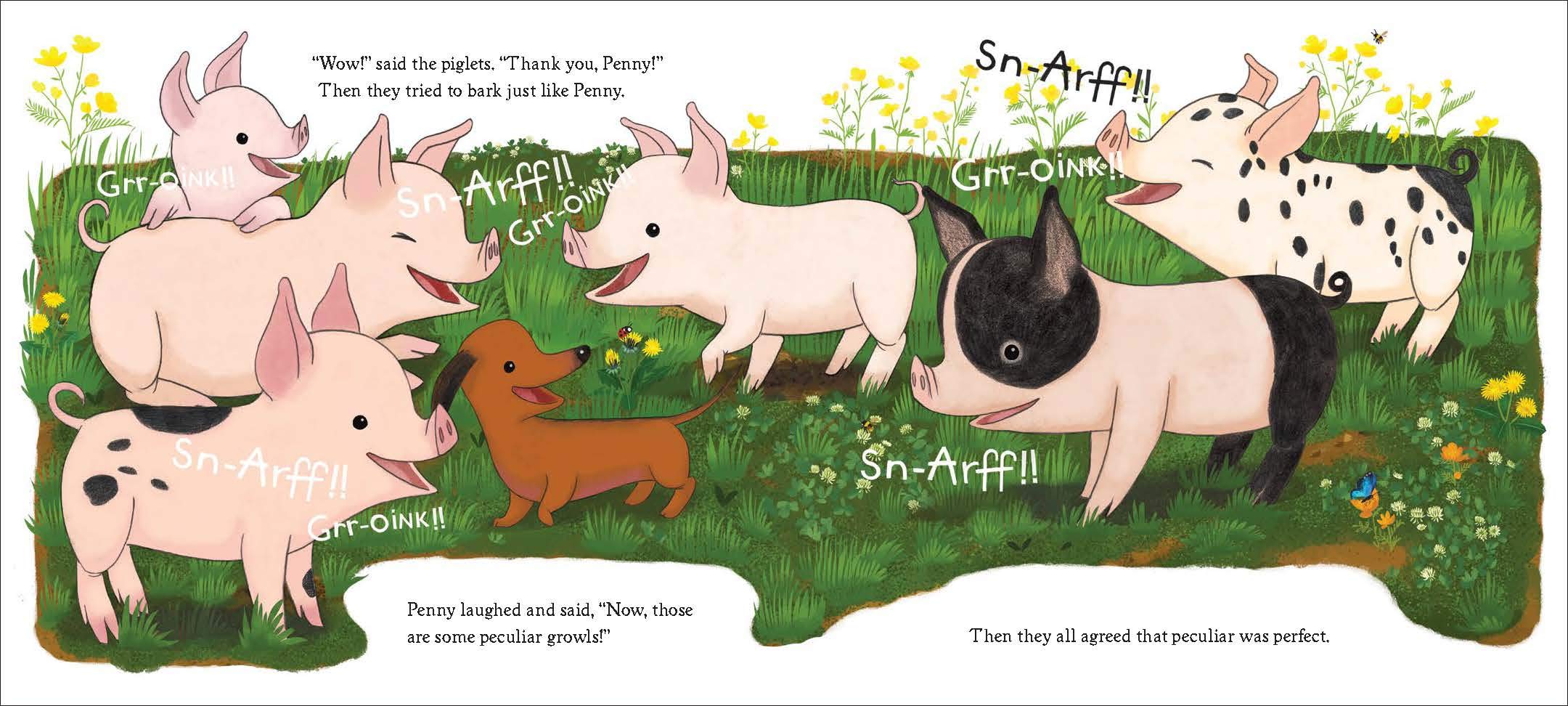
Summary:  “A different sort of piglet” appears in the pigpen one spring morning.  She’s brown instead of pink; she barks instead of oinks; and she digs with her paws instead of with her snout.  The other pigs comment on these differences, but Mama Pig loves all her children the same, and she names “her shining little one” Penny.  One day, when the pigs are out playing, they come across a snake in their path. Penny uses some of her growls and barks to scare it away.  Finally, her piggie siblings are impressed, and start trying to figure out how they can bark and growl too. 32 pages; ages 3-6.

Pros:  Adorable illustrations of baby animals provide an easily accessible story about what it’s like to be different than other members of your family.  This could easily lead to discussions about adoption or other issues where kids may see themselves as different from their siblings.  I didn’t mean to do two pig books in a row, but if you want to have a piggie storytime, you are all set.

Cons: How are no humans noticing what’s going on in the pigpen?

If you would like to buy this book on Amazon, click here.

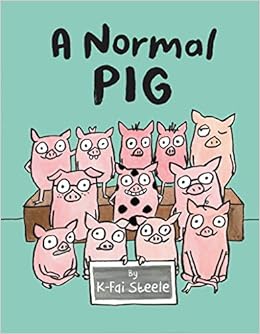
A Normal Pig by K-Fai Steele

Published by Balzer + Bray

Image result for normal pig amazon

Image result for normal pig steele

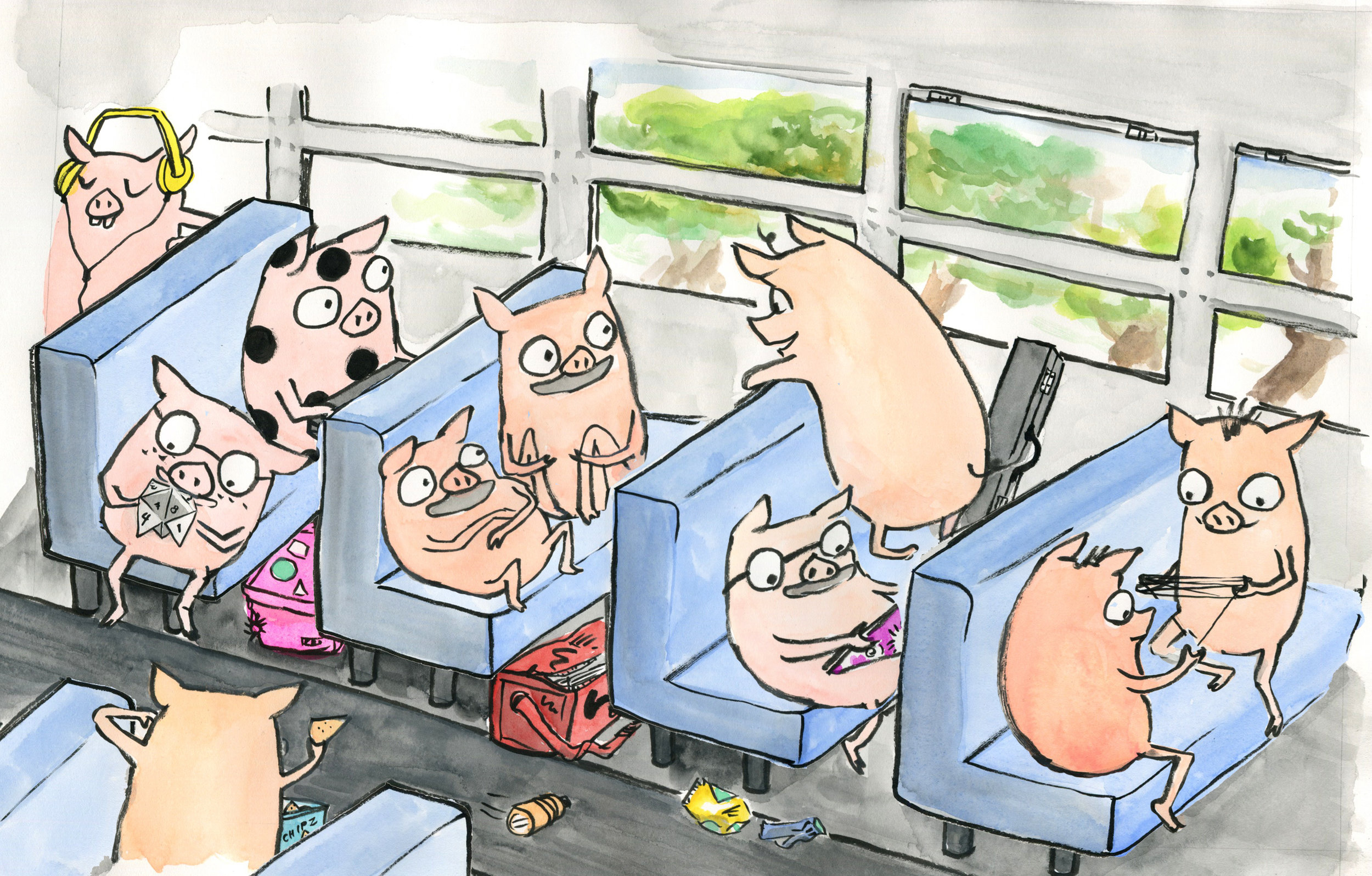
Summary:  Pip considers herself a pretty normal pig.  She likes doing art, hanging out with her family, and dreaming about what she might do when she grows up.  Then one day a new pig comes to school–you know the type–and starts making fun of Pip’s lunch and art. When she asks if Pip’s mother (who is gray, unlike the other pink pigs) is her babysitter, Pip has had enough.  She goes home and demands a “normal” lunch. Her parents’ wise response is to take her to the city the next weekend, where she sees pigs of many different colors, speaking a variety of languages, and eating all sorts of food.  When Pip calls the food “weird”, another pig responds, “Maybe it’s weird for you, but not for me. I like it.” Pip tries this line out the next week in school, and soon even the new pig wants to trade lunches. By the final page, Pip is back to feeling “pretty normal” once again.  40 pages; ages 4-8.

Pros:  A great be-yourself message that may give kids some ideas about how to deal with those who think that being different is somehow uncool.

Cons:  The new pig appears extra big on one page, but not on any of the others, which slightly confused me the first time I read the book.

If you would like to buy this book on Amazon, click here.

Image result for normal pig steele

Linus the Little Yellow Pencil by Scott Magoon

Published by Disney-Hyperion

Image result for linus yellow pencil amazon

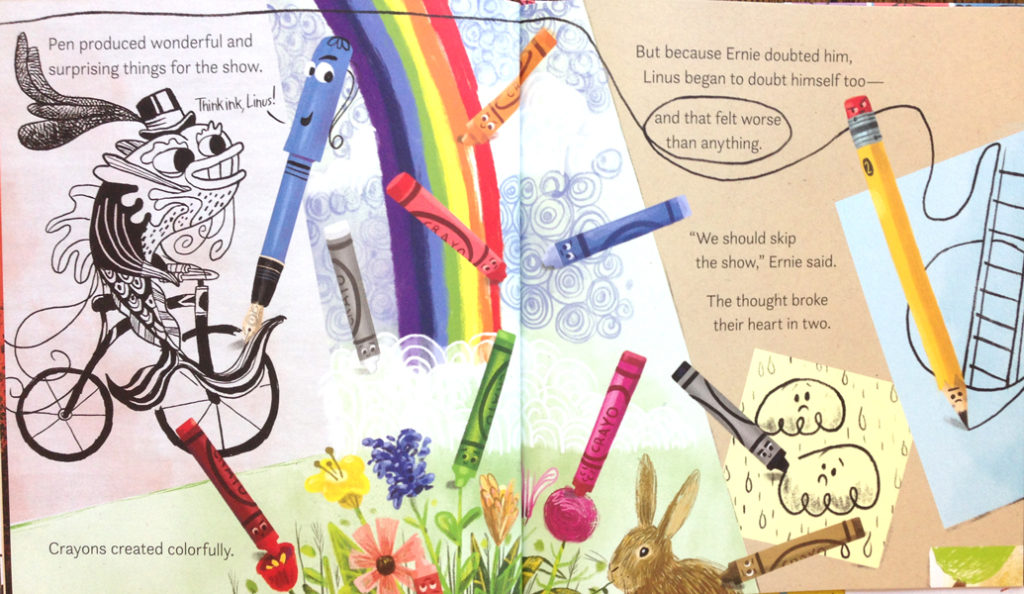
Summary:  Linus is excited about entering the big art show, but Ernie, his eraser, won’t stop critiquing his work.  Ernie tells Linus his lines are too curvy, his stick figures aren’t good enough, and before long, Ernie has convinced Linus that he shouldn’t enter the art contest, and that he’s not really an artist at all.  When Linus heads for the pencil sharpener, he meets Smudge waiting in the darkness, unable to draw. He encourages Linus to let the eraser erase and to find his path by drawing it. Newly inspired, Linus starts working with Ernie to create enough amazing art to fill a wall at the art show.  The large crowds that attend the show agree: Linus and Ernie’s work has the most heart. 32 pages; ages 4-8.

Pros:  Cute illustrations, lots of plays on words, and a nice message about not letting your inner critic shut you down.

Cons:  The end seemed like a little bit of an anti-climax, and I wasn’t really sure I had “gotten it”.

If you would like to buy this book on Amazon, click here.


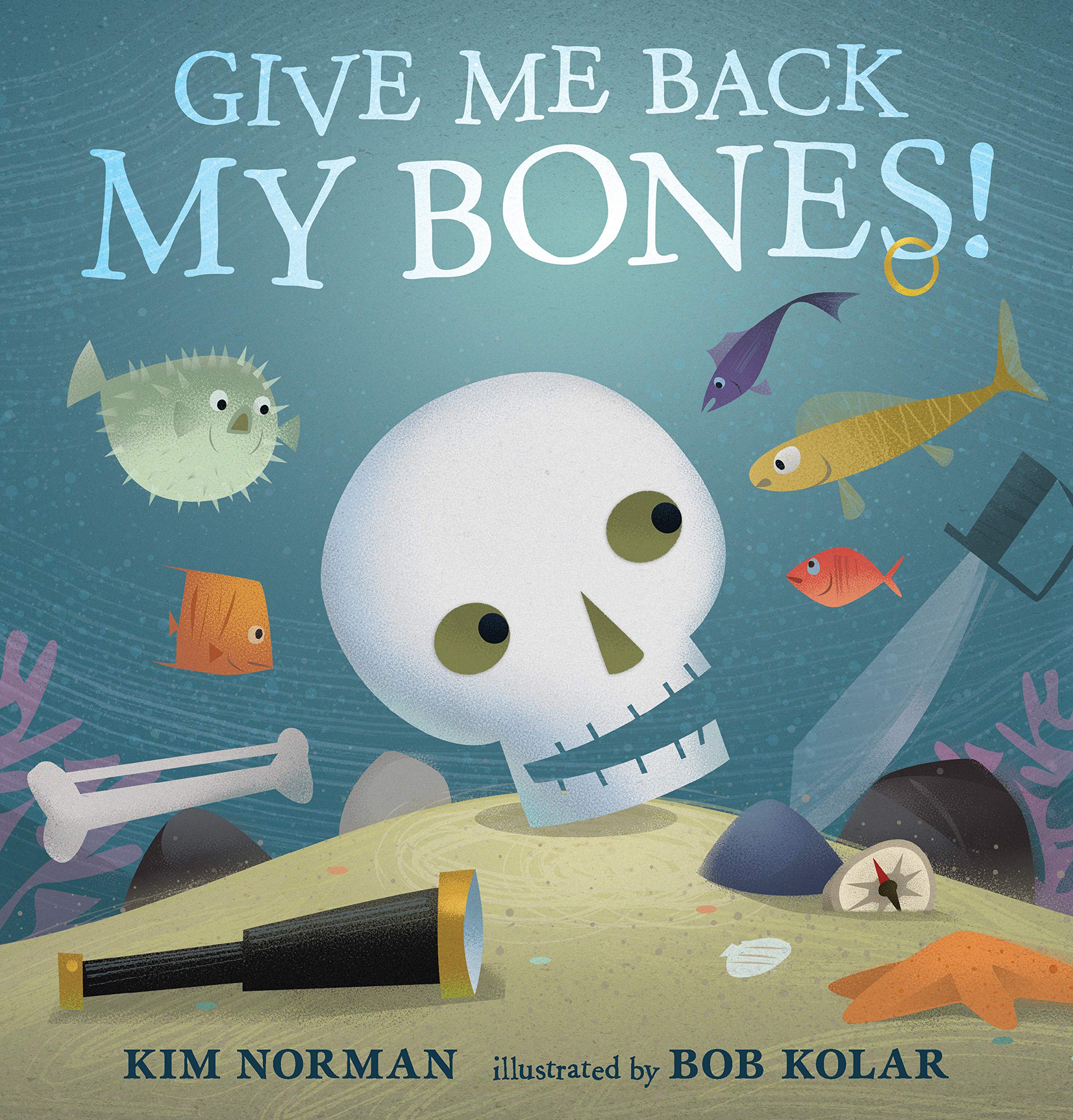
Give Me Back My Bones! by Kim Norman, illustrated by Bob Kolar

Published by Candlewick

Image result for give me back my bones norman

Related image

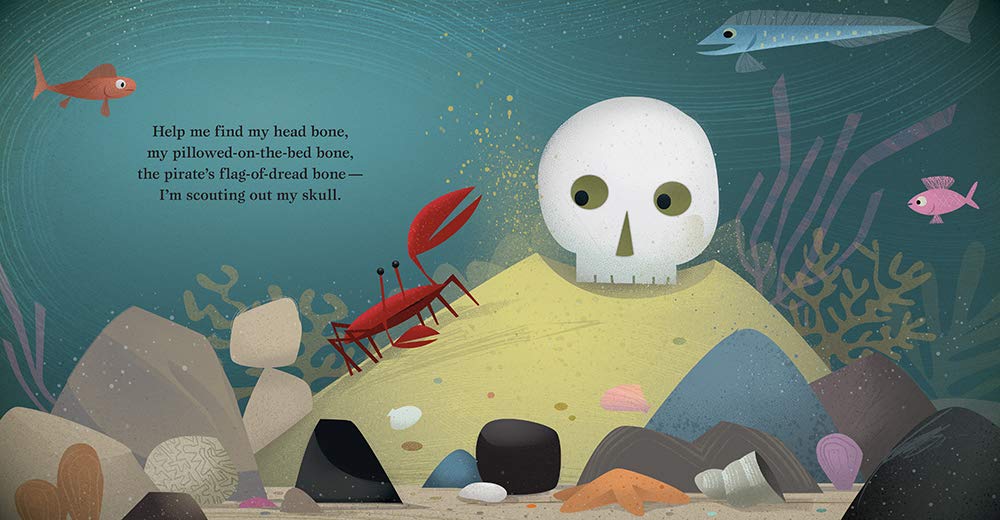
Summary:  A pile of bones on the ocean floor slowly reassembles itself into a pirate with the help of some sea creatures.  “Help me find my head bone, my pillowed-on-the-bed bone, the pirate’s flag-of-dread bone–I’m scouting out my skull.”  He continues working his way down, each rhyme ending with the name of the bone he’s seeking: from mandible and clavicle all the way to tibia, fibula, and phalanges.  At last, he’s ready to don his pirate’s hat, and climb aboard his shipwrecked ship where he’s sure he’ll find treasure–”I feel it in my bones!” The endpapers show the separate bones on the front and a labeled skeleton on the back.  40 pages; ages 4-9.

Pros:  Although this has the feel of a preschool-to-primary-grade picture book, older kids would find this a humorous introduction to different bones.  The rhymes are catchy and the skeleton is oddly endearing. It could even be a nice alternative to traditional Halloween reading. Great fun!

Cons:  Back matter about the skeleton with additional resources would have been useful.

If you would like to buy this book on Amazon, click here.

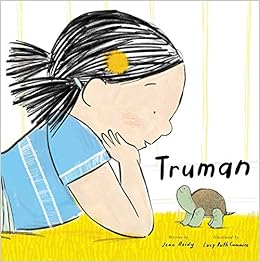
Truman by Jean Reidy, illustrated by Lucy Ruth Cummins

Published by Atheneum Books for Young Readers

Image result for truman reidy amazon

Image result for truman reidy amazon

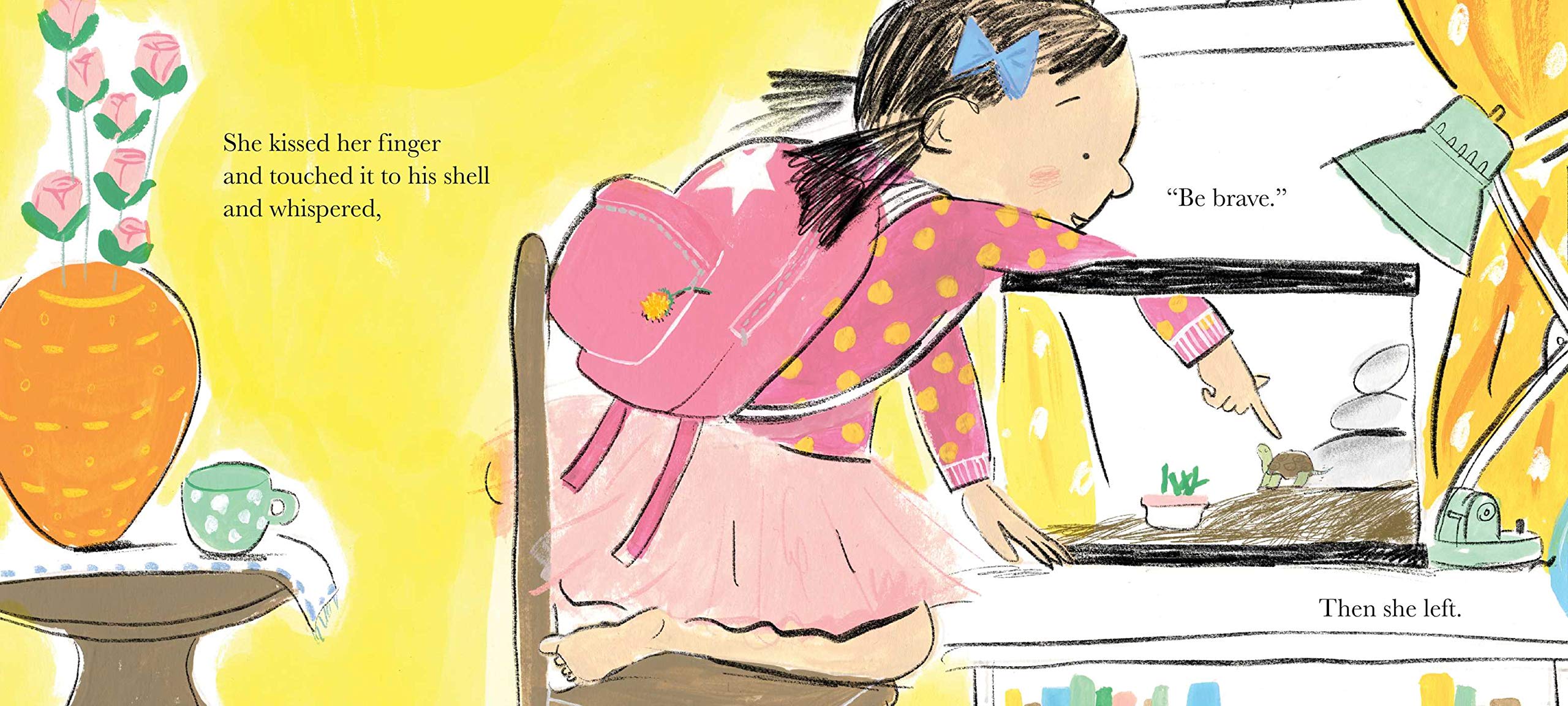
Summary:  Truman is a turtle, “”the size of a donut…and every bit as sweet” who is inseparable from his friend Sarah.  But one day Sarah eats a big breakfast, gives Truman some extra green beans, straps on an enormous backpack (it could fit 32 small tortoises!) and with the parting words, “Be brave”, boards the number 11 bus.   Truman is determined to wait bravely, but after waiting “a thousand hours”, he decides it’s time for a search. Using three rocks in his tank, he makes a break for freedom, and is plodding across the living room rug when Sarah finally returns.  She is amazed to see him, and puts him safely back in his tank. As they share a bedtime story that night, Truman dreams of a day he might go with Sarah on her bus, perhaps as part of Show and Tell. 48 pages; ages 4-8.

Pros:  This little gem would make another great back-to-school book.  Truman will win your heart, and Sarah is pretty darn likeable as well.  Kids going off to school for the first time will be reassured that their pets will be okay…even if they miss their humans.

Cons:  As the mother of a former turtle fan, I’m pretty sure that small turtles like Truman carry salmonella and are illegal to buy.  Sorry, kids.

If you would like to buy this book on Amazon, click here.

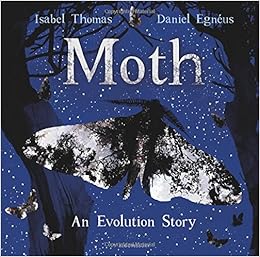
Moth: An Evolution Story by Isabel Thomas, illustrated by Daniel Egneús

Published by Bloomsbury Children’s Books

Image result for moth isabel thomas amazon

Summary:  Before the Industrial Revolution, most peppered moths had speckled wings.  The ones that were all black didn’t blend into tree bark as well and were more likely to get eaten.  But the smoke and soot from burning coal turned tree bark black, and before long, there were more black peppered moths than speckled ones.  After clean air laws were passed in the middle of the 20th century, the proportions started to shift again as tree bark returned to its original color. Includes additional information that explains defines evolution, natural selection, and adaptation.  48 pages; grades 1-5.

Pros:  How do you explain evolution and natural selection to a 7-year-old?  Isabel Thomas has done an amazing job here, ably assisted by Daniel Egneús collage-style illustrations.  The blue and silver cover is particularly eye-catching. This belongs in the science section of every elementary library.

Cons:  No photos of the real moths.

If you would like to buy this book on Amazon, click here.