Lion and Mouse by Jairo Buitrago, illustrated by Rafael Yockteng

Published by Groundwood Books
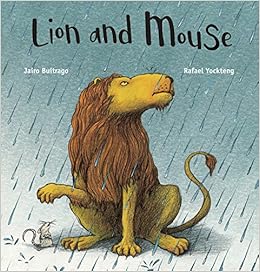
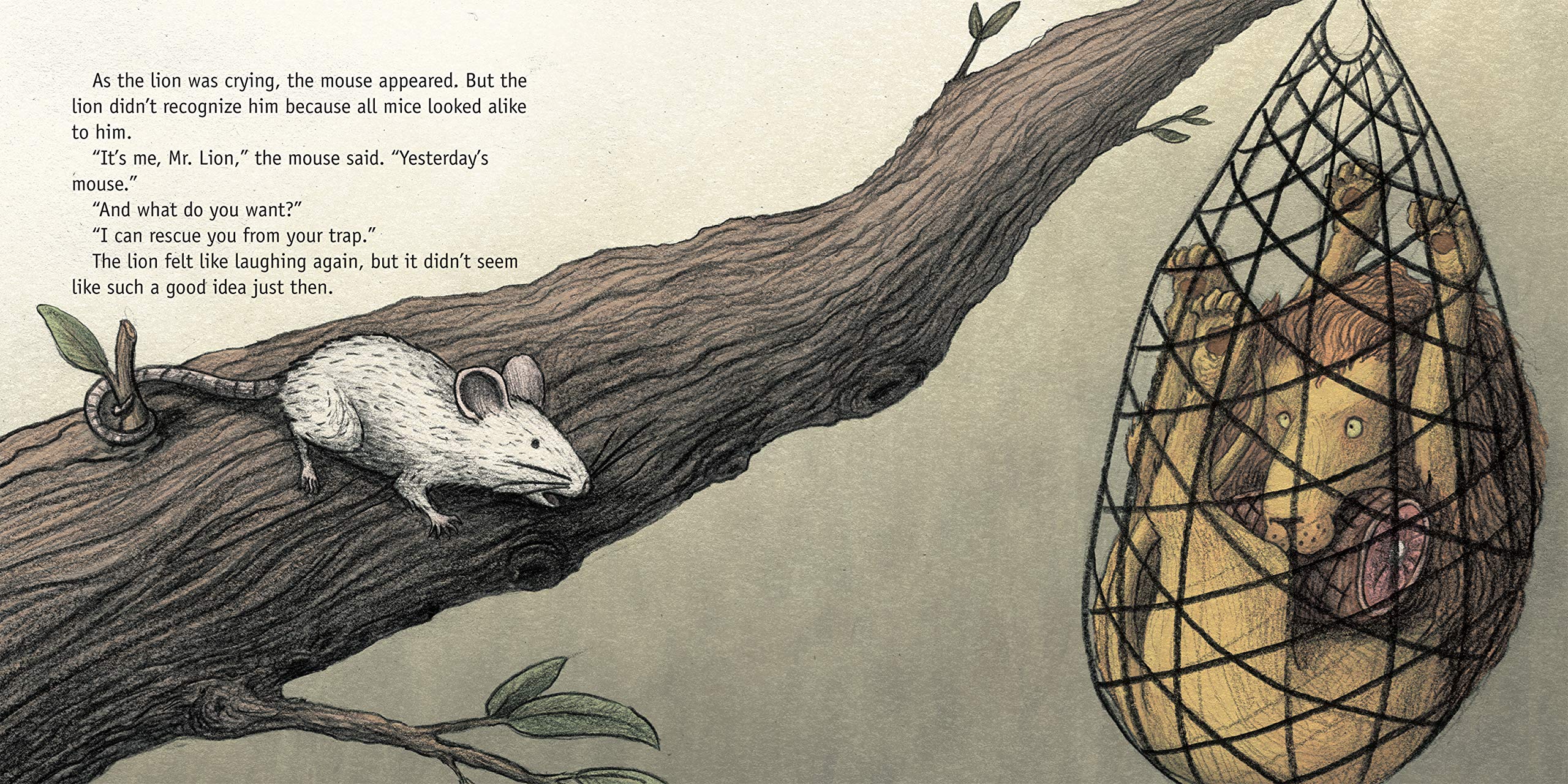
Image result for lion mouse jairo amazon

Image result for lion mouse jairo amazon

Summary:  Aesop’s famous fable is retold with a few modern twists and some attitude.  A “very lovely” lion who is “like a sun” lives in a forest with a mouse who is “a busybody and a glutton”.  One day the mouse goes into the lion’s cave; the lion almost eats him, but changes his mind. When the lion is caught in a trap the next day, it’s the mouse who frees him. But this story continues as the two continue to trade favors.  At first it’s with a feeling of obligation, but soon they are simply being kind to one another. In fact, they end up getting along so well that they live together for the rest of their lives. 32 pages; ages 4-7.

Pros:  You can never have too many versions of a classic folktale, and kids will get a chuckle out of the illustrations and tongue-in-cheek text.

Cons:  It doesn’t quite measure up to Jerry Pinkney’s version, in my opinion.
If you would like to buy this book on Amazon, click here.

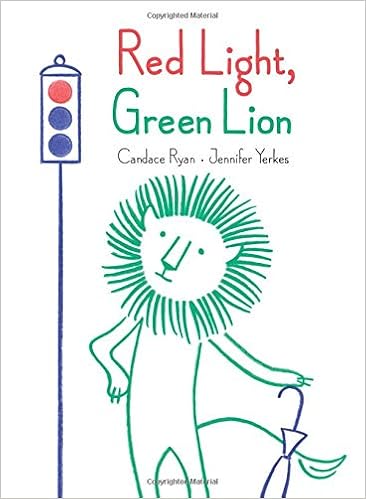
Red Light, Green Lion by Candace Ryan, illustrated by Jennifer Yerkes

Published by Kids Can Press

Image result for red light green lion amazon

Image result for red light green lion yerkesImage result for red light green lion yerkes

Summary:  “Some days are not like most days,” reads the first page, accompanied by a picture of a traffic light.  “Red light, green li-”. If you’re expecting “-ght” on the next page, you’ll be surprised to find “-on”, along with a picture of a green lion.  After that, it’s green lightning. There’s also a green lilac, a green lifeboat, some green livestock, and green library books. The message is that you can’t know what the day will bring, and it’s best to accept whatever comes along.  “Some days don’t make much sense at the beginning. But they always make sense in the end.” And, finally, the traffic light turns green. 40 pages; ages 4-8.

Pros:  A deceptively simple book that would make a fun read-aloud for kids to guess what “li-” word is coming up next, and then to discuss the message of the story.

Cons:  It would make a more fun guessing game to have a clue on the preceding page.

If you would like to buy this book on Amazon, click here.


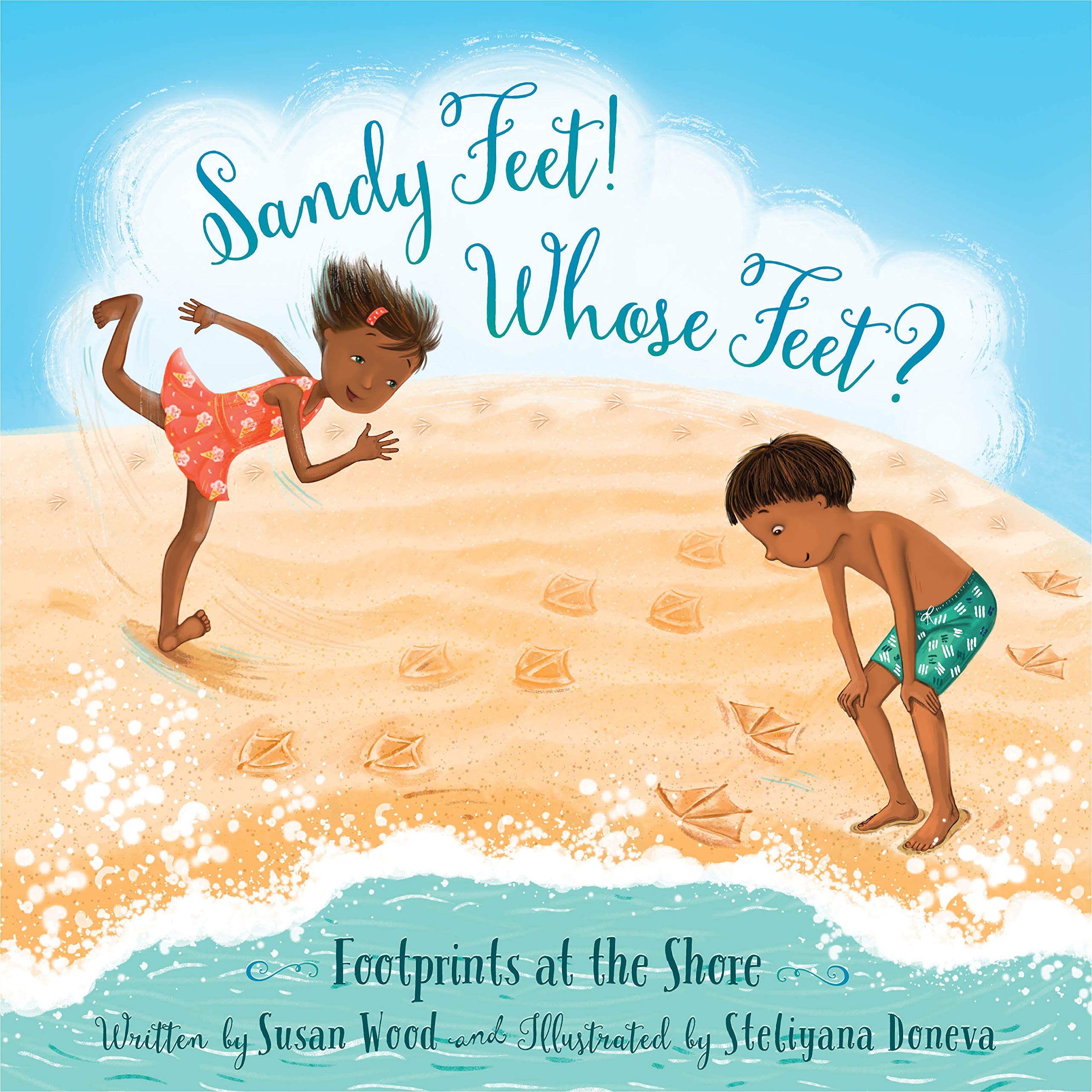
Sandy Feet! Whose Feet?: Footprints at the Shore by Susan Wood, illustrated by Steliyana Doneva

Published by Sleeping Bear Press

Image result for sandy feet whose feet amazon

Summary:  As two children play on the beach, they see the tracks left in the sand by a variety of animals, beginning with their dog.  There are also prints left by a sandpiper, crab, seagull, pelican, crab, and sea turtle. At the end of the day, their own tired feet take them back home again.  The last two pages of the story show all the prints in the sand, and the two pages after that give additional information about the animals. 32 pages; ages 4-8.

Pros:  Read this before going to the beach to make kids more aware of the animals around them.  The illustrations do a nice job of portraying the various creatures, as well as their tracks to help kids identify them.

Cons:  It would have been helpful to show pictures of tracks next to the thumbnail photos of the different animals on the last two pages.

If you would like to buy this book on Amazon, click here.

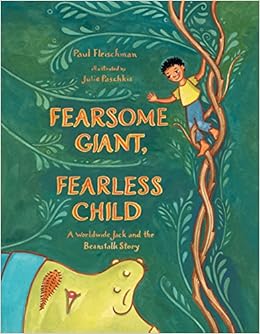
Fearsome Giant, Fearless Child: A Worldwide Jack and the Beanstalk Story by Paul Fleischman, illustrated by Julie Paschkis

Published by Henry Holt and Co.

Image result for fearsome giant fearless child

Image result for fearsome giant fearless child

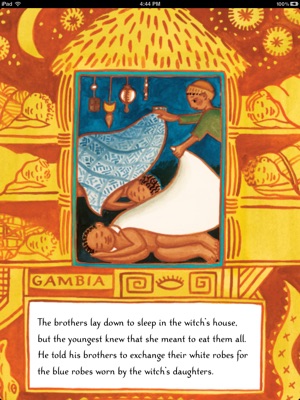
Summary:  As they did with Cinderella in Glass Slipper, Golden Sandal and creation stories in First Light, First Life, Paul Fleischman and Julie Paschkis have created a story that weaves together elements from Jack and the Beanstalk type stories all around the world.  These are all tales in which a child–often the smallest or youngest in a family–uses courage and cleverness to outwit a villain like a giant or witch.  Each illustration identifies the country from which that particular element of the story originates. A map on the endpapers shows all the countries. Whether the hero grows to full size, becomes king, or gains the respect of his family, the story always has a happy ending.  40 pages; grades 1-5.

Pros:  This book would be a perfect ending to a study of Jack and the Beanstalk tales; it’s not meant to be read as another re-telling, but rather as a way to appreciate both the variety and similarities of all these stories.  The folk art-style illustrations give it an international flavor.

Cons:  I’ve always felt that “Fee-fi-fo-fum, I smell the blood of an Englishman” was an awkward rhyme.  Why not “Fee-fi-fo-fan” or “Fee-fi-fo-fun”?

If you would like to buy this book on Amazon, click here.


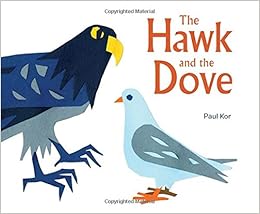
The Hawk and the Dove by Paul Kor, translated by Annette Appel

Published by Kids Can Press

Image result for hawk and dove kor

Image result for hawk and dove kor

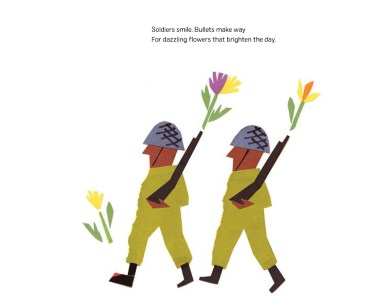
Summary:  The hawk, sad and tired of war, puts on a mask and gloves to become a dove, and the world begins to change: tanks turn into tractors, planes become butterflies, warships are replaced with sailboats, and bullets morph into flowers.  Alternating pages are smaller, giving a glimpse of what’s on the next page. The whole world is happy and grateful to the dove, but the dove still worries that a hawk may be lying in wait.  “Hawk or dove? Foe or friend? How ever will this story end?”  Includes two pages at the end that tell how the late Israeli artist Paul Kor was moved to create this book by his experiences in World War II as a child and in the Six Day War later on.  32 pages; ages 4-8.

Pros:  This unusual book could serve as a springboard to discussing war and peace, as well as an inspiration for creating paper crafts.

Cons:  Some of the rhymes are a bit too Hallmark greeting card: “The entire land is filled with light/A rainbow of colors sunny and bright.”

If you would like to buy this book on Amazon, click here.

Stubby: A True Story of Friendship by Michael Foreman

Published by Andersen Press

Image result for stubby michael foreman

Image result for stubby michael foreman

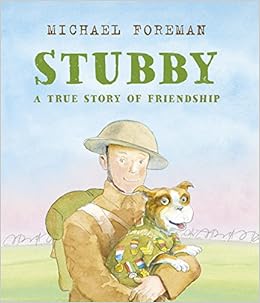
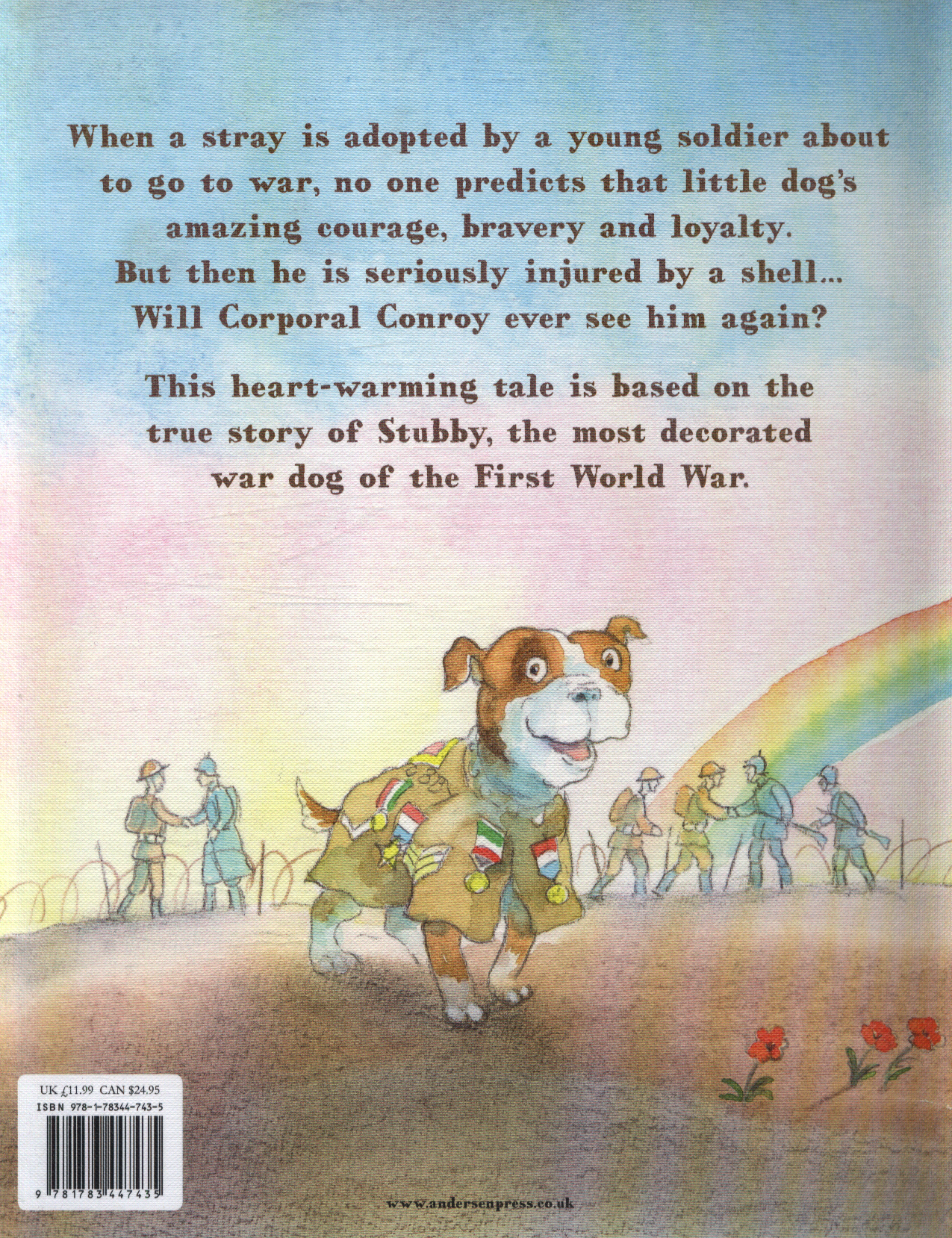
Summary:  During basic training during World War I, the soldier narrator tells how a stray dog started hanging around every time he sat down to eat.  The dog’s odd flat face and short legs earned him the name Stubby, and he became an unofficial mascot for the soldier’s division. Smuggled onto a train, then a boat, Stubby made it all the way to France, where he joined the soldier in the trenches, warning them of approaching enemy soldiers and impending gas attacks.  Severely wounded, Stubby spent time in an army hospital, but returned to the front six weeks later. Both Stubby and his soldier friend survived to the end of the war, and happily returned to a peaceful life back in the U.S. An afterword tells more about Stubby (who met Presidents Wilson, Harding, and Coolidge), and Corporal Robert Conroy, the soldier who adopted him.  32 pages; grades K-3.

Pros:  Dogs and the military are always popular subjects in my schools, so this story of a cute dog who courageously served in World War I is sure to be popular.

Cons:  Stubby is always portrayed with slightly bugged-out eyes and a big grin, making him look a few cards short of a full deck.

Image result for stubby michael foreman

If you would like to buy this book on Amazon, click here.

Home Is a Window by Stephanie Parsley Ledyard, illustrations by Chris Sasaki

Published by Neal Porter Books

Image result for home is a window amazon ledyard

Image result for home is a window ledyard

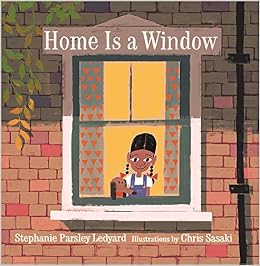
Summary:  Houses can change, but home goes with you from one to another.  “Home is a table with something good and the people gathered there.  A book before you fall asleep, and a kiss afterward.” With these meditations on home, we see a family–mother, father, boy, and girl–getting ready to move, then making a day-long drive to their new house.  There’s the sadness of saying goodbye, and the excitement of exploring the new place. The family picnics together on the floor of their new house, then the little girl looks out the window to see her parents sitting with arms around each other as she gets ready for bed in her new home.  40 pages; ages 4-8.

Pros:  A perfect read for those who are moving, and for anyone who wants to think about what home is.  This would make a good writing prompt to explore the idea of home.

Cons:  Not everyone’s home is quite so picture-perfect.

If you would like to buy this book on Amazon, click here.

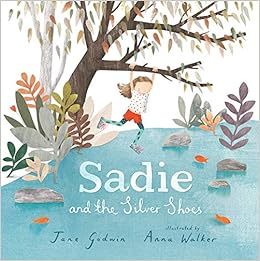
Sadie and the Silver Shoes by Jane Godwin, illustrated by Anna Walker

Published by Candlewick

Image result for sadie and the silver shoes amazon

Image result for sadie and the silver shoes ledyard

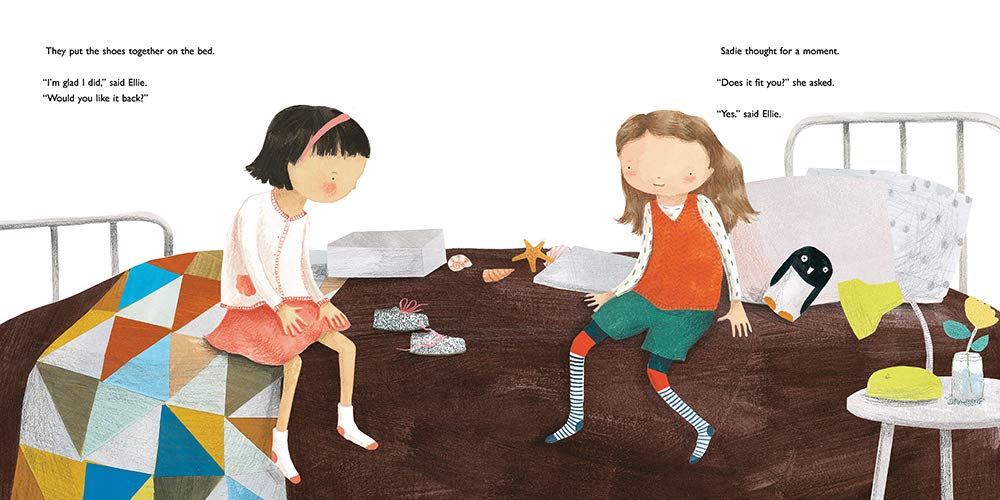
Summary:  Sadie has three older brothers, and consequently wears a lot of hand-me-downs.  The only new clothes she gets are underwear and shoes, so she is very careful about picking out her shoes.  She loves her new sparkly silver shoes, and wears them everywhere, even, unfortunately, on a family picnic. Although her mom warns her that they’ll get dirty, Sadie doesn’t care, and wears them to play in the creek with her brothers.  One shoe comes off and is washed away, leaving Sadie heartbroken. She still insists on wearing the remaining shoe (paired with another one) wherever she goes. When a new girl comes to school, she notices Sadie’s silver shoe, and says she has one just like it that she found on the beach.  Yup, it’s Sadie’s missing footwear! The girls become friends, and take turns wearing the shoes…or sometimes each wearing one. 32 pages; ages 4-8.

Pros:  Sadie is a winning protagonist, and the friendship story is heartwarming.  This would make a great read-aloud.

Cons:  Mom’s reaction to Sadie losing her beloved shoe–”Maybe you should have worn old shoes today”–is predictable.  Yes, Mom, we’ve all been there, but bite your tongue and show some compassion.

If you would like to buy this book on Amazon, click here.

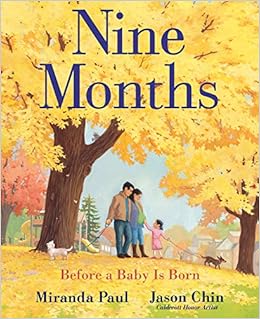
Nine Months: Before a Baby Is Born by Miranda Paul, illustrated by Jason Chin

Published by Neal Porter Books

Image result for nine months miranda paul amazon

Image result for nine months miranda paul

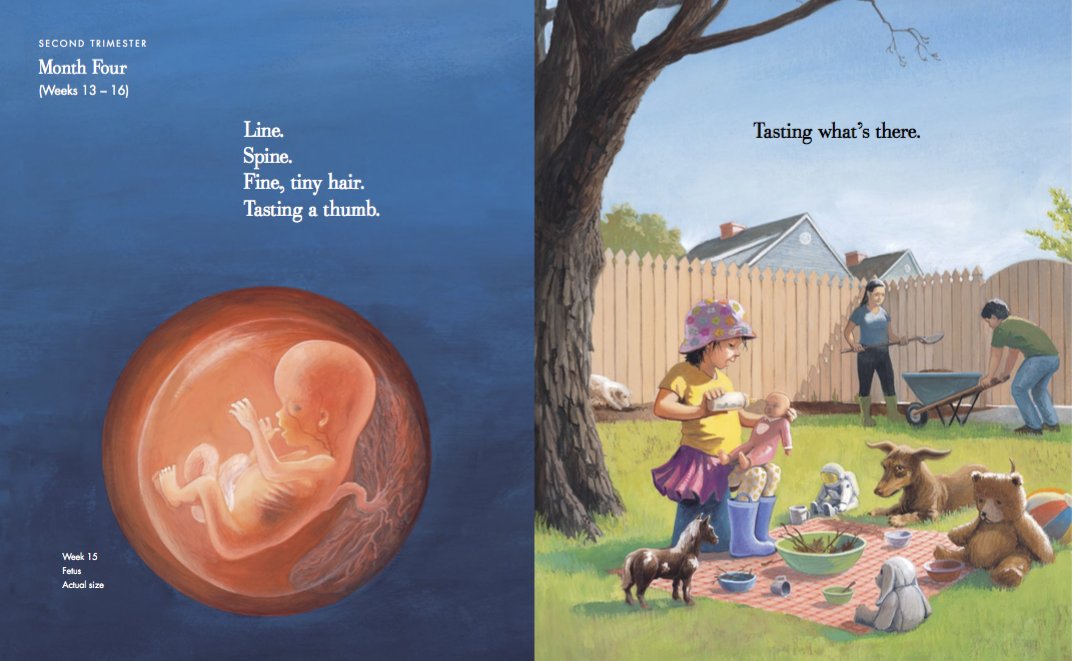
Summary:  On the right-hand pages of this book a family of a mother, father, and little girl prepare for a new baby.  The seasons change from winter to spring to summer to fall, as Mom’s belly slowly gets bigger. The left-hand pages show what’s going on with the new baby, starting from a fertilized egg and going all the way to the new baby in the hospital.  The big sister is part of the process, reading books about new babies, practicing giving a doll a bottle, watching the screen at the ultrasound, feeling the baby’s kicks, and finally, meeting her new little sister in the hospital. Includes more information on a baby’s development; the gestation periods of different animals; and some answers to what if questions that include information on twins, premature births, and miscarriages. 32 pages; ages 4-8.

Pros:  What an amazing resource for families expecting a new baby!  The simple rhyming text would make a quick read to a preschooler, but he or she will want to spend lots of time on Jason Chin’s awesome illustrations, many of which show the actual size of the developing fetus.  There’s just enough information for young kids without getting into too much birds-and-bees stuff.

Cons:  The whole process looks so easy, and the little girl seems 100% thrilled to be getting a younger sibling, which may not be entirely realistic.

If you would like to buy this book on Amazon, click here.

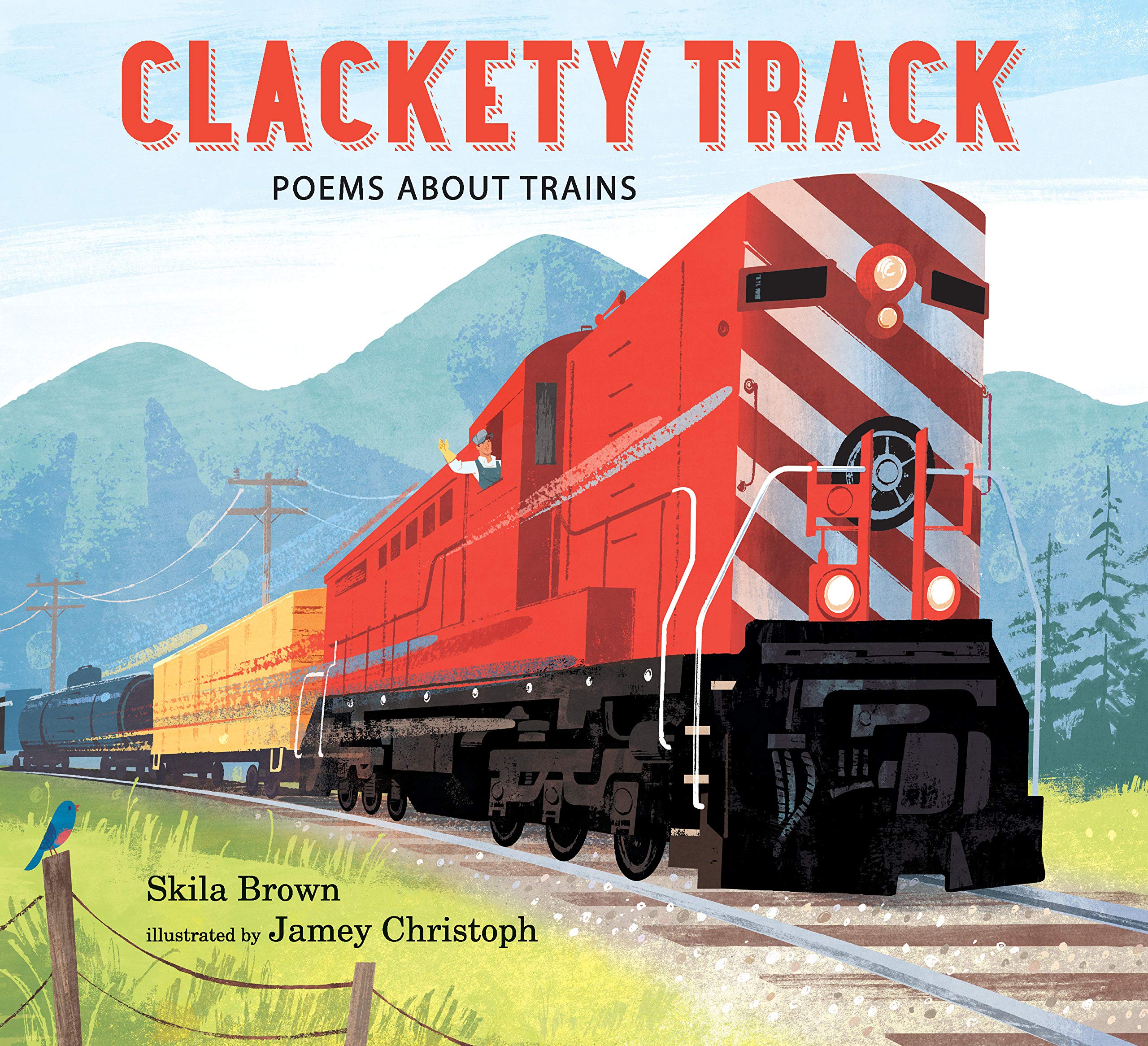
Clackety Track: Poems About Trains by Skila Brown, illustrated by Jamey Christoph

Published by Candlewick

Image result for clackety track poems amazon

Image result for clackety track poems amazon

Summary:  Thirteen poems take the reader from “Morning in the Yard” to “Sleeper Train”.  The poems take different forms, including a few concrete ones like “Tracks” in the shape of railroad tracks, and “Shoulder Ballast Cleaner” with the words interwoven in the illustration.  Each poem gets its own two-page spread, complete with a vivid, colorful illustration. Includes a dozen facts about trains, shown on railroad cars on the final two pages. 32 pages; grades K-3.

Pros:  The simple poems and bright, colorful illustrations make this an excellent introduction to poetry for primary grades; the subject is sure to be popular as well.

Cons:  I liked how Skila Brown included shark facts on every page of her book of shark poems, Slickety Quick, and wish she had done that with facts about the different trains here.

If you would like to buy this book on Amazon, click here.