The Promise written by Pnina Bat Zvi and Margie Wolfe, illustrated by Isabelle Cardinal

Published by Second Story Press
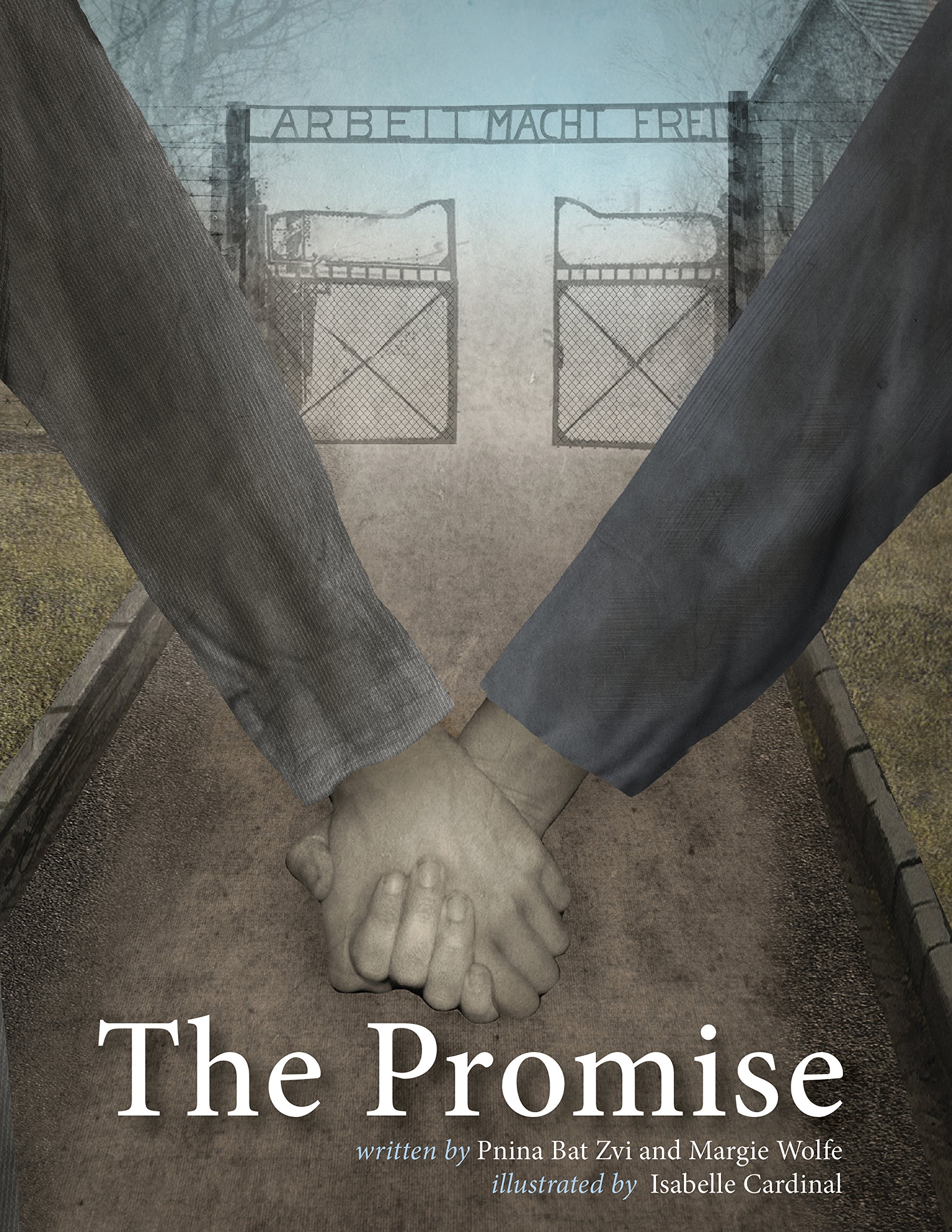
Image result for promise zvi amazon

Image result for promise isabel cardinal zvi

Summary:  Rachel and Toby have been in Auschwitz since the night their parents were taken away by the Nazis.  Before he left, their father gave Toby three gold coins.  Their mother told them to stay together no matter what.  Toby promised to take care of Rachel and not to spend the coins unless she absolutely had to.  When Rachel falls ill in the concentration camp, Toby realizes the situation is desperate enough to warrant using the coins.  She successfully rescues her sister from the sick ward, defying the Nazi guards and earning herself a beating.  The girls are allowed to stay together, though, and survive their imprisonment until the end of the war.  32 pages; grades 4-8.

Pros:  A beautiful and moving story about courage, loyalty, and hope during the most difficult circumstances.  The authors are cousins, the daughters of Rachel and Toby.

Cons:  Most reviewers recommend this book for grade 2 and up, but I would be hesitant to share it with kids under the age of 10.  The illustrations are kind of creepy, and the death of several characters at the hands of the Nazis is implied.

If you would like to buy this book on Amazon, click here.

The Princess and the Pit Stop by Tom Angleberger, illustrated by Dan Santat

Published by Harry N. Abrams

Image result for princess and the pit stop amazon

Summary:  When the Princess makes a pit stop at the car race, she learns that she’s in last place with one lap to go.  Determined to win, she takes off, aggressively passing one fairy tale character after another (“She spun out Rumpelstiltskin and butted in front of the three billy goats gruff”).  Many of the characters make reference to their stories (“And the Gingerbread Man admitted, ‘She CAN catch me!”).  The narrator is a frog announcer, screaming into a microphone.  On the last page, the princess, who has thrown a celebratory party at the castle, grabs his hand saying, “C’mon, Prince! We’ve got a dance contest to win!”  48 pages; ages 4-8.

Pros:  You really can’t go wrong pairing Tom Angleberger and Dan Santat (an aside: this is the fourth book illustrated by Dan Santat I’ve reviewed this year; the man is an illustration machine).  The story and the pictures are pure fun, and kids who know their fairy tales will enjoy the literary allusions.

Cons:  The ending seemed a little anticlimactic.

If you would like to buy this book on Amazon, click here.


Marie Curie by Demi

Published by Henry Holt and Co.

Image result for marie curie demi

Image result for marie curie demi

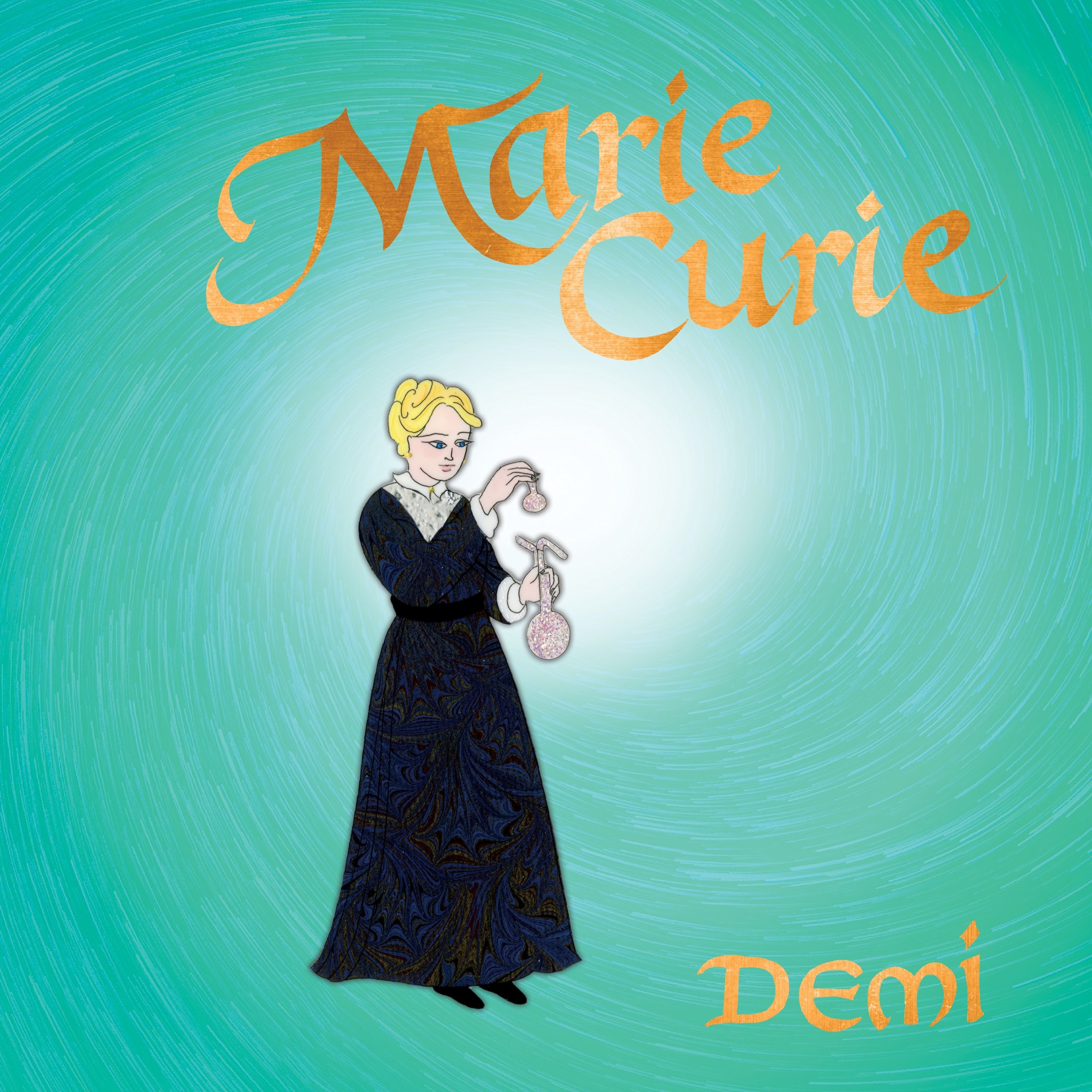
Summary:  When Marie Curie was born in 1867 Poland, life was difficult.  She had a loving family, but her mother and older sister died when she was still a child.  She and another sister, Bronya, wanted to go to the Sorbonne in Paris, but the family could only afford to send one of them.  Bronya went first, became a doctor, and supported Marie when she was through. Not only did Marie complete degrees in physics and math at the top of her class, but she met another brilliant scientist, Pierre Curie.  They married and pursued their work together, unlocking the secrets of uranium and radium. They won the Nobel Prize in physics; after Pierre’s tragic death, Marie continued their work and won another Nobel in chemistry. The dangers of radiation were unknown at the time (illustrated on the two pages showing women drinking radium and using it in beauty products), and Marie eventually died at the age of 66 from her long exposure to it.  40 pages; grades 1-5.

Pros:  An excellent introduction to Marie Curie’s life; complete, but straightforward enough for primary graders.  Demi’s illustrations are gorgeous, especially the patterns she uses for clothing, curtains, and carpets.

Cons:  Spending four years trying to determine the atomic weight of radium sounds like kind of a drag.

If you would like to buy this book on Amazon, click here.


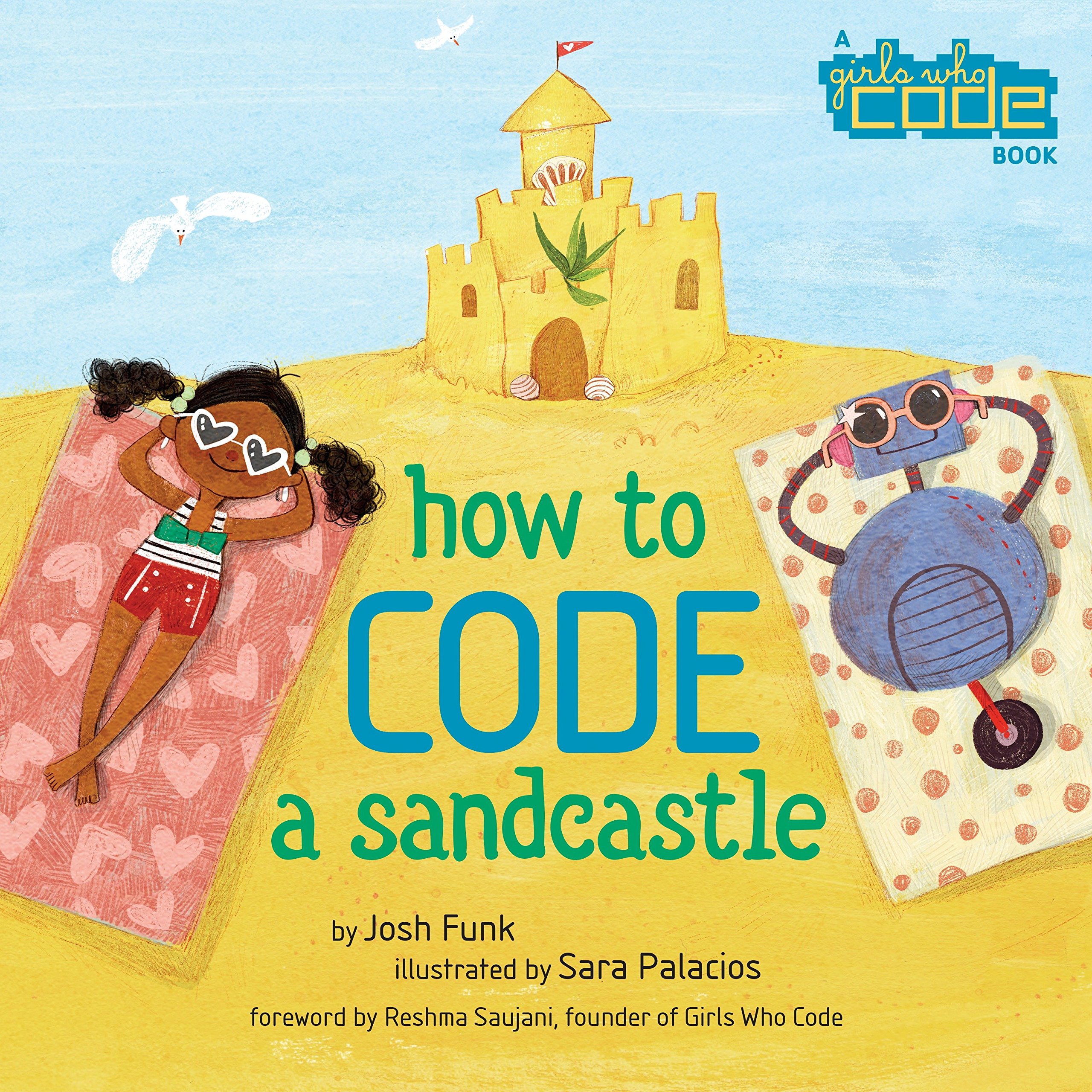
How to Code a Sandcastle (A Girls Who Code Book) by Josh Funk, illustrated by Sara Palacios

Published by Viking Books for Young Readers

Image result for how to code a sandcastle amazon

Image result for how to code a sandcastle palacios

Summary:  The narrator has been trying to build a sandcastle all summer, but for one reason or another, hasn’t been successful.  On the last day of vacation, she brings her robot Pascal to the beach with her to help build the castle. She explains to the reader what she is doing as she codes Pascal to find a good spot, create a big pile of sand, gather decorations, and shape and embellish the castle.  She makes mistakes as she goes, but figures out what she’s done wrong and corrects them. When the tide comes in and washes her sandcastle away, she can uses the program she’s created to have Pascal build another one, this time with a moat around it. At the end, she and Pascal are ready to create an entire kingdom of sandcastles.  Includes an explanation of code, sequences, loops, and if-then-else statements. 44 pages; grades K-3.

Pros:  A fun introduction to coding terms for the picture book crowd.  The foreword, by Reshma Saujani, founder of Girls Who Code, explains the importance of introducing coding concepts to young children.  The illustrations and different fonts add to the educational value.

Cons:  It would have been helpful to see the entire program for the sandcastle written out somewhere.

If you would like to buy this book on Amazon, click here.


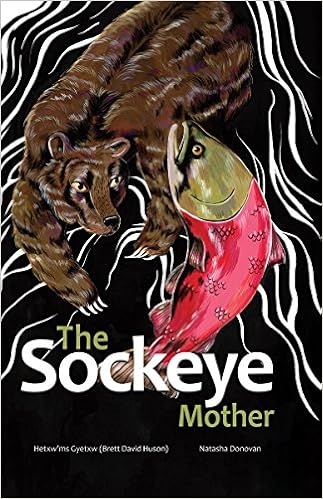
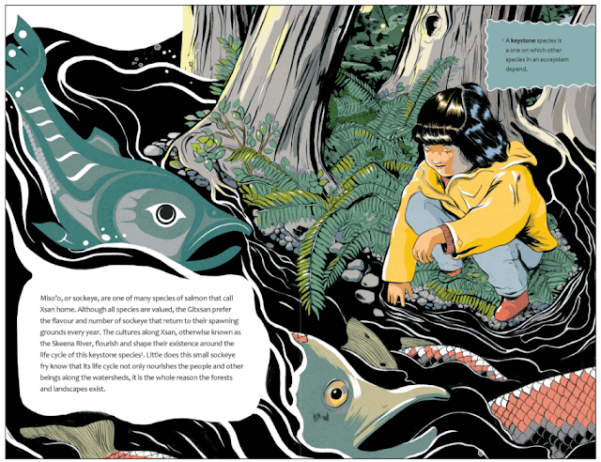
The Sockeye Mother by Hetxw’ms Gyetxw (Brett David Huson), illustrated by Natasha Donovan

Published by Highwater Press

Image result for sockeye mother brett amazon

Image result for sockeye mother natasha donovan

Summary:  The life of a sockeye salmon is described from the time she hatches from an egg until she returns to the same spawning ground two years later to lay her eggs before dying.  The sockeyes’ connection to the Gitxsan, indigenous people of British Columbia, is alluded to, as well as the reverence these people have for the fish that help sustain them.  The balance of nature is also described in a section called “A Replenishing Death”, when the salmon’s body becomes fertilizer for the flora in and around the water. 32 pages; grades 2-6.

Pros:  The author grew up in the Gitxsan Nation and imparts both scientific and cultural information in this brief story of a sockeye salmon.  The close-up illustrations vividly bring to life the different stages of the fish’s life, as well as the people and animals around her.

Cons:  This may not be a book many kids will pick up on their own, but with some guidance, they will find it an interesting resource.

If you would like to buy this book on Amazon, click here.

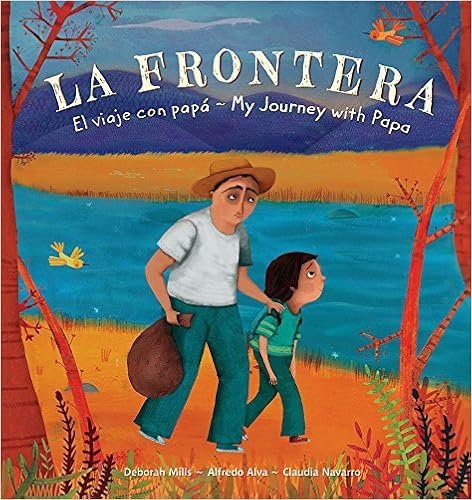
La Frontera/The Border: El Viaje Con Papa/My Journey With Papa by Deborah Mills and Alfredo Alva, illustrated by Claudia Navarro

Published by Barefoot Books

Image result for la frontera deborah mills amazon

Image result for la frontera claudia navarro

Summary:  Alfredo tells the story of his life in Mexico, how his father was no longer able to support the family, and his parents’ decided to send him and papa north to the United States.  A coyote led the two of them to the Rio Grande, gave them an inner tube to float across, then disappeared with their money.  After a grueling week of traveling on foot, they found a shack to sleep in, and a friend of Alfredo’s grandfather picked them up and drove them to Texas.  They settled in to the Embassy, a collection of broken-down vehicles parked behind a factory.  When Alfredo started school, his father gave him a $100 bill to buy a bus ticket back home if he was picked up by immigration officials and sent back to Mexico.  After a difficult transition, Alfredo enjoyed school.  President Reagan granted amnesty to immigrants, and Alfredo and his father were able to start the path to citizenship.  Best of all, four years later, the rest of the family was able to come to the United States.  Includes photos of Alfredo and his family, and extensive information on Alfredo’s story, borders and culture, and immigration.  In English and Spanish.  48 pages; grades 1-5.

Pros:  A grittily realistic story of a family seeking a way out of desperate poverty in the United States.  Although it takes place more than 30 years ago, the story is more relevant than ever to readers today.  Putting a face on “illegal immigrants” will help students have greater empathy for others in a similar situation, and those who have experienced a journey like Alfredo’s will feel a connection to him and his father.

Cons:   Too bad certain government officials in Washington, D.C. aren’t reading this.

If you would like to buy this book on Amazon, click here.


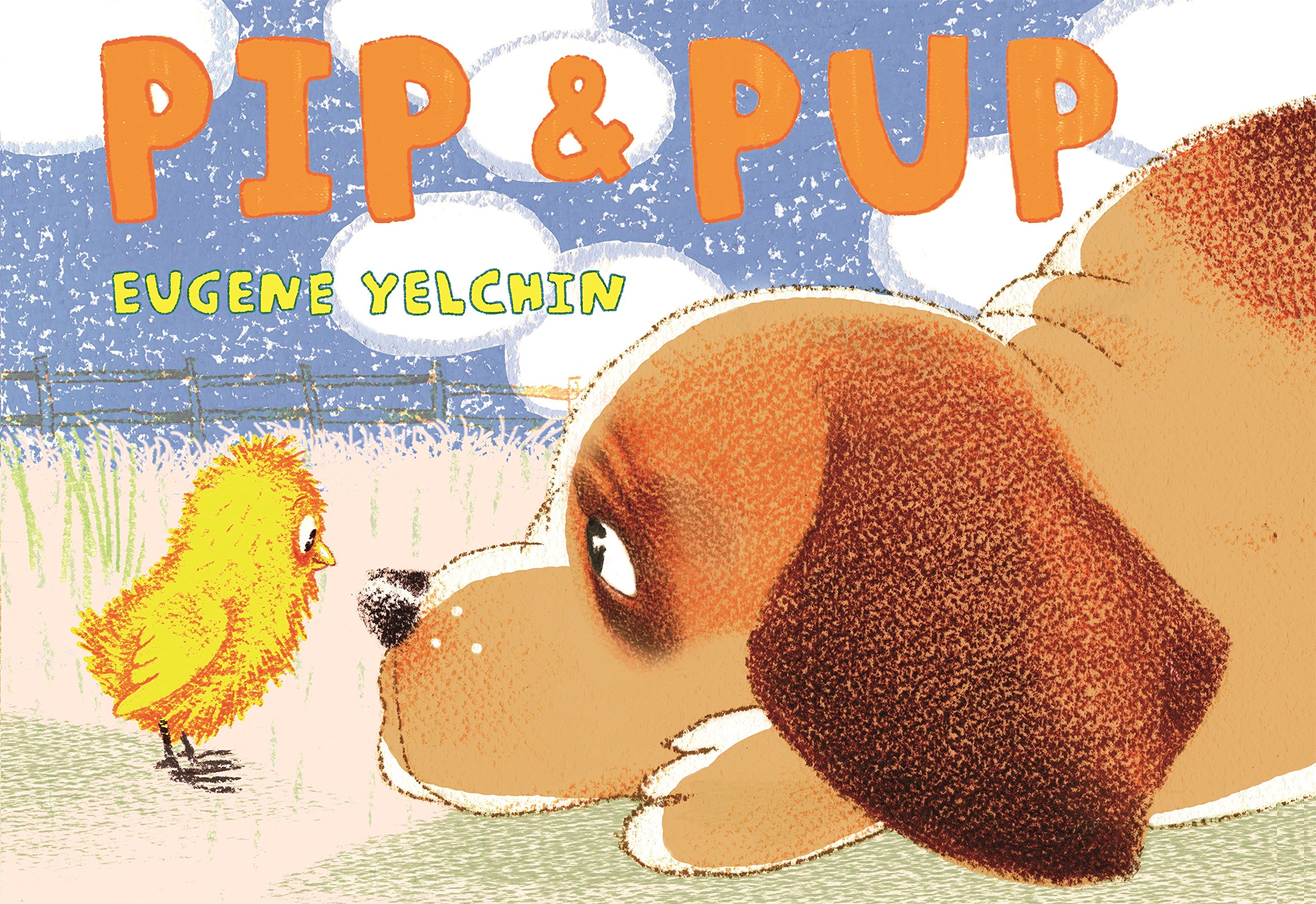
Pip and Pup by Eugene Yelchin

Published by Henry Holt and Co.

Image result for pip and pup amazon

Summary:  At the beginning of this wordless book, Pip, a fuzzy yellow chick, hatches out of her egg and goes exploring.  The first animal she sees is sleeping puppy Pup. She pecks on his nose, then gets scared when he wakes up and chases her.  She goes back to her eggshell; when it starts raining, she uses the bottom half as a boat and the top half as a hat. She paddles back to Pup, who is feeling unhappy in the rain.  When Pip puts half her eggshell on Pup’s head, a riotous game begins that ends when Pup accidentally crushes the eggshell. His way to make amends? Bringing out a tennis ball which seems like it will start a whole new game.  32 pages; ages 3-7.

Pros:  A cute story of friendship by Newbery honoree Eugene Yelchin (Breaking Stalin’s Nose).  The personalities of both animals come through loud and clear even though there are no words.

Cons:  It’s a pretty simple and straightforward story, without as many interesting details as some wordless books have.

If you would like to buy this book on Amazon, click here.

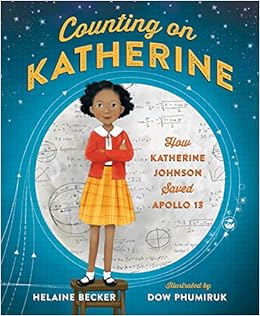
Counting on Katherine: How Katherine Johnson Saved Apollo 13 by Helaine Becker, illustrated by Dow Phumiruk

Published by Henry Holt and Co.

Image result for counting on katherine amazon

Summary:  Katherine Johnson became more widely known with the book and movie Hidden Figures.  This picture book biography covers her life from her childhood in West Virginia through her role in helping to rescue the Apollo 13 crew.  In between, she graduated college at age 18, became a teacher, then moved on to NASA, beginning her career as a “computer”. Her brilliance in math earned her promotions, allowing her to work on Project Mercury, where astronaut John Glenn requested her calculations before flying.  She then moved on to calculating the flight paths for the Apollo missions, which is how she came to be called on when Apollo 13 was in trouble. Her assignment was to calculate a flight path that would bring the astronauts home with the little fuel they had left. She succeeded; the final page shows her gazing into space, a path of calculations connecting her to the moon, with the sentence, “She was now a star herself.”  Includes additional biographical information and sources. 40 pages; grades 1-5.

Pros:  A good overview of Katherine’s life through 1970, with additional information in the back matter.  Both the text and the illustrations emphasize the importance of math in Katherine’s life and work.

Cons:  A timeline would have been useful.

If you would like to buy this book on Amazon, click here.

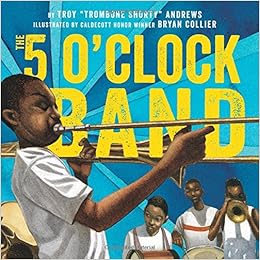
The 5 O’Clock Band by Troy “Trombone Shorty” Andrews, illustrated by Bryan Collier

Published by Abrams Books for Young Readers

Image result for 5 o'clock band amazon

Image result for 5 o'clock band collier

Summary:  In this companion book to Trombone Shorty, Troy Andrews tells the story of a day he forgot to meet his band for their daily performance through the streets of New Orleans.  He wanders through the streets, fearing he may not have what it takes to become a great bandleader.  Along the way he meets musician Tuba Treme, chef Queen Lola, and Big Chief from the Mardi Gras Indians.  Each one gives Shorty advice about what it takes to be a leader: respect for tradition, love, and dedication.  When he finally catches up with his band, Shorty tells that them that he’s learned that they have what they need to be a success.  They invite him to take the lead, and off they go, playing “When the Saints Go Marching In” and parading through their neighborhood to the delight of their fans. Includes author’s and illustrator’s notes with additional information about the people and places in the story. 40 pages; grades K-4.

Pros:  Another winning effort by Troy Andrews and Bryan Collier that conveys Andrew’s love for music and his hometown of New Orleans.

Cons:  The story was a little long and rambling.

If you would like to buy this book on Amazon, click here.

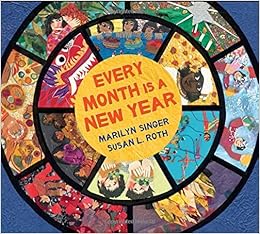
Every Month Is a New Year by Marilyn Singer, illustrated by Susan L. Roth

Published by Lee & Low Books

Image result for every month is a new year singer amazon

Image result for every month is a new year roth

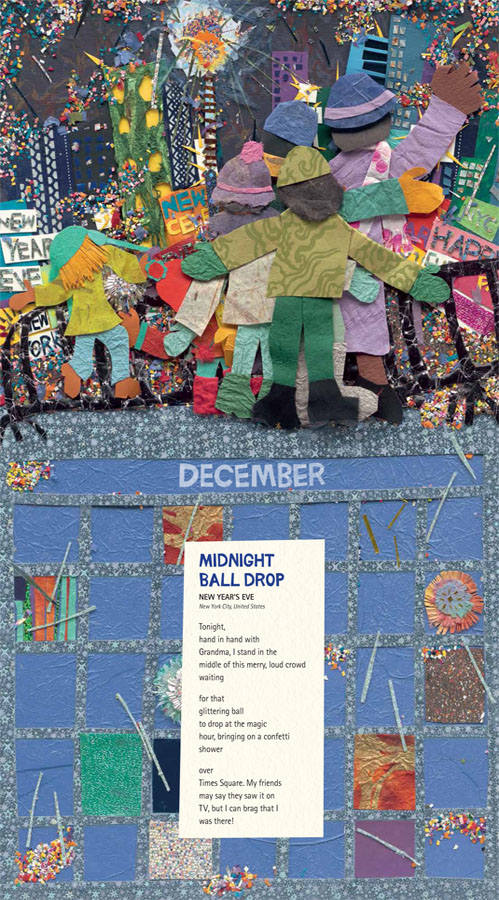
Summary:  Designed like a calendar, opening at the bottom instead of the right side, this book explores how a new year is celebrated in cultures around the world.  Eighteen poems celebrate the new year, beginning with “Midnight Ball Drop” on December 31 in New York City, and wrapping up with “Las Doce Uvas de la Suerte” in Spain the following December 31.  In between, there are visits to Scotland, Russia, China, Iran, Thailand, Jordan, Chile, New Zealand, India, and Ecuador, and celebrations that take place in every month of the year. Includes several pages with additional information about each holiday; a glossary and pronunciation guide; and author’s sources.  48 pages; grades 2-5.

Pros:  A wealth of information about a wide variety of cultures, all in a clever package–a book designed like a calendar.  The collage illustrations add texture and plenty of color to the poems.

Cons:  I would have preferred the information about each holiday to be on the page with the poem rather than all in the back.  The poems made me curious to learn more, and it was a little unwieldy to have to keep flipping back and forth.

If you would like to buy this book on Amazon, click here.