The Snow Man by Jonah Winter, illustrated by Jeannette Winter

Published by Beach Lane Books

Summary:  When he first came to the mountain, he lived in an abandoned shack with no electricity or running water.  Eventually, he built himself a house with solar panels and a greenhouse.  Boredom drove him to start measuring and recording the natural world around him: snowfall, the return of animals in the spring, the first wildflower blossoms.  In between, he would chop wood, watch movies, and ski to town and back for supplies (800 miles every winter).  He stayed for many years and began to notice patterns: less snow, earlier springs.  When he shared his information with a scientist, the scientist was amazed at his painstaking records that showed the patterns of climate change.  Older now, he no longer chops wood or skis, but he continues his record-keeping on animals, plants, and–for now–snow.  Includes additional information about billy barr, a man who has spent most of his life living a solitary existence in the Rocky Mountains of Colorado; also, a short list of additional resources. 40 pages; ages 4-8.

Pros:  A fascinating story about a man who chose an unconventional path in life but has found a way to make a difference in the world, observing climate change before much of the rest of the world did. 

Cons:  The story is a little confusing without the context given in the author’s note, so you might want to read that first.

Ethan and the Strays by John Sullivan, illustrated by Hatem Aly

Published by Simon and Schuster/Paula Wiseman Books

Summary:  When Ethan and his big brother Sam discover three stray cats on their way to school, Ethan wonders if they could take them home.  “You know Dad said no pets,” Sam reminds him.  Ethan worries about the cats when the weather gets colder, despite the research Sam helps him do about how strays survive.  When the boys see a sign advertising a Trap-Neuter-Return campaign, they visit the animal clinic to learn what to do.  Not only do they trap the cats and take them to the clinic to be neutered, but Sam gets three outdoor cat shelters.  When the time comes to return the cats to their street, one of them seems to want to stay with the kids.  They decide to take her home to ask their dad, and the last page shows Dusty and Ethan curled up together on his bed. Includes an author’s note with additional information about strays and Trap-Neuter-Return (TNR). 32 pages; ages 4-8.

Pros:  Ethan is a kind-hearted protagonist who finds a way to make a difference in his community and gets a cute pet in the process.  The information about TNR is woven into the story without coming across as preachy, and the illustrations will make readers take Ethan, Sam, and the cats to heart.

Cons:  It seemed like a bit more adult supervision was warranted.

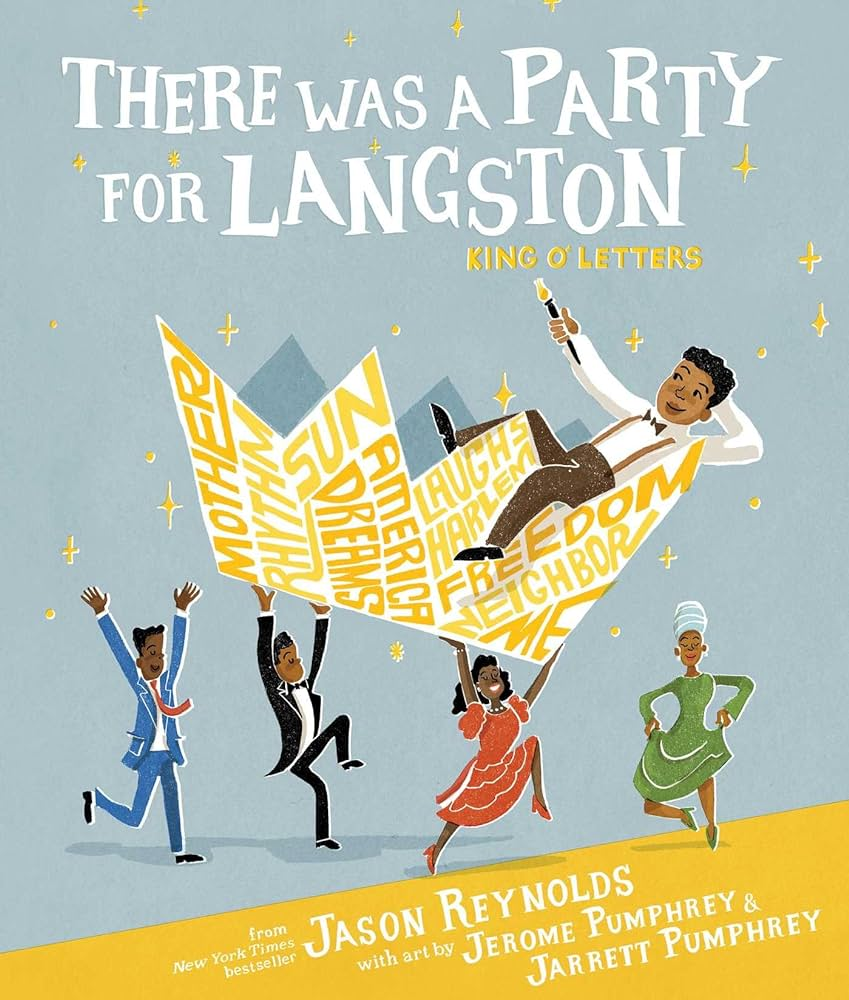
There Was a Party for Langston by Jason Reynolds, illustrated by Jerome Pumphrey and Jarrett Pumphrey

Published by Atheneum/Caitlyn Dlouhy Books

Summary:  When Jason Reynolds saw a photo of two of his favorite poets, Maya Angelou and Amiri Baraka, dancing at a party in honor of his all-time favorite Langston Hughes, he was inspired to write this ode to the three of them and their poetry.  They laughed at those who tried to ban their books or break their words, and those words are woven into the illustrations of the party held at the New York Public Library’s Schomburg Center in 1951.  Other stars of the Black literary world peek out from their books on the library shelves, arranged alphabetically from James Baldwin to Richard Wright.  Includes an author’s note with the photo of Maya Angelou dancing with Amiri Baraka.  56 pages; grades 2-5.

Pros:  One of the most anticipated books of the year, here’s the picture book debut of beloved author Jason Reynolds, illustrated by the inimitable Pumphrey brothers.  Sure to be a Caldecott contender.

Cons:  There were so many allusions in this book to people (like Amiri Baraka) and poems that I didn’t know about.  I wish that the author’s note had been at the front and that there had been a list somewhere of poems referenced in the book.

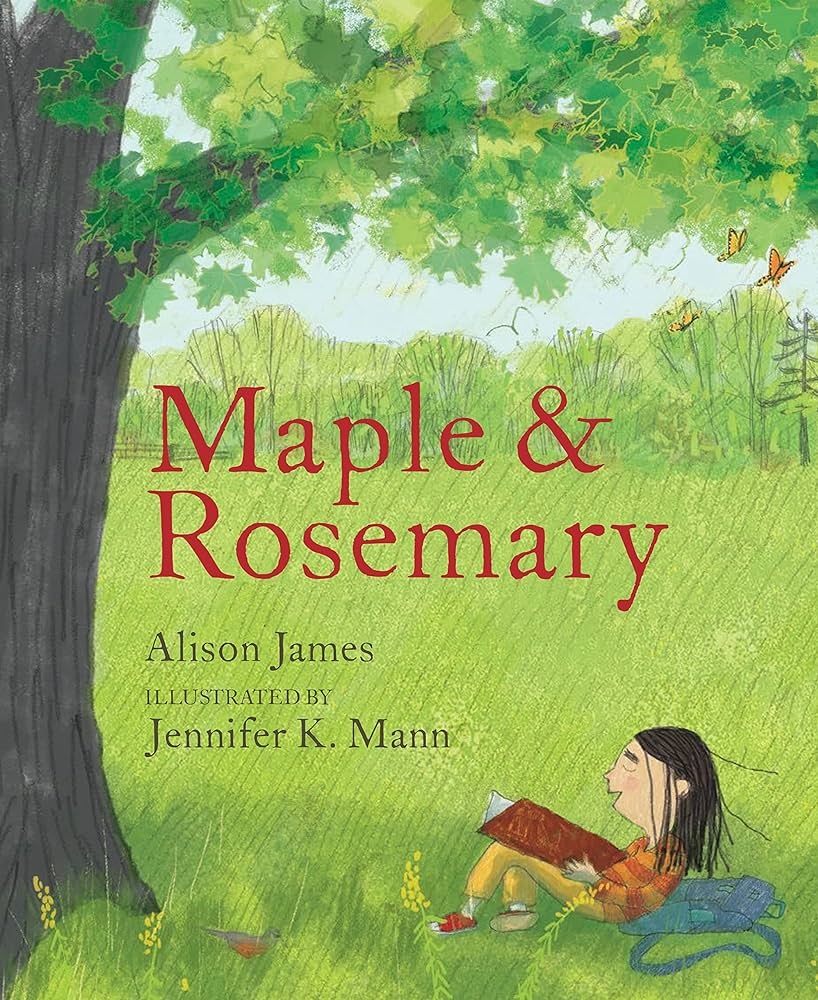
Maple & Rosemary by Alison James, illustrated by Jennifer K. Mann

Published by Neal Porter Books

Summary:  Maple is a lonely tree, surrounded by evergreen cedars and pines who have no time for a tree that loses its leaves for half the year.  Rosemary is a girl who feels friendless and comes to Maple to find solace.  As the years go by, their friendship grows, and each teaches the other.  There comes a day, though, when Rosemary no longer comes to visit.  Maple is lonely, although by now, other maples have grown from her seeds.  One day, a grown-up Rosemary returns, now a teacher who brings her students to meet Maple.  Maple loves the visits year after year, until Rosemary is old and visits by herself.  Maple gives her a stick to lean on, and the two celebrate their friendship, with Maple realizing that true friends are with you forever.  48 pages; ages 4-8.

Pros:  A wonderful celebration of both trees and friendship, richly illustrated to show the beauty of Maple at every season.

Cons:  The ending was–pardon the expression–a little sappy.

Autumn Peltier, Water Warrior by Carole Lindstrom, illustrated by Bridget George, foreword by Autumn Peltier

Published by Roaring Brook Press

Summary:  The narrator of this story is water, which tells how humans valued and respected it for a very long time.  As that started to change, some of the women who had traditionally cared for the water began to make their voices heard. One of those was Grandma Josephine, who walked miles around the Great Lakes to honor the water.  Her great-niece Autumn took up the work after Grandma Josephine passed on.  The last page invites readers to consider what they will do to protect Earth’s water.  Includes additional information about Josephine Henrietta Mandamin and Autumn Peltier, who began her activism at the age of 12; also, a list of resources and a glossary.  40 pages; grades 2-5.

Pros:  Poetic text and beautiful water-inspired illustrations combine to tell a story of indigenous activism that encourages kids to find ways to protect the environment.

Cons:  I found the book quite confusing before I got to the back matter.  Kids would need a pretty thorough introduction before reading this.

The City Tree by Shira Boss, illustrated by Lorena Alvarez

Published by Clarion Books

Summary:  Dani lives in a city apartment building with a big hole in front of it.  One day, a truck pulls up with a tree that gets planted in that hole.  The tree brings positive changes to Dani’s world, as birds’ chirping replaces traffic noise outside her window, and the sound of rustling leaves adds a calming note to the busy pace of the city.  Although Dani enjoys the bigger trees in the park, her tree is special.  It changes with the seasons and with different types of weather.  Dogs and people passing by are not always kind to the tree, so Dani and her friends learn how to help it, and in return, the tree becomes an important part of the neighborhood.  Includes additional information about how street trees help people, how people can help them, and a list of resources.  40 pages; ages 4-8.

Pros:  A lovely introduction to the benefits of urban trees, with brilliantly colored illustrations filled with details of Dani’s neighborhood that kids will enjoy tracking from one page to the next.  The back matter makes it a great resource for all ages.

Cons:  The tree seemed to grow at a supernaturally fast rate.

Two books about mindfulness

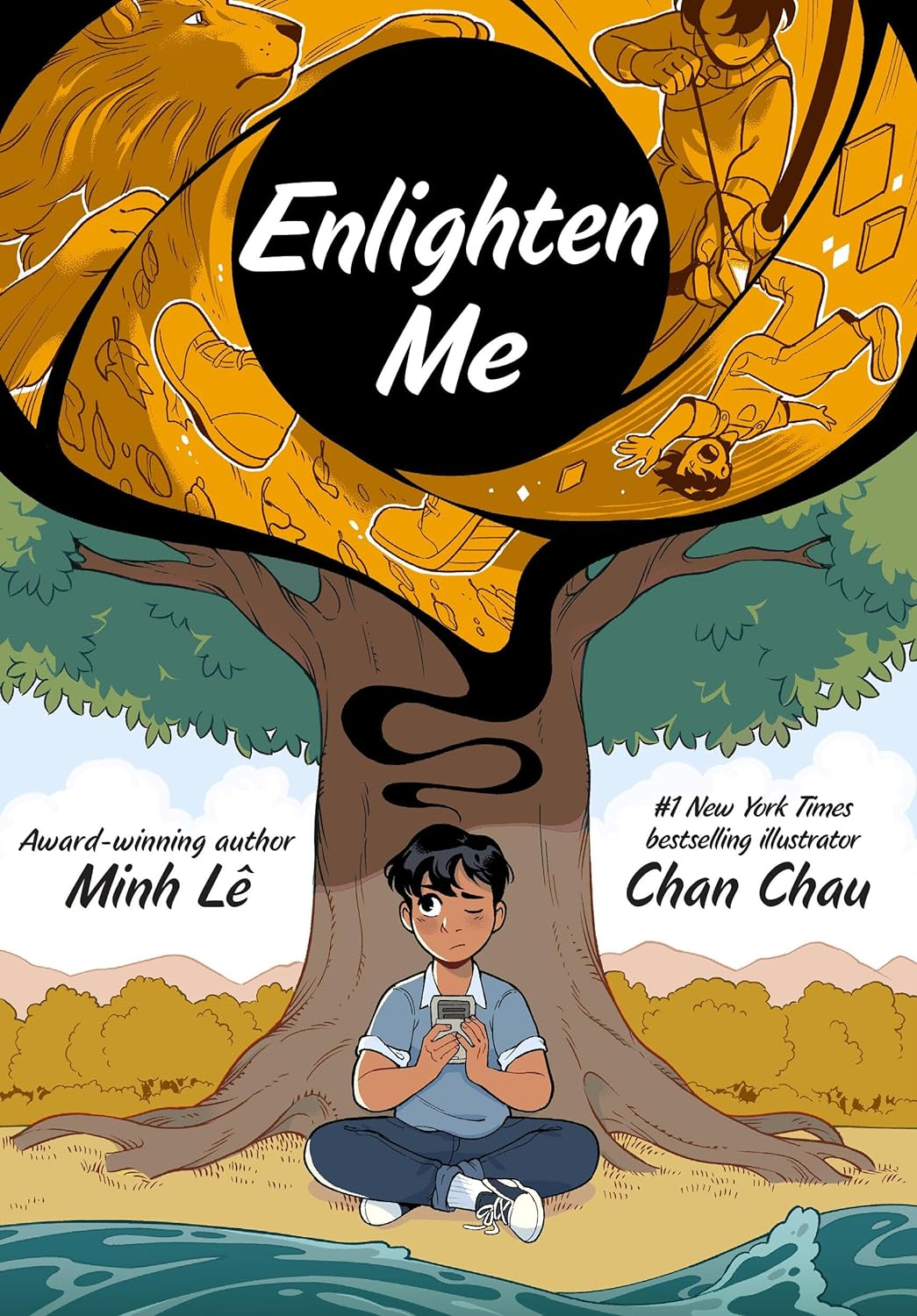
Enlighten Me by Minh Lê, illustrated by Chan Chau

Published by Little Brown Ink

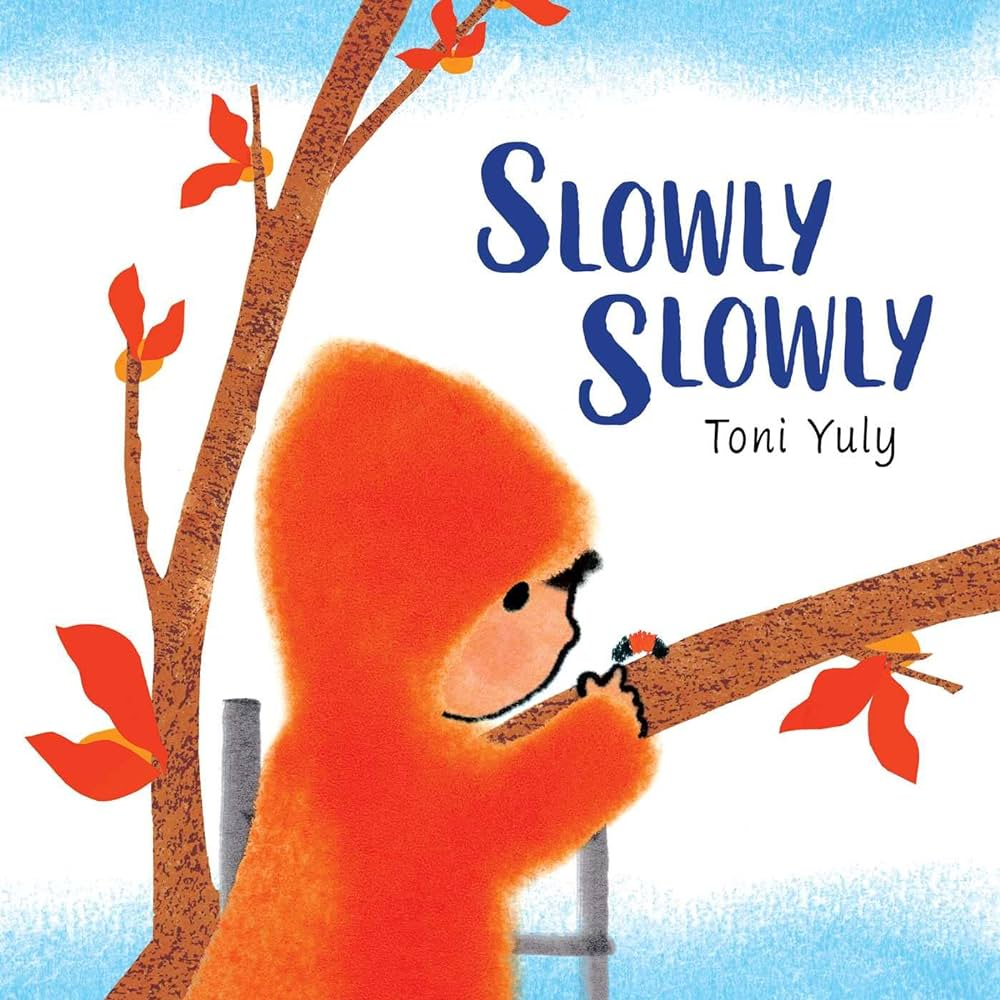
Slowly Slowly by Toni Yuly

Published by Atheneum Books for Young Readers

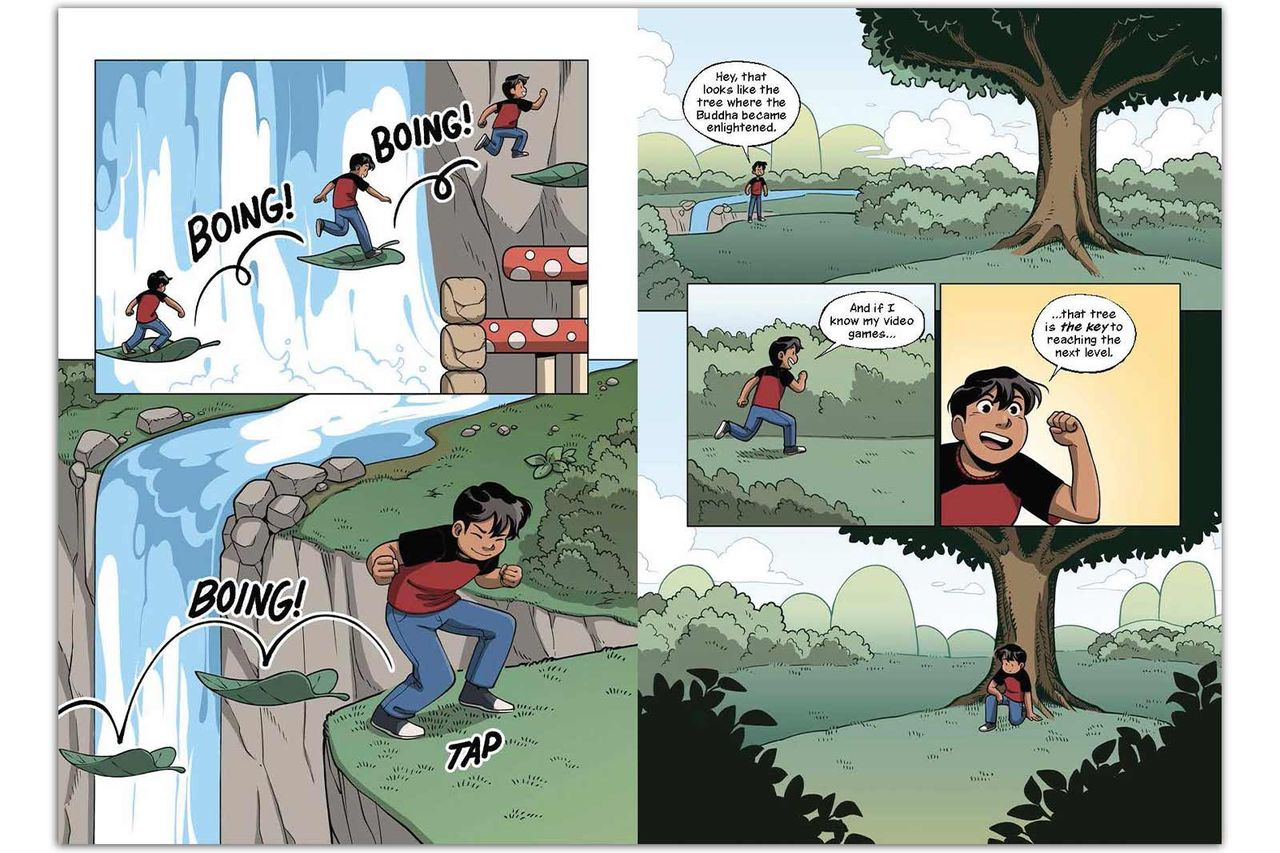
Summary: Binh and his family are off to a silent Buddhist retreat in Enlighten Me. During meditation times, Binh struggles with a recent memory of racist bullying at school. When he fought back, he ended up being the one to get in trouble. In between meditation sessions, a monk named Sister Peace shares stories about the Buddha with the kids that teach Binh some lessons about dealing with his issues. Those issues don’t get resolved, but by the time the family is heading for home, it’s clear that Binh is seeing things in a new light.

“When you slow down…you see more,” begins Slowly Slowly, as a child and dog explore the natural world. They observe winter turning to spring, and a persimmon tree slowly, slowly, slowly, slowly, slowly, slowly, slowly, slowly makes persimmons. With each page of “slowly”, readers can look for other changes going on in the child’s world. Enlighten Me is 140 pages; grades 4-7; Slowly Slowly is 40 pages; ages 4-8.

Pros: Both books focus on mindfulness through beautiful artwork and kids’ experiences. Minh Lê uses Binh’s story and love of video games to tell some tales of the Buddha while offering some kid-friendly insights Binh has about meditation and enlightenment. Readers of Slowly Slowly will want to take the time to notice all that is happening in the busy yet peaceful illustrations and to reflect on how slowing down can help us notice the world around us.

Cons: Both books are pretty spare, offering more of an opportunity for reflection than a fleshed-out story.

Two books about Christmas and teamwork

Otto the Ornament by Troy Cummings

Published by Random House Books for Young Readers

Elves Are the Worst! by Alex Willian

Published by Simon and Schuster Books for Young Readers

Summary: Otto the Ornament knows his dazzling looks should earn him a front and center position on the Christmas tree. When the other ornaments try to take him down a notch, Otto goes looking for another tree. His journey into the world leaves him battered, without his former shine and glitter. A chance encounter with a familiar ornament sends Otto back home where he’s happy to find a place on the tree and simply reflect some of the holiday light onto the other ornaments.

The goblin from Elves Are the Worst! may be familiar to those who have read Alex Willian’s books declaring unicorns, dragons, and yetis as the worst. Elves, he tells the reader, may seem hard-working and perfect, but in reality, they hang out in trees baking cookies, pour bowls of the world’s loudest cereal, or just sit on a shelf all day. When he stops by the North Pole to show that a goblin can do what the elves there do, he learns that caring for reindeer and making toys are actually pretty tough tasks. Elves aren’t perfect, after all, just good at the teamwork needed to get everything ready for Santa’s big night. Both books 40 pages; ages 4-8.

Pros: Two fun, cartoon-style books for the holidays that deliver their message about playing well with others with plenty of humor. Kids will be delighted to find either Otto or a bunch of elves under the tree.

Cons: Probably not destined to become holiday classics.

I’m From by Gary R. Gray, Jr., illustrated by Oge Mora

Published by Balzer + Bray

Summary:  “I come from early morning wake-ups, handcrafted blankets, knitted with memories.”  A boy goes through his day, recounting the people, places, foods, and events that make him who he is.  Some are good, like the pancakes and fried bologna for breakfast and the four square and hoop dreams on the playground.  Others, like long school days and racist comments (“Can I touch your hair?” “You don’t sound Black!”) are tougher to deal with.  At the end of the day, there’s dinner, family fun, and a cozy tuck-in: “Sleep tight and remember where you’re from…our dreams, hopes, ambitions, lionlike traditions.”  40 pages; ages 4-8.

Pros:  I’m always thrilled to see a new book from Oge Mora, and this one is a beautiful meditation from poet Gary Gray in his picture book debut.  It could serve as a prompt for kids to write and/or illustrate their own “I’m From” stories. Another Caldecott contender.

Cons:  I wish I had some pancakes and fried bologna right now.

The Christmassy Cactus by Beth Ferry, illustrated by A. N. Kang

Published by HarperCollins

Summary:  Tiny Cactus has a special place in her family, especially with the little girl who greets her every morning with, “Hello, my little cupcake,” and tucks her in each evening saying, “Who’s the sweetest bonbon?”  When it’s time to decorate for Christmas, Tiny Cactus is as excited as the little girl, but as the weeks go by, there are more distractions–especially the big shimmery Christmas tree–and less time for a little cactus.  Tiny Cactus wishes that she could have some sort of decorations, and she keeps making her wish as the holiday draws nearer.  On Christmas Eve, a window blows open and snowflakes swirl in on top of the cactus.  As they melt away, the cactus can still feel their magic.  The next morning, there’s a surprise…Tiny Cactus turns out to be a Christmas cactus who has found a way to make her own decorations.  40 pages; ages 4-8.

Pros:  A cute and slightly quirky Christmas story with a subtle message about making your own wishes come true.

Cons:  I would have enjoyed a photo of an actual Christmas cactus.