Dog Says, Cat Says by Marilyn Singer, illustrated by Sonia Sánchez

Published by Dial Books
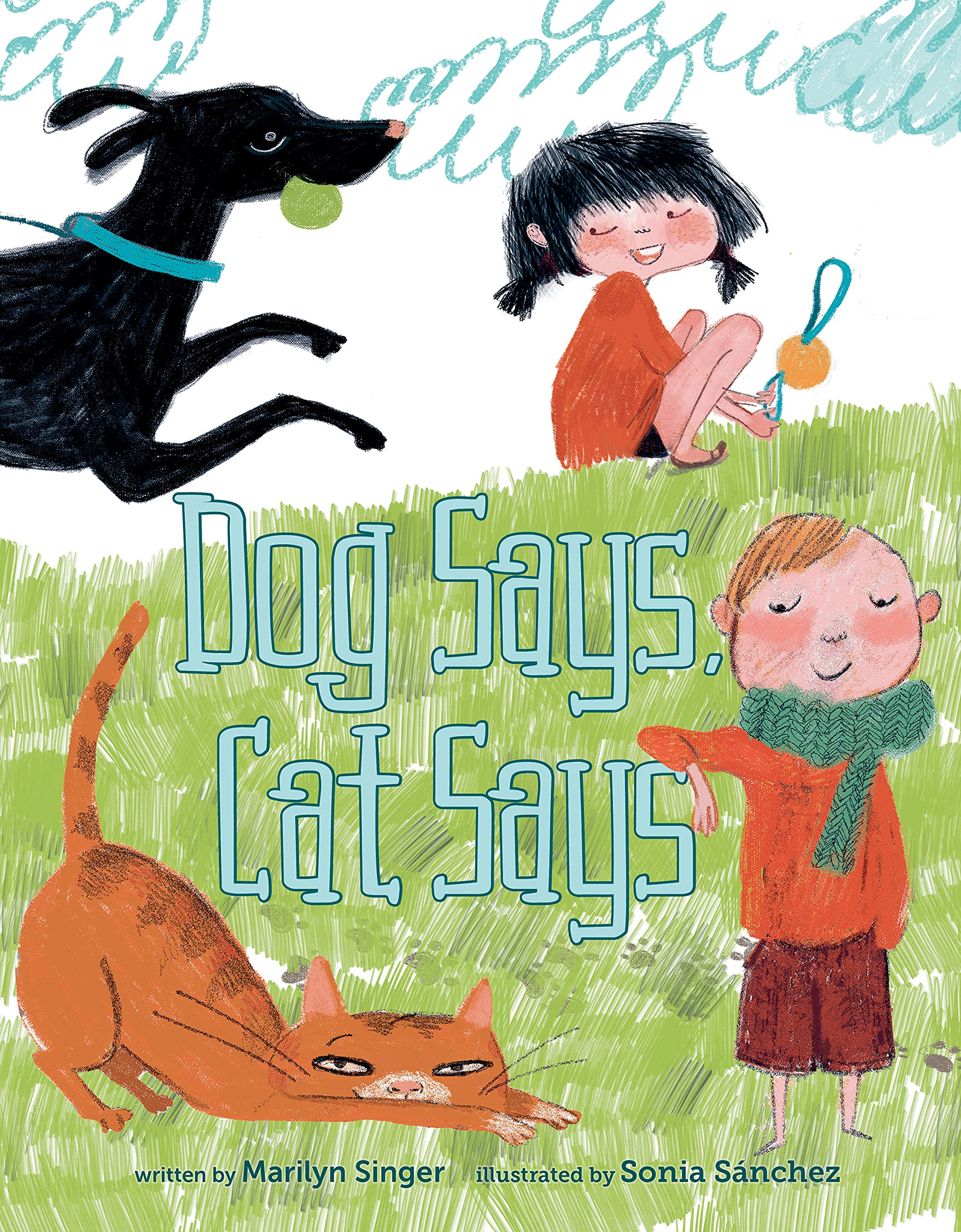
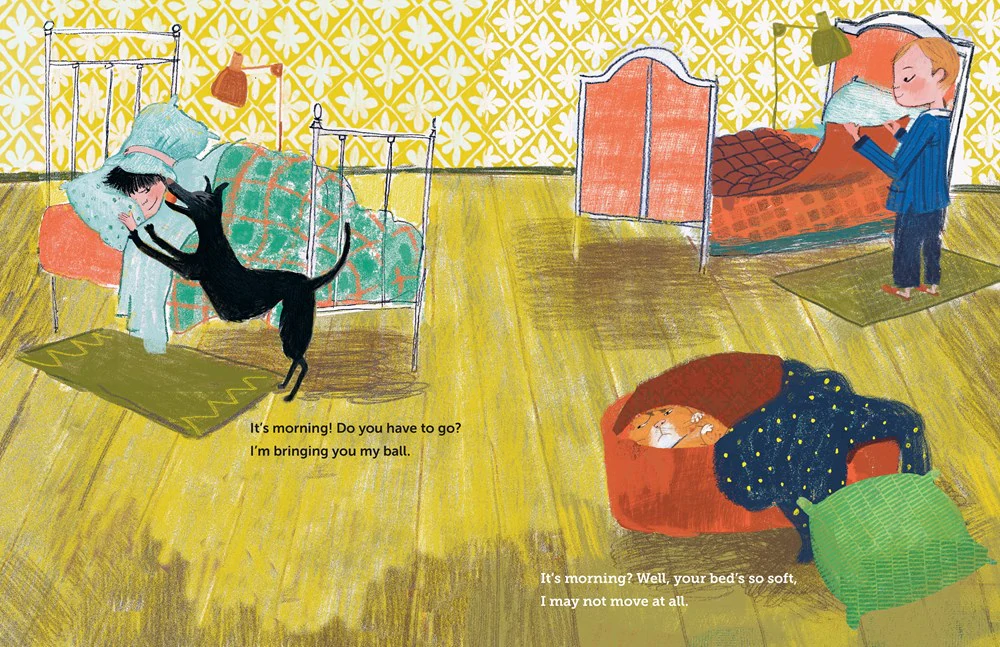
Summary:  In rhyming text, a dog and cat alternate talking to their owners throughout the day: “It’s morning! Do you have to go? I’m bringing you my ball/It’s morning? Well, your bed’s so soft, I may not move at all.”  The dog enthusiastically leaps into all things dog-gy: barking at the mailman, playing fetch, and rolling in the mud, while the cat perfects the art of standoffishness and showing superiority to the dog.  When nighttime comes, the dog is ready to settle down in his bed, while the cat prowls through the house, then finally snuggles in with the dog.  32 pages; ages 4-8.

Pros:  A fun book for pet lovers that reminded me of Elisha Cooper’s Yes and No, with the dog and cat leading very different lives but coming together as night falls.  The bouncy rhymes and illustrations capture both the high energy of the dog and cat’s more languid nature.

Cons:  Failed to change my opinion that dogs make superior pets.
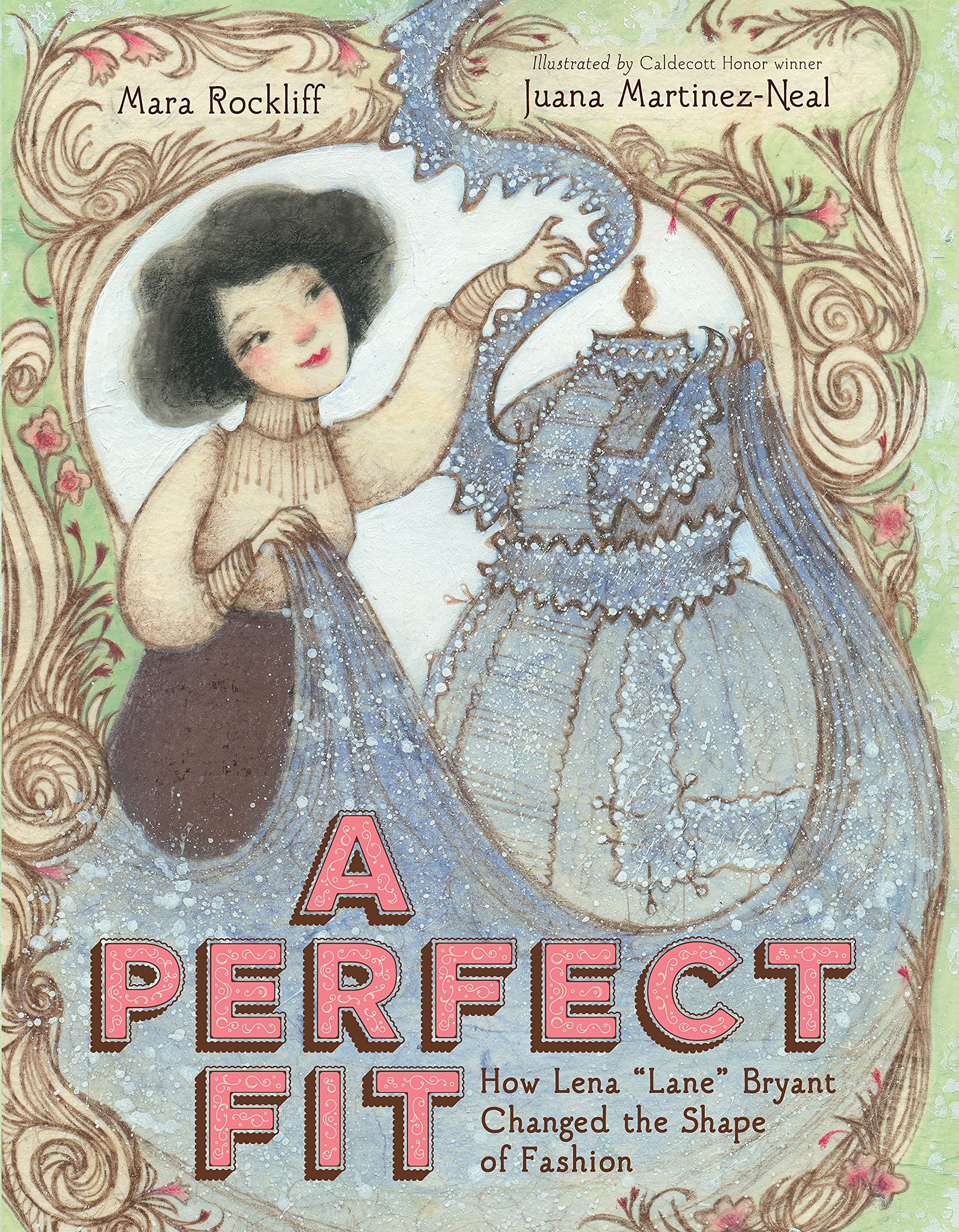
A Perfect Fit: How Lena “Lane” Bryant Changed the Shape of Fashion by Mara Rockliff, illustrated by Juana Martinez-Neal

Published by Clarion Books

Summary:  Raised by her grandparents in Lithuania, Lena Himmelstein learned sewing from her grandmother and from her grandfather, the definition of real success: helping another person.  When she was 16, Lena followed her older sister to America, where she got a job as a seamstress.  She studied English and fashion and married a man named David Bryant, who died shortly after the birth of their son.  To support the family, Lena bought a sewing machine and started her own business.  When a pregnant woman asked for a gown that would grow with her, Lena remembered her grandfather’s advice and found a way to help her customer.  Her reputation grew, and soon she opened her own shop and a bank account.  At the bank, she accidentally signed her name as “Lane” instead of Lena.  Lane Bryant became famous for clothes made to help women of all sizes and shapes.  “Everyone said Lena was a great success.  And when she thought about her grandfather, she knew that it was true.”  Includes an author’s note and a list of sources.  32 pages; grades K-4.

Pros:  Mara Rockliff’s engaging writing and Juana Martinez-Neal’s fashionable illustrations bring Lena Himmelstein Bryant’s story to life, with a heartwarming emphasis on how helping others is the true definition of success.

Cons:  Too bad this wasn’t released in time for Women’s History Month.

Hello, Puddle! By Anita Sanchez, illustrated by Luisa Uribe

Published by Clarion Books

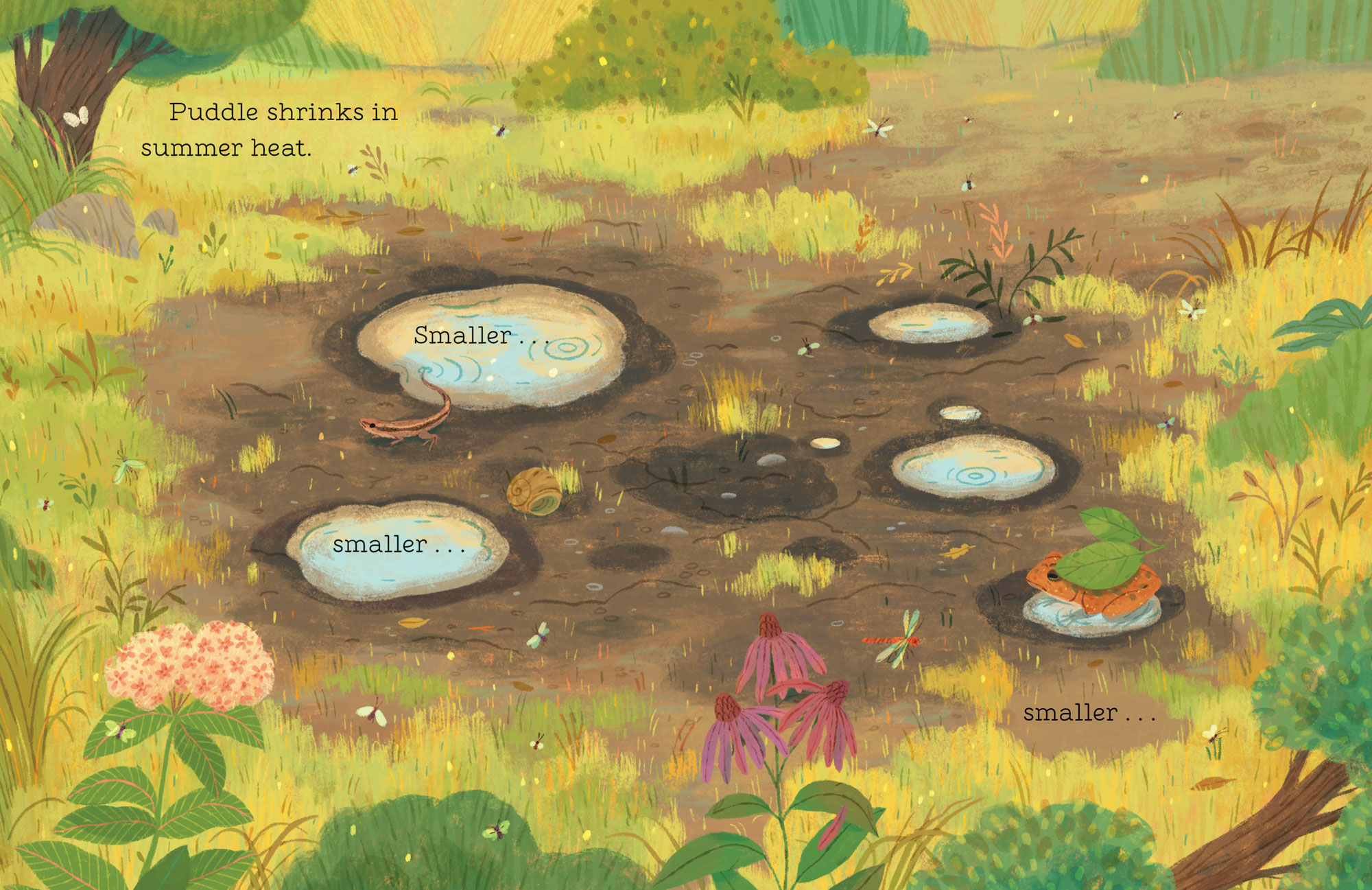
Summary:  A young girl observes a puddle throughout the year.  Spring brings tadpoles, turtles, and plants growing near the edges.  Squirrels cool off in the summer heat, which also causes the puddle to shrink.  There’s still enough water for mosquitoes to lay their eggs, and when they hatch, bats swoop in to eat them.  Deer stop by for a drink as the puddle fills up with falling leaves.  Finally, it ices over, and the girl bids it farewell until spring comes again.  Includes an author’s note about the real puddle on which the story is based; additional puddle facts and directions for making your own puddle; a list of the animals in the book and how to find signs of them; a glossary; and a list of additional resources.  40 pages; ages 4-8.

Pros:  Who would have thought the humble puddle could draw such a wide variety of wildlife?  This book is perfect for giving young naturalists an introduction to animals they can observe in their own backyards, and the back matter can lead them to further explorations.

Cons:  I got a little nervous there in midsummer that the puddle was going to disappear.

Climb On! by Baptiste Paul, illustrated by Jacqueline Alcántara

Published by NorthSouth Books

Summary:  Dad thinks it’s a great day for watching futbol, but his daughter has another idea, to take a hike up the mountain.  They fill backpacks with snacks, water, and a camera and head out.  At first, she’s the energetic one, scrambling up rocks, swinging from a vine, and encouraging her father, but as the day goes on, their roles are reversed.  As they approach the summit, she climbs onto his back, and finally they make it to the top, where an amazing vista awaits them.  The last page shows them both swinging from a vine, watched by a group of animals that the reader is invited to go back and find in the illustrations.  32 pages; ages 3-8.

Pros:  The team that brought you The Field has produced another winning story about a fun day in what I am guessing is St. Lucia, the setting for The Field.  The brief text is all dialog between the girl and her dad, sprinkled with Creole words.  The brilliant illustrations that capture the flora and fauna of the hike should be considered for some sort of award recognition.

Cons:  There was no back matter explaining the setting of the story, and, although the words were translated in the text, a Creole glossary would have been nice.

Nour’s Secret Library by Wafa’ Tarnowska, illustrated by Vali Mintzi

Published by Barefoot Books

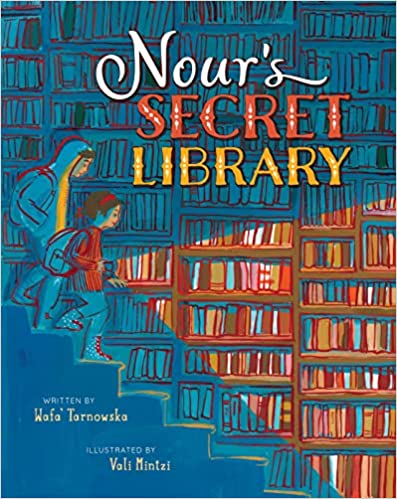
Summary: Nour and Damir are cousins living in Syria with big plans to start a secret society for themselves and their friends.  Those plans are destroyed when the war moves to their city and they have to hide in a basement.  During lulls in the fighting, Damir goes out on his bike to look for food and begins to rescue books that he finds in the rubble.  The kids find an empty basement in a mostly-abandoned building and set up a library there.  With the help of neighbors, they build shelves and move their books into the basement.  Before long, people are coming from all over the city to borrow books.  Reading and books provide a respite for people as they endure the long war.  Includes a glossary, information about Syria, a list of 8 famous libraries in the Middle East, information about the real secret library, and notes from the author and illustrator.  32 pages; grades 1-5.

Pros:  An inspiring story based on real events that celebrates reading, books, and innovative kids who found a way to bring joy to their war-torn city.

Cons:  It wasn’t exactly clear which parts of the book were fact and which were fiction.

People Are Wild by Margaux Meganck

Published by Knopf Books for Young Readers

Summary:  A series of animal parents and offspring observe humans from a distance.  “Mama, what’s that?” asks a young elephant.  “Don’t get too close,” a frog warns.  “Why not?” asks the smaller frog.  “Because people are wild.”  They’re loud, messy, smelly, and nosy.  But, the younger animals point out, people are also funny, cuddly, and cute.  When the young elephant begs to keep a human, the parent says no.  “People are wild.  And all wild creatures should be free.”  Includes facts about each animal shown, a map showing where they live, and each one’s endangered status.  40 pages; ages 4-8.

Pros:  Kids will get a kick out of hearing animals describe humans in the same way people often talk about animals, and in the process may also absorb an important lesson about wild creatures.  Everyone will be drawn in by the beautiful illustrations.

Cons:  Wouldn’t a young frog be a tadpole?

Knight Owl by Christopher Denise 

Published by Christy Ottaviano Books

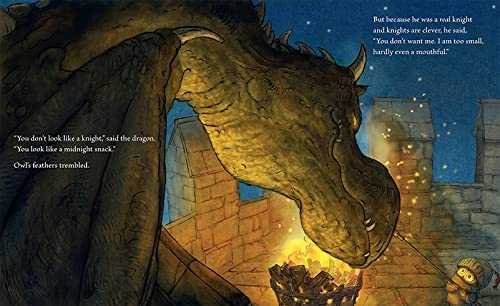
Summary:  Young Owl has always dreamed of becoming a knight, and when knights start disappearing from the castle, his dream comes true.  He’s accepted to Knight School where he struggles to overcome his small stature.  But he works hard and graduates “with honor, as all knights do.”  Owl gets assigned to Night Knight Duty, which he excels at thanks to his ability to stay awake all night.  When a dragon attacks the castle, though, it looks like Owl might become a midnight snack until some quick thinking and preparation turn things around.  Before long, Owl is hosting late-night (knight) parties for the dragon and other new friends.  48 pages; ages 3-8.

Pros:  Kids will love this adorable story and illustrations that celebrate the power of hard work, courage, friendship, and pizza.

Cons:  I wish Owl had a more original name.

Born Hungry: Julia Child Becomes “the French Chef” by Alex Prud’homme, illustrated by Sarah Green

Published by Calkins Creek

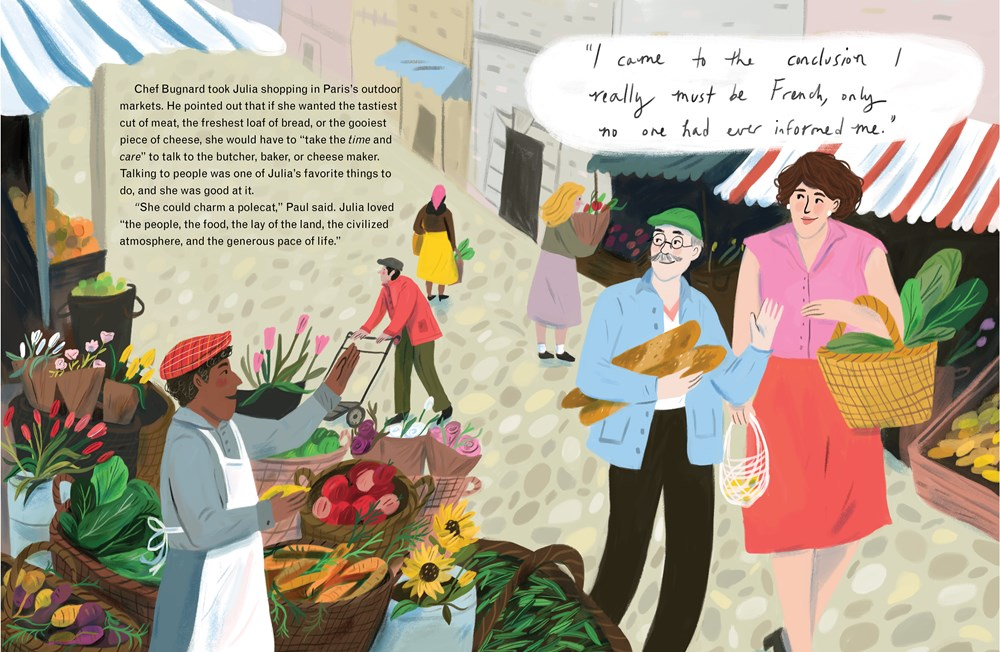
Summary:  “I was born hungry, not a cook,” Julia Child said of her early days.  Her family employed a cook, so young Julia never had to learn to prepare food.  With a hunger for adventure, Julia volunteered for the Office of Strategic Services (OSS) during World War II, where she was sent to Ceylon (now Sri Lanka) and met her future husband, Paul Child.  Paul had lived in France and introduced Julia to fine food and wine.  After getting married, the couple moved to Paris, where Paul worked at the US embassy and Julia threw herself into learning French cooking.  She signed up for classes at Le Cordon Bleu and read French cookbooks at night.  The book ends with her opening L’Ecole des Trois Gourmandes (The School of the Three Hearty Eaters) with two French friends and a picture of Julia on TV.  Includes a two-page author’s note with photos that gives more information about Julia’s television career, an extensive list of resources, and a recipe for scrambled eggs (Oeufs Brouillés) .  40 pages; grades 1-5.  

Pros:  Alex Prud’homme’s grandfather was Paul Child’s brother, and he worked with Julia Child on her memoirs.  His intimate knowledge of her life makes for an engaging picture book, with mouth-watering descriptions of food that are enhanced by the illustrations (often accompanied by the word “Yum!”).

Cons:  I was sorry that the story ended just as Julia’s career as the French Chef was beginning.

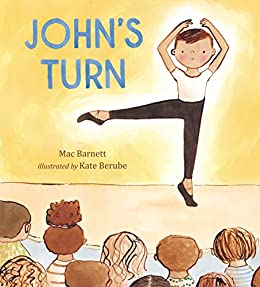
John’s Turn by Mac Barnett, illustrated by Kate Berube

Published by Candlewick

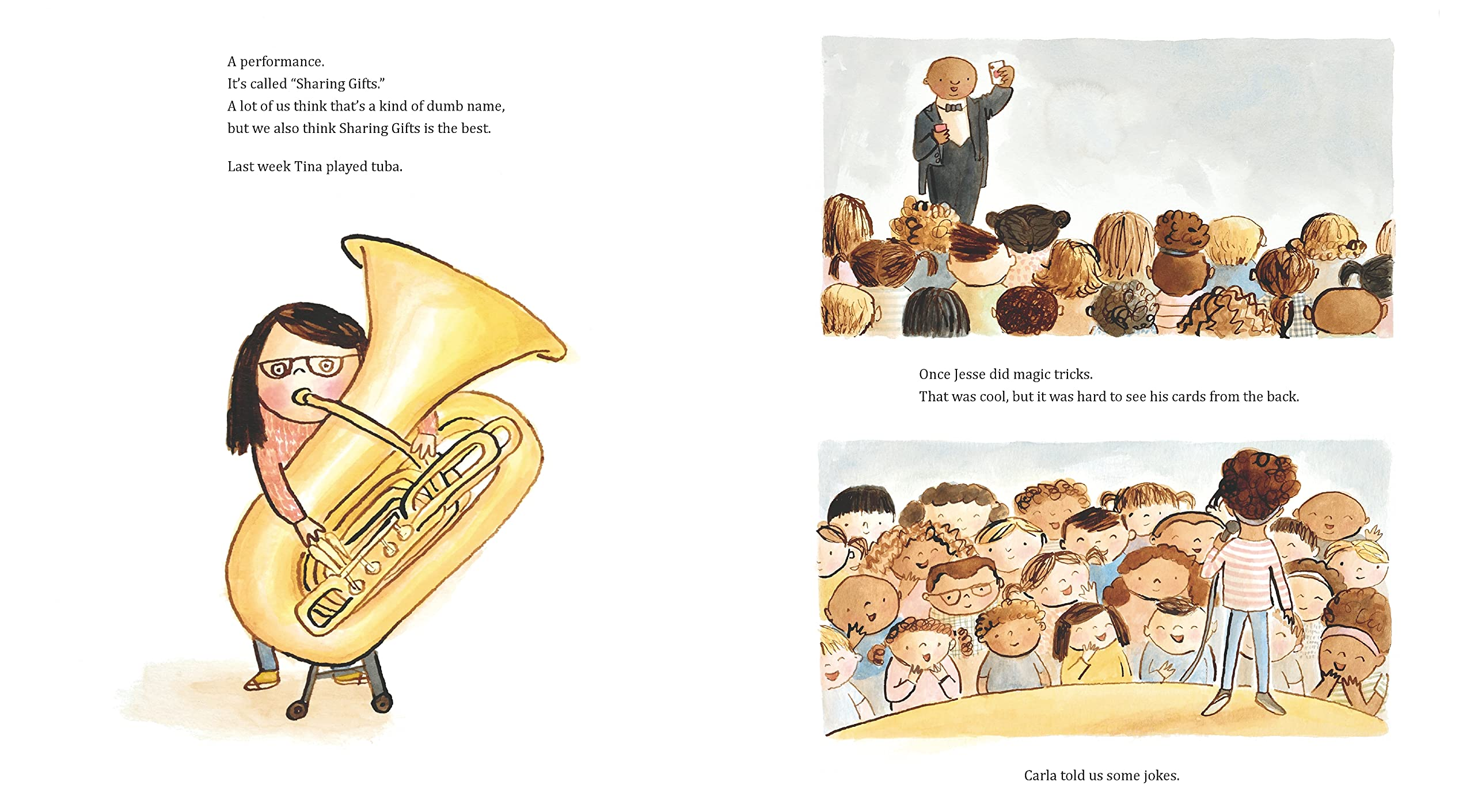
Summary:  Every Friday there’s an assembly in the cafeteria: announcements, sometimes a guest, and then one student performs.  It’s called “Sharing Gifts.”  On this particular Friday, John is signed up to dance.  He’s quiet at breakfast, and everyone knows why: he’s nervous.  John changes into his ballet clothes during announcements.  The music begins, the kids quiet down, and John starts dancing, tentatively at first but then with more confidence.  He spins, leaps, and finishes with a bow.  There’s a moment of silence, and then the whole school applauds wildly.  32 pages; ages 4-8.

Pros:  This simple story really captures John’s courage and the joy he feels when his performance is done.  It’s a perfect little slice-of-life tale of school, and the illustrations beautifully portray John’s dance moves.

Cons: We never find out who’s narrating the story

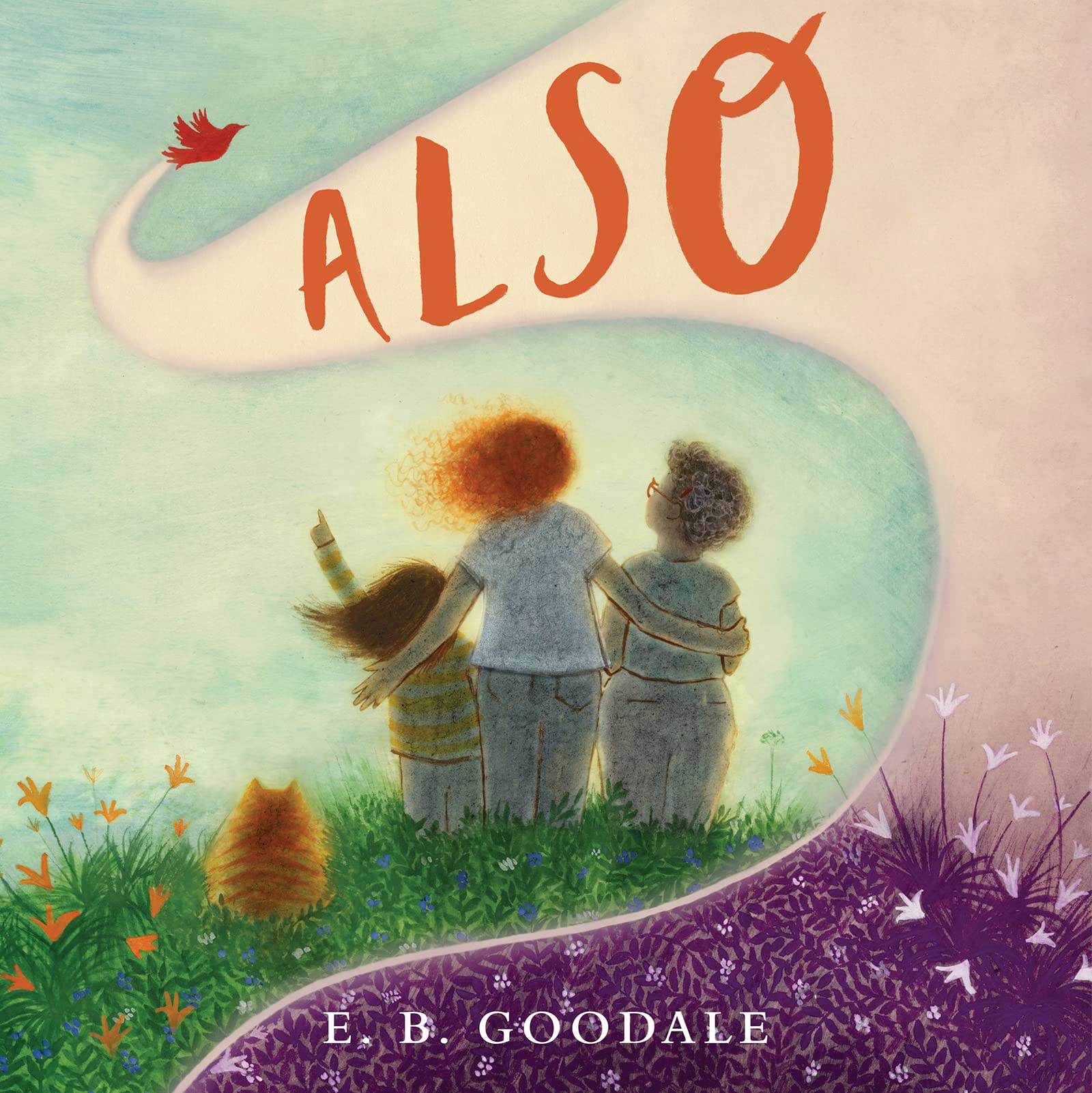
Also by E. B. Goodale

Published by Clarion Books

Summary:  “Today, I am at my gramma’s house, high on the hill, amongst the blueberry bushes.  And also…I am remembering camping with Mama.”  The author tells and shows how she, her mother, and her grandmother are all remembering past days even while they are enjoying the present one.  The past is shown with purple hues, while the illustrations of the present have a more colorful palette.  The narrator concludes with a picture of her as an adult writing at her desk, while she remembers her childhood days.  These illustrations have swaths of color going through the purple pictures of the past.  Includes a recipe for blueberry ink.  32 pages; ages 4-8.

Pros:  This meditation on the past and present would make a nice prompt for writing about a memory.  The illustrations help distinguish the past from the present and the variation in the colors show how alive people and places can be in our memories.

Cons:  The switch between past and present may be confusing to some kids.