Dakota Crumb: Tiny Treasure Hunter by Jamie Michalak, illustrated by Kelly Murphy (released July 6)

Published by Candlewick
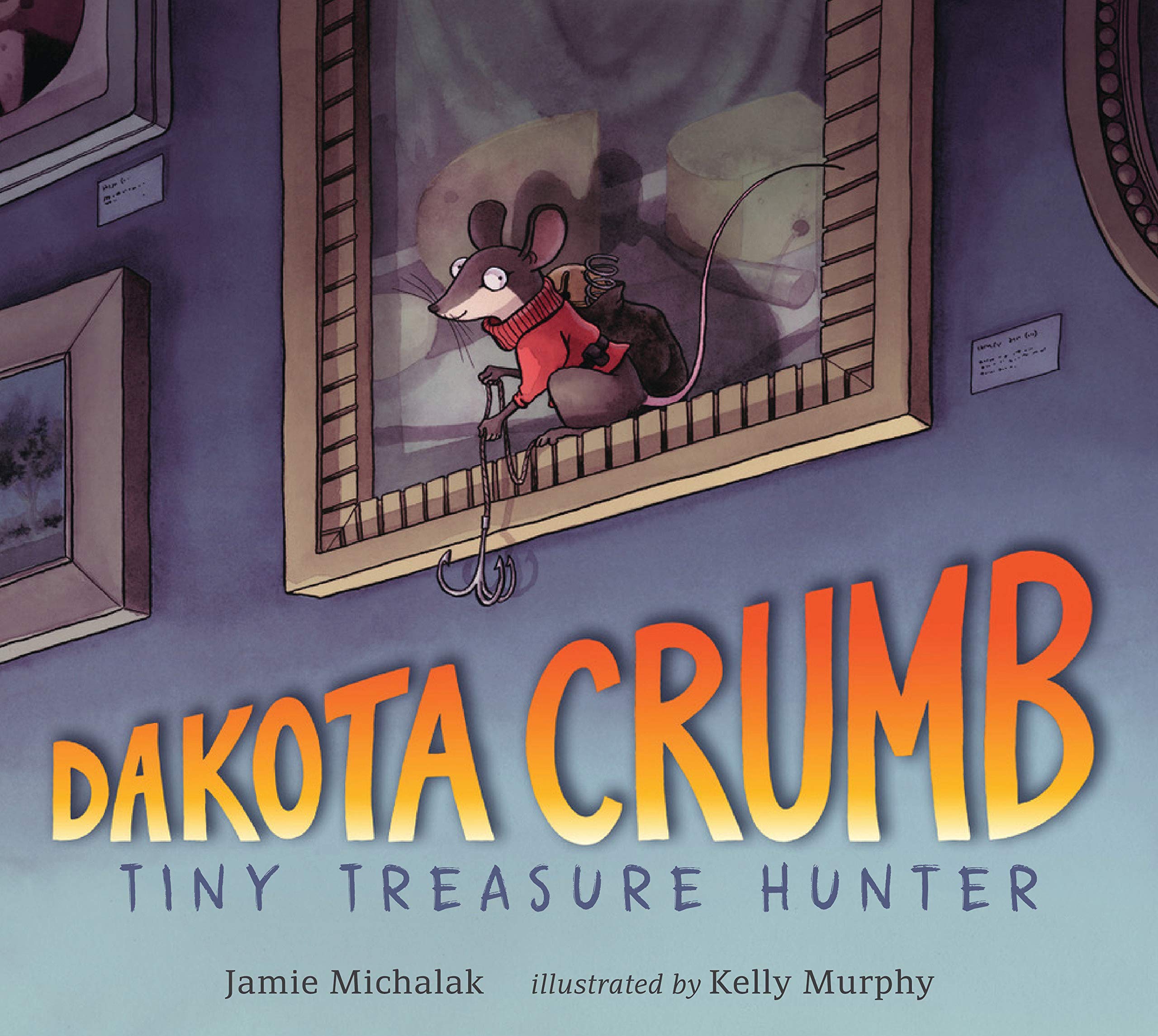
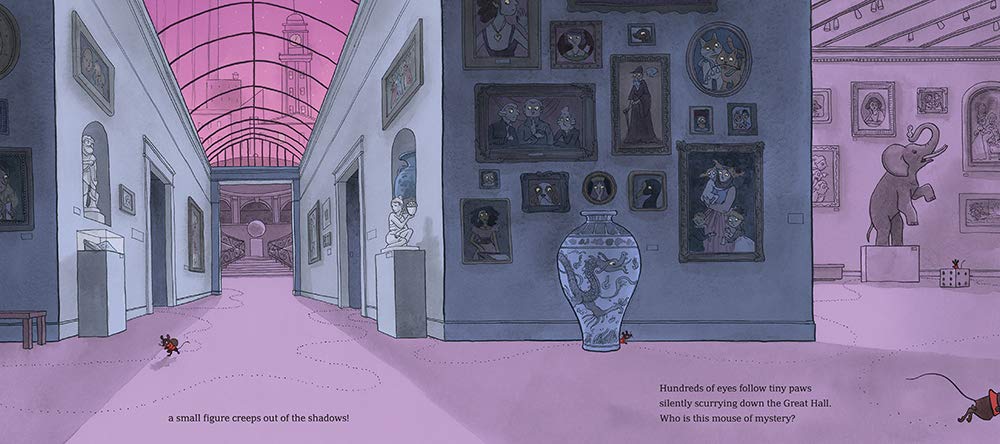
Image result for dakota crumb tiny treasure hunter

Summary:  It’s after hours at the big museum when a tiny creature darts out of the shadows.  It’s Dakota Crumb, mouse treasure hunter, following his map to find the treasure marked by an X.  As he travels toward his destination, he finds a few other valuable items (a postage stamp and an action figure) that he pops into his knapsack.  At last, in the Ancient Egypt exhibit, after staring down the cat statue, he finds what he came for: the valuable purple gumdrop.  His mission accomplished, Dakota hurries back to his mouse house, which turns out to be a museum in its own right.  Dakota’s treasures are on display for the crowd of animals that comes to visit in the morning.  Includes pictures of small items in the museum that Dakota did and did not find; kids can go back to the story to see if they can spot them.  32 pages; ages 3-7.

Pros:  I would have loved this book so much as a kid, when I was kind of obsessed with miniature animals and creating imaginary worlds for them (okay, I still may have some of those tendencies).  The language almost rhymes, with lots of bounce and energy to match Dakota’s, and the illustrations give an excellent introduction to what’s in an art museum.  The puzzle pages at the end add to the fun.

Cons:  I didn’t quite understand where the gumdrop had been hidden.
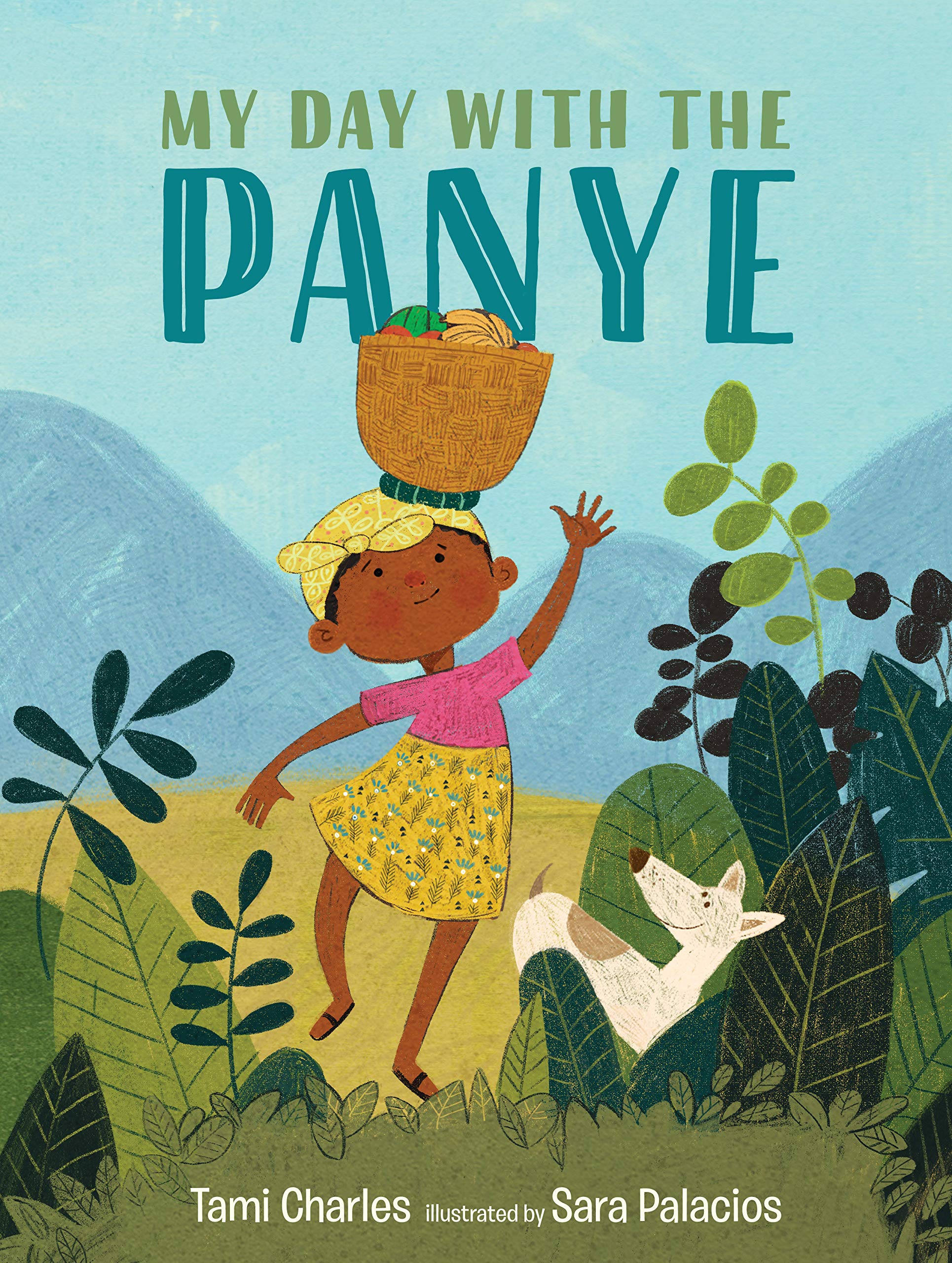
My Day With the Panye by Tami Charles, illustrated by Sara Palacios (released March 16)

Published by Candlewick

Image result for my day with the panye

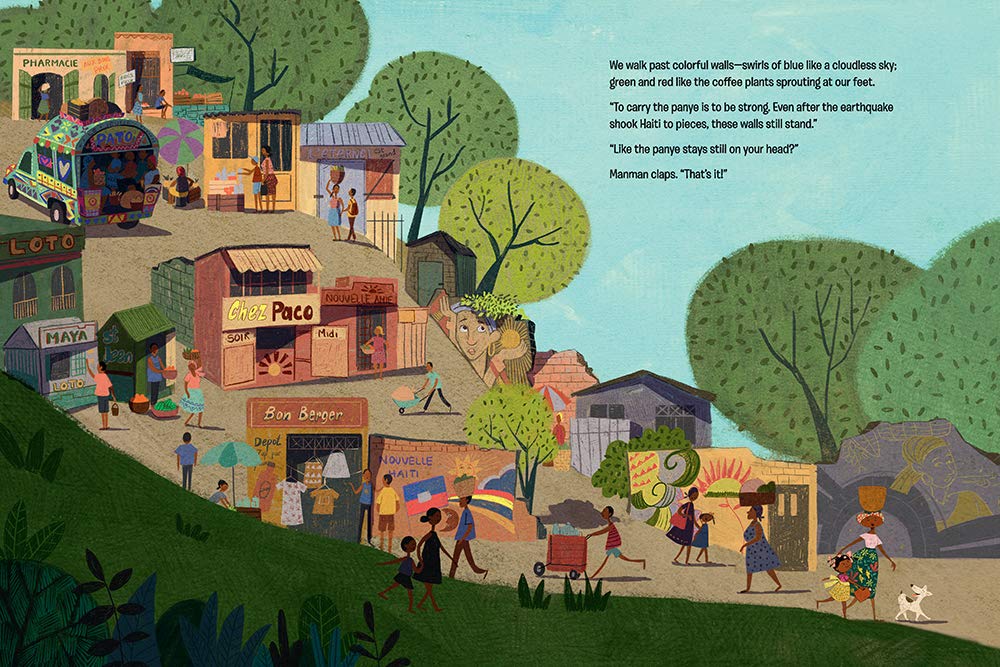
Summary:  Fallon, accompanying her mother to a Port-au-Prince market, wants desperately to carry the panye, the basket her mother and other women and girls carry on their heads.  When Fallon tries to carry it, the panye falls to the floor, and her mother reminds her to be patient: “Little by little, the bird builds its nest.”  After buying food for the family dinner and packing it into the panye, Fallon has another try at carrying it on her head, but before long the vegetables are lying in the road.  Her patient mother loads it back again, and this time Fallon is successful.  Walking tall and proud, she arrives home where she is met with the admiration of her little sister, who is now eager to try carrying the panye.  Includes an author’s note about the panye, Haiti, and her connection (her husband is from Haiti).  40 pages; ages 4-8.

Pros:  Fallon and her mother serve as excellent ambassadors to introduce readers to Haiti, beautifully pictured in the colorful illustrations.  There’s also a good lesson in patience and perseverance.

Cons:  I wish there had been translations for the French (Creole?) words in the text and illustrations.

Seeing an Aurora by Elizabeth Pulford, illustrated by Anne Bannock

Published by Blue Dot Press

Image result for seeing an aurora bannock amazon

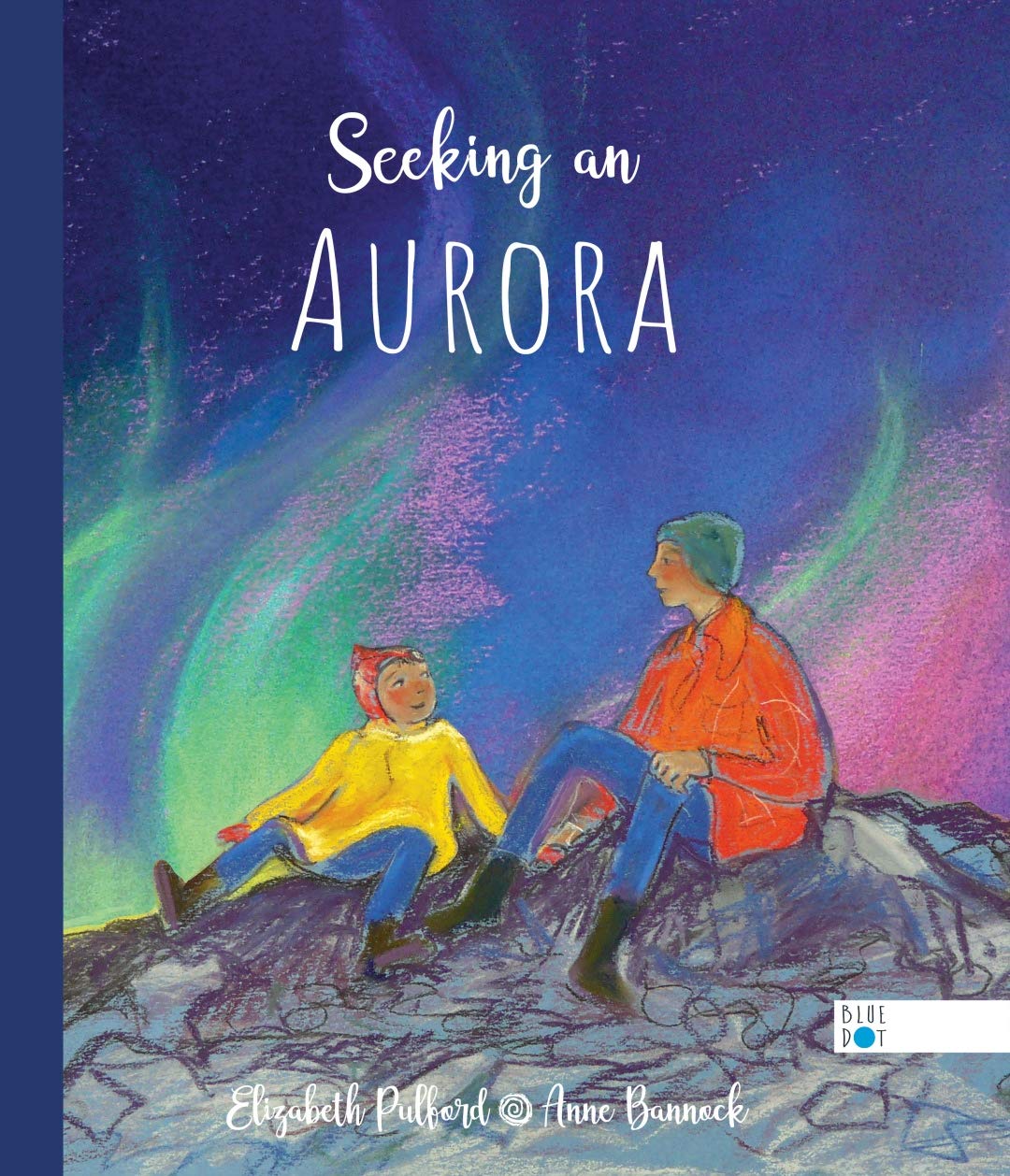
Summary:  A father wakes his child in the middle of the night.  “We’re off to find an aurora.”  They go out into a cold, snowy night.  The child is full of questions: is it scary? Are stars in the aurora? The moon?  Finally, they reach the top of a high hill, and the colors of the aurora explode all around them.  Neither speaks, but on the walk back home, Dad tells all he knows about auroras.  Includes a note entitled “Everything Dad Knew About the Aurora”.  32 pages; ages 3-8.

Pros:  This beautiful book, originally published in New Zealand, captures the feel of being out on a winter’s night, and the magic of the aurora.  The colors in the illustration are gorgeous, and the information is just right for a young child.

Cons:  Although the final note mentions that auroras occur at the North Pole and South Pole, it doesn’t specify where on Earth they can be seen.  Also, a photo or two and a list of additional resources wouldn’t have been amiss.


The Highest Tribute: Thurgood Marshall’s Life, Leadership, and Legacy by Kekla Magoon, illustrated by Laura Freeman

Published by Quill Tree Books

Image result for highest tribute thurgood amazon
Image result for highest tribute thurgood laura freeman

Summary:  When Thoroughgood Marshall was in second grade, he decided to change his name to Thurgood.  Growing up in Baltimore, he saw plenty of other things he wanted to change in his segregated city.  After attending college and law school, Thurgood worked for the NAACP, where he argued several cases before the Supreme Court, including Brown v. Board of Education of Topeka.  In 1967, President Lyndon Johnson nominated Marshall to the Supreme Court, where he became the first Black justice.  Includes a timeline; additional information on Thurgood Marshall’s major court cases; a list for further reading; and a bibliography.  40 pages; grades 2-5.

Pros:  It’s a tossup as to which Thurgood Marshall picture book biography I would choose…this or the Jonah Winter/Bryan Collier collaboration Thurgood (2019).  This one packs a lot of information into 40 pages and has excellent back matter, probably giving it an edge as a book for research.

Cons:  Most reviews recommend this for readers as young as 4 or 5.  If you want to try it out in a kindergarten class, more power to you, but I think it would have greater interest and impact with older kids.

Zonia’s Rain Forest by Juana Martinez-Neal (released March 30)

Published by Candlewick

Zonia's Rain Forest: Martinez-Neal, Juana, Martinez-Neal, Juana:  9781536208450: Amazon.com: Books

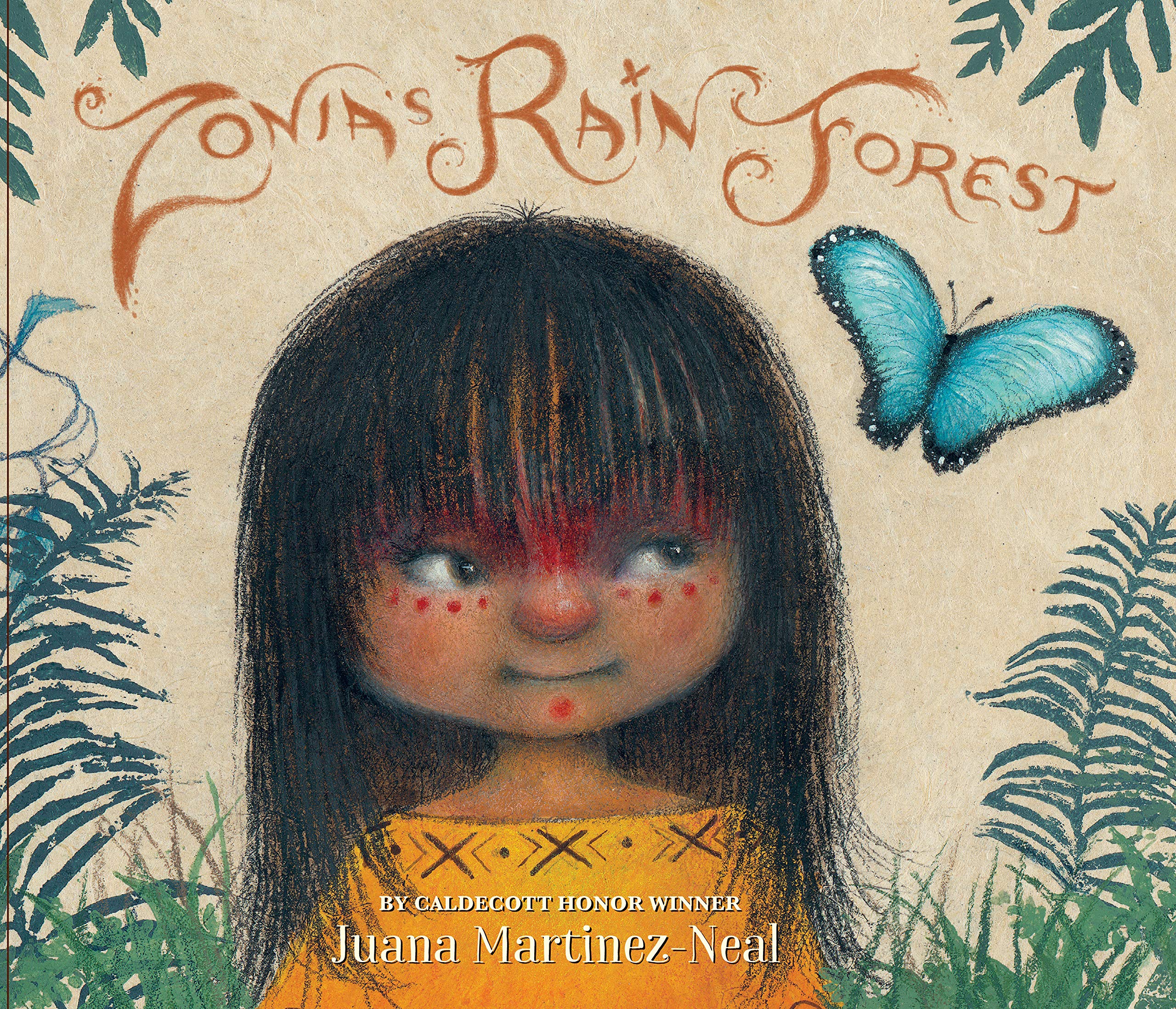
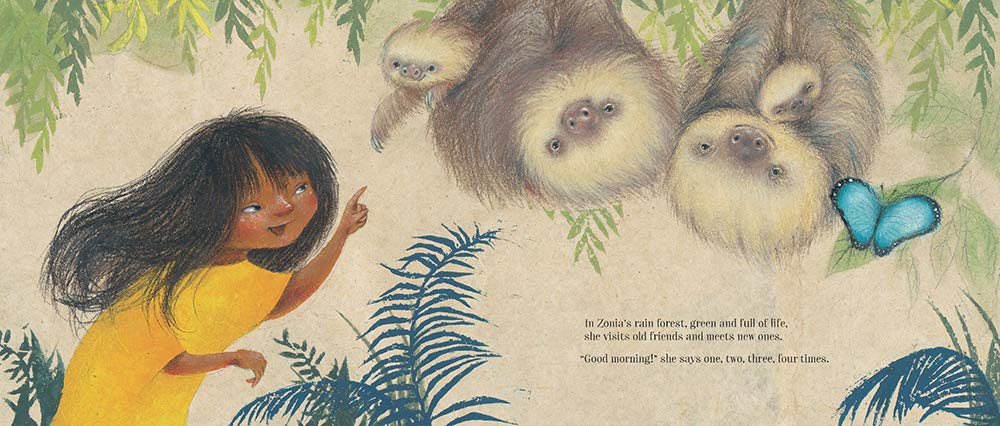
Summary:  “Every morning the rain forest calls to Zonia.”  Off she goes with her animal friends: playing hide-and-seek, running races, and lying quiet and still.  After a day with the animals, she’s ready to return to her parents and baby brother.  On the way home, though, she stumbles upon something she’s never seen before: the severed stumps of trees that have been cut down.  She tells her mother that the forest needs help, and her mother says it is calling to her.  “‘Then I will answer,’ says Zonia, ‘as I always do.’”  Includes additional information about the Asháninka, the largest indigenous group living in the Peruvian rain forest; a few facts about the Amazon; threats to the Amazon; and Zonia’s animal friends in order of appearance.  Spanish version also available: La Selva de Zonia. 40 pages; ages 4-8.

Pros:  This is sure to be a hit with any child who loves animals.  Zonia’s life in the rain forest looks like a lot of fun, and the animals are beautifully rendered.  The environmental message is delivered delicately, then reinforced with the excellent back matter.  Another Caldecott contender!

Cons:  I hate to mention it with all the excellent back matter, but I would have liked to have seen a map.

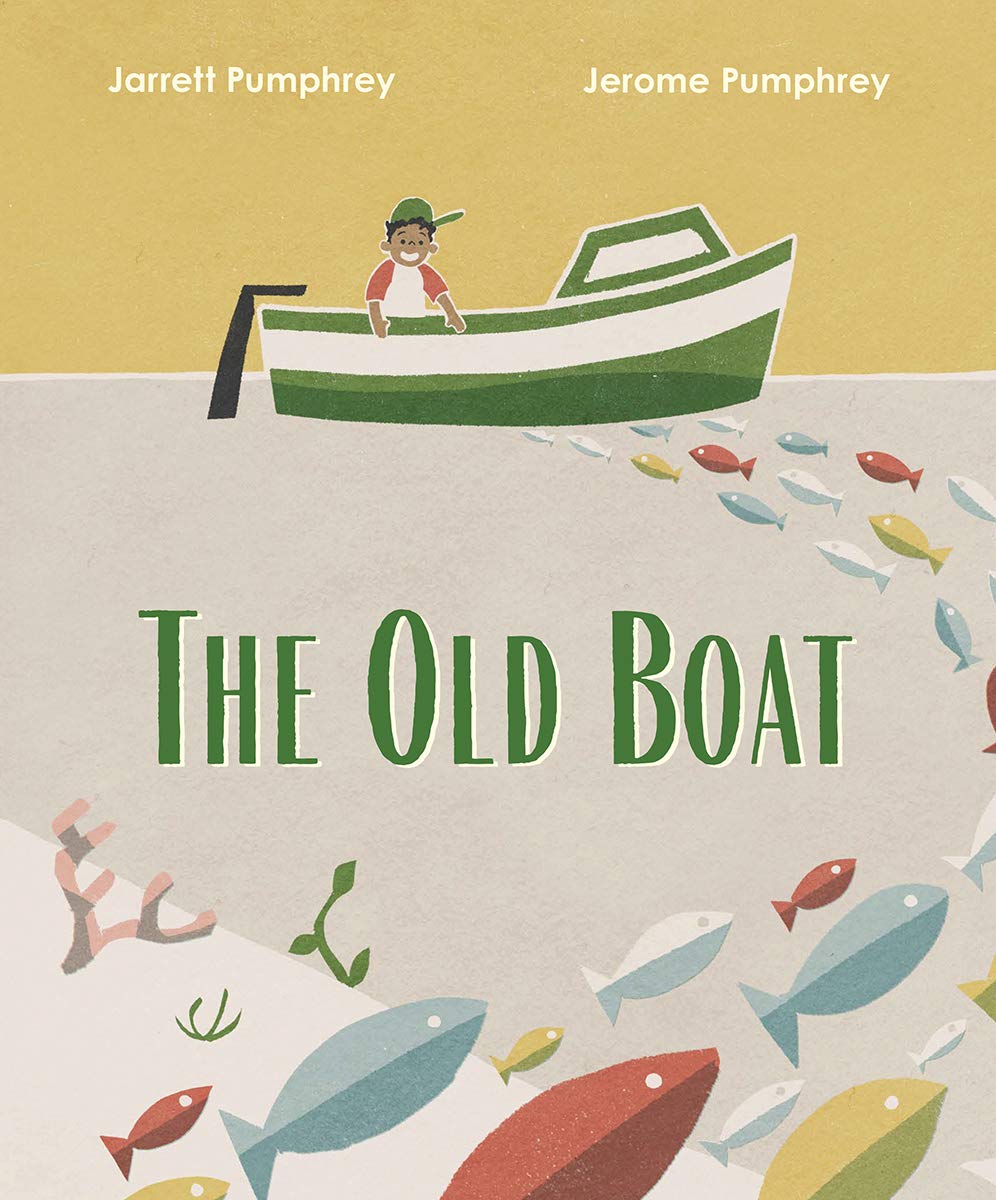
The Old Boat by Jarrett Pumphrey and Jerome Pumphrey (released March 2)

Published by Norton Young Readers

The Old Boat: Pumphrey, Jarrett, Pumphrey, Jerome: 9781324005179:  Amazon.com: Books

Summary:  In this follow-up to The Old Truck, the Pumphrey brothers show a boat through its years of service as a fishing vessel.  Initially, a boy and his mother (or grandmother) fish in the waters off the coast of an island; as time passes, the boy grows up.  He now fishes alone, and must go further and further out to sea to find fish as the waters around the island grow increasingly polluted.  After a storm at sea, readers see the boat under the water with a hole in the bottom, and a “new sailor” who turns the tide by cleaning up the island.  As he works with others to restore the beach and ocean, readers can see the old boat underwater, gradually decaying and becoming part of the seascape.  On the final page, an old man stands on the island with a young girl, both of them fishing in the coastal waters.  56 pages; ages 4-9.

Pros:  You had me at “book about an old vehicle by the Pumphrey brothers”.  Like The Old Truck, this tells the story of a family and shows the passage of time through the illustrations, created with similar handcrafted stamps.  There is also a subtly conveyed environmental message.  I was hoping for a Caldecott honor for you, Pumphrey brothers, but do not give up…maybe 2022 will be your year!

Cons:  I found the reference to the “new sailor” a bit confusing.  Was it really a new (different) sailor, or the same old one who became like a new person after a near death experience?  I tend to think the latter, but kids may take it more literally.

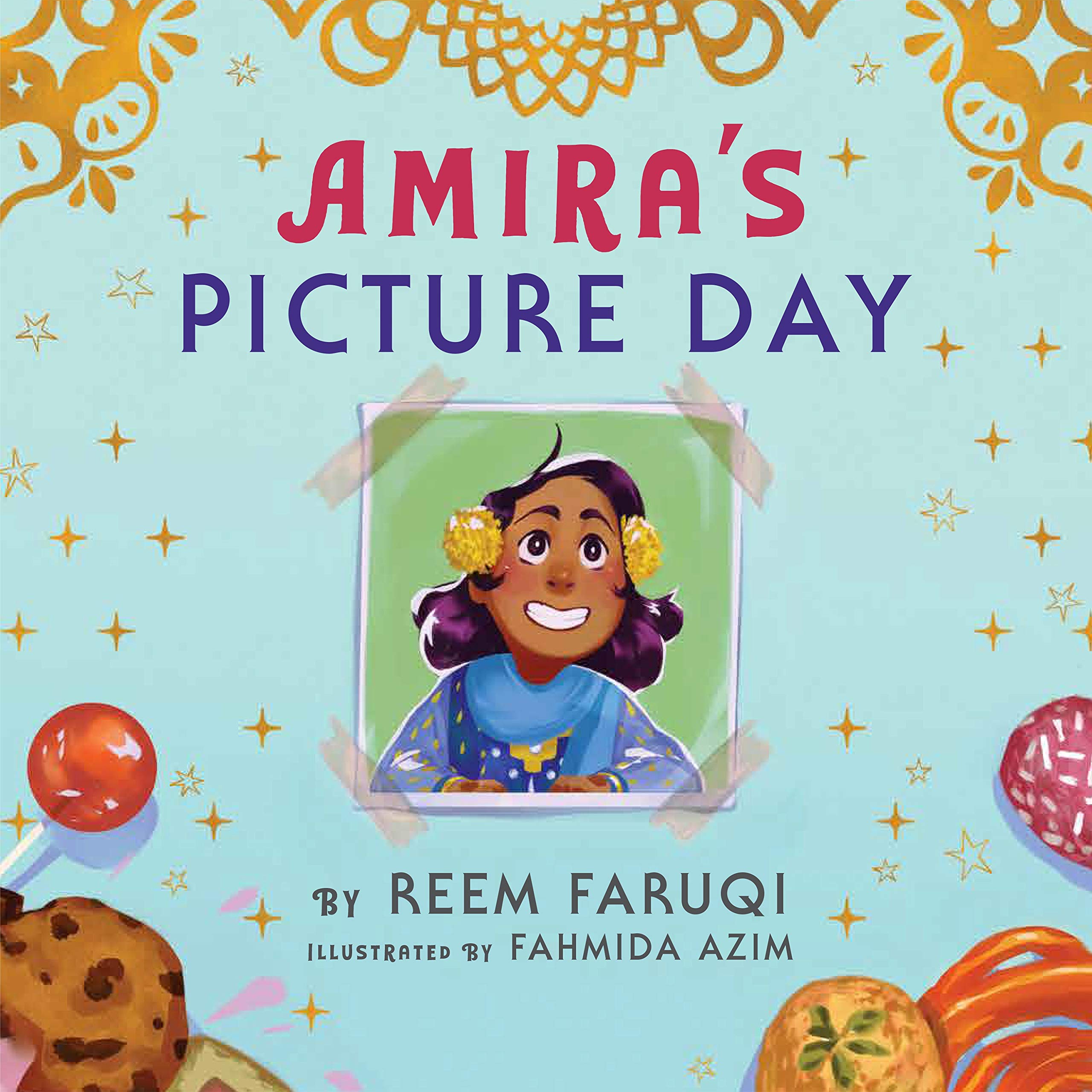
Amira’s Picture Day by Reem Faruqi, illustrated by Fahmida Azim (released April 6)

Published by Holiday House

Amazon.com: Amira's Picture Day (9780823440191): Faruqi, Reem, Azim,  Fahmida: Books

Summary:  Amira is excited when she sees the crescent moon in the sky; Ramadan has ended and Eid is the next day.  There will be a big celebration, and she’ll get to skip school.  But then she remembers that tomorrow is also picture day, and she’ll miss being in the photo with the rest of her class.  Her mother assures her that she’ll take plenty of pictures of Amira at the big celebration, but it’s not quite the same.  The next day, though, Amira dons her shalwar kameez, leaving the pink dress she was going to wear for picture day hanging in the closet.  As predicted, Amira and her family have a wonderful celebration, but on the way home, Amira is feeling sad about having missed picture day.  An abundance of leftover goody bags gives her an idea, and she is able to make it to school in time for the picture and to share some of Eid with her classmates.  Includes an author’s note with additional information about Eid and a glossary.  40 pages; grades K-3.

Pros:  The colorful illustrations and realistic story make a great introduction to Eid for those who don’t celebrate it, and a story that will be relatable for those who do.  

Cons:  The author’s note states that Muslims “do not know the exact date for Eid until they spot the new moon’s crescent”.  This confused me, because I was able to Google the date (the evening of May 12 until the evening of May 13) for 2021.

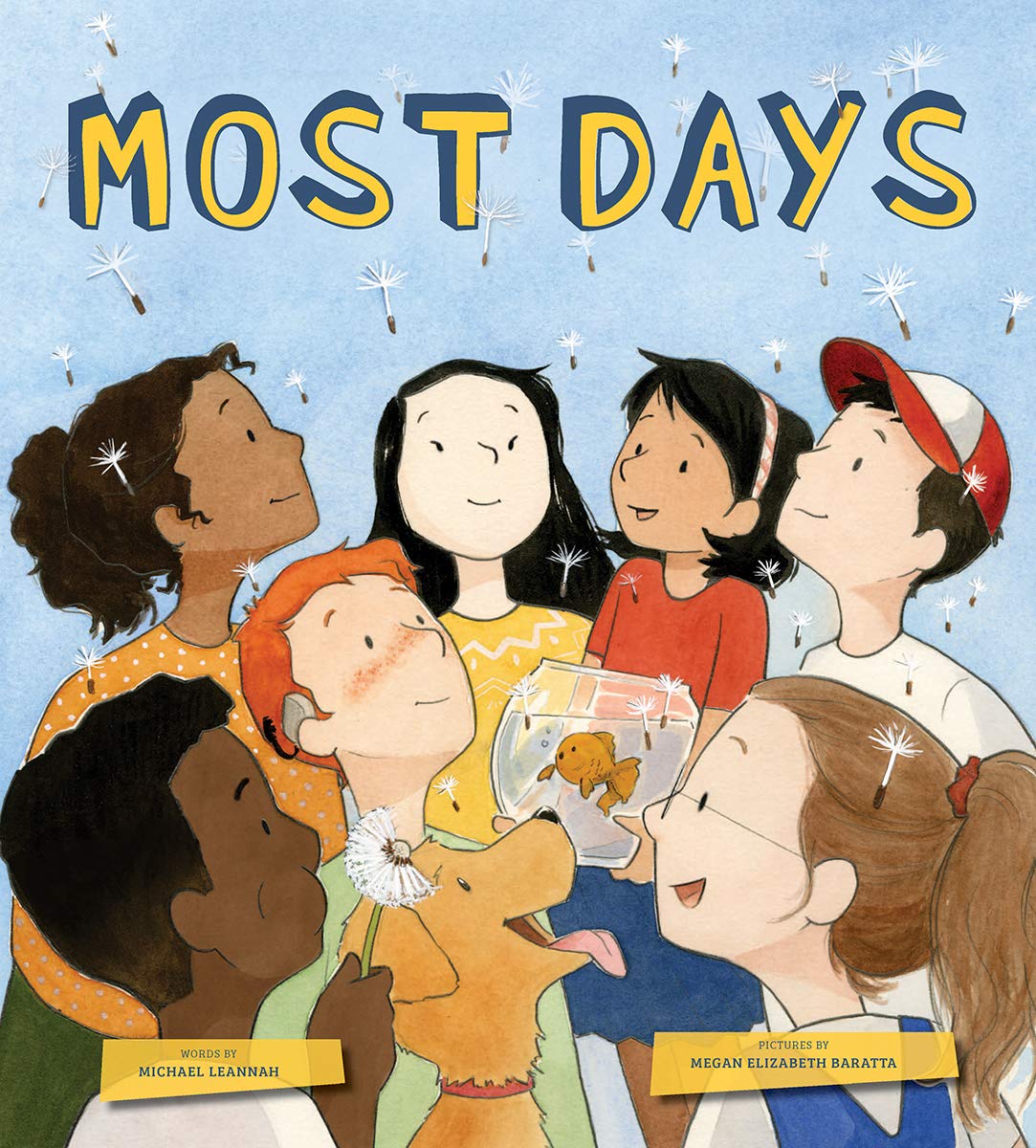
Most Days by Michael Leannah, illustrated by Megan Elizabeth Baratta

Published by Tilbury House

Amazon.com: Most Days (9780884487272): Leannah, Michael, Baratta, Megan  Elizabeth: Books

Summary:  “Most days are ordinary days.”  We get up, brush our teeth, eat breakfast.  But if you stop and look, you will notice changes and wonders all around you.  The plant that had six leaves now has seven.  There’s a new spiderweb, and yesterday’s puddle is gone.  Fill your senses with the sounds of trucks rumbling and a saxophone playing, and the smell of freshly-baked bread.  When you go to bed, the day’s ordinary moments “glimmer in…memory like stars in the night sky.”  32 pages; ages 4-8.

Pros:  A beautiful, lyrical meditation on the wonder of ordinary moments that encourages readers to slow down and be grateful each day.  The appealing illustrations reminded me a bit of Raina Telgemeier’s work.

Cons:  Doesn’t acknowledge the more painful parts that are often also part of an ordinary day.

We Are Still Here! Native American Truths Everyone Should Know by Traci Sorell, illustrated by Frané Lissac (released April 20)

Published by Charlesbridge

Amazon.com: We Are Still Here!: Native American Truths Everyone Should Know  (9781623541927): Sorell, Traci, Lessac, Frane: Books
We Are Still Here! – Charlesbridge

Summary: From the team that brought you We Are Grateful: Otsaliheliga comes this introduction to important terms in Native American history.  A group of kids from the Native Nations Community School puts together a series of presentations for Indigenous People’s Day.  There are a dozen reports on such topics as assimilation, relocation, tribal activism, and language revival.  Each presentation is a paragraph with bullet points that introduce the topic, and each one ends with Native Nations saying, “We are still here!”   Includes additional information on each presentation, including the locale and event shown in each illustration; a 5-page timeline covering 1870-2007; a glossary of terms and a list of sources; and an author’s note giving more information about the book and her personal connection to Native history (she’s a dual citizen of the Cherokee Nation and the United States).  40 pages; grades 2-5.

Pros:  This is an amazing starting place for kids to learn Native American history.  Any one of the topics could be researched further and expanded upon.  The back matter, especially the timeline, really beefs up the historical information.  I love the folk art style illustrations.

Cons:  There are no dates given in any of the reports, so it’s a bit difficult to put the events into historical context without flipping back to the timeline.

The Passover Guest by Susan Kusel, illustrated by Sean Rubin

Published by Neal Porter Books

The Passover Guest: Kusel, Susan, Rubin, Sean: 9780823445622: Amazon.com:  Books
Interrogating the Passover Guest: A Susan Kusel and Sean Rubin Interview -  A Fuse #8 Production

Summary:  Muriel is excited that Passover is approaching, but sobered by the knowledge that there probably won’t be much at her Seder dinner.  It’s 1933, and her father has lost his job.  As she walks home through the streets of Washington, DC, she spies a ragged man performing magic tricks in front of the Lincoln Memorial.  When she gives him the only penny she has, he tells her to hurry home where she’ll find a Seder dinner waiting.  When she gets home, though, the house is as empty as it has been for weeks.  Her parents are trying to decide whose dinner they might be able to share, when there’s a knock on the door.  It’s the man from the Lincoln Memorial, and in an instant a magical dinner has appeared.  Friends and neighbors join Muriel and her family for the meal, which goes far into the night.  Just before midnight, Muriel remembers the wine in Elijah’s cup.  When she looks, she sees that the cup is empty, and she realizes who the mysterious stranger was.  Includes notes from the author and artist and a note on the Passover holiday.  40 pages; ages 4-9.

Pros:  Based on a story by I. L. Peretz (also the basis for Uri Shulevitz’s 1973 book The Magician), this story blends magic with a real time and place (Washington, D.C. in the Great Depression), offering hope in difficult times.  The illustrations, based on Marc Chagall’s art, do an excellent job with the magic realism as well.  

Cons:  The magician is a little creepy looking in a scary clown kind of way.