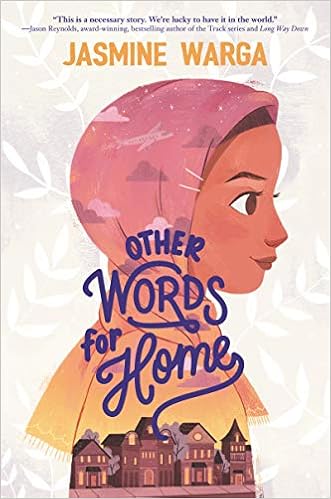
Other Words for Home by Jasmine Warga

Published by Balzer + Bray

Image result for other words for home amazon

Summary:  Jude worries about the changes going on in her Syrian town: the tourist business has almost completely stopped, and her college-age brother is increasingly involved in protests that could get him arrested or worse.  When her mother tells Jude that she’s expecting a baby, she also reveals that the two of them are moving to Jude’s uncle’s house in Cincinnati, Ohio. In America, Jude finds both good and bad. She likes her ELL classmates and bravely decides to try out for her middle school’s production of Beauty and the Beast.  But she also must deal with a cousin who’s not thrilled to have to share her home and with racism when she starts wearing hijab.  Concern for her brother and her best friend, both of whom go missing after she gets to the U.S., and for her father, whose fate in Syria is uncertain, color Jude’s days.  Seeing her mother’s courage and resilience inspires her, and new friends help her to move toward a hopeful future by the end of the book. Includes an author’s note with websites to visit for more information about Syria and Syrian refugees.  352 pages; grades 4-7.

Pros:  The poetic language of this novel in verse is both beautiful and accessible, and American readers will get a greater understanding of what life for immigrants and refugees is like.  I would certainly not be unhappy to see this on the Newbery or other award list next January.

Cons:  The future still seems pretty uncertain for Jude and her family.

If you would like to buy this book on Amazon, click here.

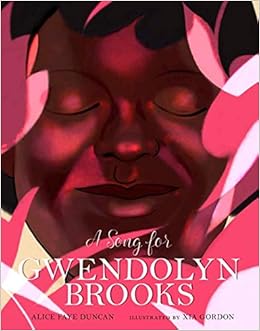
A Song for Gwendolyn Brooks by Alice Faye Duncan, illustrated by Xia Gordon

Published by Sterling Children’s Books

Image result for song for gwendolyn brooks

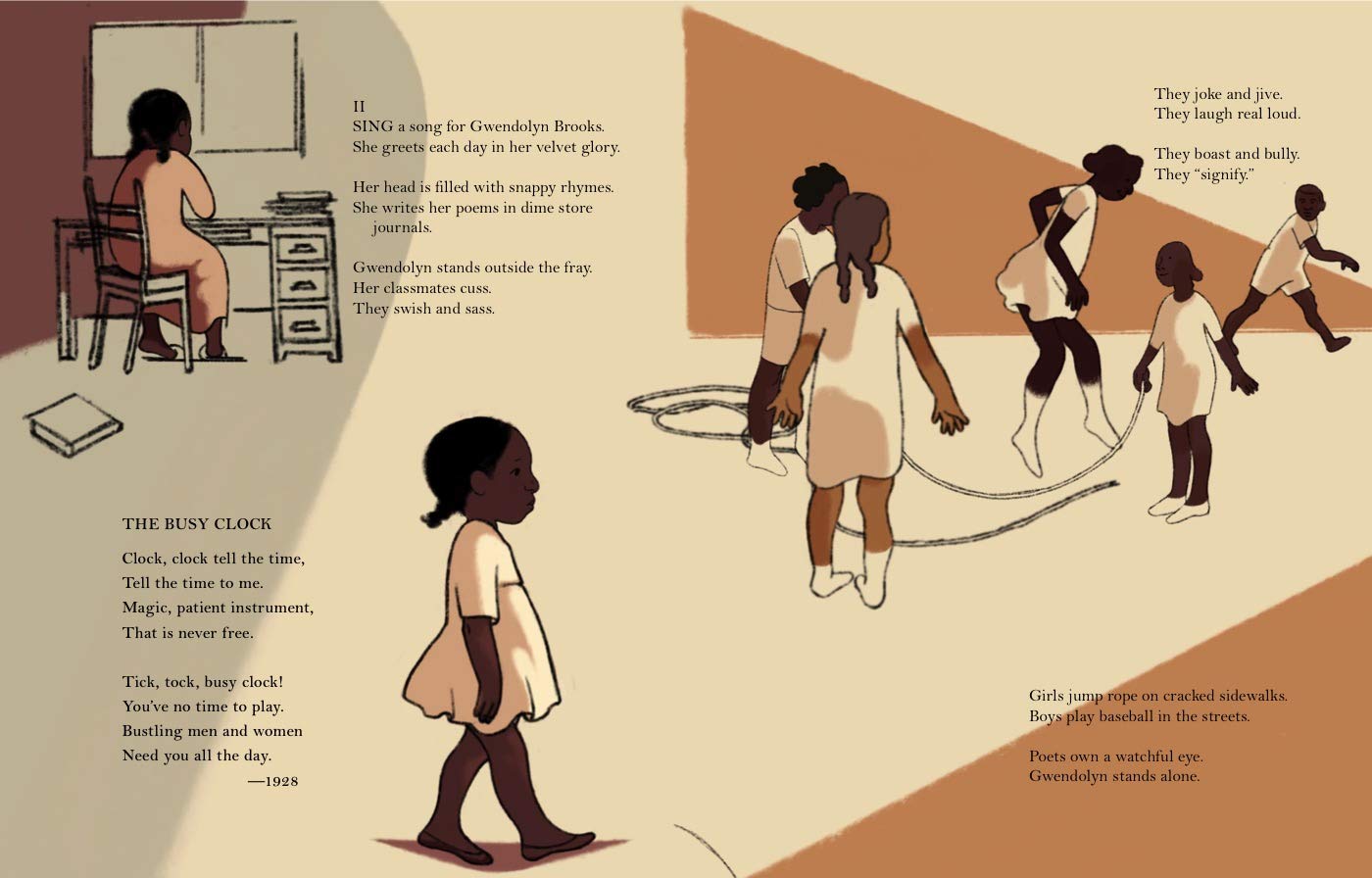
Image result for song for gwendolyn brooks

Summary:  From an early age, Gwendolyn loved words and poetry.  Fortunately, her parents were supportive of her interests and allowed her to opt out of chores if they knew she was working on a poem  When a teacher accused her daughter of plagiarism, Gwendolyn’s mother marched to the school and had Gwendolyn write a poem on the spot to prove her talent.  As an adult living on the South Side of Chicago, Brooks didn’t let marriage and family stop her from writing, and in 1950 she won a Pulitzer Prize for her poetry collection Annie Allen.  Includes an author’s note with additional information about Gwendolyn Brooks; a timeline; a list of some of her poetry books; and a bibliography.  48 pages; grades 2-6.

Pros:  Although this beautifully illustrated book is suggested for elementary ages, it would also make an excellent text to use in a middle school introduction to poetry.  Brooks’ poems are sprinkled throughout the story, and older kids might resonate with the poet’s more introverted nature.

Cons:  The fonts used for the main text and the poems were so similar, it was sometimes difficult to distinguish the difference between the two.

If you would like to buy this book on Amazon, click here.

Trees by Verlie Hutchens, illustrated by Jing Jing Tson

Published by Beach Lane Books

Image result for trees verlie

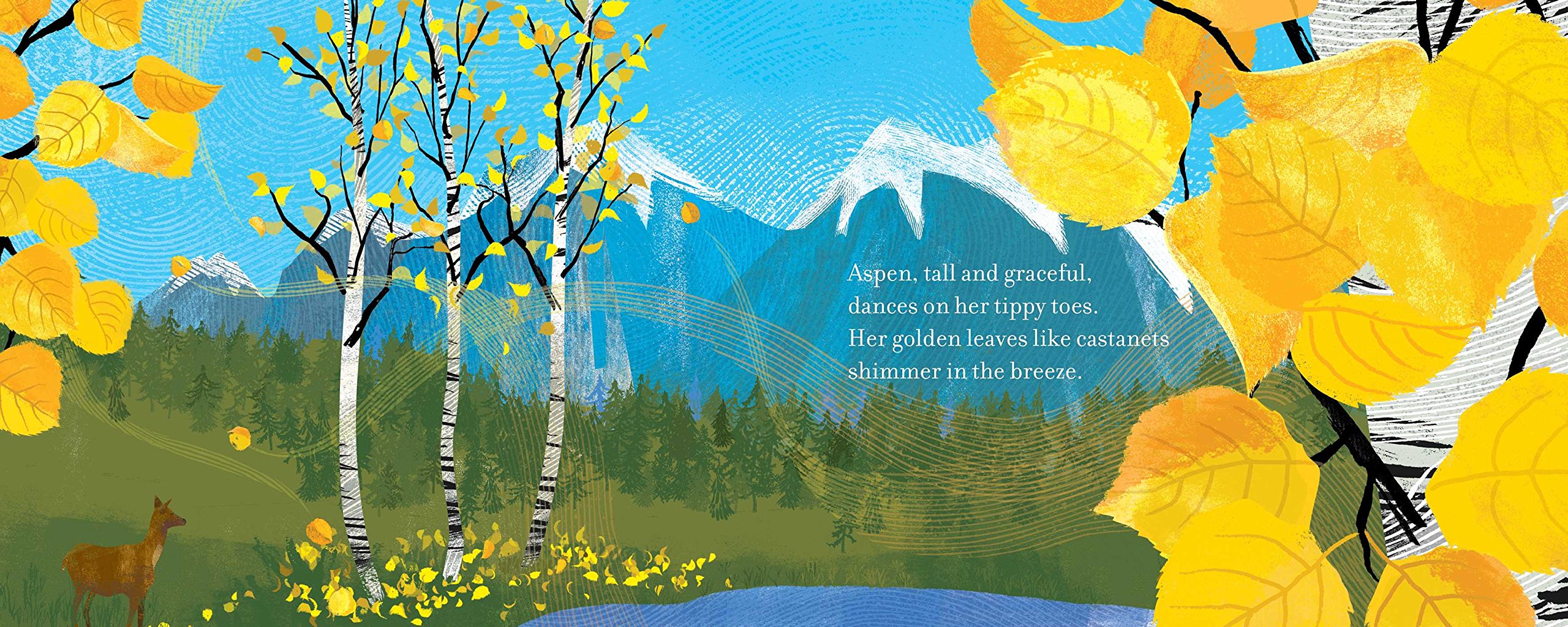
Image result for trees verlie jing

Summary:  Fourteen different trees are profiled, each one getting a brief free-verse poem and a two-page illustration.  Some of the taller trees’ pages require turning the book 45 degrees, as the tree stretches from roots on the left-hand side to the treetop on the right.  The trees are personified, often being assigned a gender, and sometimes compared to a human (a sycamore is a “fashion queen” and the white pine, an “unruly uncle”).  Other trees include maple, aspen, oak, palm, pussy willow, apple, redbud, dogwood, spruce, willow, birch, and sequoia. 40 pages; ages 4-8.

Pros:  Just enough information is given in the brief poems and illustrations to help kids start to identify some of the trees in their neighborhoods.  The short, easy-to-understand verses and familiar subject matter would make this a good introduction to poetry.

Cons:  There were no additional resources to help readers learn more about trees.

If you would like to buy this book on Amazon, click here.

Sweet Dreamers by Isabelle Simler

Published by Eerdmans Books for Young Readers

Image result for sweet dreamers simler

Image result for sweet dreamers simler

Summary:  Twenty eight poems tell how different animals sleep: “Toes clinging to the ceiling/kite-fingers folded like a blanket/the bat dreams upside down/As the day shines, she slips into darkness.”  Each spread has a picture of the animal from a short distance on the page with the poem, and a close-up of the animal on the facing page. There are a few wordless spreads of nighttime landscapes interspersed among the poems.  The last poem is for the reader (or listener): “She clambers onto the whale/straddles the seahorse/clings to the elephant/swoops with the swallow./All night long, cuddling her koala/The child dreams beneath the moon.” 80 pages; ages 4-9.

Pros:  Nothing was lost in the translation of this book from the original French to English.  The poems are brief but expressive, and convey at least a fact or two about each animal.  The big and beautiful illustrations are digitally created, which is hard to believe. They look like scratchboard, with bright bits of color on dark backgrounds, perfect for the subject matter.

Cons:  Some additional information on the animals at the end would have added to the educational value.

If you would like to buy this book on Amazon, click here.

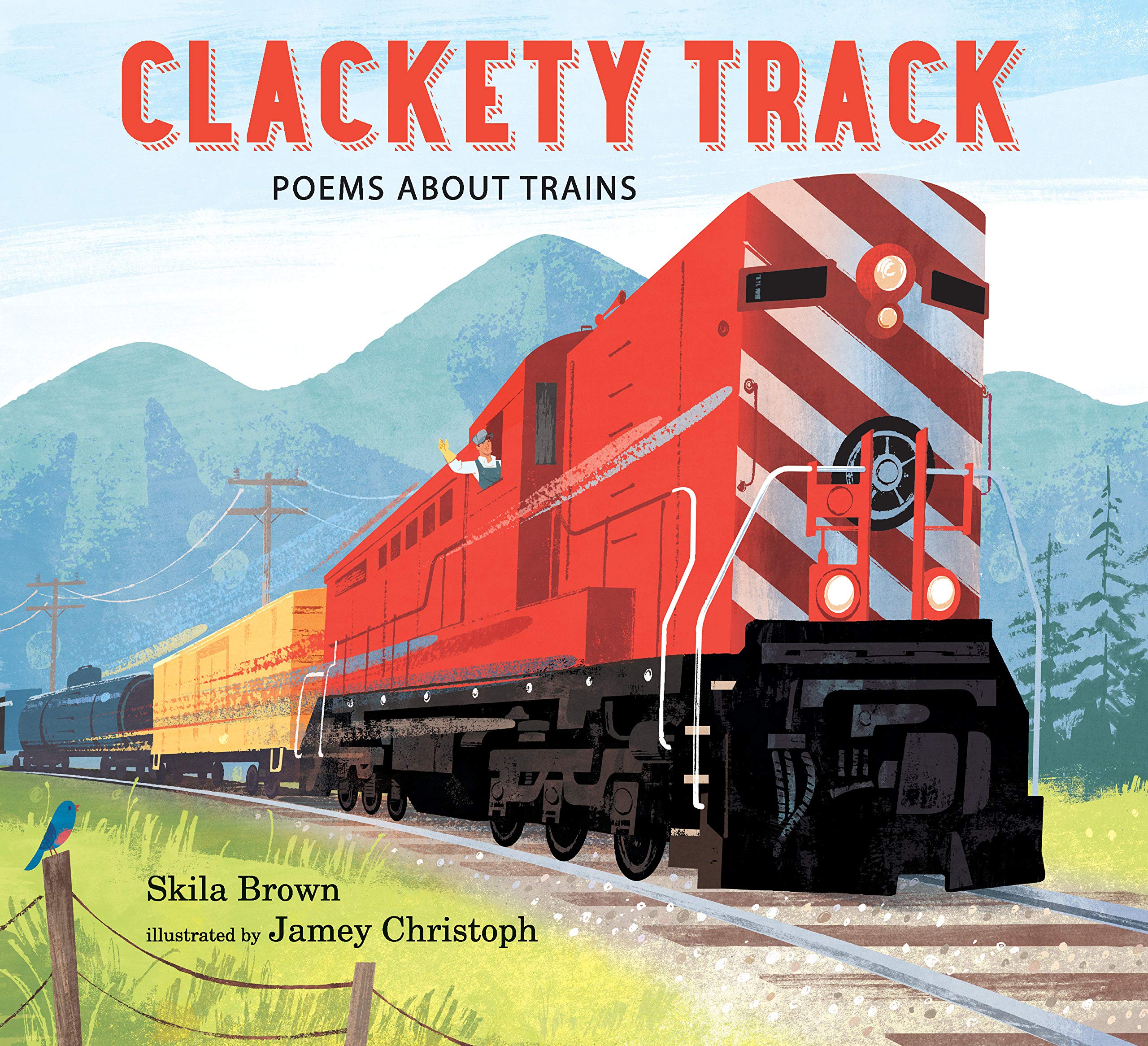
Clackety Track: Poems About Trains by Skila Brown, illustrated by Jamey Christoph

Published by Candlewick

Image result for clackety track poems amazon

Image result for clackety track poems amazon

Summary:  Thirteen poems take the reader from “Morning in the Yard” to “Sleeper Train”.  The poems take different forms, including a few concrete ones like “Tracks” in the shape of railroad tracks, and “Shoulder Ballast Cleaner” with the words interwoven in the illustration.  Each poem gets its own two-page spread, complete with a vivid, colorful illustration. Includes a dozen facts about trains, shown on railroad cars on the final two pages. 32 pages; grades K-3.

Pros:  The simple poems and bright, colorful illustrations make this an excellent introduction to poetry for primary grades; the subject is sure to be popular as well.

Cons:  I liked how Skila Brown included shark facts on every page of her book of shark poems, Slickety Quick, and wish she had done that with facts about the different trains here.

If you would like to buy this book on Amazon, click here.

The Proper Way to Meet a Hedgehog and Other How-To Poems selected by Paul B. Janeczko, illustrated by Richard Jones

Published by Candlewick

Image result for proper way to meet a hedgehog amazon

Image result for proper way to meet a hedgehog richard jones

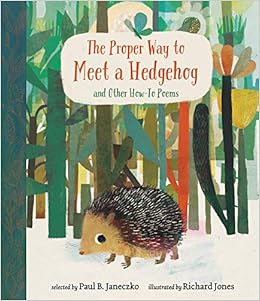
Summary:  Thirty three poems that explain how to do something are collected here.  Starting with “How to Build a Poem” by Charles Ghigna, they cover such diverse topics as “Mix a Pancake” (Christina Rossetti), “How to Tell Goblins from Elves” (Monica Shannon), and “How to be a Tree in Winter” (Irene Latham).  “A Lesson from the Deaf” (Nikki Grimes) beautifully and concisely describes how to sign “Thank you”, with “How to Read Braille (Steven Withrow) appearing on the facing page. Other poets include Marilyn Singer, Kwame Alexander, Robert Louis Stevenson, and many more.  48 pages; grades 1-5.

Pros:  The concrete nature of these poems will broaden their appeal to younger readers, while older kids might be inspired to try writing some of their own.  The somewhat abstract illustrations add nice subtle touches to the poetry.

Cons:  I learned in the process of writing this review that Paul Janeczko passed away on February 19.

If you would like to buy this book on Amazon, click here.


I wrote a book!

Remember the book A Wonderful Year by Nick Bruel?  Me neither.  It was the first book I reviewed on this blog on February 20, 2015, and I don’t think I’ve looked at it since.

Three days later I posted a review for The War That Saved My Life by Kimberly Brubaker Bradley, a book I still book talk many times a year and count among my favorite books of all times.

That’s the way it goes with reading.  Some books are just more memorable than others.

So when I realized that I’ve published almost 1,400 reviews, I decided it was time to do some weeding.  In a week or so, I’m going to take down the reviews from 2015 and 2016.  In preparation for this,  I’ve gone through all the books I’ve written about and picked out the ones I feel have stood the test of time.

I’ve compiled them into a book called Hit the Books: The Best of Kids Book A Day, 2015-2018.  There are about 150 books included; each entry has the summary I wrote on my blog and why it was included on the list.  They’re divided into eight sections: picture books, early readers, early chapter books, middle grade fiction, graphic novels, poetry, biography, and nonfiction.

I also put together ten lists of “Read-Alikes” from the books I’ve reviewed on the blog.  So if you have a fan of Diary of A Wimpy Kid or Raina Telgemeier, you can get some ideas for other books they might want to try.

Let me know if you find this book helpful.  Who knows, I may put together a second edition in another year or two!

If you would like to buy this book on Amazon, click here.

The Undefeated by Kwame Alexander, illustrated by Kadir Nelson

Published by Versify

Image result for undefeated kwame amazon

Image result for undefeated kadir nelson

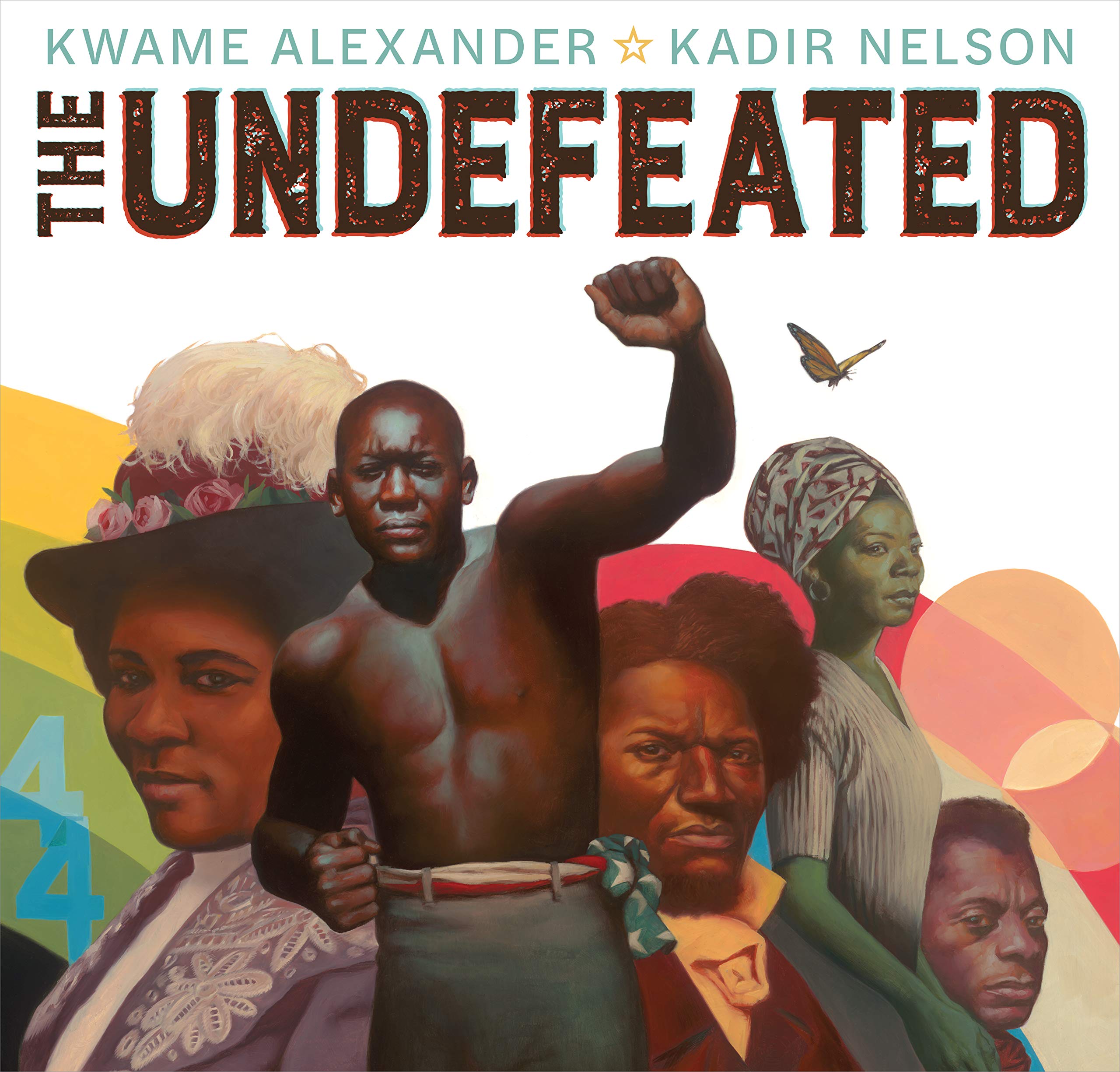
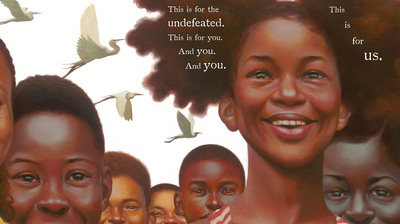
Summary:  “This is for the unforgettable/The swift and sweet ones/who hurdled history/and opened a world of possibility.”  Kwame Alexander’s poem is an ode to African Americans, both the famous and the unknown ones who played important roles in America’s history.  Kadir Nelson’s oil paintings on white backgrounds portray the subjects; a list at the end identifies them and gives more information about each one. Alexander has also written an afterword to tell how he came to write this poem in 2008, the year his second daughter was born and Barack Obama became president.  He concludes in the final line of the poem, “This is for the undefeated./This is for you./And you./And you./This is for us.” 40 pages; grades 1-5.

Pros:  The poem is extremely moving, as well as being an excellent introduction to a chunk of African-American history.  I hope Kadir Nelson’s amazing paintings will be recognized with some kind of an award.

Cons:  In the group pictures, each person is identified, but it’s just a list, so it’s difficult to tell who is who in the painting.

If you would like to buy this book on Amazon, click here.

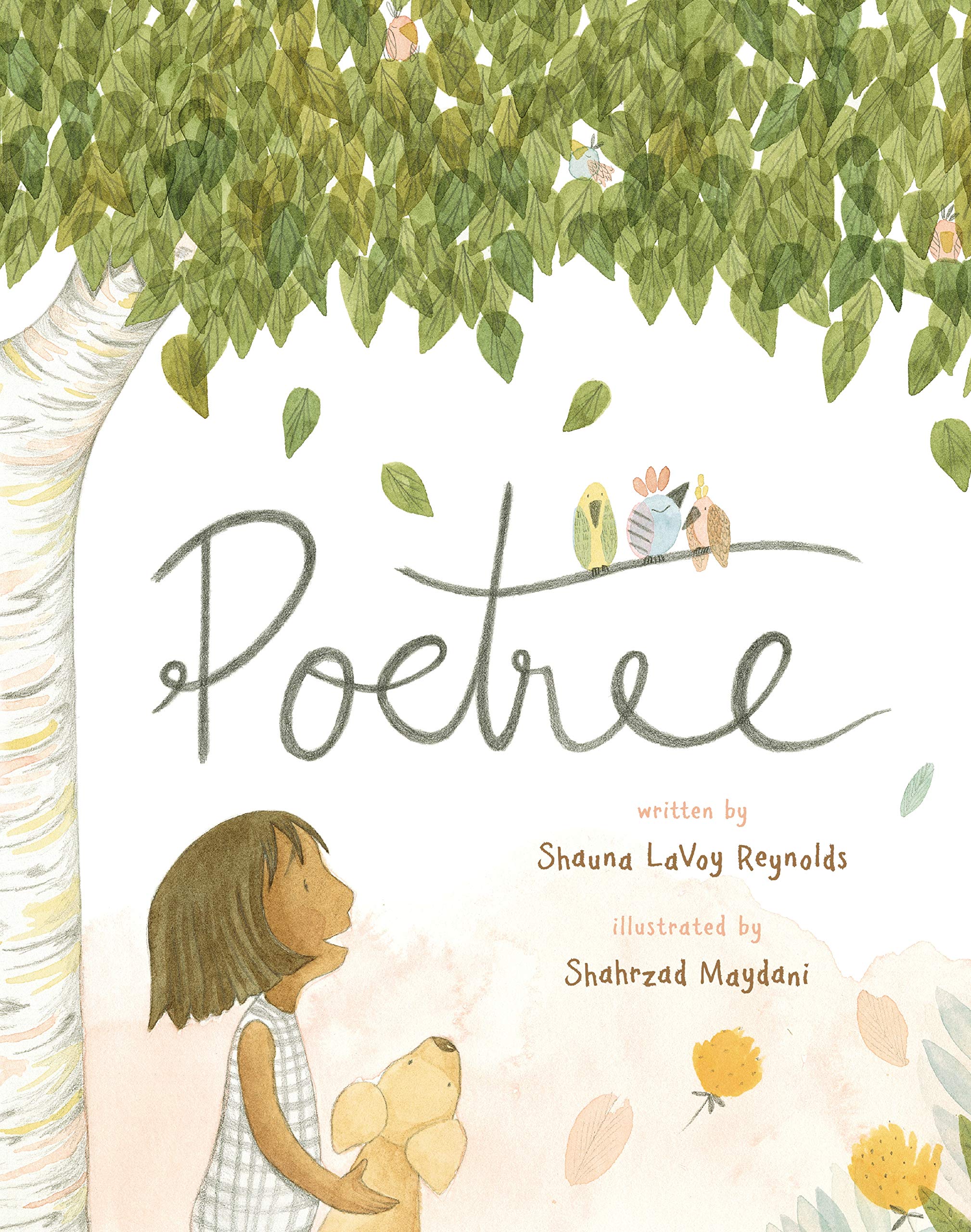
Poetree by Shauna LaVoy Reynolds, illustrated by Shahrzad Maydani

Published by Dial Books for Young Readers

Image result for poetree amazon

Image result for poetree maydani

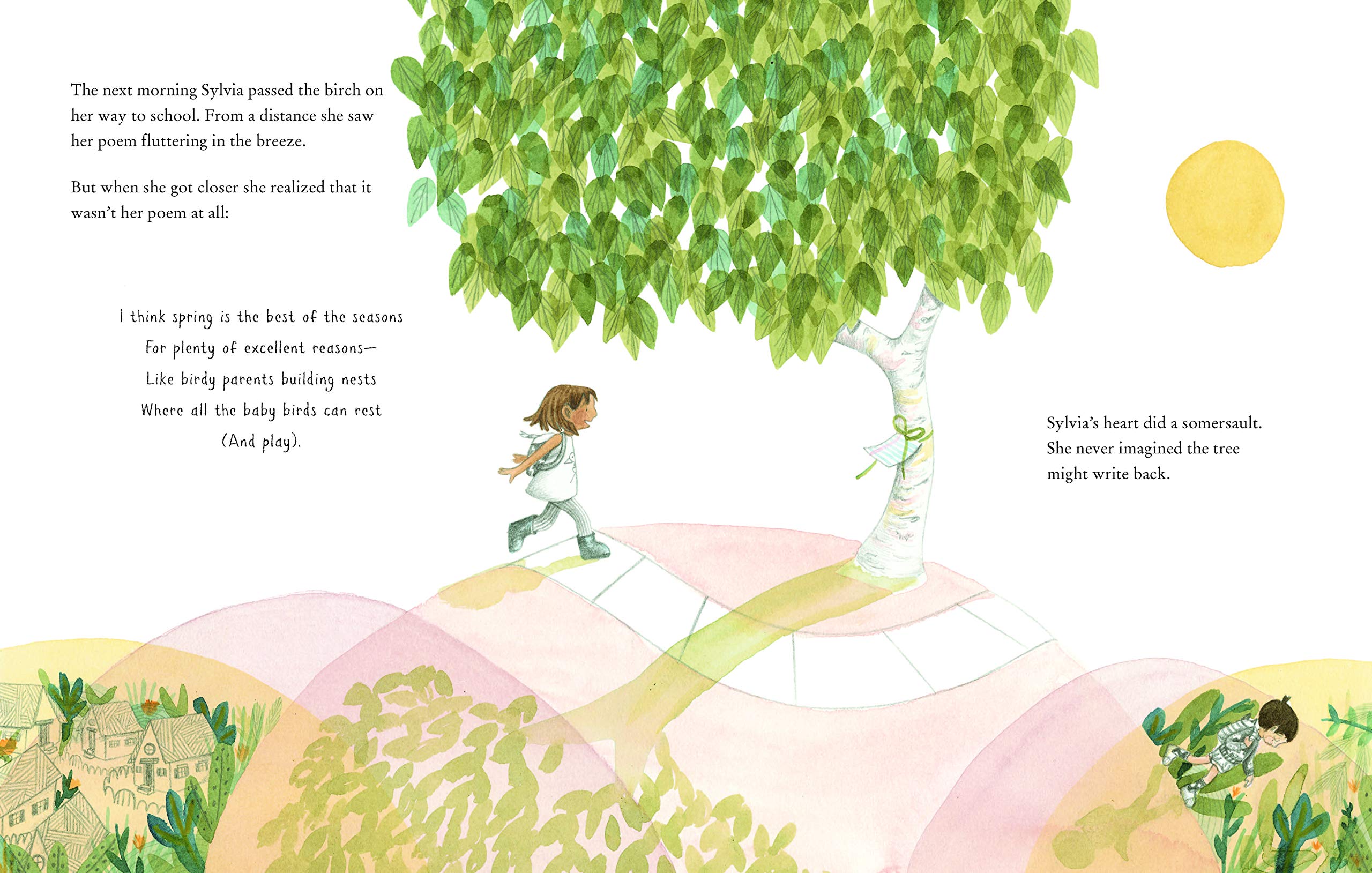
Summary:  When Sylvia celebrates spring by writing a poem, she decides to share it with a birch tree in the park, tying it around the trunk.  The next day, there’s a new poem tied to the tree, and Sylvia can’t believe it–the tree has written back! She thinks about the tree during school, which helps distract her from Walt, the most annoying boy in her class.  The class studies haiku, and Sylvia shares her creation with the tree on the way home. Once again, her efforts are reciprocated the next day. A few days later, on a visit to the tree, who should appear but Walt, who actually starts acting nice.  It turns out it is Walt, not the tree, who is writing the poems. He writes one on the spot to commemorate the beginning of their friendship: “If you want to share a poem with me/Give it to the tall birch tree/Or if you need a friend for writing/Playing with, or sit beside-ing/I’ll be here for you joyfully/Right beneath the Poetree.”  32 pages; ages 4-9.

Pros:  This lovely story of a new friendship would also make a perfect introduction to a poetry unit.

Cons:  Walt seems like a good guy…so why is he so mean at school?

If you would like to buy this book on Amazon, click here.

Bark in the Park: Poems for Dog Lovers by Avery Corman, illustrated by Hyewon Yum

Published by Orchard Books

Image result for bark in the park amazon

Summary:  A girl and her father walk through the city, meeting dogs of many different breeds, such as the Afghan hound: “Although he’s noble and aloof/He’s still a dog, so he still says ‘Woof!’” and the basset hound: “For things she can smell/She’s a comer and goer/She’s much like a Beagle/But longer and lower.”  38 dog breeds are covered in all, with each one getting a two- or four-line rhyme. The book concludes, “So here’s to dogs both big and little/And the others in the middle/And here’s to all the mixed breeds, too/Being friends with a dog is a dream come true.” 48 pages; ages 3-7.

Pros:  Dog lovers are almost sure to find at least one of their favorites in these pages.  The poems are short and sweet (written by the author of Kramer vs. Kramer and Oh, God!, oddly enough), and the unstintingly adorable illustrations make a perfect pairing.

Cons:  Some lines had an extra syllable or two that made them a little less than flowing.

If you would like to buy this book on Amazon, click here.