Rebound by Kwame Alexander

Published by HMH Books for Young Readers

Image result for rebound kwame

Summary:  It’s the summer of 1988, and Chuck Bell is reeling from the death of his father.  His mom decides to send him to his grandparents’ in Washington, D.C. to help them both heal.  Chuck is not excited, and his grandfather’s work ethic doesn’t improve his outlook.  But his cousin Roxie, a star basketball player, starts to get him interested in the game, and before long, he’s leaving his beloved comic books behind to try to be a superhero on the court (there are several comics about Chuck throughout the book).  There’s a hint of romance for Chuck in the letters and phone calls he gets from his friend Crystal back home.  When Chuck’s other friend, Skinny, comes to D.C. for a visit, Chuck finds himself in a difficult situation with a tough older crowd, and eventually ends up in jail for unknowingly possessing marijuana.  That scare puts him on a path that readers of The Crossover will know led to a career in basketball and a love for the game that he will pass down to his sons Josh and Jordan.  416 pages: grades 5-8.

Pros:  Fans of the 2014 Newbery medalist The Crossover will not be disappointed by this novel-in-verse prequel that tells the story of 12-year-old Chuck Bell.  There’s a little fast-forwarding at the end, so readers learn of Chuck’s legacy to his two sons, as well as what happened to some of the characters from 1988.

Cons:  Middle school or elementary?  Fifth graders will definitely enjoy this, but be aware there is the whole arrested for possession scene towards the end of the book.

If you would like to buy this book on Amazon, click here.

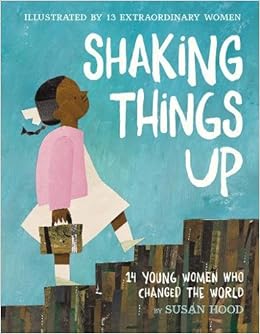
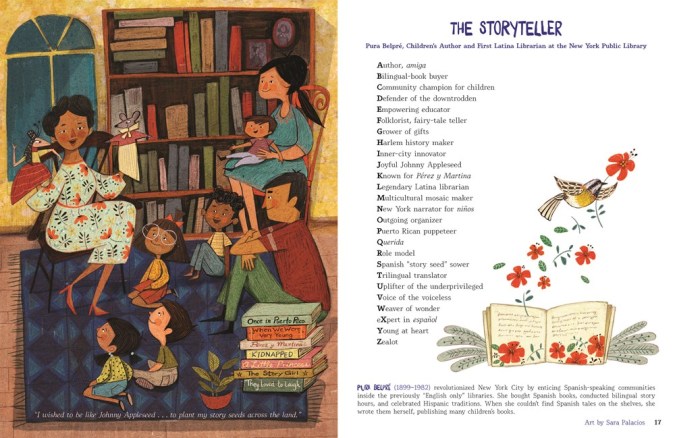
Shaking Things Up: 14 Young Women Who Changed the World by Susan Hood, illustrated by 13 extraordinary women

Published by HarperCollins

Image result for shaking things up hood amazon

Image result for shaking things up hood

Summary:  13 poems honor 14 girls and women (sisters Jacqueline and Eileen Nearne, secret agents during World War II, share a poem), with art for each one from a different children’s book illustrator.  Some of the subjects are better known (Frida Kahlo, Malala Yousafzai) than others (Annette Kellerman, Angela Zhang).  Their fields range from art to science to sports, and each one is in a different form of poetry.  A brief biographical paragraph accompanies each poem, and a timeline at the beginning shows where each woman fits into history, from the early 1780’s to 2014.  Sources and additional resources are listed for each woman at the end.  40 pages; grades K-5.

Pros:  Readers will be inspired to learn more about these girls and women, many of whom were well on their way to success in their teens.  The variety of illustrations celebrates women artists as well.

Cons: I was occasionally frustrated by only having a little information about someone I would have liked to learn about in greater depth.

If you would like to buy this book on Amazon, click here.

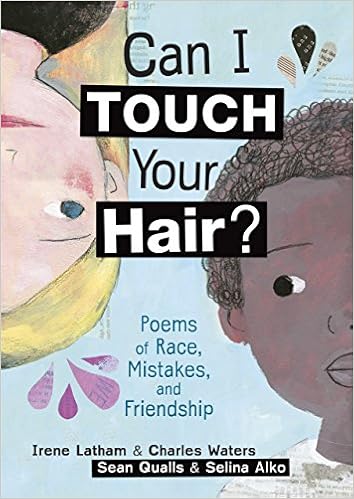
Can I Touch Your Hair? Poems of Race, Mistakes, and Friendship by Irene Latham and Charles Waters, illustrated by Sean Qualls and Selina Alko

Published by Carolrhoda Books

Image result for can i touch your hair qualls amazon

Image result for can i touch your hair latham

Summary:  Charles and Irene (alter egos for the two authors) are forced to work together on a poetry project in their fifth grade classroom.  Both are apprehensive; Charles is black and Irene is white; he is a non-stop talker while she is quiet and shy.  But through their poems, they find some common ground, like arguments with parents, church, reading, and difficulties with other kids in and out of school.  Race is a common theme, from Irene’s struggles with Shonda, a black girl she would like to befriend, to Charles’s bullying by white kids wearing cornrows and dreadlocks (“I’m confused: why do people who want to look like me hate me so much?”).  They bond over an author visit by Nikki Grimes, and by the time the project ends, their teacher is having to shush them (“Irene, I never thought I’d ever say this to you, but you need to be quiet”) when they talk too much during work time.  Authors’ and illustrators’ notes tell more about their collaboration.  40 pages; grades 3-6.

Pros:  Poetry tells the story of two very different children who discover they have more in common than they have ever suspected in this celebration of friendship and the written word.

Cons:  Irene’s father reaches for a paddle when her two younger brothers get in trouble.

If you would like to buy this book on Amazon, click here.

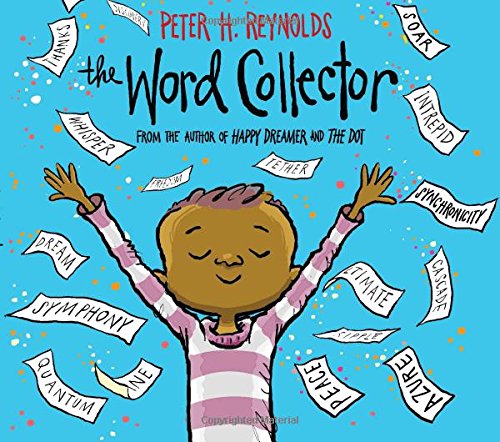
The Word Collector by Peter H. Reynolds

Published by Orchard Books

Image result for word collector reynolds amazon

Image result for word collector reynolds

Summary:  Some people collect stamps or coins, but Jerome collects words.  He loves the sight and sound of them.  His collection consists of scrapbooks, in which his words are arranged by category (“Dreamy”, “Scientific”, “Action”).  One day, though, he slips, and his words go flying.  They’re all mixed together, and Jerome discovers he likes them even better that way.  Putting unlikely words together results in poetry; simple words like “sorry” and “thank you” are surprisingly powerful.  At last, Jerome gathers all his words into one big bag, and scatters them into the wind; then enjoys the sight of children running around gathering up his words.  The final endpapers offer this advice from the author: “Reach for your own words. Tell the world who you are and how you will make it better.”  40 pages; ages 4-8.

Pros:  This could be used in a variety of ways in an ELA curriculum: vocabulary and poetry come to mind, and I’m sure there are others.

Cons:  The final scattering of words seems pretty messy.

If you would like to buy this book on Amazon, click here.


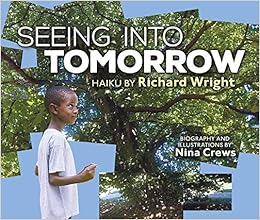
Seeing Into Tomorrow: Haiku by Richard Wright biography and illustrations by Nina Crews

Published by Millbrook Press

Image result for seeing into tomorrow richard wright amazon

Image result for seeing into tomorrow nina crews

Summary:  Twelve haiku poems by Richard Wright are illustrated with collage photographs of African American boys in nature.  Wright’s biography is divided into two parts: an introductory page at the beginning of the book and a more detailed three-page one at the end that concludes with an invitation to the reader to write their own haikus.  The poems are deceptively simple: easy for kids to understand (“So insistently/A crow caws in a spring field/That I want to look”), yet small masterpieces of word artistry. Includes a list for further reading.  32 pages; grades K-5.

Pros:  A perfect introduction to both Richard Wright and the art of haiku, with beautiful photographic collages by Nina Crews (whom I just learned is the daughter of Caldecott illustrators Donald Crews and Ann Jonas), and an age-appropriate introduction to Wright’s life.

Cons:  No photo of Richard Wright.

If you would like to buy this book on Amazon, click here.


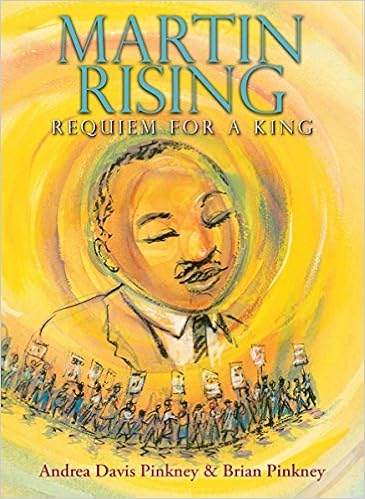
Martin Rising: Requiem for a King by Andrea Davis Pinkney, illustrated by Brian Pinkney

Published by Scholastic Press

Summary:  The Pinkneys relate the story of Martin Luther King, Jr.’s assassination, beginning with a “Henny Penny Prelude”, in which the fairy tale hen tries to warn of the bitter events ahead.  The remaining poems are in three sections: “Daylight”, “Darkness”, and “Dawn”, in which King’s work is described, particularly the sanitation workers’ strike that brought him to Memphis, Tennessee in March and April of 1968.  The assassination occurs part way through “Darkness”, and includes poems about Coretta Scott King, the Kings’ four children, and James Earl Ray.  “Dawn” is made up of just three poems, concluding with “Rejoice the Legacy” which celebrates MLK’s legacy, including the holiday celebrating his birth.  Back matter includes author’s and artist’s reflections, four pages of text describing the events from the poems called “Now Is the Time” (with several photographs), a timeline, and sources.  128 pages; grades 4-8.

Pros:  Both the poetry and the illustrations are majestic and give the reader much to think about.  The author’s note suggests that the poems could be performed with the “Now Is the Time” section as narration and adding poems to the appropriate parts of the story.

Cons:  The Henny Penny motif was a bit confusing to me.

If you would like to buy this book on Amazon, click here.

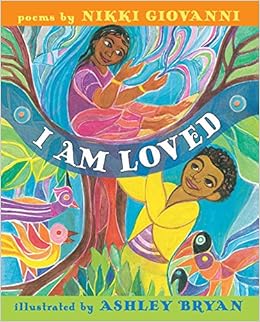
I Am Loved: A Poetry Collection by Nikki Giovanni, illustrations by Ashley Bryan

Published by Atheneum

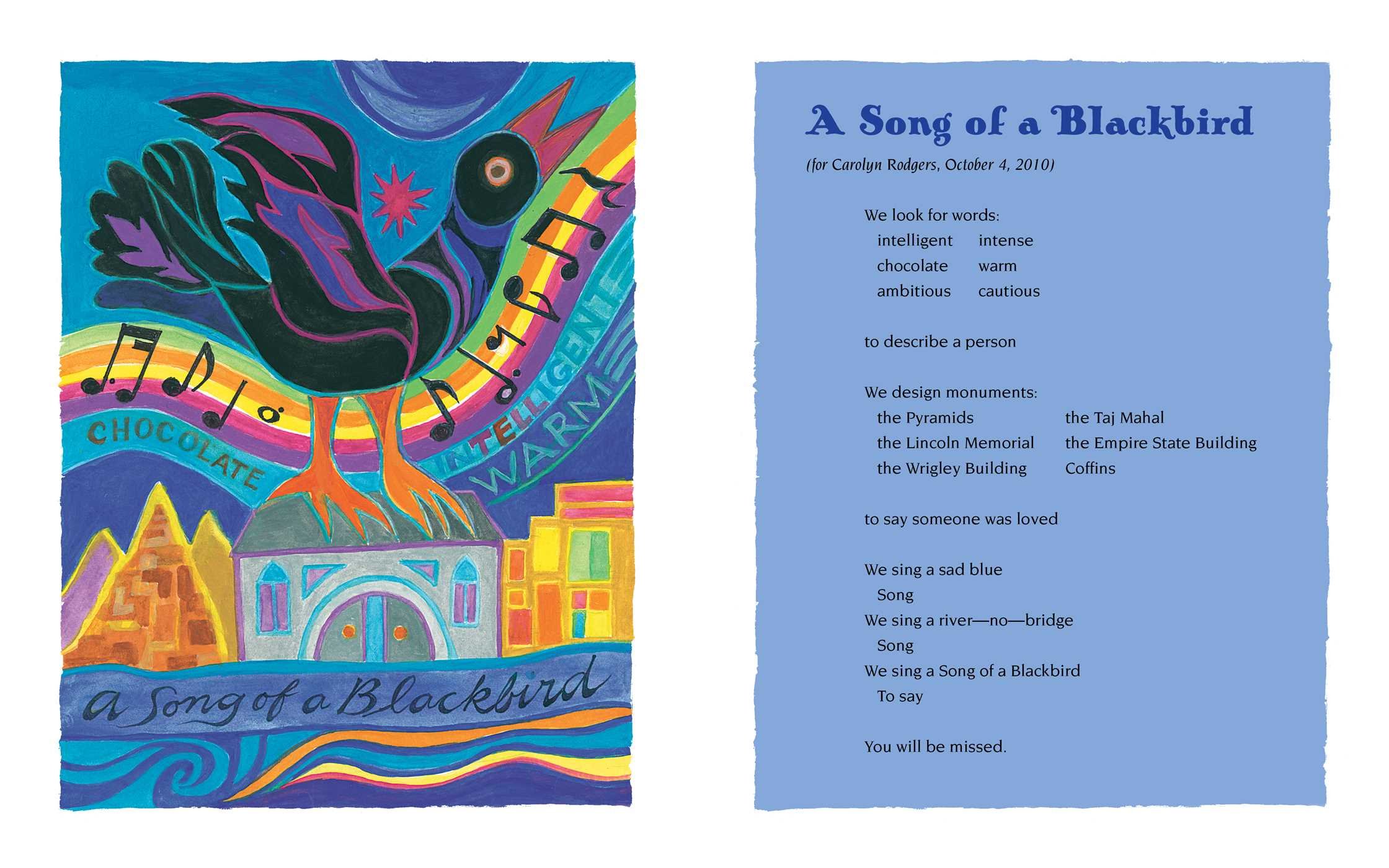
Summary:  In 11 short poems, Nikki Giovanni expresses love, both for the reader and for the simple everyday pleasures surrounding him or her.  Wildflowers, cats, and quilts are all celebrated.  In “No Heaven”, she asks how there can be no heaven when there is so much to appreciate all around.  “A Song of Blackbird” looks at how we describe people and remember them when they’re gone.  “I Am a Mirror” comes with a mylar mirror for the reader to reflect on, and mentions the auction block and middle passage.  The final poem, “Do the Rosa Parks” is a catchy song that encourages readers to sit down with those who are suffering and stand up to injustice.  32 pages; ages 4-8.

Pros:  Award winners Giovanni and Bryan team up for a perfect introduction to poetry for the youngest readers, illustrated in Bryan’s trademark colorful folk-inspired paintings.

Cons:  The mylar mirror may not survive repeated library use.

If you would like to buy this book on Amazon, click here.

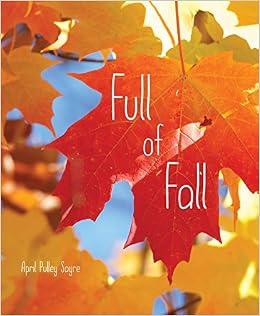
Full of Fall by April Pulley Sayre

Published by Beach Lane Books

Summary:  “September sun is low in the sky/So long summer/Green, goodbye!” So begins this homage to autumn.  Each page has a few lines of poetry, describing the colors as leaves change from green to red and gold to brown.  Large, colorful photographs show the stages in detail, as well as animals often associated with the season, like squirrels and geese.  “Goodbye, leaf show/Winter is coming/Oh, hello, snow!”  The last page provides a perfect transition to check out a similar book by the author, Best in Snow.  Includes two pages that give more scientific information about what is happening on each page of the book.  40 pages; ages 3-8.

Pros:  Another gorgeous book about the seasons from April Pulley Sayre (see also Raindrops Roll).  Combine this with In the Middle of Fall by Kevin Henkes (see my 9/22 review) for a perfect autumn story hour.

Cons:  All that raking.

If you’d like to buy this book on Amazon, click here.

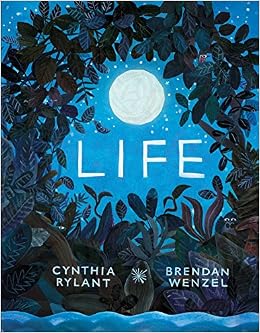
Life by Cynthia Rylant, illustrated by Brendan Wenzel

Published by Beach Lane Books

Summary:  Life begins small and grows.  Ask any animal what it loves about life, and you will get different answers: the hawk loves the sky, the camel loves the sand, the snake loves the grasssss.  Life isn’t always easy, but it is constantly changing.  So if you’re in the wilderness now, it will most likely end eventually.  “And it is worth waking up in the morning to see what might happen.”  48 pages; grades K-3.

Pros:  This lovely book features poetic text by Newbery Medalist Cynthia Rylant, complemented by the gorgeous illustrations of animals all over the world.  This would make a perfect gift for a graduate or someone else moving into a new chapter of life.

Cons:  This may not have instant appeal for young kids; it’s probably best read with adult accompaniment.

Back to School Book List

Tomorrow I take my daughter back to college, Monday and Tuesday are professional development days at my school, and Wednesday the kids return.  This gives me the bittersweet mix of sadness that summer is over and excitement that school is starting again.  If you and/or anyone in your life is going back to school, here are some new books you might want to read.

Back to School With Bigfoot by Samantha Berger and Martha Brockenbrough, illustrated by Dave Pressler.  Published by Arthur A. Levine Books.
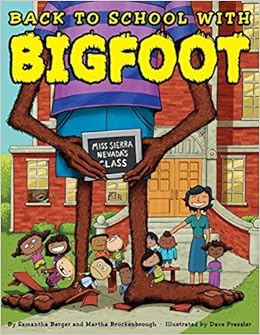
Bigfoot explains why going back to school is extra difficult for him; from back-to-school shopping and haircuts to fitting in at the cafeteria.  He’s ready to quit until he remembers all the fun that’s in store for him in the year ahead.  Perfect for dealing with first day jitters.


A New School Year: Stories in Six Voices by Sally Derby, illustrated by Mika Song.  Published by Charlesbridge.
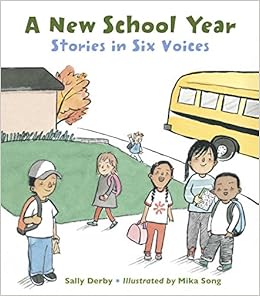
I haven’t had a chance to look at this poetry book yet, but reviews call it a great ice-breaker for teachers and a possible inspiration for kids’ writing.  Six diverse kids from grades K-5 tell their experiences throughout the first day of school in four sections that start with the anxious night before and end after the first day is over.


Twindergarten by Nikki Ehrlich, illustrated by Zoey Abbott.  Published by Harper.
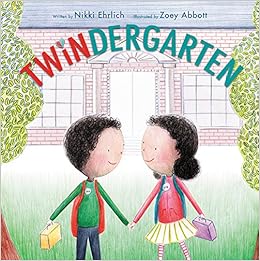
Know any twins who are in different classrooms for the first time?  This book will show them how it’s done, with the reassuring message that it’s possible to thrive on your own while maintaining that twin connection.


I’m Smart! by Kate and Jim McMullan.  Published by Balzer and Bray.
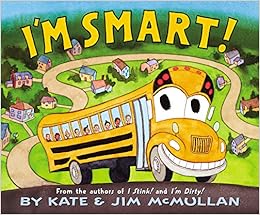
Using their winning formula from I Stink! and its sequels, the McMullans present a cheerful and confident school bus who explains the ins and outs of her job.

How to Get Your Teacher Ready by Jean Reagan, illustrated by Lee Wildish.  Published by Alfred A. Knopf.
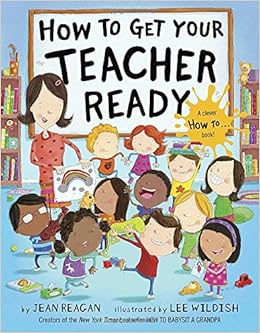
Another one I haven’t read yet, but it’s from the team that brought you How to Babysit a Grandpa and its sequels, so it’s sure to be a fun and rollicking look at the beginning of school, as well as a fine example of procedural writing.


Second Grade Holdout by Audey Vernick, illustrated by Matthew Cordell.  Published by Clarion Books.
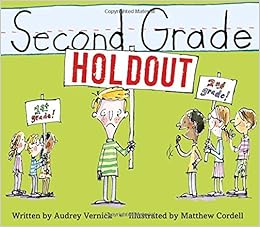
Obnoxious older siblings have the narrator believing that second grade is too much for him to handle.  Sticking with first grade seems a lot easier, but maybe not as much fun…