Two picture books that may inspire a family camping trip

Eclipse by Andy Rash (Scholastic Press, 40 pages, ages 4-8). ”Two months ago, I learned there would be a total solar eclipse,” the narrator begins. ”A month ago, I picked out the perfect place and time to watch the eclipse.” The countdown is on as he orders official eclipse glasses a week before the eclipse, travels with his dad a day before to a campsite near the big event, packs up to go to the perfect viewing site an hour before, and arrives a minute before. ”Now, Dad and I are in the dark.” Following this climactic moment, he and his dad will sit in traffic, finally get home, and savor their memories. 

I learned from reading this book that there’s a total solar eclipse in the United States on April 8! It looks like my school will be at about 90-95% totality, occurring right at dismissal, which could very well spell the end of the world. To prepare, I plan to read this fun and informative book to as many classes as I can. I liked the format of story, placing the eclipse as the central event, with the past and future referenced from the moment of totality. There’s additional information about different types of eclipses at the end, and the endpapers have a map showing annular and total eclipses in the US from now until 2048. I couldn’t see the path the April 8 one will take over Massachusetts, because it was hidden by the taped-down dust jacket.

Climbing the Volcano: A Journey in Haiku by Curtis Manley, illustrated by Jennifer K. Mann (Neal Porter Books, 48 pages, ages 4-8). A boy narrates his family’s adventure to climb South Sister, a dormant volcano in the Cascade Mountains of Oregon, using haiku poetry to tell the story. It’s an all-day hike, up past the tree line, into the snow, and finally to the summit! The descent is easier, and they finish the day back at their campsite for dinner and a well-earned rest. There’s additional information at the end about South Sister, the Cascades, what to bring on a hike, the flora and fauna encountered in the book, and haiku.

I love Jennifer Mann’s illustrations; just like in The Camping Trip, she makes you want to get out in nature. And of course, haiku is all about nature, making it an excellent format for describing the journey. This haiku doesn’t follow the 5-7-5 rule that’s often taught in schools, so read the end material to prepare if you’re reading with kids who know that format. 

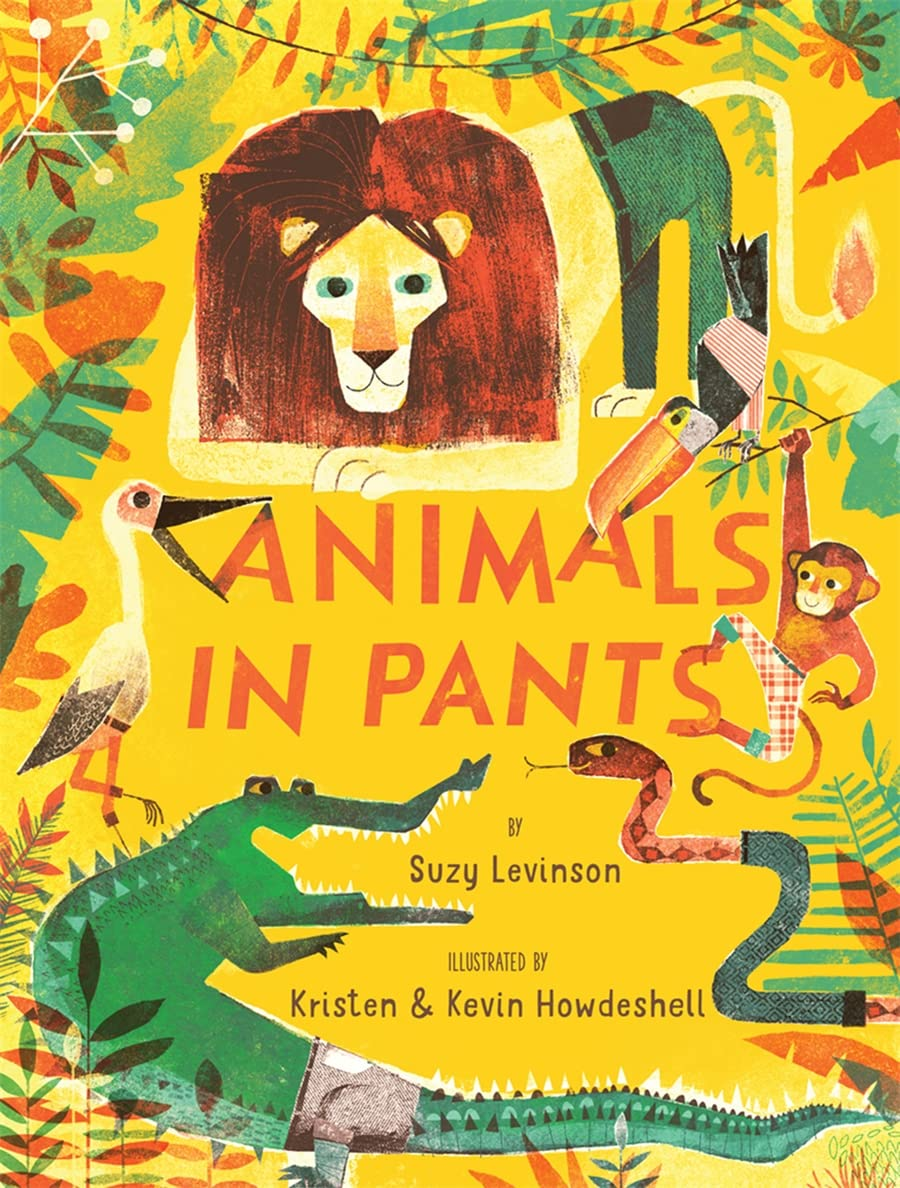
Animals in Pants by Suzy Levinson, illustrated by Kristenand Kevin Howdeshell

Published by Harry N. Abrams

Summary:  “Don’t put a goat in overalls. Really. I mean it. They tend to eat their overalls. Trust me. I’ve seen it.”  Yet the goat and a couple dozen of her friends are rocking their pants, from jeans to lederhosen to slacks (for yaks).  Each poem is just a few lines long, accompanied by humorous illustrations, making this short enough to easily read in a single sitting.  Prepare yourself for the end: “The bad news? The tailor’s incredibly slow. It takes him forever to stitch and to sew. To let out a pant seam, it could be a year. To add a new zipper, the timeline’s unclear. He fusses and frets over each inch of cloth…The good news? He’s fast for a sloth.” 32 pages; ages 4-8.

Pros:  Kids will get a kick out of these animals in their pants with impeccably rhymed poems and fun illustrations.  These took me back to A. A. Milne poems of my early childhood.  A perfect introduction to poetry, and for what it’s worth, this is currently #15 on the Goodreads list of Newbery predictions.

Cons:  I almost missed the child saying, “What? You’ve never seen animals in pants?” on the front endpapers, due to the jacket flap covering up most of her.  The good news is, she’s on the back asking the same question about animals in hats, which bodes well for a sequel.

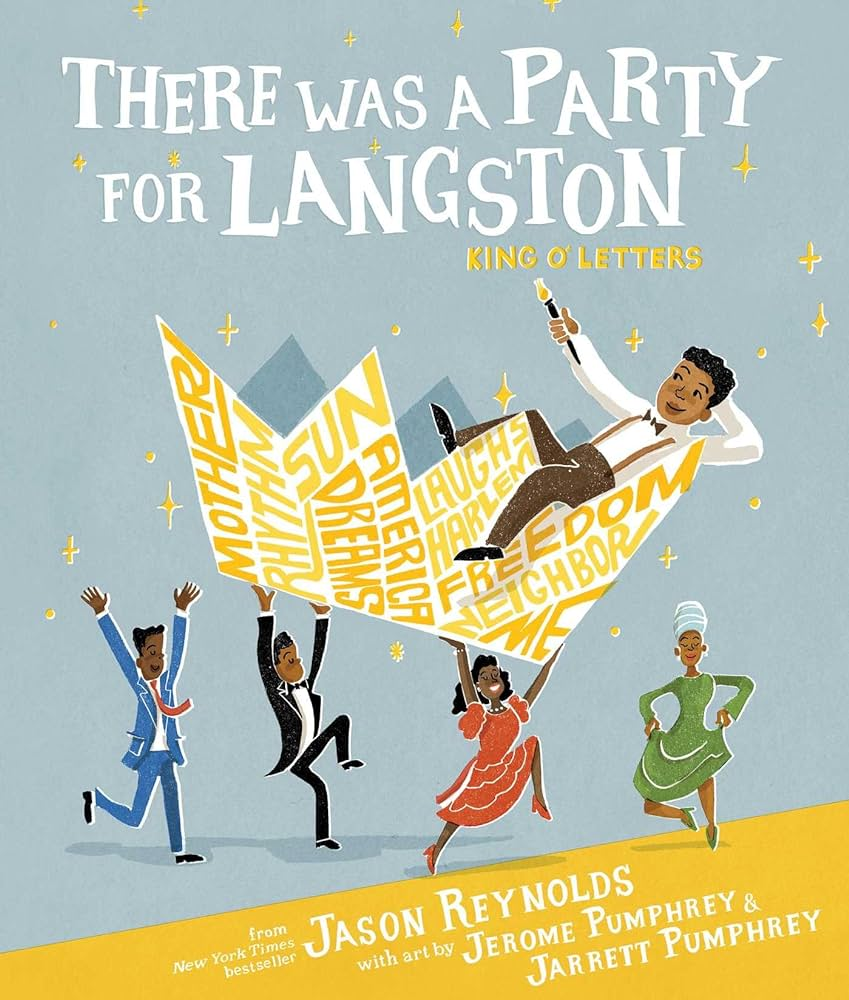
There Was a Party for Langston by Jason Reynolds, illustrated by Jerome Pumphrey and Jarrett Pumphrey

Published by Atheneum/Caitlyn Dlouhy Books

Summary:  When Jason Reynolds saw a photo of two of his favorite poets, Maya Angelou and Amiri Baraka, dancing at a party in honor of his all-time favorite Langston Hughes, he was inspired to write this ode to the three of them and their poetry.  They laughed at those who tried to ban their books or break their words, and those words are woven into the illustrations of the party held at the New York Public Library’s Schomburg Center in 1951.  Other stars of the Black literary world peek out from their books on the library shelves, arranged alphabetically from James Baldwin to Richard Wright.  Includes an author’s note with the photo of Maya Angelou dancing with Amiri Baraka.  56 pages; grades 2-5.

Pros:  One of the most anticipated books of the year, here’s the picture book debut of beloved author Jason Reynolds, illustrated by the inimitable Pumphrey brothers.  Sure to be a Caldecott contender.

Cons:  There were so many allusions in this book to people (like Amiri Baraka) and poems that I didn’t know about.  I wish that the author’s note had been at the front and that there had been a list somewhere of poems referenced in the book.

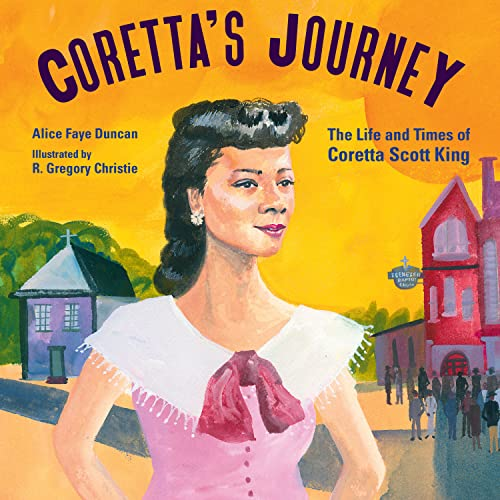
Coretta’s Journey: The Life and Times of Coretta Scott King by Alice Faye Duncan, illustrated by R. Gregory Christie

Published by Calkins Creek

Summary:  With alternating pages of poetry and prose, Alice Faye Duncan tells the story of Coretta Scott King, starting with her childhood in Alabama.  Her parents were determined to give their children an education and worked hard as farmers and small business owners, starting over again when both their home and their lumber mill were burned by segregationists who didn’t want to see them succeed.  Coretta went on to study education at Antioch College, then to Boston to pursue her love of music.  It was there that she met Martin Luther King, Jr.  The two of them found much in common with their passion for justice, and even after they were married with four children, they supported each other’s work.  After Martin’s death, Coretta continued this work, focusing on the establishment of the King Center in Atlanta to teach nonviolence and the campaign to get Martin’s birthday made a national holiday.  Includes a timeline, author’s note, photos, and bibliography.  48 pages; grades 2-5.

Pros:  Duncan writes in the introduction that she chose to tell some of Coretta Scott King’s story in poetry because of Coretta’s love of music and lyrical voice.  It works well, interspersed with the lengthy prose pieces.  There were a lot of rich details about her early life which showed how she got her love of justice and her determination to work for it.

Cons:  Although this has the look of a picture book, the prose pages are so long that this would be difficult to do as a read-aloud.

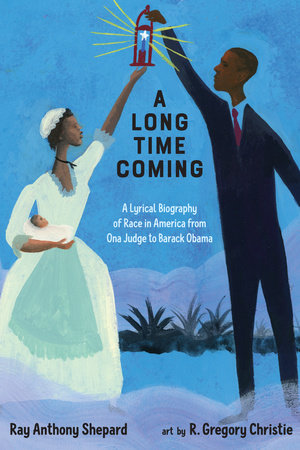
A Long Time Coming: A Lyrical Biography of Race in America from Ona Judge to Barack Obama by Ray Anthony Shepard, illustrated by R. Gregory Christie

Published by Calkins Creek

Summary:  Six Black Americans are profiled in five chapters: Ona Judge, Harriet Tubman and Frederick Douglass together, Ida B. Wells, Martin Luther King, Jr., and Barack Obama.  Their stories are told in verse, weaving together scenes from their lives to paint engaging portraits of their work, their dreams, their discouragements, and their successes and failures.  Each section begins with an illustration and a bit of personal history from the author, connecting his life to his subjects’.  Includes a timeline, additional resources, a bibliography and source notes for each section, and an index.  336 pages; ages 12 and up.

Pros:  Ray Anthony Shepard has written a masterful poetry collection, telling stories that will immediately engage readers.  He doesn’t shy away from telling both the terrible events his subjects witnessed and the less-than-great choices they sometimes made to fully portray their humanity.  Definitely deserving of some serious Coretta Scott King Award recognition.

Cons:  I wish there had been some information on the poetry and poetic forms used.

My Head Has a Bellyache and More Nonsense for Mischievous Kids and Immature Grown-Ups by Chris Harris, illustrated by Andrea Tsurumi

Published by Little, Brown Books for Young Readers

Summary:  A companion to I’m Just No Good at Rhyming, this book of poems begins with “World, Watch Out!” where the narrator is ready to conquer the world…until he trips down the stairs after forgetting to tie his shoes.  The poems cover all kinds of topics like families (“Sometimes Dads Are No Help At All”), holidays (“Valentine Poem for Someone You Don’t Care About”), books (“Help! I’m Trapped in ‘Happily Ever After’!”), and so much more.  Many of the page numbers have fun facts next to them that also form rhymes: “78: one right through twelve added up all the way, 79: a really bad year to have been in Pompeii.”  Includes a glossary of terms (written as a 14-verse poem); somewhat unconventional indexes by title and subject; and a list of books by (and not by) the author and the illustrator.  192 pages; grades 1-5.

Pros:  The back cover cautions that, “extreme laughter while reading this book may give your belly a headache.”  It’s a fair warning, as the book is packed with funny and clever poems and illustrations.  Just the first few pages gave me ideas for sharing with various age groups.  I wouldn’t try to read the whole book at once but to savor it a few pages at a time.

Cons:  I prefer a bit more color variety in illustrations.

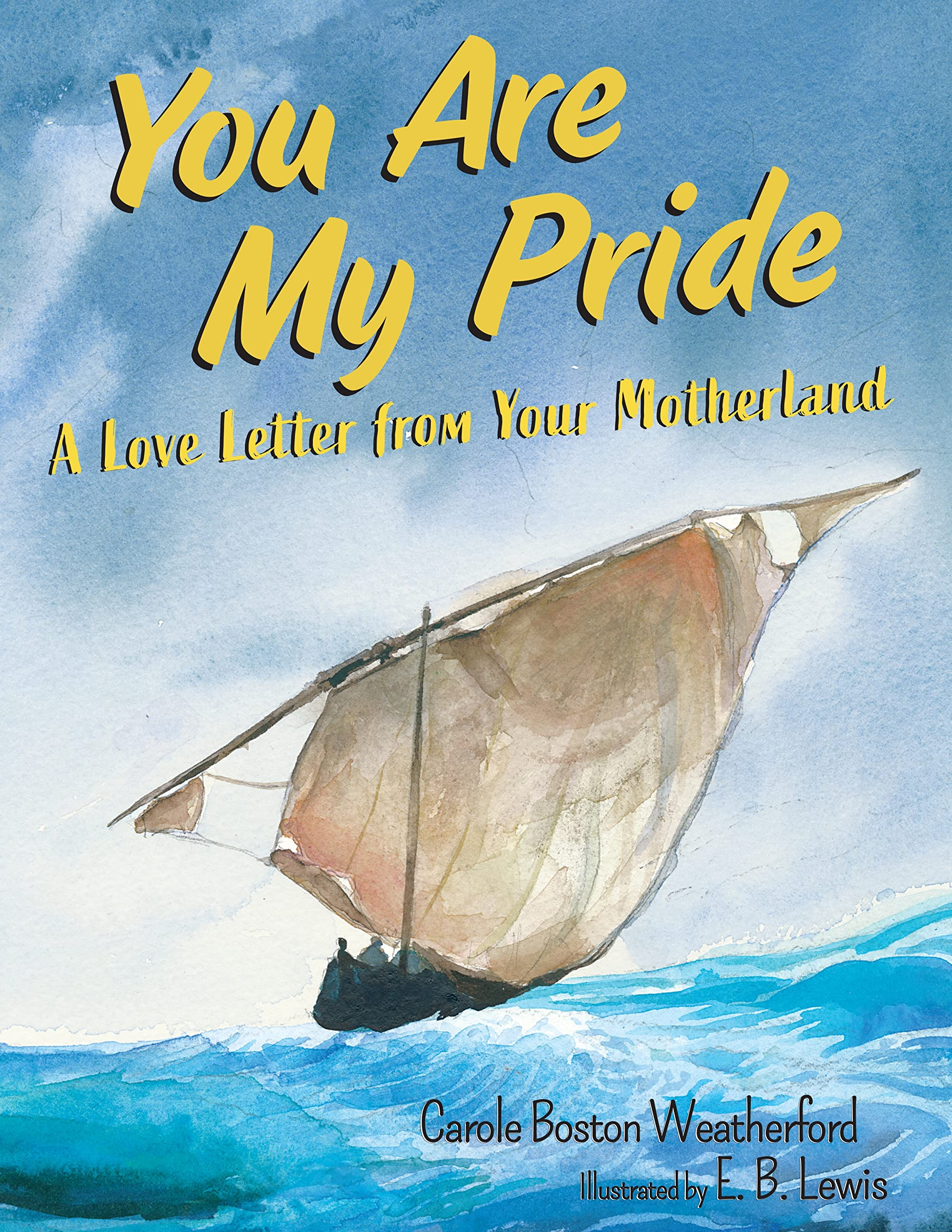
You Are My Pride: A Love Letter from Your Motherland by Carole Boston Weatherford, illustrated by E. B. Lewis

Published by Astra Young Readers

Summary:  “I am the mother of all humanity.  I have a long history and a longer memory,” begins this poem that is addressed to humans from the continent of Africa.  The narrator traces time from the first cells that evolved into the first humans.  “Child, you are mine as much as Mount Kilimanjaro, as much as the Serengiti and the Sahara, as much as the baobab and the bush.”  And although those children are her treasure, she sends them around the globe to let their gifts shine.  Includes additional information about human evolution, specifically in Africa, and a timeline of key species and developments in early human evolution.  40 pages; grades K-5.

Pros:  This loving poem with beautiful illustrations celebrates all of humanity, but especially those with roots in Africa.  The additional information makes it a resource that older kids will find useful as well.

Cons:  No additional resources.

Remember by Joy Harjo, illustrated by Michaela Goade

Published by Random House Studio

Summary:  Former U.S. Poet Laureate Joy Harjo’s poem celebrates life: the cosmos, the Earth, the plants and animals, and people, especially parents.  “Remember you are the universe.  And this universe is you.  Remember.”  Caldecott Medalist Michaela Goade’s illustrations depict a child traveling through the universe, with images inspired by traditions from her Tlingit culture.  Includes an author’s note about poetry that encourages readers to write their own poems and an illustrator’s note with additional information about her inspirations for the pictures.  40 pages; ages 5 and up.

Pros:  This beautiful book created by two Indigenous American artists celebrates the complexity of life and the universe, reminding the reader to stop and pay attention.  A Caldecott contender for sure.

Cons:  Young readers will need some adult guidance to fully appreciate both the text and the illustrations.

Champion Chompers, Super Stinkers and Other Poems by Extraordinary Animals by Linda Ashman, illustrated by Aparna Varma

Published by Harry N. Abrams

Summary:  Using mask poems (poems in which the writer speaks in the voice of someone or something else), Linda Ashman has animals give hints as to what they are and what superlatives (fastest, biggest, stinkiest, etc.) they hold in the animal world.  Each poem has an illustration showing part of the animal to give an additional clue.  Turn the page, and the animal is pictured in full, along with a paragraph of information.  Opening and closing poems introduce the contest.  Includes additional information about protecting endangered animals, measurements, and mask poems, as well as a glossary, and lists of websites and books.  48 pages; grades 1-4.

Pros:  I do love a good guessing book to keep kids engaged, and this one lets readers guess both the animals and the records they hold.  The illustrations are cute and offer hints to go with each poem.  Kids can try their hands at mask poems after reading these.

Cons:  It may be a little long for primary kids to get through all of these in one sitting.

Garvey’s Choice: The Graphic Novel by Nikki Grimes, illustrated by Theodore Taylor III

Published by Wordsong

Summary:  Nikki Grimes’s 2016 novel in verse has been turned into a graphic novel that is quite faithful to the original.  Garvey’s interested in chess and astronomy, while his dad wishes he would play sports, leading to ongoing conflict between the two.  When Garvey joins the school chorus, he discovers a talent for singing that eventually leads to a reconciliation with his dad (you can read a more detailed summary in my original review).  Includes additional information about tanka, the poetic form used by Nikki Grimes to write the book.  144 pages; grades 4-7.

Pros:  Turning this into a graphic novel is a stroke of genius, since it will bring a lot more readers to this excellent book.  The original was short enough that it is mostly preserved intact (I’m taking reviewers’ words for this, as I didn’t do a comparison myself), creating a story that many kids will relate to.

Cons:  Although Garvey lost a little bit of weight (one size), he wisely focused on developing healthier habits; however, the illustrations made him look like almost a different person in the last few pages.