The Shark Book by Steve Jenkins and Robin Page

Published by Clarion Books
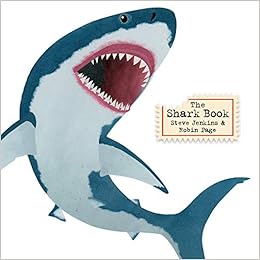
The Shark Book: Jenkins, Steve, Page, Robin: 9781328569493: Amazon.com:  Books
Bound To Stay Bound Books, Inc. - Bookstore

Summary:  The husband-and-wife team of Jenkins and Page introduce readers to the world of sharks through cut-paper illustrations and text describing different types of sharks, how sharks reproduce, what they eat, and more.  Of course, what readers REALLY want to know is how dangerous sharks are to humans, and this is addressed as well, along with additional information about how dangerous humans are to sharks.  Includes a chart showing size, range, danger to humans, and conservation status of all the sharks in the book as well as a bibliography.  40 pages; grades K-4.

Pros:  One can never have too many shark books on the library shelves, and, as per usual, Jenkins and Page do a stellar job of making the information interesting and accessible to the intended audience, with excellent illustrations as well as text.

Cons:  The font seemed a bit small to me, especially since it was one that looked like handwriting.
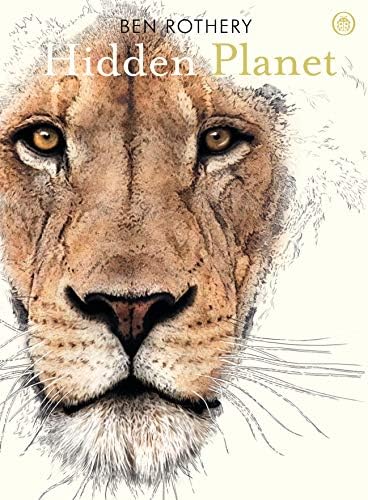
Hidden Planet: Secrets of the Animal Kingdom by Ben Rothery

Published by Tilbury House Publishers

Hidden Planet: Rothery, Ben: 9780241361016: Amazon.com: Books
Hidden Planet: An Illustrator's Love Letter to Planet Earth: Rothery, Ben:  9780241361009: Amazon.com: Books

Summary: This animal book focuses on secret or hidden aspects of the animal kingdom.  There are hidden relationships like mutualism and parasitism; hidden families, like the surprising connections among the elephant, the manatee, the dugong, and the rock hyrax; and hidden abilities, such as camouflage and other defenses.  Each oversized page contains at least one illustration (sometimes filling the whole page), and often has two, three, or more, some in color and some black and white.  Includes an introduction and a final author’s note that explain how he became interested in illustrating and writing about animals, why it’s so important to understand animals better, and an invitation to readers to start their own writing and drawing; also, an index.  96 pages; grades 3-8.

Pros:  The wealth of information and especially the illustrations are phenomenal.  Any kid interested in animals will love this book, whether it’s just to browse through the gorgeous pictures or to pore over the interesting facts. 

Cons:  So many of the full-color illustrations are suitable for framing; if I were a kid with an Exacto knife, well…I might not be responsible for my actions.

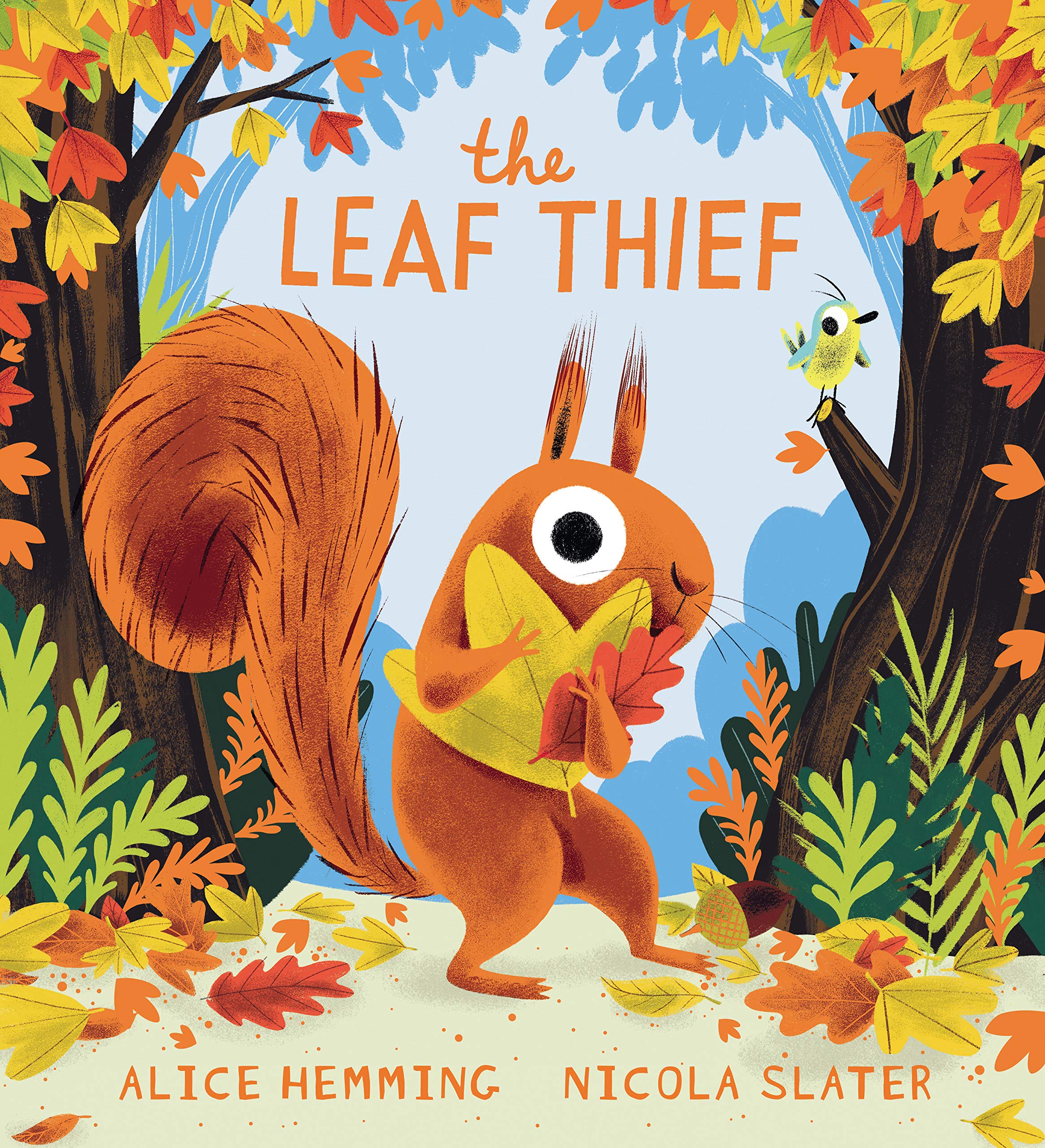
The Leaf Thief by Alice Hemming, illustrated by Nicola Slater

Published by Sourcebooks Jabberwocky

The Leaf Thief: Hemming, Alice, Slater, Nicola: 0760789305887: Amazon.com:  Books

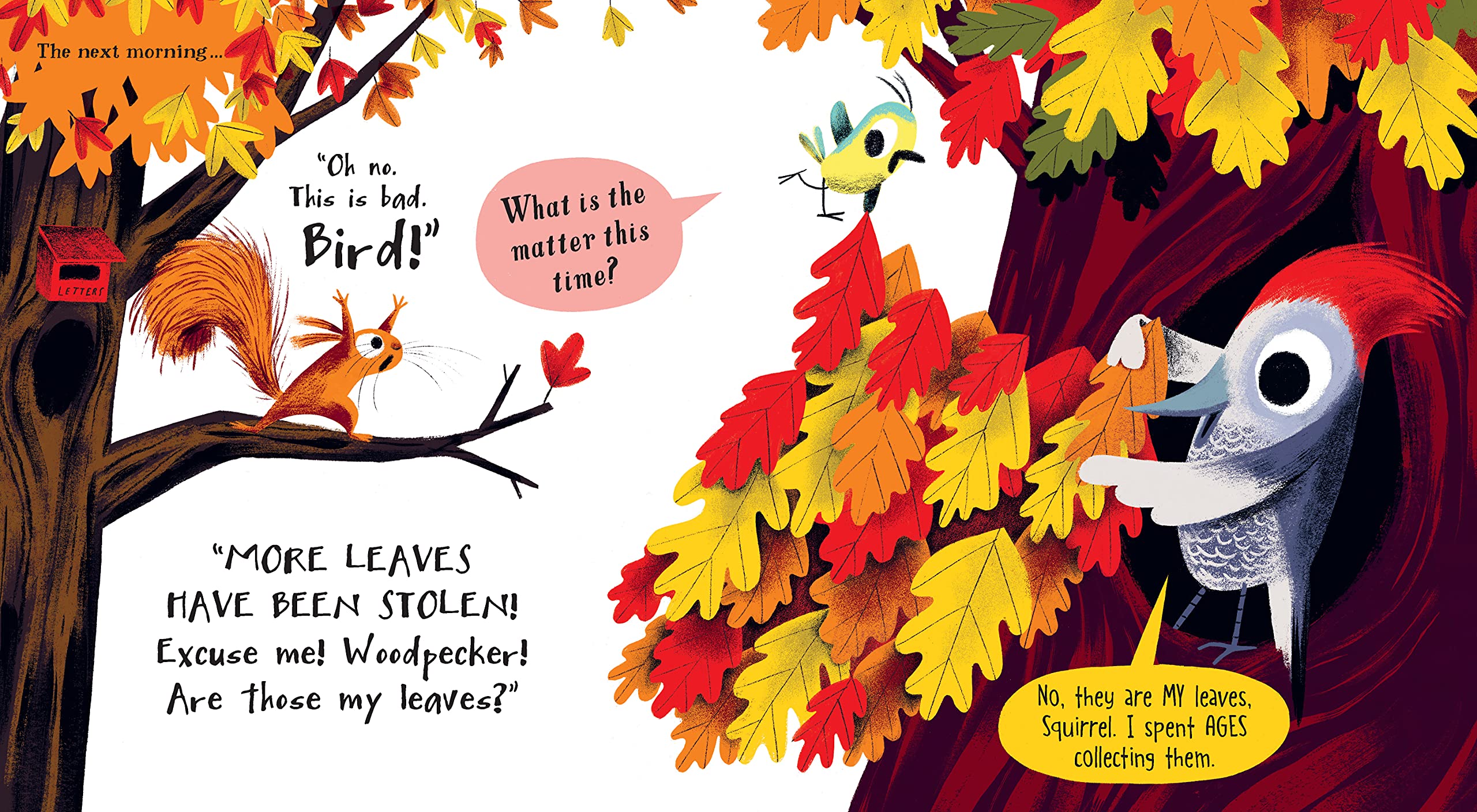
Summary:  Squirrel is in a panic when he notices that one of his leaves is missing, and immediately runs to his friend Bird’s house to report the theft.  Bird reassures him that it’s normal to lose a leaf or two at this time of year, but the next day, Squirrel freaks out again when more leaves go missing.  He accuses some of the other animals, but eventually Bird reminds him that this has happened before, and that the only one stealing leaves is the wind.  Squirrel is finally able to calm down…until he wakes up on a snowy morning, and realizes that someone has stolen the GRASS!  Includes two pages of facts about autumn and the changes deciduous trees undergo during the fall season.  32 pages; ages 3-7.

Pros:  I have nothing against Halloween and Thanksgiving books, but sometimes you just want a good fall story; this one is sure to be a hit with younger kids who will undoubtedly find Squirrel’s antics hilarious.  As a bonus, there’s some good, age-appropriate information to share about the season.

Cons:  The fall facts are printed on the back cover.  Someday, in my ideal world, publishers will listen to me and stop doing that, so we librarians won’t have to cover them up with the dust jackets. 

Dr. Fauci: How a Boy from Brooklyn Became America’s Doctor by Kate Messner, illustrated by Alexandra Bye

Published by Simon and Schuster Books for Young Readers

Dr. Fauci | Book by Kate Messner, Alexandra Bye | Official Publisher Page |  Simon & Schuster

Dr. Fauci | Book by Kate Messner, Alexandra Bye | Official Publisher Page |  Simon & Schuster

Summary:  From the time he was a boy growing up in Brooklyn, Anthony Fauci always had a curious mind.  His family encouraged that, telling him to always gather evidence and keep an open mind when solving a problem.  Although he wasn’t the biggest kid in the neighborhood, he learned to be competitive in sports, using speed to make up for what he lacked in stature.  In 1966, Anthony became Dr. Fauci when he graduated first in his class from Cornell Medical School.  Throughout his career, he studied new diseases like AIDS, West Nile virus, and, of course, COVID-19.  Keeping an open mind, working with scientists around the world to gather evidence and look for solutions, Dr. Fauci worked tirelessly on the problem of COVID-19.  The book ends on a positive note, with the vaccine rollout; Dr. Fauci is happy to get his vaccine, reunite with family, and get back to work on whatever problem comes along next.  Includes additional information on vaccines and their safety; Dr. Fauci’s five tips for future scientists; a timeline of his life; a recommended reading list; and several photos of Anthony Fauci growing up.  48 pages; grades K-3.

Pros:  A much-needed picture book biography of Dr. Fauci, along with timely information about vaccine safety.  The information is straightforward, emphasizing the importance of hard work and critical thinking in the scientific world.

Cons:  Probably appropriate for the age group, but the tone of the book is consistently upbeat, with none of the political controversy around Dr. Fauci touched upon.

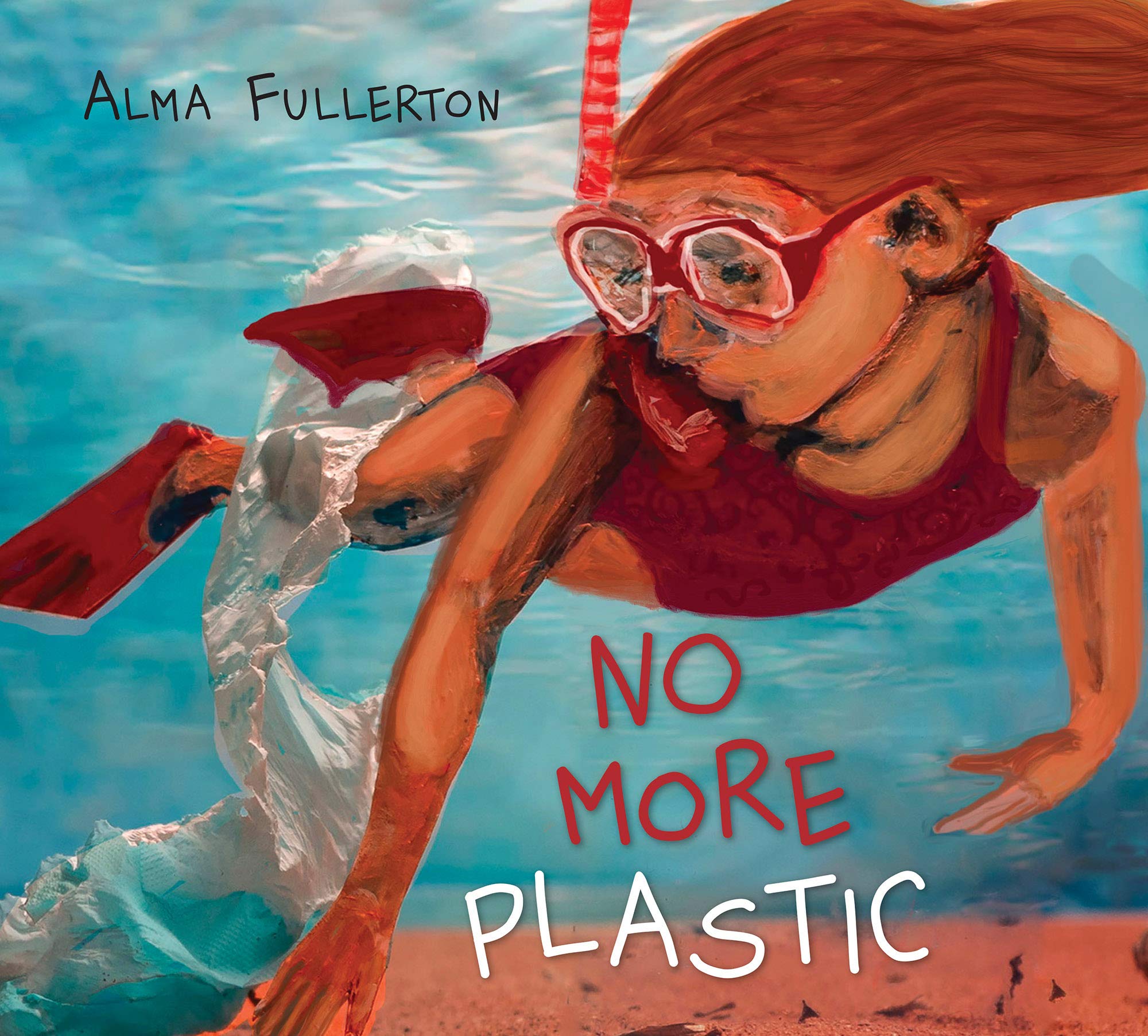
No More Plastic! by Alma Fullerton

Published by Pajama Press

No More Plastic: Fullerton, Alma, Fullerton, Alma: 9781772781137:  Amazon.com: Books

No More Plastic | Pajama Press

Summary:  Isley loves everything about the ocean near her home until one day when a dead whale washes up on the beach.  When she learns that the whale starved to death because its stomach was filled with plastic, she becomes angry.  Turning her anger into action, Isley begins a campaign in her community to stop using plastic bags, straws, and other products.  At first people are enthusiastic, but eventually the convenience of plastic causes them to backslide.  Isley begins collecting the plastic she finds on the beach and uses it to create a giant whale sculpture.  The whale serves as a reminder to people in the community, who begin to make bigger changes like banning plastic grocery bags and installing filling stations for water bottles.  Includes an author’s note and a list of ideas for reducing plastics, both locally and globally.  32 pages; ages 4-8.

Pros:  An empowering story about a girl who finds a way to make a difference in her community, with information that may inspire kids to take action themselves.

Cons:  The writing felt a little stilted.

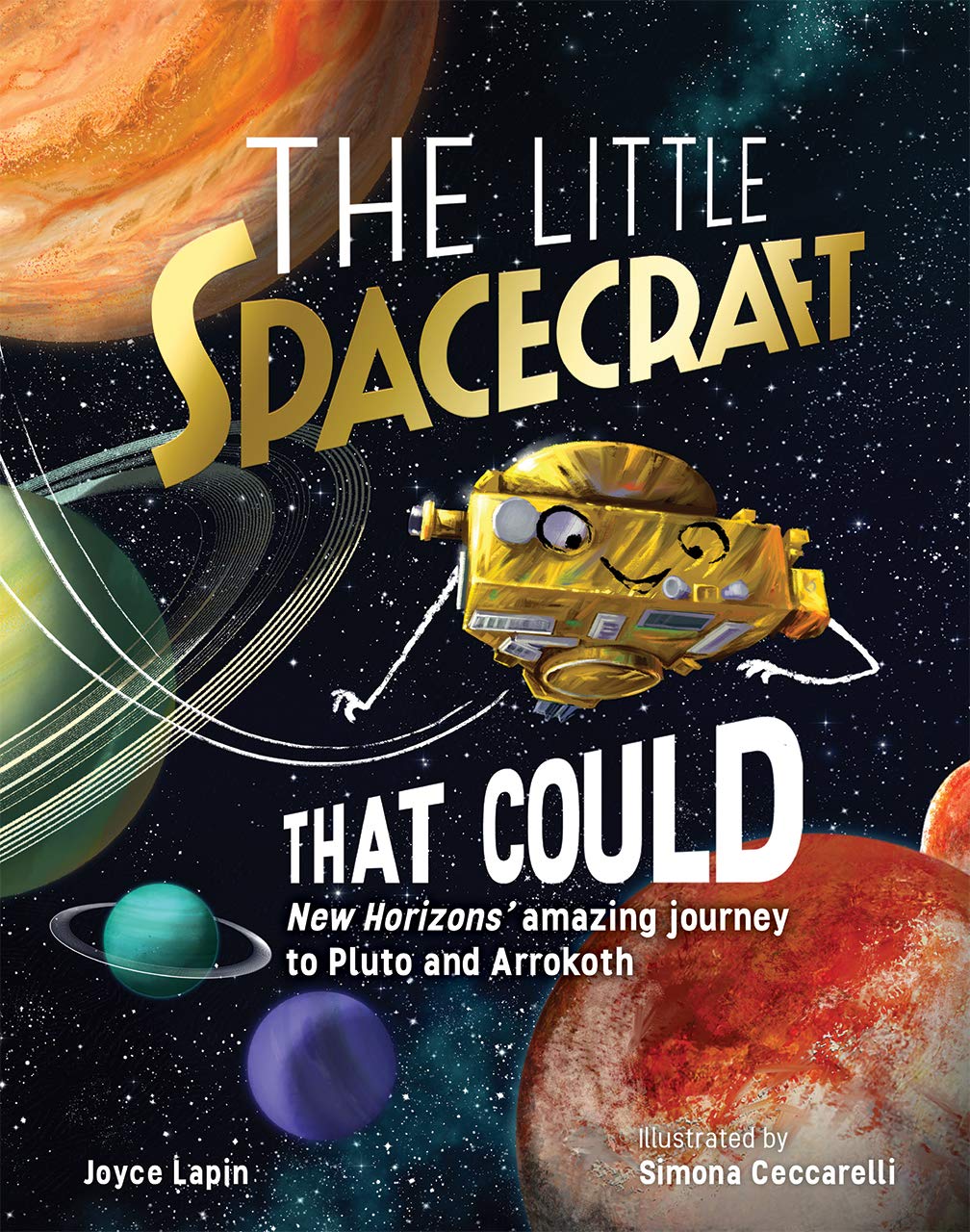
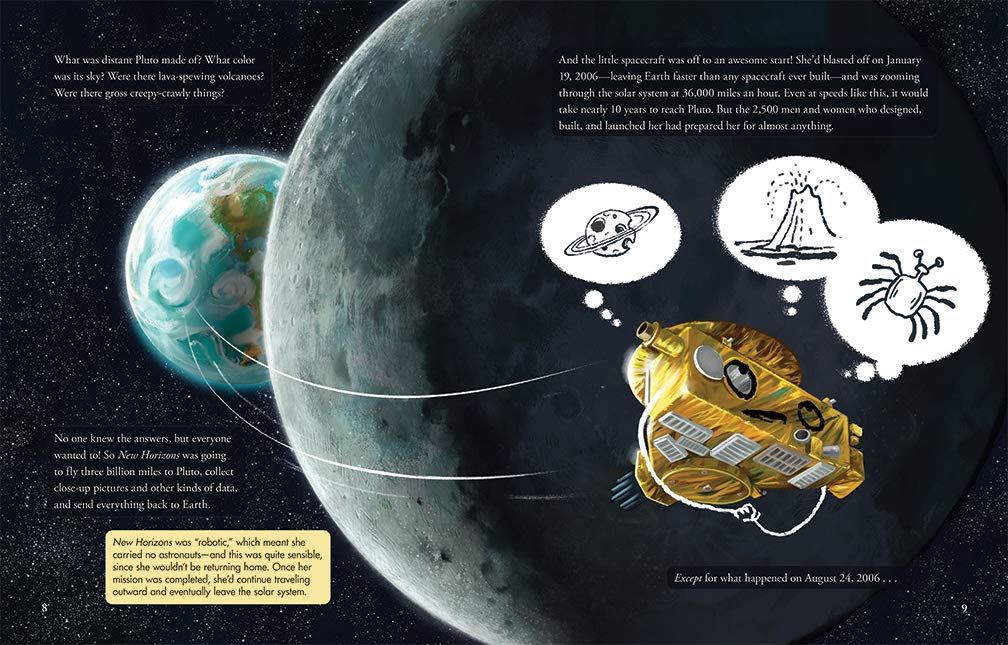
The Little Spacecraft That Could: New Horizons’ amazing journey to Pluto and Arrokoth by Joyce Lapin, illustrated by Simona Ceccarelli

Published by Sterling Children’s Books

The Little Spacecraft That Could: Lapin, Joyce, Ceccarelli, Simona:  9781454937555: Amazon.com: Books

The Little Spacecraft That Could: Lapin, Joyce, Ceccarelli, Simona:  9781454937555: Amazon.com: Books

Summary:  On January 19, 2006, a spacecraft called New Horizons blasted off from Earth, traveling toward what was then the planet Pluto.  It took ten years to reach that destination, during which time Pluto’s designation changed from planet to dwarf planet.  Much of that decade was spent by New Horizons in a shutdown state, hurtling through space on autopilot at a million miles per (Earth) day.  In late 2014, scientists “woke” New Horizons again, and in 2015, she began transmitting photos of Pluto that captivated Earthlings and greatly increased understanding of the dwarf planet and its moons.  A few years later, on New Year’s Day of 2019, New Horizons reached another object called Arrokoth that had been discovered in the years after her launch.  Photos of Arrokoth helped scientists understand more about the early years of the solar system.  New Horizons isn’t done yet, as she continues to travel further out in space.  Includes a timeline, glossary, and resources for additional research.  40 pages; grades 1-5.

Pros:  This charming science book gives New Horizons a quirky personality and uses words like “ginormous”, but also makes the story of scientific discovery engaging and packs a lot of information about space exploration and the solar system into a 40-page picture book.

Cons:  I was wishing for more information on how New Horizons transmits photos and information back to Earth, which seems like an impossible task over such a great distance.

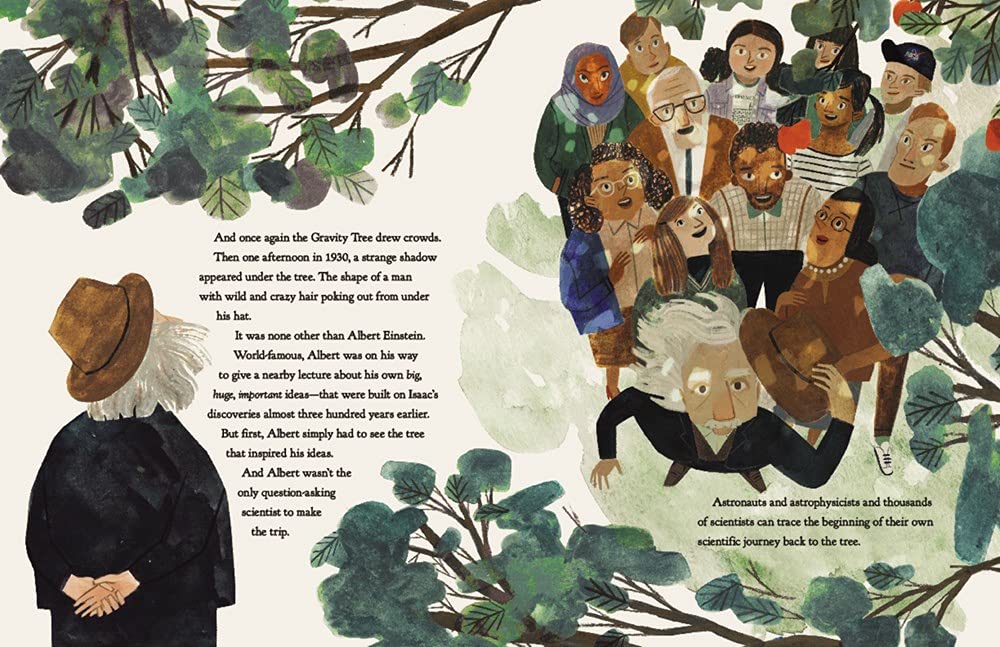
The Gravity Tree: The True Story of a Tree That Inspired the World by Anna Crowley Redding, illustrated by Yas Imamura

Published by HarperCollins

Amazon.com: The Gravity Tree: The True Story of a Tree That Inspired the  World (9780062967367): Redding, Anna Crowley, Imamura, Yas: Books

Amazon.com: The Gravity Tree: The True Story of a Tree That Inspired the  World (9780062967367): Redding, Anna Crowley, Imamura, Yas: Books

Summary:  Many of us have heard that Isaac Newton developed the theory of gravitation after watching an apple fall off of a tree.  Newton is the star of that story, but what about the tree?  Believe it or not, it still stands outside of Woolsthorpe Manor, Isaac’s home in Lincolnshire England, and has been visited by such scientific superstars as Albert Einstein and Stephen Hawking.  A sliver of it traveled aboard the International Space Station and was released into space.  A piece was used on a carriage handcrafted for Queen Elizabeth II.  And offspring from its seeds have been planted around the world.  It all started with one apple seed, and, the book concludes, you too contain the potential to change the world.  Includes additional information about the gravity tree, Isaac Newton, Albert Einstein, and Stephen Hawking; a timeline of Newton’s life; and a bibliography.  40 pages; grades K-5.

Pros:  2021 does seem to be the year of the tree: counting trees, wise trees, historical trees, and now a tree that has inspired famous scientists.  It’s a fun and fresh way to introduce kids to the works of Newton, Einstein, and Hawking, while using the metaphor of a seed to inspire them to think about their own potential.  The back matter makes it a great book for older elementary kids.

Cons:  Turns out the apple didn’t hit Newton on the head which takes away a bit of the drama from the story.

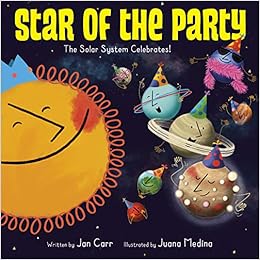
Star of the Party: The Solar System Celebrates! by Jan Carr, illustrated by Juana Medina

Published by Crown Books for Young Readers

Star of the Party: The Solar System Celebrates!: The Solar System  Celebrates!: Carr, Jan: 9781524773137: Amazon.com: Books
Star of the Party: The Solar System Celebrates!: The Solar System  Celebrates!: Carr, Jan: 9781524773120: Amazon.com: Books

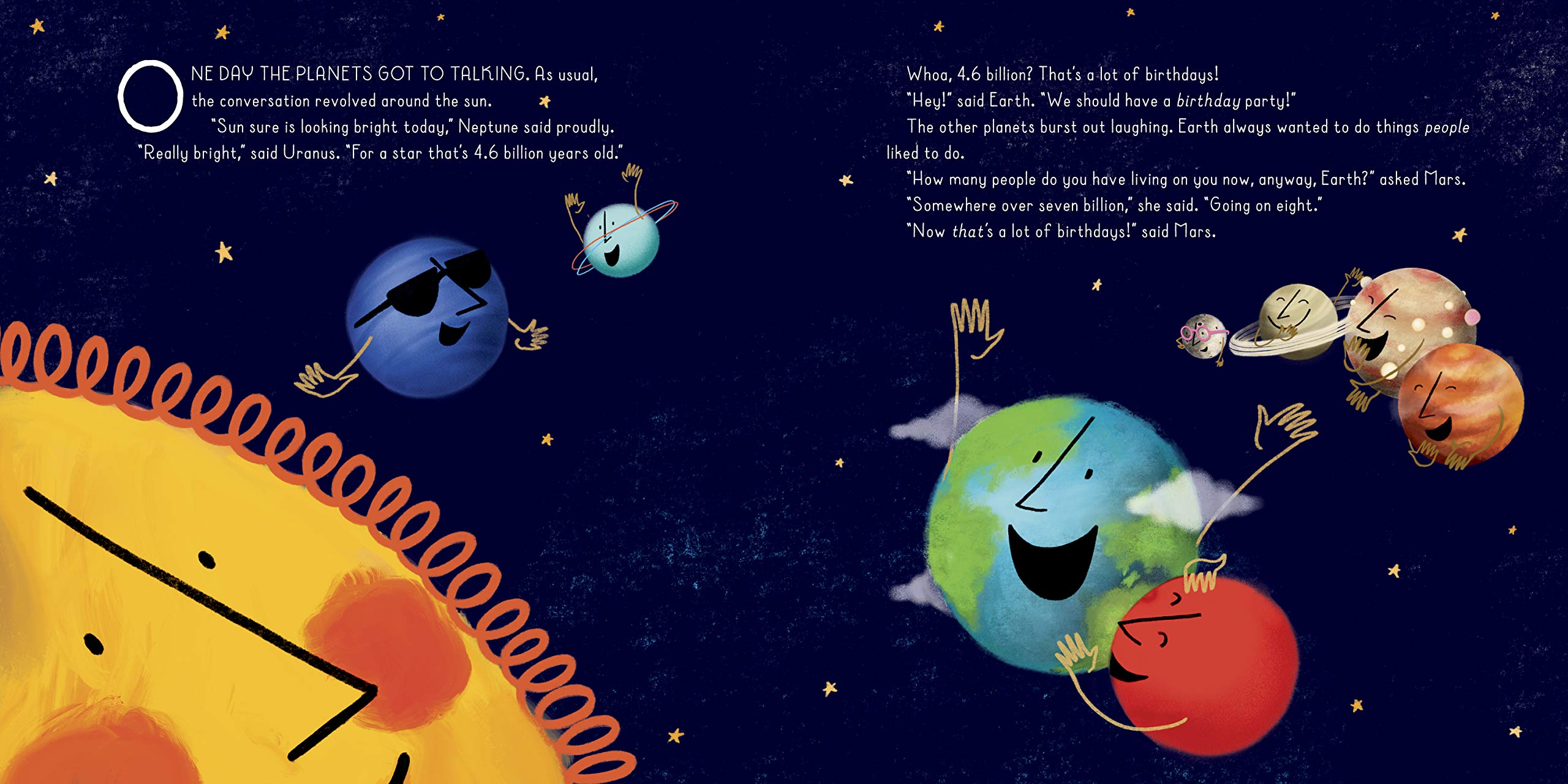
Summary:  The sun is 4.6 billion years old, and the planets have decided to throw a birthday party.  They consider the guest list (if they invite Pluto, will they have to include the other dwarf planets?  Can a moon be counted as a plus-one if a planet has over 70 moons?) and what to give as a gift, finally settling on a testimonial from each one of them.  When the big day arrives, each one has a touching message, and as a surprise, the mysterious voice of Planet X is heard, wishing the sun a happy birthday from a great distance.  The sun is pretty reserved, but she declares the party “Stellar”, while looking both beaming and radiant.  Includes a list of websites, with the note that scientists are constantly learning new facts about the solar system, so the web can provide the most up-to-date information.  40 pages; grades K-3.

Pros:  A great combination of a fun story and lots of facts about the planets that would make a good companion to Adam Rex’s Pluto Gets the Call.  I liked the acknowledgement that science changes so fast that books can go out of date quickly.

Cons:  Pluto got left off the guest list.

Dear Treefrog by Joyce Sidman, illustrated by Diana Sukyka

Published by HMH Books for Young Readers

Dear Treefrog: Sidman, Joyce, Sudyka, Diana: 9780358064763: Amazon.com:  Books
Bound To Stay Bound Books, Inc. - Bookstore

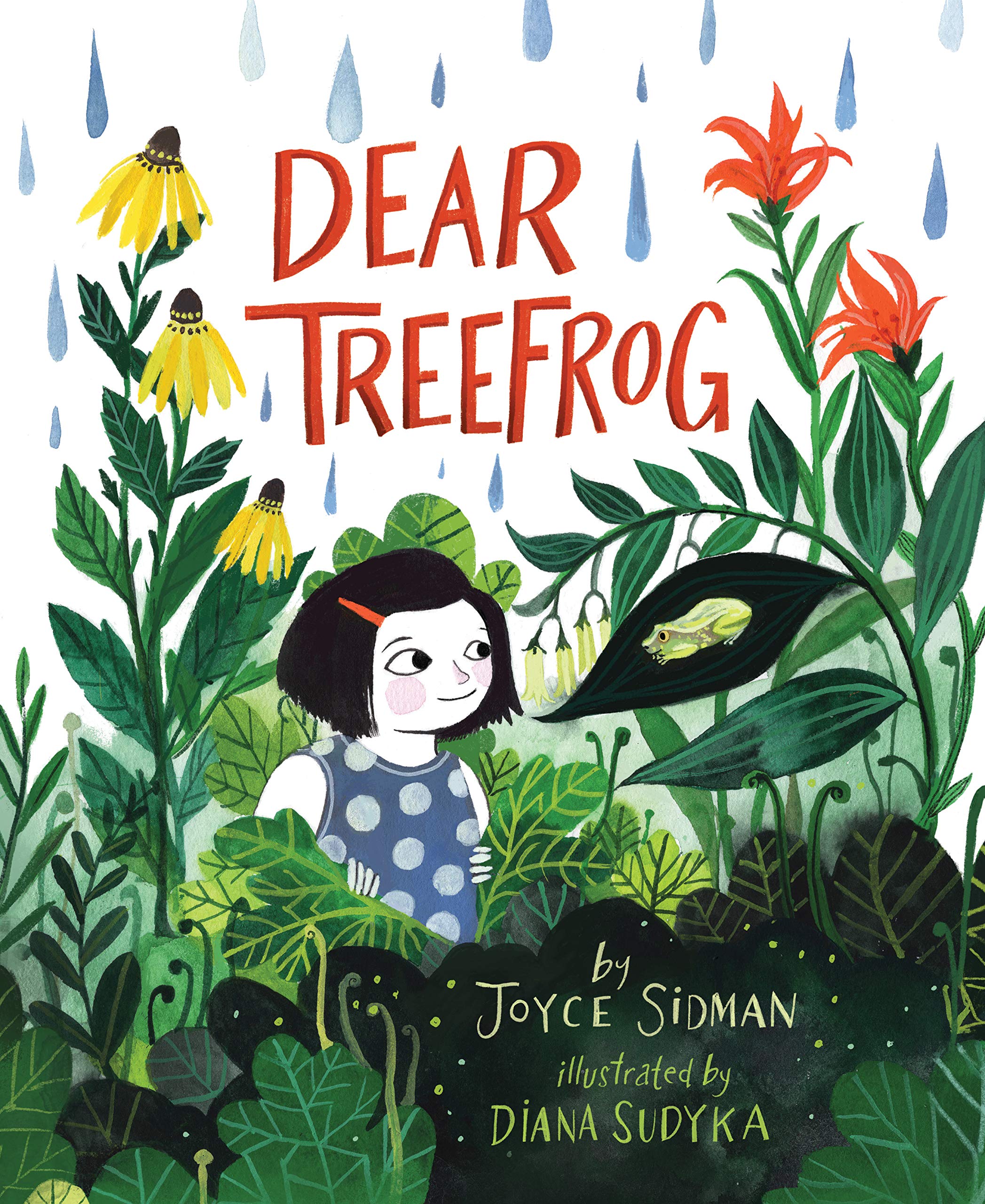
Summary:  A young girl discovers a treefrog in the garden outside her new home.  As the two travel through the seasons together, she makes discoveries about both the frog and herself.  It’s summer when she moves in. Some kids come to play, but they’re too noisy for both her and the frog.  When school starts, she meets a boy who feels like more of a kindred spirit, and she brings him to meet the frog.  The two friends enjoy winter, and in the spring, their patience is rewarded when they see the treefrog once again.  Each page offers some treefrog facts as well as a poem and illustration. Includes a page of questions and answers that gives more treefrog information. 40 pages; ages 4-8.

Pros:  This delightful picture book functions as both a friendship story and a nonfiction book about treefrogs…and is narrated with Joyce Sidman’s simple but beautiful poetry.

Cons: No additional resources for further research.

I Am the Shark by Joan Holub, illustrated by Laurie Keller

Published by Crown Books for Young Readers

I Am the Shark: Holub, Joan, Keller, Laurie: 9780525645283: Amazon.com:  Books

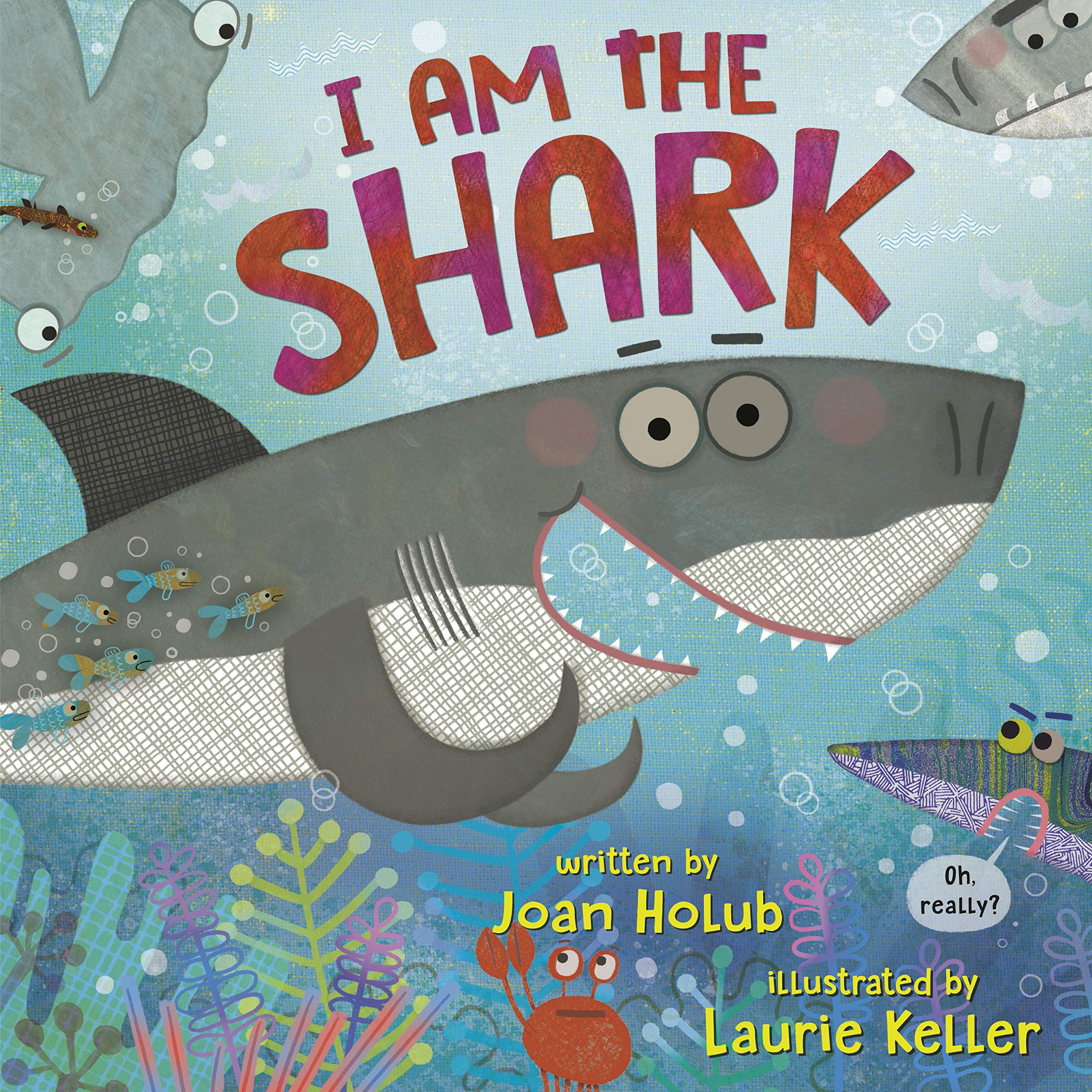
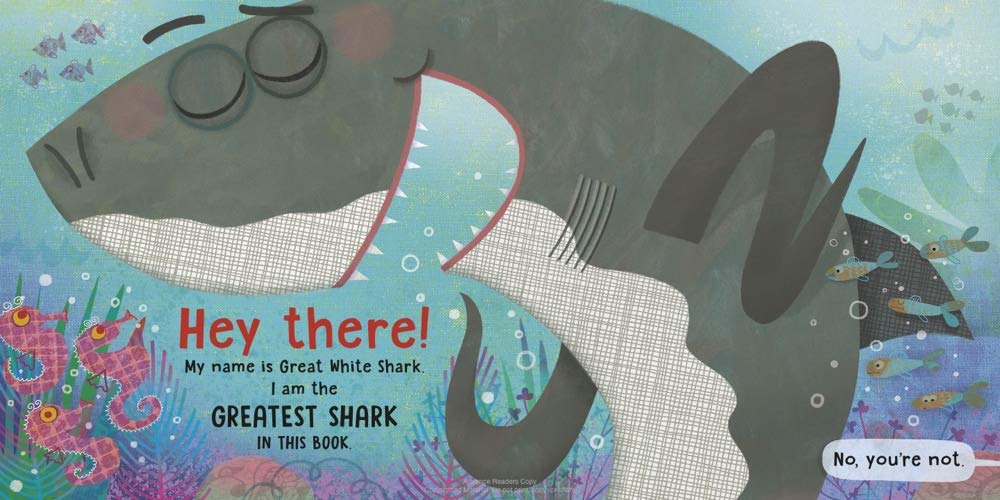
Summary:  A great white shark makes the case that he is the greatest.  Or is he?  Turns out, there are other sharks that are bigger, smaller, faster, and every other superlative he tries to be.  By the end, he’s ready to change his name to the just-okay white shark or the not-so-great white shark.  But then a little fish comes along and tells him there’s always going to be someone who is bigger, faster, smarter, or whatever than you are, and it’s best being happy to be you.  That makes the great white happy, and he concludes by flashing his 300-tooth-grin…the greatest smile in the book.  Includes thumbnails of all sharks mentioned with additional information and “More Books to Sink Your Teeth Into”.  48 pages; ages 4-9.

Pros:  It’s a no-brainer that any book featuring sharks is going to be hugely popular, and the funny premise of this one, combined with Laurie Keller’s humorous illustrations will only add to that.  Don’t be misled by all the jokester sharks, though…there is also plenty of information to fill your hammerhead shark-size-brain.

Cons:  I thought the pages with a labelled diagram of the great white shark and the shark facts in the middle of the book kind of interrupted the story; they seemed more like back matter.