Moonwalk: The Story of the Apollo 11 Moon Landing by David Jenkins, illustrated by Adrian Buckley

Published by Circa Press
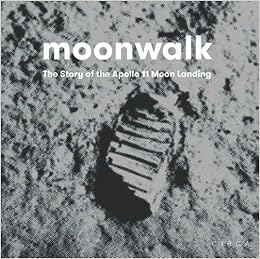
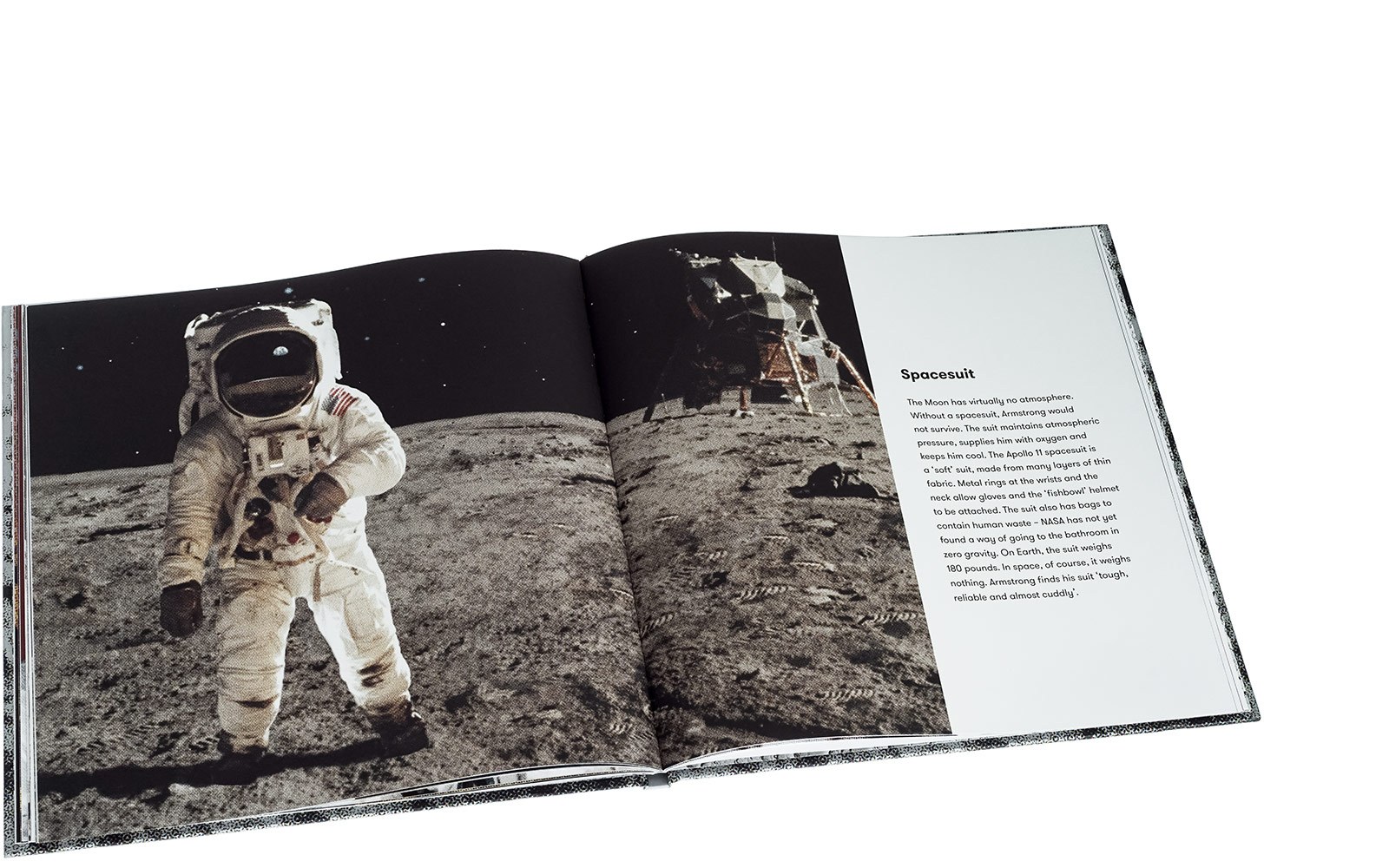
Summary:  48 years ago today, Neil Armstrong and Buzz Aldrin became the first two men to walk on the moon.  This book looks at what happened each day of that Apollo 11 mission.  It begins with a bit of context to clarify the importance of the mission, then starts in on July 15, 1969 as people are arriving to camp out and witness takeoff the next morning.  Each two-page spread covers one aspect of the journey, with a paragraph of information and a large digitally enhanced photo.  The excitement builds as the various parts of the trip unfold, climaxing with Neil Armstrong’s one small step onto the moon on July 20.  The final page shows the New York City ticker tape parade a few weeks later, celebrating the triumphant return of Armstrong, Aldrin, and Michael Collins.  The final two pages include a collection of interesting facts.  48 pages; grades 2-5.

Pros:  An excellent combination of exciting storytelling and clear explanations of the more technical parts of the space voyage.  The illustrations provide a you-are-there feeling.

Cons:  Some back matter like a bibliography or resource list would have been a nice addition.
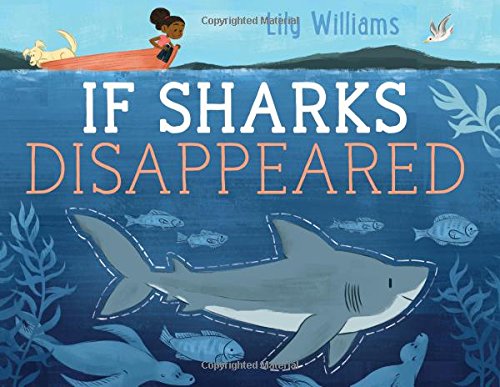
If Sharks Disappeared by Lily Williams

Published by Roaring Brook Press

Summary:  Sharks can seem scary, but a world without sharks is even scarier.  Because they’re at the top of the food chain, they keep the populations of their prey in balance.  By feeding on weaker animals, they allow the stronger ones to reproduce and survive.  Williams makes the case that removing sharks from the ecosystem could ultimately destroy the oceans and all the animals that depend on it for life–including humans.  The final two pages include additional information on why sharks are in trouble and what kids can do to help save them.  Also includes a glossary and bibliography; labeled drawings of a variety of shark species are included on the endpapers.  40 pages; ages 4-8.

Pros:  A simple yet scientific explanation of the interconnectedness of all species.  The focus on sharks will make this a popular choice for kids.

Cons:  The destruction of all life on earth is kind of a downer.

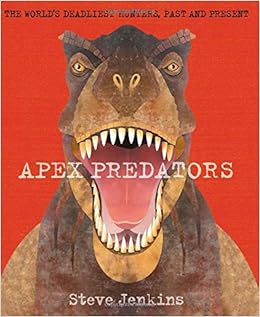
Apex Predators by Steve Jenkins

Published by Houghton Mifflin Harcourt

Summary:  After a one-page explanation of what an apex predator is (animals at the top of their food chain), Jenkins launches into his trademark cut-paper illustrations with facts about various apex predators, past and present.  He starts with several modern-day animals, then works his way backward through time, from the giant short-faced bear (extinct 11,000 years ago) to the Anomalacaris (strange shrimp) that’s been extinct for 500 million years.  On the last two pages, he shows a couple imagined face-offs between living and extinct animals.  Who would win–the Siberian tiger or the Utahraptor?  The great white shark or the Dunkleasteus?  There’s also a sidebar about the deadliest predator of all times; bet you can guess what that is.  Includes a brief bibliography and a list of websites.  32 pages; grades 1-5.

Pros:  Jenkins has produced another collection of amazing illustrations and kid-friendly facts.  Readers will wish for more of the “Who would win?” scenarios…maybe they could learn about some of the apex predators and create their own.

Cons:  After reading many Steve Jenkins books, some of his facts sound familiar.

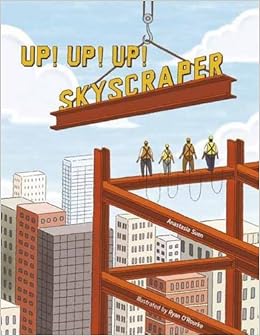
Up, Up, Up, Skyscraper! by Anastasia Suen, illustrated by Ryan O’Rourke

Published by Charlesbridge

Summary:  What’s going on behind that fence?  A group of kids gets to put on hard hats and take a look at every step of the construction of a skyscraper. Each two-page spread has four lines of rhyming text, supplemented with a few sentences explaining the process.  The illustrations have labels to identify machines used, as well as different parts of the structure.  A small inset picture gives a macro view of what the building looks like at each step.  The last page unfolds upward to show the finished skyscraper.  32 pages; ages 3-8.

Pros:  A fun and accessible introduction to building a skyscraper.  Construction enthusiasts will love studying the pictures, while those less familiar with the process will learn a lot.

Cons:  The fold-out page seemed a little ill-fitting and was already starting to rip a bit when I unfolded it.

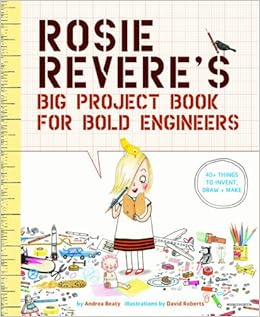
Rosie Revere’s Big Project Book for Bold Engineers by Andrea Beaty, illustrated by David Roberts

Published by Harry N. Abrams

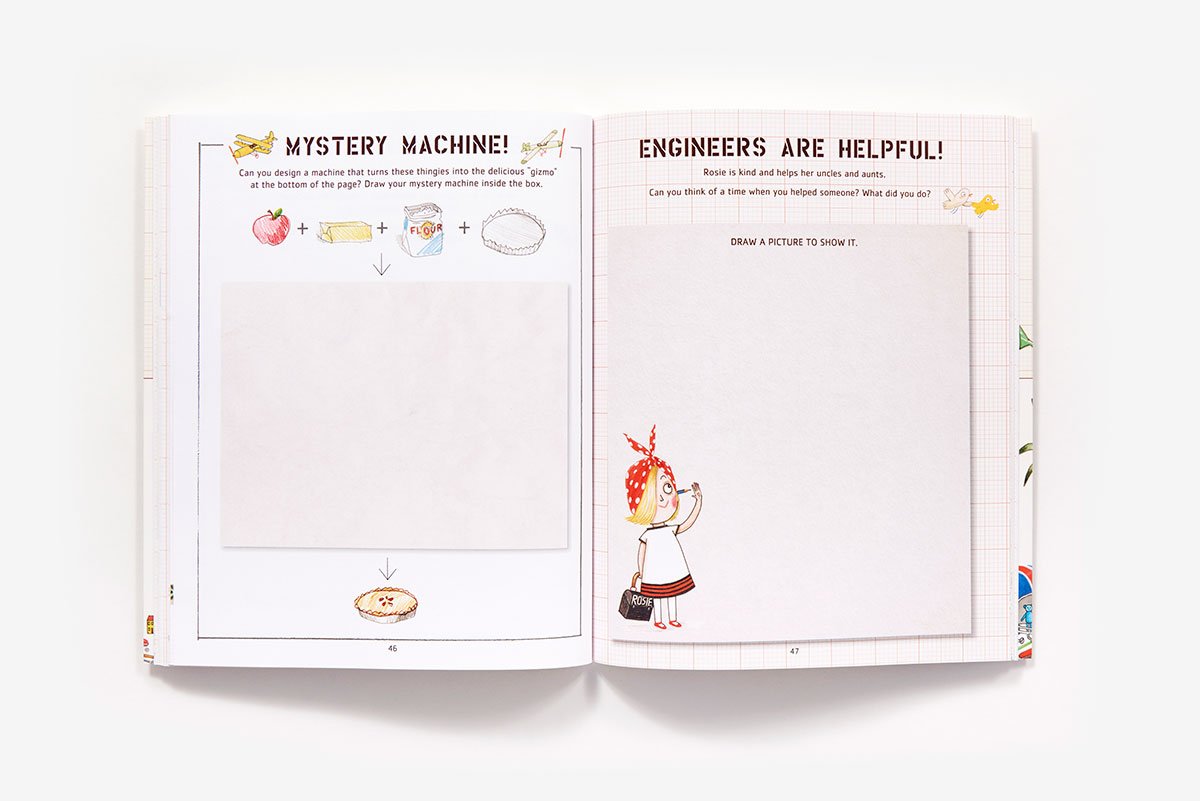
Summary:  In this companion workbook to Rosie Revere, Engineer, Rosie advises kids about how to start being an engineer.  On the first few pages, Rosie introduces herself and the different types of engineering.  Much of the rest of the book is design challenges, including several “Real-World Problems”, such as thinking of ways to save water, and “Make-It” activities like building and testing a catapult for marshmallows.  There are several “Super-Duper Engineering Challenges”, like designing a cane for Great-Great-Aunt Rosie that will allow her to carry her tools; kids are encouraged to draw a design for these, rather than to build the actual item.  There are many blank pages for writing and drawing.  On the final page, young engineers can design a stamp to identify their work.  96 pages; grades 1-5.

Pros:  A good introduction to engineering with lots of activities to inspire creative thinking.

Cons:  Kids and teachers might be looking for less drawing and writing and more hands-on activities to build.

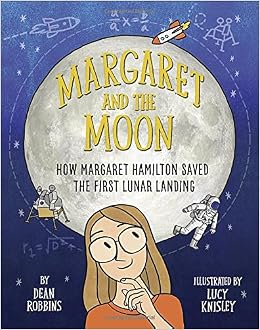
Margaret and the Moon: How Margaret Hamilton Saved the First Lunar Landing by Dean Robbins, illustrated by Lucy Knisley

Published by Knopf Books for Young Readers

Summary:  Margaret Hamilton loved solving problems.  Her ability to problem-solve led her to a career in computers, first at MIT, and then at NASA.  In 1964, she went to work for NASA, writing computer programs that took into account every problem a spacecraft could have as it traveled to the moon.  By the time the Apollo missions were underway, Margaret was the director of software programming.  Minutes before Apollo 11 was going to touch down on the moon, a computer problem set off an alarm.  Margaret was able to use her code to solve the problem, and the rest was a giant step into history.  An author’s note gives more biographical information about Margaret; there’s also a bibliography, and photos of Margaret on the endpapers.  40 pages; grades 1-4.

Pros:  A fun story about a woman who pioneered computer programming and played an important role in the space program. The text is engagingly conversational, and the graphic novel-style illustrations make it kid-friendly.

Cons:  The biographical details of Hamilton’s life are a little light.


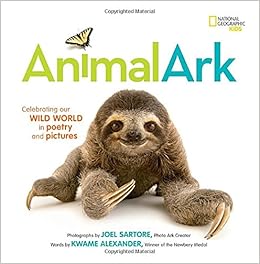
Animal Ark: Celebrating our wild world in poetry and pictures photographs by Joel Sartore, words by Kwame Alexander

Published by National Geographic

Summary:  The National Geographic Photo Ark is a project in which Joel Sartore is photographing every captive species.  Thirty two of these photos are showcased here, along with brief poems by Kwame Alexander.  The photos are close-ups on plain black or white backgrounds.  More animals appear on two sets of pull-out pages, along with their IUCN status indicating how endangered that species is.  Notes from the photographer and the writer give more information about their work, how this book came to be, and what kids can do to help the animals pictured here.  48 pages; ages 4-8.

Pros:  Kids will fall in love with the photographs in this book, and may even be inspired to try writing haikus inspired by them.

Cons:  While Kwame Alexander calls his poetry haikus, and defines haikus as having 17 syllables in the traditional 5-7-5 arrangement, these poems don’t seem to fit the definition.

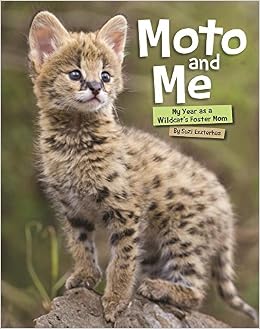
Moto and Me: My Year As a Wildcat’s Foster Mom by Suzi Eszterhas

Published by Owlkids

Summary:  While trying to rescue her kittens from a fire, Moto’s mother was scared by a truck and dropped one of them in the road.  The tourists on the truck didn’t see the mother.  Thinking they were rescuing the tiny serval, they took it to a ranger station.  By the time they got there, the ranger knew Moto’s mother would never take her kitten back, so he was given to Suzi Eszterhas, who was working as a wildlife photographer.  She became his foster mom, taking care of him, but also making sure that he followed his instincts and learned how to live in the wild.  As Moto grew up, he spent increasingly long periods of time in the wild until one day he didn’t return.  Eszterhas feared the worst, but a week later, she spotted him, and he came over to her jeep to greet her.  He was seen again several times by rangers, and Suzi knew she had succeeded as a serval foster mom.  Includes a page of facts about servals.  40 pages; grades K-5.

Pros:  An engaging nonfiction narrative that kids could read for either pleasure or research.  Eszterhas is a wildlife photographer, so the many photos are cute and captivating.

Cons:  I’m not really sure how to pronounce “serval”.

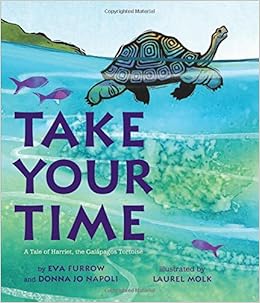
Take Your Time: A Tale of Harriet, the Galapagos Tortoise by Eva Furrow and Donna Jo Napoli, illustrated by Laurel Molk

Published by Henry Holt and Co.

Summary:  Harriet is a Galapagos tortoise who enjoys taking life at her own leisurely pace.  Other animals tell her she’s too slow, but she is untroubled.  One day she decides to travel to a nearby island to see a penguin parade.  Although the parade doesn’t happen until summer, she leaves in the winter and enjoys a nice slow swim.  When she gets there, she has fun meeting other animals and taking in the sights.  A couple of years pass by, and Harriet decides it’s time to return home.  At the end of another deliberate swim, she meets a pod of dolphins, one of whom offers to give her a ride on his back.  Harriet tries it out, but doesn’t like the speed.  When she gets back to her island, she reflects with satisfaction on all the animals she’s met, and how each one moves to its own rhythm. An author’s note tells the story of the real Harriet, who lived to the ripe old age of 175, becoming the world’s oldest animal in captivity. 32 pages; ages 4-8.

Pros:  A fun and leisurely look at the life of a Galapagos tortoise, including quite a few other animals who live in that ecosystem.  The prints colored with watercolors are unique and beautiful.  Readers will be fascinated to learn more details of Harriet’s long life, and there’s a good lesson about finding your own rhythm.

Cons: Like Harriet, the story meanders without much of a plot.

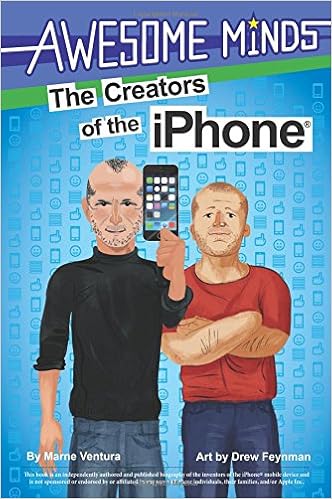
Awesome Minds: The Creators of the iPhone by Marne Ventura, art by Drew Feynman

Published by duopress

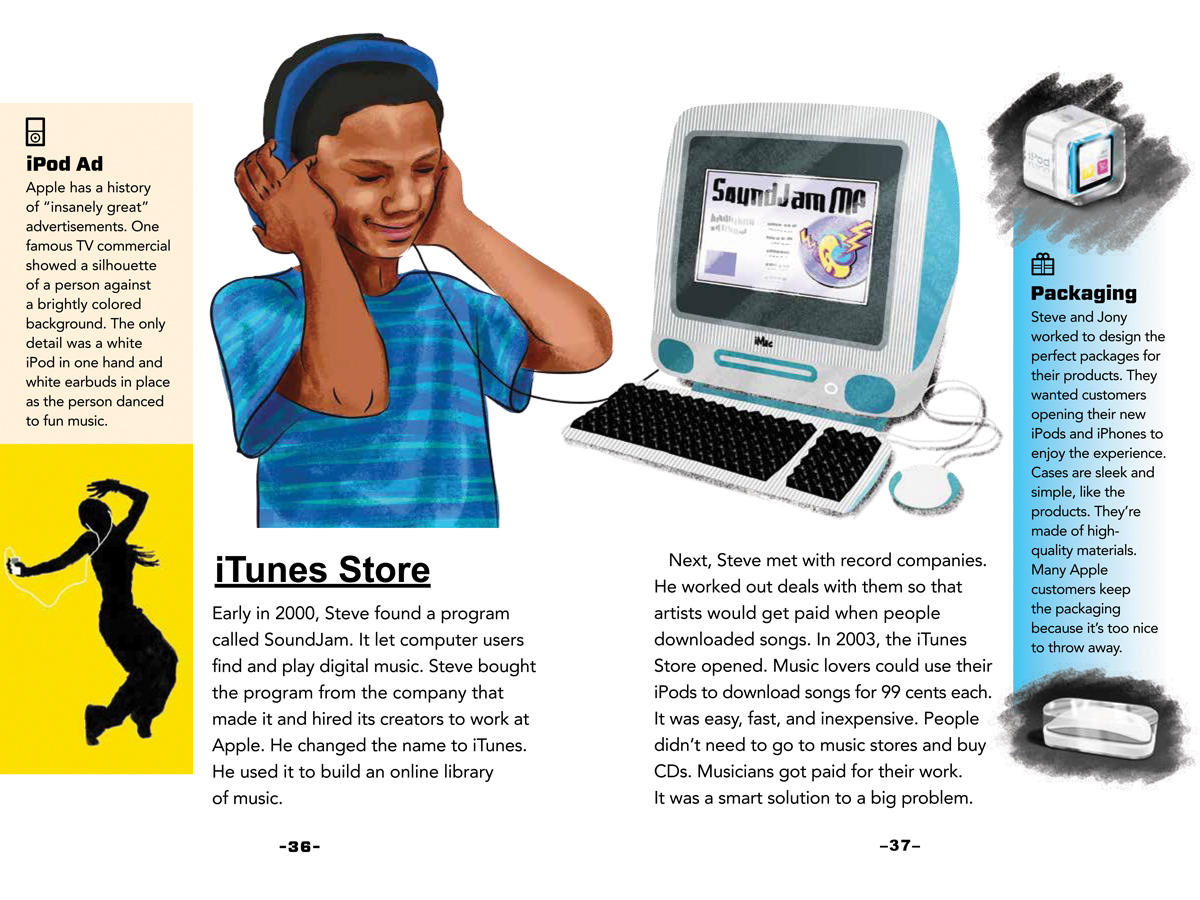
Summary:  We all take our smartphones for granted these days, but it wasn’t so long ago that portable phones were roughly the size and weight of a brick (at least it doesn’t seem that long ago to me).  It was the genius of Steve Jobs and industrial designer Jony Ive that created the first iPhone.  It was a long road to get there, though, beginning with the creation of the Apple company, and continuing with the many machines and software that came before the iPhone: personal computers in a variety of shapes and sizes, the iPod, iTunes, and more.  This book takes a brief look at the whole history, starting with the creators’ early lives, and concluding with Steve Jobs’ death and the iPhone today.  Includes a glossary, list of books and websites, and index. 56 pages; grades 2-5.

Pros:  A fast-paced, colorful look at a topic that’s sure to be of interest to kids.  The design is appealing, with plenty of sidebars and graphics .

Cons:  So much material is covered in such a short book that it sometimes seems disjointed and choppy.