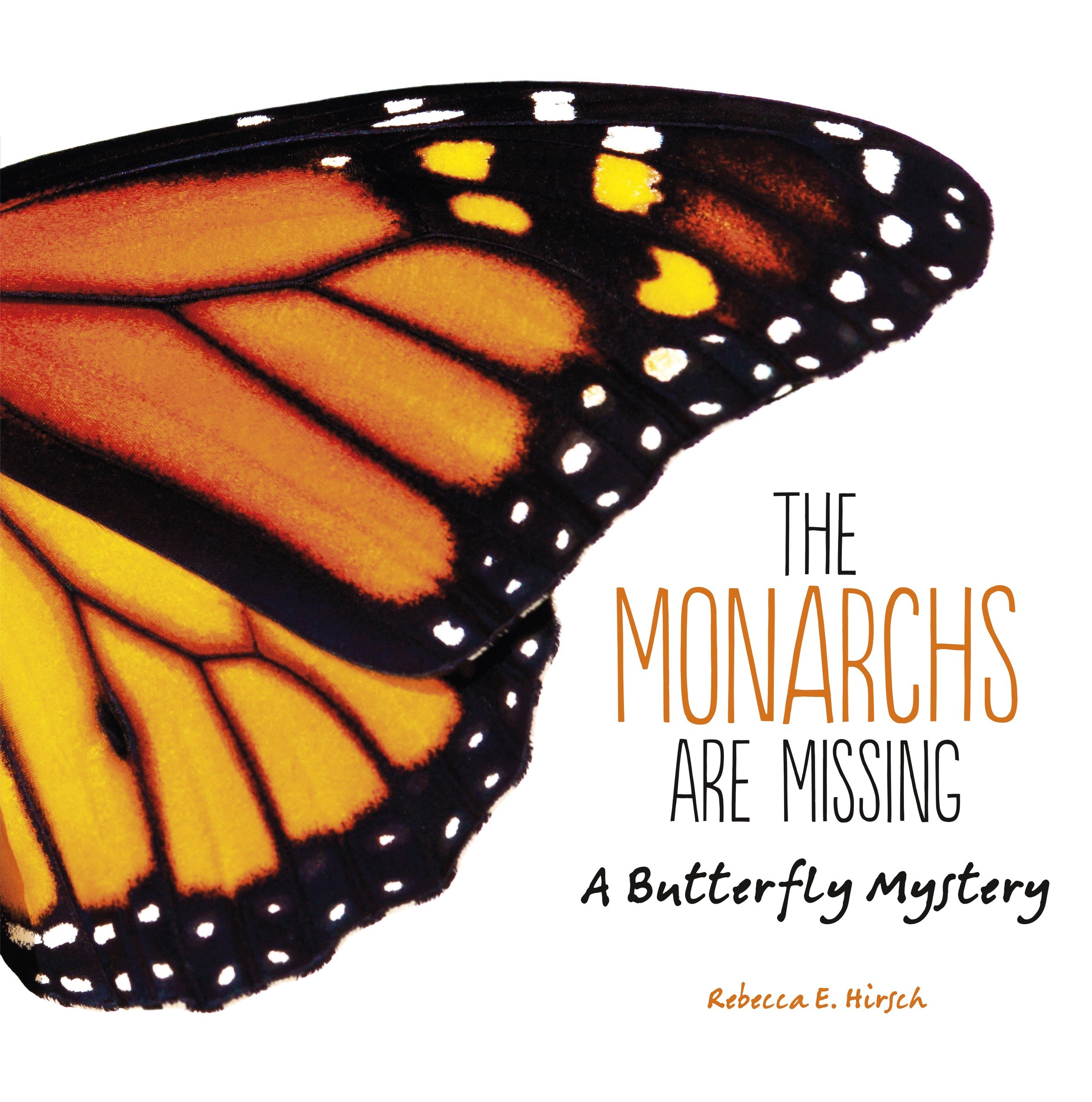
The Monarchs Are Missing: A Butterfly Mystery by Rebecca E. Hirsch

Published by Millbrook Press

Image result for monarchs missing hirsch amazon

Summary:  The monarchs are missing?  Some of them are, anyway.  In the last two decades, the monarch butterfly population has steeply declined.  How can we even know how many monarchs there are?  The answer to that goes back to the 1960’s when scientists first discovered the areas in Mexico where monarchs spend the winter.  Since then, they’ve taken annual measurements of the area the butterflies inhabit to get a rough estimate of the population.  There’s no agreement in the scientific community about why there are so many fewer monarchs today, but some theories include climate change, new pesticides, and agricultural methods that have impacted milkweed, the butterflies’ main food source.  Kids can help by planting milkweed and other wildflowers that provide nectar for the monarchs during their migration south.  Includes an author’s note, glossary, 3 books for further reading, an index, instructions for planting a butterfly garden, and several websites to help kids become citizen scientists.  56 pages; grades 3-7.

Pros:  A fascinating look at science at work, with plenty of photos and kid-friendly ideas for making a difference.

Cons:  The introduction profiled two kids catching and tagging butterflies; it would have been interesting to read more about kids acting as citizen scientists.

If you would like to buy this book from Amazon, click here.

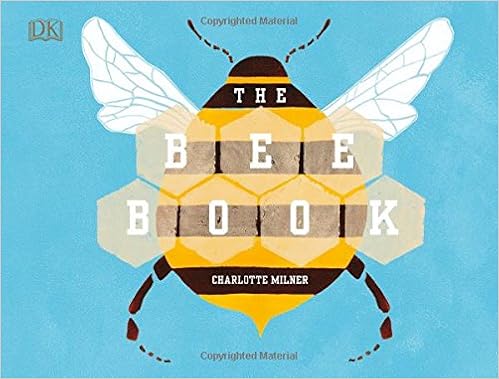
The Bee Book by Charlotte Milner

Published by DK Children

Image result for bee book milner amazon

Image result for bee book milner

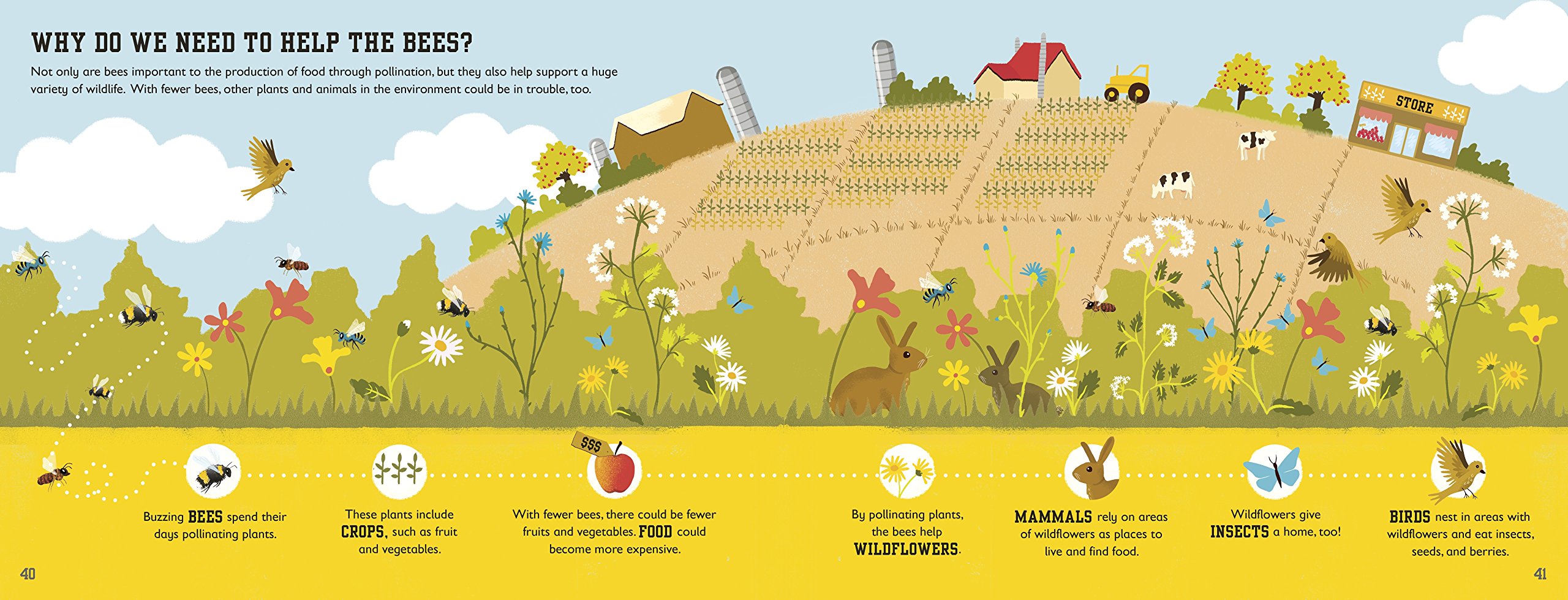
Summary:  What’s the buzz about bees?  This book seeks to answer this and quite a few more questions like “Where does honey come from?”, “What would we do without bees?”, and “What can you do to help?”.  Turns out the whole “busy as a bee” thing is real; you might appreciate that spoonful of honey more when you know it’s the lifetime’s work of 12 honeybees (a jar of honey represents 55,000 miles of flying).  Why should humans be concerned about the disappearance of bees?  One-third of our food comes from crops pollinated by animals.  Scientists are working to develop a robot bee, but it’s not quite the same, is it?  Activities at the end include making a bee hotel and planting a garden to help bees in their pollination efforts.  48 pages; grades K-5.

Pros:  Interesting information combined with lots of graphics make this an appealing choice to learn more about all kinds bees, with a focus on honeybees.

Cons:  The whole bee situation is a lot more serious than I realized.

If you would like to buy this book from Amazon, click here.


Hidden Figures: The True Story of Four Black Women and the Space Race by Margot Lee Shetterly with Winifred Conkling, illustrated by Laura Freeman

Published by HarperCollins

Summary:  In case you haven’t read the original book, the young readers’ edition, and/or seen the movie, this picture book tells the story of four women who worked for NASA between 1943 and 2007.  Dorothy Vaughn, Mary Jackson, Katherine Johnson, and Christine Darden were all good at math.  Very good.  This refrain is repeated throughout the story, as each one is shown overcoming the barriers in place for them at school and later on at NASA.  But they succeeded, and their work helped launch the space program and eventually send men to the moon.  As they looked to their careers after that dream had been fulfilled, “Dorothy, Mary, Katherine, and Christine knew one thing: with hard work, perseverance, and a love of math, anything was possible.”  Includes a timeline, additional biographical information about each woman, a glossary, and an author’s note.  40 pages; grades 1-5.

Pros:  Many kids will recognize these women from the movies.  All are inspiring, and emphasize the importance of hard work and the exciting adventures to be found in STEM careers.  Laura Freeman illustrated Fancy Party Gowns, one of my favorite biographies of last year, and does an excellent job here portraying the four women, NASA, and outer space.

Cons:  The story of Christine Darden (who wasn’t portrayed in the movie) didn’t seem as well integrated to the rest of the book as the other three.

If you would like to buy this book on Amazon, click here.

Made for Each Other: Why Dogs and Puppies Are Perfect Partners by Dorothy Hinshaw Patent, photographs by William Munoz

Published by Crown Books for Young Readers

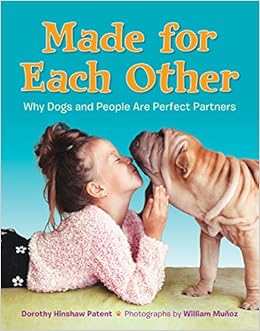
Summary:  Man’s best friend gets a closer look in the three sections of this book.  The first discusses the history of dogs, and how they evolved from wolves to partner with humans.  Part two, “The Science of Love” looks at how dogs’ brains work and what their body language and barks can communicate to humans.  The final section shows how contemporary humans and dogs share lives. The topics change quickly, with each two-page spread featuring a new heading and lots of adorable and sometimes funny photos.  Includes a long list of additional resources and source notes.  64 pages; grades 1-4.

Pros:  This book will be irresistible to dog lovers, not only because of the incredibly cute photographs, but also the interesting and relevant information (who doesn’t want to know what their dog is thinking?).  A perfect STEM title for all readers.

Cons:  Sorry, I just can’t think of anything negative in the presence of all those cute puppies.

If you would like to buy this book on Amazon, click here.

Mae Among the Stars by Roda Ahmed, illustrated by Stasia Burrington

Published by HarperCollins

Summary:  From an early age, Mae Jemison dreamed of becoming an astronaut.  Her mother told her what becomes a repeating refrain in this book: “If you can dream it, if you believe it and work hard for it, anything is possible.”  At school, some kids laughed at her aspiration, and a teacher told her nursing would be a more appropriate profession.  Fortunately, her mother didn’t let her believe this, and Mae promised that one day she would wave to her parents from a spaceship.  The last page shows the adult Mae in her orange space suit and reveals that she did become an astronaut and wave to her mom and dad on Earth.  Includes a page with additional biographical information.  40 pages; ages 4-8.

Pros:  An inspiring story of following your dream, illustrated with engaging round-faced characters and plenty of color.

Cons:  The biographical information is pretty thin.

If you would like to buy this book on Amazon, click here.

Winter Dance by Marion Dane Bauer, illustrated by Richard Jones

Published by Houghton Mifflin Harcourt

Summary:  When a single snowflake lands on a fox’s nose, the fox is unsure about how to handle the coming winter.  He gathers advice from other animals, but hibernation and migration options don’t work for him for one reason or another.  At last he meets another fox, and as snow begins to fall, whirling in the wind, the other fox shows him how they can dance together.  40 pages; ages 4-8.

Pros:  Muted illustrations perfectly capture the feeling of late fall and early winter.  The repeating text will help kids learn more about how animals survive the cold weather.

Cons:  It would have been nice to see some back matter explaining more about animal behavior, and especially about the foxes’ dance.

If you would like to buy this book on Amazon, click here.

Full of Fall by April Pulley Sayre

Published by Beach Lane Books

Summary:  “September sun is low in the sky/So long summer/Green, goodbye!” So begins this homage to autumn.  Each page has a few lines of poetry, describing the colors as leaves change from green to red and gold to brown.  Large, colorful photographs show the stages in detail, as well as animals often associated with the season, like squirrels and geese.  “Goodbye, leaf show/Winter is coming/Oh, hello, snow!”  The last page provides a perfect transition to check out a similar book by the author, Best in Snow.  Includes two pages that give more scientific information about what is happening on each page of the book.  40 pages; ages 3-8.

Pros:  Another gorgeous book about the seasons from April Pulley Sayre (see also Raindrops Roll).  Combine this with In the Middle of Fall by Kevin Henkes (see my 9/22 review) for a perfect autumn story hour.

Cons:  All that raking.

If you’d like to buy this book on Amazon, click here.

How to Be an Elephant: Growing Up in the African Wild by Katherine Roy

Published by Roaring Brook Press

Summary:  When a baby elephant is born, she has a lot to learn; good thing she has a protective family and herd to teach her.  From walking to using her complex trunk to figuring out the different smells in her environment, the youngster will spend several years learning all the elephant ways.  Labelled diagrams and full-page illustrations complement the text to impart all the intricate knowledge the elephant needs to survive.  Includes a note from the author about her research and the endangered status of African elephants, and a list of resources for further information.  48 pages; grades 2-6.

Pros:  Readers will learn a ton of information about elephants, both through the text and the illustrations, which should be considered by the Caldecott committee.

Cons:  While the book has the look and feel of a picture book, the information and vocabulary is pretty advanced for primary grades.

If you would like to buy this book on Amazon, click here.

What Makes a Monster? By Jess Keating, illustrated by David DeGrand

Published by Knopf Books for Young Readers

Summary:  From the team that brought you Pink Is for Blobfish comes this collection of animals that can seem “monstrous”.  Each two-page spread features a photo of the animal, a brief description of the animal and what makes dangerous or deadly, a sidebar with facts like diet and habitat, and another interesting fact or two.  Many of the animals have monster-sounding names like the assassin bug, the horror frog, and the tyrant leech king.  And some of them are downright creepy, like the cordyceps fungus that takes over insects’ brains, causing them to self-destruct.  The final page is the seemingly obligatory inclusion of humans with a catalog of how we are wreaking havoc on the planet.  Includes a page connecting animals to famous monsters (e.g., Dracula and the vampire bat), a page explaining how what we see as scary is really an animal’s way of protecting itself, and a glossary.  48 pages; grades 1-4.

Pros:  The gross-out factor combined with striking graphics and appealing page layouts makes this a surefire nonfiction hit.

Cons:  An introductory page would have been nice to give an overview of the book before diving into the first animal.

Charlotte the Scientist is Squished by Camille Andros, illustrated by Brianne Farley

Published by Clarion Books

Summary:  Charlotte the rabbit loves to use science to solve her problems.  Her biggest problem is that she is squished by her large family.  So she tries the steps of the scientific method, first asking a question, then forming a hypothesis, and finally running a series of experiments.  The first few fail, but she thinks she has found success when she builds a rocket and sends herself to the moon.  In space, she has all the space she could want, and when she makes her observations and draws her conclusions, she decides that her hypothesis was correct.  Being less squished has made her a better scientist!  But then a new problem arises: Charlotte is lonely.  So it’s back to the scientific method, and ultimately, back to earth, where she finally arrives at a solution that makes everyone happy.  The last two pages review the scientific method in greater detail.  40 pages; ages 4-8.

Pros:  The engaging story and cute rabbits make an appealing introduction to the scientific method.  Kids can even email Charlotte to tell her of their scientific successes.

Cons:  The word “hypothesis” is frequently used in the story, but isn’t defined until the last two pages.