Our Food: A Healthy Serving of Science and Poems by Grace Lin and Ranida T. McKneally, illustrated by Grace Zong

Published by Charlesbridge 
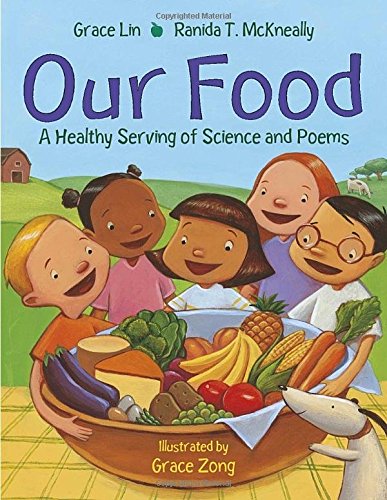
Summary:  Each two-page spread includes a large, colorful illustration, a haiku poem, and a question such as “Why are so many vegetables green?” and “What makes a grain a grain?”  Each question is answered with several paragraphs of kid-friendly text.  Five food groups are covered: fruits, vegetables, dairy, protein foods, and grains.  The book supports the USDA recommendations for eating these different types of foods.  The last couple pages encourage eating a variety of healthy foods and explain a little more about the food groups.  Includes a glossary.  40 pages; grades K-3.

Pros:  A good basic introduction to food and nutrition.  The haikus and cheerful illustrations add fun touches.

Cons;  Food allergies receive a one-sentence mention at the bottom of the third-to-last page, and varieties on the USDA-recommended diet, such as vegetarianism or gluten-free, are not mentioned.  A list of additional resources could have addressed some of those topics.


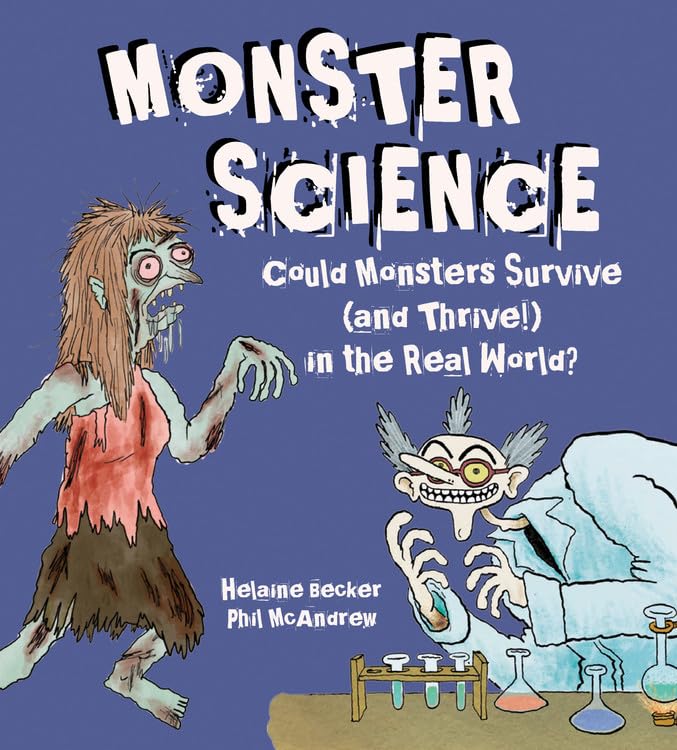
Monster Science: Could Monsters Survive (And Thrive!) in the Real World? By Helaine Becker, illustrated by Phil McAndrew

Published by Kids Can Press

Summary:  Frankenstein, vampires, Bigfoot, zombies, werewolves, and sea monsters…each chapter starts with a labeled illustration of the monster in question, then gives a little history.  Then it’s on to science, and lots of it.  For instance, the first chapter—Frankenstein—covers electricity, the nervous system, organ transplants, genetic engineering, and robots.  There are plenty of humorous illustrations, sidebars, and “Monster Facts”.  Each chapter ends with a 10-question quiz that tests kids comprehension without taking itself too seriously.  For Frankenstein, a score of 0-2 earns you the title of Luigi Galvani; 3-6 is Isaac Newton; and 7-10 is Dr. Frankenstein himself.  An index is included, but no resources for further exploration.  96 pages; grades 3-7.

Pros: This could make a fun and fairly comprehensive science textbook.  There’s plenty of information, presented with lots of humor.  The monster aspect adds an extra element of interest for readers.

Cons:  It would take a keen interest in science to get through all the material here.

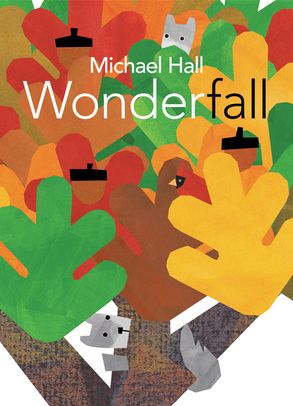
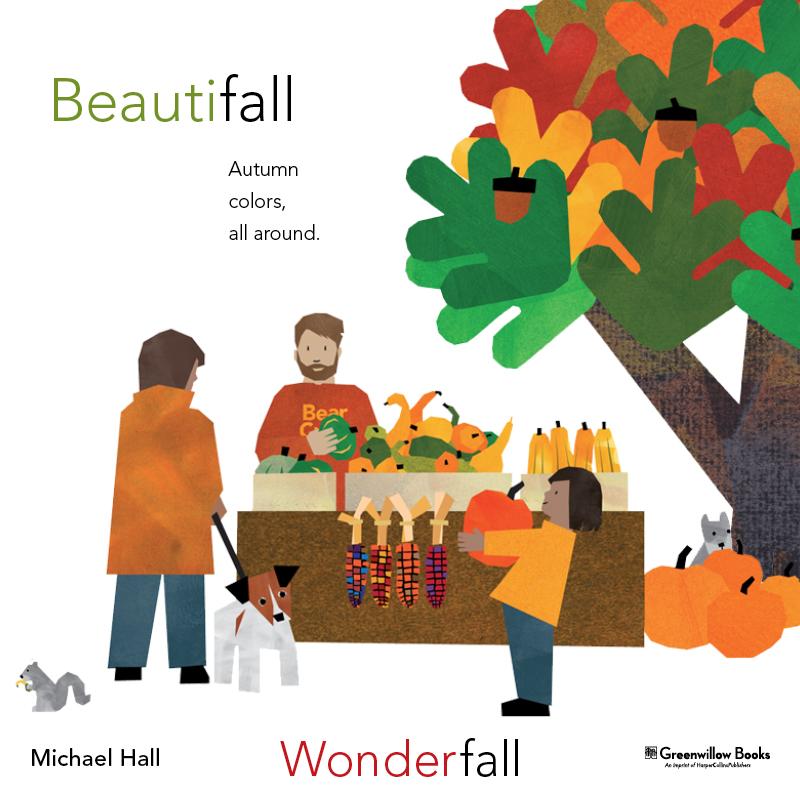
Wonderfall by Michael Hall

Published by Greenwillow Books 

Summary:  Each page has a picture of an oak tree and a poem about what is going on through the fall.  The poems are entitled with –fall words, such as thankfall, delightfall, and peacefall.  Gradually, the tree changes from green to multi colored to bare.  The school bus appears at the beginning, followed by a farmer’s market, an autumn parade, Halloween, Thanksgiving, and finally, clean-up of the fallen leaves.  The final word heralds a new season: snowfall.  Back matter includes information on how the animals pictured spend the winter (introducing the terms hibernation and migration), as well as the connection between squirrels and acorns, and how the tree will survive the cold weather.  40 pages; ages 4-8.

Pros:  A beautiful introduction to fall, with scenes kids will recognize from the season, illustrated with Michael Hall’s bright, simple creations.  The end matter will give readers more scientific information to appreciate the changing seasons.

Cons:  I couldn’t tell from the information given if some of the animals hibernate or stay awake in the winter.

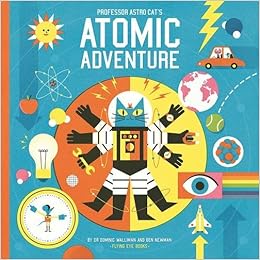
Professor Astro Cat’s Atomic Adventure by Dr. Dominic Walliman and Ben Newman

Published by Flying Eye

Summary:  Professor Astro Cat takes readers on a tour through the world of physics.  After announcing that physics holds the answers to many questions (“Why is the sky blue?” “How does a boat float?”), he covers many of the basics of physics, including gravity, sound, light, atoms, matter, energy, and more.  Each two-page spread of this oversize book has a dizzying array of graphics giving facts, answers to questions, and real-life examples.  This is a British import, so there are some British spellings and measurements.   A glossary-index is included at the end.  56 pages; grades 2-6.

Pros:  A very complete introduction to physics, explained in a kid-friendly but not condescending way, with eye-catching illustrations throughout.

Cons:  It will take a dedicated science fan or some adult support to get through all the content here.

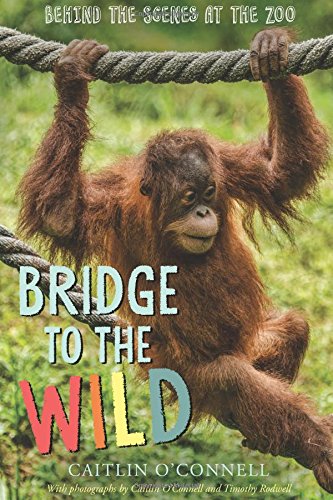
Bridge to the Wild: Behind the Scenes at the Zoo by Caitlin O’Connell, with photographs by Caitlin O’Connell and Timothy Rodwell

Published by HMH Books for Young Readers


Summary:  Caitlin O’Connell, elephant scientist and science writer, expands her horizons here to many other zoo animals.  Touring Zoo Atlanta in Atlanta, Georgia, she gives readers a behind-the-scenes look at how zoo staff study animal behavior.  Readers will learn how panda mothers interact with their babies, how hierarchies work with various social animals like elephants and gorillas, and how zoo staff handle deadly poisonous snakes.  Much of what is learned about animals in captivity can be applied to helping species survive in the wild.  The last chapter describes ways humans have been able to help endangered animals such as Brazil’s lion tamarin.  Includes extensive bibliography, source notes, and index.  208 pages, grades 5-7.

Pros:  Animal lovers will learn a lot from this book, and come away with a new appreciation for zoos and the people who work there.  Excellent photographs illustrate almost every page.  Chapters could be read in isolation by those interested in a specific animal.

Cons:  At 208 pages, it will take a pretty dedicated young zoologist to get through the whole book.

How Much Does a Ladybug Weigh? by Alison Limentani

Published by Boxer Books 

Summary:  “10 ants weigh the same as 1 ladybug.  9 ladybugs weigh the same as 1 grasshopper.”  And so this book goes, counting down from 10 to 1, with each page showing a progressively larger animal that weighs the same as that number of the animal from the preceding page.  The final, largest animal is a swan, which weighs the same as 362,880 ladybugs.  The last page shows all the animals with each one’s weight shown in ounces or pounds.  32 pages; ages 3-6.

Pros:  A fun introduction to weight and relative sizes for the youngest readers.  The simple, cute animal illustrations will make this an easy sell.

Cons:  You’ll need to look elsewhere for an introduction to units of measure and other information about weight.

Goodbye Summer, Hello Autumn by Kenard Pak

Published by Henry Holt and Company 

Summary:  A girl and her dog go for a walk through the fields and forests on a late summer day.  As they go, she greets everything she sees: “Hello, trees. Hello walking sticks and butterflies.  Hello, puddles.”  Each item responds to tell her how it is changing as summer turns into fall.  The trees are swaying in the breeze, the animals are looking for food, and the sun is setting earlier each evening.  After watching it set, the girl says goodbye to summer and goes into her house.  A wordless two-page spread shows a peaceful nighttime scene.  On the final page, the girl sits on her front step, the sun back in the sky, and greets the new season: “Hello, autumn!”  32 pages, ages 4-7.

Pros:  Perfect for this time of year, the text and the beautiful green and gold illustrations will get kids talking about the changes they see around them as summer moves into fall.

Cons:  That twinge of sadness I feel as the days shorten and the leaves start to change colors.

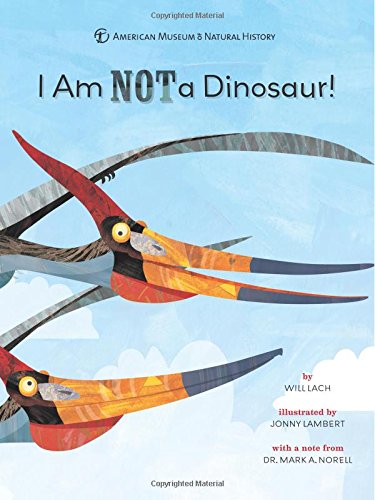
I Am NOT a Dinosaur! by Will Lach, illustrated by Jonny Lambert

Published by Sterling Children’s Books 

Summary:  Sure, we all know T-Rex, Stegosaurus, and Triceratops, but they weren’t the only vertebrates around in prehistoric times, not by a long shot.  The rhyming text introduces some of the other key players, like the familiar saber-tooth cat and woolly mammoth, and the less-well known dunkleosteus and glyptodont.  An introductory note from Dr. Mark A. Norrell, paleontologist at the American Museum of Natural History starts things off, and a final author’s note puts the prehistoric eras into some perspective, comparing the 170 million years of dinosaurs with 200,000 years of modern humans.  There’s also a bit more information on each animal and a timeline showing the different geologic time periods and which of the animals lived in each one.  40 pages; grades K-3.

Pros:  There’s more to this book than meets the eye.  Young dinosaur fans will enjoy learning about some new animals, but the front and end notes add a lot more information.  If you’ve followed this blog for a while, you may know what a fan I am of cut-paper illustrations, and these are right up there with Steve Jenkins’ work.

Cons:  You might be sorry if you don’t glance at the pronunciation guides in the end matter before attempting a read aloud.

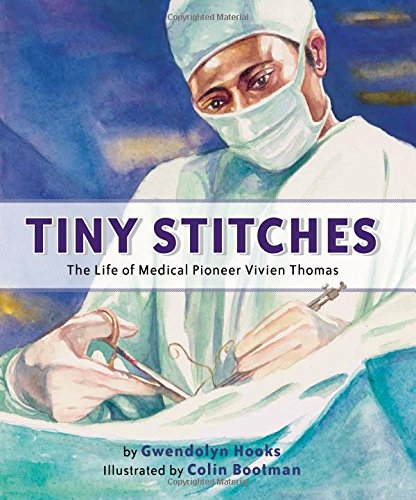
Tiny Stitches: The Life of Medical Pioneer Vivien Thomas by Gwendolyn Hooks, illustrated by Colin Bootman

Published by Lee & Low Books 

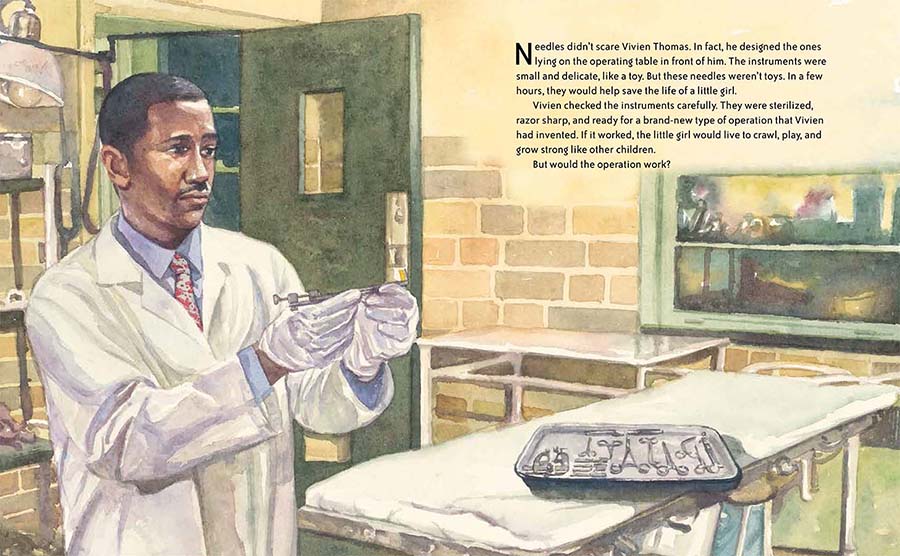
Summary:  Vivien Thomas dreamed of becoming a doctor, but when the Great Depression hit, he lost all his college savings.  Determined to pursue a medical career, he found a job as a research assistant for Dr. Alfred Blalock at Vanderbilt University.  Vivien proved to be a quick study and soon was conducting his own experiments and mastering surgical skills like suturing blood vessels.  In 1941, Dr. Blalock was offered a job at Johns Hopkins University.  He accepted it on the condition that Vivien would go with him.  At Johns Hopkins, the two men met Dr. Helen Taussig, a pediatric cardiologist who was trying to find a cure for so-called “blue-babies” whose skin turned blue because of a heart defect.  Vivien Thomas ended up doing a large portion of the research, developing a procedure, and designing a needle tiny enough to do the surgery.  When Dr. Blalock performed the ground-breaking surgery in 1944, it was Vivien who stood behind him and coached him, a role he would continue to play after the first surgery was a success.  More than a quarter of a century went by before Vivien finally got the recognition he deserved, having his portrait hung in Johns Hopkins Hospital and being awarded an honorary doctorate.  Back matter includes more information about the surgical procedure and Vivien Thomas, as well as a medical glossary and sources.  32 pages; grades 2-5.

Pros:  A compelling story of a little-known African-American scientist who overcame a myriad of prejudices to make an important contribution to medicine.  Kids who find this book interesting may want to read last year’s Breakthrough! How Three People Saved “Blue Babies” and Changed Medicine Forever by Jim Murphy.

Cons:  There is a lot of text and somewhat technical information for a picture book.

Every Breath We Take: A Book About Air by Maya Ajmera and Dominique Browning, with a foreword by Julianne Moore

Published by Charlesbridge 

Summary:  Brightly colored photographs illustrate the simple text describing how air is all around us and necessary for all kinds of life.  The last several pages talk about how dirty air is unhealthy, and makes several kid-friendly suggestions (ride bikes and walk more, turn out the lights) to help clean up polluted air.  The final two pages have six questions, such as “What is air?” and “Why is clean air so important?” with a few paragraphs of information on each topic.  40 pages; ages 4-8.

Pros:  A simple and beautifully illustrated introduction to the importance of clean air in our lives.

Cons:  Trying to answer the question “What is climate change, and how is it connected to air pollution?” in two paragraphs seems overly ambitious.