Bridge to the Wild: Behind the Scenes at the Zoo by Caitlin O’Connell, with photographs by Caitlin O’Connell and Timothy Rodwell

Published by HMH Books for Young Readers
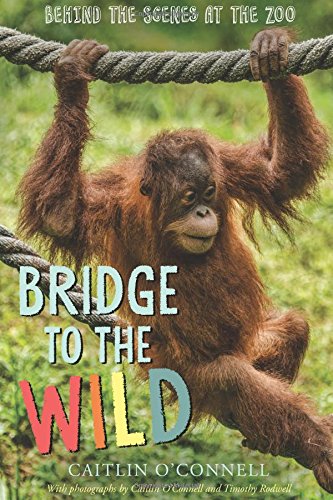
 

Summary:  Caitlin O’Connell, elephant scientist and science writer, expands her horizons here to many other zoo animals.  Touring Zoo Atlanta in Atlanta, Georgia, she gives readers a behind-the-scenes look at how zoo staff study animal behavior.  Readers will learn how panda mothers interact with their babies, how hierarchies work with various social animals like elephants and gorillas, and how zoo staff handle deadly poisonous snakes.  Much of what is learned about animals in captivity can be applied to helping species survive in the wild.  The last chapter describes ways humans have been able to help endangered animals such as Brazil’s lion tamarin.  Includes extensive bibliography, source notes, and index.  208 pages, grades 5-7.

Pros:  Animal lovers will learn a lot from this book, and come away with a new appreciation for zoos and the people who work there.  Excellent photographs illustrate almost every page.  Chapters could be read in isolation by those interested in a specific animal.

Cons:  At 208 pages, it will take a pretty dedicated young zoologist to get through the whole book.

How Much Does a Ladybug Weigh? by Alison Limentani

Published by Boxer Books 

Summary:  “10 ants weigh the same as 1 ladybug.  9 ladybugs weigh the same as 1 grasshopper.”  And so this book goes, counting down from 10 to 1, with each page showing a progressively larger animal that weighs the same as that number of the animal from the preceding page.  The final, largest animal is a swan, which weighs the same as 362,880 ladybugs.  The last page shows all the animals with each one’s weight shown in ounces or pounds.  32 pages; ages 3-6.

Pros:  A fun introduction to weight and relative sizes for the youngest readers.  The simple, cute animal illustrations will make this an easy sell.

Cons:  You’ll need to look elsewhere for an introduction to units of measure and other information about weight.

Goodbye Summer, Hello Autumn by Kenard Pak

Published by Henry Holt and Company 

Summary:  A girl and her dog go for a walk through the fields and forests on a late summer day.  As they go, she greets everything she sees: “Hello, trees. Hello walking sticks and butterflies.  Hello, puddles.”  Each item responds to tell her how it is changing as summer turns into fall.  The trees are swaying in the breeze, the animals are looking for food, and the sun is setting earlier each evening.  After watching it set, the girl says goodbye to summer and goes into her house.  A wordless two-page spread shows a peaceful nighttime scene.  On the final page, the girl sits on her front step, the sun back in the sky, and greets the new season: “Hello, autumn!”  32 pages, ages 4-7.
Pros:  Perfect for this time of year, the text and the beautiful green and gold illustrations will get kids talking about the changes they see around them as summer moves into fall.

Cons:  That twinge of sadness I feel as the days shorten and the leaves start to change colors.

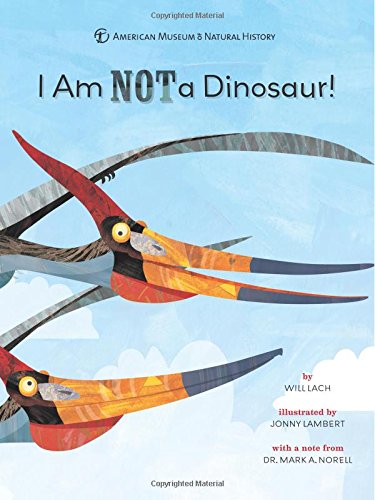
I Am NOT a Dinosaur! by Will Lach, illustrated by Jonny Lambert

Published by Sterling Children’s Books 

Summary:  Sure, we all know T-Rex, Stegosaurus, and Triceratops, but they weren’t the only vertebrates around in prehistoric times, not by a long shot.  The rhyming text introduces some of the other key players, like the familiar saber-tooth cat and woolly mammoth, and the less-well known dunkleosteus and glyptodont.  An introductory note from Dr. Mark A. Norrell, paleontologist at the American Museum of Natural History starts things off, and a final author’s note puts the prehistoric eras into some perspective, comparing the 170 million years of dinosaurs with 200,000 years of modern humans.  There’s also a bit more information on each animal and a timeline showing the different geologic time periods and which of the animals lived in each one.  40 pages; grades K-3.

Pros:  There’s more to this book than meets the eye.  Young dinosaur fans will enjoy learning about some new animals, but the front and end notes add a lot more information.  If you’ve followed this blog for a while, you may know what a fan I am of cut-paper illustrations, and these are right up there with Steve Jenkins’ work.

Cons:  You might be sorry if you don’t glance at the pronunciation guides in the end matter before attempting a read aloud.

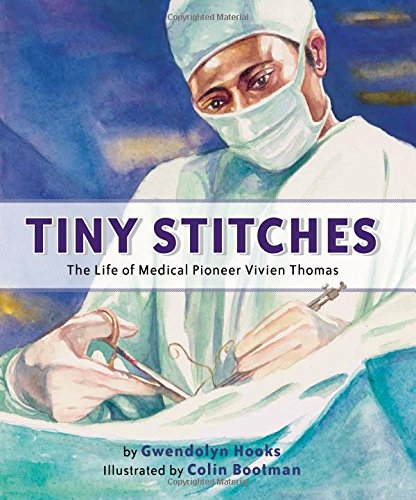
Tiny Stitches: The Life of Medical Pioneer Vivien Thomas by Gwendolyn Hooks, illustrated by Colin Bootman

Published by Lee & Low Books 

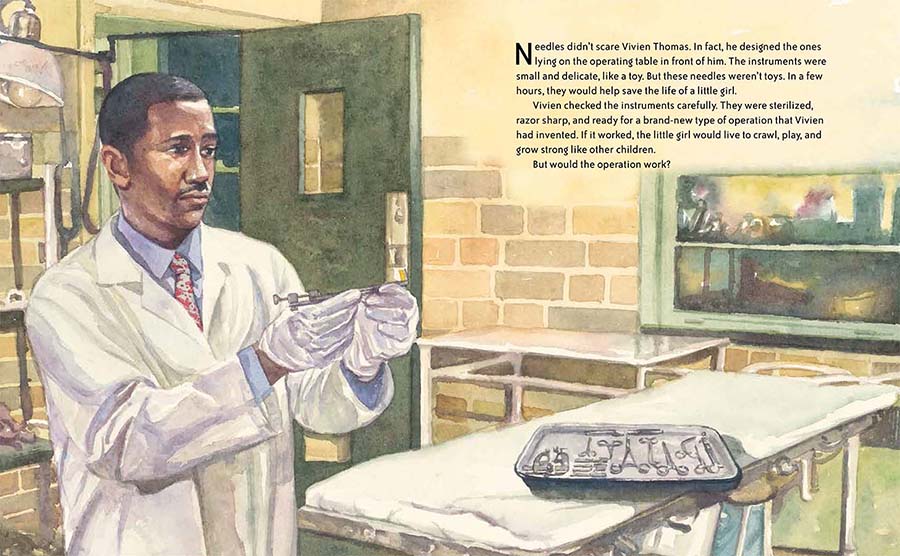
Summary:  Vivien Thomas dreamed of becoming a doctor, but when the Great Depression hit, he lost all his college savings.  Determined to pursue a medical career, he found a job as a research assistant for Dr. Alfred Blalock at Vanderbilt University.  Vivien proved to be a quick study and soon was conducting his own experiments and mastering surgical skills like suturing blood vessels.  In 1941, Dr. Blalock was offered a job at Johns Hopkins University.  He accepted it on the condition that Vivien would go with him.  At Johns Hopkins, the two men met Dr. Helen Taussig, a pediatric cardiologist who was trying to find a cure for so-called “blue-babies” whose skin turned blue because of a heart defect.  Vivien Thomas ended up doing a large portion of the research, developing a procedure, and designing a needle tiny enough to do the surgery.  When Dr. Blalock performed the ground-breaking surgery in 1944, it was Vivien who stood behind him and coached him, a role he would continue to play after the first surgery was a success.  More than a quarter of a century went by before Vivien finally got the recognition he deserved, having his portrait hung in Johns Hopkins Hospital and being awarded an honorary doctorate.  Back matter includes more information about the surgical procedure and Vivien Thomas, as well as a medical glossary and sources.  32 pages; grades 2-5.

Pros:  A compelling story of a little-known African-American scientist who overcame a myriad of prejudices to make an important contribution to medicine.  Kids who find this book interesting may want to read last year’s Breakthrough! How Three People Saved “Blue Babies” and Changed Medicine Forever by Jim Murphy.

Cons:  There is a lot of text and somewhat technical information for a picture book.

Every Breath We Take: A Book About Air by Maya Ajmera and Dominique Browning, with a foreword by Julianne Moore

Published by Charlesbridge 

Summary:  Brightly colored photographs illustrate the simple text describing how air is all around us and necessary for all kinds of life.  The last several pages talk about how dirty air is unhealthy, and makes several kid-friendly suggestions (ride bikes and walk more, turn out the lights) to help clean up polluted air.  The final two pages have six questions, such as “What is air?” and “Why is clean air so important?” with a few paragraphs of information on each topic.  40 pages; ages 4-8.

Pros:  A simple and beautifully illustrated introduction to the importance of clean air in our lives.

Cons:  Trying to answer the question “What is climate change, and how is it connected to air pollution?” in two paragraphs seems overly ambitious.

Coyote Moon by Maria Gianferrari, pictures by Bagram Ibatoulline

Published by Roaring Brook Press


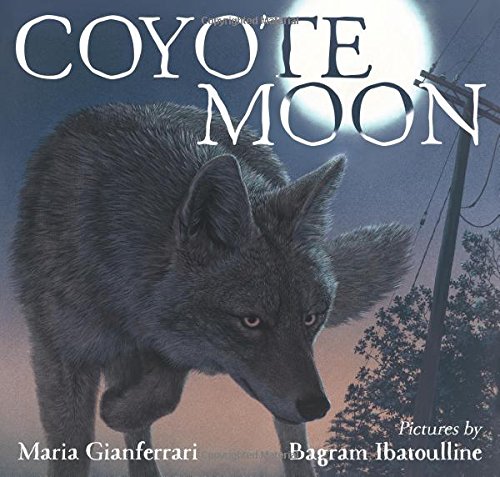
Summary:  A coyote explores a nighttime suburban neighborhood, looking for food to bring back to his family’s den in a cemetery.  He is unsuccessful in catching a mouse and a rabbit; geese at a neighborhood pond chase him away before he can get to their eggs.  Just before dawn, he manages to kill a turkey.  His song awakens a little girl, who looks out her bedroom window to see him walking through her backyard.  Finally, he returns to his den, where his family eats, then falls asleep for the day.  The last two pages contain a wealth of coyote facts and some books and websites for further research.  32 pages; ages 4-8.

Pros:  An interesting and positive look at an animal that (I learned from this book) lives in every state except Hawaii, and is often considered a nuisance at best and a danger at worst.  The illustrations are stunning and realistic, capturing the coyote’s beauty and movements perfectly.

Cons:  Given the prevalence of coyotes in the U.S., it would have been helpful to offer tips about what to do if you encounter a coyote.


Whoosh! Lonnie Johnson’s Super-Soaking Stream of Inventions by Chris Barton, illustrated by Don Tate

Published by Charlesbridge

Whoosh!: Lonnie Johnson's Super-Soaking Stream of Inventions: Barton,  Chris, Tate, Don: 9781580892971: Amazon.com: Books

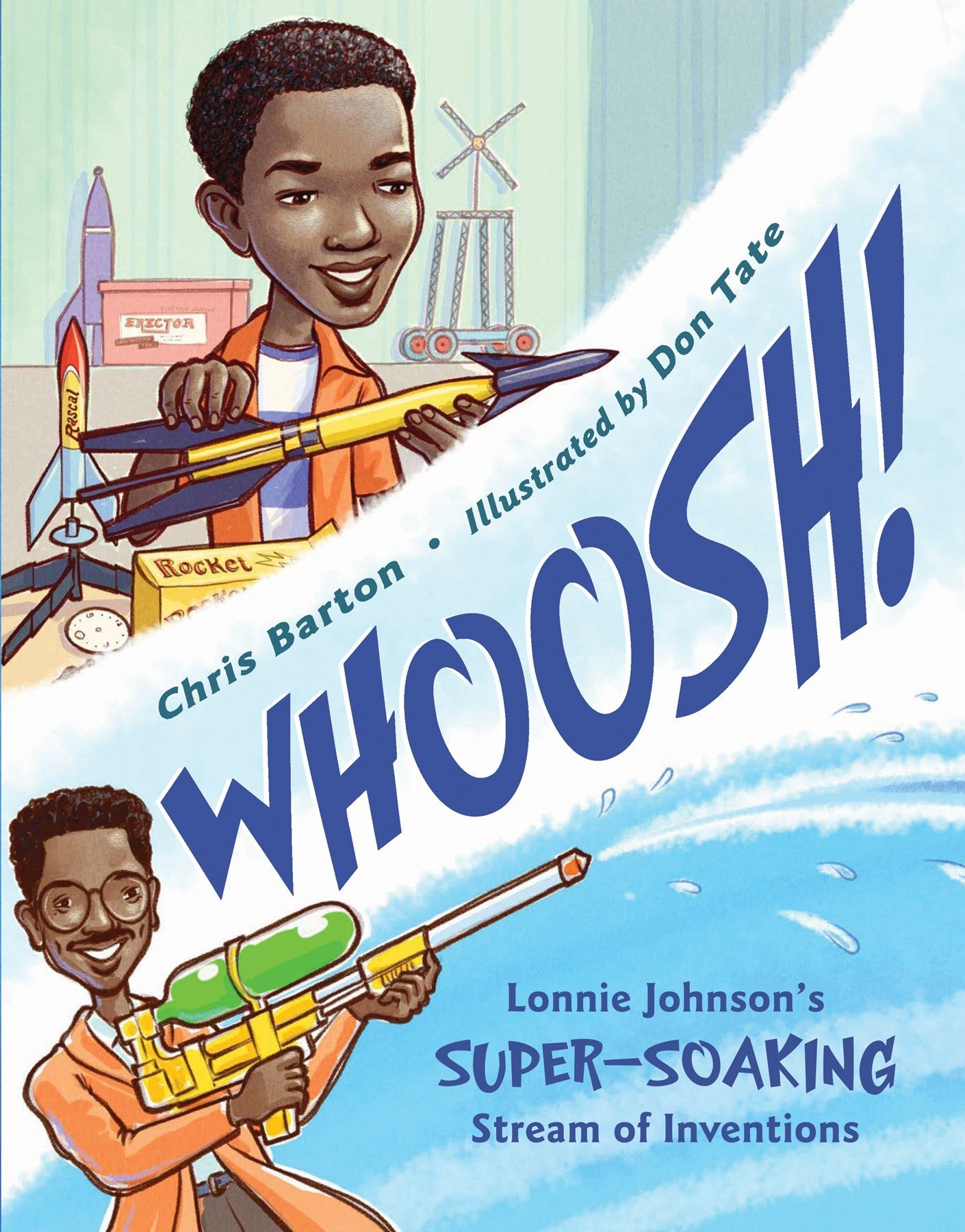
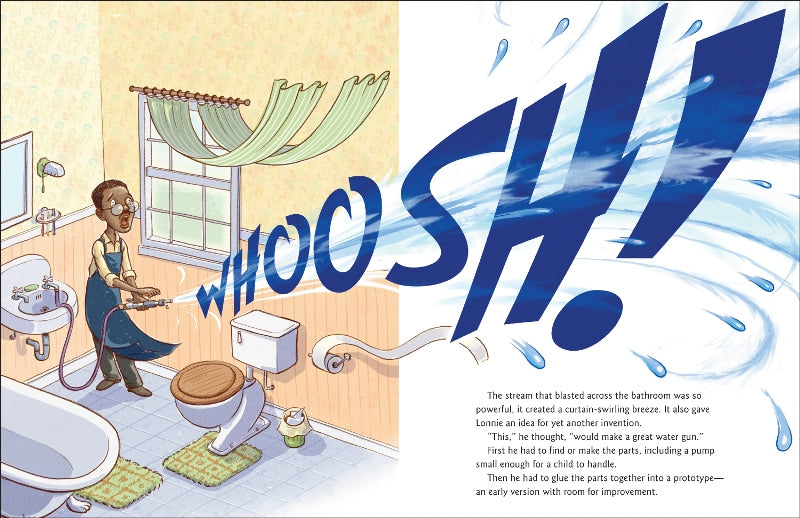
Summary:  When Lonnie Johnson was growing up in Alabama, his small house and large family didn’t leave him with much space to do what he loved best…invent.  Still, he had supportive parents (when his rocket fuel caught fire in the kitchen, his mom just sent him outside) and a lot of perseverance.  His hard work paid off in high school, when his robot won first place at a science fair at the University of Alabama—a school that African-American students like Lonnie hadn’t been allowed to attend just a few years before.  Lonnie graduated from Tuskegee, then went on to work for NASA, but he kept inventing in his spare time.  While testing an environmentally-friendly cooling system, he serendipitously invented the Super Soaker water gun.  This hit toy has given Lonnie enough income to allow him to continue working on his inventions full-time.  The author’s note explains how he learned about kids’ stereotypical ideas about scientists, leading him to write a biography of a man who doesn’t fit those stereotypes. 32 pages; grades 1-5.

Pros:  Kids will connect with this hard-working, but fun-loving scientist who invented a much-loved toy; teachers will make connections to science and African-American history curriculum; and librarians will enjoy using this book to tie in with their maker spaces.

Cons:  It seemed to me that Lonnie Johnson was a bit hasty in disregarding the advice, “Don’t quit your day job”.

Circle by Jeannie Baker

Published by Candlewick Press 

Summary:  Before the title page, a boy lies on his bed, wishing he could fly.  A couple pages later, he’s in wheelchair on the beach, watching a bird called a godwit flying with his flock.  They’re heading north, on the longest migration any animal in the world makes, traveling 7,000 miles from Australia to Alaska.  It’s a perilous journey, but the godwit finally makes it.  He builds a nest and finds a mate.  Together they have four babies, only one of which survives to make the return trip with his parents.  The flock flies for nine days and nights without stopping, arriving back at the beach where the story started, and where the boy has now abandoned a set of crutches to run along the beach.  An author’s note tells more about godwits and some of the threats to their survival.  48 pages; grades K-3.

Pros:  Beautiful collage illustrations capture the various environments inhabited by this remarkable bird.

Cons:  A hungry fox eats the other three chicks.

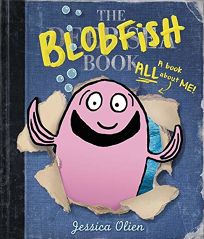
The Blobfish Book by Jessica Olien

Published by Balzer + Bray 

Summary:  Blobfish takes a book called The Deep Sea Book and turns it into The Blobfish Book.  The original is about the deepest part of the ocean, with photographs of some of the animals that live there.  Blobfish’s version has a pink cartoon of himself drawn onto the photographs, attempting to make it all about him.  Finally, the book gets to the page about blobfish, but the sentence “The blobfish was once voted the world’s ugliest animal” stops the narrator in his tracks.  Fortunately, the other sea creatures are paying attention, and they join forces to create a final page that celebrates Blobfish and cheers him up again.  Includes more facts about the deep sea and its creatures, plus a list of additional resources.   40 pages; ages 4-8.

Pros:  2016 is turning into The Year of the Blobfish…this is the second kids’ book featuring a blobfish in the last six months (see Pink is for Blobfish).  This one is a fun blend of fact and fiction, with some facts about the deepest parts of the ocean being snuck in around Blobfish’s slightly obnoxious, but always good-intentioned narration.

Cons:  The informational part is pretty slight.