Persistence, resistance, and a fight for existence

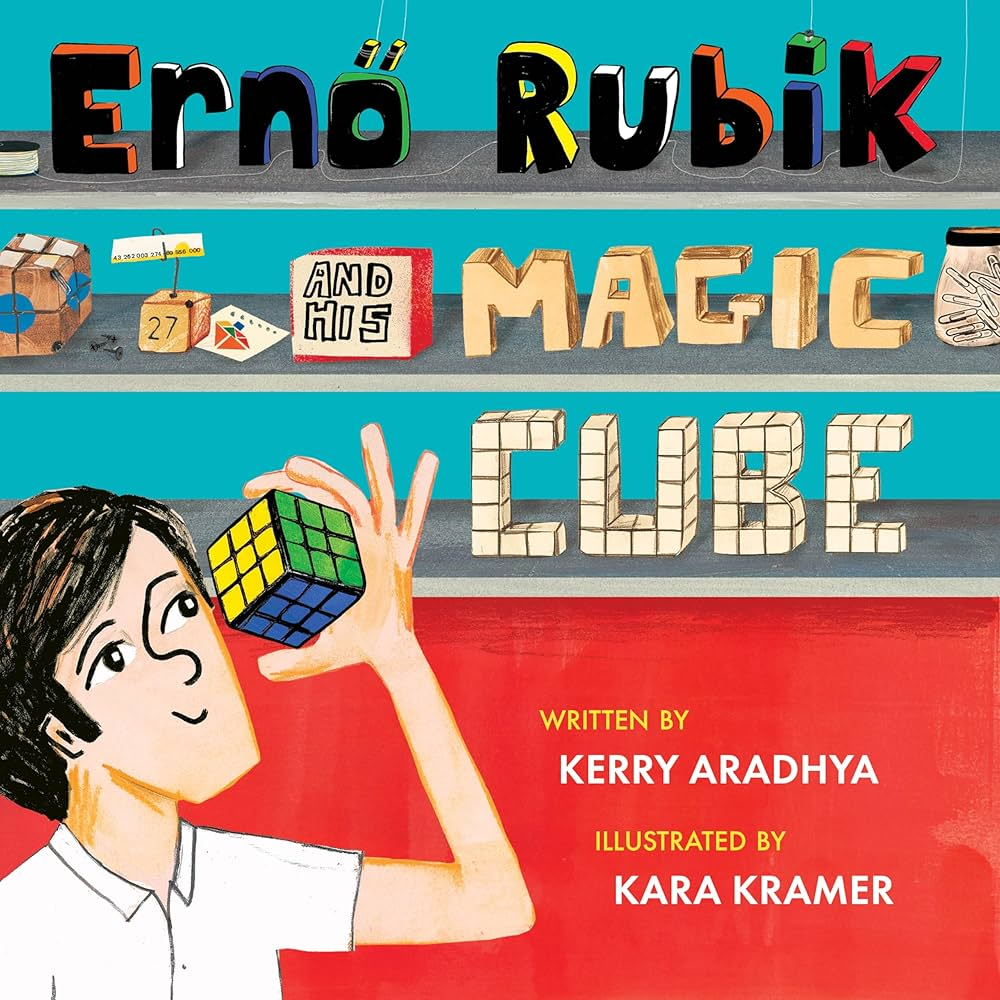
Ernö Rubik and His Magic Cube by Kerry Aradhya, illustrated by Kara Kramer (Peachtree, 32 pages, grades K-4). Ernö Rubik was a solitary kid who enjoyed reading and solving puzzles in his Budapest home. He grew up to be a teacher who would build models to teach his students about three-dimensional objects. His curiosity about cubes led him to try making a big cube out of small ones that could move around but stay connected. His first attempts failed, but he finally found the secret: 26 cubes in three rows, with a round mechanical core. And the rest is history as Ernö’s invention, the Rubik’s Cube, went on to become one of the most popular puzzles of all time. Includes additional information about Rubik and his cube, an author’s note, and a list of three books about the cube.

Although there are some details about Ernö Rubik’s life, the focus is on the Rubik’s cube and the perseverance needed to solve a difficult problem. If kids haven’t tried the cube, they will definitely get their hands on one and start searching YouTube for various solutions.

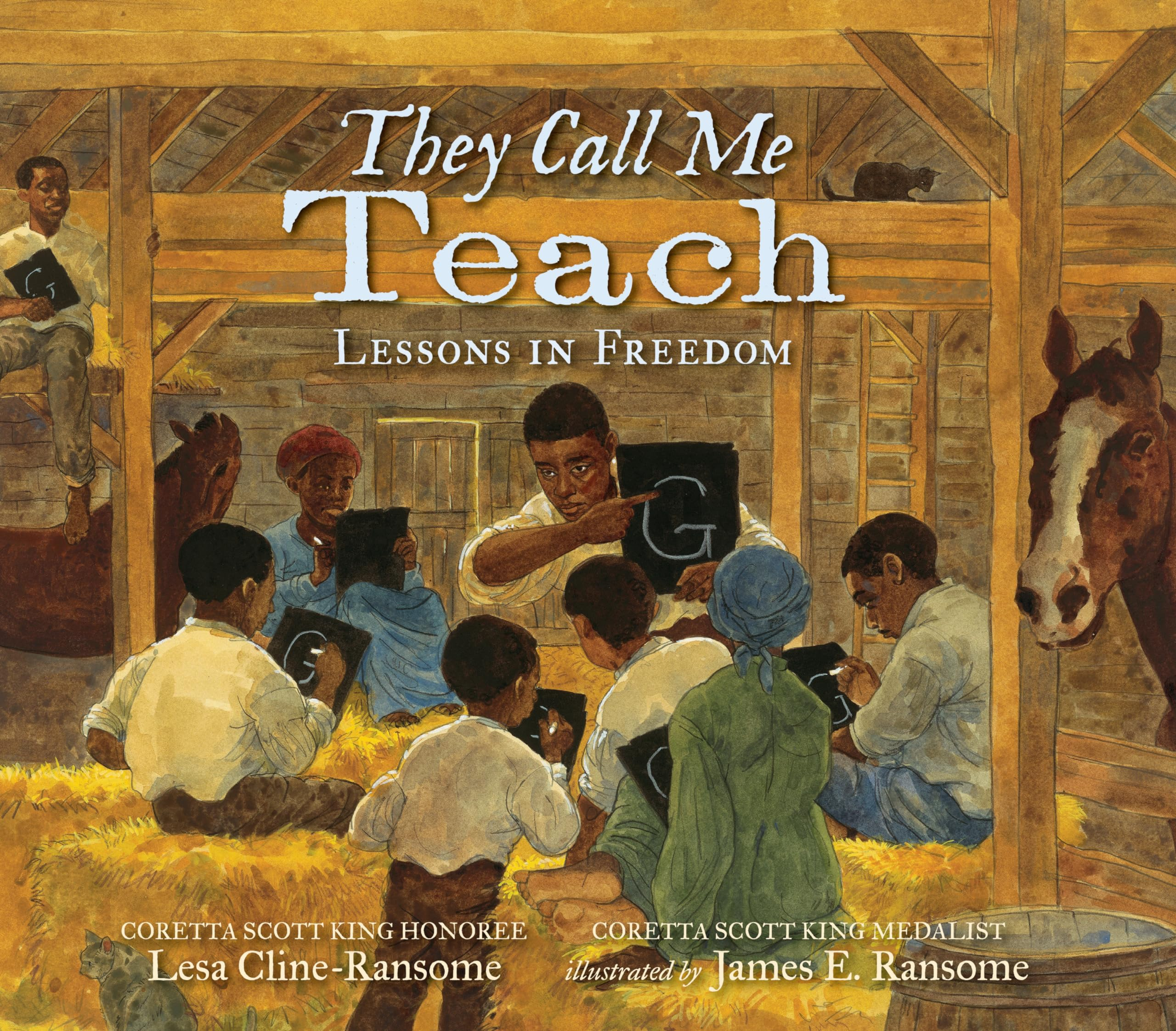
They Call Me Teach: Lessons in Freedom by Lesa Cline-Ransome, illustrated by James E. Ransome (Candlewick, 40 pages, grades 1-5). A young enslaved man is known as Teach, due to his abilities to read and write that he learned growing up with the master’s son. By day he works as a clerk in the master’s store, but at night he teaches other enslaved people to read. He secretly helps people by reading their letters and, in one case, writing a receipt to help a woman escape. Just looking at a newspaper in public results in punishment, leaving readers to infer that there could be much more serious consequences for teaching literacy to other Black people. An author’s note gives more information about Black people’s quest for education throughout history. Includes a list entitled “More Books on Resistance.”

This husband and wife team has created a fascinating story that focuses on the large majority of enslaved people for whom escape was impossible and who tried to resist and improve themselves in the ways that were available to them, despite the risk of cruel punishments. Sure to be a Coretta Scott King award contender.

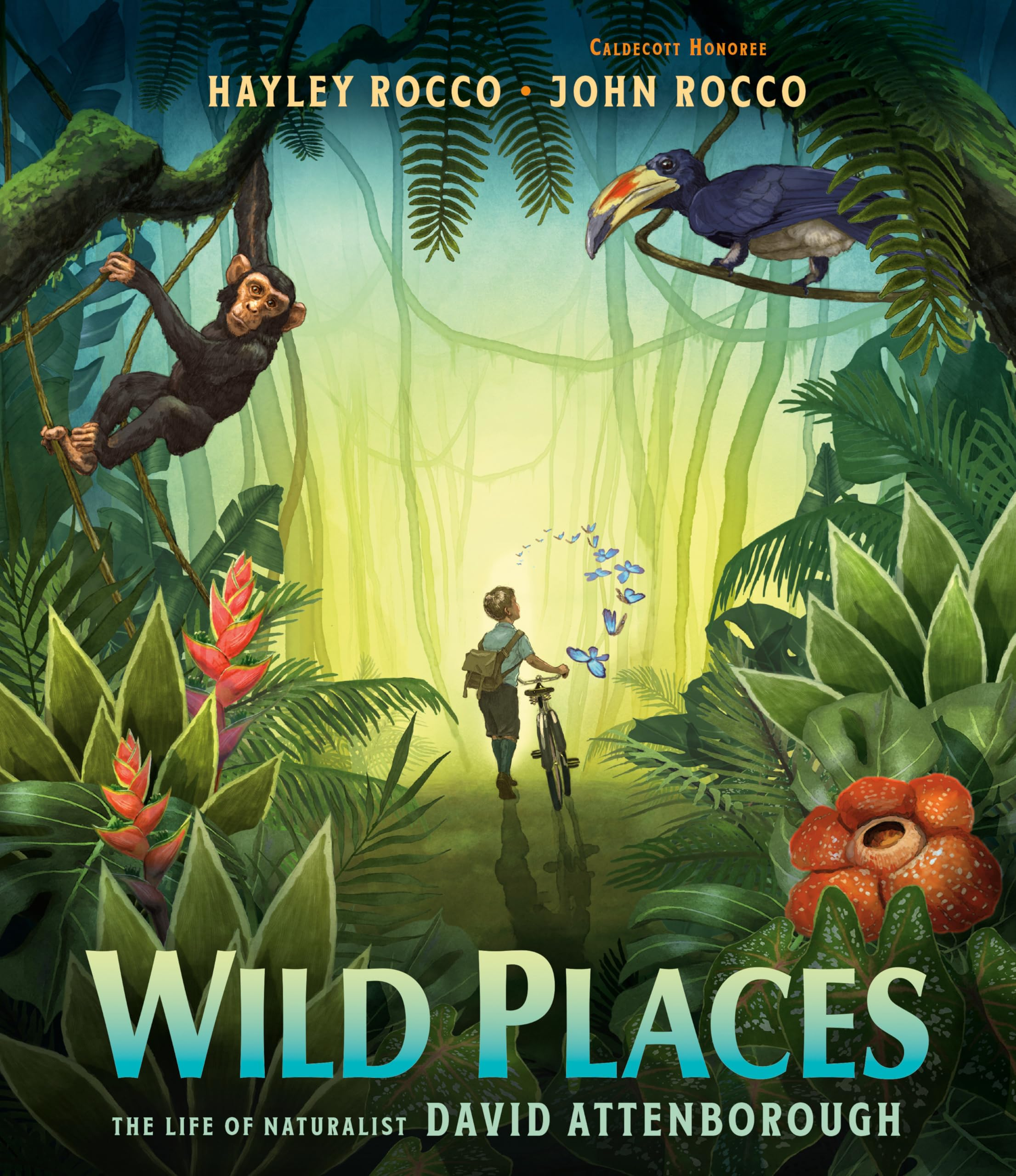
Wild Places: The Life of Naturalist David Attenborough by Hayley Rocco, illustrated by John Rocco (G. P. Putnam’s Sons Books for Young Readers, 48 pages, grades K-3). The story of David Attenborough’s life is told by another husband and wife team. Young David loved exploring the natural world around his English home, and he continued those studies as a university student. When he graduated, television was just becoming popular, and he got a job introducing viewers to the world of nature. Before long, he was traveling all over the world to show people plants and animals of different ecosystems. His travels made him more aware of the ways that wild places were shrinking and living creatures were losing their habitats. David shifted his focus to helping people understand what was happening and giving them information to help them make better choices for the planet, work that he continues today in at the age of 98. Includes an author’s note with additional information about David Attenborough and rewilding, a couple of photos, and a bibliography.

Like the Ernö Rubik biography, this is an engaging read that’s a little light on biographical information. Most pages only contain a sentence or two of text, along with award-winning illustrator’s John Rocco’s beautiful depictions of the natural world. Quotes from David Attenborough are scattered throughout the book, and the end matter fleshes out his life a bit more.

National treasures

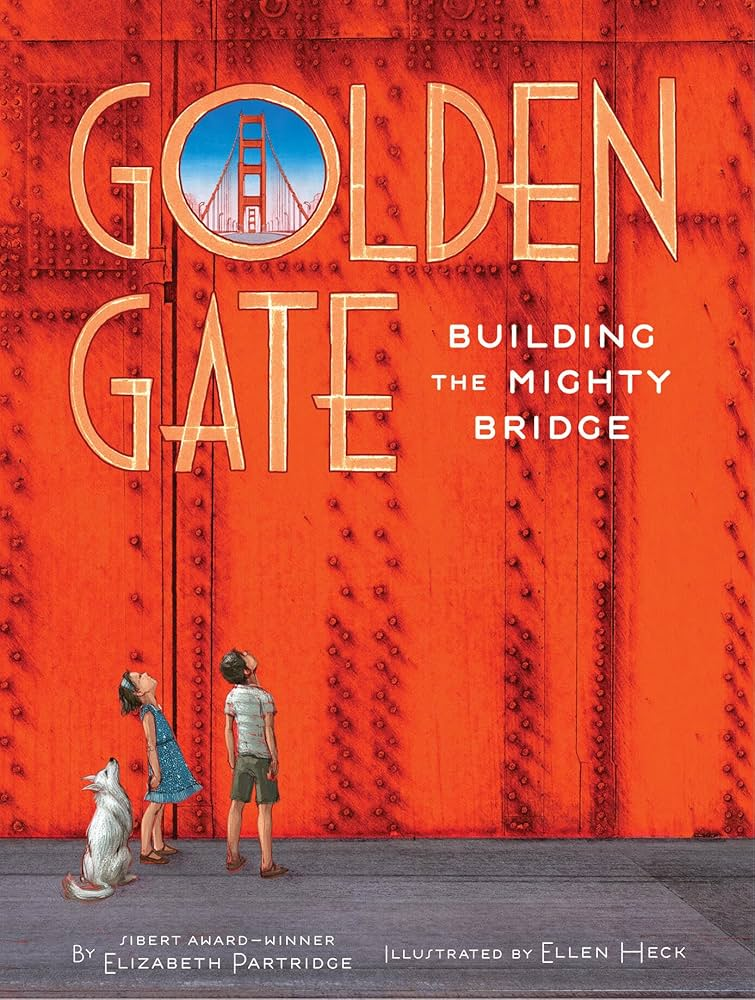
Golden Gate: Building the Mighty Bridge by Elizabeth Partridge, illustrated by Ellen Heck (Chronicle Books, 60 pages, grades 2-5). The two children of a lighthouse keeper observe the creation of the Golden Gate Bridge from their house. Told in second person narration (“You leap out of bed–how did you forget? Today’s the day work begins on the Golden Gate Bridge”), the text includes plenty of construction details and emphasizes the seemingly impossible nature of the project. As the kids grow older, the foreman gets to know them and sometimes includes them in some aspects of construction, like the day they get to ride the elevator to a height of 700 feet above the water. Finally, on May 27, 1937, the Golden Gate Bridge is open to the public, and crowds of people, including the two children, walk across the bridge, where “the word impossible seems like nothing at all.” Includes an afterword with additional information.

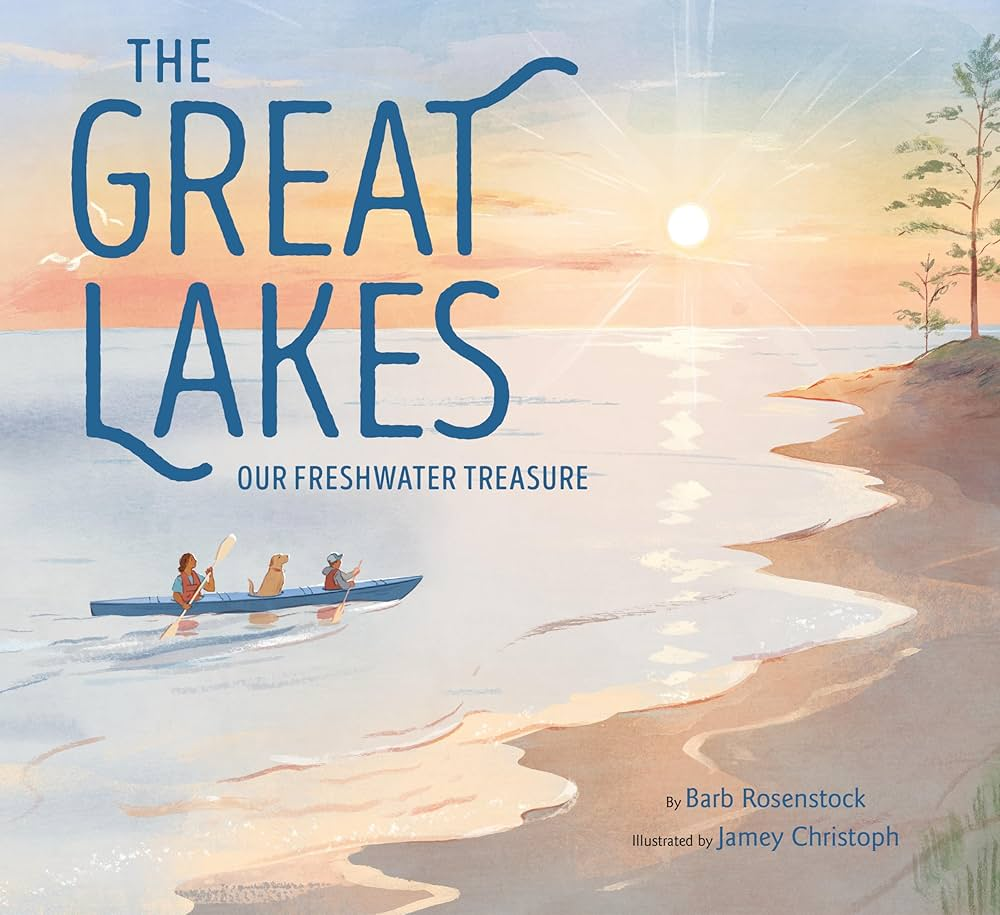
Great Lakes: Our Freshwater Treasure by Barb Rosenstock, illustrated by Jamey Christoph (Knopf Books for Young Readers, 40 pages, grades 2-5). Beginning with the history of the five Great Lakes, formed by the melting of a huge glacier that covered more than half of North America, the narrative shifts to the present importance of the lakes. Not only are they home to many species of plants and animals, but they contain almost all of the surface freshwater in North America. Although they are essential in supporting humans, we’ve done our best to poison and pollute them. In recent years, work has been done to protect them, and readers are invited to investigate how they can help preserve these national treasures. Includes messages from the author and Kathleen Smith, an indigenous woman from the Great Lakes Indian Fish and Wildlife Commission, information about the Center for Great Lakes Literacy, and a list of sources.

Both of these books are chock full of fascinating information, well supplemented by beautiful, detailed illustrations, that will help readers better understand two famous American landmarks. Although they are both picture books, each one contains quite a bit of text and somewhat technical information, making them better choices for older elementary and middle school readers.

Space travel

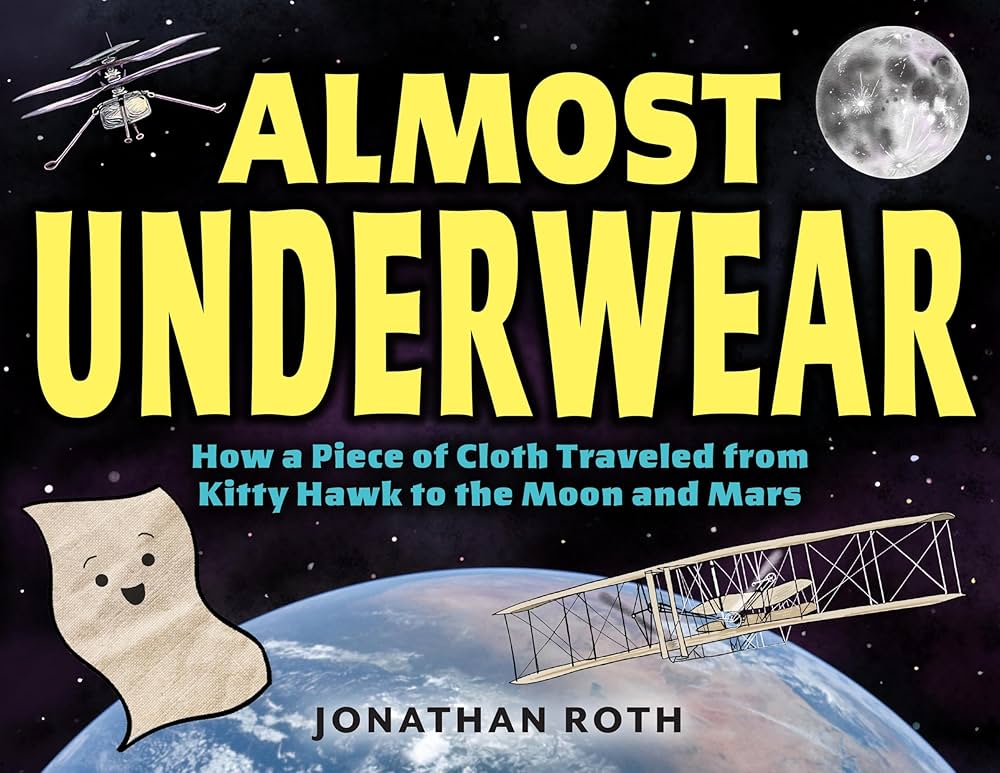
Almost Underwear: How a Piece of Cloth Traveled from Kitty Hawk to the Moon and Mars by Jonathan Roth (Christy Ottaviano Books, 40 pages, grades 1-5). Back in 1903, unbleached muslin was most commonly used to make ladies’ underwear. But one bolt of fabric was purchased by Wilbur and Orville Wright and used for a completely different purpose: to help make the wings of their new flying machine. Although they succeeded, and the muslin went airborne, the machine ultimately was wrecked and went into storage for many years. Shortly before his death, Orville donated swatches of fabric to the new Carillon Historical Park museum in Dayton, Ohio, where it stayed until 1969, when Neil Armstrong carried a piece of it into space. The cloth made it all the way to the Moon, where Armstrong carried it on his moonwalk. The cloth’s final adventures took place in 2020, when it traveled all the way to Mars on board the rover Perseverance. Not only that, but the cloth was attached to Ingenuity, a four-pound helicopter that became the first machine to fly on a different planet. Not bad…for something that could have been some underwear. Includes an author’s note, a glossary of the Perseverance instruments, and a bibliography.

The title reveals the clever hook used to look at three different milestones in air and space travel history, illustrated with combinations of historical photographs and cartoons, including a fun cartoon rendering of the happy piece of cloth. The author does a great job of making STEM history accessible to elementary readers. Pro tip: be very specific when doing a Google images search for Almost Underwear.

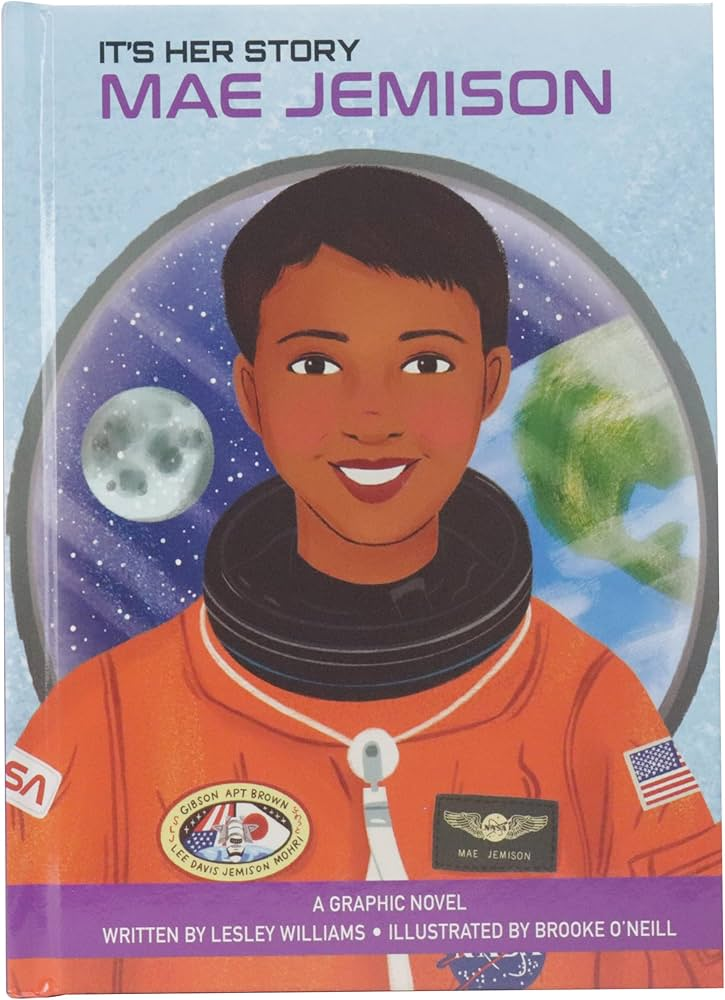
Mae Jemison: A Graphic Novel (It’s Her Story) by Lesley Williams, illustrated by Brooke O’Neill (Sunbird Books, 48 pages, grades 2-5). This short graphic biography tells the amazing life of Mae Jemison, who graduated from high school at age 16, attended Stanford, became an M.D., then transitioned to a career as an astronaut, becoming the first Black woman to go into space. She also loved music and was an accomplished dancer, as well as working for civil rights as a college student and advocating for STEM education as an adult. The last page invites readers to share their dreams, remembering that Mae’s hard work and persistence made hers come true.

This is the first volume of this series I’ve seen, but it looks like there are several others about famous women. The short page count and graphic format will make it appealing to many different types of readers, and it brings Mae Jemison to life in a way that kids will relate to, showing her as a child who had many interests in addition to science. Some additional resources at the end would have been a nice addition.

Fighting fevers and moving beavers

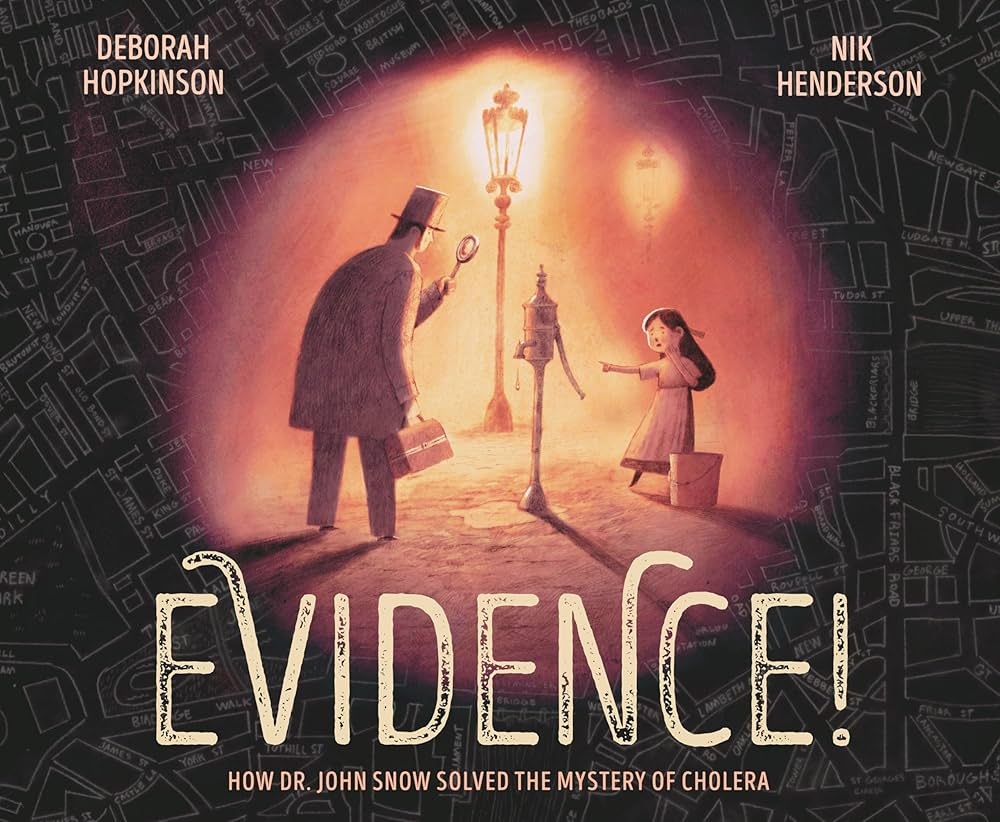
Evidence! How Dr. John Snow Solved the Mystery of Cholera by Deborah Hopkinson, illustrated by Nik Henderson (Knopf Books for Young Readers, 40 pages, grades 2+). When an 1854 cholera outbreak hit Broad Street in “stinky old London”, most people accepted the prevailing theory that it was caused by bad air. With human waste and garbage filling the streets, there was no shortage of that, but Dr. John Snow believed there was a different cause. He’d been gathering clues for years, working as a medical detective to solve the mystery of cholera. When he heard of the Broad Street outbreak, he hurried over to interview families of victims. Their answers led him to hypothesize that the water used by the neighborhood was a possible cause. But old beliefs are hard to change, and Dr. Snow had to keep gathering evidence to persuade the local neighborhood board to remove the pump handle. The back matter gives more information about this particular cholera outbreak as well as Dr. John Snow’s impressive career and contributions to modern medicine.

I’d love to see this exciting medical mystery considered for a Sibert award. The pacing is perfect, as Deborah Hopkinson tells the story of Dr. Snow’s race against time to gather evidence before the upcoming board meeting, skillfully incorporating details about cholera and London at that time. The sepia-toned illustrations convey both the time period and the wretched conditions many people were living in. The reviews I saw recommended this book for kids as young as 4 or 5 (making me wonder if these reviewers know any actual 4- or 5-year-olds), but I think upper elementary as well as middle school or even high school science students would find it interesting. Incidentally, I did learn via Google that a fever is rarely a symptom or cholera, but the rhyme was just too good, so I took poetic license with this blog post title.

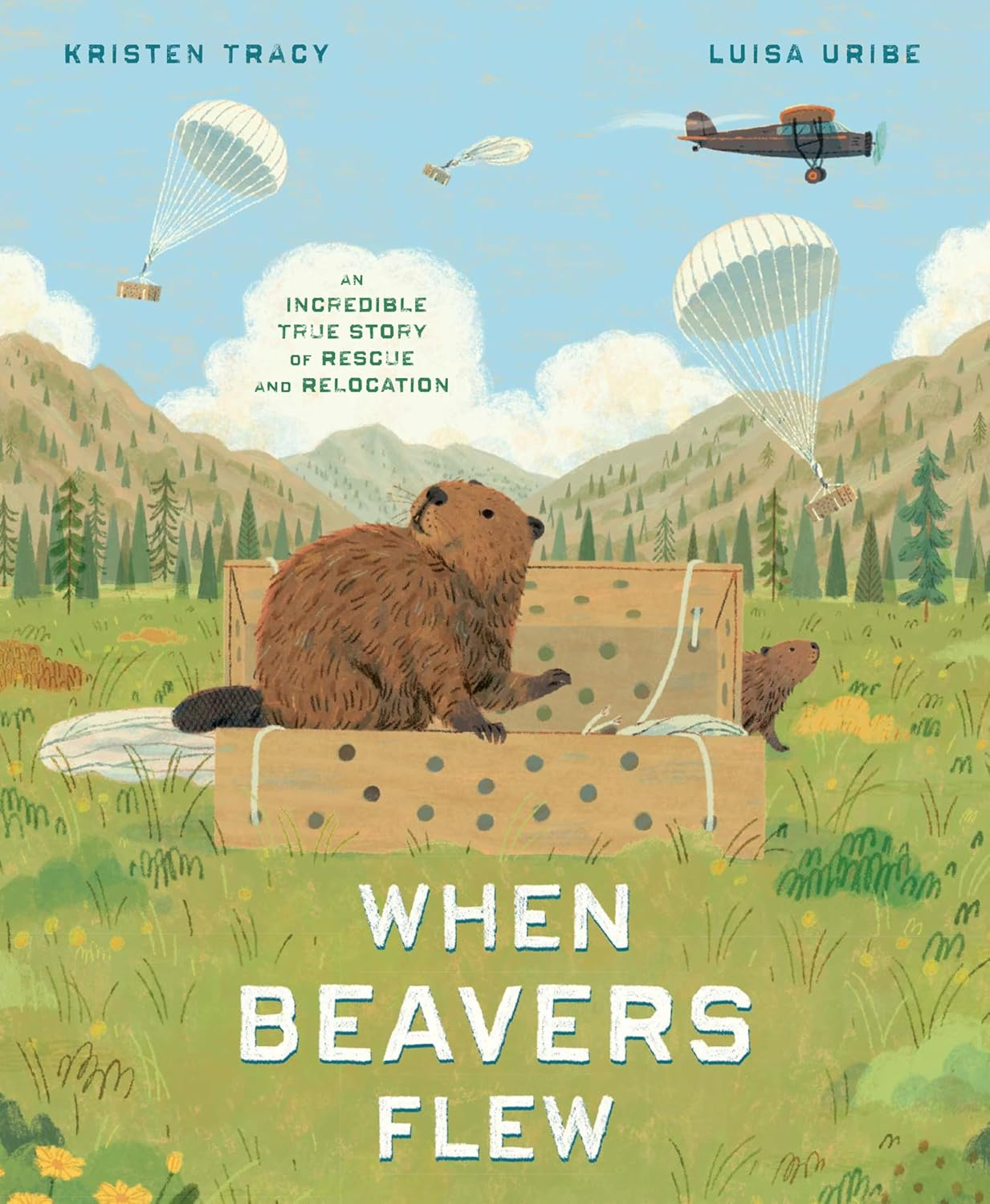
When Beavers Flew: An Incredible True Story of Rescue and Relocation by Kristen Tracy, illustrated by Luisa Uribe (Random House Studio, 40 pages, grades K-3). In 1948, the town of McCall, Idaho was booming, and the beavers that lived there were becoming a nuisance. Fish and Game warden Elmo Heter thought it would be best for both the beavers and the humans if the animals could be transported to a wilderness area called Chamberlain Basin. The problem was, the basin was surrounded by mountains that were almost impassable. Elmo tried strapping beavers in their traps onto pack horses, but this didn’t work well for the beavers, the horses, or the human riders. His next idea was to attach the beavers to surplus World War II parachutes and drop them into their new home. After experimenting with a variety of boxes, he finally found one that seemed like it would work. When he tried it out with a beaver named Geronimo, the animal landed safely and got out of the box. So Elmo boxed up 75 beavers and dropped them from a plane. When he checked on them a year later, he found that they were thriving, as was the wetland environment they helped create, and the beaver population continues in Chamberlain Basin to this day. Includes an author’s note with additional information, a couple for photos, and a list of sources.

Sometimes I find myself writing a sentence like, “So Elmo boxed up 75 beavers and dropped them from a plane,” and wonder how we got here. But I’m sure kids will find this story fascinating as well as surprising, and Elmo demonstrates some tenacious and creative problem-solving skills. Although the ending is reassuring, dropping beavers out of a plane seems like kind of an ethically gray area, and I’m glad the author’s note discusses the problems that can be associated with moving species out of their natural habitat.

Animal (and human) homes

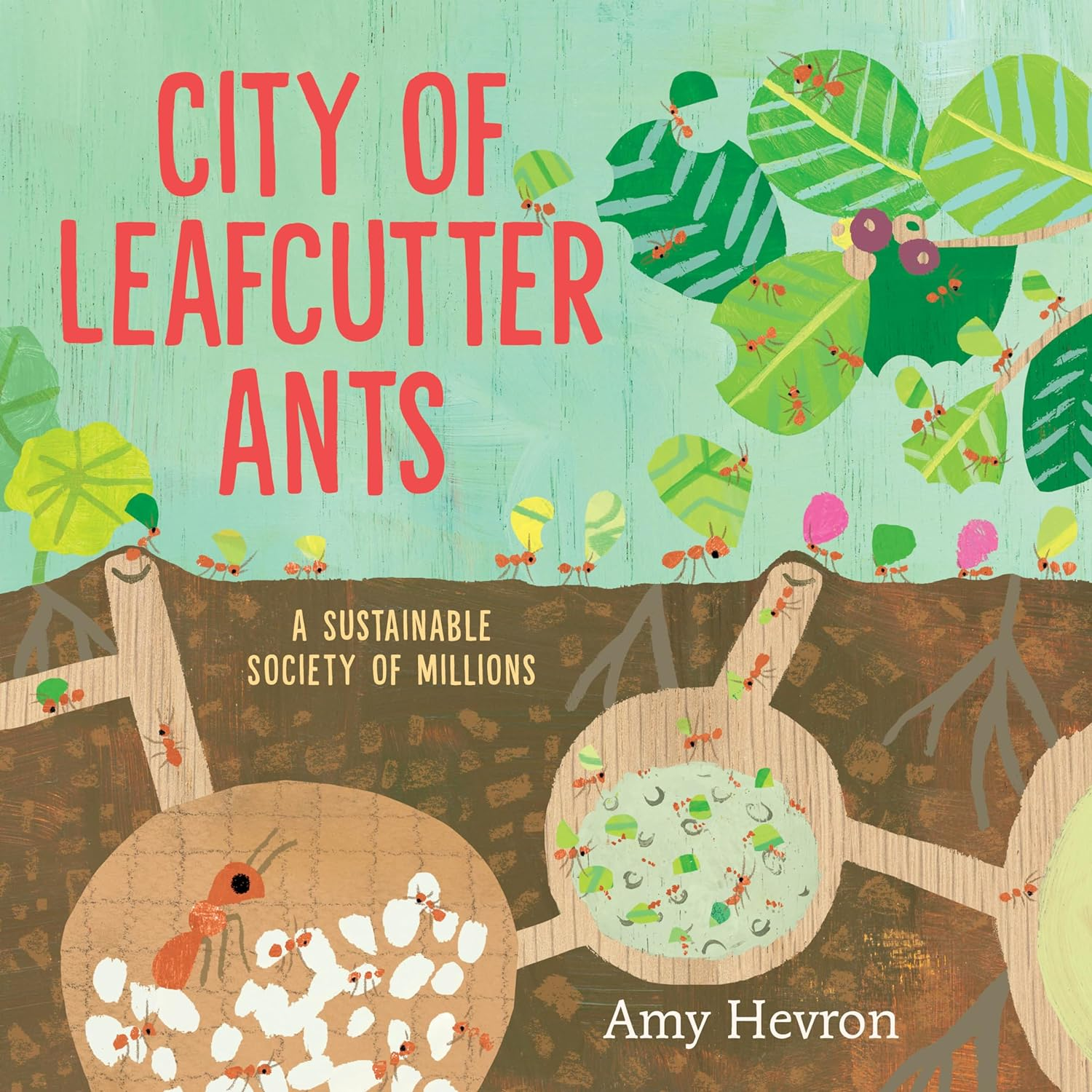
City of Leafcutter ants: A Sustainable Society of Millions by Amy Hevron (Neal Porter Books, 40 pages, ages 4-8). Enter the fascinating world of leafcutter ants, a rainforest community of eight million that produces their own food, uses antibiotics to prevent diseases, manages their trash, and builds and defends their city. Each job is described with a sentence or two of text and collage illustrations that show the different ants at work. There’s a surprising amount of action, including an amazing defense against an invading poison dart frog (don’t worry, everyone’s okay). The back matter provides a lot more information along with a list of additional resources. This is an excellent science book that would be perfect to share with preschool and early elementary kids, although the boys may be bummed by the limited role of the male drones in this largely female society.

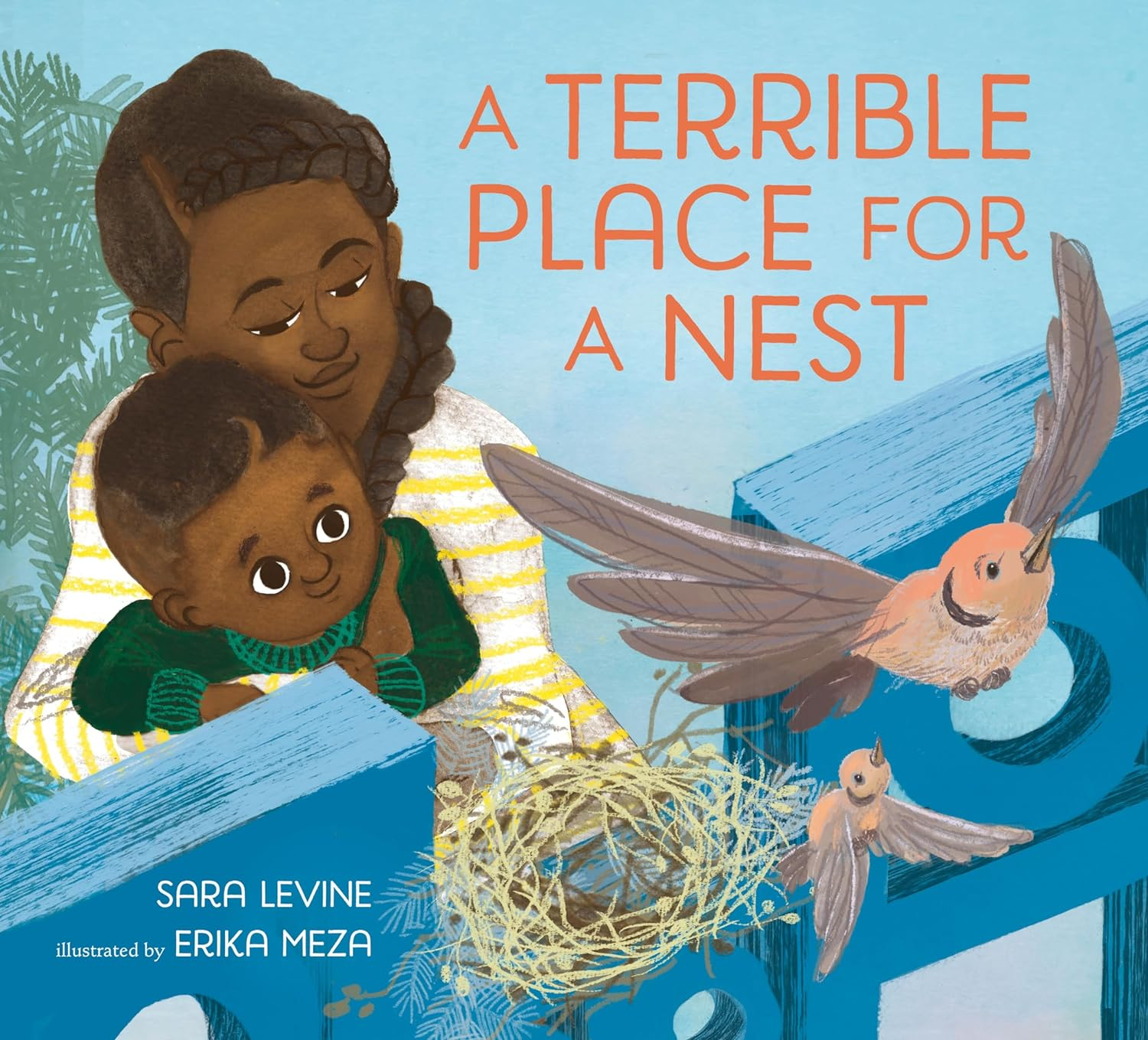
A Terrible Place for a Nest by Sara Levine, illustrated by Erika Meza (Roaring Brook Press, 40 pages, ages 4-8). “When Juno and his mom lost their home, they had to move to a new place.” Juno is sure the new place will never feel like home. He and his mom notice he mourning doves that live outside of their new building. When Juno sees two of the birds making a nest on the fence, he tells them it’s a terrible place for a nest. Sure enough, a deliveryman accidentally knocks it down, breaking the eggs inside. Juno tries to rebuild the nest, doing some research to learn more about mourning doves, but the birds stay away. Meanwhile, the illustrations show him making a new friend and settling into his home. By the time a pair of doves settles into the nest, Juno and his friend are ready, with signs warning people to watch out for the nest. “I told them it wasn’t a great place for a nest,” Juno says, “But we made it work.” This sweet picture book will reassure kids who have to move to a new home, with its parallel story about the doves and Juno and his mom. Kids will find plenty to look at in the illustrations, which tell more of Juno’s story than the text does. A little back matter about mourning doves would have been a nice addition.

Two books from Eerdmans

Long-time subscribers may recall that a few years ago I reviewed a book every week from an independent publisher. I haven’t kept up with it recently, but a few of those publishers still reach out to me from time to time. I recently received these two excellent books from Eerdmans Books for Young Readers. They are a great reminder of the unique and beautiful work being produced by smaller publishers. Both books will be released in September.

Counting Winter by Nancy White Carlstrom, illustrated by Claudia McGhee (44 pages, ages 4-8). Nancy White Carlstrom drew on her eighteen years in Alaska to create this counting book that includes eleven different animals, with verses written in similar fashion: “One red fox walks/across the white snow/quietly/stalking winter.” These could be used as models for kids to write their own four-line poems about animals with a similar combination of verbs, adverbs, and adjectives. The stunning scratch board and watercolor illustrations perfectly capture the animals and the snowy landscapes. When the counting reached eleven, I started to think it was going all the way to twenty, but the last page features twelve excited children, which was the perfect stopping place. Includes a wordless two page spread showing all the animals, two pages of animal profiles, and notes from the author and illustrator.

Fast Cheetah, Slow Tortoise: Poems of Animal Opposites by Bette Westera and Mies van Hout, illustrated by David Colmer. (40 pages, grades K-4). This Dutch import pairs animal poems that illustrate antonyms; a two-page spread features the tortoise in a poem entitled “Slow” with the cheetah, which is “Fast.” Others are noisy and quiet (cricket and pill bug), relaxed and busy (sloth and ant), and bossy and meek (gorilla and lesula). As this last example shows, there are some animals that may be new to kids. Each poem is accompanied by an illustration, which will help kids visualize those unfamiliar animals. This would be fun to share by reading a poem and having kids guess the animal and maybe the antonym as well. Unfortunately, there’s no back matter that could have offered more information on the animals.

A couple of nonfiction picture books

Clever Crow by Chris Butterworth, illustrated by Olivia Lomenech Gill (Candlewick, 32 pages, ages 4-8). “Wherever you are right now, there’s sure to be a crow or two nearby.” Crows are easy to spot, but also easy to miss. They tend to be plain, not particularly fancy fliers, and have a hoarse caw instead of a melodious song. But they’re smart enough to use tools and store food, and sometimes you can see them acting playfully. To summarize, they are “smart, clever, crafty and playful…just like you!” Includes a list of suggestions for learning more about crows and a short index.

The illustrations in this book are stunning, beginning with the endpapers, which show various crow eggs in the front and the birds that hatch out of them in the back. The text is quirky but interesting, although it left me wanting to know a lot more…for instance, is a crow a specific bird or a family of birds? I was surprised by the inclusion of a blue jay on the back endpapers, since I don’t think of it as a crow, but a quick Google search revealed that it’s part of the crow family. This is an eye-catching introduction, but curious readers will want to dig deeper for more information.

Sleepy: Surprising Ways Animals Snooze by Jennifer Ward, illustrated by Robin Page (Beach Lane Books, 32 pages, grades K-3). Whether it’s the half-sleeping brain of the dolphin, the deep torpor of the hummingbird, or the eyes-wide-open slumber of a snake, animals get their rest in a variety of fascinating ways. Each page features a close-up illustration of the animal with four lines of rhyming text describing its sleep, with a paragraph of additional information giving more details. The last page features a human child experiencing what scientists call “monophasic sleep.” Includes a list of the types of sleep in the book, a list of sources, and pie charts showing sleeping and waking times for all 16 animals and five more showing humans at different developmental stages.

As much as I mourn the loss of Steve Jenkins, his talented wife Robin Page has found an able partner with Jennifer Ward, whose rhyming text and fascinating facts reminded me of many a Jenkins book. The pie charts were very similar to some in his Animals by the Numbers (and the fact that I know that is a testament to how many times I’ve shared that book with classes.) The rhyming text and pictures will appeal to younger readers, and older ones will enjoy the additional information about each animal.

Cultivate your own garden

Prunella by Beth Ferry, illustrated by Claire Keane (Simon and Schuster Books for Young Readers, 40 pages, ages 4-8). Prunella’s green-thumbed parents are surprised when their new daughter is born with a purple thumb. Turns out Prunella’s just as good at growing things as they are, but her talents lie with plants like Venus flytraps, bladderworts, and corpse flowers. Her parents are completely supportive of their daughter’s passions, but other kids are not, and Prunella’s only friends are her plants. One day a little boy appears and starts asking her about her garden. Much to Prunella’s surprise, he not only isn’t repelled by them, but tells her his aspiring-mycologist sister would be interested as well. Before long, other botanists have found them, and Prunella finds herself surrounded by a group of like-minded–and purple-thumbed–friends. The plants from Prunella’s garden (“Prunella’s Persnickety Plants”) are described on the front and back endpapers.

Millie Fleur’s Poison Garden by Christy Mandin (Orchard Books, 40 pages, ages 4-8). When Millie Fleur La Fae and her mother arrive in Garden Glen (“A Picture-Perfect Place”), they move into the one rundown house, located on the edge of town. Millie starts a garden with seeds from her old home, and before long plants like fanged fairy moss, sore toothwort, and glowing Jack-in-the-bush are flourishing there. The local garden club is not happy, and they try to root out this unconventional garden from their pristine town. Millie doesn’t understand, but her mother tells her, “Some people are scared of things that are different.” Millie decides to share her garden with the kids in her class, bringing in a plant for show and tell and inviting the whole class over to her house. The kids are amazed (if occasionally grossed out) by Millie’s wild collection, but slowly things start to change in Garden Glen. While it retains some of its original perfect charm, many people incorporate Millie’s plants into their gardens, adding a weird and wonderful dimension to the community. Includes additional information about snapdragons, spider plants, and a real-life garden like Millie’s in England.

These two books came out within a couple of weeks of each other and are remarkably similar with their stories involving girls who love unusual plants and themes of how being true to yourself can enhance a community. They would make a great story time combination, perhaps paired with a study of plants or an activity of planting something from Prunella’s or Millie’s garden.

For the birds

Sparrow Loves Birds by Murry Burgess, illustrated by Tamisha Anthony (Christy Ottaviano Books, 40 pages, ages 4-8). Sparrow is an observant girl, who loves noticing the people, animals, and sounds of her neighborhood. Most of all, she loves to watch birds, and she’ll often head out with her sketchbook and binoculars to look for them. She learns to identify different birds by their movements, colors, and songs, carefully drawing them and labelling them when she knows their names. The last page invites readers to explore their own neighborhoods, and there’s lots of back matter to help them, including tips for birdwatchers and a guide to eighteen birds mentioned in the text. There’s also an author’s note describing her journey from a childhood spent learning about nature to a career in wildlife biology, and encouraging kids to get outside and observe nature, whether they live in rural, suburban, or urban neighborhoods. This a great introduction to birdwatching, and just generally enjoying the outdoors, that introduces lots of different birds and birdwatching techniques through an enthusiastic young narrator. The illustrations and back matter add to the educational value.

Owls in Our Yard! The Story of Alfie by Carl Safina (Norton Young Readers, 48 pages, grades 2-5). For some real-life backyard birdwatching, here’s the story of Alfie, a baby eastern screech owl found on the ground and given to ecologist Carl Safina for rehabilitation. After nursing her back to health, he and his family gradually reintroduced her to the wild. He wasn’t sure she would ever completely lose her reliance on humans, but slowly, Alfie started leaving her nesting box for longer periods of time and learned to hunt for food on her own. Eventually, she showed up with a mate, and Carl discovered that Alfie had built a nest and laid three eggs. During the pandemic, the family had plenty of opportunities to follow the adventures of the new baby owls, including battles with blue jays and robins for backyard territory. While Alfie has stayed close to her old home, she’s completely integrated into the wild now, having raised three broods and raised a total of ten owlets. The photos and compelling nonfiction story make every step of Alfie’s journey an adventure that animal lovers are sure to enjoy. It’s a bit text heavy, so younger kids may need some help with the reading, but the narrative is engaging enough to keep them going to learn what happens to Alfie and her babies.

Animal books

Animal Superpowers by Amy Cherrix, illustrated by Frann Preston-Gannon (Beach Lane Books, 48 pages, grades K-4). From a seemingly immortal jellyfish to a gravity-defying ibex to a snake-killing, venom-resistant opossum, these animals have superpowers that allow them to survive and thrive in their environments. Even your pet dog has a smelling superpower! Each two-page spread has a vivid illustration with boxed text. One spread gives the introduction to the power, then turn the page to reveal what it is and how the animal uses it. The last couple pages, entitled “Action is your superpower!”, tells how the different animals are threatened by pollution and climate change, encouraging kids to take action to help them. There’s also a list of sources.

Wolf Effect: A Wilderness Revival Story by Rosanne Parry, illustrated by Jennifer Thermes (Greenwillow Books, 40 pages, grades K-4). The story of wolves in Yellowstone, from their disappearance due to hunting to their reintroduction in the 1990’s, is told with rhyming text, prose, and illustrations. The wolves’ demise is told in verses, showing farmers and rangers hunting the wolves, with newspaper headlines declaring that Yellowstone is free of them. Then the text goes into a sort of “house that Jack built” rhyme, showing the ripple effects of reintroducing the wolves on the environment, as beavers, willows, and songbirds all return to the park. Boxes of narrative text provide more details, as do the illustrations, which sometimes depict a bear and a coyote discussing the effects of the wolves’ return. Eighteen animals from the pages are shown at the end; there are also notes from the author and illustrator, as well as a glossary and a list of resources.

Animal fans will be happy to see both of these books on the library shelves, with their eye-catching covers and beautiful illustrations. Animal Superpowers will appeal to readers who like collecting interesting facts while Wolf Effect is more of a story. I found the way the latter book was written a bit confusing, and I’m not sure that rhyming verses were the best way to go, particularly from an author as knowledgeable about wolves as Rosanne Parry (A Wolf Called Wander is one of my all-time favorite animal stories). Jennifer Thermes is amazing, though, and I found the illustrations to be the main attraction of both books.