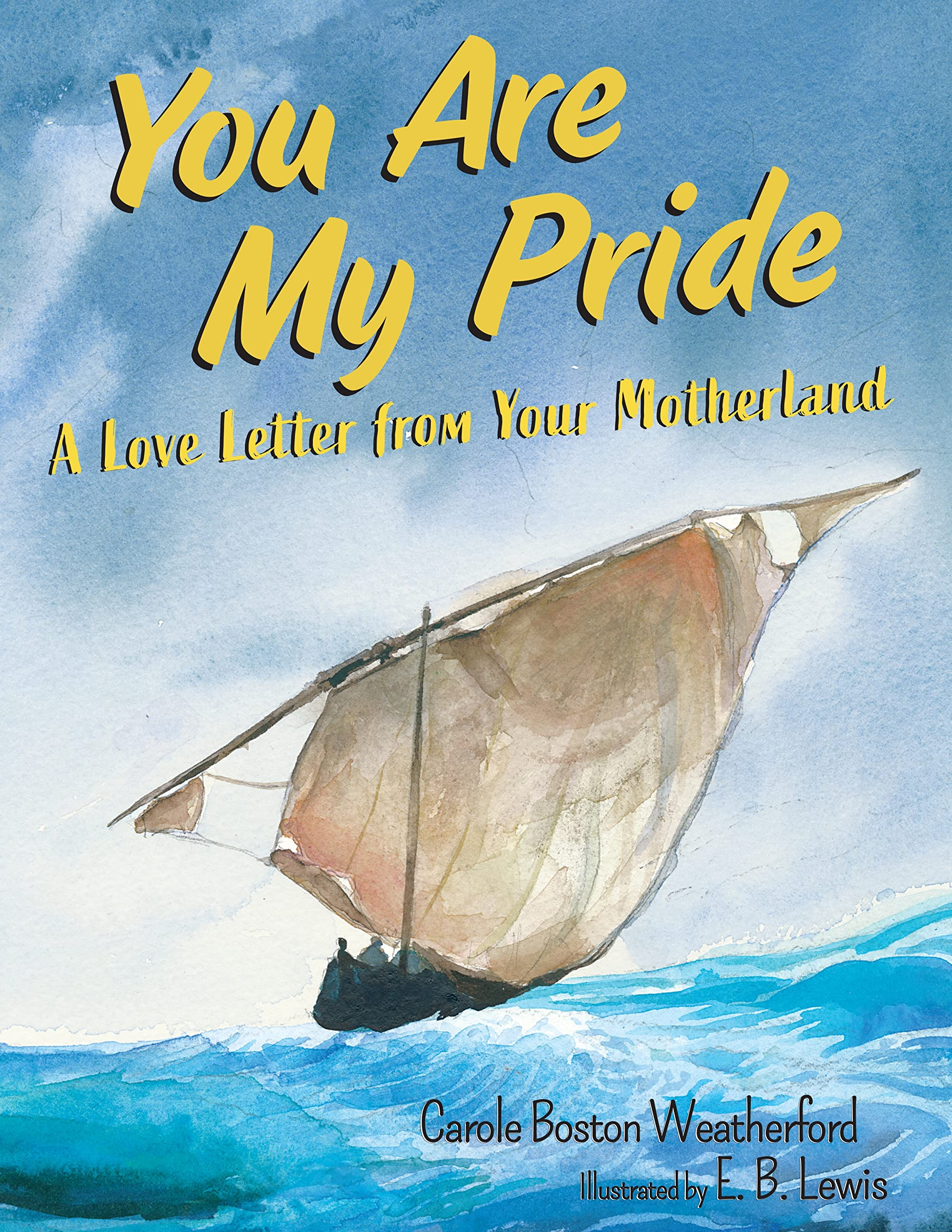
You Are My Pride: A Love Letter from Your Motherland by Carole Boston Weatherford, illustrated by E. B. Lewis

Published by Astra Young Readers

Summary:  “I am the mother of all humanity.  I have a long history and a longer memory,” begins this poem that is addressed to humans from the continent of Africa.  The narrator traces time from the first cells that evolved into the first humans.  “Child, you are mine as much as Mount Kilimanjaro, as much as the Serengiti and the Sahara, as much as the baobab and the bush.”  And although those children are her treasure, she sends them around the globe to let their gifts shine.  Includes additional information about human evolution, specifically in Africa, and a timeline of key species and developments in early human evolution.  40 pages; grades K-5.

Pros:  This loving poem with beautiful illustrations celebrates all of humanity, but especially those with roots in Africa.  The additional information makes it a resource that older kids will find useful as well.

Cons:  No additional resources.

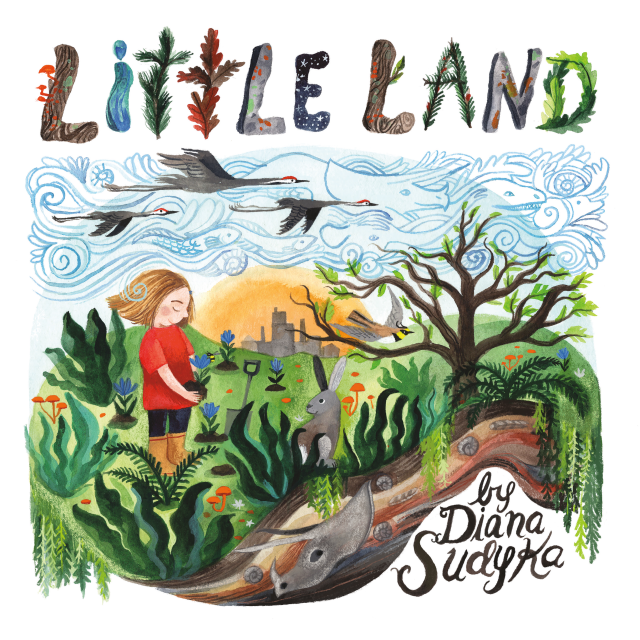
Little Land by Diana Sudyka

Published by Little, Brown Books for Young Readers

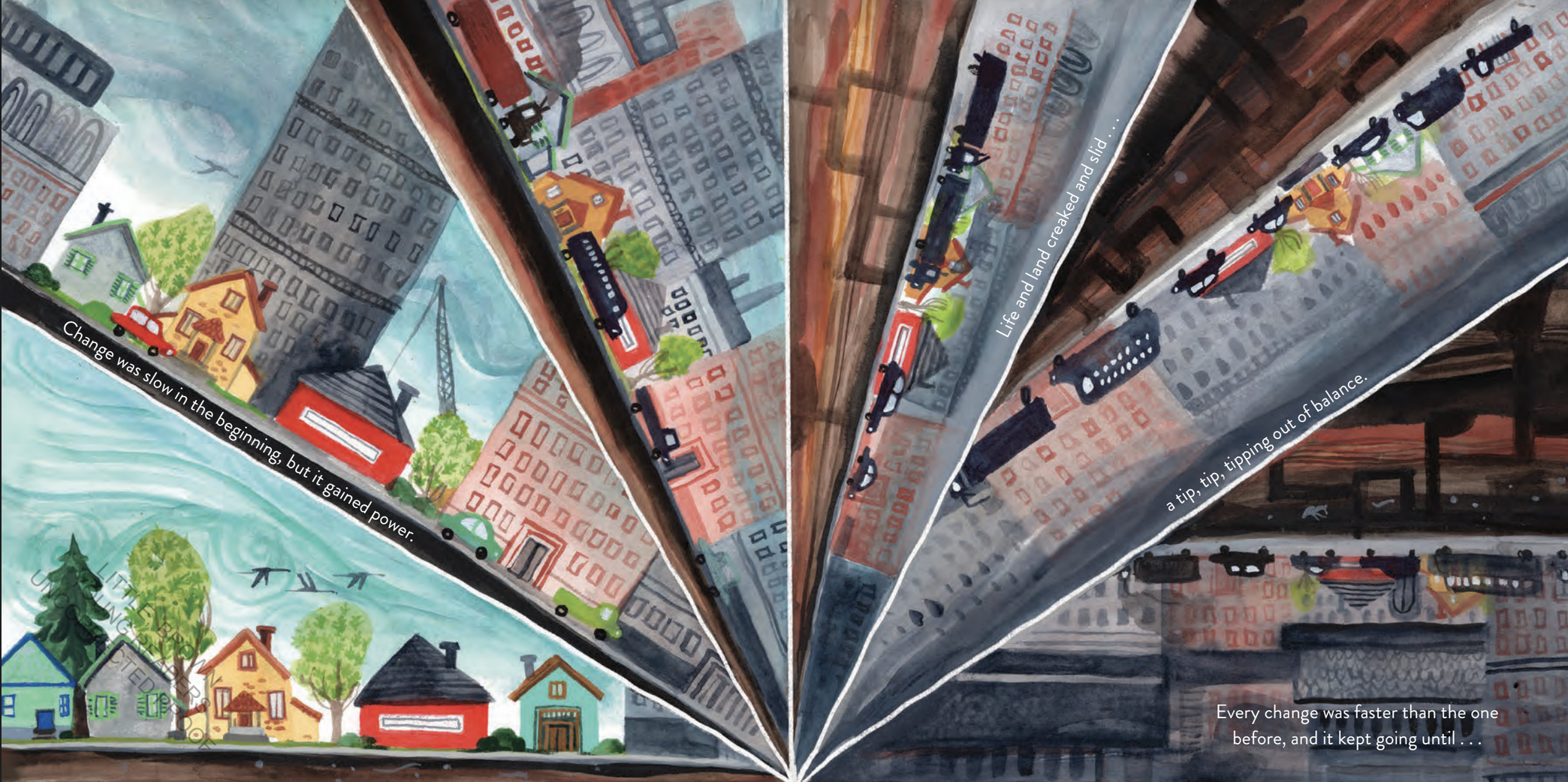
Summary:  The story of a small piece of land began five hundred million years ago, when it was part of the ocean.  Dinosaurs walked on it sixty-seven million years ago, and ice covered it one hundred thousand years ago.  There have been many, many changes, and different forms of life have come and gone.  But the land has always survived…until humans came along.  Starting with a single house, people gradually built more and more on the land, even digging into it to create structures to support them.  The impacts grew and grew until one day “…it seemed unstoppable,” shown with an upside down black and gray illustration.  Kids start to make changes, reclaiming the land with clean-up efforts, flowers, and trees.  Even a small gift to the Earth can reap big rewards.  Includes an author’s note, a list of words that inspired the book, animals and plants in the book, a list of epochs represented, and additional resources.  48 pages; grades K-3.

Pros:  A gorgeous introduction to environmental concerns, covering a surprising amount of information with deceptively simple text and illustrations that reminded me a little bit of Virginia Lee Burton (and should be considered for a Caldecott!).  The last few pages and back matter will empower kids to figure out what they can do to help the planet.

Cons:  My usual discouragement and angst when I read books about the environment.

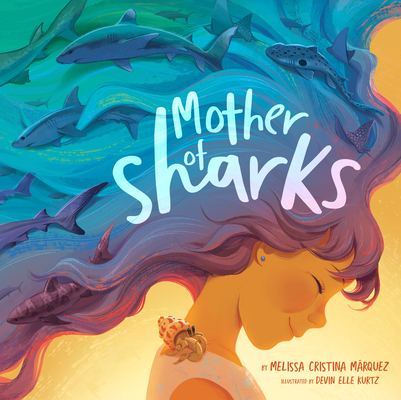
Mother of Sharks by Melissa Cristina Márquez, illustrated by Devin Elle Kurtz

Published by Penguin Workshop

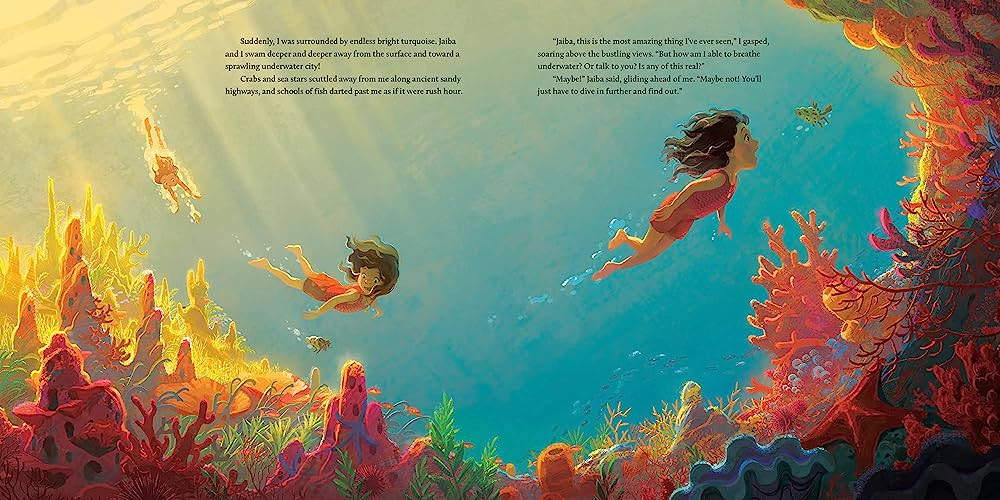
Summary:  Enjoying her last swim of the day at Puerto Rico’s Playita del Condado, Meli is amazed to find a talking hermit crab named Jaiba in one of the tidal pools.  Jaiba takes Meli on a magical journey underwater where she sees bleached coral and rescues a mako shark that’s tangled up in a plastic net. As Meli learns more from Jaiba about sharks and environmental damage that’s affecting them, she wonders if she can grow up to help them, since she’s never seen a scientist who looks like her.  Jaiba then takes her to meet one, a Hispanic woman known as the Mother of Sharks.  Inspired, Meli returns to the beach and her mom, excited to pursue her dreams.  Includes a letter from the author, a renowned marine biologist who grew up in Puerto Rico; a glossary; a list of resources; a translation of the Spanish words and phrases used in the story; and endpapers with about two dozen different types of sharks and their names. 48 pages; grades K-3.

Pros:  Gorgeous underwater illustrations (I love the cover!) depict a world that may inspire others to follow dreams of marine biology; the story offers positive affirmations that those dreams available to everyone.

Cons:  The font was small and hard to read in some of the darker-hued illustrations.

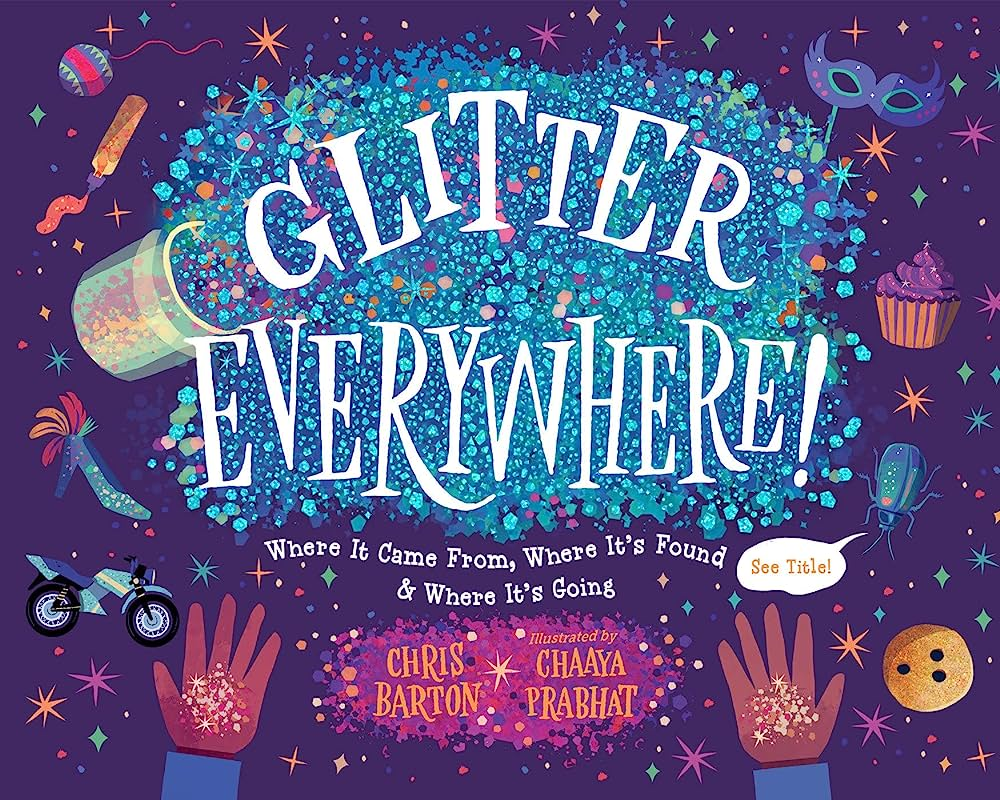
Glitter Everywhere! Where It Came From, Where It’s Found & Where It’s Going by Chris Barton, illustrated by Chaaya Prabhat

Published by Charlesbridge

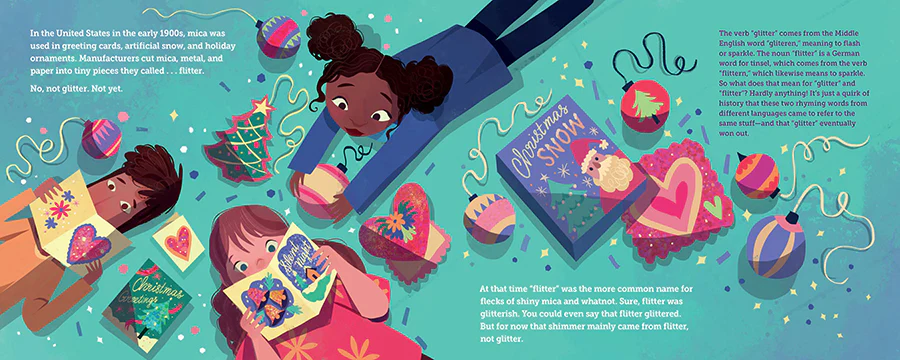
Summary:  Since early times, humans have been attracted to things that are iridescent, like beetles and mica.  In more recent history, people have learned to manufacture this iridescence, starting with “flitter”, a mix of ground-up mica, metal, and paper that was sold in the early 1900’s.  During World War II, mica was needed for industry, so a man named Henry F. Ruschmann began making plastic glitter from his factory in Bernardsville, NJ.  This product, which has become ubiquitous in our society, has its downsides, being the very definition of microplastic, a material that is wreaking all kinds of environmental havoc.  Alternative glitters are being created, so it looks as though, one way or another, glitter is here to stay.  Includes an author’s note that talks about how he researched the book, an illustrator’s note, books for further reading, and a bibliography.  48 pages; grades 2-5.

Pros:  Chris Barton tells the story of glitter with some history, some science, and a lot of humor in this extremely engaging nonfiction book.  The illustrations are lots of fun, and what kid is not going to want to read about glitter?

Cons:  My vacuum cleaner and I have kind of a love/hate relationship with glitter.

Whale Fall: Exploring an Ocean-Floor Ecosystem by Melissa Stewart, illustrated by Rob Dunlavey

Published by Random House Studio

Summary:  When a whale dies, its massive body sinks to the bottom of the deep sea, beginning a 50-year process that supports all kinds of ocean life.  Hagfish, sleeper sharks, and other scavengers are the first to arrive, eventually picking the bones of the whale clean.  Zombie worms feed on the bones, and squat lobsters eat the zombie worms.  The process continues for decades, supporting millions of animals in the deep sea, until every trace of the whale has disappeared.  Includes additional information on the 22 animals included in the main text, a list of selected sources, and resources offering additional information.  40 pages; grades K-4.

Pros:  A fascinating look at a process scientists didn’t know occurred until 1987.  The illustrations perfectly capture the deep sea, with close-ups of some of the creatures featured in insets.  A unique topic that is sure to capture the interest of budding marine biologists.

Cons:  The picture of hungry hagfish descending on the whale carcass may be a bit disturbing to whale lovers. Circle of life, man.

Food for the Future: Sustainable Farms Around the World by Mia Wenjen, illustrated by Robert Sae-Heng

Published by Barefoot Books
Summary:  From a honey farm in Yemen to a circular garden in Senegal to an underwater biosphere in Italy, this book takes readers on a tour of innovative sustainable food production sites around the world.  Each two-page spread has a rhyming couplet about the farm or other site, with illustrations showing people at work.  A map at the end shows all the sites and provides information about sustainable farming and food justice.  There’s additional information about each place, including a description and why it’s sustainable.  Includes notes from the author and illustrator about how they were inspired to create this book.  40 pages; ages 4-8.

Pros:  An inspiring look at sustainable food production that includes both indigenous practices and new technology.  The built-in definitions and pronunciation guides make this a great resource for younger kids, who will also find the bright folk art style illustrations appealing.

Cons:  Some additional resources would have been nice.

Super Small: Miniature Marvels of the Natural World by Tiffany Stone, illustrated by Ashley Spires

Published by Greystone Kids

Summary:  Each of the fifteen tiny animals profiled here has a superpower. Whether it’s the pygmy seahorse’s ability to camouflage, the axolotl’s regenerative powers, or the black-footed cat’s lethal aim, each animal has something that allows it to survive despite being so small.  Each profile includes an illustration, a poem, and a comic strip that gives the animal the chance to show off its special abilities.  The final poem asks readers to consider what their superpowers might be.  36 pages; grades K-4.

Pros:  The cute poems, comics, and illustrations offer a fascinating look at some unique animal adaptations, and the last poem is a nice way to get kids thinking about what makes them unique as well.

Cons:  I would have loved some additional information at the end, particularly about how the hydra stays young forever.

Rise to the Sky: How the World’s Tallest Trees Grow Up by Rebecca E. Hirsch, illustrated by Mia Posada

Published by Millbrook Press

Summary:  The tallest living thing isn’t an animal: it’s a tree.  Trees can grow taller than the Statue of Liberty or Big Ben, closing in on 400 feet.  Amazingly, they all start as a small seed, but the ideal conditions of sunlight and water can result in lots of growth and a long life, sometimes thousands of years, with protection from their bark and roots.  From their great height, the trees send down their seeds to the ground, beginning the process all over again.  Includes additional information about trees, photos and facts about some of the world’s tallest trees, a couple of tree activities, and a list of resources.  32 pages; grades K-4.

Pros:  An excellent informational book with beautiful illustrations and plenty of back matter.  Perfect for any unit on trees, plants, or seeds.

Cons:  It would have been nice to have a map showing where the tallest trees live, since they seem to be concentrated in just a few places in the world.

Jumper: A Day in the Life of a Backyard Jumping Spider by Jessica Lanan

Published by Roaring Brook Press

Summary:  As a young girl explores a backyard garden, a jumper spider engages in parallel activities.  They both have senses to explore the world around them, but Jumper’s senses are extra keen, with sound-detecting hairs all over her body and eight eyes that see in all directions.  These senses, plus her jumping abilities, keep her safe from predators like a chickadee and a wasp.  She also uses them for hunting, and the final pages show her successful capture of a fly as big as she is.  Includes four pages of additional information, a glossary, a list of resources, and steps for finding and identifying spiders.  48 pages; ages 4-8.

Pros:  Spectacular illustrations portray a spider’s-eye view of the world, including a gatefold illustration of what the garden looks like through eight eyes.  The extensive back matter makes this an excellent resource for research.  Could be a Caldecott or Sibert contender.

Cons:  The capture of the fly is not for the faint of heart.

Champion Chompers, Super Stinkers and Other Poems by Extraordinary Animals by Linda Ashman, illustrated by Aparna Varma

Published by Harry N. Abrams

Summary:  Using mask poems (poems in which the writer speaks in the voice of someone or something else), Linda Ashman has animals give hints as to what they are and what superlatives (fastest, biggest, stinkiest, etc.) they hold in the animal world.  Each poem has an illustration showing part of the animal to give an additional clue.  Turn the page, and the animal is pictured in full, along with a paragraph of information.  Opening and closing poems introduce the contest.  Includes additional information about protecting endangered animals, measurements, and mask poems, as well as a glossary, and lists of websites and books.  48 pages; grades 1-4.

Pros:  I do love a good guessing book to keep kids engaged, and this one lets readers guess both the animals and the records they hold.  The illustrations are cute and offer hints to go with each poem.  Kids can try their hands at mask poems after reading these.

Cons:  It may be a little long for primary kids to get through all of these in one sitting.